台积电

Search documents
台积电千亿美元投资美国!英伟达、博通秘密测试英特尔:谁输谁赢?
美股研究社· 2025-03-05 10:58
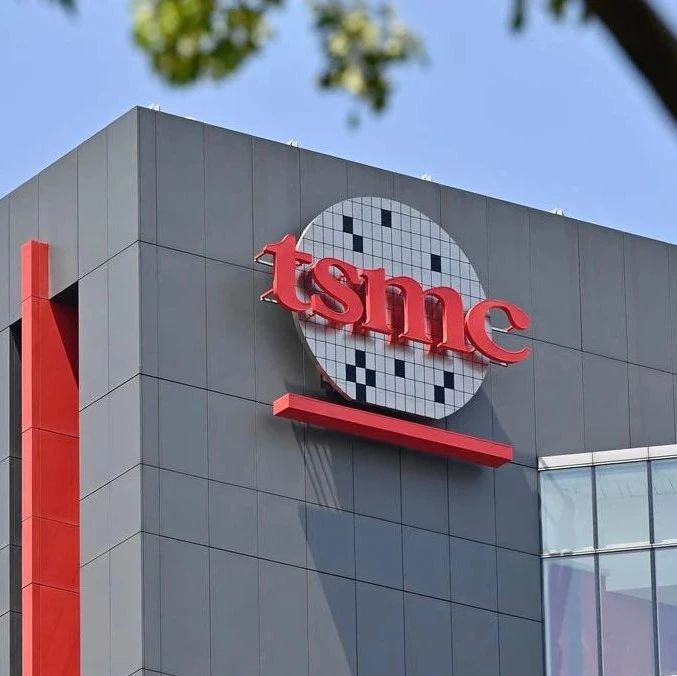
Core Viewpoint - TSMC plans to invest $100 billion in the U.S., exceeding its previous announcement of a $65 billion investment, to build additional chip manufacturing facilities in Arizona, which will create thousands of high-paying jobs [1][5]. Group 1: TSMC's Investment and Impact - TSMC has already begun construction of three factories in Arizona, with the first factory already in mass production of 4nm chips [1]. - The investment is seen as a significant move for economic security, emphasizing the importance of semiconductors in the 21st-century economy [1]. - This investment will include the construction of three more chip manufacturing plants and two packaging facilities in Arizona [1]. Group 2: Intel's Competitive Position - Intel is also making strides in its chip manufacturing business, with reports indicating that major clients like NVIDIA and Broadcom are testing manufacturing with Intel, which could lead to significant contracts worth hundreds of millions [2][5]. - Intel's 18A manufacturing process is under evaluation by AMD, although it is unclear if AMD has sent test chips for production [3]. - Intel's manufacturing business has faced challenges, including a $13.4 billion loss last year, but success in attracting major clients could bolster its position [6]. Group 3: Market Reactions and Future Prospects - Intel's stock saw a 5% increase at the opening on March 3 but closed down 4% due to market influences [4]. - The success of Intel's manufacturing tests is crucial for its future, as delays in the 18A process have pushed delivery timelines to 2026, raising concerns among potential clients [7]. - Industry experts are closely monitoring Intel's progress, as many chip design companies are waiting to see if Intel can scale production effectively [8].


特朗普,要废除芯片法案
半导体芯闻· 2025-03-05 10:25
如果您希望可以时常见面,欢迎标星收藏哦~ 来源:内容来自半导体芯闻综合 ,谢谢。 美国总统唐纳德·特朗普3月4日表示,将废除拜登政府制定的半导体补贴计划《CHIPS法案》,此 举可能影响韩国芯片制造商三星电子和SK海力士。 三星和 SK 海力士在美国投资巨大,原本将根据该计划获得数十亿美元的补贴。特朗普再次承诺废 除该计划,引发了人们对这些公司可能受到的财务影响的担忧。 特朗普在国会联合演讲中表示:"得益于我们的'美国优先'政策,我们在过去几周内就看到美国获 得了 1.7 万亿美元的新投资。软银是世界上最出色的公司之一,宣布投资 2000 亿美元。OpenAI 和甲骨文——拉里·埃里森——宣布投资 5000 亿美元。苹果宣布投资 5000 亿美元。蒂姆·库克打 电话给我说,'我花这笔钱的速度还不够快。'就在昨天,台湾半导体公司宣布投资 1650 亿美元, 在美国制造地球上最强大的芯片" https://www.chosun.com/english/industry-en/2025/03/05/DVF7DO7XAZFJJHIXEWYTSUC4SA/ 点这里加关注,锁定更多原创内容 *免责声明:文章内容系作者个人 ...

英特尔芯片,又延期了?
半导体芯闻· 2025-03-05 10:25
Core Viewpoint - Intel's Panther Lake chips are likely to be delayed beyond 2025 due to slow yield improvements in the Intel 18A process, which may impact the company's revenue and profit in the second half of 2025 [1][2]. Group 1: Chip Production and Delays - Analyst Ming-Chi Kuo indicates that the production timeline for the Panther Lake (PTL) series has been pushed from early September 2025 to mid-Q4 2025, meaning devices using these chips may not be available until 2026 [1][2]. - Intel's initial production schedule communicated to partners was for the second half of 2025, but the delays could negatively affect the company's revenue, profit, and supply chain trust [2]. Group 2: Manufacturing Process Challenges - The Intel 18A manufacturing process, which utilizes RibbonFET and PowerVia technologies, has not achieved the expected yield rates, currently estimated at 20%-30%, hindering the company's ability to enter the shipping phase [2]. - Internal investigations suggest that there will be no improvement in yield rates by Q3, making it nearly impossible for Intel to achieve mass production within the anticipated timeline [2].
晶圆上的国运:从张汝京到中芯国际的技术突围
新财富· 2025-03-05 07:45
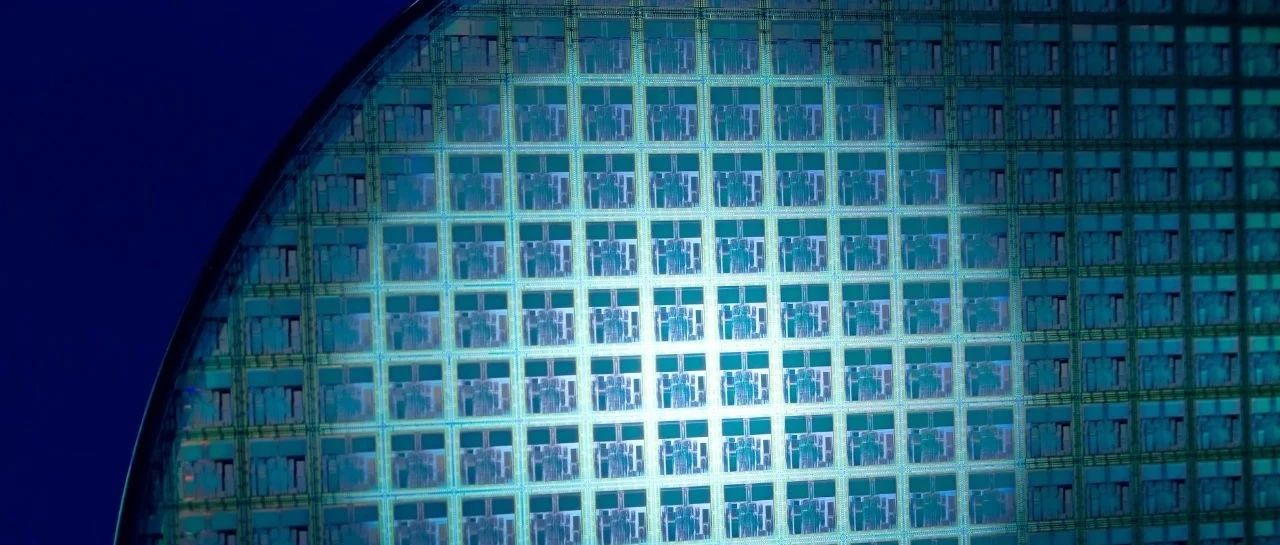
Core Viewpoint - The article chronicles the journey of Zhang Rujing, the founder of SMIC, highlighting his significant contributions to the semiconductor industry in China and the evolution of SMIC from its inception to its current status as a key player in the global semiconductor market [1][2][3]. Group 1: Early Life and Education - Zhang Rujing was born in 1948 in Nanjing and graduated from Taiwan University in 1970, initially aspiring to pursue aerospace engineering but shifted to electronic engineering due to circumstances [1]. - He furthered his education in the United States, obtaining a master's degree in engineering science from the University at Buffalo in 1974 and a Ph.D. in electronic engineering from Southern Methodist University in 1986, where he developed a rigorous engineering mindset [2]. Group 2: Career at Texas Instruments - Zhang joined Texas Instruments (TI) in 1977 during the semiconductor industry's golden age, where he gained extensive experience in chip factory construction and management [4]. - He was involved in the development of DRAM technology and learned to improve wafer yield from 35% to 82%, establishing a methodology for factory construction that considered local industry policies and talent [4][5]. Group 3: Founding of SMIC - After leaving TI in 1997, Zhang founded United Microelectronics Corporation (UMC) in Taiwan, achieving profitability within three years and planning to establish factories in mainland China [5][6]. - In 2000, he sold UMC to TSMC for $5 billion, which provided him with $1 billion and a skilled team, enabling him to establish SMIC in Shanghai [6][7]. Group 4: Rapid Growth of SMIC - Under Zhang's leadership, SMIC built its first 8-inch production line in just 13 months, setting a record for wafer fab construction speed, and achieved an 85% yield rate [7][8]. - Zhang implemented a "reverse foundry" strategy, allowing small design companies to benefit from comprehensive services, which led to a rapid increase in clients and production capacity [6][7]. Group 5: Challenges and Legal Issues - SMIC faced legal challenges from TSMC, which led to a halt in advanced process development and impacted client relationships due to concerns over legal risks [9]. - Zhang's departure in 2009 was marked by a series of legal settlements, resulting in significant executive turnover within the company [9][11]. Group 6: Post-Zhang Era and Strategic Shifts - After Zhang's exit, SMIC adopted a "rural encirclement of cities" strategy under new leadership, focusing on mature processes and increasing domestic market share [11][12]. - The introduction of state-owned investors helped stabilize the company financially and laid the groundwork for future technological advancements [11][12]. Group 7: Technological Advancements - The arrival of Liang Mengsong in 2017 marked a turning point for SMIC, leading to significant advancements in process technology, including the successful development of 14nm FinFET technology [12][13]. - Liang's leadership resulted in a dramatic increase in yield rates and the establishment of a robust R&D framework, enabling SMIC to compete in advanced process technology [15][16]. Group 8: Industry Impact and Future Outlook - SMIC's evolution reflects the potential for China's semiconductor industry to achieve breakthroughs through talent and engineering organization, with a focus on developing a skilled workforce [18][19]. - The company's journey illustrates the challenges and opportunities within the global semiconductor landscape, emphasizing the importance of innovation and adaptation in response to geopolitical pressures [19].

中信证券 近期美股科技股波动的思考
2025-03-05 05:45
中信证券 近期美股科技股波动的思考 20250304 当前市场交易特征与去年 8、9 月份相似,都是典型的宏观主导结构。市场情绪 受宏观数据和政策变化影响显著。例如,今年微软削减部分数据中心项目、台 积电订单缩减、新加坡对英伟达出货审查等消息,在当前敏感时期结合宏观数 据走弱,使得市场出现明显下跌。然而,从长期来看,这些传闻本身并不会构 成持续性负面影响,因为企业通常会进行阶段性调整以适应市场变化。 摘要 Q&A 近期美股科技股的表现如何?背后的主要原因是什么? 近期美股科技股出现了显著的下跌,主要指数如纳斯达克、标普 500 等都有较 大跌幅。背后的主要原因包括宏观经济数据的走弱,例如服务业 PMI 数据意外 走低、消费者信心指数下降以及通胀预期上升。此外,特朗普政府的一系列关 税政策,尤其是对墨西哥和加拿大的关税表述,也使得市场情绪变得非常悲观。 这些因素导致市场对经济增长和消费预期明显下行,从而引发了科技股的下跌。 • 宏观经济下行预期和高利率环境对科技股,尤其是软件和 AI 算力相关股票 造成显著冲击,软件作为经济后周期资产需求减少,AI 算力短期投入大于 产出导致资本开支缩减。 • 当前市场交易特征 ...

这个国家,将建首个晶圆厂
半导体行业观察· 2025-03-05 01:03
Core Viewpoint - Vietnam is set to build its first semiconductor wafer fabrication plant with a budget of 12.8 trillion VND (approximately 500 million USD), aiming to enhance its semiconductor ecosystem and attract foreign investment in the industry [1][2]. Investment and Development Plans - The Vietnamese government has approved a significant investment plan for a semiconductor factory, which will include tax incentives allowing companies to retain 20% of taxable income for reinvestment in the local semiconductor ecosystem [1]. - Vietnam is actively negotiating with several U.S. semiconductor companies, including GlobalFoundries and PSMC, to establish a semiconductor manufacturing presence in the country [3][5]. - The government aims to complete the first semiconductor manufacturing plant by around 2030, with plans to support local companies like Viettel in building their own facilities [5][10]. Industry Growth and Export Statistics - By 2021, semiconductors accounted for 19% of Vietnam's technology exports, up from 11% in 2011, with a compound annual growth rate of 37.6% during that period [8]. - In 2023, Vietnam's semiconductor equipment exports reached 7.53 billion USD, with over half going to the U.S., making Vietnam the third-largest chip exporter to the U.S. after Malaysia and Taiwan [8][10]. Strategic Vision for Semiconductor Industry - Vietnam's long-term strategy includes establishing six wafer fabrication plants and achieving an annual revenue of approximately 25 billion USD by 2030, with projections of 50 billion USD by 2040 and 100 billion USD by 2050 [13][14][15]. - The strategy will be implemented in three phases, focusing on attracting foreign investment, enhancing domestic capabilities, and ultimately creating a self-sufficient semiconductor ecosystem [16][20][22]. Challenges and Competitive Landscape - The high cost of building semiconductor fabs, estimated at up to 50 billion USD, poses a significant challenge for Vietnam as it competes with countries like China, the U.S., South Korea, and the EU, which have announced substantial funding for their semiconductor industries [6][12]. - Vietnam's semiconductor industry currently relies heavily on foreign direct investment, primarily in assembly, testing, and packaging, with limited domestic production capabilities [10][12].

比亚迪融资435亿港元;Anthropic估值冲到615亿美元;台积电至少在美国新增千亿美元投资丨百亿美元公司动向
晚点LatePost· 2025-03-04 15:33
比亚迪在港交所发布公告称,将新增发行 1.298 亿 股新 H 股,配售价为 335.2 港元 / 股,共计可融 资约 435.09 亿港元,扣除佣金和估计费用后,所得净额预计约为 433.83 亿港元,融资所得拟用作 集团研发投入、海外业务发展、补充营运资金以及一般企业用途。 比亚迪表示,这是过去十年全球汽车行业最大的股权再融资项目,阿联酋 Al-Futtaim 家族办公室以 战略投资者身份参与本次配售。Al-Futtaim 在中东和东南亚等地区拥有汽车、金融服务、房地产、 零售和医疗保健等产业。比亚迪这次股票发售也是 2021 年以来港交所同类售股中规模最大的一 次。 OpenAI 老对手 Anthropic 估值冲到 615 亿美元。 Anthropic 上周刚发完全球首个混合推理模型 Claude 3.7 Sonnet,这周就宣布完成 35 亿美元的 E 轮 融资,投后估值达到 615 亿美元;马斯克的 xAI 在去年 12 月 的估值介于 350 亿至 450 亿美元之 间。 Anthropic 是 OpenAI 前核心员工创立,2021 年时因对 OpenAI 在 AI 未来走向、安全风险以及商业 ...
【太平洋科技-每日观点&资讯】(2025-03-05)
远峰电子· 2025-03-04 11:41
Market Performance - The main board led the gains with notable stocks such as Daysea Intelligent (+10.03%), Zhejiang University Network New (+10.02%), and Dongni Electronics (+10.02) [1] - The ChiNext board saw significant increases with Yitong Technology (+20.02%), Saiwei Intelligent (+20.00%), and Langke Technology (+19.98%) [1] - The Sci-Tech Innovation board was led by Chip Origin (+20.01%), Anlu Technology (+20.00%), and Guoxin Technology (+15.50%) [1] - Active sub-industries included SW Other Communication Equipment (+5.83%) and SW Analog Chip Design (+4.80%) [1] Domestic News - A new holographic waveguide N30G was showcased by Nika Optical, featuring high luminous efficiency of 600 nits/lm and a transmittance greater than 90% [1] - Shanghai has included AR/AI glasses in its digital product subsidy program, offering up to 15% direct price subsidies for consumers purchasing brands like Rokid and Meizu [1] - A major project in Jiangdu District aims to produce 3 million automotive-grade SiC modules annually, generating sales revenue of 1 billion yuan and tax revenue of 50 million yuan [1] - TSMC plans to invest an additional $100 billion in advanced semiconductor manufacturing projects in the U.S., including the construction of three new wafer fabs [1] Company Announcements - Weir Shares announced a pledge and release of part of its controlling shareholder's shares, with 48.78 million shares pledged, accounting for 11.94% of total shares [2] - Yuntian Lihui reported a share buyback progress, having repurchased 1,432,621 shares, representing 0.4034% of total shares [2] - Dongtu Technology disclosed receiving government subsidies totaling 21,844,452.91 yuan from October 25, 2024, to the announcement date [2] - Zhongke Xingtou's 2024 annual report indicated revenue of 3.257 billion yuan, a year-on-year increase of 29.49%, and a net profit of 352 million yuan, up 2.67% year-on-year [2] Overseas News - The NAND Flash industry is expected to see a revenue decline of up to 20% in Q1, but is anticipated to rebound in the second half of the year [2] - Marvell showcased its first 2nm silicon IP for next-generation AI and cloud infrastructure, produced using TSMC's 2nm process [2] - Qualcomm released the X85 5G modem, featuring a dedicated AI processor that improves AI inference speed by 30% compared to the previous generation [2] - Intel announced a five-year delay in the production of its $28 billion advanced chip manufacturing facility in Ohio, raising concerns about the reliance on government funding to revitalize the U.S. chip industry [2]

封装大厂,抢攻FOPLP
半导体芯闻· 2025-03-04 10:59
Core Viewpoint - The demand for semiconductor packaging is increasing due to the rise of artificial intelligence, leading companies to shift towards Fan-Out Panel Level Packaging (FOPLP) for better efficiency and cost reduction [1][2]. Group 1: Industry Developments - Taiwan's panel manufacturer Innolux plans to start mass production of FOPLP in the first half of 2025, aiming to surpass competitors like TSMC and ASE [1][2]. - ASE has invested $200 million to develop large-size FOPLP technology, expanding substrate size from 300mm x 300mm to 600mm x 600mm, with equipment expected to arrive in Q2 and trial production in Q3 [2]. - TSMC is focusing on micro FOPLP production lines, with expectations to achieve results within three years, favoring a 300mm x 300mm size over the rumored 515mm x 510mm [2]. Group 2: Technical Advantages - Current CoWoS packaging technology uses circular substrates, which limit chip placement as size increases. In contrast, FOPLP utilizes rectangular substrates, allowing for more chips per panel, thus improving utilization and reducing costs [2].
5000亿美元投资计划背后,我们为什么应该做空苹果?
美股研究社· 2025-03-04 10:56
Core Viewpoint - Apple Inc. has announced a significant investment plan of $500 billion in the U.S., which is more of a business restructuring and increased spending rather than a focus on innovation. Analysts remain bearish on the stock due to its high valuation and lack of innovation [2][4]. Group 1: Investment and Spending Plans - Apple plans to invest $500 billion in the U.S. over the next year, with approximately $125 billion allocated annually [3]. - The investment includes a commitment to TSMC's Fab 21 factory in Arizona, indicating a shift of chip production to the U.S., which may incur higher costs without enhancing competitive advantage [4]. - The advanced manufacturing fund will double from $5 billion to $10 billion, and Apple will hire 20,000 new R&D employees, increasing operational costs by about $5 billion annually [5][4]. Group 2: Financial Performance and Projections - Apple's sales growth was only 3.9% in Q1, with Q2 expectations between 3% and 4%, indicating a lack of strong growth recovery [7]. - The projected growth rate for FY2025 is only 4.6%, with the company failing to report quarterly year-over-year growth rates exceeding 6% regularly [8]. - Free cash flow is struggling to grow, with $109 billion generated in FY2024, but only returning to previous annual levels, and dropping to $98 billion post-FY2025 [8][10]. Group 3: Shareholder Returns and Valuation - Apple returned more cash to shareholders than it generated in free cash flow in 24 out of the last 28 quarters, with $119 billion in buybacks and dividends last year against $98 billion in free cash flow [9]. - The net cash position has decreased to $45 billion, raising concerns about the company's ability to invest in AI without compromising future capital returns [10]. - The stock is currently trading at a valuation significantly above historical averages, with a price-to-earnings ratio of 33 times the FY2025 earnings target of $7.34, while the stock price exceeds $240 [11].