华熙生物

Search documents
罕见!9家券商集体被怼,有研报已删文,部分机构道歉,行业协会发声
21世纪经济报道· 2025-05-25 14:06
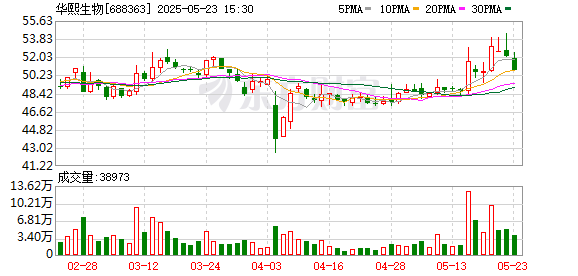
Core Viewpoint - The article discusses the controversy surrounding Huaxi Biological, a leading player in the medical aesthetics industry, which publicly refuted claims made by nine brokerage firms regarding the obsolescence of hyaluronic acid, asserting that these claims mislead the market and harm the industry [2][5][13]. Group 1: Industry Response - Huaxi Biological received support from two industry associations before making its statement and has reported the misleading content to the China Securities Regulatory Commission (CSRC) [2][12]. - Following Huaxi's public rebuttal, some brokerage firms have deleted their reports, and certain institutions have issued apologies to the company [2][12]. - The brokerage reports in question were primarily focused on the emerging concept of recombinant collagen, which Huaxi argues is being promoted at the expense of hyaluronic acid [5][13]. Group 2: Misleading Claims - Huaxi Biological criticized the brokerage reports for making misleading comparisons between hyaluronic acid and recombinant collagen, claiming that these reports lacked scientific basis and were driven by speculative capital [5][13]. - The company highlighted that the reports suggested hyaluronic acid was inferior to recombinant collagen in terms of safety and efficacy, which Huaxi disputes, stating that such conclusions are not supported by scientific evidence [5][31]. Group 3: Regulatory and Compliance Issues - The article raises concerns about the compliance of the brokerage reports, suggesting that they may not have adhered to the necessary standards for objectivity and scientific backing [20][21]. - Industry experts indicate that the reports should have included relevant data to support their claims, and the lack of such data could lead to regulatory scrutiny [21][22]. - The ongoing regulatory environment is described as increasingly stringent, with past instances of penalties for brokerage firms due to similar issues [26][27]. Group 4: Scientific Basis of Claims - Huaxi Biological argues that both hyaluronic acid and recombinant collagen have their unique applications and benefits, and it is inappropriate to declare one superior to the other without substantial scientific evidence [31][32]. - The company emphasizes that the existing research favors hyaluronic acid in certain applications, particularly in skin hydration and immediate filling, while recombinant collagen may have advantages in tissue repair [31][32].



湾财周报 大事记 多款新能源准新车价崩;宁德时代登陆港股
Nan Fang Du Shi Bao· 2025-05-25 12:41
Industry Insights - The production of new energy vehicles in China reached over 4.4 million units from January to April, with a market penetration rate of 43%, leading to a significant increase in second-hand vehicle supply and a notable price drop for several models in May, including those from Tesla, BYD, Zeekr, and Xiaomi [9] - The first quarter of 2025 saw Xiaopeng Motors reclaim the title of sales champion among new energy vehicle manufacturers, delivering 94,008 vehicles, a year-on-year increase of 330.8% [15] - BYD's stock price hit a new high, with a year-to-date increase of over 40%, and its sales of pure electric vehicles in Europe surpassed those of Tesla for the first time [14] - The recent revision of regulations regarding government dining has negatively impacted the stock prices of several liquor companies, with notable declines observed in companies like Wuliangye and Shanxi Fenjiu [12] Company Developments - Ningde Times made a strong debut on the Hong Kong stock market, with shares opening at 263 HKD and reaching a peak of 307.6 HKD, marking a 16.96% increase and establishing it as the largest IPO globally this year [13] - Huaxi Biological criticized the market's portrayal of the hyaluronic acid industry, claiming it has faced misinformation and manipulation that undermines its competitive position [16] - The establishment of a new company for High合汽车, with a registered capital of approximately 143 million USD, indicates a shift in ownership structure, now involving foreign investment [18][19]


21解读|华熙生物怒怼9家券商台前幕后:六家研报仍在线可查!“对比研究”是否踩线合规各执一词
2 1 Shi Ji Jing Ji Bao Dao· 2025-05-25 11:00
Core Viewpoint - The article discusses the controversy surrounding Huaxi Biological's rebuttal of the claims made by nine brokerage firms regarding hyaluronic acid being "outdated" and the promotion of recombinant collagen as a superior alternative, highlighting the impact of these claims on the market and the industry [2][4][9]. Group 1: Company Actions - Huaxi Biological publicly refuted the claims about hyaluronic acid and named nine brokerage firms for misleading reports, which has led to some brokerages retracting their reports and issuing apologies [2][8]. - The company received support from two industry associations before making its statement and has reported the matter to the China Securities Regulatory Commission [2][8]. - As of May 23, three of the ten reports mentioned have been removed from public access, while the remaining seven are still available for viewing [8][9]. Group 2: Industry Context - The medical beauty industry is characterized by a high overlap between capital market participants and enterprise users, making capital evaluations significantly impactful on the competitive landscape, which explains Huaxi Biological's strong response [2][4]. - The article emphasizes that the claims made in the brokerage reports lack scientific basis and are driven by speculative capital, which could harm a key industry in China [6][9][24]. Group 3: Scientific Claims - Huaxi Biological argues that the reports promoting recombinant collagen over hyaluronic acid are misleading and lack substantial scientific evidence, asserting that both substances have their unique benefits and should not be directly compared [23][24]. - The company highlights that the regulatory approvals for hyaluronic acid products far exceed those for recombinant collagen, indicating a stronger safety profile for hyaluronic acid [25][26]. Group 4: Regulatory Environment - The article notes that the regulatory environment for brokerage reports is tightening, with recent inspections revealing issues in compliance and the need for better management of report quality and information sources [18][20]. - There is a growing concern about the potential for misleading information in brokerage reports, which could lead to regulatory actions against the firms involved if found to be in violation of established guidelines [21][22].
胶原蛋白精华里“不含胶原”?巨子生物“可复美”否认造假
Nan Fang Du Shi Bao· 2025-05-25 07:47
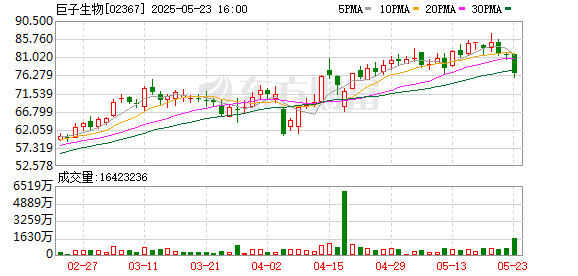
Core Viewpoint - The beauty blogger "Dr. Big Mouth" accused Giant Biological (02367.HK) of serious fraud regarding its Kefu Mei collagen essence, claiming that the actual content of recombinant collagen is only 0.0177% in the best-selling product, and that the key component "glycine" is missing [2][3][10]. Group 1: Accusations and Responses - The blogger questioned the legality of labeling recombinant collagen as a non-trace component when its actual content is below the regulatory threshold of 0.1% [3][10]. - Giant Biological issued a statement firmly denying the allegations, asserting that multiple tests showed collagen content greater than 0.1%, contradicting the blogger's claims [12][14]. - The company emphasized its adherence to scientific ethics and regulatory compliance, stating that all products are rigorously tested and verified [12][14]. Group 2: Product Composition Concerns - The blogger raised concerns about the absence of glycine in a product claiming to contain recombinant collagen, questioning the validity of calling it "recombinant collagen" [5][9]. - There were also questions about the marketing of a dipeptide molecule as "Mini small molecule collagen," suggesting potential misuse of scientific terminology [7]. Group 3: Market Performance and Investor Sentiment - Despite the controversies, Giant Biological has seen significant growth, reporting a revenue of 5.539 billion yuan in 2024, a year-on-year increase of 57.07%, and a net profit of 2.062 billion yuan, up 42.06% [22]. - The company has gained substantial attention from investors, with several funds heavily investing in its stock, indicating strong market confidence [24].
创业仅4年,30岁北大博士和欧莱雅签了
Zhong Guo Ji Jin Bao· 2025-05-25 05:58
Group 1 - Veminsyn has completed a strategic financing round of nearly 100 million yuan, with a post-investment valuation of approximately 100 million USD, backed by L'Oréal Group and Naies Group [2][4] - The partnership aims to co-develop innovative bioactive ingredients and promote their large-scale production using low-carbon biomanufacturing technologies [4][12] - Veminsyn, founded in May 2021, focuses on AI and biotechnology in the beauty and personal care sector, providing high-value bioactive ingredients through next-generation biosynthesis technology [4][5] Group 2 - The founders, Zhao Yaran and Chen Jiayue, recognized the potential of biotechnology in consumer goods, particularly in the beauty industry, which has higher raw material value due to its medical attributes [5][6] - The trend towards more flexible, efficient, and low-carbon biosynthesis methods is seen as essential for future innovation in beauty raw materials [5][6] - Veminsyn's new raw material, Time-COL17™, has achieved mass production and market expansion, enhancing the application scenarios for downstream skincare brands [9][11] Group 3 - Veminsyn has established itself as a key supplier for both domestic and international beauty brands, including L'Oréal, Procter & Gamble, and Unilever [12] - The company is also expanding into the home cleaning sector through its partnership with Naies, aiming for global market expansion [12] - The establishment of a GMP-level factory in Suzhou has enabled Veminsyn to produce medical beauty products, further solidifying its position in the industry [12]


商贸零售行业周报:2025年4月社零+5.1%,期待消费回暖趋势继续维持-20250525
KAIYUAN SECURITIES· 2025-05-25 04:01
Investment Rating - The industry investment rating is "Positive" (maintained) [1] Core Viewpoints - The report highlights a steady recovery in social consumption, with April 2025 retail sales showing a year-on-year increase of 5.1%, and a total retail sales amount of 1618.45 billion yuan for the first four months of 2025, reflecting a 4.7% year-on-year growth [4][25] - The report suggests that the overall social consumption is expected to maintain stable growth due to effective policy measures aimed at boosting domestic demand, with a focus on the high-growth segments of gold jewelry and cosmetics [4][31] Summary by Sections Retail Market Overview - The retail industry index closed at 2110.59 points, down 1.61% for the week, underperforming the Shanghai Composite Index, which fell by 0.57% [6][15] - The jewelry sector showed the highest growth among retail segments, with a weekly increase of 7.56% and a year-to-date increase of 18.83% [17][20] Social Consumption Trends - In April 2025, the retail sales of consumer goods increased by 5.1%, driven by favorable consumption policies and the Qingming holiday effect [28][31] - Online retail sales for the first four months of 2025 reached 4741.9 billion yuan, growing by 7.7%, with physical goods online retail accounting for 24.3% of total retail sales [28][29] Investment Recommendations - Investment focus on high-growth segments under emotional consumption themes, particularly in gold jewelry and cosmetics [7][39] - Recommended companies in the gold jewelry sector include Laopuhuangjin, Chaohongji, and Zhou Dasheng, which are expected to benefit from differentiated product offerings and consumer insights [39][41] - In the cosmetics sector, recommended brands include Proya, Shangmei, and Juzi Biological, which are positioned to capitalize on the ongoing trend of domestic brand growth [39][41] Company Performance Highlights - Proya reported a 28.9% year-on-year increase in net profit for Q1 2025, driven by new product launches [40] - Chaohongji achieved a 25.4% year-on-year revenue growth in Q1 2025, indicating strong brand momentum [40] - Zhou Dasheng's revenue for Q1 2025 was down 47.3% year-on-year, highlighting challenges in the current market environment [40]




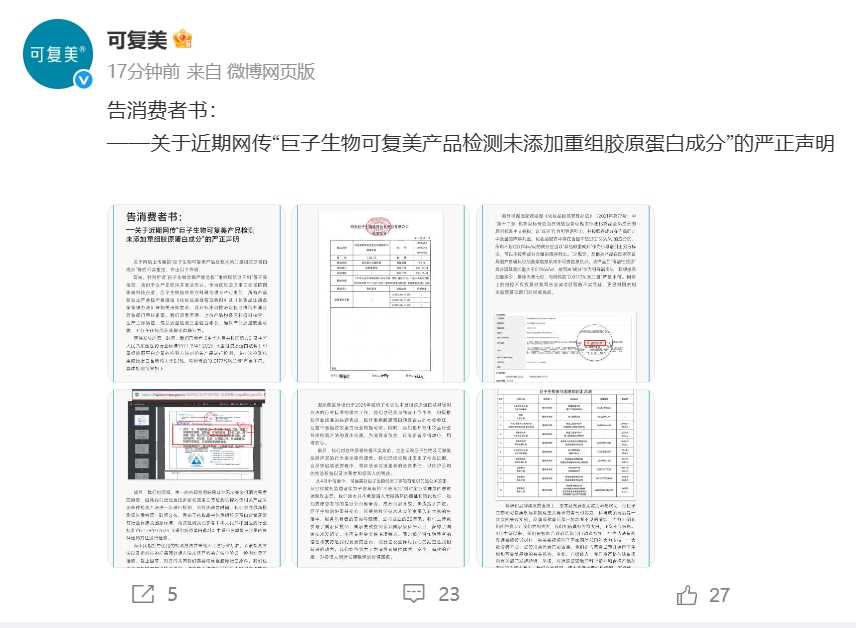
自称“香港大学化学博士”的博主质疑巨子生物产品造假!公司深夜发长文回应:不实!将依法追究造谣者法律责任
Mei Ri Jing Ji Xin Wen· 2025-05-24 17:06
Core Viewpoint - The company, Giant Biological, has issued a strong statement denying allegations of product fraud related to its brand, Kefu Mei, specifically regarding the collagen content in its products. The company asserts that all products comply with regulatory standards and have undergone rigorous testing to ensure quality and safety [4][8]. Group 1: Company Response - Giant Biological firmly rejects accusations of serious fraud and insists that all product formulations are accurately labeled and compliant with relevant regulations [4][6]. - The company conducted multiple tests on its products, confirming that the collagen content exceeds 0.1%, contradicting claims of a mere 0.0177% [5][6]. - A detailed report of the testing results shows collagen content in various batches of the product, with values ranging from 0.27% to 0.28% [5]. Group 2: Allegations and Background - The controversy began when a social media account, "Big Mouth Doctor Yan Research Institute," published an article questioning the authenticity of Giant Biological's collagen products, claiming they lacked essential amino acids [9][10]. - The article's author, who claims to be a PhD from the University of Hong Kong, used high-precision HPLC methods to assert that the collagen content was significantly lower than advertised [10][14]. - The allegations have sparked widespread industry attention and concern regarding the integrity of the collagen market [9][10]. Group 3: Financial Performance - Giant Biological reported a revenue of 5.539 billion yuan for 2024, marking a year-on-year increase of 57.17%, with a net profit of 2.062 billion yuan, up 42.06% [25]. - The company's revenue is primarily driven by its professional skincare and health food segments, with its two main brands, Kefu Mei and Keli Jin, generating over 50 billion yuan, accounting for 97.2% of total revenue [25]. Group 4: Market Impact - Following the allegations, Giant Biological's stock price fell by 5.72%, with a market capitalization of 821.38 billion HKD as of May 23 [26].
两年没了305亿,“医美茅”掌舵人简军财富大跳水
凤凰网财经· 2025-05-24 11:40
Core Viewpoint - The article discusses the significant decline in the wealth of Jian Jun, the leader of Aimeike, a prominent player in the medical beauty industry, highlighting the challenges faced by the company amid increasing competition and changing market dynamics [2][3]. Group 1: Wealth Decline of Jian Jun - Jian Jun's wealth has decreased from 525 billion yuan in 2023 to 220 billion yuan in 2025, a loss of 305 billion yuan over two years [2][3]. - Aimeike, under Jian Jun's leadership, has become a leading company in the medical beauty sector, forming a competitive landscape with Huaxi Biological and Haohai Biological, known as the "three swordsmen of hyaluronic acid" [2][3]. - Despite previous high growth rates, Aimeike's revenue and net profit growth have slowed to single digits in 2024, with both metrics turning negative in Q1 2025 [2][10]. Group 2: Aimeike's Business Performance - Aimeike's revenue surged by 104.13% in 2021, reaching 1.448 billion yuan, with net profit increasing by 117.81% to 958 million yuan [10]. - In 2023, Aimeike's revenue reached 2.869 billion yuan, and net profit was 1.858 billion yuan, but growth rates fell to 5.45% and 5.33% respectively in 2024 [11]. - The company's gross margin has also declined, from 95.09% in 2023 to 93.85% in Q1 2025 [11]. Group 3: Strategic Moves and Acquisitions - In March 2025, Aimeike announced plans to acquire 85% of South Korean REGEN Biotech, Inc. for 1.9 billion USD, aiming to enhance its international presence and product offerings [12][13]. - The acquisition is seen as a strategic move to solidify Aimeike's leading position in the injectable product market and to drive future growth [13][14]. - Analysts believe that this overseas acquisition could provide new growth opportunities for Aimeike amid a challenging domestic market [12][13].
2025年中国玻尿酸内衣行业:科技与创新驱动玻尿酸内衣快速发展
Tou Bao Yan Jiu Yuan· 2025-05-23 12:12
Investment Rating - The report indicates a strong growth potential for the hyaluronic acid underwear industry, with a projected market size increase from 1 billion to 10.4 billion yuan from 2022 to 2024, reflecting a compound annual growth rate (CAGR) of over 300% [29][32]. Core Insights - The rapid development of the hyaluronic acid underwear market is driven by technological advancements and innovation, particularly in integrating hyaluronic acid into textiles for enhanced moisturizing properties [2][4]. - Consumer awareness and demand for functional and aesthetically pleasing clothing are significant growth drivers, with a notable shift towards products that offer both warmth and skin benefits [3][40]. - The market faces challenges such as product homogenization, leading to intensified brand competition and a focus on product differentiation and technological innovation as core strategies for future growth [3][34]. Summary by Sections Industry Overview - Hyaluronic acid is recognized for its natural safety and biodegradability, making it a key ingredient in the development of moisturizing functional textiles [15][22]. - The market for hyaluronic acid underwear is characterized by a transition from basic thermal properties to dual benefits of warmth and skin care [4][22]. Market Size - The market size for hyaluronic acid underwear is expected to grow from 14.5 billion yuan in 2025 to 25.3 billion yuan by 2029, maintaining a stable upward trend despite a slowdown in growth rate [29][32]. Driving Factors - The growth of the hyaluronic acid underwear industry is supported by favorable policies that promote innovation and market expansion, aligning with trends towards health and sustainability [26][27]. Competitive Landscape - The online retail market for hyaluronic acid underwear shows significant concentration, with leading brands like Qiaolaiti dominating in market share and consumer recognition [35][34]. - The competitive environment is marked by a reliance on digital platforms for sales, particularly Douyin, which accounts for over 80% of sales in this segment [35][34]. Consumer Demand - There is a growing consumer preference for functional, stylish, and versatile clothing, with significant interest in the moisturizing benefits of hyaluronic acid products [40][42]. - The search index for keywords related to hyaluronic acid underwear on platforms like Douyin has shown substantial growth, indicating strong market potential and consumer interest [42][32].
三个月暴涨60%!又火了!
格隆汇APP· 2025-05-23 11:27
Core Viewpoint - The domestic cosmetics and medical beauty industry is experiencing rapid growth driven by policy incentives, recovering consumption, and trade friction, with domestic brands gaining significant market share and attention [1][20]. Group 1: Market Performance - The Wind Cosmetics Index has risen over 20% since April 7, with Proya's stock increasing by more than 20% in the same period, and Marubi's stock rising nearly 70% over three months since February [1]. - During the 618 pre-sale event, over 13,000 brands saw doubled sales, with 43 brands quickly surpassing 100 million yuan in sales, marking a 50% increase in the number of brands in the "billion club" compared to last year [4]. - The beauty industry saw a 6.6% year-on-year increase in total sales during the 2024 618 event, with skincare sales reaching 38.876 billion yuan (up 5.18%) and fragrance and makeup sales at 11.073 billion yuan (up 12.08%) [5]. Group 2: Brand Performance - Domestic brands are outperforming international brands, with Proya's sales on Tmall increasing by 70% year-on-year and Douyin's GMV rising by 110%, significantly exceeding platform growth rates [6]. - International brands like L'Oréal and Estée Lauder have seen a decline in sales, with Lancôme experiencing only slight growth [7]. - The market share of domestic beauty brands reached 50.4% for the first time, surpassing international brands and establishing them as the main force in China's cosmetics market [20]. Group 3: Consumer Trends - There is a growing recognition of domestic brands among consumers, particularly younger consumers who prioritize cost-effectiveness and cultural identity in products, laying a foundation for long-term growth [21]. - The 2024 China Beauty Industry White Paper indicates that over 60% of consumers are willing to purchase domestic beauty products with innovative technology or ingredients [35]. Group 4: Financial Performance - Proya's revenue for 2024 exceeded 10.778 billion yuan, with a net profit growth of 30%, leading to a stock price surge [22]. - Marubi reported a revenue of 2.970 billion yuan for 2024, a year-on-year increase of 33.44%, with a net profit of 342 million yuan, also showing strong growth [25]. - Yatsen Holding, the parent company of Perfect Diary, reported a revenue of 3.393 billion yuan for 2024, a slight decline of 0.63%, and a net loss of 708 million yuan, indicating ongoing financial struggles [30]. Group 5: Competitive Landscape - The beauty industry is becoming increasingly saturated, with brands competing fiercely for market share, leading to a more challenging operating environment for brand owners [18]. - Brands with strong R&D capabilities and comprehensive channel operations are likely to survive, while those lacking core competitiveness may face elimination [39].