
保利发展

Search documents
联合资信:资产证券化产品发行总规模的6.40%
Lian He Zi Xin· 2026-02-11 11:29
1. Report Industry Investment Rating No information provided in the content. 2. Core Viewpoints of the Report - In 2025, the issuance scale and number of supply chain asset - backed securitization products decreased, with the exchange as the main issuance venue. The single - issuance scale was highly concentrated, and the maturity was mainly within 1 year. The issuance interest rates and spreads of priority securities declined, and the exploration of collective supply chain asset - backed securitization products increased, with the repayment method remaining mainly one - time repayment at maturity. The market survival scale of such products decreased year by year [3][7][8][13][14][16][34][37]. - The top ten single core enterprises in terms of issuance amount of supply chain asset - backed securitization products had a high concentration, mainly state - owned enterprises. The single core enterprises in Beijing, Guangdong, and Shandong had a large proportion of issuance amount, and were mainly concentrated in industries such as industry, real estate, and finance [20][23][27][37]. - The new regulations on supply chain asset - backed securitization products in 2025 can better address market chaos and provide a framework for the standardized development of the industry. In the future, these products will still play an important role in serving the real economy in the ABS market [38][40][41]. 3. Summary of Each Section 3.1 2025 Primary Market Operation 3.1.1 Issuance Overview - **Issuance Scale and Number**: Affected by multiple factors, in 2025, the issuance scale of supply chain asset - backed securitization products was 148.758 billion yuan, a year - on - year decrease of 20.09%, accounting for 6.40% of the total issuance scale of the whole - market asset - backed securitization products, a year - on - year decrease of 3.02 percentage points. The issuance number was 300, a year - on - year decrease of 14.04%, accounting for 12.32% of the total issuance number, a year - on - year decrease of 4.42 percentage points. Exchange issuance scale was 127.146 billion yuan, a year - on - year decrease of 9.67%, with 245 issuances, a year - on - year decrease of 7.20%. Bank - inter - market issuance scale was 25.039 billion yuan, a year - on - year decrease of 42.41%, with 55 issuances, a year - on - year decrease of 33.73% [3][4]. - **Single - Issuance Scale**: The single - issuance scale was highly concentrated. The product with the largest issuance scale was 3.286 billion yuan, and the smallest was 0.25 billion yuan. The number of products with a single - issuance scale in the (0, 5] billion yuan range was the largest, and the total issuance scale of products in the (5, 10] billion yuan range was the largest [7]. - **Maturity Structure**: The maturity of products issued in 2025 was mainly within 1 year. The issuance scale of products in each maturity decreased year - on - year, and the overall maturity structure remained relatively stable [8]. - **Product Mode and Repayment Method**: The exploration of "multi - core + guarantee + factoring" collective supply chain asset - backed securitization products increased. The repayment method was mainly one - time repayment at maturity, with no major change compared to 2024 [11][13]. 3.1.2 Interest Rate Analysis - The initial credit rating showed that the issuance scale of AAAsf products accounted for 86.22%, a year - on - year increase of 2.30 percentage points, and the issuance scale of AA + sf products accounted for 13.04%, a year - on - year decrease of 1.44 percentage points. Affected by monetary policy and liquidity, the issuance interest rates of supply chain asset - backed securitization products decreased and were more stable in 2025 compared to 2024. The issuance spreads of priority securities with different maturities and credit ratings narrowed. For example, the average issuance interest rate of priority securities (AAAsf, within 1 year) was 2.29%, a year - on - year decrease of 0.19 percentage points; the average issuance spread with 1 - year treasury bonds was 0.80%, a year - on - year decrease of 0.11 percentage points; the average issuance spread with 1 - year AAA corporate bonds was 0.34%, a year - on - year decrease of 0.03 percentage points [14][15][16]. 3.2 Analysis of Issuers of Supply Chain Asset - Backed Securitization Products 3.2.1 Issuing Core Enterprises - The concentration of the top ten single core enterprises in terms of issuance amount was high, mainly state - owned enterprises. The top three core enterprises in terms of issuance amount were Poly Developments and Holdings Group Co., Ltd., JD Technology Group Co., Ltd., and Beijing JD Century Trading Co., Ltd., with issuance amounts of 21.48 billion yuan, 9 billion yuan, and 8.5 billion yuan respectively, accounting for 16.50%, 6.91%, and 6.53% of the total issuance amount. The total issuance amount of the top three single core enterprises accounted for 29.94%, and the top ten accounted for 52.24% [20]. - In terms of enterprise nature, 92 were state - owned enterprises, 7 were private enterprises, and 1 was other (foreign - funded enterprise), with corresponding issuance scales of 51.438 billion yuan, 57.222 billion yuan, and 8.5 billion yuan [22]. - In terms of regional distribution, the single core enterprises were distributed in 21 regions, with the top three regions being Guangdong, Beijing, and Shandong, with a total issuance amount of 79.171 billion yuan, accounting for 60.82% of the issuance amount of single core enterprises [23]. - In terms of industry distribution, the single core enterprises were mainly distributed in 8 industries, with industry, real estate, and finance leading in terms of issuance scale, accounting for 31.73%, 30.40%, and 15.54% of the issuance amount of single core enterprises respectively [27]. 3.2.2 Issuing Original Equity Holders The issuing original equity holders were relatively concentrated. The top ten original equity holders accounted for 72.32% of the issuance amount. The top five original equity holders were Shenghe (Shenzhen) Commercial Factoring Co., Ltd., Shenzhen Qianhai Lianyirong Commercial Factoring Co., Ltd., Shanghai Banghui Commercial Factoring Co., Ltd., Poly Commercial Factoring Co., Ltd., and China Railway Commercial Factoring Co., Ltd., accounting for 18.19%, 14.56%, 11.50%, 6.47%, and 5.07% of the total issuance amount respectively [30]. 3.2.3 Issuing Managers The issuing managers were concentrated. The top ten managers accounted for 57.97% of the issuance amount. The top five managers were Huatai Securities (Shanghai) Asset Management Co., Ltd., CITIC Securities Co., Ltd., Ping An Securities Co., Ltd., Tianfeng (Shanghai) Securities Asset Management Co., Ltd., and Capital Securities Corporation Limited, with issuance amount ratios of 11.73%, 8.57%, 6.77%, 6.01%, and 5.61% respectively [31][33]. 3.3 Performance of Supply Chain Asset - Backed Securitization Products during the Survival Period - As of the end of 2025, the market survival scale of supply chain asset - backed securitization products was 144.633 billion yuan, accounting for 4.04% of the total balance of the ABS market. The number and scale of surviving products decreased year by year [34]. - In 2025, there were no projects involving rating adjustments for supply chain asset - backed securitization products [36]. 3.4 Summary and Outlook - **Summary of Market Characteristics in 2025**: The issuance scale, number, and survival scale of supply chain asset - backed securitization products decreased. The issuance venue was mainly the exchange, the single - issuance scale was concentrated, the maturity was mainly within 1 year, the interest rates and spreads of priority securities decreased, the exploration of collective products increased, and the repayment method was mainly one - time repayment at maturity. The top ten single core enterprises in terms of issuance amount were highly concentrated and mainly state - owned enterprises [37]. - **New Regulations**: The "Notice on Regulating Supply Chain Financial Services and Guiding Supply Chain Information Service Institutions to Better Serve the Financing of Small and Medium - Sized Enterprises" issued in 2025 can address market chaos and provide a framework for the standardized development of the industry [40]. - **Market Outlook**: Although the issuance scale of supply chain asset - backed securitization products has decreased in recent years, aspects such as issuance venue selection, product term design, and credit enhancement arrangements have become more flexible. In the future, these products will still play an important role in the ABS market in serving the real economy [41].
城楼网|2026年开年房地产市场平稳开局 百强房企销售1654.5亿元
Xin Lang Cai Jing· 2026-02-11 10:21
Core Viewpoint - In January 2026, the top 100 real estate companies in China achieved a total sales amount of 165.45 billion yuan, indicating a stable market despite the traditional off-season impact, with signs of recovery in the second-hand housing market in key cities [1][14]. Group 1: Sales Performance - Poly Developments ranked first with a total sales amount of 156.0 billion yuan and a sales area of 701,000 square meters [6][21]. - China Overseas Land & Investment followed closely with a sales amount of 144.8 billion yuan [2][23]. - Among the top 100 companies, 32 reported year-on-year growth, with 10 companies experiencing growth rates exceeding 100% [7][22]. Group 2: Market Trends - The new housing market showed weak performance due to seasonal factors, while the second-hand housing market began to show signs of recovery [1][14]. - Policy measures from the central government are aimed at urban renewal, financing optimization, and tax incentives, which are expected to support the revitalization of existing resources and alleviate financial pressures on real estate companies [13]. Group 3: Company Rankings - The top five companies by sales amount in January 2026 were: 1. Poly Developments: 156.0 billion yuan 2. China Overseas Land & Investment: 144.8 billion yuan 3. China Vanke: 116.5 billion yuan 4. China Resources Land: 86.9 billion yuan 5. China Merchants Shekou: 76.7 billion yuan [2][6][23]. Group 4: Sales Data Overview - The sales data reflects the total sales amount and sales area for the top companies, with Poly Developments leading in both metrics [6][21]. - The data is based on contract signing figures, excluding deposits or subscription data, and covers the period from January 1 to January 31, 2026 [6].







超十家房地产公司高层变动
第一财经· 2026-02-11 09:44
Core Viewpoint - The real estate industry is experiencing significant executive turnover at the beginning of 2026, with over ten companies undergoing management changes, reflecting a broader trend of organizational restructuring and strategic realignment in response to market pressures [3][5]. Group 1: Executive Changes - In early 2026, companies such as Diyi City Holdings, Zhongliang Holdings, and New World Development have reported executive resignations, with reasons ranging from retirement to personal choices [3][6]. - Zhongliang Holdings saw the resignation of He Jian, who had been with the company since 2015, and the appointment of Zhao Peng as the new executive director and co-president [6]. - Other companies like Rongsheng Development and Guangming Real Estate have also experienced frequent executive changes, indicating a trend across the industry [7]. Group 2: Organizational Restructuring - The beginning of the year is a critical period for real estate companies to implement reforms, with 21 companies making 31 organizational adjustments since January 2025 [9]. - Major firms such as Poly, China Overseas, and Longfor have initiated new rounds of optimization adjustments, indicating ongoing efforts to refine their operational structures [9][10]. - The restructuring aims to enhance resource allocation and core business management, reflecting a shift towards quality-focused survival strategies in the industry [10]. Group 3: Industry Trends and Challenges - The frequent changes in management are symptomatic of the broader challenges facing the real estate sector, including sales pressure and ongoing financial losses since 2022 [11]. - The shift from large-scale development to refined operations and asset-light models necessitates new leadership capable of navigating these changes [11]. - Companies are urged to focus on financial safety, operational efficiency, and precise investment strategies to adapt to the evolving market landscape [11].




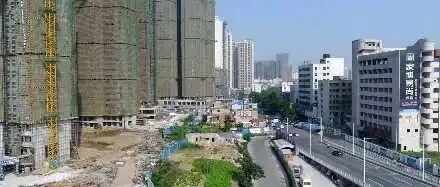
开年上演人事“大戏”,超十家房地产公司高层变动
Di Yi Cai Jing· 2026-02-11 08:52
Core Viewpoint - The real estate industry is experiencing significant executive turnover, with over ten companies undergoing leadership changes within a month, reflecting a broader trend of organizational restructuring and strategic realignment in response to market pressures [2][3][7]. Group 1: Executive Changes - More than ten real estate companies, including Joy City Holdings, Zhongliang Holdings, and New World Development, have reported executive changes since the beginning of 2026, with reasons ranging from retirement to personal resignations [2][3]. - Joy City Holdings announced the resignation of director Chen Lang due to reaching retirement age, while Zhongliang Holdings saw the departure of executive director He Jian and the appointment of Zhao Peng as his successor [3]. - Other companies like Rongsheng Development and Guangming Real Estate have also experienced frequent executive changes, indicating a trend of leadership turnover across the sector [4][5]. Group 2: Organizational Restructuring - The beginning of the year is a critical period for real estate companies to implement reforms, with 21 companies undergoing 31 organizational adjustments since January 2025 [5]. - Major firms such as Poly, China Overseas, and Longfor have initiated new rounds of optimization adjustments, with China Overseas restructuring its management model from a three-tier to a two-tier system [6]. - The adjustments aim to enhance resource allocation and core business management, reflecting a shift towards quality-focused operations in response to market challenges [6][7]. Group 3: Industry Trends and Challenges - The frequent changes in leadership are indicative of the industry's response to ongoing sales pressures and financial losses experienced by publicly listed real estate companies since 2022 [7]. - The shift from large-scale development to refined operations and asset-light models necessitates new leadership capable of navigating these changes [7]. - Companies are urged to focus on financial security, operational efficiency, and precise investment strategies to adapt to the evolving economic landscape [7].

新消费时代下的大机遇系列报告一:从“场所”到“场景”,新消费时代下的商业地产迎来重大机遇
Bank of China Securities· 2026-02-11 08:04
Investment Rating - The report rates the real estate industry as "Outperforming the Market" [1] Core Insights - The traditional residential development sector is contracting, while commercial real estate is entering a policy-driven growth phase, with a focus on new consumption scenarios starting from 2024 [1][8] - The shift from traditional commercial spaces to immersive experience-driven scenarios is essential to meet the diverse needs of modern consumers [1][10] - The report emphasizes the importance of integrating "scene" and "consumption" to create unique consumer experiences, enhancing customer retention and engagement [1][10] Summary by Sections 1. Current State of Commercial Real Estate - The commercial real estate sector has entered a "stock era," with the number of new openings in 2025 reaching a ten-year low, with 369 new projects and a total area of approximately 27.41 million square meters, down 24% and 25% year-on-year respectively [15][19] - High vacancy rates and declining rents are significant challenges, with 2025 seeing a 20% share of new openings being stock renovation projects [14][15] - New market entrants include outlet malls and themed commercial spaces, which are becoming differentiated "new scenes" [14][15] 2. New Consumption Scenarios - The core of new scenarios lies in transitioning from merely providing sales spaces to creating emotionally resonant immersive experiences [1][10] - The rise of new consumption brands is reshaping the operational strategies of commercial real estate, focusing on customer flow and experience rather than just transactions [1][10] - Non-standard commercial projects, characterized by small-scale and open street designs, are gaining traction, with a 18.7% increase in foot traffic compared to traditional shopping centers [1][10] 3. Differentiated Commercial Spaces - The report categorizes non-standard commercial spaces into three types: fashion innovation, retro innovation, and ecological innovation, each targeting different consumer emotional needs [1][10] - Major cities like Shanghai, Beijing, Hangzhou, and Chengdu are leading in the development of non-standard commercial projects, with a significant focus on cultural and experiential elements [1][10] 4. Recommendations for Developers and Operators - Developers and operators are encouraged to innovate by creating differentiated offerings that resonate with specific consumer segments, emphasizing cultural integration and social spaces [1][10] - The report suggests that the focus should shift from traditional metrics like rental income to new indicators such as customer dwell time and engagement in experiential activities [1][10] - The commercial real estate sector is expected to benefit from favorable policies during the 14th Five-Year Plan, with opportunities for high-quality assets to thrive [1][10]
2026年1月中国房企业绩分析报告
克而瑞地产研究· 2026-02-11 06:07
Core Viewpoint - The real estate market in core cities has shown signs of recovery, with the top 100 real estate companies achieving a sales amount of 165.45 billion yuan in January 2026 [1][14][16]. Group 1: Sales Performance - In January 2026, the top 100 real estate companies achieved a total sales amount of 165.45 billion yuan [14][16]. - The sales performance threshold for the top 100 real estate companies has decreased compared to January 2025 [17]. - Seven companies entered the top 100 list for the first time, with CITIC City Opening making it into the top 30 [21]. Group 2: Year-on-Year Growth - A total of 32 companies among the top 100 experienced year-on-year growth in January 2026, with 10 companies seeing growth rates exceeding 100% [25]. - Notable performers include Junyi Holdings with a growth rate of 757.4% and Haian Group with 488.2% [27]. Group 3: Market Trends - The new housing market showed weak performance in January, with a transaction area of approximately 8.1 million square meters in 50 key cities [27]. - The second-hand housing market, however, saw a recovery with a transaction area of approximately 8.1 million square meters, reflecting a 16% month-on-month increase and a 33% year-on-year increase [27]. Group 4: Policy Support - In January 2026, the central government released various policies focusing on urban renewal, financing optimization, and tax incentives to support the real estate market [28]. - Financial support measures include a reduction in the re-lending rate by 0.25 percentage points to 1.25% and a decrease in the minimum down payment ratio for commercial properties to 30% [28].

商业不动产REITs获受理点评:商业不动产REITs获受理,助力房企盘活存量资产
Tai Ping Yang Zheng Quan· 2026-02-11 03:45
Investment Rating - The industry is rated positively, with expectations of overall returns exceeding the CSI 300 Index by more than 5% in the next six months [18]. Core Insights - The introduction of commercial real estate REITs has led to the acceptance of 10 funds, with a total expected fundraising of approximately 37.7 billion yuan, including various asset types such as commercial complexes, office buildings, retail, and hotels [3][4][8]. - The public REITs market is expanding, with 79 public REITs issued to date, primarily in infrastructure sectors like highways and municipal facilities. The inclusion of commercial real estate in the REITs framework is expected to further enhance market growth and assist real estate companies in revitalizing their existing assets [4][12][15]. - The underlying assets of the accepted REITs include a mix of retail, office, hotel, and commercial complex projects, with state-owned enterprises accounting for 50% of the original rights holders [9][11]. Summary by Sections Section 1: Acceptance of Commercial Real Estate REITs - As of February 2026, 10 commercial real estate REITs have been accepted, with the first batch of 8 disclosed on January 29-30, 2026, and an additional 2 on February 5, 2026. The expected total fundraising is around 37.7 billion yuan [3][8]. - The asset types include commercial complexes, office buildings, retail, and hotels, with a significant portion of the original rights holders being state-owned enterprises [9][11]. Section 2: Expansion of Public REITs Market - The public REITs market has seen continuous growth, with a total of 79 public REITs issued, amounting to 203.37 billion yuan. The majority of these are concentrated in transportation and municipal infrastructure [12][15]. - The new policy for commercial real estate REITs is expected to help real estate companies convert their existing assets into cash flow, alleviating debt pressure and promoting industry transformation [4][15].
好房子专题上线:保利好房子 筑就好生活
新华网财经· 2026-02-11 03:05
在房地产行业迈入高质量发展的新时期,"好房子" 早已超越单纯的居住空间载体属性,成为人们对美好生活的核心向往与品质追求的具象 承载。作为国资央企,保利发展控股立足于"不动产投资开发、不动产经营、不动产综合服务"三大主业,围绕"好产品、好服务、好生 活"三大维度,系统性推进"好房子"建设,交出了新时代"好房子"的"保利答卷"。 为全面展现"好房子"建设实践成果,新华网与保利发展控股携手,以"保利好房子,筑就好生活"为主线,策划推出原创专题报道。专题从 战略价值解读、标杆项目展示、精品视频鉴赏三大维度,深度解析保利发展控股打造"好房子"的底层逻辑与实践路径,重点呈现保利"好房 子"在各地的落地成果,全面诠释保利发展控股让"好房子"生长为美好生活场景的生动实践。 从顶层设计到落地执行的全链条品质闭环,保利发展控股不仅为房地产行业高质量发展提供了可借鉴的实践范本,更切实助力千家万户圆 就美好安居梦想。 欢迎点击下方【阅读原文】,解锁专题更多精彩内容。 来源:新华网 关注" 新华网财经 "视频号 更多财经资讯等你来看 往期推荐 腾讯"元宝分10亿"活动2月1日0点正式开启,用户最高可领万元现金红 包,官方攻略发布 亚马 ...

四川省教科文卫工会以“引智助企”小切口赋能产教融合
Xin Lang Cai Jing· 2026-02-10 16:58
(来源:劳动午报) 转自:劳动午报 四川省教科文卫工会以企业"出题"、工会搭台、高校"献智",探索实施"引智助企"项目,通过帮助企业 突破智能制造、新材料研发等技术瓶颈,已促成200余项校企合作等案例,构建了产教深度融合、多方 协同联动的工作机制。 打通供需堵点,构建精准对接机制。四川省教科文卫工会深入一线摸排企业需求,与市、县两级工会联 动,走访政府经济部门、实地调研近500家企业,通过座谈交流、分类引导,打消企业顾虑,累计梳理 可用需求800余项。在调研40所省内高校优势学科基础上,争取中国教科文卫体工会和四川省总工会支 持,联合主办示范活动。全委梳理212条专家项目信息,协调14个省(区、市)产业工会、中科院、中 国保利集团等,匹配20多家对口高校、科研院所和央企专家参与。 破解创新难题,打造立体服务模式。构建多层次协同联动模式方面,推动形成"中国教科文卫体工会和 四川省总工会牵头,北京市教育工会等14家兄弟省级产业工会支援,四川省教科文卫工会执行,市级产 业工会落实"的"上下一盘棋"工作格局。围绕企业关键技术攻关、数智化转型升级等需求,组织校企双 方洽谈会,达成合作意向;确定工会联络员,跟踪项目进展, ...
——从2025Q4前五大持仓看债基信用策略:震荡行情中的债基超额收益由何主导?
Huachuang Securities· 2026-02-10 12:17
Core Insights - The report analyzes the factors influencing bond fund returns in Q4 2025, highlighting the impact of credit strategies on yields [7] - It identifies a recovery in credit bond allocation sentiment compared to Q3, with a notable preference for mid-term credit varieties [12][34] - The report emphasizes the importance of leveraging strategies and the contribution of credit downgrades to overall portfolio returns [23][27] Group 1: Performance of Bond Funds - The average return rate for bond funds in Q4 2025 was 0.55%, a significant improvement from -0.32% in Q3 [12] - Credit bond allocation's contribution to returns increased, with a correlation coefficient of 0.0027 in Q4, up from 0.0024 in Q3 [12] - Mid-term bonds (3-5 years) showed a strong contribution to portfolio returns, with a U-shaped relationship between return rates and the average remaining maturity of heavy holdings [17][20] Group 2: Bond Fund Holdings Overview - By the end of Q4 2025, the total scale of credit bonds held by bond funds reached 5.27 trillion yuan, an increase of 303.2 billion yuan from the previous quarter [34] - The proportion of credit bonds in bond fund holdings rose to 63.21%, up from 61.00% in the previous quarter [34] - The average yield of heavy holdings in various bond categories generally declined, indicating a shift in investment strategy towards more liquid varieties [2][3] Group 3: Credit Bond Strategy Analysis - The report notes an increase in the frequency of holdings in government and financial bonds, while credit bond holdings decreased, suggesting a strategy shift towards more liquid assets [2] - The average remaining maturity of heavy credit bond holdings slightly lengthened, indicating a flexible adjustment in duration structure [2] - The report categorizes heavy credit bond holdings by yield ranges, identifying specific opportunities for investment based on implied ratings [4][8]