高通

Search documents
高通正面“叫板”英伟达,入局AI芯片能否打破市场格局
Hua Xia Shi Bao· 2025-10-31 03:39
Core Insights - Qualcomm has officially entered the AI chip market with the launch of AI200 and AI250 chips, targeting data centers and aiming to compete with Nvidia, the current market leader [1][2] - The decision to enter the AI chip market is driven by the need to adapt to market changes and capitalize on the potential of AI technology, especially as Qualcomm faces increasing competition in the mobile chip sector [1][3] - The AI chip market is experiencing explosive growth, with Nvidia currently dominating the space, while Qualcomm aims to leverage its expertise in mobile chips to carve out a niche in AI [4][5] Product Launch and Features - The AI200 and AI250 chips are expected to be commercially available in 2026 and 2027, respectively, with plans for annual releases of new computing chips [2] - The AI200 chip is designed for rack-level AI inference, supporting 768GB LPDDR memory for enhanced performance and cost efficiency [2] - The AI250 chip features an innovative memory architecture that significantly improves memory bandwidth and reduces power consumption, focusing on inference rather than training [2] Market Dynamics - The demand for AI chips has surged since the rise of ChatGPT, with Nvidia's market capitalization reaching approximately $4.89 trillion [4] - Qualcomm's previous attempts to enter the data center market were unsuccessful, but the current strategy focuses on competing directly with Nvidia in the AI chip sector [5] - The AI chip market is expected to evolve into a collaborative ecosystem with multiple strong players, including Qualcomm and Huawei, particularly in edge AI applications [6] Financial Performance - Qualcomm reported a 10% year-over-year revenue increase to $10.365 billion for the third fiscal quarter of 2025, with net profit rising 25% to $2.666 billion [7] - The company faces challenges in maintaining its market share in the smartphone application processor market, with MediaTek leading at 36% and Qualcomm at 28% [7][8] - Regulatory scrutiny from Chinese authorities poses additional challenges for Qualcomm, impacting its strategic positioning [7][8] Future Outlook - The global AI computing market is projected to reach $1.21 trillion by 2025, with hardware accounting for approximately $762.3 billion, indicating significant growth potential for companies like Qualcomm [8]

全球首个5万亿美元市值公司!英伟达凭什么?
21世纪经济报道· 2025-10-31 00:09
Core Insights - Nvidia has surpassed a market capitalization of $5 trillion, making it the first publicly traded company to reach this milestone, positioning it as the "third-largest economy" globally, only behind the US and China [1] - The rapid growth of Nvidia's market value from $4 trillion to $5 trillion occurred in less than four months, showcasing the company's remarkable speed in capital appreciation [1] - The surge in Nvidia's value is largely attributed to the AI boom, particularly following the launch of ChatGPT, which increased demand for Nvidia's GPUs, essential for powering AI applications [2] Financial Performance - Nvidia's revenue growth rate for 2023 to 2024 is projected at an astonishing 125%, while other semiconductor companies are expected to see growth rates around 20% [2] - The anticipated revenue from the new generation of Blackwell and Rubin GPUs is expected to exceed $500 billion over the next five quarters, with current orders reaching 20 million units, five times the total shipments of the previous generation [3] Market Dynamics - Major cloud computing companies such as Amazon, Meta, Google, Microsoft, and Oracle are driving the demand for Nvidia's products, with their combined capital expenditures projected to reach $632 billion by 2027 [3] - Goldman Sachs predicts that the total capital expenditures of five major cloud service providers will approach $1.4 trillion from 2025 to 2027, nearly tripling compared to the previous three years [3] Competitive Landscape - Despite Nvidia's dominance, challenges remain, including algorithmic, energy consumption, and regulatory hurdles, as well as competition from companies like AMD and various cloud providers developing their own chips [3] Vision and Future Outlook - Nvidia's leadership, particularly CEO Jensen Huang, emphasizes the importance of using its financial resources to create greater technological advancements, moving beyond mere market capitalization to a broader vision for the future of technology [4]


再创历史!英伟达市值一夜突破5万亿美元!
具身智能之心· 2025-10-31 00:04
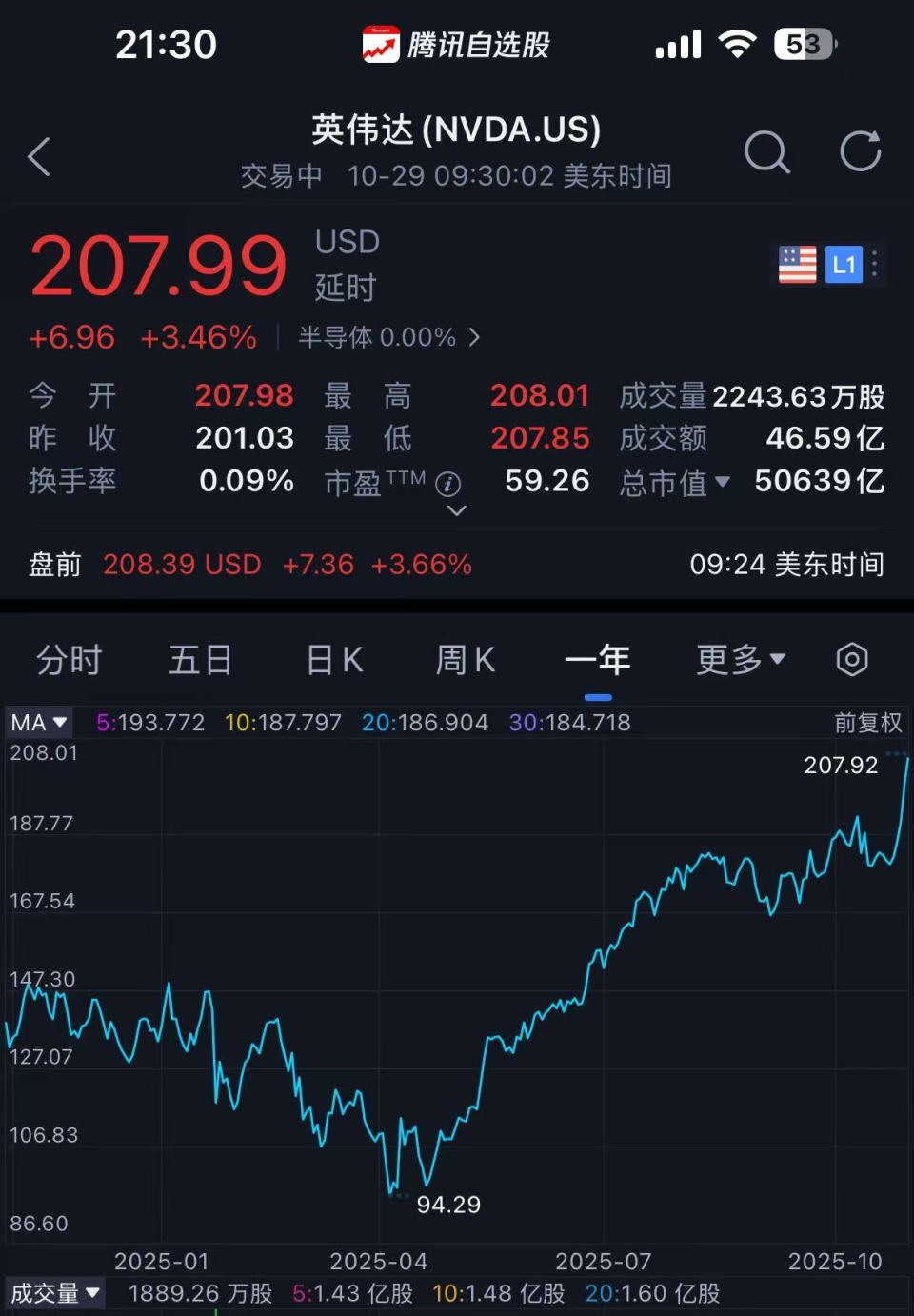
Core Viewpoint - Nvidia has become the first company in history to surpass a market valuation of $5 trillion, marking a significant milestone in the tech industry [2][4][11]. Group 1: Market Performance - On October 29, Nvidia's stock price rose by 5.44%, reaching an intraday high of $212.19 per share, and closing at $207.04 per share, resulting in a market capitalization of $5.03 trillion [3][11]. - Since the beginning of 2025, Nvidia's stock has surged by 56%, showcasing its rapid growth compared to other major tech companies [6][40]. - Nvidia's market value now exceeds the combined market capitalizations of major competitors such as AMD, Intel, and Qualcomm, as well as entire sectors within the S&P 500 [6][7]. Group 2: Growth Trajectory - Nvidia's market value has skyrocketed from $1 trillion to $5 trillion in just two and a half years, a feat unmatched by other tech giants [10][24]. - The company achieved its first $1 trillion valuation in May 2023, followed by reaching $3 trillion in June 2024, and then $4 trillion in just over a year [23][24]. - In contrast, Microsoft took nearly six years to grow from $1 trillion to $4 trillion, while Apple took over seven years for the same growth [17][20]. Group 3: Strategic Developments - The recent surge in Nvidia's market value is attributed to announcements made during the GTC developer conference, where CEO Jensen Huang unveiled several technological advancements and partnerships [26][40]. - Key highlights from the conference included plans to collaborate with the U.S. Department of Energy to build new supercomputers and the introduction of the Blackwell chip series, which is expected to significantly increase production [27][28]. - Nvidia's new open system architecture, Nvidia NVQLink, aims to accelerate the development of quantum supercomputers, further positioning the company at the forefront of technological innovation [29][32]. Group 4: Future Outlook - Nvidia anticipates that the cumulative revenue from its upcoming products, including the Blackwell and Rubin chip platforms, could reach $500 billion by the end of next year [32][34]. - The company is also set to invest up to $100 billion in building AI data centers in collaboration with OpenAI, indicating a strong commitment to expanding its AI infrastructure [40][41]. - Nvidia's growth is closely tied to the increasing demand for computational power driven by AI advancements, with its GPUs being integral to the infrastructure of leading AI companies [40].
利好出尽必失利空,降息如预期而至,三大指数集体回撤
Ge Long Hui· 2025-10-30 21:11
冲高回落,特别是降息消息发布后的直线跳水。截至收盘道指下跌0.16%,纳指上涨0.55%,标指平 盘。盘面上,银行股延续弱势,科技股分化,中概股高开低走,黄金四连跌。 银行股延续弱势,其中阿莱恩斯西部银行大跌3.35%,花旗集团下跌2.24%,联合银行下跌2%,高盛、 齐昂银行、美国合众银行等多股跌幅均在1%上方。 科技股延续分化,其中英伟达上涨2.99%,谷歌上涨2.65%,超威公司上涨2.45%,特斯拉、苹果、亚马 逊、META等股均小幅收涨;高通、英特尔、微软、奈飞等股小幅收跌。 中概股高开低走,截至收盘中国金龙下跌0.03%。其中爱奇艺大涨3.98%,阿里巴巴上涨1.84%,哔哩哔 哩上涨1.39%,蔚来、腾讯控股、百度、拼多多等股均小幅收涨;理想汽车、贝壳等股逆势收跌。 COMEX黄金低开低走延续弱势,截至收盘下跌0.67%报3941.7美元/盎司,盘中最低报3930美元/盎司, 最高报4046.2美元/盎司。 理财就是一场修行,有人修有人度,结果就是看谁踩准了点,把握住了机会。 ...

英伟达市值飙上5万亿后,AI牛市能否延续至2026?
Jin Shi Shu Ju· 2025-10-30 13:16
Core Viewpoint - Nvidia has become the first company to surpass a market capitalization of $5 trillion, highlighting the unprecedented influence of AI in capital markets and the global economy [1] Group 1: Market Performance - Nvidia's stock price surge reflects the strong demand for AI, with the company reaching a market cap of $2 trillion in March 2024, $3 trillion in just 66 trading days, and $4 trillion by July 2025, surpassing both Apple and Microsoft [2] - The company's market cap now exceeds the combined market values of AMD, ARM, ASML, Broadcom, Intel, Lam Research, Micron Technology, Qualcomm, and TSMC, as well as the total market cap of the utilities, industrials, and consumer staples sectors in the S&P 500 [1] Group 2: AI Industry Dynamics - Nvidia is positioned as a key player in the AI sector, with significant partnerships and investments in companies like OpenAI, Oracle, Nokia, and Eli Lilly, which have contributed to the positive market sentiment [1] - The company has shipped 6 million units of its Blackwell chip and received an additional 14 million orders, indicating strong demand for its products [1] Group 3: Valuation Concerns - Analysts express concerns about Nvidia's high valuation, with a price-to-earnings ratio of 33 times expected earnings for the next year, compared to the S&P 500 average of 24 times [3] - Despite the high valuation, Nvidia's stock is still considered attractive by some analysts, with expectations of total sales reaching $500 billion over the next five quarters [5] Group 4: Investment Risks - There are concerns among investors and analysts about the potential for an "internet bubble" scenario, given the significant investments in data centers and chip production, alongside high debt levels and relatively limited current revenue [2] - Nvidia's access to the Chinese market remains an uncertain factor that could impact future revenue [2]
10倍带宽突破、市值暴涨200亿美元,高通能否「分食」千亿级AI推理市场?
雷峰网· 2025-10-30 08:06
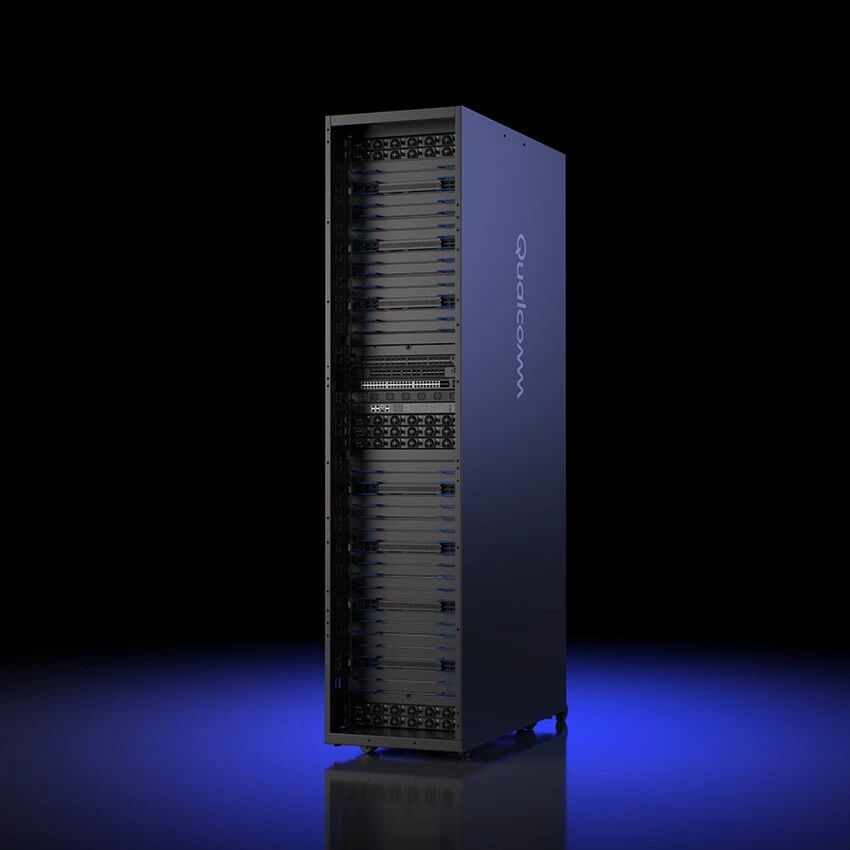
Core Viewpoint - Qualcomm's entry into the AI inference chip market is seen as a strategic move to compete with Nvidia, which has a dominant position in the sector, particularly in the cloud inference market [2][3][4]. Qualcomm's AI Inference Solution - Qualcomm announced its AI inference optimization solution for data centers, which includes the Qualcomm AI200 and AI250 cloud AI chips, along with corresponding accelerator cards and racks [2]. - The launch has positively impacted Qualcomm's stock, with a peak increase of 22% during trading, closing with an 11% rise, adding nearly $20 billion to its market capitalization [2]. Market Dynamics and Competition - Analysts suggest that Qualcomm's experience in edge chips could lead to new business growth in AI inference chips, as the market seeks to avoid Nvidia's monopoly [3]. - The global AI inference chip market is projected to grow from approximately $14.21 billion in 2024 to $69.01 billion by 2031, with a compound annual growth rate (CAGR) of 25.7% from 2025 to 2031 [5]. Technical Advantages and Challenges - Qualcomm emphasizes a low Total Cost of Ownership (TCO) but needs to prove its competitive edge in energy efficiency and memory processing capabilities in real-world scenarios [4]. - Nvidia's rapid iteration speed and technological advancements, such as the Rubin CPX platform, provide significant advantages in terms of token processing and cost efficiency [4]. Collaboration and Customization - Qualcomm has partnered with Saudi AI company HUMAIN to deploy its AI200 and AI250 solutions, with a planned scale of 200 megawatts starting in 2026 [5]. - The collaboration aims to develop cutting-edge AI data centers and hybrid AI inference services, focusing on customized solutions to meet specific client needs [5]. Hardware Specifications - Qualcomm's AI200 supports 768 GB LPDDR memory, while the AI250 is expected to adopt an innovative near-memory computing architecture, enhancing memory bandwidth and reducing power consumption [7][8]. - The comparison of specifications shows that Qualcomm's chips have a significant memory capacity advantage, which is crucial for private deployments [7][8]. Software Ecosystem Development - Qualcomm is also enhancing its software ecosystem to support its AI inference products, optimizing for leading machine learning frameworks and inference engines [9]. - The integration of Qualcomm's network chips is expected to create products with performance advantages in the competitive landscape dominated by Nvidia [9].
英伟达的“10倍股历程”:3年前ChatGPT首发时市值4000亿美元,如今,首家“五万亿美元公司”!
美股IPO· 2025-10-30 07:22
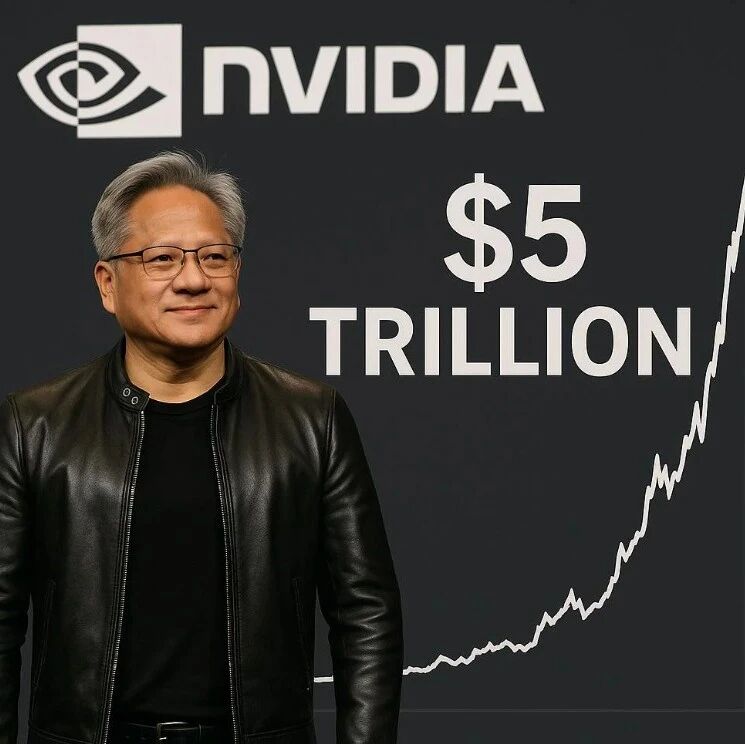
Core Insights - Nvidia's market capitalization has officially surpassed $5 trillion, making it the first company to reach this milestone globally, reflecting unprecedented growth and market influence [3][4][6] - The company's stock price has increased approximately 90% over the past six months, driven by strong demand for its AI chips and optimistic sales expectations in the Chinese market [6][11] Market Position - Nvidia's market value exceeds the combined market capitalization of competitors such as AMD, Arm, ASML, Broadcom, Intel, Lam Research, Qualcomm, and TSMC, as well as entire sectors like utilities, industrials, and consumer staples within the S&P 500 [6][10] - The company's valuation trajectory has outpaced that of major tech giants like Apple and Microsoft, which recently crossed the $4 trillion mark [10] Growth Drivers - The surge in Nvidia's market value is primarily attributed to the skyrocketing demand for GPUs, particularly following the launch of generative AI tools like ChatGPT, which significantly increased the need for training and running large language models [8][11] - Nvidia's CEO, Jensen Huang, has projected substantial sales growth, estimating that total sales could reach $500 billion over the next five quarters, with chip sales expected to exceed $300 billion in the 2026 calendar year [12][13] Demand and Orders - Strong demand is reflected in Nvidia's order data, with 6 million units of the Blackwell chip shipped and an additional 14 million units on order [11] - Major tech companies are investing heavily in data center infrastructure to support AI model operations, driving demand for Nvidia's products [13] Valuation Concerns - Despite the impressive growth, there are concerns about potential market bubbles, with some analysts comparing the current AI stock surge to the early 2000s internet bubble [14] - Nvidia's stock is currently valued at approximately 33 times its expected earnings for the next year, compared to an average P/E ratio of 24 for the S&P 500, raising questions about sustainability [14]
黄仁勋坚称AI热潮无泡沫
21世纪经济报道· 2025-10-30 04:30
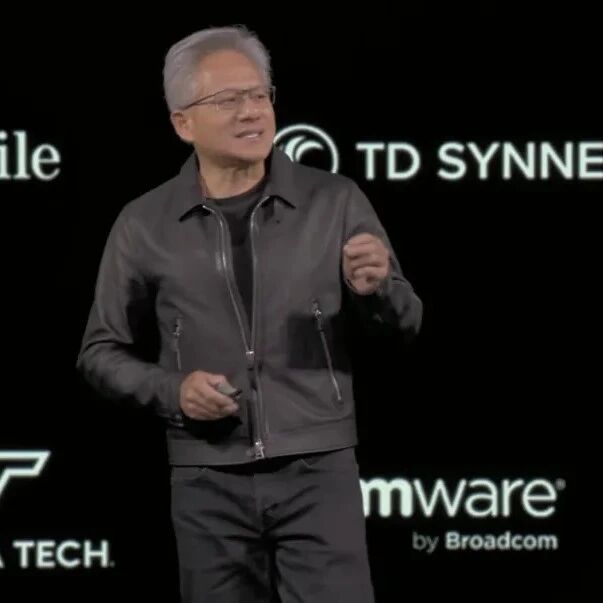
Core Viewpoint - Nvidia's CEO Jensen Huang downplayed concerns about an AI bubble, emphasizing the strong demand for AI models and the willingness of customers to pay for advanced computing infrastructure, which he believes validates the investments in this area [4][5][6]. Group 1: Nvidia's Position and Market Impact - Nvidia's stock rose approximately 3%, reaching a market capitalization of $5 trillion, following Huang's announcements at the Global Technology Conference [1]. - Huang projected that the shipment of Nvidia's latest generation chips would reach 20 million units, significantly higher than the previous generation's total of 4 million units [5]. - The company is entering a "remarkable" virtuous cycle in AI, with strong customer demand for AI models supporting infrastructure investments [8]. Group 2: Market Dynamics and Economic Indicators - The current stock market rally is driven by positive macro policies, strong corporate earnings, and sustained optimism about AI [5][6]. - As of October 28, 87% of S&P 500 companies that reported earnings exceeded expectations, indicating robust profit growth among large tech and consumer companies [5]. - The Federal Reserve's anticipated interest rate cuts and lower-than-expected inflation data are providing valuation support for growth stocks [5]. Group 3: Future Investment Opportunities - Future investment opportunities may lie in foundational infrastructure and hardware, such as high-speed optical communication modules and energy systems [10]. - There is potential in Chinese concept stocks and emerging markets, particularly those related to hardware autonomy [10]. Group 4: Risks and Market Sentiment - Concerns are emerging regarding consumer confidence, which fell to a six-month low of 94.6 in October, potentially impacting market sentiment [12]. - The ongoing U.S. government shutdown has raised worries about economic stability, with historical comparisons indicating potential risks [12][14]. - Analysts warn that despite strong market performance, signs of a bear market are emerging, with high price-to-earnings ratios and credit indicators showing weakness [12][14].

2票反对!美联储内部分歧加大!鲍威尔:“是时候停止量化紧缩了!”
证券时报· 2025-10-30 00:08
当地时间10月29日,美股三大指数收盘涨跌不一。 英伟达市值突破5万亿美元。国际贸易局势出现暂时缓和迹象。美联储降息25个基点,并宣布将从12月起结束资产负债表缩减。鲍威尔称12月并不必然降 息。 在鲍威尔讲话期间,美股三大指数全线跳水,盘中一度集体翻绿,随后纳指转涨,道指、标普500指数尾盘跌幅有所收窄,截至收盘,道指跌74.37点,跌幅 为0.16%,报47632.00点;纳指涨130.98点,涨幅为0.55%,报23958.47点;标普500指数跌0.30点,报6890.59点。 英伟达股价收高3.05%,市值突破5万亿美元,成为全球第一家达到这一估值的公司。 美联储再降息25基点 2票反对 将停止缩表 鲍威尔还称,12月并不必然会再次降息。 美东时间周三下午,美联储结束为期两天的货币政策会议,宣布降息25个基点,将联邦基金利率目标区间下调至3.75%到4%之间,该利率决议符合市场普 遍预期。 两位委员投下反对票,显示内部分歧加剧。其中,堪萨斯联储主席施密德反对降息,支持维持利率不变;美国总统特朗普钦点的美联储理事米兰对本次利率 决议持反对意见,认为应降息50个基点。 另外,美联储FOMC声明宣布将于1 ...

见证AI时代的奇迹:英伟达市值突破5万亿美元,全球首家
3 6 Ke· 2025-10-29 23:24
Core Insights - Nvidia's market capitalization has surpassed $5 trillion, making it the first company globally to achieve this milestone, increasing from $4 trillion in less than four months [1][4] - The company's stock price has risen over 50% this year, doubling since its low in April [3] Group 1: Nvidia's Market Value Growth - Nvidia's market value milestones include reaching $1 trillion on May 30, 2023, $2 trillion on February 23, 2024, $3 trillion on June 5, 2024, $4 trillion on July 9, 2025, and finally $5 trillion on October 29, 2025 [6][4] Group 2: Recent Developments and Strategic Initiatives - At the GTC conference on October 28, Nvidia announced significant product updates and strategic partnerships, leading to a stock price increase of 4.98% [3][7] - CEO Jensen Huang emphasized advancements in 6G, AI, quantum computing, and robotics, highlighting Nvidia's role in driving global technological progress [9] - Nvidia plans to invest $1 billion in Nokia to co-develop an AI-native 6G network platform and is collaborating with telecom companies to accelerate 6G deployment [9] - The company introduced NVQLink technology for efficient connections between quantum processors and GPU supercomputers, gaining support from 17 quantum computing firms [9] Group 3: Financial Performance and Future Projections - Nvidia's revenue exceeded $100 billion in the first half of the year, with projections indicating GPU sales could reach $500 billion by the end of 2026 [10] Group 4: Market Position and Competitive Landscape - Despite maintaining dominance in the AI chip market, competitors like AMD and Qualcomm are intensifying their efforts, with AMD signing agreements to provide AI processors and Qualcomm entering the AI data center market [18] - Nvidia's technological advantages, particularly in software ecosystems like CUDA and TensorRT, create significant barriers for competitors [18][19] - The company is pursuing a strategy of vertical integration and horizontal collaboration, including a potential $100 billion investment in OpenAI and a strategic alliance with Intel [19]