陕西煤业

Search documents
煤炭中期策略报告:供需再平衡,政策尤可期
2025-07-21 14:26
Summary of Coal Industry Conference Call Industry Overview - The coal market currently faces high overall supply, primarily concentrated in Shanxi, Inner Mongolia, Shaanxi, and Xinjiang, with some provinces maintaining high production levels to meet GDP targets despite safety and environmental pressures leading to reductions in certain areas [1][2] Core Insights and Arguments - The coal industry in the second half of the year will rely on policy interventions to address the oversupply issue, with anti-involution policies providing hope for market stabilization. Without such interventions, self-balancing of supply and demand is unlikely [3][4] - Historical experiences indicate that past supply-side reforms, such as those in 2016, significantly boosted coal prices, suggesting that similar policy measures could lead to market recovery [3][9] - To achieve supply-demand balance, a reduction of at least 60 million tons of domestic coal production is necessary in the second half of the year, with specific reductions depending on demand growth rates [3][13] Demand and Supply Dynamics - In the first half of 2025, the coal industry is expected to face excess supply pressure, with supply growth of 6% from January to May and a monthly increase of 4% in May [2] - Demand is anticipated to improve in the second half, particularly for thermal power and chemical coal, although demand from the steel and cement sectors remains weak. Increased thermal power demand is a key driver for potential price increases [6][7] Price and Inventory Trends - Despite high total social inventory levels, there has been a recent decline. Continued high temperatures and increased demand for iron and chemical coal could further reduce inventory, leading to price increases [6][7] - Current coking coal prices are trending upwards due to lower inventory levels [6] Company Performance - Different listed companies exhibit varied production performances. For instance, China Shenhua has seen a decline in production, while companies like China Coal, Shaanxi Coal, and Lu'an have experienced growth. Overall, most companies are still in a growth phase [8] Historical Context - The current situation bears similarities to past periods of overcapacity, particularly the 2014-2015 downturn, followed by a significant recovery post-2016 policy interventions [9][11] Future Outlook and Recommendations - To stabilize coal prices, it is essential to reduce social inventory to a five-year average, targeting a rebound in thermal coal prices to 750 RMB per ton. This requires both a reduction in imports and domestic production [13] - Investment strategies should focus on high-dividend thermal coal companies and those in turnaround situations, such as Jineng Technology and Shaanxi Black Cat, which may offer good returns in the future [14]
从去产能到反内卷:历史镜鉴与当下破局
2025-07-21 14:26
蒙古煤贸易商受益于三季度蒙煤长协价格处于历史低位,当期货和现货价格上 涨时,其利润空间扩大。业绩向上的确定性较高,估值能够合理计算。此外, 需要关注蒙古煤通关量变化、9 月份重大事件对产量的影响以及国内产量变化 从去产能到反内卷:历史镜鉴与当下破局 20250721 摘要 焦煤股受市场情绪带动涨幅较大,现货升水现象显著,动力煤价格亦有 上涨空间,短期内对动力煤和焦煤价格走势持乐观态度,关注期货与现 货价格差异带来的投资机会。 蒙古煤贸易商受益于三季度蒙煤长协价格低位,期货和现货价格上涨扩 大其利润空间,业绩确定性较高,估值合理,但需密切关注蒙古煤通关 量、重大事件及国内产量变化对投资的影响。 历史上的三轮去产能周期显示,2016 年供给侧改革通过 276 天工作制 度等措施有效限制产量,推动秦皇岛动力煤价翻倍,为当前反内卷政策 提供了借鉴意义。 反内卷政策强调依法治理低价竞争,借鉴历史经验,有效限制国内产量 是关键,应关注政府出台强制性减产措施以推动行业健康发展和市场反 转。 供给侧改革显著提升煤炭行业投资,2016 年政策出台后两年内煤炭板 块涨幅超沪深 300 指数,表明政策对煤炭板块产生显著超额收益。 ...
天弘红利智选混合A:2025年第二季度利润335.92万元 净值增长率2.66%
Sou Hu Cai Jing· 2025-07-21 10:42
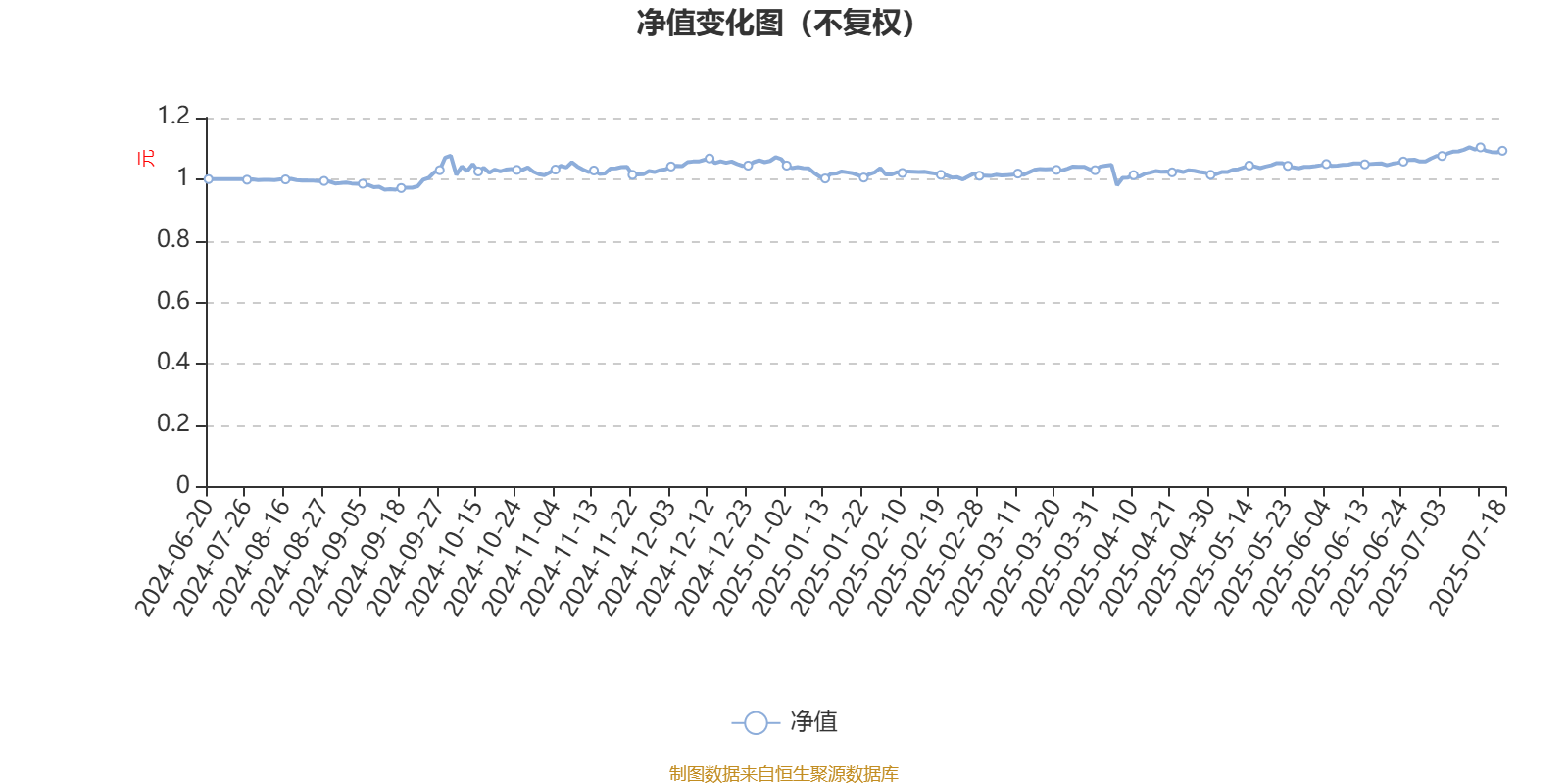
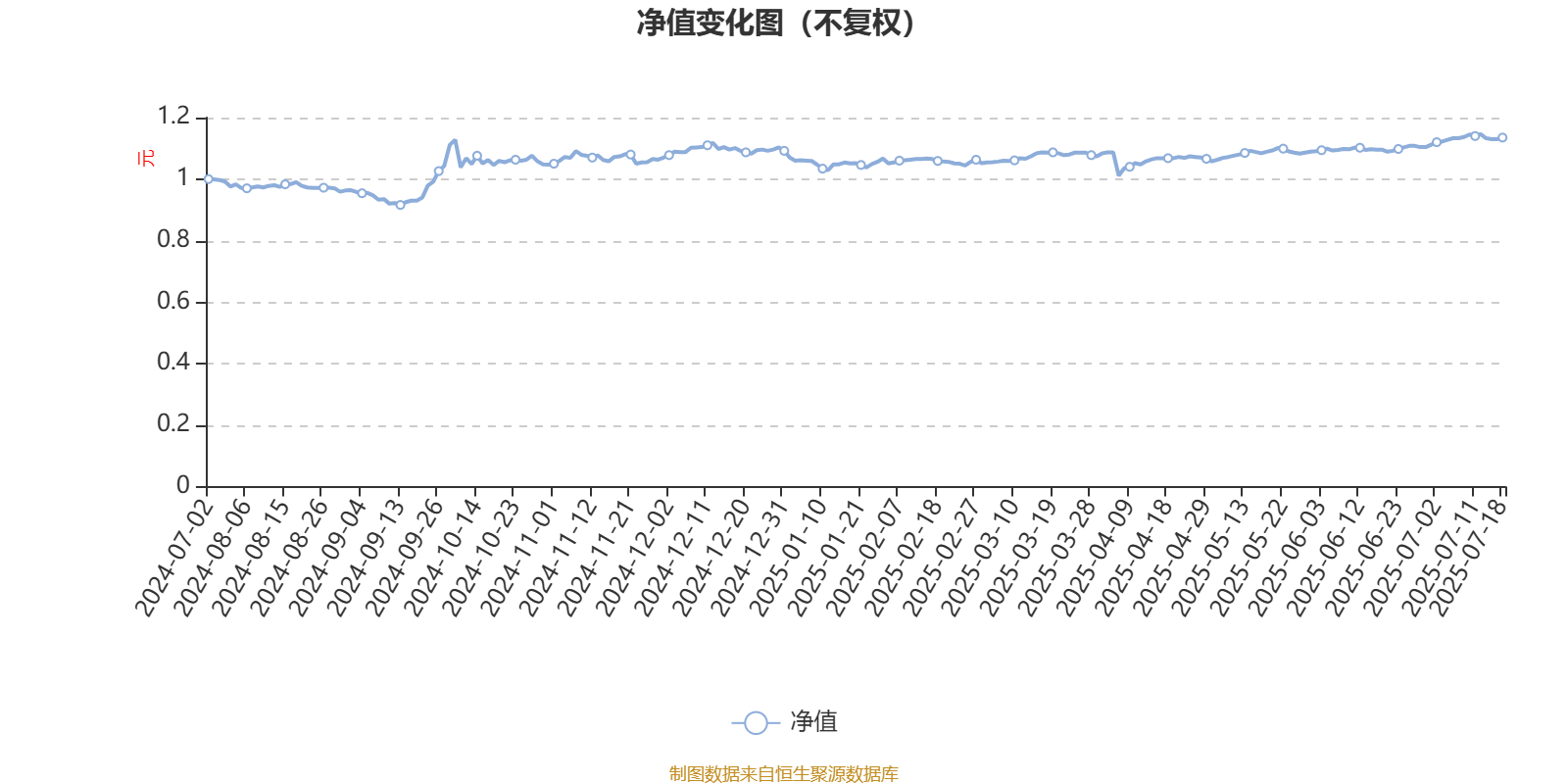
该基金属于偏股混合型基金,长期投资于周期股票。截至7月18日,单位净值为1.092元。基金经理是杨超,目前管理8只基金近一年均为正收益。其中,截 至7月18日,天弘国证2000指数增强A近一年复权单位净值增长率最高,达58.6%;天弘红利智选混合A最低,为9.2%。 基金管理人在二季报中表示,本基金业绩比较基准所对标的中证红利指数上涨0.04%。报告期内,基金管理人根据基金合同约定,通过量化的广度投资和自 下而上的研究方法,在红利主题股票池中精选投资组合,获得了高于业绩基准的投资回报。 投资策略方面,本基金作为一只投资于红利主题的、主要依据量化方法进行组合构建的主动投资基金,基金管理人将在严格控制风险的前提下,追求超越业 绩比较基准的投资回报,力争实现基金资产的长期稳健增值。 截至7月18日,天弘红利智选混合A近三个月复权单位净值增长率为6.60%,位于同类可比基金56/82;近半年复权单位净值增长率为6.84%,位于同类可比基 金46/82;近一年复权单位净值增长率为9.20%,位于同类可比基金40/77。 AI基金天弘红利智选混合A(020799)披露2025年二季报,第二季度基金利润335.92万元,加 ...

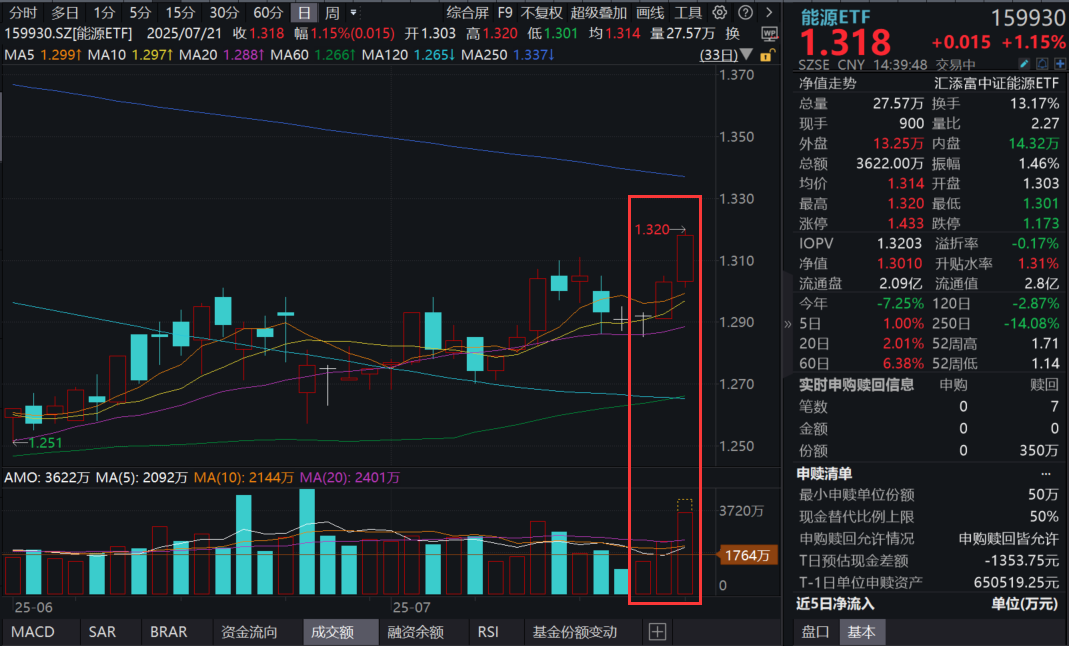
A股全面爆发量价齐升,煤炭、油气股冲高!能源ETF(159930)、油气资源ETF(159309)双双涨超1%,“反内卷”来袭,后市将如何演绎?
Xin Lang Cai Jing· 2025-07-21 08:45
Group 1: Market Overview - The A-share market experienced a significant surge on July 21, with over 4,000 stocks rising and a trading volume increase of 133.8 billion yuan, leading to a new high for the Shanghai Composite Index this year [1] - Key sectors such as building materials, coal, and oil saw substantial gains, with Energy ETFs (159930) rising over 1% for three consecutive days, and Oil and Gas Resource ETFs (159309) also increasing over 1% for four consecutive days [1] Group 2: Coal and Oil Sector Performance - Major coal and oil stocks saw significant increases, with companies like Yanzhou Coal Mining and Shanxi Coking Coal rising over 3%, while Meijin Energy and China United Coalbed Methane increased over 2% [3] - The top ten components of the Energy ETF (159930) included major players like China Petroleum and China Shenhua, with respective trading volumes of 757 million yuan and 968 million yuan [4] - The top ten components of the Oil and Gas Resource ETF (159309) also featured significant players, with China Petroleum and China Petrochemical leading in trading volumes [4] Group 3: Policy and Market Dynamics - On July 18, government officials announced a new round of growth stabilization plans for key industries, including steel, non-ferrous metals, petrochemicals, and building materials, aimed at optimizing supply and eliminating outdated production capacity [5] - The China Coal Transportation and Marketing Association emphasized the need for coal companies to understand market changes and ensure compliance with long-term contracts to maintain market balance [5] - The "anti-involution" policy is expected to resonate with the coal sector, potentially leading to valuation increases as the market stabilizes [6] Group 4: Price Trends and Future Outlook - Short-term coal prices are expected to remain bullish due to seasonal demand, with supply constraints from safety regulations and stricter import controls [6] - In the medium to long term, coal prices are projected to gradually return to a "reasonable center," which would stabilize profitability for coal companies and reshape market perceptions of the coal sector [7] - The oil sector may face challenges related to overcapacity, necessitating a focus on controlling operating rates and project approvals [8]






煤炭行业周报:电力负荷创新高,旺季动力煤价有望持续上涨;铁水产量高位,产量受限,焦煤价预计持续反弹。-20250721
Shenwan Hongyuan Securities· 2025-07-21 08:26
行 业 及 产 业 煤炭/ 煤炭开采 2025 年 07 月 21 日 电力负荷创新高,旺季动力煤价有 望持续上涨;铁水产量高位,产量 受限,焦煤价预计持续反弹。 看好 ——煤炭行业周报(2025.7.12-2025.7.18) 证券分析师 严天鹏 A0230524090004 yantp@swsresearch.com 闫海 A0230519010004 yanhai@swsresearch.com 施佳瑜 A0230521040004 shijy@swsresearch.com 研究支持 施佳瑜 A0230521040004 shijy@swsresearch.com 联系人 施佳瑜 (8621)23297818× shijy@swsresearch.com 本研究报告仅通过邮件提供给 中庚基金 使用。1 本期投资提示: ⚫ 动力煤方面,截至 7 月 18 日,据中国煤炭市场网,秦皇岛港口 Q4500、Q5000、 Q5500 动力煤现货价收报 511、581、642 元/吨,环比上涨 13、12、10 元/吨。供给 端,据中国煤炭市场网,环渤海四港区本周日均调入量 174.34 万吨,环比上周减少 2. ...
金十图示:2025年07月21日(周一)富时中国A50指数成分股今日收盘行情一览:银行板块全天表现低迷,能源、汽车板块集体收涨
news flash· 2025-07-21 07:10
金十图示:2025年07月21日(周一)富时中国A50指数成分股今日收盘行情一览:银行板块全天表现低迷,能源、汽车板块集体 收涨 富时中国A50指数连续 -0.03(-0.53%) +0.04(+0.47%) -0.08(-0.68%) 光大银行 2522.95亿市值 6.05亿成交额 4.27 -0.03(-0.70%) 保险 中国太保 中国平安 中国人保 帆 3723.66亿市值 3526.82亿市值 10414.43亿市值 15.20亿成交额 26.71亿成交额 5.53亿成交额 36.66 57.19 8.42 -0.43(-1.16%) +0.12(+0.21%) +0.03(+0.36%) 酿酒行业 贵州茅台 山西汾酒 五粮液 18126.93亿市值 2199.47亿市值 4757.30亿市值 37.80亿成交额 23.04亿成交额 16.64亿成交额 180.29 1443.00 122.56 +6.00(+0.42%) -1.22(-0.99%) -0.81(-0.45%) 半导体 北方华创 寒武纪-U 海光信息 HYGON 2309.49亿市值 2434.80亿市值 3176.67亿市值 1 ...





能源周报(20250714-20250720):下游采购需求释放,动力煤市场价格上涨-20250721
Huachuang Securities· 2025-07-21 06:42
Investment Strategy - Crude oil supply is expected to remain limited due to declining global oil and gas capital expenditures, with a significant reduction of nearly 122% from 2014 levels to $351 billion in 2021 [8][29][30] - Geopolitical tensions, particularly the Russia-Ukraine conflict, have exacerbated concerns over energy supply, with the EU planning to reduce oil imports from Russia by 90% by the end of 2022 [9][30] - The current active drilling rig count in the US remains low, impacting short-term crude oil and natural gas production capacity [29][30] Coal Industry - The market price for thermal coal has increased, with the average price at Qinhuangdao port reaching 637 RMB/ton, up 1.46% from the previous week, driven by increased downstream purchasing demand [11][12] - Coal inventory at major ports has decreased by 6.32% to 25.2 million tons, indicating a tightening supply situation [11][12] - The demand for coal is supported by rising electricity consumption due to high summer temperatures, although cement demand is declining [11][12] Coking Coal - The coking coal market is experiencing price increases, with the price of Shanxi main coking coal rising by 6.67% to 1,440 RMB/ton [13][14] - Downstream steel mills are maintaining high production levels, leading to a positive outlook for coking coal prices as demand remains strong [13][14] - The overall market sentiment is bullish, with expectations of further price increases due to rising costs and stable demand from steel producers [13][14] Natural Gas - Industrial natural gas production in China showed steady growth, with June output at 21.2 billion cubic meters, a year-on-year increase of 4.6% [15][16] - The average price of natural gas in the US has risen to $3.51 per million British thermal units, reflecting a 5% increase from the previous week [15][16] - The EU has reached an agreement on a natural gas price cap, which may lead to liquidity issues and increased competition for supplies [15][16] Oilfield Services - The oilfield services sector is expected to see a recovery in demand due to increased capital expenditures driven by high oil prices and supportive government policies [17][18] - The total capital expenditure for major oil companies in 2023 is projected to reach 581.738 billion RMB, reflecting a compound annual growth rate of 6% since 2018 [17][18] - The number of active drilling rigs globally has decreased to 1,576, indicating a cautious approach to new investments in oil and gas exploration [18]

金十图示:2025年07月21日(周一)富时中国A50指数成分股午盘收盘行情一览:盘面整体涨跌互现,银行、保险板块普跌,能源、汽车板块多数走高
news flash· 2025-07-21 03:35
Market Overview - The FTSE China A50 Index showed mixed performance with banks and insurance sectors declining, while energy and automotive sectors mostly advanced [1][6]. Banking Sector - Major banks like China Everbright Bank reported a market capitalization of 252.295 billion with a trading volume of 391 million, experiencing a slight decline of 0.03 (-0.70%) [3]. Insurance Sector - Key insurance companies such as China Pacific Insurance, Ping An Insurance, and China Life Insurance had market capitalizations of 369.27 billion, 349.31 billion, and 1,037.255 billion respectively, with trading volumes of 1.066 billion, 1.782 billion, and 0.345 billion. They experienced declines of 0.78 (-2.10%), 0.11 (-0.19%), and 0.04 (-0.48%) [3]. Alcohol Industry - Leading companies in the alcohol sector, including Kweichow Moutai, Shanxi Fenjiu, and Wuliangye, had market capitalizations of 1,811.450 billion, 218.056 billion, and 475.070 billion respectively, with trading volumes of 2.287 billion, 1.577 billion, and 0.913 billion. Kweichow Moutai saw a slight increase of 5.01 (+0.35%), while the others faced declines [3]. Semiconductor Sector - Notable semiconductor firms like North Huachuang, Cambricon Technologies, and Hygon reported market capitalizations of 231.057 billion, 244.680 billion, and 317.063 billion respectively, with trading volumes of 1.070 billion, 2.435 billion, and 1.138 billion. North Huachuang experienced a decline of 4.99 (-1.53%) [3]. Oil Industry - Major players in the oil sector, including Sinopec, PetroChina, and China Railway, had market capitalizations of 273.495 billion, 715.347 billion, and 1,634.377 billion respectively, with trading volumes of 0.732 billion, 0.426 billion, and 0.427 billion. Sinopec saw an increase of 0.08 (+1.37%) [3]. Coal Industry - Companies like Shenhua Energy and Shaanxi Coal and Chemical Industry had market capitalizations of 749.639 billion and 189.440 billion respectively, with trading volumes of 0.536 billion and 0.911 billion. Shenhua Energy reported an increase of 0.33 (+0.88%) [3]. Automotive Sector - BYD, a leading automotive manufacturer, had a market capitalization of 1,827.526 billion with a trading volume of 2.984 billion, experiencing an increase of 3.49 (+1.06%) [3]. Securities Sector - Major securities firms such as CITIC Securities and Guotai Junan reported market capitalizations of 425.350 billion and 347.129 billion respectively, with trading volumes of 2.668 billion and 1.636 billion. CITIC Securities saw an increase of 0.36 (+1.27%) [4]. Consumer Electronics - Companies like Hon Hai Precision Industry and Luxshare Precision reported market capitalizations of 534.617 billion and 276.157 billion respectively, with trading volumes of 1.553 billion and 2.572 billion. Hon Hai experienced a decline of 0.19 (-0.70%) [4]. Home Appliances - Leading home appliance firms such as Haier Smart Home and Gree Electric Appliances had market capitalizations of 266.739 billion and 243.580 billion respectively, with trading volumes of 0.713 billion and 0.309 billion. Haier reported a decline of 0.26 (-0.54%) [4]. Pharmaceutical Sector - Major pharmaceutical companies like Heng Rui Medicine and Muyuan Foods had market capitalizations of 255.221 billion and 384.958 billion respectively, with trading volumes of 1.833 billion and 1.230 billion. Heng Rui experienced a decline of 0.76 (-1.29%) [4].

华夏红利量化选股股票A:2025年第二季度利润42.66万元 净值增长率2.83%
Sou Hu Cai Jing· 2025-07-21 02:06
Core Insights - The AI Fund Huaxia Dividend Quantitative Stock A (021570) reported a profit of 426,600 yuan for Q2 2025, with a weighted average profit per fund share of 0.0238 yuan [3] - The fund's net asset value (NAV) growth rate for the reporting period was 2.83%, and as of the end of Q2, the fund size was 15.97 million yuan [3] - The fund is categorized as a standard equity fund, focusing on cyclical stocks, and as of July 18, the unit NAV was 1.135 yuan [3] Fund Performance - The fund manager, Sun Ranye, oversees seven funds, with the Huaxia National Securities 2000 Index Enhanced Initiation A showing the highest one-year NAV growth rate at 50.97%, while Huaxia Dividend Quantitative Stock A had the lowest at 13.93% [3] - As of July 18, the fund's NAV growth rates were 6.26% over the past three months, 7.99% over the past six months, and 13.93% over the past year, ranking 13th out of 18 in its category for the last three and six months, and 5th out of 14 for the last year [3] Investment Strategy - The fund employs a multi-factor quantitative investment strategy, making stock investment decisions based on quantitative models while actively participating in new stock subscriptions on the Sci-Tech Innovation Board and the Growth Enterprise Market to enhance returns [3] Risk Metrics - As of June 27, the fund's Sharpe ratio since inception was 0.122 [8] - The maximum drawdown since inception was 10.34%, with the largest quarterly drawdown occurring in Q2 2025 at 6.93% [11] Portfolio Composition - The average stock position since inception was 87.11%, compared to the category average of 88.69%. The fund reached a maximum position of 92.15% by the end of 2024 and a minimum of 75.04% by the end of Q3 2024 [14] - As of the end of Q2 2025, the top ten holdings included China COSCO Shipping, Jiangsu Bank, Shanghai Bank, Baosteel, Shaanxi Coal and Chemical Industry, CITIC Bank, Lanhua Sci-Tech, Bank of Communications, Chongqing Rural Commercial Bank, and China Shenhua Energy [19]
研判2025!中国半无烟煤行业政策汇总、产业链、产量、竞争格局及发展趋势分析:在环保政策的作用下,半无烟煤行业需求不断增加[图]
Chan Ye Xin Xi Wang· 2025-07-21 01:14
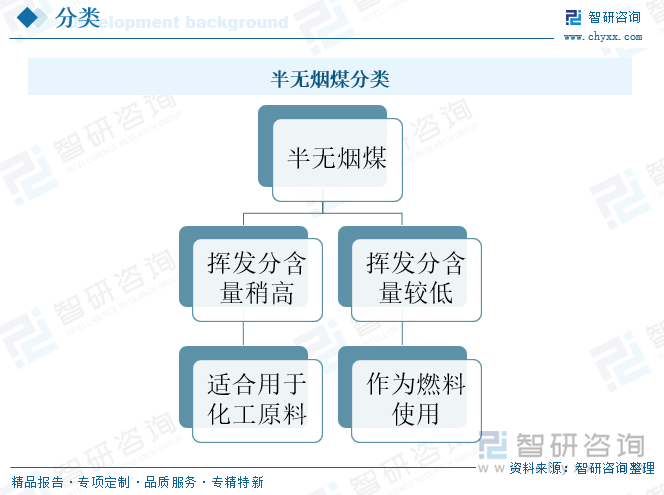
Core Viewpoint - The semi-anthracite coal industry in China is experiencing robust growth due to increasing environmental policies and demand for clean energy, with production expected to rise from 375 million tons in 2019 to 476 million tons by 2024, reflecting a compound annual growth rate of 4.90% [1][14]. Industry Overview - Semi-anthracite coal, positioned between anthracite and bituminous coal, has high energy density and low sulfur content, making it environmentally friendly and widely used in power generation, industrial boilers, and chemical industries [3]. - The classification of semi-anthracite coal based on volatile matter content allows for tailored applications in various industries, enhancing resource utilization efficiency [3]. Policy Influence - The Chinese government has implemented multiple policies to promote low-carbon development in the coal industry, emphasizing clean and efficient utilization of coal, with specific targets set for 2030 [5][7]. - Recent policies include the "2024-2025 Energy Conservation and Carbon Reduction Action Plan" and the "Opinions on Strengthening Clean and Efficient Utilization of Coal," which aim to enhance coal's green and intelligent development [5][7]. Industry Chain - The semi-anthracite coal industry chain includes upstream activities such as coal mining and washing, midstream production and processing, and downstream applications in various sectors [8]. Production and Demand - China's raw coal production is projected to increase from 3.746 billion tons in 2019 to 4.759 billion tons in 2024, with a 6.00% year-on-year increase in early 2025 [10]. - The demand for electricity is rising, driven by economic growth and increased consumption in various sectors, with total electricity generation expected to grow from 7,417 billion kWh in 2020 to 9,418 billion kWh in 2024 [12]. Competitive Landscape - The semi-anthracite coal market in China is relatively concentrated, dominated by large state-owned enterprises like China Shenhua and China Coal Energy, which leverage resource reserves and advanced production technologies [16][17]. - Emerging companies are gradually diversifying the competitive landscape through technological innovation and product optimization [16]. Future Trends - Environmental policies are expected to drive demand for semi-anthracite coal in key sectors such as power generation, metallurgy, and chemicals, as it offers lower emissions compared to other coal types [21]. - The application of semi-anthracite coal is expanding into new areas, including clean fuel production and chemical feedstock, indicating significant potential for future growth [22]. - Technological advancements will enhance production efficiency and reduce emissions, contributing to the industry's upgrade and market expansion [23].