
邮储银行

Search documents
构建适配服务生态 持续提升科技金融服务能力
Jin Rong Shi Bao· 2025-12-18 01:50
Core Insights - The article emphasizes the need to build an adaptable service ecosystem for technology finance, focusing on the alignment between financial supply and the diverse needs of technology enterprises at different development stages [1][3][4]. Group 1: Financial Ecosystem Trends - The financing needs of technology enterprises vary across their lifecycle stages, requiring different types of financial support from various institutions such as venture capital, banks, and insurance [3][4]. - The current financing structure in China is predominantly indirect, with banks playing a crucial role in supporting technology enterprises throughout their lifecycle [4][5]. Group 2: Role of Banks and Financial Institutions - Banks are not only fund providers but also play a guiding role in aggregating resources from different financial institutions to support technology enterprises [4][5]. - The recent expansion of Asset Investment Company (AIC) licenses allows banks to provide integrated financial services, combining funding and capital support for technology innovation [5][6]. Group 3: Challenges and Opportunities for Local Banks - Local banks, despite not having direct access to AIC licenses, can leverage their local information advantages and agile decision-making to better serve small and early-stage technology enterprises [6][7]. - Local banks should enhance their understanding of technology innovation and develop specialized research capabilities to improve their service offerings in technology finance [8]. Group 4: Enhancing Service Capabilities - Banks need to establish a differentiated assessment and incentive mechanism to support the complexities of technology finance, ensuring that frontline staff are motivated to engage in this area [8][9]. - A specialized approval mechanism is necessary for banks to efficiently manage the unique characteristics of technology enterprises, which often involve high-tech and asset-light models [8][9]. Group 5: Exit Strategies in Equity Investment - The exit phase in equity investment is critical, with current methods such as IPOs and mergers facing significant challenges, necessitating improvements in exit channels [9][10]. - Policy and market improvements are needed to create a more favorable environment for investment exits, including enhancing the inclusivity of various market platforms [11][12]. Group 6: Collaborative Efforts from Regulatory Bodies - Regulatory bodies should facilitate collaboration among finance, technology, and fiscal departments to convert the social effects of innovation into economic benefits for technology enterprises [12][13]. - Financial institutions should be incentivized to support technology enterprises through various funding mechanisms, including risk-sharing funds and technology financial rewards [12][13].





银行业着力创新科技金融服务
Jin Rong Shi Bao· 2025-12-18 00:57
Group 1 - The core viewpoint of the news is that China's central economic work conference emphasizes the importance of innovation-driven development and the establishment of three major international science and technology innovation centers, expanding from individual cities to regions [1][2] - The three international innovation centers are Beijing, Shanghai, and the Guangdong-Hong Kong-Macao Greater Bay Area, with a focus on regional collaboration and resource concentration to create a global highland for technological innovation [2][4] - The conference highlights the need for improved intellectual property protection, governance of artificial intelligence, and innovative financial services to support technological innovation [2][3] Group 2 - Major state-owned banks are actively supporting technological innovation by enhancing their financial services and focusing on key areas such as expanding domestic demand and supporting small and medium-sized enterprises [4][6] - The total balance of technology loans from major banks has seen rapid growth, with Industrial and Commercial Bank of China reaching over 6 trillion yuan, Agricultural Bank of China at 4.7 trillion yuan, Bank of China at 4.59 trillion yuan, and China Construction Bank at 5.15 trillion yuan as of June this year [6][7] - There is a shift from traditional collateral-based financing to more innovative financial products that cater to the unique characteristics of technology enterprises, such as knowledge property and R&D investments [5][8]





新华财经看湖南|邮储银行湖南省分行党委书记、行长胡建国谈金融如何助力绿色发展
Zhong Guo Jin Rong Xin Xi Wang· 2025-12-18 00:25
Core Viewpoint - The China Postal Savings Bank Hunan Branch aims to become a leader in green finance by establishing a measurable, traceable, and incentivized green financial system to support green development in Hunan province [1][2]. Group 1: Green Financial System Development - The bank has established a Green Finance Committee to allocate resources effectively [1]. - It has pioneered systematic carbon accounting for enterprises in the province, completing carbon emission assessments for 867 companies [1]. - The bank introduced "carbon reduction-linked loans," which tie interest rates to the effectiveness of emission reductions, shifting from a "green requirement" to a "green incentive" [1]. Group 2: Carbon Financialization Initiatives - The bank has launched personal carbon accounts and deepened enterprise carbon accounting, which helps reshape its service logic by incorporating carbon performance into risk control, transitioning to a "green transformation partner" service model, and creating actual value from green behaviors [2]. - An example of this is the "sustainable development-linked loans," which not only optimize asset structure by binding to high-quality green clients but also incentivize companies to reduce emissions through market mechanisms [2]. Group 3: Future Directions - The bank plans to focus on key areas such as green manufacturing and clean energy, leveraging urban-rural dual driving advantages to integrate green finance with inclusive finance [2]. - The goal is to develop a replicable "Postal Savings Bank Hunan Model" and position itself as a value discoverer, resource integrator, and steadfast partner in Hunan's green economic development [2].

万亿级金融机构渐次扬帆 “五篇大文章”重塑航向
Zheng Quan Shi Bao· 2025-12-17 22:17
Group 1: Core Insights - In 2025, China's financial industry is navigating through deep reforms, shifting focus from scale expansion to quality improvement, aiming for high-quality development and transitioning from a financial power to a financial stronghold [1] Group 2: Mergers and Restructuring - The wave of mergers and restructuring in China's financial sector is accelerating, with significant reforms in small and medium financial institutions to enhance competitiveness and manage risks [2] - Over 400 banking institutions have exited the market through dissolution, mergers, or cancellations, surpassing the total from previous years [3] - Major mergers in the securities industry include the consolidation of Guolian Securities and Minsheng Securities, and the merger of Guotai Junan and Haitong Securities, aligning with the goal of cultivating top-tier investment banks [3] Group 3: Financial Supply Optimization - The financial industry is optimizing its supply by focusing on five key areas: technology finance, green finance, inclusive finance, pension finance, and digital finance, as guided by the State Council [4] - Technology finance has gained unprecedented attention, with technology loans accounting for 28.8% of new loans, and loans to tech SMEs growing by 22% year-on-year [5][6] - Green loans have increased by 23.8% year-on-year, and green bond issuance has reached 4.6 trillion yuan [6] Group 4: Risk Management and Compliance - Regulatory measures remain stringent, with a focus on preventing and mitigating financial risks, as indicated by the establishment of new regulatory frameworks [8] - The People's Bank of China and the CSRC have introduced the Financial Infrastructure Supervision Management Measures to enhance the regulatory framework for financial infrastructure [8] - Many financial institutions are actively increasing capital to prepare for future growth and risk management, with at least 10 local banks completing targeted share issuances [8]



关于发布2023—2024年度四川银行业履行社会责任工作示范单位名单的公告
Si Chuan Ri Bao· 2025-12-17 22:17
Core Viewpoint - The Sichuan banking industry is committed to implementing the spirit of the 20th National Congress of the Communist Party, focusing on five key areas: technology finance, green finance, inclusive finance, pension finance, and digital finance, to support high-quality economic development in Sichuan [1] Group 1: Industry Initiatives - Sichuan banking institutions are actively integrating into the new development pattern and enhancing their role in modern industrial construction, regional coordination, and safeguarding consumer rights [1] - The Sichuan Banking Association has initiated a social responsibility evaluation for the 2023-2024 period, recognizing 34 institutions for their exemplary social responsibility practices [1] Group 2: Recognized Institutions - Notable institutions recognized for their social responsibility include the China Development Bank Sichuan Branch and the Industrial and Commercial Bank of China Sichuan Branch, among others [1][2] - Categories of recognition include best inclusive finance institutions, best rural revitalization finance institutions, and best technology finance institutions, highlighting the diverse contributions of various banks [2]
多家银行调整个人贵金属业务!个人投资黄金,风险大了?
Sou Hu Cai Jing· 2025-12-17 18:00
Core Viewpoint - The Industrial and Commercial Bank of China (ICBC) announced a significant policy change regarding personal precious metal accounts, effective December 19, targeting inactive accounts with no holdings, inventory, or funds [1][2][3] Group 1: Market Reaction - The announcement caused immediate turmoil in the market, especially as gold prices recently reached a historical high of 4381.29 yuan per gram on October 20 [4][5] - Other major banks, including China Construction Bank and Postal Savings Bank, have also begun similar actions, indicating a broader industry trend towards tightening regulations on leveraged trading and dormant accounts [6][8] Group 2: Regulatory Context - The move is not a one-off event; it reflects a systematic adjustment across the banking sector to mitigate risks associated with high-leverage trading, particularly in light of past incidents where clients faced significant losses [10][12] - The Shanghai Gold Exchange has issued risk warnings, suggesting that banks are aligning their policies with regulatory expectations to manage potential risks effectively [10][21] Group 3: Investment Strategy Shift - The banks are encouraging a shift from high-risk leveraged products to more stable investment options like physical gold bars and accumulation gold, which are perceived as safer [17][23] - The regulatory environment is expected to become stricter, with potential implementation of "risk rating + trading limit" controls, making high-risk precious metal trading more challenging for ordinary investors [25][30] Group 4: Long-term Outlook - Despite the tightening measures, the long-term value of gold remains intact, with global central banks increasing their gold purchases by 20% year-on-year in the first half of 2024 [21] - The investment approach is shifting towards a more conservative strategy, where regular small purchases of gold are recommended to average costs and reduce exposure to short-term volatility [28]
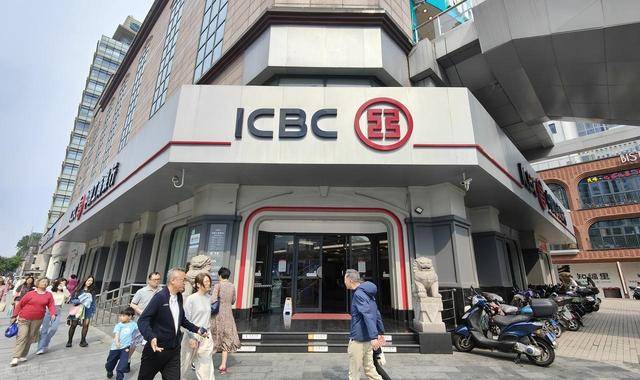
第三家股份制银行AIC开业
Zhong Guo Ji Jin Bao· 2025-12-17 13:35
Core Viewpoint - Xinyin Financial Asset Investment Co., Ltd. (Xinyin Jintou) officially opened in Guangzhou, becoming the third financial asset investment company (AIC) under a joint-stock bank in China [1][2]. Group 1: Company Establishment - Xinyin Jintou's registered capital is 10 billion RMB, and it is located in Guangzhou, Guangdong Province [2]. - The establishment of Xinyin Jintou signifies the addition of another AIC under a joint-stock bank, enhancing the AIC landscape in China [2]. Group 2: Strategic Focus - Xinyin Jintou will focus on market-oriented debt-to-equity swaps and equity investment in strategic emerging industries, supporting innovation-driven enterprises and the private economy [2]. - The company aims to enhance the comprehensive operational capabilities and sustainable development of CITIC Bank [2]. Group 3: Industry Context - The opening of Xinyin Jintou follows the establishment of other AICs, including the one under China Merchants Bank in Shenzhen, contributing to a dual-core AIC structure in the Guangdong-Hong Kong-Macao Greater Bay Area [3]. - The rapid expansion of AICs is supported by regulatory changes, allowing joint-stock banks to establish AICs in 18 pilot cities, thus accelerating the pace of AIC licensing [3].
关于黄金交易,多家银行调整
新华网财经· 2025-12-17 11:33
Core Viewpoint - The tightening of personal precious metals trading business by banks acting as agents for the Shanghai Gold Exchange is aimed at managing market risks, complying with regulatory pressures, and fulfilling investor suitability obligations, leading to a more concentrated and mature market structure in precious metals investment [2][5][9]. Group 1: Bank Adjustments - Several banks, including Industrial and Commercial Bank of China (ICBC), have announced adjustments to their personal precious metals trading business, actively clearing inactive "three-no" clients (no positions, no inventory, no debts) [4]. - ICBC's announcement indicates that from December 19, 2025, it will transfer the balances of these clients' margin accounts to their linked settlement accounts and terminate related business functions [4]. - Other banks such as Agricultural Bank of China and China Postal Savings Bank have also made similar announcements regarding the termination of agreements with inactive clients [4]. Group 2: Market Implications - Experts believe that the banks' actions will lead to a reduction in speculative trading and a reassessment of risk-return characteristics of gold investments by individual investors [7][8]. - The tightening of bank channels may result in a decrease in trading volume and liquidity in the short term, but it is expected to guide funds towards more transparent and compliant markets in the long term [8][9]. - The exit of individual investors is likely to concentrate market participants among institutional clients, leading to more rational trading behavior and potentially reducing market volatility [9]. Group 3: Business Transformation - The retail precious metals business of banks is undergoing a transformation from trading channels to asset allocation services, moving away from high-risk, high-leverage trading towards more stable financial products like gold ETFs [11][12]. - This shift indicates that banks are focusing on providing asset allocation services and standardized financial products rather than merely facilitating trading and selling physical gold [12]. - The future development of bank precious metals business is expected to remain significant, with opportunities in promoting lower-risk investment products that meet residents' demand for gold as a hedge and asset allocation [12].

多家银行清理“休眠账户”
Sou Hu Cai Jing· 2025-12-17 10:12
Core Viewpoint - The adjustment by Industrial and Commercial Bank of China (ICBC) to close "three-no" customer gold trading functions reflects a tightening trend in the gold trading business among major banks due to market risk volatility, tax compliance pressures, and changes in investor demand structure [1][2]. Group 1: ICBC's Adjustments - ICBC announced the closure of gold trading functions for customers with no positions, no inventory, and no debts but still holding funds in their accounts, effective December 19 [1]. - Customers are required to withdraw their funds, and the bank will terminate related business agreements, while existing positions will not be affected [1]. - This move aims to enhance account management efficiency and reduce the risk of idle customer funds, aligning with regulatory requirements for fund safety and transparency [2]. Group 2: Industry-Wide Trends - Other banks, including Everbright Bank, China Construction Bank, and Postal Savings Bank, have also taken similar actions to tighten personal gold trading services [2]. - Postal Savings Bank announced the cessation of related services, requiring customers to close positions by October 31, while Citic Bank and Ningbo Bank have also initiated account clean-ups for inactive customers [2]. - The tightening of these services is attributed to the high risk and volatility in the gold market, as well as the low entry barriers for leveraged products, making it difficult for banks to verify customer investment capabilities [2]. Group 3: Brand Gold Sales Exit - Following the implementation of new gold tax regulations, Hengfeng Bank announced it will cease brand gold sales starting December 22, marking the first bank to exit this business since the new policy [3]. - The new tax regulations have increased operational complexity and risk for banks, prompting some to withdraw from brand gold sales due to compliance pressures [3]. - Despite significant price increases in precious metals this year, the volatility has led to a decline in brand gold sales, with expectations that more banks may follow suit in exiting this market segment [3].
继中行、建行之后,又一家国有大行宣布!
Jin Rong Shi Bao· 2025-12-17 09:39
Core Viewpoint - The announcement of capital changes by state-owned banks, including the recent increase in registered capital by Bank of Communications, reflects a broader trend of capital replenishment among major state-owned banks in China, driven by regulatory support and market conditions [1][2][3] Group 1: Capital Changes - Bank of Communications has increased its registered capital by 14.101 billion RMB, changing from 74.263 billion RMB to 88.364 billion RMB following a specific issuance of A-shares [1] - This capital increase follows similar actions by other state-owned banks, including Bank of China and China Construction Bank, which also raised capital through targeted A-share issuances [1] Group 2: Capital Replenishment Trends - In 2023, major state-owned banks are actively replenishing capital, with a total planned fundraising of 520 billion RMB through targeted A-share issuances, as outlined in the government work report proposing the issuance of special government bonds [1][2] - The capital replenishment strategies of state-owned banks are characterized by a diversified approach, utilizing both internal profit retention and external financing methods such as targeted issuance and IPOs [2] Group 3: Importance of Capital Adequacy - The capital adequacy of systemically important banks (D-SIBs) is crucial for maintaining financial stability, with sufficient capital serving as a core defense against risks associated with being "too big to fail" [3] - The proactive capital replenishment by state-owned banks sends a positive signal to the market regarding prudent management and risk control, which helps stabilize market expectations and boost investor confidence [3]