
DeepSeek

Search documents
OpenAI拟出售股权,估值或跃升至5000亿美元
Guo Ji Jin Rong Bao· 2025-08-07 09:32
Core Viewpoint - OpenAI is in preliminary talks with existing investors regarding the sale of employee shares, which could increase its valuation from $300 billion to $500 billion, surpassing SpaceX's valuation of $350 billion, making it one of the most valuable AI companies globally [1] Group 1: Investment and Valuation - OpenAI is negotiating with existing investors, including Thrive Capital, for the sale of employee shares [1] - If successful, OpenAI's valuation is expected to rise significantly, positioning it as a leader in the AI sector [1] Group 2: Competitive Landscape - OpenAI faces intense competition from tech giants like Meta, which is aggressively expanding its AI team and offering substantial signing bonuses [1] - Another competitor, Anthropic, founded by former OpenAI employees, is valued at approximately $170 billion and is seeking funding for AI model training [2] Group 3: Technological Innovation - OpenAI is preparing to release an upgraded version of its ChatGPT model, potentially named GPT-5, while also launching new open AI models for public use [2] - The company has acquired a startup founded by iPhone designer Jony Ive for $6.4 billion, aiming to produce 100 million AI "companions" for everyday use [2] Group 4: Business Model and Future Direction - OpenAI's core business model involves subscription fees for enhanced ChatGPT services and integration of AI models into enterprise solutions [3] - The company is transitioning from a mixed non-profit and for-profit organization to a fully profit-driven entity, which has sparked some controversy regarding its original mission [3] - Despite some tensions, the collaboration between OpenAI and Microsoft remains strong and beneficial for both parties [3]
DeepSeek、Kimi 首轮淘汰,马斯克 Grok 4 杀进决赛,首届全球 AI 对抗赛连爆冷门
3 6 Ke· 2025-08-07 08:27
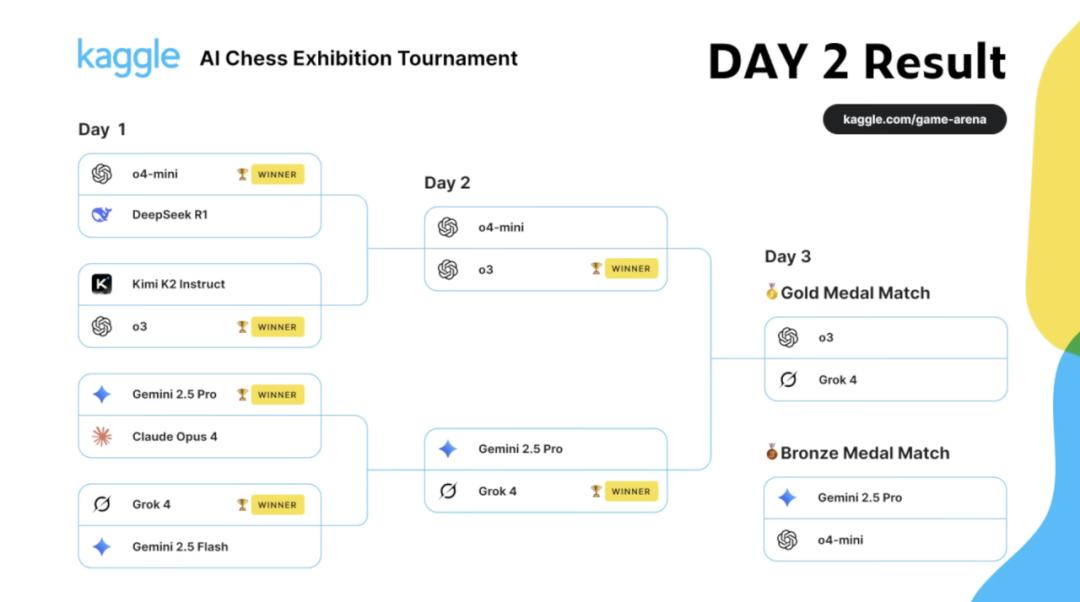
Core Insights - The AI chess championship, hosted by Kaggle, featured eight leading language models competing in a three-day tournament to evaluate their strategic reasoning abilities [8][9] - The final match will see OpenAI's o3 face off against xAI's Grok 4, reflecting the rivalry between Elon Musk and the Ultraman character [19] Group 1: Tournament Structure and Participants - The tournament lasted three days from August 5 to 7, with the first day determining the top four competitors [3] - Eight AI models participated, including Claude Opus 4, DeepSeek-R1, Gemini 2.5 Pro, Gemini 2.5 Flash, Kimi K2, o3, o4-mini, and Grok 4 [3][8] Group 2: Competition Rules and Format - The competition utilized the "Chess-Text Harness" rule system, which tested the models' pure reasoning capabilities without external tools or pre-defined legal moves [9] - Each model had a 60-minute time limit per move, and they could only interpret the chessboard through text symbols [9] Group 3: Match Highlights - In the semifinals, o3 decisively defeated o4 mini with a score of 4:0, showcasing its superior tactical skills [11] - Grok 4 faced Gemini 2.5 Pro in a closely contested match, with Grok initially making significant errors but later recovering to win crucial games [13][17] - The final match will employ an "Armageddon" format, where Grok, playing black, can win with a draw, balancing the inherent advantage of white [19][22]


OpenAI推出开源模型gpt-oss抗衡中企
日经中文网· 2025-08-07 08:00
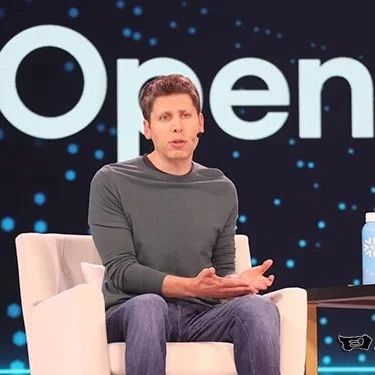
Core Viewpoint - OpenAI has launched an open-source AI model named "gpt-oss," allowing developers to use and modify it for free, marking a significant return to open-source large language models after nearly six years since "GPT-2" [2][4]. Group 1 - OpenAI's CEO Sam Altman announced the release of the open-source AI model on August 5, 2023, to counter emerging competitors like DeepSeek from China [2][5]. - The newly released models are designed to operate efficiently with fewer computational resources, making them suitable for devices like laptops and smartphones [4]. - The open-source model is characterized by its logical reasoning capabilities, excelling in mathematics and programming tasks [4]. Group 2 - OpenAI's commitment to sharing research and technology has been a core principle since its inception, but competition has led to reduced information sharing among companies [5]. - The rise of Chinese companies in the open-source model space, particularly DeepSeek's release of the "R1" model, has prompted OpenAI to consider launching its own open-source models [5]. - Other Chinese companies, such as Alibaba's Tongyi Qianwen and emerging firms like Moonshot AI, have also entered the open-source model market, intensifying competition [5].
首届大模型象棋争霸赛:Grok 4与o3挺进决赛,DeepSeek、Kimi落败
3 6 Ke· 2025-08-07 06:16
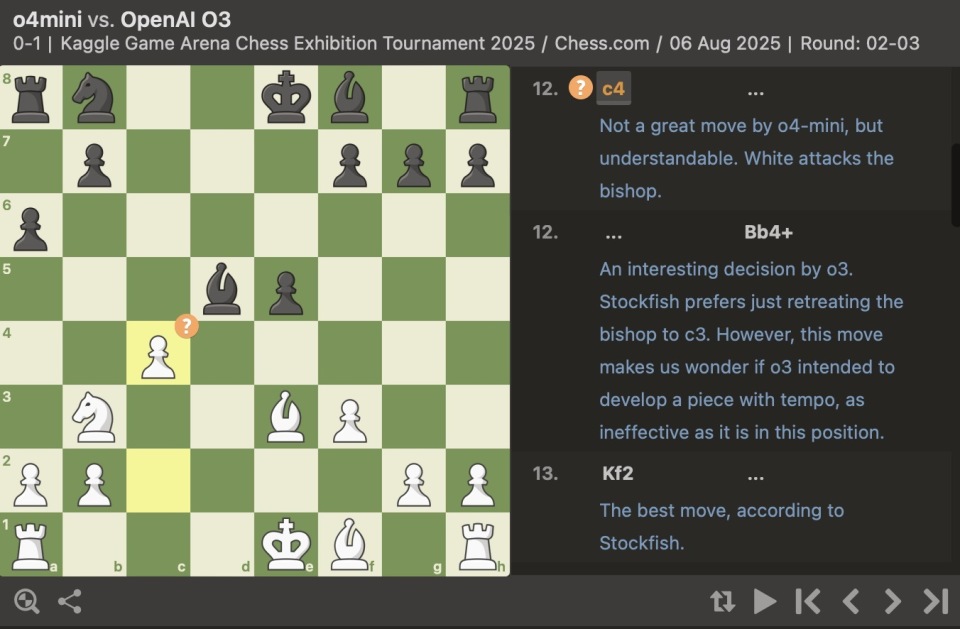
Core Insights - The AI chess tournament hosted on Kaggle featured eight large language models (LLMs) competing in a knockout format, with Grok 4 and o3 advancing to the finals after defeating Gemini 2.5 Pro and o4-mini respectively [1][3][8] Group 1: Tournament Structure and Results - The tournament lasted three days and involved eight AI models, including Grok 4 (xAI), Gemini 2.5 Pro (Google), o4-mini (OpenAI), o3 (OpenAI), Claude 4 Opus (Anthropic), Gemini 2.5 Flash (Google), DeepSeek R1 (DeepSeek), and Kimi k2 (Moonshot AI) [1] - The competition utilized a single-elimination format where each AI had up to four attempts to make a legal move; failure to do so resulted in an immediate loss [1] - On the first day, Grok 4, o3, Gemini 2.5 Pro, and o4-mini all achieved 4-0 victories, advancing to the semifinals [3][11][22] Group 2: Semifinal Highlights - In the semifinals, o3 demonstrated a dominant performance, winning 4-0 against o4-mini, showcasing a high level of precision with a perfect accuracy score of 100 in one of the games [5] - The match between Grok 4 and Gemini 2.5 Pro ended in a tie after regular play, leading to an Armageddon tiebreaker where Grok 4 emerged victorious [8] - The semifinals highlighted the strengths and weaknesses of the AI models, with Grok 4 overcoming early mistakes to secure its place in the finals [8][19] Group 3: Performance Analysis - The tournament revealed that while some AI models performed exceptionally well, others struggled with basic tactical sequences and context understanding, indicating areas for improvement in AI chess capabilities [22] - The performance of Grok 4 attracted attention from industry figures, including Elon Musk, who commented on its impressive gameplay [19]
OpenAI重开源战略:扩大影响力,应对全球AI开源竞争新格局
Sou Hu Cai Jing· 2025-08-07 05:39
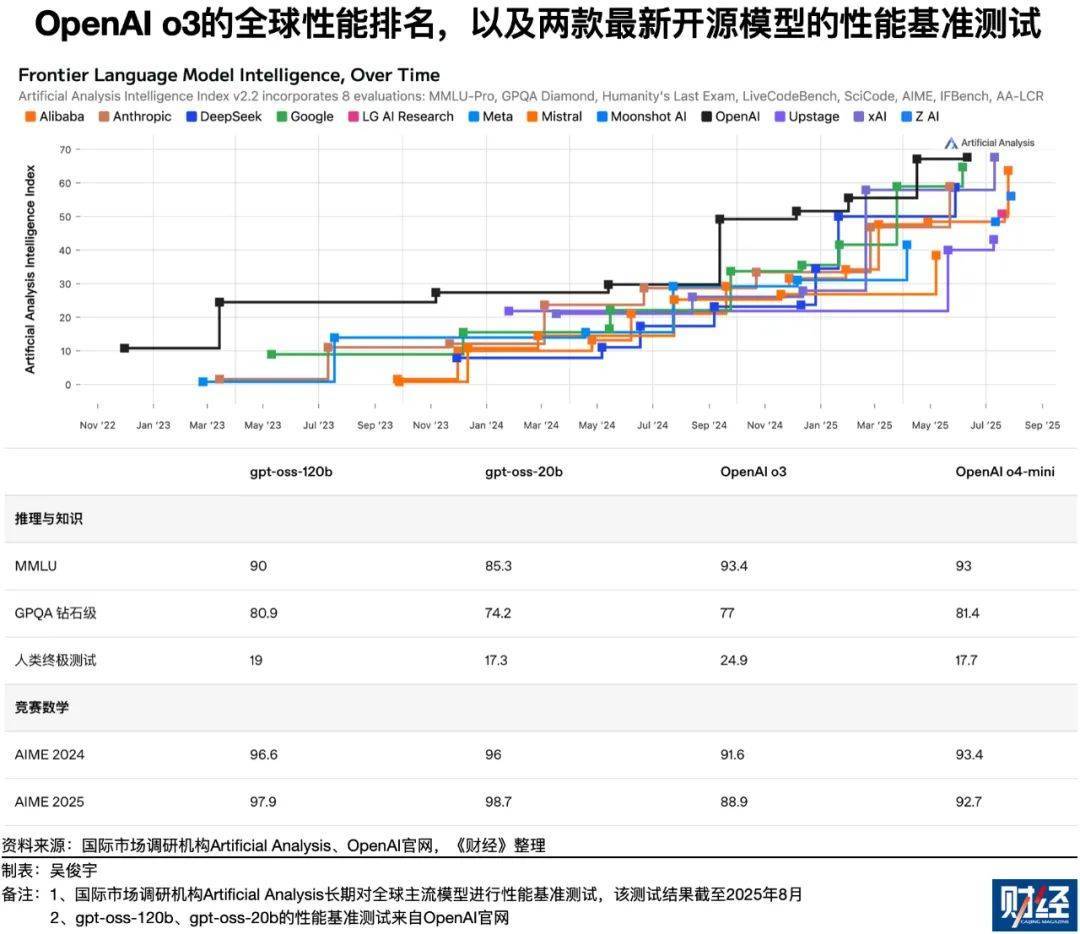
Core Viewpoint - OpenAI is re-entering the open-source arena by launching two significant models, gpt-oss-120b and gpt-oss-20b, amidst a growing competition between open-source and closed-source AI solutions [1][2]. Group 1: OpenAI's Historical Context - Since its establishment in 2015, OpenAI has been at the forefront of AI technology, with the launch of ChatGPT in 2022 marking a significant milestone in user growth [1]. - Initially, OpenAI embraced open-source principles with the releases of GPT-1 and GPT-2, but shifted to a closed-source model with GPT-3 in 2020, which drew criticism for contradicting its mission to benefit humanity [1][2]. Group 2: New Open-Source Models - The newly launched models, gpt-oss-120b and gpt-oss-20b, are designed for high inference in cloud environments and low latency on edge devices, providing developers with more options [2]. - The release of these models has generated significant interest in the AI open-source community, leading to a surge in downloads on the Hugging Face platform, prompting requests to manage server load [2]. Group 3: Industry Reactions and Implications - Opinions on OpenAI's approach are mixed; some view it as a protective measure for core assets, while others argue it limits developers' ability to conduct in-depth research and hinders the open-source ecosystem [4]. - OpenAI's collaboration with cloud providers like Amazon AWS is seen as a strategy to enhance the distribution and application of its open-source models [4]. - The performance gap between open-source and closed-source models is narrowing, increasing competition from global open-source players, particularly in the Chinese market with Alibaba's Qwen series achieving over 300 models and 400 million downloads by July 2023 [4]. Group 4: Future Outlook - OpenAI's re-entry into open-source presents both challenges and opportunities, suggesting that AI giants may adopt more flexible strategies in response to the rapidly changing market [7].
X @Decrypt
Decrypt· 2025-08-07 03:55
Lawmakers Call for Inquiry Into China's DeepSeek Over National Security, Data Risks► https://t.co/M37LVXXyVt https://t.co/M37LVXXyVt ...
科技巨头校招超7000岗位!阿里AI职位占六成,腾讯美团字节争夺AI人才
Sou Hu Cai Jing· 2025-08-06 23:59
Group 1 - The core focus of the autumn campus recruitment by tech giants is on AI talent, with Alibaba leading by offering over 7,000 positions for the 2026 graduates [1] - Tencent has also initiated its recruitment, emphasizing software development and technology research roles, particularly in the AI sector [3] - The proportion of AI-related positions has significantly increased, with Alibaba's AI roles accounting for over 60% and Meituan's technical positions making up one-third of their total recruitment [1][3] Group 2 - As of July 2025, 41.07% of employees in leading AI companies are actively seeking new opportunities, a figure much higher than the 14.65% in the broader internet industry [4] - Over 1,000 AI companies have posted job openings on the platform, indicating a competitive talent market [4] - Companies are shifting their hiring criteria to prioritize learning potential and cross-disciplinary thinking over just technical skills [4] Group 3 - To adapt to the increasing preference for stable job options among graduates, companies are enhancing their talent retention strategies [5] - 37.6% of companies are raising starting salaries for fresh graduates, and nearly 80% are offering specialized training programs [5] - Alibaba's "Ali Star" program has attracted over 200 top young talents, producing more than 3,000 research outcomes [5] Group 4 - The AI era is reshaping career development, with new trends emerging such as liberal arts graduates receiving offers from major companies [6] - Universities are increasingly offering technical training courses to bridge the gap between graduates and industry needs [6] - A new course on embodied robotics has been launched, covering the entire process from theoretical teaching to practical deployment [6]



腾讯、阿里、字节、京东、小米、美团、滴滴开抢 !超5万个岗位
Sou Hu Cai Jing· 2025-08-06 14:44
Core Insights - The tech giants are initiating a new round of campus recruitment, with a total of over 50,000 positions available, significantly increasing the demand for AI-related roles, which are becoming a strategic resource for companies [2][3][4] Group 1: Company Recruitment Plans - Tencent's 2026 campus recruitment focuses on software development and technical research positions, with a significant increase in AI-related roles [2] - Alibaba's recruitment plan has over 60% of positions in AI, with certain divisions like Alibaba Cloud and DingTalk reaching 80% [3] - Meituan plans to recruit 6,000 individuals globally, with over one-third of these positions in technology [4] - Xiaomi's recruitment includes 16 job categories, emphasizing software and hardware development, as well as algorithm roles [4] - ByteDance is offering over 5,000 positions, with a 23% year-on-year increase in research and development roles [4] - JD.com is opening 35,000 positions, with 20,000 aimed at fresh graduates [4] - Didi's recruitment includes various technical and operational roles, reflecting the broadening scope of AI talent needs [4] Group 2: Talent Market Dynamics - The demand for AI talent is structurally changing, with a notable increase in the willingness of AI professionals to switch jobs, indicating a high market premium for AI skills [6] - Companies are adjusting their hiring standards, focusing more on learning potential and interdisciplinary skills rather than just technical expertise [6] - The trend of hiring individuals from diverse educational backgrounds, including non-STEM fields, is becoming more common in the AI sector [6][9] Group 3: Employment Trends and Strategies - A significant portion of graduates still prefer stable positions in state-owned enterprises, reflecting a cautious approach to employment [7] - Companies are enhancing their recruitment strategies by increasing starting salaries and offering specialized training programs to attract talent [8] - Alibaba's "Ali Star" program aims to cultivate top AI talent, having attracted over 200 young researchers and produced over 3,000 research outcomes [8] - Meituan's structured training system for new hires has led to over 70% of them achieving promotions within their first year [8] Group 4: Educational and Industry Integration - The AI sector is reshaping career development paths, with universities increasingly offering courses to meet industry demands [9][10] - The urgency for educational institutions to align with industry needs is emphasized, as seen in initiatives like the collaboration between Zhiyuan Robotics and Tsinghua University [9][10] - Training programs that cover both theoretical and practical aspects of AI are being developed to enhance graduates' employability [10]



大厂秋招暗战酣,AI人才定乾坤
2 1 Shi Ji Jing Ji Bao Dao· 2025-08-06 13:24
Core Insights - The demand for AI talent is significantly increasing, with major tech companies launching extensive recruitment campaigns targeting AI-related positions, indicating a structural shift in the job market [1][2][3] Group 1: Recruitment Trends - Alibaba has initiated its 2026 campus recruitment with over 7,000 positions, where AI-related roles account for more than 60% of the total [1][2] - Tencent's recruitment for the same period emphasizes AI roles, with a focus on software development and technical research [1][2] - Meituan plans to recruit 6,000 individuals globally, with over one-third of these positions in technical roles, reflecting a similar trend towards AI [2] Group 2: Talent Market Dynamics - As of July 2025, 41.07% of employees in leading AI companies are considering job changes, significantly higher than the 14.65% in the broader internet sector, indicating a high turnover intention in the AI field [3] - Over 1,000 AI companies are actively hiring, showcasing a competitive landscape for talent acquisition [3] Group 3: Skills and Backgrounds - Companies are shifting their hiring criteria from solely technical skills to valuing learning potential and interdisciplinary thinking, highlighting the importance of diverse educational backgrounds [3][4] - The narrative around AI talent is evolving, with non-technical graduates, such as those from humanities backgrounds, finding opportunities in AI roles [4][5] Group 4: Educational and Training Initiatives - Companies like Alibaba and Meituan are investing in training programs to enhance the skills of new hires, with Alibaba's "Ali Star" program attracting over 200 top talents and producing more than 3,000 research outcomes [4][5] - Meituan has implemented a mentorship and rotation system for new graduates, resulting in over 70% of them achieving promotions within their first year [5] Group 5: Industry and Educational Integration - The need for integration between education and industry is emphasized, with calls for educational institutions to align more closely with industry demands to better prepare graduates for the job market [5][6] - Initiatives like the collaboration between Zhiyuan Robotics and Tsinghua University aim to bridge the gap between theoretical knowledge and practical application in AI and robotics [6]
全国工商联人工智能委员会常务秘书长范丛明:智能体相关新工种有望问世
Zheng Quan Shi Bao Wang· 2025-08-06 12:41
Group 1 - The development of artificial intelligence (AI) is expected to give rise to new job roles related to intelligent agents by next year, as highlighted by the National Federation of Industry and Commerce's AI Committee [1] - The AI Committee has been conducting research on key enterprises in representative cities since December last year, focusing on the integration of "industry + AI" and has formed multiple proposals and suggestions [1] - The committee aims to leverage AI technology to enhance productivity and promote industrial intelligence upgrades, capitalizing on local industrial advantages [1] Group 2 - The National Data Bureau has been promoting data openness and has implemented measures regarding data rights, circulation, and trading, with pilot projects in the Greater Bay Area [2] - The concept of "data assets on the balance sheet" is discussed, emphasizing that the true value of data lies in its usability and confirmation by customers, rather than merely listing it as an asset [2] - As national laws and regulations become more refined, data trading is expected to become more standardized and orderly, which is crucial for realizing data value [2] Group 3 - The evolution of AI is categorized into several stages: logical reasoning (1950-1980), knowledge reasoning (1980-2000), deep learning (2000-2020), and the current AIGC stage starting in 2023 [3] - The AI industry has transitioned from voice recognition companies to image processing and machine vision firms, culminating in the emergence of generative AI led by companies like DeepSeek and Baidu [3] - The focus is on promoting AI applications while ensuring safety, with efforts to showcase successful industry cases and enhance AI platform construction [3]