康方生物

Search documents
和誉-B中报观:靠“造血优势”拉高安全边际,靠硬核创新提升配置价值
Zhi Tong Cai Jing· 2025-08-05 00:10
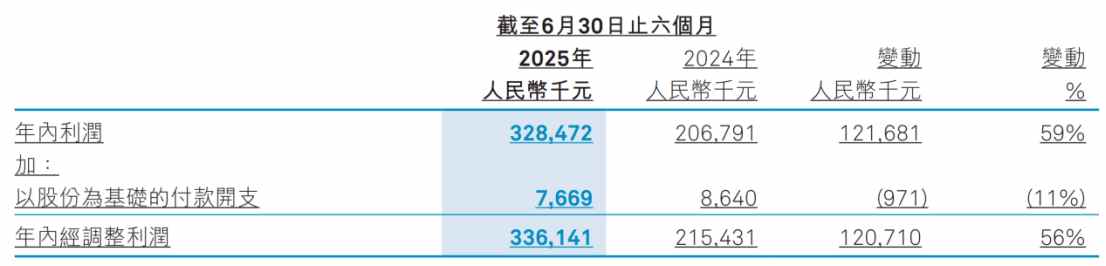
今年7月29日,和誉-B(02256)盘中最高股价达到11.74港元,创下公司近4年以来的股价新高,而这也让和誉年初至今的股价最大涨幅达到155.22%。 在高涨的股价让二级市场投资者投资回报水涨船高的同时,和誉也在持续通过注销式股票回购方式用"真金白银"回馈投资者。今年3月,和誉董事会再次批 准了公司动用2亿港元在市场上购回股份,截至今年6月30日,公司已累计回购954.50万股,合计7530万港元。 实际上,今年以来,港股创新药板块走出了一波大爆发行情。而从和誉最新披露的2025年中期财报投资者不难看出,随着创新研发与国际化BD预期的不断 兑现,公司顺利实现了持续性规模化的创新收益与盈利,并产生了丰富的现金流,为公司中长期创新研发提供了可观的资金保障,也进一步完善了公司"创 新-盈利"的正循环。今年上半年不断攀升的股价反映的便是市场对公司价值的高度认可。 规模化盈利预期获持续兑现 今年上半年,和誉得以实现规模化盈利预期的持续兑现,其中的关键载体便是商业化价值持续释放的核心品种匹米替尼。 作为首个中国自主研发进入全球III期TGCT临床试验的CSF-1R抑制剂,匹米替尼目前已获中美欧多国监管机构突破性疗法认 ...

智通港股通资金流向统计(T+2)|8月5日
智通财经网· 2025-08-04 23:32
Group 1 - The top three stocks with net inflows of southbound funds are Yingfu Fund (02800) with 2.858 billion, Hang Seng China Enterprises (02828) with 2.255 billion, and Meituan-W (03690) with 1.397 billion [1][2] - The top three stocks with net outflows of southbound funds are Pop Mart (09992) with -0.382 billion, Ping An of China (02318) with -0.360 billion, and Laopu Gold (06181) with -0.345 billion [1][2] - In terms of net inflow ratio, the top three are Hopson Development Holdings (00754) at 70.43%, K Wah International Holdings (00173) at 64.10%, and Qingdao Port International (06198) at 61.26% [1][2] Group 2 - The top three stocks with the highest net outflow ratios are Gawei Electronics (01415) at -60.55%, Bank of China Aviation Leasing (02588) at -46.75%, and GX Hengsheng Technology (02837) at -43.69% [1][3] - The top ten stocks with the highest net inflows include Kuaishou-W (01024) with 1.391 billion and Alibaba-W (09988) with 1.040 billion [2] - The top ten stocks with the highest net outflows also include CICC (03908) with -0.333 billion and Kangfang Biologics (09926) with -0.263 billion [2]



资产配置日报:缩量上涨-20250804
HUAXI Securities· 2025-08-04 15:18
Market Overview - The equity market experienced a volume contraction rebound on August 4, with trading volume decreasing from 2 trillion to 1.5 trillion yuan. The morning session saw strong performance from bank stocks, while small-cap stocks gained strength in the afternoon as market risk appetite improved [1] - Major indices rebounded, with the Shanghai Composite Index and CSI 300 rising by 0.66% and 0.39% respectively. The STAR Market and ChiNext indices saw increases of 1.22% and 0.50%, while the Hang Seng Tech Index rose by 1.55% [1] - The bond market showed a divergence between short and long ends, with 10-year and 30-year government bonds rising by 1.30 basis points and 1.55 basis points to 1.71% and 1.92% respectively [1] Monetary Policy and Liquidity - The central bank maintained a net injection of liquidity at the beginning of the month, with a large reverse repo of 544.8 billion yuan announced to alleviate month-end cash withdrawal pressure, resulting in a net injection of 49 billion yuan [2] - The overnight interbank rates opened at 1.43%-1.47% and later fell to 1.40%-1.43%, stabilizing around 1.35% in recent days. The 7-day funding rate decreased by 1 basis point to 1.48% [2] - Short-term interest rates declined, with 1-year and 3-year government bond yields falling by 0.37 and 0.59 basis points to 1.37% and 1.44% respectively [2] Bond Market Dynamics - The bond market exhibited a "see-saw" dynamic influenced by stock market movements, with yields initially declining before reversing as equity markets rebounded. The 10-year government bond yield rose to 1.71% after a brief dip to 1.68% [3] - Market sentiment weakened as expectations for new government bonds emerged, leading to significant selling by funds and brokerages. However, as rumors were dispelled, bond yields gradually decreased [3] Future Outlook - The bond market may see downward opportunities in August due to expected stable liquidity conditions and a "wide monetary" policy stance from the central bank. Historically, August experiences limited fluctuations in funding rates [4] - The equity market is anticipated to continue its rebound, with the total trading volume at 1.52 trillion yuan, down 101.7 billion yuan from the previous week. This pattern resembles previous market behavior following significant corrections [4] - Market risk appetite shows signs of decline, with a decrease in financing balances and net outflows from equity ETFs, indicating potential concerns regarding U.S.-China relations and slower-than-expected economic recovery [5] Sector Performance - The banking sector performed well in the morning, with the SW Bank Index rising by 1.45%, driven by risk-averse sentiment. In the afternoon, small-cap stocks surged, with the CSI 2000 index increasing by 1.56% to a historical high [5] - Notable sectors included defense and robotics, with respective index increases of 3.06% and 3.42%, likely influenced by upcoming events such as the September 3 military parade and the World Robotics Conference [5] - Precious metals also saw gains, with the SW Precious Metals Index rising by 4.80%, possibly in response to global risk appetite shifts following non-farm payroll data releases [6]
知名降脂药将撤离中国市场
21世纪经济报道· 2025-08-04 14:25
Core Viewpoint - The withdrawal of the once-prominent cholesterol-lowering drug, Poylid, from the Chinese market highlights the intense competition in the pharmaceutical industry, particularly in the PCSK9 inhibitor segment [2][3]. Summary by Sections Market Dynamics - Poylid, a PCSK9 inhibitor, was approved for the Chinese market in December 2019 and was included in the national medical insurance list in 2021, leading to a significant price drop from 1982 yuan to 306 yuan per injection, a decrease of 84.56% [1][4]. - The drug will cease promotion in China starting July 2025 due to global supply issues and a strategic shift in Sanofi's cardiovascular market approach [1][4]. Competitive Landscape - The market for PCSK9 inhibitors is becoming increasingly competitive, with more domestic products being included in the insurance reimbursement list, making the market more diversified [4][9]. - Currently, there are seven approved PCSK9 products in China, with Poylid's exit leaving six competitors, four of which are domestic products [9][10]. Financial Performance - Sanofi reported a product sales revenue of 99.94 billion euros (approximately 110 billion USD) in Q2, with a year-on-year growth of 10.1% [5]. - The cardiovascular segment's performance has been underwhelming, indicating challenges in this area for Sanofi [6]. Future Opportunities - The exit of Poylid presents a significant opportunity for domestic PCSK9 inhibitor manufacturers to capture market share and accelerate product promotion [10][11]. - Analysts predict that the competition will drive innovation, leading to the development of more effective and affordable cholesterol-lowering products [10]. Market Reaction - Following the announcement of Poylid's withdrawal, stocks of domestic pharmaceutical companies, such as Jingxin Pharmaceutical, saw an increase, reflecting investor optimism regarding the prospects for domestic alternatives [11].


医药生物行业周报:2025AAIC大会总结阿尔茨海默病治疗领域更新-20250804
Guoxin Securities· 2025-08-04 13:09
Investment Rating - The report maintains an "Outperform" rating for the pharmaceutical and biotechnology sector [5][4]. Core Insights - The pharmaceutical sector has shown stronger performance compared to the overall market, with a 2.95% increase in the biopharmaceutical sector while the total A-share market declined by 1.01% [28][4]. - The report highlights significant advancements in Alzheimer's disease treatments presented at the 2025 AAIC conference, with multiple drugs updating their clinical research data [11][5]. - Roche's Trontinemab, a new generation Aβ antibody, demonstrated a 91% clearance rate of Aβ plaques in high-dose groups during Phase 1b/2a trials, indicating promising safety and efficacy [2][12]. Market Performance - The overall A-share market decreased by 1.01%, while the biopharmaceutical sector increased by 2.95%, with chemical pharmaceuticals leading with a 5.01% rise [28][4]. - The current price-to-earnings (P/E) ratio for the pharmaceutical sector is 39.10x, which is at the 80.69th percentile of its historical valuation over the past five years [33][4]. Key Companies and Investment Ratings - Mindray Medical (300760.SZ): Outperform, market cap 275.5 billion, projected net profit for 2024A is 11.67 billion [4]. - WuXi AppTec (603259.SH): Outperform, market cap 267 billion, projected net profit for 2024A is 9.35 billion [4]. - New Industries (300832.SZ): Outperform, market cap 42.6 billion, projected net profit for 2024A is 1.83 billion [4]. - Huatai Medical (688617.SH): Outperform, market cap 39.4 billion, projected net profit for 2024A is 670 million [4]. - Aier Eye Hospital (not listed): Outperform, focusing on rapid expansion in the ophthalmology service sector [37]. Clinical Research Developments - Trontinemab's Phase 1b/2a study showed significant reductions in Aβ plaque levels, with the 3.6 mg/kg dose group achieving a mean reduction from 119 CL to 21 CL after 12 weeks [14][12]. - The report emphasizes the strategic focus of overseas pharmaceutical companies on CNS (central nervous system) drug development, particularly in Alzheimer's treatments [2][25]. Recommendations - The report suggests monitoring the domestic and international AD detection and treatment drug-related industry chain, highlighting the potential for growth in this area [2][25].




智通港股通活跃成交|8月4日



智通财经网· 2025-08-04 11:02
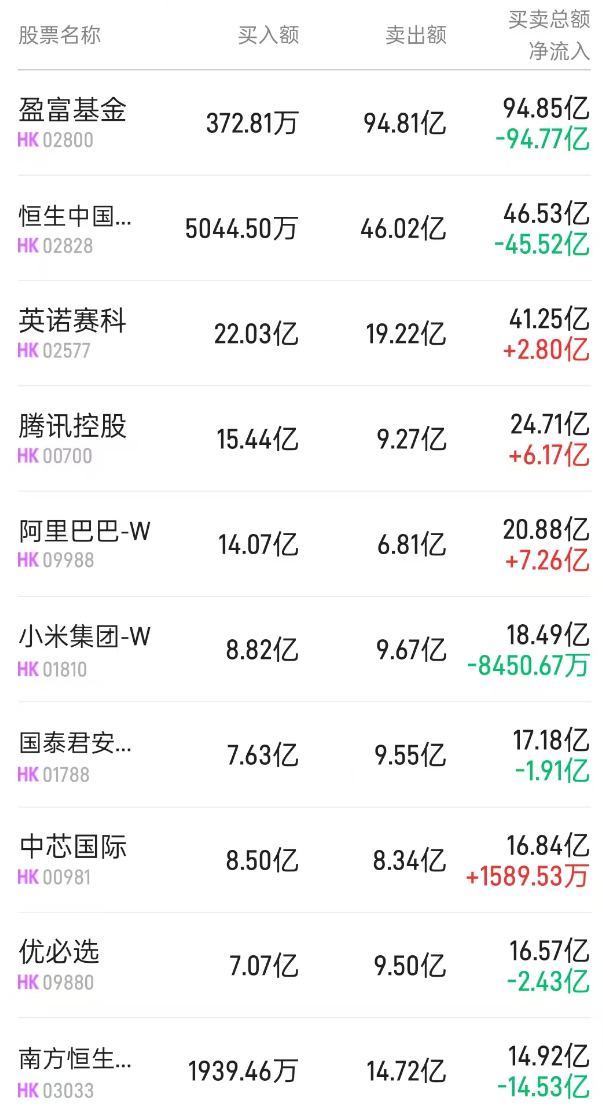
Core Insights - On August 4, 2025, the top three companies by trading volume in the Southbound Stock Connect were Yingfu Fund (02800), Hang Seng China Enterprises (02828), and InnoCare Pharma (02577) with trading volumes of 94.85 billion, 46.53 billion, and 41.25 billion respectively [1] - In the Southbound Stock Connect for Shenzhen, the top three companies were Yingfu Fund (02800), Tencent Holdings (00700), and Hang Seng China Enterprises (02828) with trading volumes of 50.64 billion, 22.09 billion, and 17.90 billion respectively [1] Southbound Stock Connect (Shanghai) Active Companies - Yingfu Fund (02800) had a trading amount of 94.85 billion with a net buy of -94.77 billion [2] - Hang Seng China Enterprises (02828) recorded a trading amount of 46.53 billion with a net buy of -45.52 billion [2] - InnoCare Pharma (02577) achieved a trading amount of 41.25 billion with a net buy of +2.80 billion [2] - Tencent Holdings (00700) had a trading amount of 24.71 billion with a net buy of +6.17 billion [2] - Alibaba-W (09988) recorded a trading amount of 20.88 billion with a net buy of +7.26 billion [2] Southbound Stock Connect (Shenzhen) Active Companies - Yingfu Fund (02800) had a trading amount of 50.64 billion with a net buy of -50.58 billion [2] - Tencent Holdings (00700) recorded a trading amount of 22.09 billion with a net buy of -5.65 billion [2] - Hang Seng China Enterprises (02828) achieved a trading amount of 17.90 billion with a net buy of -17.74 billion [2] - Alibaba-W (09988) had a trading amount of 12.93 billion with a net buy of +228.97 million [2] - InnoCare Pharma (02577) recorded a trading amount of 12.76 billion with a net buy of +823.66 million [2]
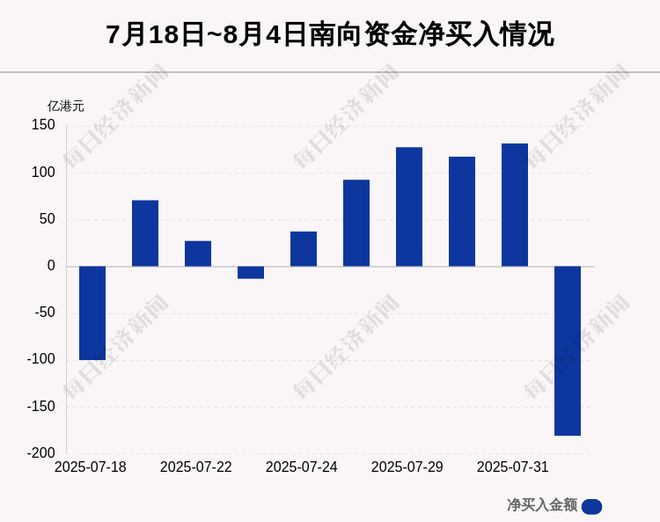
最新出炉!8月4日港股通净流出180.92亿港元,这只龙头被逆势买入7.282亿港元!
Mei Ri Jing Ji Xin Wen· 2025-08-04 10:49
Key Points - The most actively traded stock by southbound funds is Alibaba-W (9988.HK), with a net buy amount of 728 million HKD [1][2] - The stock with the highest net sell amount is CanSino Biologics (9926.HK), totaling 323 million HKD [1][2] Summary by Category Net Buy Stocks - Alibaba-W (9988.HK): Closing price at 116.2 HKD, net buy of 728 million HKD, with a price change of -0.60% [2] - InnoCare Pharma (2577.HK): Closing price at 75.15 HKD, net buy of 363 million HKD, with a price change of 30.47% [2] - Kuaishou-W (1024.HK): Closing price at 77.0 HKD, net buy of 220 million HKD, with a price change of 3.22% [2] - SMIC (0981.HK): Closing price at 51.5 HKD, net buy of 218 million HKD, with a price change of 2.90% [2] - Tencent Holdings (0700.HK): Closing price at 550.0 HKD, net buy of 53 million HKD, with a price change of 2.80% [2] - Li Auto-W (2015.HK): Closing price at 101.2 HKD, net buy of 41 million HKD, with a price change of 0.70% [2] - Xiaomi Group-W (1810.HK): Closing price at 54.55 HKD, net buy of 27 million HKD, with a price change of 2.15% [2] Net Sell Stocks - CanSino Biologics (9926.HK): Closing price at 152.1 HKD, net sell of 323 million HKD, with a price change of -2.69% [2] - UBTECH Robotics (9880.HK): Closing price at 97.3 HKD, net sell of 243 million HKD, with a price change of 10.13% [2] - Guotai Junan International (1788.HK): Closing price at 5.34 HKD, net sell of 19 million HKD, with a price change of -6.48% [2]
港股通(深)净卖出69.68亿港元
Zheng Quan Shi Bao· 2025-08-04 10:37
Market Overview - On August 4, the Hang Seng Index rose by 0.92%, closing at 24,733.45 points, while southbound funds through the Stock Connect recorded a net sell of 18.092 billion HKD [1] - The total trading volume for the Stock Connect on August 4 was 130.07 billion HKD, with a net sell of 18.092 billion HKD [1] Trading Activity - In the Shanghai Stock Connect, the trading volume was 83.126 billion HKD with a net sell of 11.124 billion HKD, while in the Shenzhen Stock Connect, the trading volume was 46.944 billion HKD with a net sell of 6.968 billion HKD [1] - The most actively traded stock in the Shanghai Stock Connect was the Tracker Fund of Hong Kong (盈富基金), with a trading volume of 9.485 billion HKD, followed by Hang Seng China Enterprises and InnoCare Pharma, with trading volumes of 4.653 billion HKD and 4.125 billion HKD respectively [1] Net Buy/Sell Analysis - Alibaba-W recorded the highest net buy amount of 726 million HKD, despite a closing price drop of 0.60% [1] - The Tracker Fund of Hong Kong had the highest net sell amount of 9.477 billion HKD, while its closing price increased by 0.88% [1] - In the Shenzhen Stock Connect, the Tracker Fund of Hong Kong also led in trading volume with 5.064 billion HKD, and had a net sell of 5.058 billion HKD, closing up by 0.88% [2] Key Stocks Performance - Kuaishou-W had the highest net buy amount in the Shenzhen Stock Connect, with a net buy of 220 million HKD and a closing price increase of 3.22% [2] - Tencent Holdings and Hang Seng China Enterprises followed in trading volume with 2.709 billion HKD and 1.790 billion HKD respectively [2]



南向资金今日成交活跃股名单(8月4日)
Zheng Quan Shi Bao Wang· 2025-08-04 10:37
Core Insights - The Hang Seng Index rose by 0.92% on August 4, with southbound trading totaling HKD 130.07 billion, resulting in a net sell of HKD 18.09 billion [1] - The most actively traded stock by southbound funds was the Tracker Fund of Hong Kong, with a total trading amount of HKD 14.55 billion, followed by Hang Seng China Enterprises and InnoCare Pharma [1][2] - Alibaba-W had the highest net buy amount of HKD 728 million, despite a closing price drop of 0.60% [1][3] Southbound Trading Summary - Total southbound trading amounted to HKD 130.07 billion, with buy transactions at HKD 55.99 billion and sell transactions at HKD 74.08 billion, leading to a net sell of HKD 18.09 billion [1] - The southbound trading for Stock Connect (Shenzhen) was HKD 46.94 billion, with net selling of HKD 6.97 billion, while Stock Connect (Shanghai) had a total of HKD 83.13 billion with net selling of HKD 11.12 billion [1] - The stocks with the highest net buy amounts included Alibaba-W (HKD 728 million), InnoCare Pharma (HKD 363 million), and Kuaishou-W (HKD 220 million) [1][2] Continuous Net Buying Stocks - Three stocks experienced continuous net buying for more than three days, with Tencent Holdings, Xiaomi Group-W, and Kuaishou-W leading in net buying days at 8, 7, and 3 days respectively [2] - The highest net buying amounts during this period were for Xiaomi Group-W (HKD 4.16 billion), Tencent Holdings (HKD 3.59 billion), and Kuaishou-W (HKD 1.80 billion) [2]

北水动向|北水成交净卖出180.92亿 北水再度减持港股ETF 全天抛售盈富基金超145亿港元
智通财经网· 2025-08-04 10:05
Core Viewpoint - The Hong Kong stock market experienced significant net selling from northbound capital, totaling HKD 180.92 billion, with notable net selling in specific stocks and sectors [1] Group 1: Northbound Capital Activity - Northbound capital recorded a net selling of HKD 180.92 billion on August 4, with HKD 111.24 billion from the Shanghai Stock Connect and HKD 69.68 billion from the Shenzhen Stock Connect [1] - The stocks with the highest net buying included Alibaba-W (09988), InnoCare Pharma (02577), and Kuaishou-W (01024) [1] - The stocks with the highest net selling included the Tracker Fund of Hong Kong (02800), Hang Seng China Enterprises Index (02828), and Southern Hang Seng Technology Index (03033) [1] Group 2: Individual Stock Performance - Alibaba-W (09988) saw a net inflow of HKD 7.28 billion, supported by Morgan Stanley's report predicting significant subsidies in the mainland food delivery sector [4] - InnoCare Pharma (02577) had a net inflow of HKD 3.62 billion, with a report from Jefferies highlighting its inclusion in NVIDIA's 800V power supply vendor list [5] - Kuaishou-W (01024) received a net inflow of HKD 2.19 billion, with ongoing developments in its AI initiatives contributing to positive market sentiment [5] - Semiconductor company SMIC (00981) experienced a net inflow of HKD 2.17 billion, amid concerns regarding NVIDIA's chip security issues [6] - Li Auto-W (02015) had a net inflow of HKD 40.81 million, despite a decline in vehicle deliveries due to sales team adjustments and increased competition [6] Group 3: ETF and Broader Market Trends - Northbound capital sold off Hong Kong ETFs, with the Tracker Fund of Hong Kong (02800) facing a net outflow of HKD 145.34 billion [7] - Concerns about rising overseas risks and the potential impact of tariff negotiations are influencing market sentiment [7] - Tencent (00700) and Xiaomi Group-W (01810) saw net inflows of HKD 52.6 million and HKD 26.66 million, respectively [7]