欣旺达

Search documents
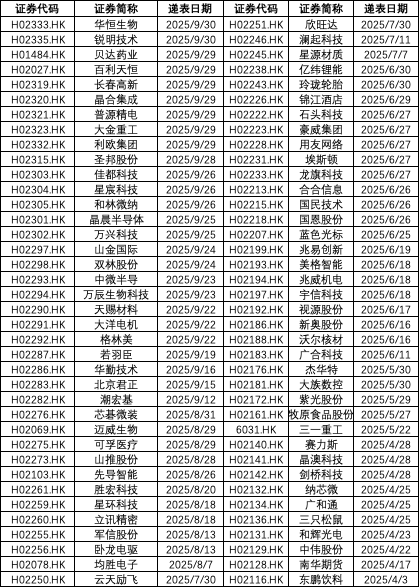
“A+H”股热潮持续,76家A股公司递表排队赴港上市
Sou Hu Cai Jing· 2025-10-06 00:37
Core Viewpoint - The trend of A-share companies planning to list in Hong Kong continues, with a significant number of firms seeking to expand their financing channels and enhance their international presence [1][4][8]. Group 1: A-Share Companies Planning to List in Hong Kong - As of September 30, three A-share companies, XinNuoWei, Kexing Pharmaceutical, and KOTAI Power, announced plans to list in Hong Kong, bringing the total to 25 companies that have made such announcements in September alone [1][3]. - A total of 76 A-share companies have submitted listing applications to the Hong Kong Stock Exchange and are awaiting hearings as of October 2 [1][6]. Group 2: Industry Distribution and Notable Companies - The companies planning to list cover various industries, including pharmaceuticals, technology, and consumer goods, indicating a broad interest across sectors [6]. - Notable companies among those planning to list include Kexing Pharmaceutical, which aims to enhance its international strategy and financing capabilities, and XinNuoWei, which focuses on global expansion and capital operations [4][5]. Group 3: Financing and Market Trends - The "A+H" listing model has seen significant fundraising success, with 11 A-share companies raising a total of 916.89 billion HKD this year, accounting for over 50% of the total IPO financing in Hong Kong [8]. - The Hong Kong Stock Exchange has experienced a surge in new stock issuance, with total financing reaching 1,345 billion HKD by the end of August, marking a nearly sixfold increase compared to the same period in 2024 [8].




锂电池续航与安全不可兼得难题被破解
起点锂电· 2025-10-05 07:00
Group 1 - The CINE2025 Solid-State Battery Exhibition and Industry Annual Conference will be held from November 6-8, 2025, at the Guangzhou Nansha International Convention Center, featuring over 200 exhibitors and 20,000 professional attendees [2][9] - The event will include the 2025 Qidian Solid-State Battery Golden Ding Award Ceremony and the SSBA Solid-State Battery Industry Alliance Council [2] - The first batch of exhibitors and sponsors includes companies such as Jin Na Technology, Ru Tian Technology, and Rongjie Energy, among others [2] Group 2 - A research team from Tsinghua University has developed a new fluorinated polyether electrolyte that achieves an energy density of 604 Wh kg-1 for high-safety polymer batteries, addressing the challenge of balancing battery range and safety [3][4] - Solid-state batteries are seen as a significant development direction for lithium batteries, particularly those using lithium-rich manganese-based layered oxides, which show potential for energy density breakthroughs [3][4] - The research team proposed a new design strategy called "rich anion solvation structure," which enhances the physical contact and ionic conductivity at the solid-solid interface, significantly improving interface stability [4] Group 3 - The polymer battery constructed with the new electrolyte demonstrated excellent electrochemical performance, achieving an energy density of 604 Wh kg-1 under 1 MPa external pressure, surpassing current commercial lithium iron phosphate and nickel-cobalt-manganese batteries [4] - The battery passed safety tests, including puncture and thermal stability tests at 120°C, without any combustion or explosion, showcasing its superior safety performance [5]
高工锂电年会前瞻 | 硫化锂赛道接连抛出“上量”信号
高工锂电· 2025-10-04 09:41
Core Viewpoint - The lithium sulfide sector is experiencing significant growth, with companies ramping up production capabilities and advancements in solid-state battery technology, indicating a faster-than-expected demand increase for lithium sulfide in the coming years [4][10]. Group 1: Industry Developments - Tianqi Lithium announced the commencement of a pilot project for a 50-ton lithium sulfide production line in Sichuan, emphasizing low risk and rapid mass production capabilities [2]. - Enjie Co. reported the completion of a pilot line for high-purity lithium sulfide, with a capacity of 100 tons, and has established a 10-ton solid-state electrolyte production line [2]. - Shanghai Xiba has acquired relevant assets related to lithium sulfide and plans to expand production through joint ventures [2]. Group 2: Market Demand and Projections - The demand for lithium sulfide is projected to reach a hundred-ton level by 2025, with expectations of a shift to a thousand-ton level by 2026, indicating a faster growth trajectory than previously anticipated [4]. - The industry is witnessing a surge in interest in sulfide solid-state batteries, with multiple companies, including Yiwei Lithium Energy and Guoxuan High-Tech, disclosing advancements in their solid-state battery products [3]. Group 3: Production and Purity Challenges - Lithium sulfide constitutes 77% to 80% of the cost of solid-state electrolytes, with current market prices ranging from 3 million to 4 million yuan per ton, making cost reduction critical for the commercialization of solid-state batteries [6]. - High purity lithium sulfide is essential for producing high-performance solid-state electrolytes, with impurities adversely affecting ionic conductivity and posing safety risks [7]. - The current market purity levels for lithium sulfide range from 99.5% to 99.9%, with advancements being made towards achieving 99.99% purity by domestic companies [8]. Group 4: Technological Approaches - Different companies are adopting varied production methods for lithium sulfide, including the hydrogen sulfide neutralization method, which has achieved scale and is represented by Shanghai Xiba [12]. - The liquid-phase method is being pursued by companies like Tianqi Materials and Huasheng Lithium, leveraging their expertise in electrolyte and fine chemical production [14]. - The lithium-sulfur direct solid-phase method, favored by major lithium companies, is noted for its high purity output but faces challenges in scalability due to the high cost of lithium metal [15][16]. Group 5: Equipment and Process Challenges - The production of lithium sulfide is constrained by the need for specialized equipment that can handle its corrosive nature and sensitivity to moisture and oxygen [18]. - Current industry practices involve three main equipment solutions, with the hydrogen sulfide-hydroxide method leading in terms of engineering capabilities and cost reduction potential [18].

固态初创企业生存法则:避开动力储能大赛道,细分场景寻出路
高工锂电· 2025-10-04 09:41
Core Viewpoint - The solid-state battery industry is shifting focus from mainstream markets like power and energy storage to niche markets, reflecting a pragmatic approach to commercialization and technology application [3][11][27]. Market Overview - The lithium battery industry is primarily driven by two core application scenarios: power batteries and energy storage, which together account for a significant market share. In the first half of 2025, China's total lithium battery shipments reached 776 GWh, a year-on-year increase of 68%, with power batteries at 477 GWh (up 49%) and energy storage batteries at 265 GWh (up 128%) [4][5]. - Despite the potential for solid-state batteries to capture even 1% of these markets, the current dominance of lithium iron phosphate (LFP) batteries, due to their cost advantages and performance improvements, poses a significant challenge for solid-state batteries to gain market share in the short term [5][6]. Cost and Performance Analysis - The competitive landscape shows that the cost of materials is a decisive factor, with LFP batteries gaining market share due to lower raw material costs and economies of scale, while ternary batteries are losing ground [6][7]. - Solid-state batteries currently have a much higher cost than ternary batteries, making it nearly impossible to compete in the cost-sensitive power and energy storage markets [6][10]. Niche Market Opportunities - Solid-state battery startups are now targeting niche markets where their technology can meet specific performance and safety needs, such as high-end consumer products (e.g., premium power banks and electric motorcycles) and military applications [11][12][14]. - In high-end consumer markets, consumers are less price-sensitive and more focused on safety and performance, allowing solid-state batteries to find a foothold despite higher prices [13]. - Military and specialized equipment sectors demand high energy density and safety, which solid-state batteries can provide, making them suitable for these applications [14][15]. Technological Transition - The industry is currently seeing a transition towards semi-solid-state batteries, which serve as a bridge between liquid and full solid-state batteries, balancing performance and cost effectively [18][19]. - Semi-solid-state batteries can mitigate safety risks associated with high energy densities in traditional batteries, and their technology is advancing towards mass production capabilities [19][20]. Industry Trends - The solid-state battery sector is entering a phase of pragmatic development characterized by three trends: accelerated commercialization, the central role of semi-solid-state batteries as a transitional technology, and the long-term coexistence of solid and liquid batteries [23][25][26]. - The industry is moving from a conceptual phase to a commercial phase, with several startups establishing significant production capacities for semi-solid-state batteries [24][27]. - The future landscape will see solid-state batteries complementing liquid batteries in niche markets, rather than directly competing in mainstream applications [26][27].
重磅!理想牵手宁德时代/欣旺达
起点锂电· 2025-10-04 09:13
Group 1 - The article discusses the establishment of a joint venture between Li Auto and battery manufacturer Sunwoda, marking a shift from a transactional relationship to a collaborative partnership [4][5][8] - The joint venture, Shandong Li Auto Battery Co., Ltd., is a 50:50 investment aimed at producing and selling lithium-ion batteries for electric vehicles, with Li Auto leading the R&D efforts [5][9] - Li Auto's battery R&D team consists of over 200 members, and the self-developed battery products are expected to be launched in production models by 2026 [5][9] Group 2 - Li Auto's strategy includes a dual approach of self-research and external procurement of batteries, focusing on high-performance 5C supercharging batteries [10][11] - Current battery suppliers for Li Auto include CATL, Sunwoda, and Honeycomb Energy, with a recent five-year strategic cooperation agreement signed with CATL [12][13] - The collaboration with CATL aims to enhance supply chain stability and market expansion, while the joint venture with Sunwoda accelerates the development of self-researched batteries [13][14] Group 3 - The partnership between automotive companies and battery manufacturers is expected to reshape the electric vehicle industry, with self-research becoming essential for leading companies to enhance competitiveness [14]


高工锂电年会前瞻 | 头部电池企业竞逐零碳新业态
高工锂电· 2025-10-03 09:33
Core Viewpoint - The article emphasizes the growing trend of "zero carbon" initiatives in the battery industry, highlighting collaborations between battery companies and local governments to create zero-carbon cities and ecosystems, driven by national energy strategies and policies [3][4][5]. Group 1: Zero Carbon Collaborations - Battery companies are engaging in partnerships with local governments across various regions to develop zero-carbon initiatives, including zero-carbon industrial parks and transportation corridors [2][3]. - The focus of these collaborations has shifted from merely building battery production capacity to comprehensive planning for zero-carbon infrastructure [3][4]. - Notable partnerships include Ningde Times with Jiangsu, Shanxi, and Gansu provinces, aiming to leverage local renewable energy resources for zero-carbon projects [2][3]. Group 2: National Energy Strategy - The zero-carbon initiatives align with China's national energy strategy, which aims to peak carbon emissions by 2030 [4][5]. - The energy transition is being framed as a strategic cornerstone industry, with significant government involvement in shaping the market and technological landscape [5][6]. - Battery companies are encouraged to integrate into the national energy system, finding their ecological niche within this broader framework [6][42]. Group 3: Energy Transition Dimensions - The energy transition is characterized by five dimensions: electrification of energy consumption, low-carbon energy production, interactive energy supply and demand, modernization of energy equipment, and scientific governance of energy [7][8]. - Recent policies from various government departments have positioned batteries at the core of this energy transition, emphasizing their role in both consumption and production sides [8][9]. Group 4: Market Mechanisms and Innovations - The introduction of market mechanisms, such as the electricity spot market and new storage construction plans, has elevated the role of batteries from mere tools to central resources in energy management [11][12]. - Innovations in energy equipment and governance are expected to enhance the efficiency of storage systems and battery technologies [12][13]. Group 5: Key Projects and Infrastructure - Major projects like the Yajiang Hydropower Station and the Xinjiang coal transportation initiative are pivotal in establishing a new power system that supports green energy and battery applications [21][22]. - The Yajiang Hydropower Station, with a capacity of 70-81 million kilowatts, is projected to significantly reduce electricity costs in the Southwest region [23]. Group 6: Battery Companies' Strategic Shifts - Leading battery companies are transitioning from product manufacturing to becoming comprehensive service providers, actively participating in local energy system restructuring [29][30]. - Companies like Ningde Times and Envision are exploring integrated solutions in energy storage and microgrid systems, enhancing regional energy reliability and economic efficiency [32][34]. Group 7: Future Competitiveness - The ability of battery companies to deeply integrate into the new energy system will be a decisive factor for their future competitiveness [43][44]. - Companies must understand policy intentions and continuously innovate in technology and business models to seize opportunities arising from the energy system transformation [45].

储能“芯荒”引爆行业,专家:不应过度兴奋,要冷静下来
Xin Lang Cai Jing· 2025-10-03 03:06
Core Insights - The current market for energy storage batteries is experiencing high demand, with several leading companies reporting full production capacity and an inability to accept new orders [1][3][4] - The global energy storage battery shipments reached 246.4 GWh in the first half of the year, marking a year-on-year increase of 115.2%, with China's shipments at 232.03 GWh, up 118.4% [4] - The demand for energy storage is driven by a surge in applications, particularly in regions like Asia-Pacific, the Middle East, and Africa, which are becoming key growth markets [9][10] Industry Overview - Leading energy storage battery manufacturers, such as CATL and EVE Energy, are operating at nearly 90% capacity utilization, with some companies even outsourcing production to meet demand [3] - The price of energy storage cells has seen an increase of 0.01-0.03 yuan/Wh due to tight supply conditions [4] - The demand for energy storage batteries is expected to remain strong, with projections indicating that global production could exceed 2000 GWh by 2025 [18] Market Dynamics - The market is currently characterized by a dichotomy where some companies are overwhelmed with orders while others struggle to secure business, leading to a "rich get richer" scenario [17] - The transition from a planned to a market-driven model in the energy storage sector is expected to bring challenges, as the industry adapts to new competitive dynamics [14][18] - The recent policy changes, including the cancellation of mandatory storage requirements, have led to a surge in project approvals earlier this year, but subsequent months have seen a decline in new installations [11][12] Future Outlook - The industry is at a critical juncture, with a shift towards larger capacity cells (314 Ah and above) and a focus on technological advancements to improve efficiency and reduce costs [15][18] - The long-term profitability of energy storage is anticipated to improve as the market matures and clearer revenue models emerge [18] - Recommendations for the industry include maintaining quality standards, accelerating technological innovation, and establishing a robust market mechanism to ensure sustainable growth [18]


创新驱动 芯耀未来——CPCA Show Plus 2025助力产业共享AI时代发展机遇
半导体行业观察· 2025-10-03 01:56
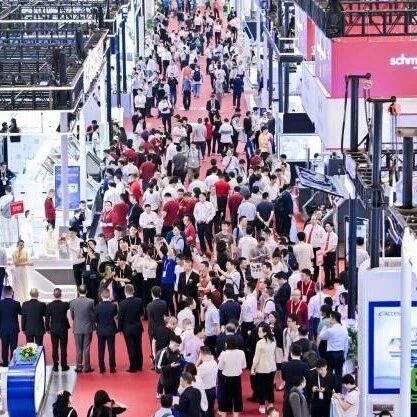
Core Viewpoint - The "2025 Electronic Semiconductor Industry Innovation Development Conference and International Electronic Circuit (Greater Bay Area) Exhibition" (CPCA Show Plus) will take place from October 28 to 30, 2025, in Shenzhen, focusing on innovation-driven development in the semiconductor and electronic circuit industries [1]. Industry Growth and Trends - The PCB manufacturing industry in China experienced robust growth in the first half of 2025, with revenue reaching approximately 183 billion RMB, reflecting a year-on-year increase of over 10% driven by terminal demand and the expansion of emerging applications [4]. - The exhibition aims to leverage the advantages of the Greater Bay Area to stimulate the PCB industry's growth in the AI era by connecting upstream and downstream enterprises [4]. Exhibition Highlights - CPCA Show Plus 2025 will feature over 300 renowned exhibitors, showcasing a comprehensive range of products from PCB manufacturing processes to semiconductor and packaging substrates, providing a one-stop procurement and collaboration service [1][4]. - Key exhibitors include leading companies in the PCB manufacturing sector and those covering advanced materials, equipment, and chemicals, emphasizing a full industry chain approach [5]. Technological Innovations - The exhibition will present smart manufacturing solutions such as automated production lines, AI quality inspection systems, and digital twin factories, aimed at enhancing production efficiency and precision management in the electronic circuit and semiconductor industries [5]. - The event will also highlight sustainable development practices, showcasing green materials, energy-efficient production equipment, and clean production processes to support the industry's low-carbon transformation [5]. Networking and Collaboration - CPCA Show Plus 2025 is expected to attract over 45,000 professional attendees from global PCB application enterprises, research institutions, and buyers, facilitating supply-demand matching and technical exchanges [7]. - The exhibition will feature specialized zones for ceramic substrates, top PCB companies, and academic innovation, allowing attendees to focus on industry dynamics and trends [7]. International Promotion - The event has been promoted through various domestic and international media channels to enhance the global presence of China's electronic manufacturing industry, attracting notable companies from the application demand side [10]. Forums and Activities - A series of forums and activities will be held alongside the exhibition, including the 47th Sino-Japanese Electronic Circuit Autumn Conference, focusing on AI empowerment and industry breakthroughs [13]. - Specialized forums will address various topics, including low-altitude economy, commercial aerospace, and AI technology innovations, catering to diverse attendee interests [14]. Invitation to Industry Stakeholders - CPCA Show Plus 2025 serves as a platform for industry stakeholders to explore opportunities and drive upgrades in the semiconductor sector, inviting global enterprises, experts, and partners to participate [16].
2025H1全球储能锂电池出货量TOP25排行榜
起点锂电· 2025-10-02 06:56
Core Viewpoint - The solid-state battery industry is experiencing significant growth, with global lithium battery shipments expected to exceed 750 GWh in 2025, driven by emerging markets and increased overseas orders from Chinese companies [2][3][4]. Group 1: Industry Overview - In the first half of 2025, global energy storage lithium battery shipments reached 315.8 GWh, a year-on-year increase of 98% [2]. - The CR5 for global energy storage batteries was 51.5%, a decrease of 2 percentage points compared to 2024, while the CR10 was 73.9%, down 3.5 percentage points [2]. - The Middle East region saw over 200% growth in new installations, becoming one of the fastest-growing areas globally [4]. Group 2: Market Performance - Europe is expected to add 28.7 GWh of new installations in 2025, a 28% year-on-year increase, with the UK and Italy as major growth points [3]. - The Australian energy storage market tripled in size year-on-year, driven by government policies and incentives [3]. Group 3: Company Performance - CATL (宁德时代) ranked first in global energy storage battery shipments in the first half of 2025, with a revenue of 28.4 billion yuan, a slight decrease of 1.47% year-on-year [15][12]. - EVE Energy (亿纬锂能) shipped 28.71 GWh of energy storage batteries, a year-on-year increase of 37.02%, with revenues of 10.29 billion yuan, up 32.47% [19][20]. - Hithium (海辰储能) achieved a shipment of 35.1 GWh in 2024, with a revenue of 7.96 billion yuan, showing a slight increase [23]. Group 4: Revenue and Cost Analysis - CATL's gross margin for energy storage systems was 25.52%, down 1.11% year-on-year [15]. - EVE Energy's gross margin was 12.03%, a decrease of 2.32% year-on-year [20]. - Hithium's energy storage system revenue was 4.67 billion yuan, a significant increase of 136.7% [23]. Group 5: Emerging Technologies - Companies are focusing on innovations in battery technology, including sodium-ion batteries and advanced energy management systems, to enhance performance and safety [18][40]. - The introduction of large-capacity energy storage systems, such as 6.25 MWh solutions, is becoming a trend among leading manufacturers [45].


高工锂电年会前瞻|AI+能源进入三年关键窗口期
高工锂电· 2025-10-01 08:43
Core Viewpoint - The article emphasizes the significant opportunities for the battery industry driven by the integration of artificial intelligence (AI) into the energy sector, as outlined in the recent government implementation plan [3][4]. Group 1: Event Overview - The 2025 (15th) High-Performance Lithium Battery Annual Conference will be held from November 18-20, 2025, at the JW Marriott Hotel in Shenzhen [5][26]. - The event will feature discussions on AI applications in batteries, energy, and manufacturing, with participation from major industry players such as CATL, BYD, and others [5][26]. Group 2: Government Implementation Plan - The National Development and Reform Commission and the National Energy Administration issued an implementation plan that sets development goals for 2027 and 2030, detailing 37 key tasks for the intelligent revolution in the energy sector [3][6]. - By 2027, the focus will be on establishing a solid foundation and promoting over five specialized AI models in energy, with the aim of creating a replicable development model [6][7]. - By 2030, the goal is to achieve international leadership in energy AI technologies, enhancing the safety, greenness, and efficiency of energy systems [6]. Group 3: Key Application Scenarios - The implementation plan outlines eight key application scenarios for AI in the energy sector, including AI + power grid, AI + new energy, and AI + traditional energy sources [8][11]. - These scenarios aim to enhance operational safety, intelligent scheduling, and the efficiency of energy production and consumption [8][11]. Group 4: Technical Support and Challenges - The plan identifies three major areas for technical breakthroughs: data foundation, computing power support, and model capability enhancement [13][15]. - It emphasizes the need for high-quality data sets, a collaborative development mechanism for computing power and electricity, and the integration of AI with energy software [13][15]. Group 5: Demonstration Projects and Results - Several demonstration projects have already been implemented, showcasing the effectiveness of AI in energy applications such as vehicle-to-grid interactions and intelligent energy storage [17][21]. - For instance, in Shandong Province, vehicle-to-grid interactions have the potential to generate significant profits for users, while AI-driven energy storage systems have improved market competitiveness [20][22][24]. Group 6: Future Outlook - The integration of AI into the energy sector is expected to further reshape the entire energy production, transmission, and consumption chain [25].