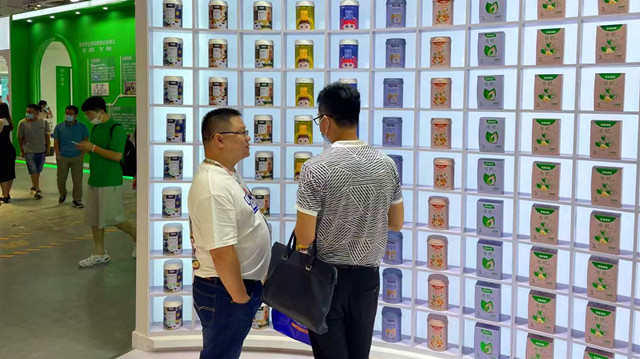
伊利股份

Search documents
为什么收入最高的女运动员大多来自网球?
36氪· 2025-10-16 00:10
Core Viewpoint - Tennis is becoming an unparalleled high-income sport for female athletes, as evidenced by the recent Forbes 2025 global athlete income rankings, where Zheng Qinwen surpassed Gu Ailing with an income of $26.1 million, ranking third overall [6][9]. Group 1: Mature Event System - Tennis has a highly mature and independent commercial structure, which is fundamental to its high income [12]. - Since the open era began in 1968, tennis has transitioned from an aristocratic sport to a professional and global commercial sport [13]. - The WTA operates as an independent entity, creating a strong wealth pool for female players through global event management and media rights sales [14]. - Major tournaments like the Grand Slams offer substantial prize money, with the 2024 Australian Open champion receiving AUD 3.15 million (approximately CNY 14.6 million) [15]. - Even first-round exits in Grand Slams provide significant guaranteed income, with the 2024 French Open offering nearly CNY 570,000 for first-round players [17]. - The WTA year-end finals have a total prize pool of $9 million, with the champion taking home $3.08 million [20]. Group 2: Equal Pay and "Star-Making" Mechanism - The equal pay system in professional tennis ensures that male and female players receive the same prize money for equivalent achievements, a rarity in professional sports [26]. - This equal pay initiative began in 1973, coinciding with the founding of the WTA, and has been adopted by all four Grand Slam tournaments [27]. - The high visibility and year-round schedule of tennis allow players to maintain a strong media presence, enhancing their commercial value [30]. - Tennis operates as a successful B2C business model, where star athletes serve as high-value assets for sponsors [32]. Group 3: Affluence and Luxury Brand Appeal - Tennis is considered a "middle-class sport" due to its high costs and popularity among affluent consumers [36]. - The sport's origins in the aristocracy and its association with luxury brands contribute to its appeal among high-income demographics [37]. - The high costs associated with tennis, such as court fees and equipment, make it more accessible to the middle class [41]. - The growing interest in tennis among affluent consumers has led to increased sales of tennis-related products, with a significant rise in searches for tennis skirts [43]. Group 4: Domestic Market Investment and Tennis System - The popularity of tennis in China has surged, particularly following the successes of players like Li Na and Zheng Qinwen [48][51]. - Zheng Qinwen's off-court earnings have surpassed her on-court income, highlighting the commercial potential of tennis in China [51]. - The number of tennis players in China has grown significantly, with projections indicating the market size will exceed CNY 60 billion by 2029 [53]. - Despite the rapid growth of tennis in China, the overall commercialization of the sport remains underdeveloped, indicating potential for future market expansion [55].


五粮液集团8亿增持!吃喝板块继续上攻,食品ETF(515710)近20日吸金超1.7亿元!机构高喊珍视底部机会
Xin Lang Ji Jin· 2025-10-15 11:51
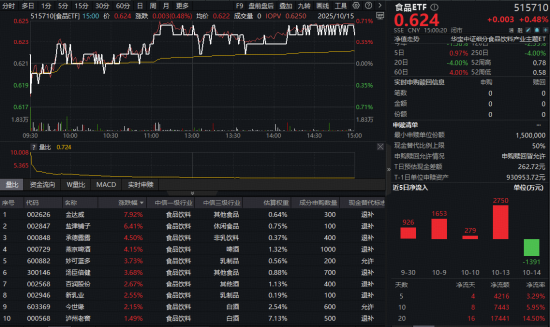
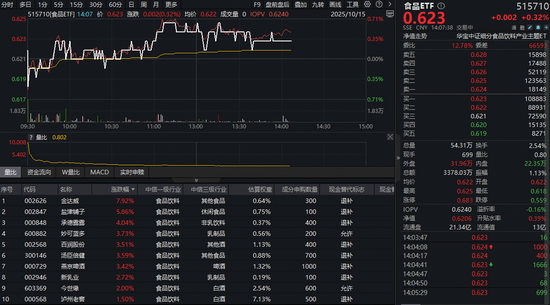
Group 1 - The food and beverage sector continues to rise, with the Food ETF (515710) showing a maximum intraday increase of 0.64% and closing up 0.48% [1][2] - Notable stock performances include Jin Dawei surging by 7.92%, Yan Jin Pu Zi increasing by 6.41%, and both Chengde Lulu and Yanjing Beer rising over 4% [1][2] - Recent inflows into the food and beverage sector ETFs have been significant, with the Food ETF (515710) seeing a net subscription of 42.16 million yuan over the last five trading days [1][2] Group 2 - Wuliangye announced the results of its share buyback plan, acquiring 6.2733 million shares, representing 0.16% of total shares, for approximately 800 million yuan [3] - Wuliangye is the largest holding in the Food ETF (515710), accounting for 14.65% of the fund's assets as of the second quarter of 2025 [3][4] Group 3 - Analysts suggest that the current low valuation period for the liquor sector presents a mid-to-long-term investment opportunity [4] - The Food ETF (515710) tracks a food and beverage index with a price-to-earnings ratio of 20.44, which is at a low percentile compared to the last decade [4] Group 4 - The food and beverage sector is characterized by low expectations and low holdings, indicating potential for price increases with any changes in supply and demand [5] - The sector is expected to benefit from government policies aimed at promoting quality development, which may enhance market confidence [5] - The Food ETF (515710) has a significant allocation to leading high-end liquor stocks and other beverage segments, making it a focal point for investors [5]

“宠物纸尿裤第一股”突发公告:拟收购宠物食品公司!
Xin Lang Cai Jing· 2025-10-15 11:30
Core Viewpoint - Yiyi Co., known as the "first stock of pet diapers," has announced a sudden suspension of trading, planning to acquire a pet food company specializing in cat food and cat litter [2][3] Company Summary - Yiyi Co. is primarily engaged in pet hygiene products, including pet pads, pet diapers, pet cleaning bags, and pet wet wipes. The company was listed in 2021 and reported a revenue of 888 million yuan in the first half of this year, a year-on-year increase of 9.34%, with a net profit of 102 million yuan, up 7.37% [3] - The target company for acquisition is Hangzhou Gaoye Family, established in 2020, which focuses on pet supplies and food research and development. Its cat litter brand, Xucuihua, is well-known on e-commerce platforms [3][4] Industry Trends - The pet economy in China is expanding significantly, attracting various capital investments for integration and layout, which is expected to promote healthy development towards branding, capitalization, and standardization [2][4] - The pet industry market size in China has grown from 97.8 billion yuan in 2015 to over 592.8 billion yuan in 2023, with a compound annual growth rate of 25.4%. It is projected to reach 811.4 billion yuan by 2025 [6] - Major pet companies are increasingly engaging in horizontal mergers and acquisitions to achieve a full-category layout, with the establishment of industry funds being one of the strategies [6][8] Investment Activities - Yiyi Co. has previously established an industry fund in collaboration with Jinding Capital, focusing on the pet and elderly care industries to enhance its supply chain competitiveness [5][8] - Other traditional food companies are also entering the pet economy, with significant investments and acquisitions, indicating a trend of cross-industry collaboration [9][10] Market Dynamics - The pet market is seeing a surge in investment and mergers, with a notable number of financing events occurring in the sector. As of the first quarter of this year, there were 634 PEVC financing events in the pet industry, with a focus on online platforms, pet medical services, and pet supplies [11] - The involvement of external capital is driving innovation and standardization in the industry, expanding consumption scenarios [12]

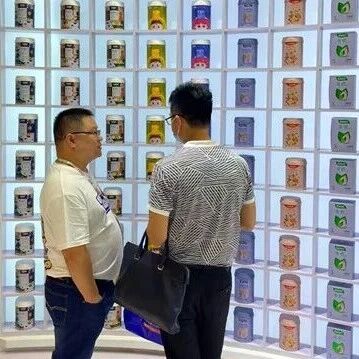
产业焦点 | 龙年生育红利消退,奶粉头部玩家技术军备竞赛鸣枪
Sou Hu Cai Jing· 2025-10-15 08:51
Core Insights - The infant formula market is experiencing intensified competition among leading brands, focusing on technological advancements rather than price wars as the initial growth from the baby boom in 2024 begins to wane [1][5] Industry Overview - The infant formula industry has seen a slight recovery in sales, with a 1.6% overall growth in the first eight months of 2025, primarily driven by a 13.5% increase in Stage 2 formula, while Stage 3 formula sales declined by 6.5% [2] - The birth rate in China reached 9.54 million in 2024, an increase of 520,000 from the previous year, marking a temporary rebound in the maternal and infant industry [2] - Despite the growth in sales figures for Stage 1 formula, this is attributed to improved market conditions rather than actual sales volume increases [4] Competitive Landscape - Leading brands are leveraging their research and development capabilities to differentiate their products, focusing on precision nutrition tailored to various age groups and regional dietary characteristics [5][6] - The competitive pressure on infant formula companies is expected to increase in the latter half of 2023 and into 2024, with larger brands' birth subsidy policies significantly impacting smaller brands, potentially reducing their sales by approximately 25% [5] - The number of registered formula series has decreased, but there is still room for increased market concentration, with 93 dairy companies having 426 formula series registered by the end of August 2025 [5]
饮料乳品板块10月15日涨0.19%,承德露露领涨,主力资金净流入2.5亿元
Zheng Xing Xing Ye Ri Bao· 2025-10-15 08:37
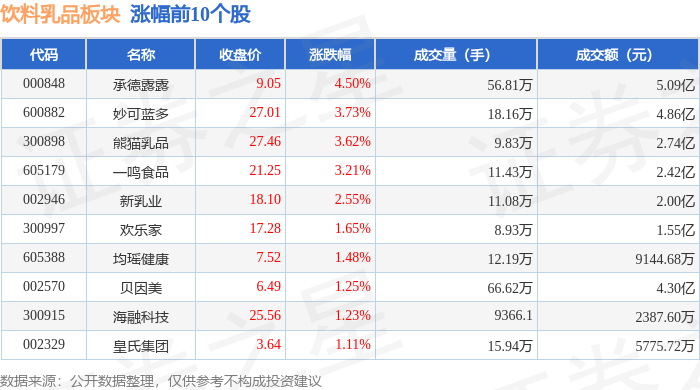
Core Insights - The beverage and dairy sector experienced a slight increase of 0.19% on October 15, with Chengde Lulu leading the gains [1] - The Shanghai Composite Index closed at 3912.21, up 1.22%, while the Shenzhen Component Index closed at 13118.75, up 1.73% [1] Stock Performance - Chengde Lulu (000848) closed at 9.05, up 4.50%, with a trading volume of 568,100 shares and a transaction value of 509 million [1] - Miaokelan Duo (600882) closed at 27.01, up 3.73%, with a trading volume of 181,600 shares and a transaction value of 486 million [1] - Panda Dairy (300898) closed at 27.46, up 3.62%, with a trading volume of 98,300 shares and a transaction value of 274 million [1] - Other notable stocks include Yiming Food (605179) at 21.25 (+3.21%) and New Dairy (002946) at 18.10 (+2.55%) [1] Capital Flow - The beverage and dairy sector saw a net inflow of 250 million from main funds, while retail investors experienced a net outflow of 188 million [2] - Major stocks like Yili (600887) had a net inflow of 94.93 million from main funds, but a net outflow of 61.86 million from retail investors [3] - Chengde Lulu (000848) also saw a net inflow of 68.09 million from main funds, with retail investors withdrawing 31.43 million [3]






浙江省嘉兴市市场监督管理局食品安全监督抽检信息通告(2025年第23期)
Zhong Guo Zhi Liang Xin Wen Wang· 2025-10-15 08:25
Summary of Key Points Core Viewpoint - The Jiaxing Market Supervision Administration conducted a food safety inspection, revealing that out of 174 samples tested, 168 were compliant while 6 were found to be non-compliant with national food safety standards [3][4]. Group 1: Inspection Results - A total of 174 samples from 26 categories of food products were tested [3]. - 168 samples passed the inspection, while 6 samples failed to meet safety standards [3][4]. - Specific non-compliant products included: - E. coli in yellow eel from Zhao Chao Seafood Stall [5]. - Pesticide residues in sweet potatoes from Xiao Yang Vegetable and Fruit Business [6]. - Pesticide residues in peaches from Yi Feng Fresh Supermarket [6]. - Pesticide residues in ginger and potatoes from Can Can Fresh Agricultural Products Co. [6]. - Pesticide residues in lychee from A Bao Fruit Store [6]. Group 2: Regulatory Actions - The Jiaxing Market Supervision Administration has mandated local market supervision departments to take legal action against the vendors of the non-compliant products [4]. - The port area market supervision department is required to ensure that the implicated food businesses take immediate measures, such as removing the products from shelves to mitigate risks [4].
山东省市场监督管理局关于食品安全“你点我检”专项抽检情况的通告(2025年第22期)
Zhong Guo Zhi Liang Xin Wen Wang· 2025-10-15 06:30
Core Points - The Shandong Provincial Market Supervision Administration conducted a food safety inspection under the "You Order, I Inspect" initiative, revealing that out of 201 food samples tested, 196 were compliant while 5 were found to be non-compliant [3][4][5] Group 1: Inspection Results - A total of 201 food samples were tested, covering 17 categories including biscuits, beverages, and meat products [3][4] - 196 samples passed the inspection, while 5 samples failed to meet safety standards [3][4] - The non-compliant products included items with excessive levels of harmful substances such as "咪鲜胺" and "噻虫胺" [4][5] Group 2: Actions Taken - Local market supervision authorities have mandated producers to trace the distribution of non-compliant products, initiate recalls, and remove these products from shelves [3][4] - The authorities are also conducting investigations to identify the causes of non-compliance and implement corrective measures [3][4] Group 3: Consumer Guidance - Consumers are encouraged to report any non-compliant products they encounter by calling the hotline 12345 [3][4]


6亿酱酒项目发布,吃喝板块继续上攻!机构高呼:三重底部或现
Xin Lang Ji Jin· 2025-10-15 06:29
Core Viewpoint - The food and beverage sector is experiencing a positive trend, with the Food ETF (515710) showing an increase of 0.32% as of October 15, 2023, indicating a favorable market sentiment towards this sector [1][2]. Group 1: Market Performance - The Food ETF (515710) has been trading positively, with a price increase of 0.32% during the day [1][2]. - Key stocks in the consumer goods sector have shown significant gains, with Jin Dawei rising nearly 8%, and other companies like Yan Jin Pu Zi and Cheng De Lu Lu increasing over 5% [1][3]. - Major liquor brands also performed well, with Luzhou Laojiao up over 1% and other leading brands like Guizhou Moutai and Shanxi Fenjiu showing slight increases [1][3]. Group 2: Investment Opportunities - The recent announcement of a 600 million yuan investment project in sauce-flavored liquor in Guizhou is seen as a strategic move to enhance the production capacity and cultural display in the region, which could benefit the local industry [3]. - Analysts suggest that the food and beverage sector is currently undervalued, with the Food ETF's price-to-earnings ratio at 20.44, indicating a good opportunity for long-term investment [3][4]. - The sector is characterized by low expectations and low holdings, suggesting that any changes in supply and demand could lead to significant price increases [4]. Group 3: Future Outlook - Securities firms are optimistic about the food and beverage sector, highlighting that the current low base and potential for recovery could lead to a positive market environment [4]. - The focus is on companies with strong fundamentals, particularly in the snack, beverage, and frozen food segments, which are expected to report high growth in their upcoming quarterly results [4][5]. - The Food ETF is recommended as a core asset for investors looking to gain exposure to the food and beverage sector, with a significant portion of its holdings in leading liquor brands and other food-related stocks [5].


奶粉头部玩家技术军备竞赛鸣枪
第一财经· 2025-10-15 03:27
Core Viewpoint - The impact of the baby boom in the Year of the Dragon (2024) on the infant formula market is gradually diminishing, leading to intensified competition among leading dairy companies, which are now focusing more on technological advancements rather than price wars [1][3]. Market Trends - In the first eight months of 2025, the overall sales of infant formula in China showed a growth of 1.6%, primarily driven by a 13.5% increase in Stage 2 formula, while Stage 3 formula sales declined by 6.5% [4]. - The sales of Stage 1 formula increased by 9.4%, but this growth rate was lower than that of Stage 2 [5]. Industry Dynamics - The birth rate in China reached 9.54 million in 2024, an increase of 520,000 from the previous year, marking a temporary recovery in the maternal and infant industry [5]. - Despite the market recovery, there are concerns about the sustainability of growth, as the momentum for Stage 1 and overall infant formula sales is beginning to weaken [5]. Competitive Landscape - Leading infant formula brands are leveraging their research and technological advantages to squeeze out smaller brands, with companies like China Feihe announcing new product upgrades aimed at precise nutrition [1][7]. - The number of registered formula series has decreased, but there is still room for market concentration to increase, with 93 dairy companies having 426 formula series registered by the end of August 2025 [7]. Future Outlook - Analysts predict that the competition pressure on infant formula companies will intensify in the second half of the year and into 2026, as the effects of the birth boom wane [6][7]. - The focus on research and brand investment by leading companies is expected to attract new consumers, further accelerating market consolidation and reshuffling [7].
龙年生育红利消退,奶粉头部玩家技术军备竞赛鸣枪
Di Yi Cai Jing· 2025-10-15 03:20
Core Insights - The impact of the baby boom in the Year of the Dragon (2024) on the infant formula market is gradually diminishing, leading to intensified competition among major brands focusing on technological advancements rather than price wars [1] - Major infant formula brands, including China Feihe, are launching upgraded products aimed at precise nutrition, reflecting a shift in strategy to maintain market share amid concerns over insufficient recovery momentum [1][2] - Despite a temporary increase in newborn population and sales growth in certain segments, the overall growth momentum for infant formula is weakening as the newborn bonus fades [2][4] Industry Trends - Data from Nielsen IQ indicates that from January to August 2025, the overall sales of infant formula in China grew by 1.6%, primarily driven by a 13.5% increase in Stage 2 formula, while Stage 3 saw a decline of 6.5% [2] - The newborn population in 2024 reached 9.54 million, an increase of 520,000 from the previous year, contributing to a brief recovery in the maternal and infant industry [2] - Market observations suggest a renewed decline in sales, with increasing brand differentiation and competition pressures, particularly for smaller brands facing challenges from larger competitors [4][5] Competitive Landscape - Major brands are leveraging their research and development capabilities to further squeeze the market share of smaller brands, with a focus on differentiated products tailored to specific age groups and dietary needs [5] - The number of registered infant formula brands has decreased, but there is still potential for increased market concentration, with 93 companies having 426 formula series registered by August 2025 [5] - Analysts predict that the competitive pressure on infant formula companies will intensify in the coming months, with the sustainability of recovery for leading brands remaining uncertain [4][5]