传音控股

Search documents
传音控股:预计2025年归母净利润同比下降54.11%
Xin Lang Cai Jing· 2026-01-29 07:42
Core Viewpoint - Transsion Holdings announced on January 29 that it expects a net profit attributable to shareholders of approximately 2.546 billion yuan for the year 2025, representing a year-on-year decrease of about 54.11% due to rising supply chain costs and component prices [1] Financial Performance - The company anticipates a significant decline in net profit for 2025, with a projected figure of 2.546 billion yuan, which is a decrease of approximately 54.11% compared to the previous year [1] Cost and Margin Impact - The increase in prices of storage and other components has adversely affected the company's product costs and gross margin, leading to a downward trend in overall gross margin during the reporting period [1] Strategic Response - In response to market competition and to enhance brand image, the company has increased its sales expenses and research and development investments during the reporting period to maintain long-term core competitiveness [1]

传音控股:2025年净利同比预减54.11%左右
Ge Long Hui A P P· 2026-01-29 07:42
格隆汇1月29日丨传音控股(688036.SH)公告称,预计2025年归属于上市公司股东的净利润为25.46亿元左 右,比上年同期减少30.03亿元左右,同比减少54.11%左右。公司由于受供应链成本影响,存储等元器 件价格上涨较多,对公司的产品成本和毛利率造成一定影响,导致报告期内公司整体毛利率出现下滑态 势。报告期内,公司销售费用和研发投入有所增加。 ...
预计Q2中晚期发布!豆包手机卷土重来:从“被围剿”,到“反围剿”
3 6 Ke· 2026-01-29 06:55
尽管如此,豆包手机的故事尚未落幕。 据《智能涌现》独家获悉,字节已于去2025年底开启豆包手机助手正式版项目,新机预计将于2026年 Q2中晚期发布。 1月26日,在腾讯公司年会上,马化腾罕见评价了豆包手机——他直言腾讯反对将用户的手机屏幕传到 云端,因为这"极其不安全、不负责任"。 对此评价,豆包手机方面快速做出回应,称将严格遵守用户授权,云端处理遵循"不存储、不训练原 则"。 马化腾的评价,也揭开了豆包手机此前的隐痛。2025年12月,字节旗下豆包手机在发布仅一天后,便经 历了一场严重"围剿"——其AI Agent由于触及了各大超级APP的流量和核心数据,引发了美团、微信、 阿里系在内互联网厂商的联合封锁,AI功能几近瘫痪。 有供应链人士称,字节对新机的预期不低,比第一代的测试版大大提升。在模式方面,豆包 二代手机 依旧合作中兴努比亚,由中兴负责硬件,豆包负责AI。 对此,字节方面暂无回复。 除了攻坚自己的硬件之外,豆包手机还在尝试两条腿走路——和一众手机厂商接洽不同形式的合作。 《智能涌现》获悉,豆包手机与手机厂商谈判的合作模式,主要分为两类: 对于自研生态完善(模型、算力、入口、OS)的手机大厂,比如 ...
豆包手机卷土重来:从“被围剿”,到“反围剿”丨智能涌现独家
3 6 Ke· 2026-01-29 05:10
文|邱晓芬 编辑|苏建勋 1月26日,在腾讯公司年会上,马化腾罕见评价了豆包手机——他直言腾讯反对将用户的手机屏幕传到 云端,因为这"极其不安全、不负责任"。 对此,字节方面暂无回复。 如何避免继续被"围剿",会是第二代硬件产品的关键课题。 对此评价,豆包手机方面快速做出回应,称将严格遵守用户授权,云端处理遵循"不存储、不训练原 则"。 马化腾的评价,也揭开了豆包手机此前的隐痛。2025年12月,字节旗下豆包手机在发布仅一天后,便经 历了一场严重"围剿"——其AI Agent由于触及了各大超级APP的流量和核心数据,引发了美团、微信、 阿里系在内互联网厂商的联合封锁,AI功能几近瘫痪。 尽管如此,豆包手机的故事尚未落幕。 据《智能涌现》独家获悉,字节已于去2025年底开启豆包手机助手正式版项目,新机预计将于2026年 Q2中晚期发布。 有供应链人士称,字节对新机的预期不低,比第一代的测试版大大提升。在模式方面,豆包二代手机依 旧合作中兴努比亚,由中兴负责硬件,豆包负责AI。 《智能涌现》了解到,豆包手机团队过去正在与多数主流应用厂商谈判,目前已经与部分互联网公司 (打车、外卖、订票等)谈好了部分常用权限。 谈 ...
宏芯宇,拟港股IPO
Zhong Guo Zheng Quan Bao· 2026-01-29 04:29
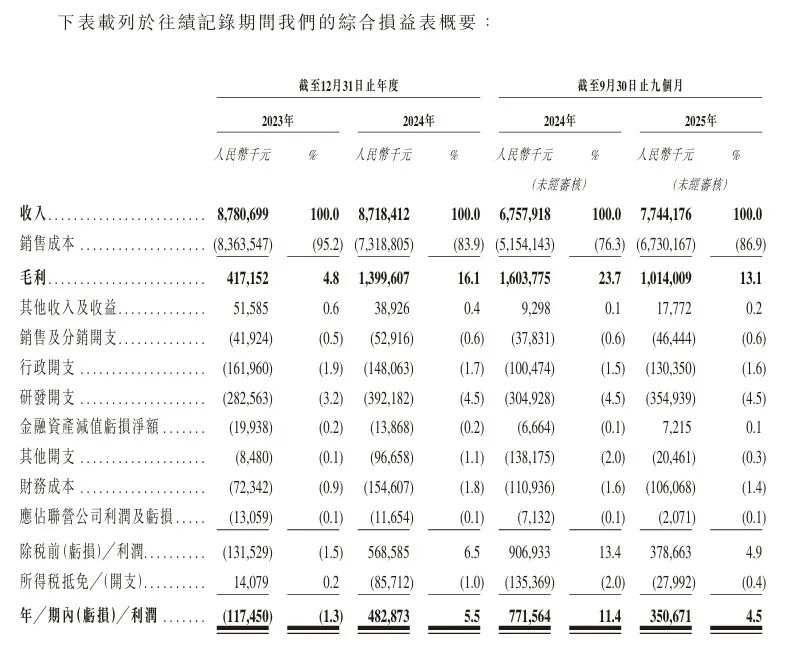
Core Viewpoint - Shenzhen Hongxinyu Electronics Co., Ltd. (referred to as "Hongxinyu") has submitted its listing application to the Hong Kong Stock Exchange, with CITIC Securities International as the sole sponsor. The post-investment valuation after the D-round financing reached 10.76 billion RMB [1][6]. Group 1: Company Overview - Hongxinyu, established in December 2018, is a leading independent memory manufacturer with a focus on the design, production, and large-scale delivery of storage products [2]. - The company operates under the independent memory manufacturer model, integrating upstream memory wafers, main control chips, and external packaging testing to meet diverse market demands [2]. - Hongxinyu's product offerings include embedded storage, solid-state drives, DRAM, and mobile storage, targeting applications in smartphones, tablets, PCs, smart imaging devices, and automotive central control systems [2]. Group 2: Client Relationships and Market Position - Hongxinyu maintains strong partnerships with major clients such as Xiaomi, Transsion, OPPO, Vivo, TCL, and Baidu, and has begun supplying storage products for automotive applications in 2023 [2]. - The company aims to achieve mass production of enterprise-level storage products by 2026 [2]. Group 3: Financial Performance - In terms of revenue, Hongxinyu reported 8.78 billion RMB in 2023, 8.72 billion RMB in 2024, and 7.74 billion RMB in the first three quarters of 2025, indicating a year-on-year revenue growth of 14.59% in 2025 despite a decline in net profit [3][4]. - The net profit figures were -117 million RMB in 2023, 483 million RMB in 2024, and 351 million RMB in the first three quarters of 2025, reflecting a 54.55% year-on-year decline in net profit for 2025 [3][4]. - The net profit margin decreased from 5.5% in 2024 to 4.5% in the first three quarters of 2025, primarily due to a drop in gross margin from 16.1% to 13.1% as a result of declining average selling prices of storage products [6]. Group 4: Research and Development Investment - Hongxinyu has consistently increased its R&D investment, with expenditures of 283 million RMB, 392 million RMB, and 355 million RMB for the first three quarters of 2023, 2024, and 2025, respectively, representing 3.2%, 4.5%, and 4.5% of total revenue during those periods [2][6].

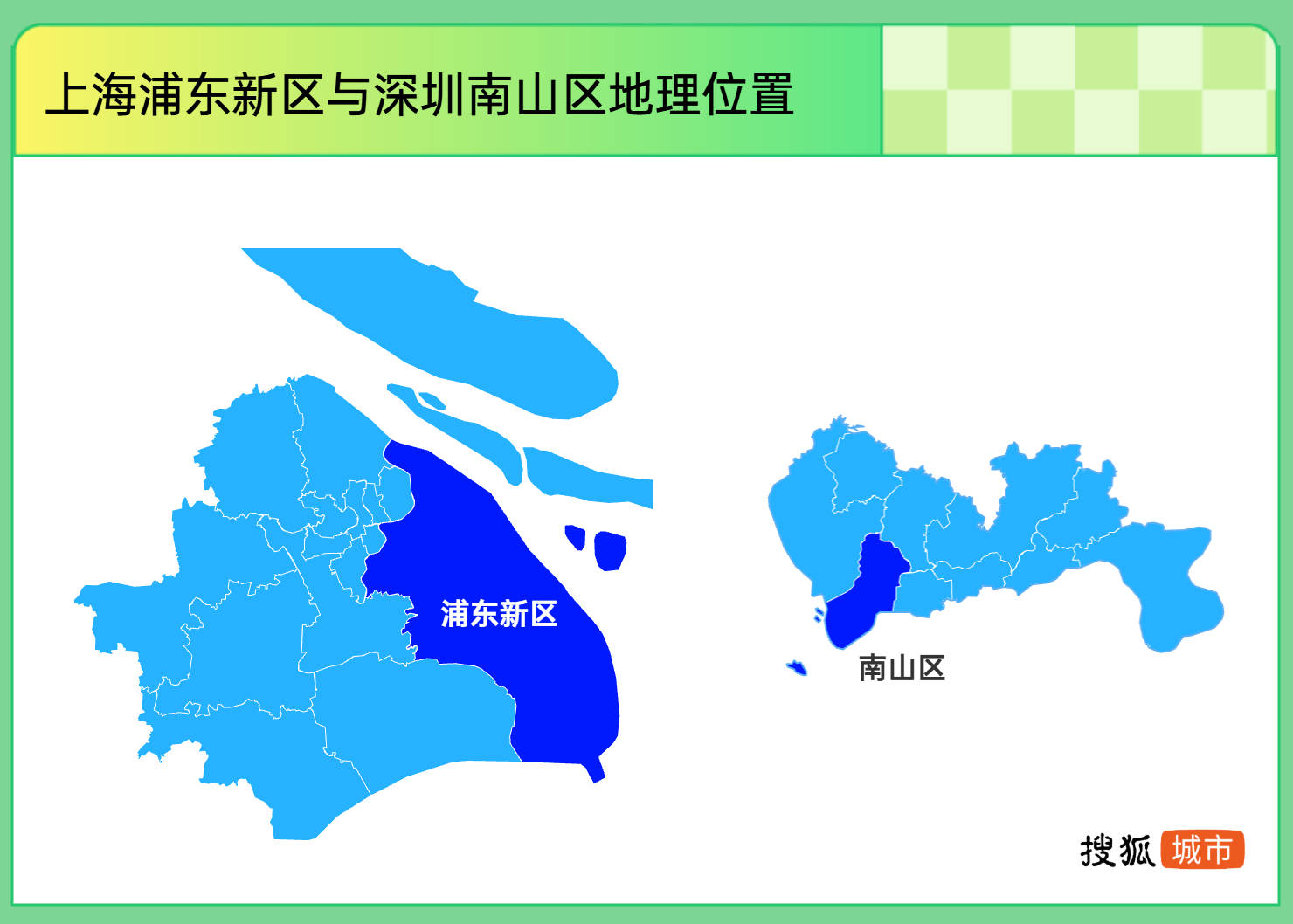
上海浦东VS深圳南山,谁是中国第一强区
Sou Hu Cai Jing· 2026-01-28 10:29
Group 1 - Shenzhen Nanshan District officially announced that its GDP will exceed 1 trillion yuan by 2025, becoming the third "trillion-yuan district" in the country and the first trillion-yuan district under a city jurisdiction [1] - Shanghai Pudong New Area disclosed that its GDP is expected to reach approximately 1.88 trillion yuan by 2025, positioning it as the first "2 trillion-yuan economic region" in the country [1][3] - In terms of economic scale, Pudong has a significant advantage with a resident population of 5.7858 million and a GDP of 1.88 trillion yuan, nearly double that of Nanshan [1][3] Group 2 - Nanshan District has a higher development efficiency, with a per capita GDP exceeding 500,000 yuan, which is 1.7 times that of Pudong, and a land GDP of over 5 billion yuan, which is 3.5 times that of Pudong [1][3] - Pudong New Area is a core functional area for Shanghai's international economy, finance, trade, shipping, and technological innovation, housing numerous high-end platforms [6][8] - Nanshan District is recognized for its high density of listed companies, with 218 listed companies and 6,037 high-tech enterprises, making it the highest in the country [10] Group 3 - Beijing's Chaoyang District is projected to be the next to reach a GDP of 1 trillion yuan, with an expected GDP of 966.85 billion yuan in 2025, just 350 billion yuan short of the target [11][13] - Chaoyang's economy is heavily reliant on the service sector, with over 95% of its GDP coming from tertiary industries, significantly higher than that of Pudong and Nanshan [13]
从“卖货”到“品牌扎根”:行业大咖深圳共议出海新周期
Sou Hu Cai Jing· 2026-01-28 09:06
Core Insights - The global e-commerce retail sales are expected to exceed $6 trillion by 2025, indicating a significant paradigm shift in China's cross-border e-commerce sector, moving from a growth model reliant on supply chain and traffic advantages to a focus on sustainable, scalable growth [2] - The first "FundPark Day" summit in Shenzhen gathered over 500 brand sellers, platform representatives, and service providers to explore sustainable growth strategies in cross-border e-commerce, marking a transition from "wild growth" to "systematic cultivation" [2] Industry Consensus - There is a fundamental shift from "goods going abroad" to "brands going abroad" and even "talent and models going abroad," as highlighted by Liu Run, founder of Runmi Consulting. He emphasized the need for companies to understand target market consumers and build brand value centered on "trust" [4] - Successful examples include Haier's voltage-adaptive refrigerators for Kenya and Transsion's localized mobile phones for Africa, showcasing the importance of solving local problems with Chinese advantages [4] - The need for a systematic collaboration of "brand, traffic, platform, and capital" is essential for sustainable growth, as noted by industry KOLs and successful entrepreneurs [5] Paradigm Innovation - The concept of "Growth as a Service" was introduced by FundPark International, marking a shift from being a service provider of operational funding to a multi-dimensional "smart growth partner" that integrates funding, data insights, and ecosystem connections [6][7] - This strategy includes three core engines: AI-driven dynamic financing services, predictive insights for optimization, and a community platform for interaction, aimed at helping businesses make better decisions and achieve sustained growth [7] Deep Dive: AI and Ecosystem Solutions - FundPark International's AI risk control model integrates multi-modal data to create precise business profiles, enabling "data-based credit" without fixed asset collateral, thus addressing financing challenges for SMEs [8] - The application of AI allows for proactive support in business growth, as demonstrated by a case where AI predicted funding gaps and adjusted financing strategies accordingly, enhancing decision-making and avoiding over-expansion risks [8] Future Outlook for 2026 - Key trends for cross-border enterprises by 2026 include compliance, AI integration, and brand development, with compliance being deemed a lifeline [9] - Challenges such as product homogenization, price competition, and evolving consumer expectations necessitate a systematic response from businesses [9] - Opportunities lie in leveraging AI to enhance operational efficiency, explore emerging markets, and deepen brand value, with a focus on either building brand barriers in niche categories or seizing trend opportunities [9] - As of September 2025, FundPark International has secured over $750 million in institutional funding, serving over 33,000 merchants and facilitating loans exceeding $7 billion, indicating market validation of its model [9]

2025中国企业出海年鉴:不确定时代中的全球化韧性:中国企业的实践与趋势
EqualOcean· 2026-01-28 01:10
Investment Rating - The report does not explicitly provide an investment rating for the industry. Core Insights - In 2025, Chinese companies' overseas expansion did not experience a singular turning point but rather accelerated along multiple changing trajectories, significantly impacting their overseas operations [6] - The focus of overseas market layout has shifted, with compliance and organizational setup becoming prerequisites, and localization evolving from a strategic option to a fundamental requirement [6] - The importance of 2025 lies not only in what occurred but in the changes that have begun to emerge, reshaping the decision-making logic of overseas enterprises and influencing their long-term choices [6] Summary by Sections Overall Changes in 2025 - The industry coverage for Chinese companies going abroad has expanded, encompassing retail e-commerce, tea drinks, entertainment, AI, automotive, and hardware, with Southeast Asia, the Middle East, Latin America, and Africa becoming significant growth sources [14] - The technological investment has increased, and compliance challenges have intensified, with a notable shift in export structure, as evidenced by a trade surplus exceeding $1 trillion for the first time in 2025 [19][21] Country-Specific Roles in Overseas Expansion - The Global South has emerged as a crucial growth source for Chinese companies, transitioning from a supplementary market to a core strategic depth [28] - The Gulf region is becoming a key node in the global AI capability competition, with significant investments in digital infrastructure and AI technologies [31] - Competition in the European and American markets has shifted towards regulatory and compliance aspects, with stringent measures impacting market access for Chinese firms [34] Industry-Specific Changes in Overseas Expansion - The automotive industry's focus has shifted from export expansion to deep localization, with significant investments in overseas manufacturing facilities [43][48] - The global AI landscape is being restructured, with Chinese AI capabilities transitioning from a follower to a leader in the market [49] - The competitive focus in cross-border e-commerce has shifted towards fulfillment and infrastructure capabilities, reflecting the need for robust operational frameworks [6] Strategic Responses of Companies and Service Systems - Chinese brands are entering a critical window for global reputation and brand premium, with the first generation of overseas experience beginning to systematically fail [4][10] - The overseas service system is evolving from a reactive response to customer needs to a proactive global service model, indicating a shift towards comprehensive service offerings [10]





“富”可敌市,中国第一个万亿GDP地市辖区,诞生
虎嗅APP· 2026-01-28 00:23
Core Viewpoint - Shenzhen's Nanshan District is set to become China's first district with a GDP exceeding 1 trillion yuan by 2025, marking a significant milestone in the economic landscape of non-direct-controlled cities [5][8]. Group 1: Economic Milestone - Nanshan's GDP surpassing 1 trillion yuan signifies a breakthrough for non-direct-controlled urban areas, positioning it alongside major economic districts like Shanghai's Pudong and Beijing's Haidian [6][12]. - The district's rapid economic growth is highlighted by its average annual compound growth rate of nearly 15% over the past 35 years, transitioning from a marginal area to a leading economic zone [17][15]. Group 2: Economic Density and Competitiveness - Nanshan boasts the highest economic density in the country, with a per capita GDP exceeding 540,000 yuan and a land GDP of over 5.4 billion yuan per square kilometer [19]. - The district is recognized for its innovation capabilities, with a significant number of patents and R&D investment intensity nearly three times the national average [21][23]. Group 3: Industrial Structure and Growth Drivers - Nanshan's economy is characterized by a balanced integration of high-end manufacturing and modern service industries, with nearly 80% of its GDP coming from the tertiary sector [30][31]. - The district is home to numerous leading enterprises, including Tencent and DJI, and has a high concentration of high-tech companies, with over 6,000 high-tech firms and 218 listed companies [34][35]. Group 4: Future Development and Strategic Initiatives - Nanshan aims to enhance its global competitiveness through a strategic framework focusing on domestic and international circulation, as well as marine economy development [44]. - The district is positioned to lead in emerging industries such as artificial intelligence and low-altitude economy, with significant investments and initiatives planned for the next decade [36][39].


电子行业周报:缺货涨价从结构性到全面性,AI 算力+存力持续高景气-20260127
Guoxin Securities· 2026-01-27 14:03
Investment Rating - The report maintains an "Outperform" rating for the electronics industry [1][10]. Core Insights - The report highlights a transition from structural shortages and price increases to a more widespread inflation across the electronics industry, driven by sustained high demand for AI computing and storage capabilities [1]. - It emphasizes the optimistic outlook for 2026 as a year of significant growth in domestic hard technology, driven by innovations in AI smartphones, AI glasses, and foldable screens [1]. - The report recommends focusing on companies involved in self-controllable manufacturing and the overseas supply chain for storage and computing [1]. Summary by Sections Market Trends - The Shanghai Composite Index rose by 0.84%, while the electronics sector increased by 1.39% over the past week, with optical electronics up by 3.21% and consumer electronics down by 0.69% [1][13]. - Global AI computing and storage demand continues to drive resource competition within the supply chain, leading to price increases across various components [1]. Semiconductor Developments - Alibaba's AI chip subsidiary, Pingtouge, is preparing for an independent IPO, indicating a strong trend towards domestic alternatives in computing chips [2]. - The report expresses confidence in the growth of domestic GPU and ASIC companies, such as Cambricon and Aojie Technology [2]. Storage Market Dynamics - NAND Flash prices have risen by 18% and DRAM prices by 33% in the past month, leading to increased cost proportions for PC manufacturers [3]. - Companies like Demingli and Jiangbolong are expected to see significant profit growth due to the ongoing storage cycle [3]. PCB Industry Insights - The report notes that rising raw material prices and increasing demand are positively impacting the performance of PCB upstream manufacturers [4]. - Companies such as Shenghong Technology and Jinan Guojiji are highlighted for their strong performance and market expectations [4]. Key Investment Recommendations - The report recommends several companies across different segments, including: - Optical Electronics: Lantech Optical, Aojie Technology, and others [1]. - Storage: Demingli, Jiangbolong, and others [3]. - PCB: Shengyi Technology and others [4]. - A focus on semiconductor companies like SMIC and Aojie Technology is also advised [9].