联影医疗

Search documents
药品零售行业高质量发展意见发布,科创医药ETF嘉实(588700)一键布局生物医药产业
Xin Lang Cai Jing· 2026-01-23 03:43
Group 1 - The core viewpoint of the news highlights the strong performance of the pharmaceutical and medical services sectors, with the Shanghai Stock Exchange Sci-Tech Innovation Board Biomedicine Index rising by 1.52% as of 11:05 AM on January 23, 2026, driven by significant gains in stocks such as Chengdu Xian Dao (+5.48%) and BGI Genomics (+4.25%) [1] - The Ministry of Commerce and eight other departments have issued opinions to promote high-quality development in the drug retail industry, encouraging retail enterprises to participate in centralized drug procurement and to enhance their bargaining power through joint purchasing [1] - The Chinese pharmaceutical industry is at a pivotal point for global value reassessment, with 2026 being a critical year to validate transformation outcomes, as highlighted by CITIC Securities [1] Group 2 - As of December 31, 2025, the top ten weighted stocks in the Shanghai Stock Exchange Sci-Tech Innovation Board Biomedicine Index include companies like United Imaging Healthcare and BeiGene, collectively accounting for 48.85% of the index [2] - The CSI Innovation Medicine ETF closely tracks the Shanghai Stock Exchange Sci-Tech Innovation Board Biomedicine Index, providing an easy investment option for those without stock accounts through the linked fund [3]


【医药】AI重构医疗,从场景落地到变现讨论 ——AI医疗行业专题报告(吴佳青)
光大证券研究· 2026-01-22 23:07
Core Viewpoint - The article emphasizes the growing integration of AI in the healthcare sector, highlighting its potential to transition from technology validation to commercial realization, driven by the need for cost control in healthcare and advancements in AI technology [4]. Group 1: AI in Healthcare - Domestic and international healthcare companies are increasingly investing in AI products and services across various segments, including health management, precision medicine, digital clinical trials, drug development, sequencing, and medical impact [4]. - The core investment logic revolves around "data closed-loop" and "scene necessity," with AI becoming a key productivity driver in new healthcare infrastructure [4]. - Future competition will hinge on who possesses exclusive, high-quality private data and can achieve continuous data iteration through business scenarios [4]. Group 2: Key AI Applications in Healthcare - AI drug development is highlighted for its ability to significantly shorten new drug research cycles, leading to strong willingness to pay from pharmaceutical companies [4]. - AI medical imaging is noted as the most mature application area, with companies like United Imaging Healthcare leading the market [5]. - AI chronic disease management is emphasized for its potential to reduce long-term insurance payouts, showcasing its commercial value [4]. - AI surgical robots are recognized for addressing uneven distribution of medical resources, presenting strong domestic substitution logic [4]. Group 3: Company Highlights - Crystal Technology's core advantage lies in its combination of quantum physics computing, AI algorithms, and robotic experimentation, evolving its business model from biotech to CRO+ [5]. - United Imaging Healthcare is a leader in medical imaging equipment, continuously innovating and integrating AI into its devices to enhance imaging quality and operational efficiency [6]. - Yuyue Medical focuses on smart home medical devices, utilizing AI to analyze user health needs, which is crucial for long-term chronic disease management [6]. - MicroPort Robotics is positioned as a leader in the surgical robot sector, leveraging AI and 5G technology to facilitate remote surgeries, addressing the challenge of uneven medical resource distribution [6].


AI医疗爆发三重奏:亢奋、焦虑与希望
2 1 Shi Ji Jing Ji Bao Dao· 2026-01-22 08:03
Core Viewpoint - The AI healthcare sector is experiencing significant growth and interest in 2026, with substantial increases in various healthcare indices and notable stock performance among key companies in the sector [1][2]. Market Performance - As of January 21, 2026, the AI healthcare index surged over 11%, while the CSI Medical Index and Hang Seng Healthcare Index rose by 8% and 11.67% respectively [1]. - Companies like Dean Diagnostics and Baolite have seen stock increases exceeding 60%, with others like Weining Health and Chengdu Xian Dao also showing gains over 20% [1]. Market Trends and Projections - The AI healthcare market in China is projected to grow from 8.8 billion yuan in 2023 to 315.7 billion yuan by 2033, reflecting a compound annual growth rate of 43.1% [2]. - The rapid advancement in AI healthcare applications is driven by technological breakthroughs, favorable policies, and increasing market demand [2]. Technological Developments - Major tech companies are actively entering the AI healthcare space, with OpenAI, Google, and domestic firms like Ant Group and Tencent launching various AI healthcare applications [4]. - Significant advancements have been made in AI-assisted diagnostics, medical imaging, and drug development, indicating a trend towards more efficient healthcare solutions [5][6]. Commercialization Challenges - Despite the enthusiasm, the commercialization of AI healthcare products faces challenges, including ethical concerns, regulatory risks, and slow progress in translating technological advancements into financial performance [10][11]. - As of January 21, 2026, over half of the 47 biomedicine companies that disclosed earnings forecasts reported losses or reduced earnings, highlighting the disparity between market excitement and actual financial results [10]. Regulatory Developments - Recent government initiatives aim to promote and standardize the application of AI in healthcare, with a focus on establishing high-quality data sets and clinical models by 2027 [13][14]. - The National Healthcare Security Administration has clarified pricing for AI-assisted diagnostic services, which is expected to enhance the commercial viability of AI healthcare products [14]. Future Outlook - Industry experts predict that 2026 will be a pivotal year for the commercialization of AI healthcare, driven by clearer payment structures and stronger market demand [13][14]. - The focus will likely be on AI applications in drug development, diagnostics, and operational efficiency, with expectations for rapid growth in the sector [14].
AI医疗行业专题报告:AI重构医疗,从场景落地到变现讨论
EBSCN· 2026-01-22 06:14
AI重构医疗,从场景落地到变现讨论 ——AI医疗行业专题报告 2026年1月22日 分析师:吴佳青,执业证书编号:S0930519120001 证券研究报告 目录 CONTENT S 第一章:复盘 •本轮行情与上轮行情的异同 第二章:AI+药物研发 •靶点发现与验证 •变现模式探讨:看好 CRO+Biotech 第四章:AI+诊疗 •环境智能与自动病历生成 •大模型驱动的 AI医生助手 第五章:AI手术机器人&健康管理 • AI在手术机器人领域的应用 可穿戴设备与数字疗法 • 第三章:AI+医学影像 •从 辅助诊断迈向全流程赋能 2025年初国内外AI医疗概念股普涨,美股AI医疗行情更侧重于健康管理、AI数字化临床实验领域,国内有相关概念映射标的 涨幅较大 1)健康管理服务:商业模式以订阅制为主,提供AI智能问诊、AI私人医生等服务,制定针对患者的个性化健康管理方案。 2)AI数字化临床实验:提供药物研发和医疗信息服务,在临床试验中运用AI技术进行数据管理、患者招募和疗效评估等。 •变现模式探讨 第六章:投资建议 第七章:风险分析 请务必参阅正文之后的重要声明 2 26年初国内AI医疗概念股普涨,行情发酵侧重 ...
科创50ETF平安(589150)多股飘红,科技板块持续活跃
Xin Lang Cai Jing· 2026-01-22 02:59
数据显示,截至2025年12月31日,上证科创板50成份指数(000688)前十大权重股分别为中芯国际、寒武 纪、海光信息、澜起科技、中微公司、金山办公、联影医疗、拓荆科技、芯原股份、沪硅产业,前十大 权重股合计占比54.42%。 截至2026年1月22日 10:22,上证科创板50成份指数(000688)上涨0.03%,成分股龙芯中科上涨5.10%,中 国通号上涨4.74%,西部超导上涨4.63%,澜起科技上涨3.62%,华大智造上涨3.01%。科创50ETF平安 (589150)多空胶着,最新报价1.12元。 风险提示:基金有风险,投资需谨慎。基金管理人承诺以诚实信用、勤勉尽责的原则管理和运用基金资 产,但不保证本基金一定盈利,也不保证最低收益。基金管理人提醒投资人基金投资的"买者自负"原 则,在做出投资决策后,基金运营状况与基金净值变化引致的投资风险,由投资人自行负担。基金的过 往业绩及其净值高低并不预示其未来业绩表现,基金管理人管理的其他基金的业绩不构成对本基金业绩 表现的保证。投资人购买基金,既可能按其持有份额分享基金投资所产生的收益,也可能承担基金投资 所带来的损失。投资人应当认真阅读《基金合同》 ...
中国医疗-中国医院调研:2026年保持谨慎乐观
2026-01-22 02:44
Summary of China Healthcare Industry Conference Call Industry Overview - **Industry**: China Healthcare Industry - **Report Date**: January 21, 2026 - **Sentiment**: Cautiously optimistic outlook for 2026 regarding hospital capital expenditures and market dynamics [1][2] Key Insights Capital Expenditure Trends - **Stable to Moderate Growth**: Hospital capital expenditures are expected to remain stable with moderate growth in 2026 [2] - **Survey Results**: 59% of surveyed hospital managers anticipate capital expenditure growth in 2026, up from 43% in late 2024, but still below 85% in late 2023 [3] - **Projected Growth Rate**: Expected capital expenditure growth of 4.7% in 2026, compared to 3.0% growth anticipated for 2025 [3] - **Actual Growth Expectations**: Respondents expect actual capital expenditure growth of 5.8% for 2025, indicating limited visibility on actual demand [3] Key Drivers of Expenditure - **Primary Drivers**: 1. Hospital Surplus (69%) 2. Patient Demand (50%) 3. Local Fiscal Budgets (44%) [3] - **Service Volume Constraints**: Factors such as Diagnosis-Related Group (DRG) payment limits and medical insurance settlements are seen as major constraints on service volume [3] Equipment and Technology Focus - **Investment Priorities**: Hospitals are prioritizing investments in AI, endoscopy, and imaging equipment, with a focus on surgical and flexible endoscopes, followed by CT and ultrasound [3] - **Weak Demand**: In vitro diagnostics are expected to remain weak [3] Company-Specific Insights Beneficiaries of Capital Expenditure Growth - **Mindray Medical (300760.SZ)**: Expected to benefit from a stable capital expenditure environment, with anticipated single-digit revenue growth in 2026. The company is expected to maintain a 16% share of planned capital expenditures [4][10] - **United Imaging (688271.SS)**: Anticipated to benefit from strong demand in high-end imaging, with projected revenue growth of approximately 21% in 2026 [4][11] - **New Industries (300832.SZ)**: Expected to face continued pricing pressure in in vitro diagnostics but may achieve above-industry growth due to healthy demand for chemical luminescence analyzers [4][12] - **Huatai Medical (688617.SS)**: Positioned to capitalize on the growing adoption of pulse field ablation technology, with projected revenue growth of 30% in 2026 [4][13] - **Guichuang Tongqiao (2190.HK)**: Expected to see revenue growth of around 30% driven by increased demand for neurointerventional and peripheral interventional procedures [4][15] Challenges for Global Players - **GE Healthcare**: Faces mixed impacts from increased capital expenditure and growing preference for local brands, which may offset some growth [4][16] - **Siemens Healthineers (SHL)**: Cautious outlook due to slow recovery in utilization rates and increased pricing pressure from procurement policies [4][17] - **Philips (PHIA)**: Similar cautious outlook with potential declines in market share for CT and ultrasound equipment [4][18] - **Olympus (7733.T)**: Expected to face challenges in maintaining market share in the digestive endoscopy market [4][19] - **Hologic (6869.T)**: Anticipated slowdown in clinical testing volumes and potential market share decline in hematology [4][20] Additional Observations - **Market Dynamics**: The report highlights a complex landscape for global medical technology companies in China, with both opportunities and pressures from local competition and procurement policies [4][16][17][18][19][20] - **Emerging Trends**: The shift towards local brands and the impact of procurement policies are significant trends that may reshape the competitive landscape in the healthcare sector [4][16][17][18][19][20]





招商中证全指医疗器械ETF投资价值分析:如何一键布局“脑机接口”赛道
CMS· 2026-01-21 14:00
- The report does not contain any quantitative models or factors related to financial engineering or quantitative analysis[1][3][4]

股票行情快报:联影医疗(688271)1月21日主力资金净买入1217.27万元
Sou Hu Cai Jing· 2026-01-21 11:50
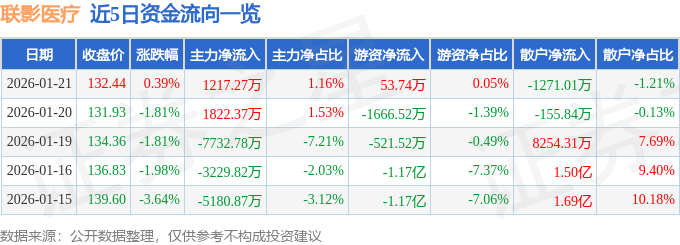
证券之星消息,截至2026年1月21日收盘,联影医疗(688271)报收于132.44元,上涨0.39%,换手率 0.96%,成交量7.92万手,成交额10.52亿元。 1月21日的资金流向数据方面,主力资金净流入1217.27万元,占总成交额1.16%,游资资金净流入53.74 万元,占总成交额0.05%,散户资金净流出1271.01万元,占总成交额1.21%。 近5日资金流向一览见下表: | 指标 | 联影医疗 | 医疗器械行业均值 | 行业排名 | | --- | --- | --- | --- | | 总市值 | 1091.51亿元 | 113.47亿元 | 2 127 | | 净资产 | 208.05亿元 | 38.34亿元 | 3 127 | | 净利润 | 11.2亿元 | 2.08亿元 | 5 127 | | 市盈率(动) | 73.08 | 99.95 | 65 127 | | 市净率 | 5.25 | 4.06 | 103 127 | | 毛利率 | 47.02% | 50.94% | 78 127 | | 净利率 | 12.44% | 9.66% | 57 127 | | ROE | 5 ...
临床质谱仪六年变迁录(2020-2025年)
仪器信息网· 2026-01-21 09:02
摘要 : 基于国家药品监督管理局(NMPA)官网公开信息,仪器信息网对 2025 年度获得医疗器械注册证的质谱相关产品进行了盘点,并结合近六年获批数据, 试图剖析中国临床质谱产业正在发生的变化。 特别提示 微信机制调整,点击顶部"仪器信息网" → 右上方"…" → 设为 ★ 星标,否则很可能无法看到我们的推送。 在此前的盘点中,仪器信息网已对2 0 2 5年度质谱新品进行了系统梳理 (点击查看: 质谱仪该以什么形态服务产业?这3 5款新品给出答案 ) 。本篇将进一步聚焦临床应用端,基于国家药品监督管理局(NMPA)官网公开信息,对2 0 2 5年度获得医疗器械注册证的质谱仪器、质谱相关 试剂盒及校准品进行全面盘点,并结合近六年获批数据,试图剖析中国临床质谱产业正在发生的变化。 六年回溯,格局变化显著 回顾2 0 2 0 - 2 0 2 5年中国市场新增获批的临床质谱仪器 (注:数据统计截止 2 0 2 5 年 1 2 月 3 1 日) ,清晰的展现出一个现象:国产质谱医疗器械的 合规化进程,已经完成了从"起步"到"放量"的阶段。 自2 0 2 0年起,国产质谱医疗器械注册证获批数量持续增长,并在2 0 2 3 ...

71只科创板股融资余额增加超1000万元
Xin Lang Cai Jing· 2026-01-21 07:09
Summary of Key Points Core Viewpoint - The financing balance of the Sci-Tech Innovation Board decreased by 2.251 billion yuan compared to the previous day, with 71 stocks seeing an increase of over 10 million yuan in financing balance, led by Tianyue Advanced, Yuanjie Technology, and Aters [1][5]. Financing Balance Overview - As of January 20, the total margin financing balance of the Sci-Tech Innovation Board was 294.585 billion yuan, a decrease of 2.270 billion yuan from the previous trading day [5]. - There are 504 stocks with a financing balance exceeding 100 million yuan, including 62 stocks with balances over 1 billion yuan [5]. - 267 stocks saw an increase in financing balance compared to the previous day, with 71 stocks having net purchases exceeding 10 million yuan [5]. Stocks with Significant Financing Changes - The stocks with the highest net purchases include Tianyue Advanced (1.255 billion yuan, up 98.0536 million yuan), Yuanjie Technology (1.598 billion yuan, up 96.1215 million yuan), and Aters (1.286 billion yuan, up 88.0648 million yuan) [2][6]. - The average decrease in financing balance for stocks that saw a reduction was significant, with 112 stocks decreasing by over 10 million yuan, led by Lanke Technology, Han's Laser, and Haiguang Information [5]. Sector Performance - Among the stocks with net purchases exceeding 10 million yuan, the average decline was 0.50%, with notable increases in stocks like Qizhong Technology (up 16.32%), Yingjixin (up 12.24%), and Hangya Technology (up 10.37%) [6]. - The sectors attracting the most interest from financing clients include electronics, machinery, and power equipment, with 23, 11, and 10 stocks respectively [6]. Financing Balance to Market Value Ratio - The average ratio of financing balance to market value for the stocks with significant net purchases is 4.34%, with Aisen Co. having the highest ratio at 9.51% [6].