
顾家家居

Search documents
董宇辉直播超亿元沙发订单引“代工”传言 顾家家居回应:均为自制,正在加快生产
Mei Ri Jing Ji Xin Wen· 2025-12-29 13:24
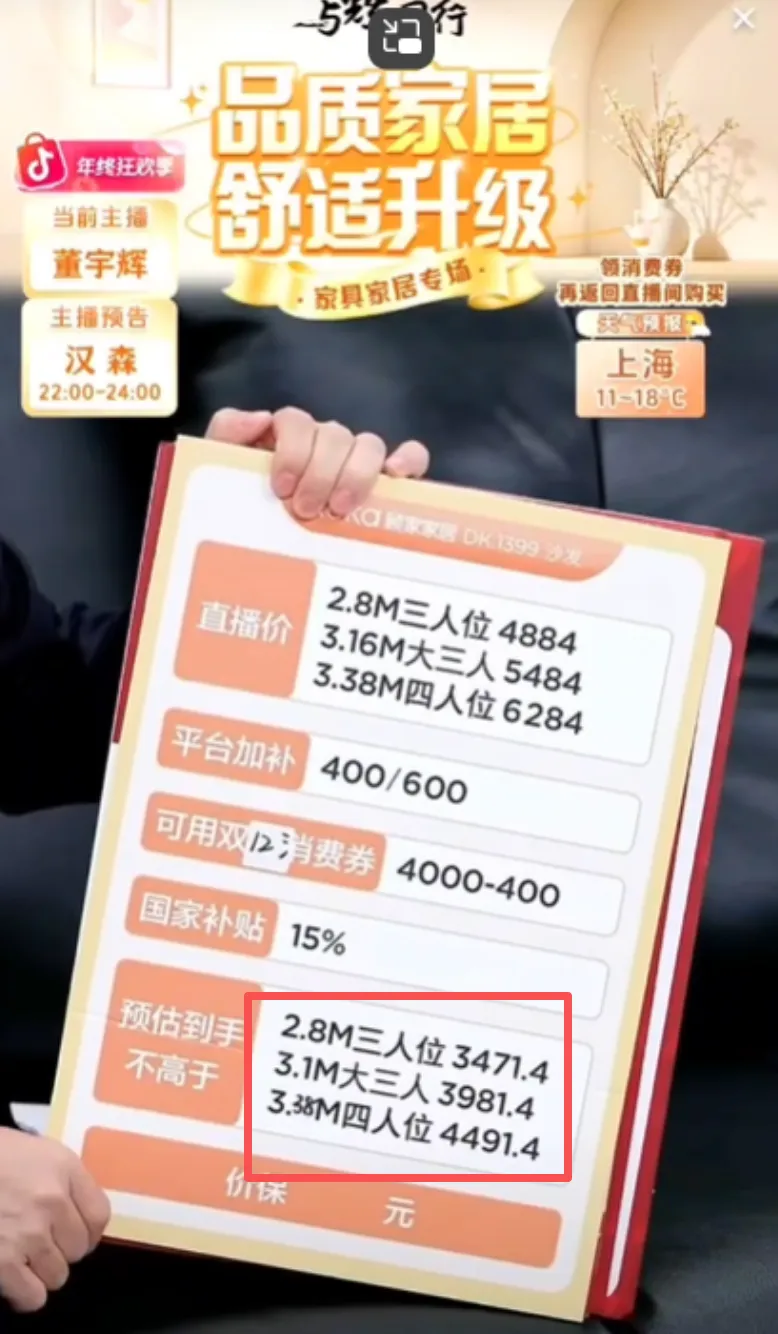
Core Insights - A live streaming event led by Dong Yuhui resulted in significant sales for Gujia Home, with total sales reaching 356 million yuan in 5.5 hours, including over 100 million yuan from a single leather sofa model [1][2] - Concerns arose within the supply chain regarding the feasibility of fulfilling approximately 30,000 sofa orders, with rumors suggesting that many manufacturers were hesitant to accept the orders due to cost and supply chain pressures [2][8] - Gujia Home confirmed that all sofas sold during the live stream were self-manufactured and that production was being accelerated to meet demand [2][10] Sales Performance - The live stream generated over 1 billion yuan in orders, equivalent to approximately 8 days of Gujia Home's average daily sales of 15.53 million yuan [9] - In the first half of 2025, Gujia Home reported sofa revenue of 5.667 billion yuan, a year-on-year increase of 725 million yuan, with sofas accounting for 57.82% of total revenue [9] Supply Chain and Production Challenges - The live stream's success poses a test for Gujia Home's supply chain and operational capabilities, highlighting both visible and hidden costs associated with production [10] - Gujia Home's production model primarily relies on self-manufacturing, supplemented by external production to address capacity constraints while maintaining product quality [10]


美的“少东家”双面资本局:左手大额计提,右手豪赌并购
Xin Lang Cai Jing· 2025-12-29 12:28
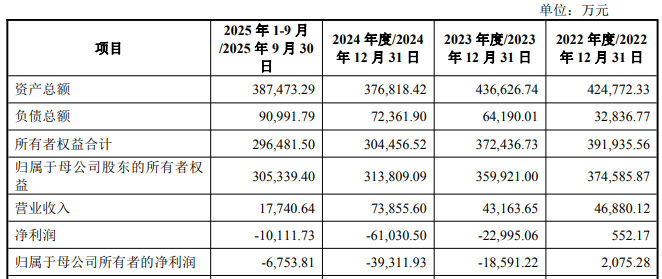
Core Viewpoint - The article discusses the aggressive capital strategy of He Jianfeng, the son of Midea Group's founder, following his departure from the board of Midea Group. He Jianfeng has made significant investments in the home furnishing sector and is now pursuing a major acquisition of a digital marketing company, which raises concerns due to the lack of performance guarantees in the deal [1][24]. Group 1: Acquisition Details - Baida Qiancheng plans to acquire 100% of Xiamen Zhonglian Century Co., Ltd. through a combination of issuing shares and cash payments, aiming to enhance its marketing capabilities [4][27]. - The projected revenue for Zhonglian Century in 2024 is 1.382 billion, while Baida Qiancheng's revenue for the same period is only 739 million, indicating a significant disparity in size [4][27]. - The acquisition lacks performance commitments and impairment compensation clauses, which are typically considered safety nets in mergers and acquisitions [4][29]. Group 2: Financial Performance and Concerns - Baida Qiancheng has reported substantial losses over the past three years, with net losses of 186 million in 2023, 393 million in 2024, and 68 million in the first three quarters of 2025 [11][35]. - The company has made significant asset impairment provisions totaling 644 million over three years, raising questions about the management of its financial health [13][37]. - The company has faced scrutiny regarding its large provisions for bad debts and inventory write-downs, which have contributed to its ongoing financial struggles [38][40]. Group 3: Strategic Moves in Home Furnishing Sector - He Jianfeng has made substantial investments in the home furnishing industry, including acquiring a controlling stake in Gujia Home and investing in Sofia [19][45]. - The acquisition of a 29.42% stake in Gujia Home was valued at 8.88 billion, with plans for further capital increases to solidify control [19][45]. - The strategic focus on home furnishings reflects a shift in He Jianfeng's investment strategy, moving away from the entertainment sector where Baida Qiancheng has struggled [19][43].


轻工制造及纺服服饰行业周报:人民币兑美元升破7.0关口,关注造纸板块机会-20251229
ZHONGTAI SECURITIES· 2025-12-29 11:43
Investment Rating - The industry investment rating is maintained at "Overweight" [3] Core Views - The report highlights the opportunity in the paper sector due to the recent appreciation of the RMB against the USD, which enhances domestic purchasing power and reduces costs for imported raw materials like wood pulp [5][6] - The report suggests focusing on companies with high wood pulp procurement costs, such as Zhongshun Jierou, and recommends Sun Paper for its integrated advantages in cultural paper production [5][6] - The report also emphasizes the potential for improved profitability in Q4 due to stabilized and rising pulp prices, alongside the release of new production capacity [5][6] Summary by Relevant Sections Industry Overview - The light industry sector includes 167 listed companies with a total market value of 1,204.38 billion CNY and a circulating market value of 954.25 billion CNY [1] Market Performance - For the week of December 22-26, 2025, the Shanghai Composite Index rose by 1.88%, while the Shenzhen Component Index increased by 3.53%. The light industry index gained 1.69%, ranking 16th among 28 Shenwan industries [10] - The paper sector saw a weekly increase of 4.47%, while the textile and apparel index rose by 2.86% [10] Key Company Recommendations - Sun Paper: Buy rating with projected EPS growth from 1.10 CNY in 2023 to 1.48 CNY in 2027, with a PE ratio decreasing from 14.25 to 10.60 [3] - Baiya Co.: Buy rating with projected EPS growth from 0.54 CNY in 2023 to 1.28 CNY in 2027, with a PE ratio decreasing from 38.94 to 16.49 [3] - Huali Group: Buy rating with projected EPS growth from 2.74 CNY in 2023 to 3.97 CNY in 2027, with a PE ratio decreasing from 19.24 to 13.27 [3] Raw Material Price Trends - The report notes fluctuations in raw material prices, with MDI and TDI prices decreasing, while cotton prices have shown an upward trend [18][22] - The average price of wood pulp and various paper products is tracked, indicating a mixed performance with some prices stabilizing and others showing slight increases [42] Housing Market Data - The report highlights a significant decline in property sales, with a 39.1% year-on-year decrease in transactions among major cities [31] - Cumulative property sales area from January to November 2025 shows a 7.8% decline year-on-year [59] Consumer Goods and AI Applications - The report discusses the potential of AI applications in consumer goods, particularly in the context of new product launches and market expansion opportunities [6] Conclusion - The report emphasizes the importance of monitoring the paper sector due to favorable currency movements and suggests specific companies for investment based on their cost structures and market positions [5][6]





周十条丨多地陶企宣布涨价、王宁担任居然之家董事长兼CEO、友邦吊顶筹划控制权变更……
Sou Hu Cai Jing· 2025-12-29 09:17
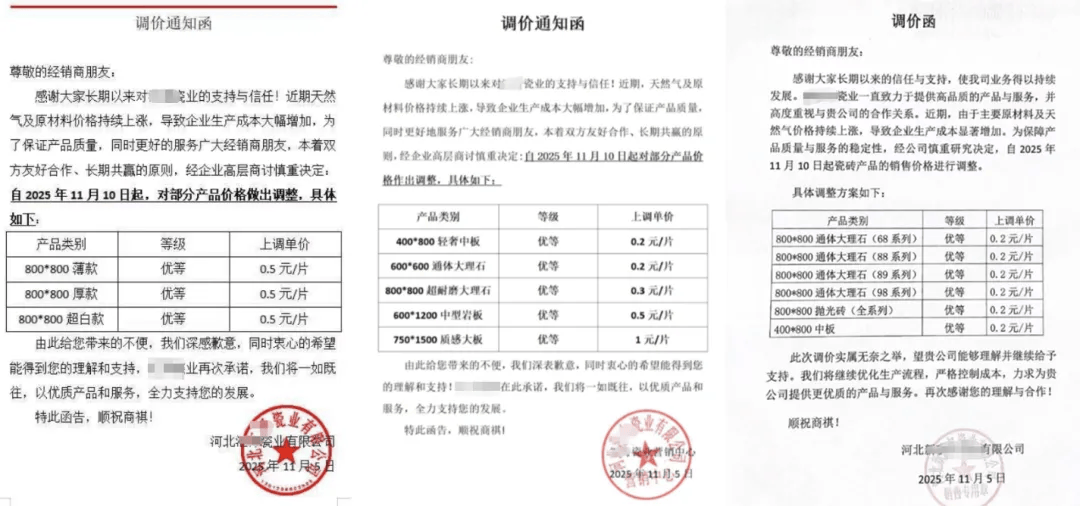
Price Increase in the Ceramics Industry - The ceramics industry is experiencing a wave of price increases as companies in Shandong, Hebei, Sichuan, Guangxi, and Chongqing announce price hikes for tiles and roofing products [1] - The primary reasons for the price increase are seasonal rises in energy costs, such as natural gas, and the upward trend in raw material costs, which are increasing production pressure on companies [1] - Additionally, some companies facing operational challenges have reduced or halted production, leading to a shift in supply and demand dynamics [1] Specific Price Adjustments - Various product categories have seen price adjustments, including: - 800*800 thin tiles: increased by 0.5 yuan per piece - 800*800 thick tiles: increased by 0.5 yuan per piece - 800*800 ultra-white tiles: increased by 0.5 yuan per piece - 400*800 luxury medium boards: increased by 0.2 yuan per piece - 600*600 full-body marble: increased by 0.2 yuan per piece - 800*800 ultra-wear-resistant marble: increased by 0.3 yuan per piece - 600*1200 medium-sized boards: increased by 0.5 yuan per piece - 750*1500 large boards: increased by 1 yuan per piece [3] - Additional adjustments include: - 800*800 full-body marble (68 series): increased by 0.2 yuan per piece - 800*800 full-body marble (88 series): increased by 0.2 yuan per piece - 800*800 full-body marble (89 series): increased by 0.2 yuan per piece - 800*800 full-body marble (98 series): increased by 0.2 yuan per piece - 800*800 polished tiles (entire series): increased by 0.2 yuan per piece - 400*800 medium boards: increased by 0.2 yuan per piece [4] Corporate Developments - Aoyuan Ceiling announced a suspension of trading due to plans for a change in control, which may lead to a change in the company's controlling shareholder [5] - Juran Home announced a board reshuffle, electing Wang Ning as the new chairman and CEO [8] - Bull Group is suing a competitor for 4.2 million yuan over misleading advertising claims [10] - Several home furnishing companies, including Gujia Home and Arrow Home, have announced guarantees for their subsidiaries, reflecting a trend of financial support as year-end funding needs rise [12] - Mona Lisa Group provided a guarantee of up to 100 million yuan for its wholly-owned subsidiary, indicating ongoing financial strategies to support business operations [18]


环球家居周报:居然智家完成换届,顾家乐活升级为副品牌,友邦吊顶筹划控制权变更……
Huan Qiu Wang· 2025-12-29 05:05
Group 1: Business Developments - Red Star Macalline and Jianfa's first collaborative commercial project, Chengdu Bay Yue City, officially opened on December 20, 2023, with a total construction area of approximately 144,000 square meters, focusing on family-oriented services and experiences [1] - Juran Smart Home completed its board restructuring on December 23, 2023, with Wang Ning reappointed as Chairman and CEO, aiming for strategic upgrades driven by innovation [2] - Gujia Home announced the upgrade of its "Gujia Lehuo" brand to an independent sub-brand, focusing on the third and fourth-tier city markets with a new store design emphasizing a warm atmosphere and young design [3] Group 2: Financial Transactions - Dream Home confirmed the completion of a share transfer of 6.86%, amounting to approximately 267 million yuan, while maintaining control with a 50.91% stake [5] - Dongyi Risheng's restructuring plan was approved by the Beijing First Intermediate People's Court, with over 1.4 billion yuan in funding to support its main business and new ventures [6] - Haier Smart Home announced the sale of 49% of its Indian subsidiary to Bharti Group and Warburg Pincus, maintaining operational control while enhancing market penetration in India [10] Group 3: Product Launches and Innovations - ONETENO, a smart sleep solution provider, completed a Pre-A round of financing, with a post-investment valuation in the tens of millions of yuan, aiming for mass production of its radar sleep monitoring products [4] - Huawei launched a new range of smart home packages during the nova 15 series release, with prices ranging from 29,999 yuan to 99,999 yuan, targeting various consumer needs [7] - The first "silver economy" themed store in Shanghai opened on December 23, showcasing elderly-friendly furniture and health products [8] Group 4: Market Expansion - Dongpeng and New Pearl Group's joint real estate company acquired residential land for 279 million yuan, marking a strategic move into real estate development [9] - Jiumu opened its largest overseas showroom in Riyadh, Saudi Arabia, covering 1,029 square meters, focusing on smart bathrooms and high-end customization [11] - Oriental Yuhong launched its new overseas brand "OYH" and a global marketing platform, aiming to transition from "Chinese supply" to a "global brand" [12]

为了贴上“美国制造”,敏华宁愿接手一家亏损公司
Ge Long Hui· 2025-12-26 13:53
Core Viewpoint - The acquisition of GRIC by Minhua Holdings for 587 million RMB (approximately 84 million USD) is a strategic move aimed at enhancing its presence in the U.S. market, despite GRIC's financial struggles, reflecting a broader trend of Chinese furniture companies transitioning from OEM to brand acquisition in response to trade barriers and market challenges [1][2][5]. Group 1: Acquisition Details - Minhua Holdings announced the acquisition of GRIC, a U.S. furniture company, for 587 million RMB, with 32 million USD for 100% equity and 26.99 million USD as an interest-free loan to cover GRIC's bank debts [1]. - GRIC reported a revenue of 188 million USD for the fiscal year 2025, a decline of 21.3%, and a net loss of 9.6867 million USD, which is a 148% increase in losses compared to the previous year [1][3]. - The acquisition is seen as a long-term strategic investment rather than a short-term profit opportunity, as it provides Minhua with essential market access and production capabilities in the U.S. [6][8]. Group 2: Industry Context - The Chinese furniture industry has evolved from relying on OEM production to seeking global market presence through brand acquisitions, driven by increased tariffs and the need for brand recognition [2][3]. - The U.S. market has seen a significant decline in furniture exports from China, with a 23.7% drop in 2024, highlighting the challenges faced by Chinese manufacturers [3]. - The shift towards brand acquisition is seen as a necessary evolution for Chinese companies to overcome the limitations of being perceived as low-cost manufacturers [4][16]. Group 3: Strategic Implications - The acquisition of GRIC allows Minhua to leverage existing production facilities and a network of over 1,000 retail partners in the U.S., facilitating a quicker market entry [6][7]. - Minhua's strategy includes integrating GRIC's operations to enhance procurement efficiency and reduce costs, potentially improving GRIC's profitability [12][13]. - The company plans to implement a three-brand strategy to cater to different market segments, which will require careful management to avoid internal competition [14]. Group 4: Comparative Analysis - The case of Minhua contrasts with other Chinese companies like Kuka Home, which faced significant challenges due to aggressive acquisition strategies that did not align with their core business [9][10]. - Dream Lily's gradual approach to acquisitions has proven successful, emphasizing the importance of strategic alignment and integration capabilities [11]. - Minhua's acquisition strategy appears to be more focused and calculated, learning from the pitfalls of previous industry players [11][16]. Group 5: Future Outlook - The success of Minhua's acquisition will depend on effective integration and the ability to establish a strong brand presence in the U.S. market [15][17]. - The broader trend in the industry indicates a shift towards brand ownership and local market adaptation, which will be crucial for long-term success [16][17]. - The outcome of this acquisition could serve as a model for other Chinese companies looking to expand internationally, emphasizing the importance of brand recognition and local market understanding [17].
红星美凯龙M+设计中心 PK 居然之家“销售分成”:家居卖场上演“变形计”!
Ge Long Hui· 2025-12-26 13:48
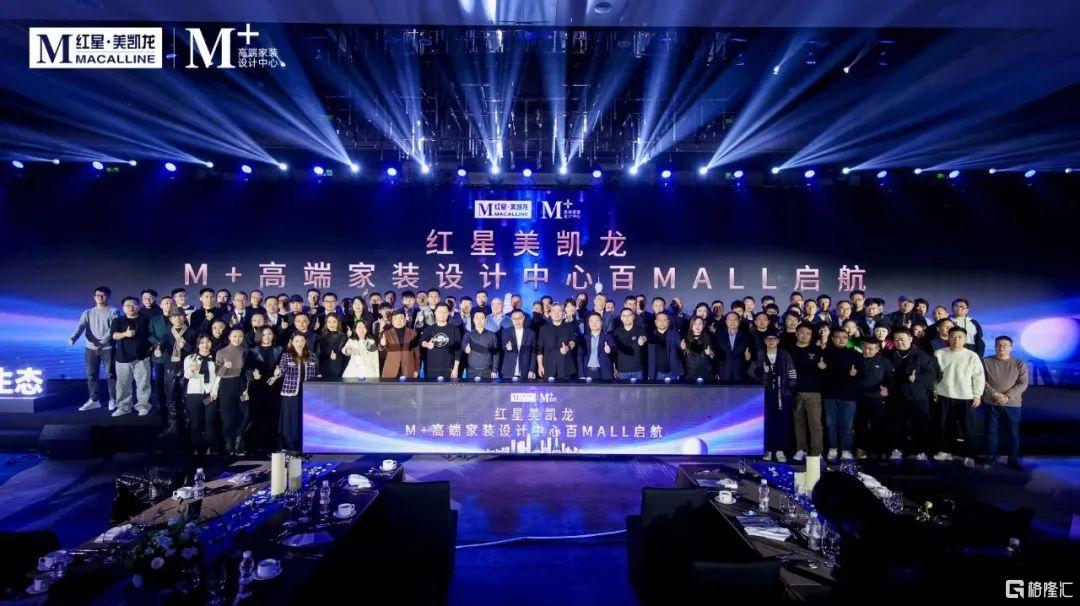
Core Viewpoint - The home furnishing industry is undergoing significant changes as it adapts to the "post-real estate era," with companies exploring new business models to meet evolving consumer demands [1][8]. Group 1: Industry Transformation - The home furnishing market is entering a "new scene cycle," where companies like Red Star Macalline are innovating by establishing high-end home design centers to create a new ecosystem that connects design with product offerings [1][3]. - Red Star Macalline has launched 16 M+ high-end home design centers and plans to build an additional 84 centers by 2025, aiming for a nationwide scale of 100 centers [3][6]. - The integration of home furnishing, home decoration, and home appliances is becoming essential as the boundaries between these categories blur, necessitating a new platform for their consolidation [6][19]. Group 2: Consumer Trends - There is a growing demand among high-net-worth individuals and young consumers for design and solutions, with 90% of high-net-worth individuals and 83% of young consumers willing to pay for design services [6][8]. - Consumers are increasingly focused on lifestyle and specific scene needs, leading to a demand for more integrated and aesthetically pleasing home products [9][11]. Group 3: Company Strategies - Companies are actively innovating their marketing strategies by creating new consumer experiences, such as integrating art into home furnishing spaces and enhancing digital and smart home solutions [9][11][13]. - Red Star Macalline's M+ centers aim to serve as super connectors for product categories, enhancing the flow of design proposals and creating a primary entry point for quality home decoration traffic [6][19]. - Other leading companies like Oppein and Shangpin are also developing scene-based home furnishing stores to provide comprehensive solutions and enhance consumer engagement [14][16]. Group 4: Market Performance - Recent financial reports indicate that only Fusenmei has achieved positive revenue and profit growth, while Red Star Macalline and Juran Home have faced declines in profitability [17][18]. - The rental rates for self-operated and managed stores have decreased significantly, prompting companies to adopt new business models such as revenue-sharing agreements to better align with merchants [18][19]. Group 5: Future Directions - The role of home furnishing markets is evolving from mere display spaces to becoming "empowerers" and "guides" that can anticipate consumer trends and provide comprehensive services [21]. - The ongoing transformation in the home furnishing industry reflects a broader need for companies to adapt their positioning and capabilities in response to market dynamics [21].

连亏股百纳千成拟收购20CM涨停 众联世纪IPO路3年下车
Zhong Guo Jing Ji Wang· 2025-12-26 07:06
Core Viewpoint - The company Baina Qiancheng (300291.SZ) has resumed trading with a significant stock price increase of 20.08% following the announcement of a plan to acquire 100% of Xiamen Zhonglian Century Co., Ltd. through a combination of share issuance and cash payment, along with raising supporting funds from specific investors [1][2]. Group 1: Acquisition Details - The acquisition involves purchasing 64.15% of Zhonglian Century's shares from seven parties, and indirectly acquiring an additional 35.86% through other entities [1][7]. - The share issuance price for the acquisition is set at 4.80 yuan per share, although the final transaction price will be determined based on an evaluation report from a qualified appraisal agency [2][3]. - The company plans to raise supporting funds from no more than 35 specific investors, with the total amount not exceeding 100% of the acquisition price [2][3]. Group 2: Financial Performance - Baina Qiancheng reported net losses of 230 million yuan, 610 million yuan, and 101 million yuan for the years 2023, 2024, and the first three quarters of 2025, respectively [5]. - Zhonglian Century's revenue for the same periods was 735.76 million yuan, 1.38 billion yuan, and 1.00 billion yuan, with net profits of 150.51 million yuan, 176.49 million yuan, and 177.56 million yuan [7][8]. Group 3: Business Focus - Baina Qiancheng primarily engages in multi-format film and television businesses and marketing, while Zhonglian Century specializes in digital marketing services, leveraging its self-developed marketing technology to provide comprehensive solutions [3][6]. - The acquisition is expected to enhance Baina Qiancheng's marketing capabilities and expand its business into mainstream digital advertising and cloud computing ecosystems [3].
长三角企业全球化路径:资本锚定全球,产业链扬帆远航|2025中国经济年报
Hua Xia Shi Bao· 2025-12-25 09:54
Core Viewpoint - In 2025, "globalization" has become a high-frequency term in the development strategies of enterprises in the Yangtze River Delta, as companies accelerate their global layout through diversified collaborative paths amid the dual waves of global industrial restructuring and regional economic integration [2] Group 1: Capital and Market Trends - The Yangtze River Delta region has seen a surge in A-share companies planning to list H-shares in Hong Kong, with 47 out of approximately 122 companies (38.5%) coming from this region [2] - Companies like Estun and Huayi Group are preparing for H-share listings to optimize financial structures and expand overseas production capacity [3][4] - Suzhou Naxin Microelectronics successfully listed on the Hong Kong Stock Exchange, raising approximately HKD 2.096 billion, with 25% allocated for expanding overseas sales networks [4] Group 2: Collaborative Ecosystem Development - The Yangtze River Delta has established various outbound bases and service platforms to support collective development among enterprises, highlighting a "cluster outbound" ecosystem [6] - The G60 Science and Technology Corridor has formed an outbound service alliance to integrate services such as market access and compliance, benefiting over 20,000 enterprises [7] Group 3: Transition from Product to Brand Globalization - Enterprises in the Yangtze River Delta are transitioning from "product export" to "brand export" and "value chain export," focusing on building international brand influence [9] - Companies like Zhongyuan Home and Gujia Home are investing in overseas production bases in Vietnam and Indonesia to enhance supply chain resilience and respond to international trade uncertainties [9] Group 4: Case Studies of Globalization - XCMG Group has evolved from merely exporting machinery to establishing local operations and acquiring global resources, showcasing a deepening commitment to localization [10] - The company has introduced customized products that meet European standards and has established training centers and subsidiaries in Europe to strengthen its local operational capabilities [10]




家居出海记
Bei Jing Shang Bao· 2025-12-24 16:03
Core Insights - The home furnishing industry is entering a strategic deepening phase in 2025, expanding beyond traditional reliance on Western markets to emerging markets in Southeast Asia, Latin America, and Africa, while transitioning from "OEM export" to "brand export" [1][2] Group 1: Global Expansion Strategies - Leading companies are accelerating their global layouts, with significant investments in overseas production facilities, such as Kuka Home's planned investment of 1.124 billion yuan in Indonesia and the establishment of a factory in Mexico by Aili Home [1][2] - Southeast Asia is becoming a core hub for home furnishing companies due to its geographical advantages and potential for consumer upgrades, with Kuka Home focusing on the North American electric sofa market through its new factories in Vietnam and Indonesia [2][3] - Companies like Jiangxin Home are investing in Cambodia to establish smart furniture production bases, aiming to enhance product sales and overall competitiveness in overseas markets [2] Group 2: Performance and Market Dynamics - The overseas revenue growth is significantly contributing to the performance of several companies, with Mengtai achieving 1.515 billion yuan in sales from overseas stores in the first three quarters of 2025, a 2.09% increase year-on-year [4] - Other companies, such as Zhibang Home and Mosi, reported substantial growth in overseas revenues, with increases of 65% and 73.97% respectively, indicating a strong market response to their international strategies [4] - The growth in overseas markets is attributed to the effective localization of operations and the ability to meet the rising demand from emerging middle-class consumers [5] Group 3: Challenges and Adaptations - Despite the growth opportunities, Chinese home furnishing companies face challenges in establishing brand recognition globally, transitioning from a cost-based OEM model to a brand-centric approach [6][7] - Compliance with international regulations poses significant barriers, with companies needing to navigate various standards in markets like the US and EU, as highlighted by recent product recalls due to non-compliance [6] - Cultural differences and brand perception issues also hinder the expansion efforts, necessitating a dual approach of localized teams and digital channels to effectively engage with international consumers [7]