后地产时代

Search documents
深度专题 | 地产“落”,消费“升”(申万宏观·赵伟团队)
赵伟宏观探索· 2026-03-09 16:03
Core Viewpoint - The article argues that contrary to common belief, consumer spending in China may not continue to suffer due to the downturn in the real estate market. Instead, international experience suggests that consumer sentiment tends to improve during the latter stages of real estate adjustments, indicating that China may be at a turning point for consumer spending [1][9]. Group 1: International Experience and Economic Effects - International experience shows that consumer sentiment typically exhibits a "U-shaped" pattern around real estate turning points, with consumer spending improving before income does [2][10]. - The impact of real estate market changes on the economy can be categorized into three effects: "income effect," "wealth effect," and "crowding-out effect." The "income effect" influences total demand and employment, affecting consumer income and spending. The "wealth effect" refers to increased consumer spending due to rising property values, while the "crowding-out effect" indicates reduced spending by potential homebuyers due to high property prices [2][11]. - In the first five years of the "post-real estate era," the "income effect" dominates, leading to lower consumer spending. After the peak of the real estate cycle, consumer disposable income growth typically declines for about ten years, with average growth rates dropping from 8%-10% to 3%-4% [2][11]. Group 2: Consumer Sentiment Improvement - In the 5-10 years following the peak of the real estate market, the "crowding-out effect" weakens, allowing consumer sentiment to improve before income does. This shift is particularly evident among potential homebuyers aged 25-40, who are key contributors to social consumption [3][16]. - Evidence suggests that China may currently be at the starting point of a "U-shaped" reversal in consumer sentiment, with significant changes in the impact of real estate on the economy and policy environment since 2021 [4][40]. Group 3: Economic Indicators and Trends - The year 2015 marked a critical turning point in the impact of real estate on the macroeconomy, with the "income effect" and "wealth effect" dominating until then. Post-2015, the "crowding-out effect" became more pronounced, leading to a decline in consumer sentiment as housing costs rose [4][41]. - By 2026, a new cycle of improved consumer sentiment may begin as the "crowding-out effect" diminishes, with indicators such as the housing price-to-income ratio returning to pre-2015 levels, suggesting a stabilization of the three economic effects [5][83]. Group 4: Policy Support and Consumer Behavior - The Chinese government has been actively implementing policies to boost domestic demand and consumer spending, including optimizing personal consumption loan subsidies and increasing fiscal support for consumption [6][155]. - The shift in population and industry towards non-first-tier cities is also expected to alleviate the pressure on consumer sentiment caused by high housing prices, further supporting consumer spending [5][94].


深度专题 | 地产“落”,消费“升”(申万宏观·赵伟团队)
申万宏源宏观· 2026-03-01 16:03
Core Viewpoint - The article argues that contrary to common belief, consumer spending in China may not continue to suffer due to the downturn in the real estate market. Instead, international experience suggests that consumer sentiment tends to improve during the latter stages of real estate adjustments, indicating that China may be at a turning point for consumer spending [1][9]. Group 1: International Experience and Economic Effects - International experience shows that consumer sentiment typically exhibits a "U-shaped" pattern around real estate turning points, with consumer spending improving before income does [2][10]. - The impact of real estate market changes on the economy can be categorized into three effects: "income effect," "wealth effect," and "crowding-out effect." The "income effect" influences total demand and employment, affecting consumer income and spending [2][11]. - In the first five years of the "post-real estate era," the "income effect" dominates, leading to a decline in consumer spending. After the peak of the real estate cycle, disposable income growth tends to decline for about ten years, with average growth rates dropping from 8%-10% to 3%-4% [2][11][16]. Group 2: Consumer Sentiment Improvement - In the 5-10 years following the peak of the real estate market, the "crowding-out effect" weakens, allowing consumer sentiment to improve before income does. This shift is particularly evident among potential homebuyers aged 25-40, who are key drivers of social consumption [3][16]. - Evidence suggests that China may currently be at the starting point of a "U-shaped" reversal in consumer sentiment, with significant changes in the impact of real estate on the economy since 2021 [4][40]. - The year 2015 marked a critical turning point for the impact of real estate on the economy, with the "income effect" and "wealth effect" dominating until then, leading to sustained high growth in disposable income and consumer sentiment [4][41]. Group 3: Future Expectations and Policy Support - By around 2026, as the "crowding-out effect" significantly weakens, a new cycle of improved consumer sentiment may begin. Indicators such as the housing price-to-income ratio have returned to levels seen before 2015, suggesting a new balance in the three economic effects [5][83]. - The shift in population and industry towards non-first-tier cities is also reducing the pressure of high housing prices on young people's consumption willingness, further alleviating the "crowding-out effect" [94]. - Policies aimed at expanding domestic demand and promoting consumption are being implemented, with a focus on optimizing personal consumption loan subsidies and enhancing support for service consumption [156][157].

打破共识系列之一:地产落,消费升
Shenwan Hongyuan Securities· 2026-02-28 08:41
Group 1: Market Trends - The current consensus that consumption will continue to be affected by the downturn in real estate is challenged; international experience suggests that consumption tends to rise at the midpoint of real estate adjustments, indicating China may be at such a turning point[3] - The "U-shaped" characteristic of consumption inclination around real estate turning points is often overlooked, with consumption growth typically leading income growth by about five years post-adjustment[4][14] Group 2: Economic Effects - The three main effects of real estate changes on the economy are the "income effect," "wealth effect," and "crowding-out effect," with the income effect dominating in the early years of the post-real estate era, leading to lower consumption[4][15] - After the peak of the real estate cycle in 2020, the average growth rate of disposable income is expected to decline from 8%-10% to 3%-4% over approximately ten years, aligning with international patterns[4][14] Group 3: Future Projections - By 2026, the significant weakening of the crowding-out effect may initiate a new cycle of rising consumption inclination, as housing price-to-income ratios have returned to pre-2015 levels, suggesting a new economic balance[7][72] - Regions experiencing significant declines in housing prices from 2022 to 2024, such as Fujian and Zhejiang, have already shown improvements in consumption inclination[7][72] Group 4: Policy Implications - The ongoing expansion of domestic demand policies, including targeted measures to boost consumption, is expected to effectively support the recovery of consumer confidence[9] - The shift in population and industry towards non-first-tier cities is expected to alleviate the pressure of high housing prices on young consumers, further enhancing consumption potential[78]
“打破共识”系列之一:地产“落”,消费“升”
Shenwan Hongyuan Securities· 2026-02-28 07:43
Group 1: Market Trends - The report suggests that consumer sentiment is expected to improve before the real estate market stabilizes, indicating a potential "U-shaped" recovery in consumption trends[3][16]. - Historical data shows that after a peak in the real estate cycle, consumer spending tends to rise before income levels improve, typically around the fifth year of the post-real estate era[4][17]. - The average disposable income growth rate in major economies tends to decline from 8%-10% to 3%-4% over approximately ten years following a real estate peak, with China's peak occurring in 2020[4][18]. Group 2: Economic Effects - The report identifies three main effects of real estate fluctuations: "income effect," "wealth effect," and "crowding-out effect," with the income effect dominating in the early years of the post-real estate era[4][18]. - The crowding-out effect, which suppresses consumer spending due to rising housing costs, is expected to weaken significantly in the next five years, allowing for a recovery in consumer spending[5][7]. - Evidence suggests that regions experiencing significant declines in housing prices from 2022 to 2024, such as Fujian and Zhejiang, have already seen improvements in consumer sentiment[7][79]. Group 3: Policy Implications - The report emphasizes that ongoing domestic demand expansion policies are crucial for stimulating consumption, with targeted measures such as optimizing personal consumption loan subsidies being highlighted[9][8]. - The transition to a new economic cycle is anticipated around 2026, characterized by a decrease in the savings rate and an increase in consumer spending as housing prices stabilize[7][78]. - The report warns of potential risks, including deviations from international experiences and unexpected changes in the real estate market, which could impact policy effectiveness[9][8].
中信建投:后地产时代资本市场地位升级 成为经济发展与资源配置的核心枢纽
Xin Lang Cai Jing· 2026-01-14 23:36
Core Viewpoint - The report from CITIC Securities indicates that the global interest rate cut cycle will enter its second half in 2026, characterized by "synchronized internal and external easing" and a transition from "extraordinary to normal" macro liquidity conditions [1] Group 1: Macro Environment - The US dollar is under pressure, while the appreciation of the Chinese yuan supports a strong performance in A-shares [1] - The long-term low interest rate environment is reshaping the logic of stock and bond allocation, with the mid-term "stock-bond seesaw" effect further supporting A-share trends [1] Group 2: Market Dynamics - The demand for "deposit migration" among residents may become the largest marginal increment for the market [1] - In the post-real estate era, the capital market's status is upgraded to become a core hub for economic development and resource allocation, continuously optimizing the market funding ecosystem [1] - This foundation is set for the high-quality development of the capital market [1]

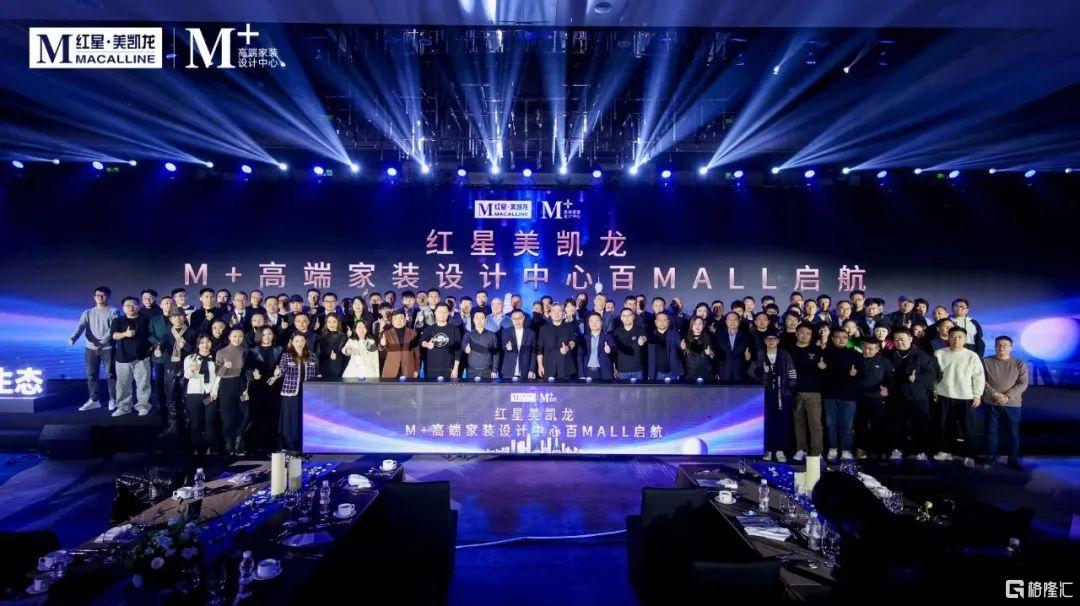
红星美凯龙M+设计中心 PK 居然之家“销售分成”:家居卖场上演“变形计”!
Ge Long Hui· 2025-12-26 13:48
Core Viewpoint - The home furnishing industry is undergoing significant changes as it adapts to the "post-real estate era," with companies exploring new business models to meet evolving consumer demands [1][8]. Group 1: Industry Transformation - The home furnishing market is entering a "new scene cycle," where companies like Red Star Macalline are innovating by establishing high-end home design centers to create a new ecosystem that connects design with product offerings [1][3]. - Red Star Macalline has launched 16 M+ high-end home design centers and plans to build an additional 84 centers by 2025, aiming for a nationwide scale of 100 centers [3][6]. - The integration of home furnishing, home decoration, and home appliances is becoming essential as the boundaries between these categories blur, necessitating a new platform for their consolidation [6][19]. Group 2: Consumer Trends - There is a growing demand among high-net-worth individuals and young consumers for design and solutions, with 90% of high-net-worth individuals and 83% of young consumers willing to pay for design services [6][8]. - Consumers are increasingly focused on lifestyle and specific scene needs, leading to a demand for more integrated and aesthetically pleasing home products [9][11]. Group 3: Company Strategies - Companies are actively innovating their marketing strategies by creating new consumer experiences, such as integrating art into home furnishing spaces and enhancing digital and smart home solutions [9][11][13]. - Red Star Macalline's M+ centers aim to serve as super connectors for product categories, enhancing the flow of design proposals and creating a primary entry point for quality home decoration traffic [6][19]. - Other leading companies like Oppein and Shangpin are also developing scene-based home furnishing stores to provide comprehensive solutions and enhance consumer engagement [14][16]. Group 4: Market Performance - Recent financial reports indicate that only Fusenmei has achieved positive revenue and profit growth, while Red Star Macalline and Juran Home have faced declines in profitability [17][18]. - The rental rates for self-operated and managed stores have decreased significantly, prompting companies to adopt new business models such as revenue-sharing agreements to better align with merchants [18][19]. Group 5: Future Directions - The role of home furnishing markets is evolving from mere display spaces to becoming "empowerers" and "guides" that can anticipate consumer trends and provide comprehensive services [21]. - The ongoing transformation in the home furnishing industry reflects a broader need for companies to adapt their positioning and capabilities in response to market dynamics [21].

未来10年中国房地产格局预测
Sou Hu Cai Jing· 2025-12-03 03:06
Overall Direction - The real estate sector in China is transitioning from an "era of real estate" to a "post-real estate era" between 2025 and 2035, driven by factors such as population peak, urbanization slowdown, and a shift in policy focus from stimulus to restructuring [1][2][4][5]. Urban Landscape - The real estate market will no longer operate as a "one-size-fits-all" across the country, but will instead amplify urban differentiation, with stronger cities becoming even more dominant while weaker ones experience prolonged declines [6][10]. - Urbanization will continue, with the urbanization rate expected to stabilize around 75% by 2035, indicating that population movement will increasingly favor major metropolitan areas [7][8]. - In first-tier and strong second-tier cities, the focus will shift to "scale reduction and core preservation," leading to a divide between prime assets and excess inventory [9]. - In ordinary second and third-tier cities, the market will resemble a "just-demand consumer good" rather than an investment target, with a focus on sellability over price [10]. Product Structure - The housing structure will evolve into a three-tier system comprising market-based purchasing, rental markets, and guaranteed housing, marking the end of relying solely on market-driven commodity housing [14][15]. Developer Landscape - The era of private real estate giants is coming to an end, with state-owned enterprises and local government financing vehicles taking the lead in the market [16][17][20]. - Developers will be categorized into three types: construction teams, operators, and platform companies, with a focus on meeting the self-occupancy and improvement needs of middle-income families [18][19]. Pricing and Transactions - The market will see a "volume reduction and price stability" trend, with the era of dramatic price fluctuations coming to an end [21]. - The gap between new and second-hand housing prices will persist, with second-hand homes gradually becoming the dominant market segment [22]. Financial and Asset Allocation - The proportion of housing in financial and household asset allocation will decline, with a shift towards diversified asset management including bank wealth management, public funds, and pension products [23][24]. - Housing will remain a significant asset but will no longer be the sole cornerstone of family wealth, as it integrates with other financial assets [27]. Implications for Different Stakeholders - For ordinary families, housing remains important but is no longer the only means of upward mobility; the choice of city and location is paramount [28]. - For investment buyers, high-leverage speculation is increasingly seen as self-destructive, with meaningful opportunities concentrated in a few cities and areas [28]. - For real estate professionals, the era of solely selling homes is over; skills in planning, renovation, operation, and asset management will be essential for future growth [28]. - For local governments, real estate is no longer an endless growth engine but requires careful management of existing and new housing to maintain balance [28].
仓位不低,可投标的不少!宁泉淡水泉瓴仁等名私募的最新观点……
聪明投资者· 2025-10-21 07:07
Core Insights - The private equity sector is maintaining high positions in their portfolios, showing a calm demeanor despite rising trade tensions post-October [2] - The market is experiencing structural growth, with significant gains in sectors like AI-related semiconductors and optical modules, while traditional industries are stagnating [6][7] - There is a recognition of visible bubbles in popular sectors, with a cautious approach towards investment in these areas [8] Group 1: Market Trends and Performance - The Shanghai Composite Index reached a nearly 10-year high in Q3, with a notable divergence between high-performing sectors and traditional industries [6] - Ningquan Asset's performance lagged behind the market due to a focus on traditional stocks, despite achieving double-digit returns this year [6][7] - The overall sentiment in the market is one of cautious optimism, with expectations of a healthy correction following rapid price increases [18][21] Group 2: Investment Strategies and Focus Areas - Investment managers are maintaining a conservative approach, focusing on sectors with stable valuations and avoiding participation in high-risk areas [10][12] - There is a shift towards growth stocks, with managers like Zhao Jun from Dongshuiquan seeing significant returns by adapting to market conditions [9] - The emphasis is on companies with strong fundamentals, particularly in technology and healthcare sectors, as they are expected to benefit from ongoing market trends [39][40] Group 3: Economic Indicators and Future Outlook - The current liquidity environment is expected to remain stable, supporting market performance [19] - Economic indicators show signs of improvement, with industrial profits showing recovery, which may enhance stock selection opportunities [19] - The market is anticipated to experience structural growth, driven by technological advancements and favorable macroeconomic policies [39][40]