
赛力斯

Search documents
理想,为什么突然不学华为了?
创业邦· 2025-11-21 06:05
Core Viewpoint - The article discusses the recent strategic shift of Li Auto, indicating a departure from its previous learning from Huawei's management practices, particularly the PBC performance model, towards a new focus on becoming a leading AI terminal company [5][10][12]. Group 1: Strategic Changes - Li Auto has recently made significant organizational changes, including the founder Li Xiang taking over HR responsibilities and several Huawei executives leaving the company [5][6]. - The company is moving away from the PBC performance model and is reintroducing the OKR management system, indicating a shift in management philosophy [5][6]. - The mission of Li Auto has evolved from being a car manufacturer to becoming a global leader in AI terminals, which has necessitated changes in its organizational structure and operational methods [10][12]. Group 2: Learning from Huawei - Initially, Li Auto aimed to learn from Huawei's Integrated Product Development (IPD) model to improve its product definition and management processes, especially after facing competition from the AITO M7 [7][8]. - The IPD model provided a structured approach to product development, ensuring high quality through rigorous checks, but it also introduced inefficiencies due to lengthy decision-making processes [8][9]. - Li Auto's adaptation of the IPD model was seen as a necessary step to stabilize its operations during a period of rapid product launches [8][9]. Group 3: Transition to AI-Native Organization - As the company's mission shifted towards AI, it recognized the need to restructure its organization to be more agile and responsive, moving away from the traditional IPD model [10][11]. - The new structure involves creating smaller, more flexible teams that can iterate quickly, akin to agile development practices in the software industry [11]. - This transformation reflects a broader understanding that the nature of AI development requires a different operational approach compared to traditional hardware manufacturing [10][12].


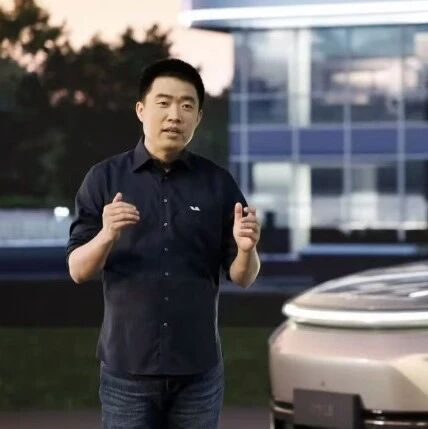
引领AI汽车新时代 赛力斯魔方技术平台2.0广州国际车展发布
Ge Long Hui· 2025-11-21 05:29
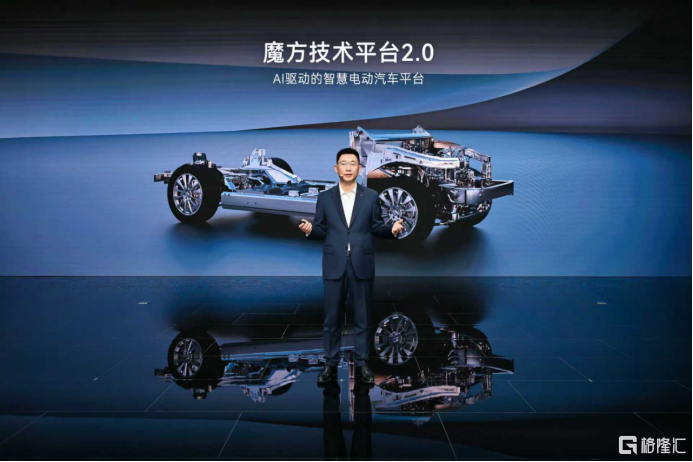
Core Viewpoint - The release of the Cyrus Magic Cube Technology Platform 2.0 marks a significant upgrade aimed at establishing the brand as a leader in high-end and intelligent vehicles in China, focusing on high safety, reliability, performance, quality, and value for users [1][19]. Group 1: Technology and Innovation - The new platform emphasizes AI-driven smart electric vehicles, enhancing smart energy, intelligent chassis, EEA architecture, and smart space [1][3]. - The platform integrates advanced AI capabilities to create a more emotional, intelligent, safe, and reliable mobile companion [3]. - The platform's architecture has evolved from distributed regional control to a centralized control system, supporting large model applications and end-to-end evolution [10]. Group 2: Product Features and Performance - The smart range-extended electric technology solution offers high integration with a high-voltage architecture, ensuring optimal vehicle operation and energy efficiency [6]. - The intelligent chassis features include road preview and curve prediction technologies, enhancing safety and comfort through dual backup systems [8]. - The platform supports multiple vehicle types and flexible production, allowing for a wide range of configurations and use cases [12]. Group 3: Safety and User Experience - The brand prioritizes safety as the ultimate luxury, implementing a comprehensive intelligent safety system covering life protection, vehicle body protection, health care, and privacy protection [15][14]. - The company has developed a robust testing system with over 100,000 test cases to ensure high reliability and user satisfaction [17]. - The brand has achieved significant user engagement, with over 900,000 cumulative users and leading sales in its vehicle segments [19][21]. Group 4: Future Outlook - The company aims to continue user-centric development through deep collaboration with strategic partners, focusing on innovation and rapid product iteration in the AI and automotive sectors [21].

2025新汽车年度盛典:中国汽车如何破局存量市场
2 1 Shi Ji Jing Ji Bao Dao· 2025-11-21 04:26
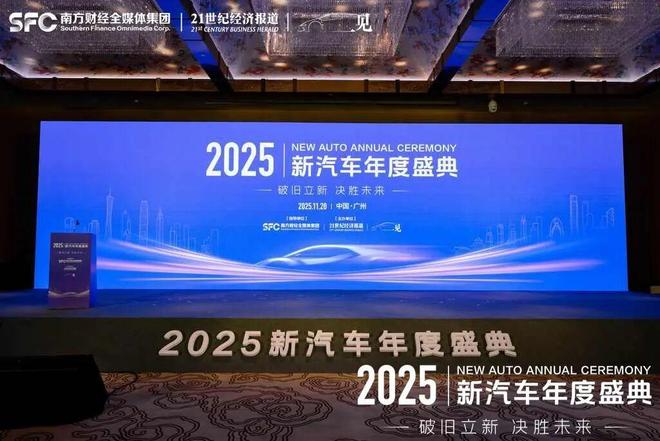
Core Insights - The Chinese automotive industry is at a critical juncture in 2025, facing both rapid growth and significant challenges, including declining profits and intense price wars [3][5] - The theme of the "2025 New Automotive Annual Ceremony" is "Breaking the Old and Establishing the New," focusing on user value, technology, ecology, and strategy as pathways to future competitiveness [3][5] Group 1: Industry Challenges and Opportunities - Chinese brands have transformed from followers to leaders, capturing over 60% market share, yet the industry is grappling with a crisis of profitability and survival [3] - The automotive sector is shifting from a growth phase to a competitive landscape, necessitating a focus on user needs and innovative solutions to thrive [18][20] Group 2: Technological Innovations - The integration of AI and advanced technologies is reshaping the automotive landscape, with companies like Horizon and Li Auto emphasizing the importance of safety and user experience in their innovations [9][11] - The concept of "software-defined vehicles" is gaining traction, with companies exploring both hardware and software solutions to enhance driving experiences [9][38] Group 3: User-Centric Approaches - Companies are increasingly prioritizing user feedback and engagement, as seen in initiatives like GAC's "User All-Mic" meetings to gather insights for product improvement [20][22] - The establishment of user co-creation committees is becoming a trend, allowing companies to incorporate user suggestions into their product development processes [22] Group 4: Market Expansion and Global Strategy - The overseas market is becoming essential for long-term growth, with challenges such as regulatory barriers and cultural differences being addressed through initiatives like NESTA-Global [35] - Chinese automotive suppliers are gaining recognition in international markets, with companies like Hesai Technology securing significant orders from European manufacturers [38] Group 5: Awards and Recognitions - The ceremony recognized various companies for their contributions, including XPeng for design, Horizon for intelligent driving, and AION for manufacturing excellence [48][49]
2025新汽车年度盛典:中国汽车如何破局存量市场
21世纪经济报道· 2025-11-21 04:10
Core Viewpoint - The Chinese automotive industry is at a critical juncture, facing both opportunities and challenges, necessitating a transformation from traditional practices to a new paradigm centered on user value and technological integration [3][5]. Group 1: Industry Overview - In 2025, Chinese brands have captured over 60% market share, transitioning from followers to leaders, yet the industry faces declining profits and intense price wars [3]. - The theme of the "2025 New Automotive Annual Ceremony" is "Breaking the Old and Establishing the New," focusing on user value, technology, ecology, and strategy to navigate the competitive landscape [3][5]. Group 2: User Value and Design - Automotive design is evolving to become a key differentiator, merging emotional and rational elements to enhance user experience [8]. - The concept of "new luxury" in automotive experiences is highlighted, with companies like AITO achieving significant sales milestones, indicating a shift in consumer expectations [15]. Group 3: Technological Innovation - Companies are adopting a "soft and hard dual repair" approach in the intelligent driving sector, emphasizing the integration of AI and traditional automotive technologies [10]. - Safety remains a top priority in technological advancements, with companies like Li Auto reporting significant accident avoidance statistics through their AEB systems [12]. Group 4: Market Expansion and Challenges - The overseas market is becoming essential for long-term growth, with challenges such as regulatory barriers and cultural differences being addressed through initiatives like NESTA-Global [34]. - The automotive industry is transitioning from a growth phase to a competitive phase, requiring companies to listen to user feedback and adapt accordingly [18][20]. Group 5: Future Directions - The integration of AI and smart technologies is reshaping user interactions and driving the evolution of automotive experiences [24][26]. - The industry is moving towards a model where electric vehicles and charging infrastructure evolve together, with a focus on smart home integration and high-power charging solutions [27]. Group 6: Recognition and Awards - The ceremony recognized various companies for their contributions, including Xiaopeng for design, Horizon Robotics for AI, and AION for manufacturing excellence, showcasing the industry's diverse strengths [46].


人形机器人:情绪向左,产业向右 | 投研报告
Zhong Guo Neng Yuan Wang· 2025-11-21 03:01
Core Insights - The humanoid robot sector is experiencing a downturn, with key indices and leading stocks showing weakness and overall sentiment at a low point [1][2] - The recent performance of major indices, including the CSI 300 and STAR Market 50, has been negative, with declines of 1.08% and 3.85% respectively, while the core index of humanoid robotics fell by 4.13% [2] - The report highlights significant fluctuations among core stocks, with notable gainers and losers, indicating a challenging market environment [2] Industry Developments - Tesla is advancing its robotics initiatives, with plans for mass production of the Optimus robot by 2026 and a significant production capacity target of 10 million units annually by 2027 [2][3] - Xiaopeng has launched its new humanoid robot, IRON, showcasing advanced technology and integration with its electric vehicle and autonomous driving strategies [3] - Yuzhu has completed its IPO guidance, positioning itself as a potential leader in the humanoid robotics sector in A-shares, with a strong market presence and profitability [3] Market Outlook - The year 2026 is anticipated to be a pivotal year for domestic humanoid robot mass production, characterized by technological breakthroughs and initial commercialization efforts [4] - Investment opportunities are expected to arise from large-scale manufacturing, hardware supply chains, and standardization processes within the industry [4] Related Companies and Stocks - Beneficiary stocks include Lens Technology, Wazhou New Spring, and others across various components such as bearings, joints, and lightweight materials [5][6]


赛力斯汽车总裁何利扬:问界系列车型累计交付突破90万辆
Ge Long Hui A P P· 2025-11-21 02:40
Core Insights - AITO's total vehicle deliveries have surpassed 900,000 units as announced by the president of Seres Automotive, He Liyang, at the 2025 Guangzhou Auto Show [1] Delivery Performance - The AITO Wenjie M9 has achieved cumulative deliveries of over 260,000 units [1] - The AITO Wenjie M8 has reached cumulative deliveries of 130,000 units [1] - The AITO Wenjie M7 has recorded cumulative deliveries of 350,000 units [1] - The AITO Wenjie M5 has seen cumulative deliveries of 160,000 units [1] Driving Assistance Milestone - The total mileage for the AITO series' advanced driver assistance systems has reached 4.45 billion kilometers [1]
问界系列车型累计交付突破90万辆
Xin Lang Cai Jing· 2025-11-21 02:32
Core Insights - AITO Wenjie series vehicles have achieved cumulative deliveries exceeding 900,000 units, showcasing strong market performance [1] Delivery Breakdown - Wenjie M9 has delivered 260,000 units - Wenjie M8 has delivered 130,000 units - Wenjie M7 has delivered 350,000 units - Wenjie M5 has delivered 160,000 units [1] Autonomous Driving Initiatives - All new Wenjie vehicles will be test-driven by executives immediately upon release, with a requirement to activate assisted driving upon entry, or face penalties - The total mileage for assisted driving in the Wenjie series has reached 4.45 billion kilometers [1]
赛力斯凤凰智创取得基于AutosarAP平台动态加载服务的通道和实例的方法和装置专利
Jin Rong Jie· 2025-11-21 01:57
Group 1 - The core viewpoint of the article highlights that Chongqing Silis Phoenix Intelligent Technology Co., Ltd. has obtained a patent for a method and device based on the AutosarAP platform for dynamic loading services, with the patent announcement number CN 119496815 B and an application date of October 2024 [1] - Chongqing Silis Phoenix Intelligent Technology Co., Ltd. was established in 2023 and is located in Chongqing, primarily engaged in software and information technology services [1] - The company has a registered capital of 122,225 million RMB and has participated in one bidding project, with a total of 2,647 patent information entries and 2 administrative licenses [1]
2025新汽车年度盛典:中国汽车如何破局存量市场?
2 1 Shi Ji Jing Ji Bao Dao· 2025-11-21 00:40
Core Insights - The Chinese automotive industry is at a critical juncture in 2025, experiencing both rapid growth with domestic brands capturing over 60% market share and facing challenges such as declining profits and intense price wars [2][3] - The theme of the "2025 New Automotive Annual Ceremony" is "Breaking the Old and Establishing the New," focusing on user value, technology, ecosystem, and strategy to navigate the industry's future [3][5] Industry Trends - The automotive sector is transitioning from a growth phase to a competitive landscape, necessitating a shift in strategies to meet user demands and enhance product offerings [10][11] - The integration of AI and advanced technologies is reshaping the automotive experience, with companies emphasizing the importance of user feedback and co-creation in product development [13][14] Technological Innovations - Companies are exploring a dual approach of "software-defined vehicles" and "hardware-locked experiences," with a focus on enhancing user experience through innovative design and technology [6][23] - The rapid iteration of technology requires robust R&D capabilities to ensure safety and reliability in new features, as demonstrated by the significant collision avoidance statistics reported by Li Auto [8] Market Dynamics - The overseas market is becoming increasingly important for Chinese automotive companies, with challenges such as regulatory barriers and cultural differences being addressed through initiatives like NESTA-Global [19] - The emphasis on electric vehicles is clear, with a consensus that pure electric technology will dominate the future, while hybrid and extended-range solutions serve as complementary options [16][17] Notable Achievements - The "2025 New Automotive Annual Ceremony" recognized several companies for their contributions, including Xiaopeng for design, Horizon Robotics for intelligent driving, and AION for manufacturing excellence [24][25]



肇民科技拟募5.9亿扩产补流 新建泰国基地完善产能配套
Chang Jiang Shang Bao· 2025-11-21 00:04
Core Viewpoint - Zhaomin Technology plans to raise up to 590 million yuan through the issuance of convertible bonds to expand production capacity and enhance its global supply chain for electric vehicle components [1][2]. Group 1: Fundraising and Investment Plans - The company intends to issue convertible bonds with a total amount not exceeding 590 million yuan, with a six-year term [2]. - Of the raised funds, 320 million yuan will be allocated to a new project for producing 800 million sets of electric vehicle components and ultra-precision engineering plastic parts, while 110 million yuan will be invested in a production base in Thailand [2][3]. - The remaining 160 million yuan will be used to supplement working capital [2]. Group 2: Financial Performance and Previous Fund Usage - As of September 30, 2025, Zhaomin Technology had utilized 710 million yuan of the 782 million yuan raised in its 2021 IPO, leaving 111 million yuan unspent [2]. - The company terminated previous projects related to automotive precision injection parts and redirected approximately 280 million yuan of surplus funds to new electric vehicle component production projects [2]. - For the first three quarters of 2025, the company reported revenue of 600 million yuan, a year-on-year increase of 13.8%, and a net profit attributable to shareholders of 107 million yuan, up 2.3% [4]. Group 3: Strategic Partnerships and Market Position - Zhaomin Technology has established partnerships with several international companies in the automotive parts sector, including Sanhua Intelligent Controls and Ametek [1][4]. - The company is actively developing precision components for humanoid robots in response to customer demand and has secured some orders [4]. - The establishment of a production base in Thailand aligns with the company's strategy to meet the localization supply chain needs of its international clients [3][4]. Group 4: Global Expansion Strategy - The company plans to set up wholly-owned subsidiaries in Singapore and Thailand to enhance its international market presence and facilitate overseas business development [5]. - This investment strategy is expected to leverage Singapore's geographical advantages and strengthen cooperation with international markets [5].