英伟达

Search documents
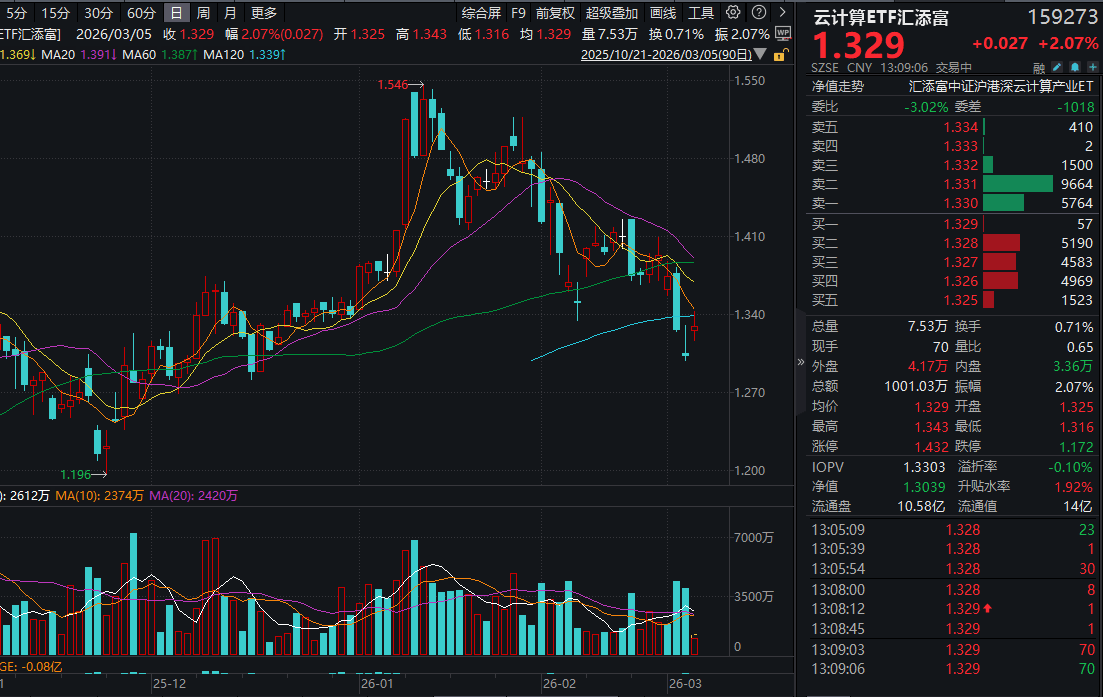
加码40亿,英伟达布局光通信!新易盛大涨超10%,云计算ETF汇添富(159273)大涨超2%!算力需求超预期,如何理解云需求“通胀”逻辑?
Sou Hu Cai Jing· 2026-03-05 06:01
Group 1 - The core viewpoint of the news highlights a strong rebound in the Asia-Pacific stock market, driven by a comprehensive rebound in US stocks and a significant increase in AI computing power, with the "computing power ETF" gaining over 2% [1][3] - Nvidia is increasing its investment in the computing power ecosystem, committing $2 billion to optical technology companies Lumentum and Coherent, which are key suppliers in the AI data center infrastructure [3][5] - The cloud computing ETF Huatai (159273) saw most of its weighted index stocks rise, with notable gains from companies like Xinyi and Zhongji [3][4] Group 2 - Citic Securities notes that the technology sector is experiencing upward pressure on capital expenditure (Capex) due to concerns over capital return rates and cash flow, leading to a shift in focus towards computing power and advanced processes [5][6] - The demand for computing power is expected to continue exceeding expectations in both overseas and domestic markets, with upstream sectors likely to maintain high profitability and price increases [6][8] - The recent iterations of large models from major companies like Google and Alibaba are driving AI inference demand, leading to a price increase in cloud services, marking a shift from price competition to premium monetization [8][9]


The Art of the Hedge: Tariffs, War Dividends, and the Spanish Trade Inquisition
Stock Market News· 2026-03-05 06:00
If there is one thing the global financial markets have learned in the early months of 2026, it is that stability is for people who don’t have a Truth Social account. Investors spent the first week of March attempting to price in a reality that feels increasingly like a fever dream written by a protectionist chatbot. Between the Supreme Court playing a high-stakes game of “legal whack-a-mole” with trade levies and the White House launching a maritime insurance start-up in the middle of a conflict zone, the ...

X @Cassandra Unchained
Cassandra Unchained· 2026-03-05 05:24
Actual SBC costs are not high simply because the employees' shares went up in value. The shares were not yet in employees' hands. The grants of RSUs are future promises, and all potential upside is funded by shareholders directly through either dilution or future buybacks to nowhere at much higher prices. Companies benefit by offloading all the employee shares' upside from the income statement, but it shows up down the road in the cash flow statement, and must be accounted.What actually happens - grant when ...
黄仁勋重磅发声:对OpenAI千亿投资机会已消失 并否认AI泡沫称增长“势不可挡”
美股IPO· 2026-03-05 04:40
Core Viewpoint - Nvidia's CEO Jensen Huang stated that the company's investment in OpenAI will not reach the previously discussed $100 billion, indicating that the opportunity for such an investment may no longer exist [1][3]. Group 1: Investment in OpenAI - Nvidia invested $30 billion in OpenAI during a financing round that totaled $100 billion, raising OpenAI's valuation to $730 billion, which is significantly lower than the $100 billion potential discussed last year [3]. - Huang emphasized that this might be the last opportunity for Nvidia to invest in a company with such strategic significance as OpenAI, which is preparing for an IPO by the end of the year [1][3]. Group 2: Strategic Relationships and Market Concerns - The lower-than-expected investment has raised concerns about the strategic relationship between Nvidia and OpenAI, despite Huang praising OpenAI's work as "incredible" and calling it one of the most influential companies of the era [3]. - Huang revealed that Nvidia's recent $10 billion investment in OpenAI competitor Anthropic is likely to be the company's last major investment in that area, as Anthropic is also preparing for an IPO [3]. Group 3: AI Market Growth and Company Performance - Huang addressed investor concerns regarding the potential for a bubble in AI investments, reiterating that the scaled deployment of AI computing has created substantial revenue opportunities for large data center operators like Microsoft [4]. - He highlighted a significant correlation between customer growth potential and computing power, stating that a threefold increase in computing capability leads to a threefold increase in customer sales [4]. - Huang pointed out that companies like Cadence Design Systems and Synopsys will play a larger and more central role in the industry ecosystem, which positively impacted their stock prices [4]. - Nvidia's historical performance was noted, with Huang asserting that the AI industry is just beginning a large growth cycle, which contributed to a 2.6% intraday increase in Nvidia's stock price [4].

DRAM与NAND携手狂飙! 存储芯片成AI时代最硬通货 美光与闪迪迎接“AI超级红利”!
美股IPO· 2026-03-05 04:40
Core Viewpoint - The demand for AI data centers is driving a significant increase in DRAM and NAND storage prices, with major companies like Micron Technology (MU.US) and SanDisk (SNDK.US) becoming focal points for global investors as their stock prices surged nearly 6% in a single day [1][4]. Group 1: Price Predictions and Market Dynamics - BNP Paribas forecasts a 90% quarter-over-quarter increase in DRAM contract prices in Q1 2026, while NAND prices are expected to rise by 55% [3]. - TrendForce has revised its Q1 2026 DRAM contract price forecast from a 55%-60% increase to 90%-95%, and NAND prices are expected to increase by 55%-60% [3]. - The rapid price increases are attributed to a growing demand for enterprise SSDs from North American cloud computing companies, indicating a supply-demand imbalance in the storage chip market [3][4]. Group 2: Current Market Trends - February's spot prices showed a significant increase, with consumer-grade DDR4 spot prices rising 11% month-over-month to $21.93/GB, while contract prices increased by 7% to $12.17/GB, indicating an 80% premium for spot prices over contract prices [5]. - Samsung has reportedly raised DRAM prices by over 100% after negotiations with major clients, reflecting a tightening supply and increasing demand [5]. Group 3: Storage's Role in AI Infrastructure - Storage chips are positioned as critical components in the AI wave, benefiting from both training and inference expansions, and are essential for the performance of AI systems like Google’s TPU and NVIDIA’s GPU clusters [7][8]. - The storage market is experiencing a shift from annual to quarterly contracts, and even monthly adjustments, due to the severe supply-demand imbalance [6]. Group 4: Future Price Outlook - Citigroup analysts predict a dramatic increase in storage prices by 2026, with DRAM prices expected to rise by 88% and NAND prices by 74%, driven by the demand from AI applications [10][11]. - The average selling price (ASP) for server DRAM is projected to increase by 144% year-over-year, with specific products like the 64GB DDR5 RDIMM expected to reach $620 in Q1 2026 [11].


博通电话会全文&详解:2027年AI芯片营收将破1000亿美元,AI不会颠覆基础设施软件!
美股IPO· 2026-03-05 04:40
Core Viewpoint - Broadcom expects AI chip revenue to exceed $100 billion by 2027, driven by strong demand from strategic customers and a robust supply chain strategy [1][4][18] Group 1: AI Chip Revenue and Customer Base - Broadcom anticipates that AI chip revenue will surpass $100 billion by 2027, with a projected installed capacity of nearly 10 gigawatts [5][18] - The company has identified six long-term strategic customers, including Google, Meta, OpenAI, and Anthropic, who are developing custom AI chips [5][18] - The demand for custom chips is expected to grow as clients develop dedicated chips for model training and inference, indicating a long-term expansion rather than a one-time replacement of GPUs [9][35] Group 2: Network Infrastructure Growth - Network revenue is projected to grow significantly, with expectations that it will account for 33% to 40% of AI revenue in the coming quarters [10][30] - Broadcom's Tomahawk 6 switch, with a throughput of 100 Tbps, is experiencing high demand, and the company plans to launch the next-generation Tomahawk 7 in 2027 [10][30] - The company emphasizes the advantages of using direct attach copper cables for low latency and cost efficiency in data center environments [10][30] Group 3: Supply Chain and Production Capacity - Broadcom has secured critical component capacity through 2028, positioning itself as one of the first companies to lock in such long-term supply agreements [11][17] - The company has a strong inventory position, with $3 billion in inventory at the end of the first quarter, reflecting its anticipation of accelerating AI semiconductor demand [11][20] Group 4: Software Business Resilience - Broadcom's infrastructure software, particularly VMware, is expected to benefit from the growth of AI, with a 13% year-over-year revenue increase in the first quarter [12][18] - The company asserts that its infrastructure software will not be displaced by AI but will instead see increased demand as AI applications grow [12][18]


Nvidia vs. Amazon: Which AI Stock Is a Better Buy Now?
The Motley Fool· 2026-03-05 04:30
Core Insights - Nvidia and Amazon are central players in the AI boom, both experiencing accelerated revenue growth recently [1] - Nvidia's revenue increased by 73% year-over-year to $68.1 billion, while Amazon's sales rose 14% to $213.4 billion, indicating a more diversified operational base for Amazon [2] Nvidia - Nvidia's fiscal fourth-quarter results were driven by its data center segment, which saw a 75% year-over-year revenue increase to a record $62.3 billion, primarily due to AI demand [4] - Despite impressive results, Nvidia's stock fell post-reporting, reflecting high market expectations [5] - Management anticipates continued strong growth, projecting fiscal first-quarter revenue of about $78 billion, representing 77% year-over-year growth [5] - Concerns exist regarding Nvidia's long-term growth prospects due to the cyclical nature of the semiconductor industry, which could lead to compressed profit margins if demand cools or competition increases [6] Amazon - Amazon's AI growth is anchored by Amazon Web Services (AWS), which saw Q4 sales increase by 24% year-over-year to $35.6 billion, an acceleration from 20% growth in Q3 [7] - Amazon's e-commerce sales rose 10% year-over-year, third-party seller services increased 11%, advertising revenue grew by 23%, and subscription services rose 14% [8] - Amazon operates on lower margins compared to Nvidia, which reduces the risk of margin compression [9] Investment Comparison - Both companies are strong businesses benefiting from technological advancements, but Nvidia's financial results are concentrated in a single, cyclical sector, raising concerns about sustainability [10] - Amazon offers more durability with a less cyclically sensitive and diversified business model, minimizing pricing power erosion risks [11] - Amazon's stock trades at a cheaper valuation of 30 times earnings compared to Nvidia's 37 times earnings [11]


重磅最新!三星,一季度 DRAM 价格上调 100%
是说芯语· 2026-03-05 04:21
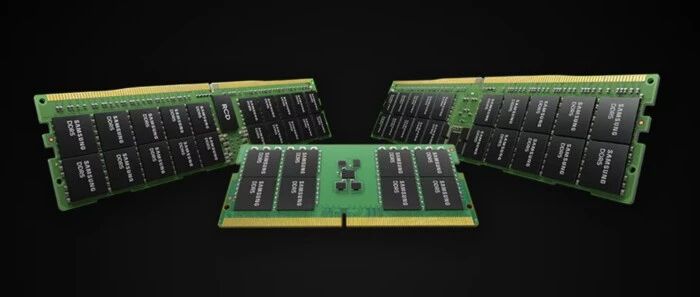
Core Viewpoint - The article discusses the significant price increases in DRAM memory due to surging demand driven by the proliferation of artificial intelligence (AI) applications, with prices for general DRAM rising by an average of 100% compared to the previous quarter [2][4]. Group 1: Price Increases - In January, the price increase for DRAM was approximately 70%, which later expanded further within a month due to heightened demand [2]. - Samsung Electronics has finalized DRAM supply prices for the first quarter, with some prices doubling compared to Q4 of the previous year, and certain clients experiencing increases exceeding 100% [2][4]. - The quarterly contracts for DRAM are now being pushed by manufacturers due to supply shortages, with considerations for monthly adjustments due to price volatility [5]. Group 2: Market Dynamics - The demand for high-bandwidth memory (HBM) has surged as AI service providers increase their procurement of AI chips, leading to a constrained supply of DRAM for servers, PCs, and mobile devices [7]. - Major companies like SK Hynix and Micron are expected to follow similar pricing trends as Samsung Electronics in their first-quarter supply contracts [7]. - Market research firm Gartner predicts that the prices of DRAM and solid-state drives (SSDs) will rise by an average of 130% this year compared to last year [7].
弯道超车?国产具身,千小时人类数据激发智能涌现
机器之心· 2026-03-05 04:15
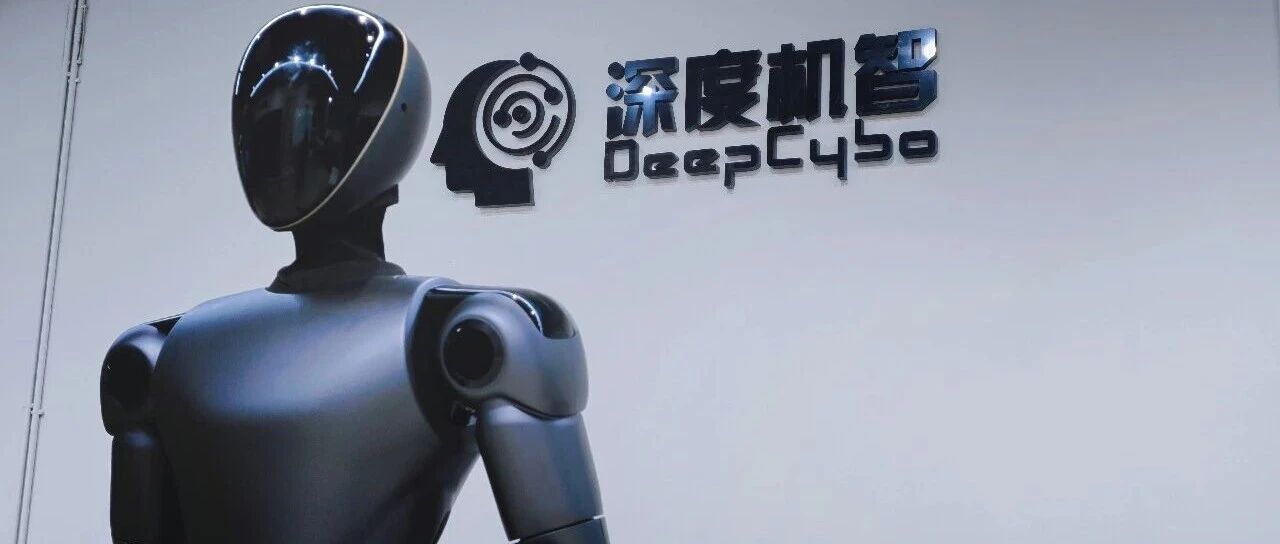
Core Insights - The article discusses the emergence of a new paradigm in robotics, focusing on "human-first perspective data" as a key to achieving advanced robotic intelligence, outperforming major players like NVIDIA by over 20% in various benchmarks [1][4][6]. Group 1: Human-First Perspective Data - The concept of "human-first perspective data" is gaining traction in Silicon Valley, with companies like Tesla and Generalist AI investing heavily in this data type to enhance robotic capabilities [3][7]. - NVIDIA's recent EgoScale framework demonstrates that increasing human demonstration data can significantly improve robotic dexterity, emphasizing the importance of human data over machine-generated data [4][6]. - Deep Intelligence, founded in 2025, is recognized as a pioneer in leveraging human-first perspective data to decode physical common sense, which is crucial for the advancement of embodied intelligence [11][8]. Group 2: Understanding Physical Common Sense - The article highlights the critical role of physical common sense in achieving true robotic intelligence, with Generalist AI labeling it as the "dark matter" of robotics [8][14]. - Current domestic discussions in embodied intelligence often overlook the significance of physical common sense, focusing instead on trajectory fitting from real or simulated data [17][18]. - Deep Intelligence's approach prioritizes "understanding first, action next," aiming to equip robots with a deep understanding of physical world operations before executing tasks [20][21]. Group 3: Technological Innovations - Deep Intelligence has developed a comprehensive technology stack that includes data, architecture, and algorithms to enhance the efficiency of learning from human-first perspective data [24][22]. - The company has created a translation pipeline, Egocentric2Embodiment, to convert human perspective videos into structured learning signals for robots, ensuring they understand the underlying physical interactions [25][34]. - The PhysBrain model, trained on human-first perspective data, has achieved a 67.4% success rate in tasks, outperforming competitors that relied on extensive machine trajectory data [27][29]. Group 4: Advanced Model Architectures - The TwinBrainVLA architecture allows for the simultaneous training of a "left brain" for general understanding and a "right brain" for specific robotic actions, preventing knowledge loss during optimization [31][32]. - The integration of various innovations has led to the development of PhysBrain1.0, which achieved a remarkable 79.8% success rate in testing, surpassing industry benchmarks [37][38]. - The model's ability to generalize across different tasks and platforms indicates a significant advancement in robotic intelligence, showcasing the potential for real-world applications [39][40]. Group 5: Future Directions - Deep Intelligence plans to scale human-first perspective data collection to a million hours by mid-2026, aiming to fully reveal the scaling laws of physical common sense [43][46]. - The company’s approach is expected to create a competitive edge that is difficult for others to replicate, as it emphasizes data efficiency and systematic modeling of physical common sense [42][46].
异动盘点0305 | 光通信概念股集体回暖,脑机接口概念股盘中拉升;美股AI应用软件股拉升,比特币概念股普涨
贝塔投资智库· 2026-03-05 04:02
Group 1: Pharmaceutical and Biotechnology Sector - Four Seasons Pharmaceutical (00460) saw a stock increase of 3.7% after receiving approval from the NMPA for its innovative drug, Pyrocilin Tablets, for treating HR+/HER2- advanced breast cancer [1] - Hengrui Medicine (01276) rose over 5% following the approval of a clinical trial for HRS-1780 Tablets aimed at treating primary hyperaldosteronism [3] - Mirxes-B (02629) experienced a stock surge of 10.86% after announcing a strategic partnership with Apollo Health to develop advanced cancer early detection solutions in India [3] - Cornerstone Pharmaceuticals-B (02616) increased by 12.37% after receiving FDA approval for its IND application for CS2009, a tri-specific antibody for advanced solid tumors [4] - Deciphera Pharmaceuticals-B (06996) rose 16.77% after signing an agreement with U.S. Biotech for the global development and commercialization of ATG-201, a dual-specific T-cell engager [5] Group 2: Automotive Sector - Automotive stocks showed a collective rebound, with XPeng Motors-W (09868) up 3.14% and NIO-SW (09866) up 3.43%, driven by news of BYD's upcoming launch of its second-generation blade battery and fast-charging technology [2] Group 3: Technology and Communication Sector - Optical communication stocks rallied, with Cambridge Technology (06166) up 8.7% after NVIDIA announced a $40 billion investment in optical technology through partnerships with Lumentum and Coherent [1] - Brain-computer interface stocks surged, with Nanjing Panda Electronics (00553) increasing by 24.64% following government reports emphasizing the development of future industries, including brain-computer interfaces [2] Group 4: Cryptocurrency Sector - Cryptocurrency-related stocks rebounded, with Okex Cloud Chain (01499) rising 15.89% as Bitcoin surpassed $72,000, driven by short-covering amid geopolitical concerns [5][6]