宇树机器人

Search documents
从能跑到会干活:具身智能产业的进化之路|活力中国调研行
Di Yi Cai Jing· 2025-06-24 00:16
Core Insights - The article discusses the advancements and challenges in the robotics industry, particularly focusing on humanoid robots and their evolution from basic mobility to intelligent operation [1][4][6]. Industry Developments - The Ministry of Industry and Information Technology of China issued national-level AI development guidelines on November 2, 2023, which has energized the industry [1]. - Local governments are implementing tailored policies to support resource allocation, talent attraction, and business environment improvement, fostering a conducive ecosystem for industry growth [1]. - Morgan Stanley's report predicts that by 2050, there will be 1 billion humanoid robots in use globally, with an estimated market size of $5 trillion, positioning it as a potential trillion-dollar market following computers, smartphones, and electric vehicles [1]. Technological Advancements - In 2023, the robotics industry achieved significant breakthroughs in mobility, with a focus on enhancing motion performance in 2024 and intelligent operations by 2025 [4]. - The Beijing Humanoid Robot Innovation Center has established a 2,000 square meter data collection facility and released a large-scale multi-configuration intelligent robot dataset and benchmark called RoboMIND [5]. - The center plans to open-source its technology in phases, including a motion control SDK by 2025, to build an open-source ecosystem that attracts global developers [5]. Market Trends - The industry is experiencing three key changes: the maturity of the supply chain leading to reduced core component costs, breakthroughs in general large model technologies, and a trend towards standardization of hardware platforms [6]. - The humanoid robot sector has seen a 34% increase in stock prices this year, with specific sub-sectors like electronic skin and lead screws showing gains of 71% and 57%, respectively [7]. - Goldman Sachs forecasts that the global market for humanoid robots will reach $38 billion by 2035, with various Chinese provinces developing plans to create leading industrial clusters [7]. Challenges and Limitations - The industry faces several challenges, including a lack of standardized platforms and certification, leading to inefficiencies and repeated efforts among companies [7][8]. - There is a significant need for high-quality real-world data for training robots, which is currently limited due to the high costs of data collection in dynamic physical environments [8]. - The industry is urged to strengthen foundational infrastructure, create an ecological certification system, and enhance collaboration among government, enterprises, and research institutions to promote sustainable development [8].

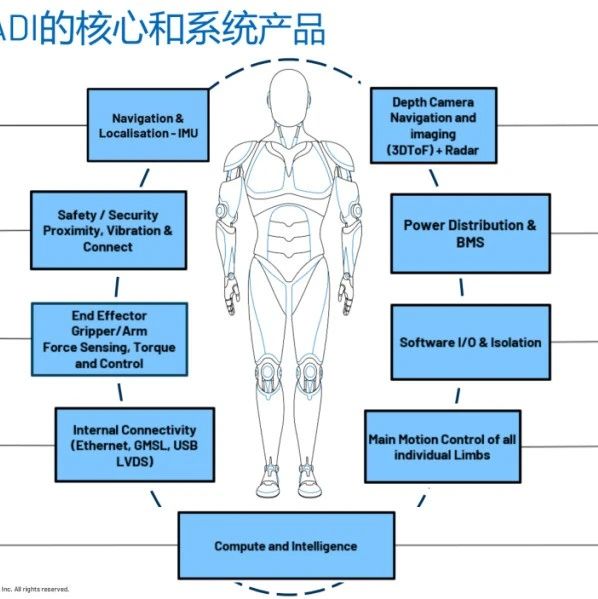
ADI全面布局人形机器人
半导体芯闻· 2025-06-16 10:13
Core Viewpoint - The rise of humanoid robots has gained significant attention following a performance at a Spring Festival gala, highlighting advancements in embodied intelligence and the need for improved hardware, particularly chips, to overcome existing challenges [1] Group 1: Humanoid Robot Development - Humanoid robots are increasingly compared to upright vehicles, requiring perception systems, high-performance chips, and effective power management for extended operation [2] - The execution capabilities of humanoid robots differ from cars, as they must also manipulate objects with dexterity, particularly through their hands [2] Group 2: ADI's Role in Humanoid Robotics - ADI has been involved in the robotics market for years and is now accelerating its offerings, including traditional chips and subsystems to facilitate product design and implementation [4] - ADI provides a range of products for humanoid robots, including sensors, internal connection systems, motor control modules, and power management solutions [5] Group 3: Connection Technologies - GMSL (Gigabit Multimedia Serial Link) is highlighted as a key technology for internal connections in humanoid robots, offering efficient data transmission and improved performance [9] - ADI's GMSL solution supports real-time transmission of video, sensor data, and power, making it suitable for the complex requirements of humanoid robots [10] Group 4: Isolation and Control Solutions - ADI offers isolation devices to protect sensitive electronics in humanoid robots from electrical interference, ensuring reliable operation in challenging environments [10] - The ADMT4000 solution provides precise joint control for robotic arms, enabling memory of positions even after power loss, thus enhancing operational reliability [12][14] Group 5: Challenges in Dexterous Manipulation - The development of dexterous hands, referred to as "smart hands," is a critical challenge in the humanoid robotics industry, requiring advanced sensors and AI algorithms [15] - Simplifying internal connections within these dexterous hands is also a significant focus for developers [15]

帝奥微:公司产品已供货宇树机器人 积极拓展其他机器人厂商
news flash· 2025-06-16 08:22
有投资者问帝奥微(688381),公司是否直接或间接供货宇树机器人?公司在互动平台表示,公司的低电 压/超低功耗USB3.2 Gen1 Redriver产品已经供货,同时也在积极拓展其他机器人厂商,目前机器人产品 销量占公司总体销售比例较小,请投资者注意风险。 ...

求购宇树机器人老股;转让头部AI芯片公司LP份额|资情留言板第163期
3 6 Ke· 2025-06-11 07:23
Group 1 - The article discusses various asset transactions in the market, highlighting the challenges faced by buyers and sellers in connecting with potential trading partners and market information [1] - The current transactions include the transfer of shares from ByteDance, Xiaohongshu, and Yushu Robotics, with expected valuations of $327 billion, $30-35 billion, and ¥10 billion respectively [1][2][3] - The article emphasizes the importance of direct communication for interested parties to engage in these transactions [1] Group 2 - A transfer of LP shares from Suiyuan Technology is mentioned, with an expected valuation of ¥20.2 billion and an asset scale of ¥30-50 million [2] - A four-legged robot company is seeking acquisitions, showcasing its diverse product range and technological advancements, including partnerships with universities and applications in various industries [3][4] - The company has a strong academic and practical background, with numerous patents and publications in the field of robotics [4] Group 3 - Additional transactions include the sale of shares from Songyan Power and Quantum Instruments, with valuations and asset scales to be negotiated [5][6] - The article also notes the ongoing interest in acquiring shares from ByteDance and Shein, with expected valuations of $300 billion and $60 billion respectively [7] - The demand for medical device and small home appliance sector acquisitions is highlighted, indicating a focus on profitable entities within these industries [8][9]

Z Potentials|专访陈羽北,Aizip打破效率瓶颈,让AI进入真实产品,推动On-Device AI的未来革命
Z Potentials· 2025-06-11 02:21
Core Viewpoint - The article discusses the rapid evolution of AI technology and its applications, highlighting the challenges of energy consumption, model size, and learning mechanisms. Aizip, a company focused on on-device AI models, aims to overcome these efficiency bottlenecks and drive the integration of AI into everyday life [1]. Group 1: AI Efficiency and Innovation - Aizip's mission is to enhance energy efficiency, model efficiency, and learning efficiency in AI systems, moving from "usable" to "efficiently usable" AI [3][10]. - The company emphasizes creating the "smallest and most efficient" AI systems, contrasting with the mainstream focus on general artificial intelligence (AGI) [3][14]. - Aizip's approach is to support businesses that require AI capabilities but lack full-stack AI expertise, allowing them to focus on application development [3][32]. Group 2: Founder's Background and Vision - The founder, Chen Yubei, has a strong academic background in AI and has shifted from theoretical research to practical applications, driven by a desire to see AI implemented in real-world products [4][16]. - The founding of Aizip was catalyzed by the COVID-19 pandemic, which disrupted initial plans for postdoctoral research and prompted discussions about entrepreneurship [6][16]. - Aizip's team comprises experienced individuals with diverse backgrounds, emphasizing a culture of collaboration and long-term value over short-term gains [17][18]. Group 3: On-Device AI Revolution - The article predicts that over 50% of AI reasoning will occur on-device in the near future, driven by advancements in hardware and user demand for low-latency, privacy-focused AI products [30][31]. - Aizip's product line includes multi-modal perception models and language models, focusing on seamless integration into various devices to enhance user experience without overtly displaying AI functionality [22][23]. - The company aims to create a comprehensive AI model ecosystem compatible with mainstream hardware, facilitating easier integration for clients [34][36]. Group 4: Market Position and Future Outlook - Aizip positions itself as a foundational support for companies lacking the resources to build their own on-device AI teams, anticipating a growing market for such capabilities [32][34]. - The company has established partnerships with leading hardware manufacturers and has achieved recognition for its innovative AI products [38]. - Aizip's strategy focuses on gradual commercialization, prioritizing technology validation and model stability before scaling operations [35][36].

他们的动作捕捉技术让机器人能看会学
Bei Jing Qing Nian Bao· 2025-06-09 17:51
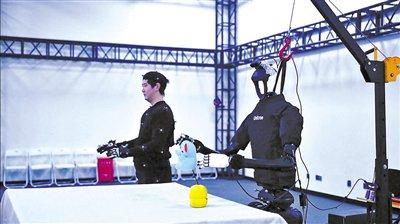
Core Viewpoint - The article highlights the innovative advancements made by the youth technology team, Yuan Ke Shi Jie, in developing a motion capture system, FZMotion, which enhances the capabilities of robots by enabling them to learn human movements and apply them in various practical scenarios [3][4][5]. Group 1: Technology Development - Yuan Ke Shi Jie has developed FZMotion, a motion capture system that accurately records human movements and converts them into data for robots to learn [3][4]. - The team has successfully implemented FZMotion in various applications, including training for the national boxing team and performances at the 2025 CCTV Spring Festival Gala [3][4]. - The technology features a "skeleton correlation algorithm" that allows it to infer true motion trajectories even when some data is obscured, significantly improving robot performance in complex environments [3][4]. Group 2: Collaboration and Innovation - The company collaborates with several universities, including Tsinghua University and Beijing Institute of Technology, to integrate academic research with practical applications [4][5]. - Yuan Ke Shi Jie has established a long-term industry-academia-research platform, facilitating the transition of academic findings into real-world applications [4][5]. - The team emphasizes a collaborative work environment, encouraging equal participation and idea sharing among all members, regardless of their position [4][5]. Group 3: Market Impact and Future Prospects - The advancements in motion capture technology are positioned to expand into various fields, including autonomous vehicles and underwater robotics, indicating a broad market potential [3][5]. - The recent policy initiatives from Beijing aim to establish the city as a global hub for embodied intelligence innovation, creating new opportunities for companies like Yuan Ke Shi Jie [5]. - The team's success in competitions and projects reflects their ability to adapt and thrive in a rapidly evolving technological landscape, showcasing the potential of youth-led innovation [4][5].
中国AIEV人形机器人供应链洞察报告出炉
3 6 Ke· 2025-06-04 03:58
Core Insights - The report by Yiou Automotive Research Institute explores the profound impact of the AIEV industry on the humanoid robot supply chain, predicting a market size of 3 trillion yuan by 2040 in China, with significant contributions from industrial, commercial, and household sectors [1][20] - The rapid development of generative AI and large model technologies has propelled the humanoid robot industry, making it a frontier of technological innovation [1][3] - AIEV manufacturers are leveraging their expertise in autonomous driving and intelligent cockpit technologies to accelerate the commercialization of humanoid robots [1][4] Industry Overview - The AIEV automotive industry is significantly contributing to the technological upgrades of humanoid robots, facilitating their application in various sectors such as industry and services [2] - Humanoid robots, resembling human form and capable of mimicking human actions, are on the verge of industrial explosion, with advancements in AI enhancing their interaction capabilities [3] - Major AIEV players like XPeng Motors, NIO, and Huawei are actively entering the humanoid robot sector, transferring their AI and smart technology experiences [4] Technological Synergy - The technological solutions for humanoid robots and AIEV vehicles are highly similar, resulting in low migration costs for technology [7][9] - AIEV manufacturers are focusing on the potential for industrial resonance with humanoid robots, aiming to expand into new business areas and enhance brand influence [10] - The technological advancements in humanoid robots are also feeding back into the AIEV sector, improving smart manufacturing processes and production efficiency [11] Market Dynamics - The humanoid robot industry is currently led by startups, with significant involvement from tech giants and automotive companies through investments and collaborations [18] - The report anticipates that from 2025 to 2030, humanoid robots will primarily serve industrial applications, transitioning to commercial services by 2031-2035, and eventually entering household scenarios post-2035 [20] - By 2040, the humanoid robot market in China is expected to reach 3 trillion yuan, with industrial applications accounting for nearly 2.3 trillion yuan [20][22] Conclusion - AIEV manufacturers are rapidly expanding into the humanoid robot sector, facilitating technology transfer and business development [22] - The integration of various components such as sensors, intelligent solutions, and battery technologies is driving the advancement and mass production of humanoid robots [22]

外媒:中国人形机器人的优势与挑战
机器人大讲堂· 2025-06-03 10:52
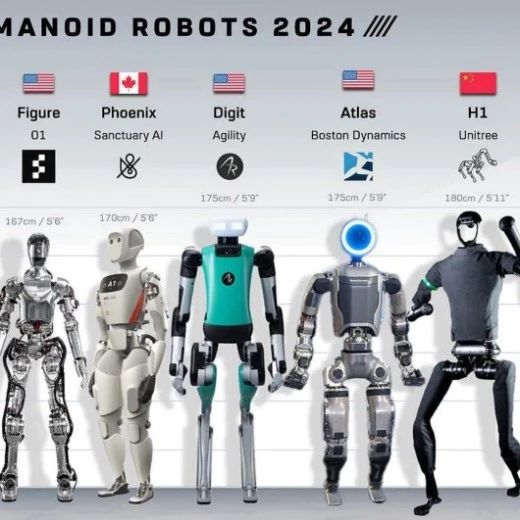
这使得 人形机器人必然会成为未来工厂进入 5.0 时代的焦点。 ▍ 中国为何成为焦点 外媒认为, 目前, 全球 人形机器人面临两大挑战。 一是市场竞争异常激烈 ,竞争的焦点是如何将最好、最 快、最智能、最强大、适应性最强的人形机器人推向市场。 二是产业链集中度较高 。 研究公司 STIQ 在最 近的一份报告中指出,几乎 60% 的人形机器人资金都是在亚洲筹集的,其余大部分资金都来自美国。 例如 STIQ 的创始人托马斯 · 安德森追踪了 49 家开发人形机器人的公司 , 超过 100 家 具身智能企业, 他认为 中国企业很可能 在未来 占据市场主导地位。 他 表示, 中国的机器人供应链和整个生态系统非常庞 大,迭代开发和研发非常容易。中国企业还享有来自 国家和地方政府的额外支持。 类似 上海 的国家地方共 建人形机器人创新中心所打造的 机器人训练机构,数十个人形机器人 能快速 学习完成任务 ,这为中国人形 机器人行业提供了大量的共有数据。 而反观欧洲的人形机器人企业,例如 Kinisi 等, KR1 机器人虽然是在英国设计和开发的,但都将在亚洲制 造,因为企业的电机、电池、电阻器等大多数 零部件必须从中国购买 ...
机器人卷土重来,还差一个引爆点
格隆汇APP· 2025-05-25 09:40
Core Viewpoint - The humanoid robot sector is expected to remain a key investment theme in the A-share market, driven by technological advancements, policy support, and market dynamics, despite recent adjustments in stock prices [2][10][19] Market Performance - The humanoid robot sector saw a significant increase of approximately 50% from January to mid-March 2025, with many leading stocks doubling in value [2] - Following a period of volatility due to tariff impacts, the sector rebounded around May 7, 2025, before entering another adjustment phase [3][5] Macroeconomic Context - The A-share market is anticipated to maintain a stable trading range without major declines, supported by government efforts to stabilize the market and the easing of trade tensions [5][6] - The humanoid robot sector is characterized as a typical technology sector, with no immediate risks of drastic declines in market sentiment [5] Industry Developments - Recent advancements in humanoid robot technology include the announcement of large-scale production plans by Zhiyuan Robotics and Tesla's demonstration of the Optimus robot's capabilities [6] - The establishment of the first national intelligent humanoid robot standard and collaborations among major companies indicate a growing focus on innovation and commercialization in the sector [6] Capital Flow - The humanoid robot sector has experienced a pullback since May 7, 2025, attributed to profit-taking after a month-long rally and a general decrease in market trading volume [7][8] - There is potential for capital to flow back into the humanoid robot sector as other sectors experience corrections [9] Investment Opportunities - Companies with lower previous price increases but strong automotive business prospects may present better investment opportunities compared to established leaders with high valuations [12] - Institutional holdings in humanoid robot companies have increased, indicating a consensus on potential growth, particularly for companies like Zhejiang Rongtai and Zhenyu Technology [13][18] Financial Performance - Key players in the humanoid robot sector, such as Zhejiang Rongtai, have shown strong profit growth and high gross margins, indicating robust business fundamentals [14][17] - The profitability of leading companies varies, with Zhejiang Rongtai and Siling Co. demonstrating the strongest financial performance [17] Long-term Outlook - The humanoid robot sector is viewed as a high-growth area comparable to the smartphone and new energy vehicle industries, warranting long-term attention from investors [19]


杨德龙:我国经济正在转型升级 科技与消费是两大推动力
Sou Hu Cai Jing· 2025-05-23 08:47
从国内经济政策来看,现在我国经济正处于转型期。过去我国经济实现了40年的高速增长,主要是靠出口拉动投资带动,我国也因此被称为世界工厂。现在 经济增长方式正在转型,特别是房地产产业链出现了调整,这对经济增长速度形成的影响是让我国经济从原来的高速增长转入中低速增长阶段,实现了经济 的高质量发展。未来经济增长要寻找新的增长动力,逐步转向消费拉动科技带动的新增长模式。过去几年消费增长对经济增长的贡献超过了投资和出口,这 是一个重要的转变。 目前国家正在通过科技赋能创造行业来产生新的投资机遇,国务院常务会议提到要推动人工智能+消费的模式,这些人形机器人是AI+消费最好的落地方 式。我国在人形机器人方面的发展已经是世界领先了,前段时间在北京亦庄举办了一场机器人半马比赛,吸引了全球的目光。虽然现在很多机器人还要靠遥 控,表现也差强人意,但至少是一个良好的开局,就像100年前德国举办的首届世界汽车大赛,当时汽车速度缓慢,只能眼睁睁看着马车呼啸而过,甚至遭 到马车夫的嘲笑,但100年后的今天,我们已经无法在大街上看到马车的身影了。实际上,在一个新产业刚出现的时候会有各种技术问题,这并不是坏事, 相反,这会推动商业资本投资这些卡 ...