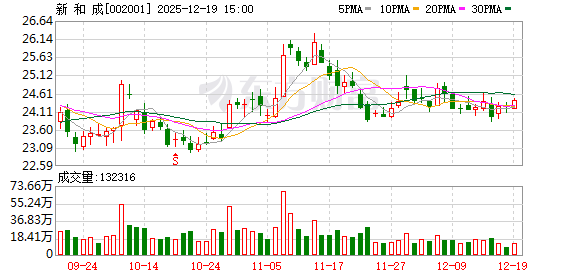
新和成

Search documents
新和成:12月26日召开董事会会议
Mei Ri Jing Ji Xin Wen· 2025-12-26 13:07
Group 1 - The company Xinhecheng (SZ 002001) held its 17th meeting of the 9th board of directors on December 26, 2025, to discuss the election of directors responsible for company affairs [1] - For the first half of 2025, the company's revenue composition was 90.23% from pharmaceutical chemicals and 9.77% from other industries [1] - As of the report date, the market capitalization of Xinhecheng was 76.3 billion yuan [1]

钱江新城“聚力”铸核,锻造的是什么?
Hang Zhou Ri Bao· 2025-12-26 02:23
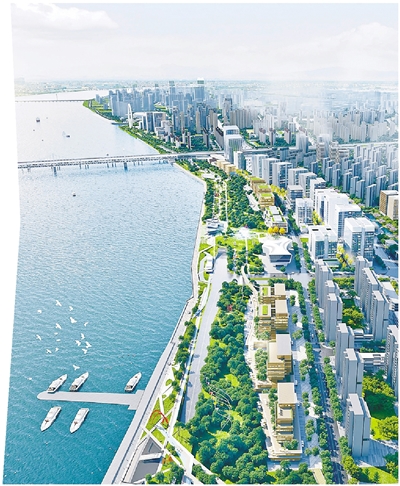
Core Insights - Qianjiang New City has successfully auctioned two significant plots of land for a total price of 1.89 billion yuan, marking a strong finish for commercial land sales in the area for 2025 [1] - The second phase of Qianjiang New City is evolving rapidly into a "core future city," emphasizing the integration of industry and urban development [2][4] Land Auction and Financial Highlights - The total number of commercial land sales in the Shangcheng District reached 11, with a total transaction amount exceeding 6.9 billion yuan, making it the top district in Zhejiang Province in terms of both total sales and floor price [1] - Qianjiang New City has become a focal point for land supply in Hangzhou, with significant attention on each new auction [1] Development Strategy and Industry Focus - The second phase of Qianjiang New City aims to create an international high-end business district and a hub for top talent, focusing on deep integration of industry and urban development [4] - The area has seen the establishment of several major companies, including New and Cheng, Beijing Zhipu Huazhang Technology, and Runze Group, indicating a strong industrial atmosphere [4] Competitive Advantages and Ecosystem - The strategic location of Qianjiang New City serves as a key hub connecting the West Lake era with the Qiantang River era, enhancing its appeal for talent and businesses [5] - The financial infrastructure in Shangcheng District, with major banks and financial institutions, provides a robust environment for businesses, particularly in cross-border payments and AI [5] AI and Innovation Focus - Qianjiang New City is positioning itself as an "AI highland," aiming to leverage artificial intelligence as a core engine for urban competitiveness [6][8] - The establishment of AI companies like Zhejiang Zhipu and Runze Group is aligned with the district's goal of creating a vibrant AI industry ecosystem [6] Policy Support and Service Mechanisms - The "one land, one special class" service mechanism implemented by Shangcheng District is crucial for attracting and retaining businesses, providing comprehensive support from planning to execution [7] - Efficient services have accelerated project launches, enhancing the attractiveness of the area for new enterprises [7]

挖掘全球多元资产?这个方向值得关注起来
Sou Hu Cai Jing· 2025-12-25 20:54
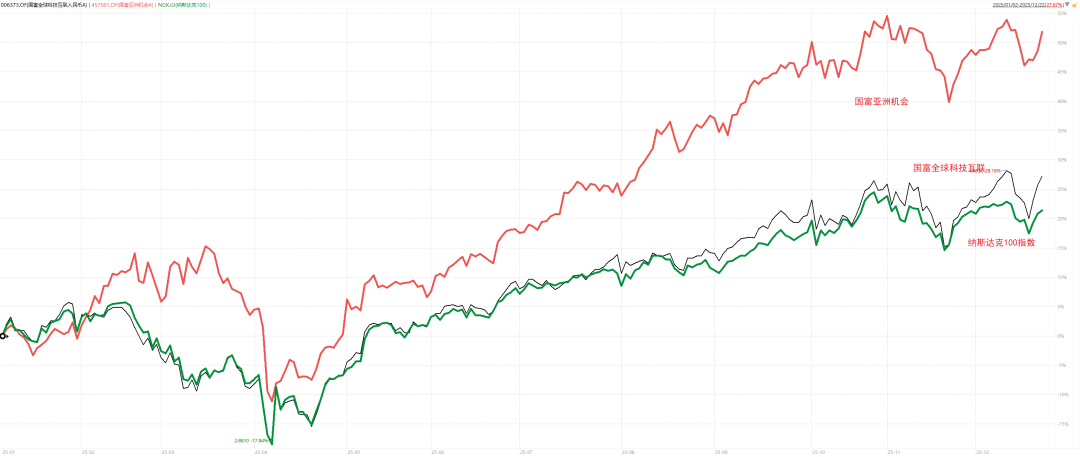
Group 1 - The core viewpoint of the article highlights the performance comparison between two funds: Guofu Global Technology Internet Fund (006373) and Guofu Asia Opportunities Fund (457001), with the latter showing stronger growth recently [1][5] - Both funds are primarily invested in AI-related sectors, but Guofu Global Technology Internet focuses on North American tech companies, while Guofu Asia Opportunities targets Asian markets, including stocks from Hong Kong, Taiwan, and South Korea [3][5] - The article emphasizes the importance of diversifying investments in both core AI industry players and supporting companies to fully benefit from the AI industry's growth [5][7] Group 2 - The performance data indicates that Guofu Asia Opportunities has outperformed the Hang Seng Technology Index, with a cumulative return of 11.26% over the past five years, compared to the index's -34.41% [5] - The fund's holdings include significant positions in companies like Alibaba, Weisheng Holdings, and TSMC, with notable increases in their respective market values [4] - Guofu Asia Opportunities is characterized as a less popular fund with no purchase limits, making it an attractive option for global diversified asset allocation strategies [7]
草铵膦等重要重点农药原药观察
2025-12-24 12:57
Summary of Key Points from Conference Call Industry Overview - The conference call focuses on the herbicide industry, specifically the market dynamics of glyphosate alternatives such as glufosinate ammonium and precision herbicides [1][3][4]. Core Insights and Arguments - **Market Growth**: The glufosinate ammonium market has seen significant growth due to the optimization of production processes and the transition to precision herbicides. By the second half of 2025, industry operating rates are expected to exceed 90%, with inventory levels dropping to low points and demand increasing by over 50% year-on-year [1][3]. - **Replacement Drivers**: The main drivers for glufosinate ammonium replacing glyphosate and paraquat include glyphosate's cancer lawsuits and resistance issues, paraquat's high toxicity leading to its market exit, and the gradual emergence of cost advantages for glufosinate ammonium, supported by pesticide reduction policies [1][4]. - **One Product, One Certificate Policy**: This policy aims to standardize the market, benefiting large companies with strong distribution capabilities while putting smaller firms at a disadvantage. It is expected to increase market share for larger companies and enhance industry regulation [1][6]. - **Cost Comparison**: The raw material price of dicamba is significantly lower than that of glufosinate ammonium and precision herbicides, but the per-acre application cost is similar. As the price of precision formulations decreases, their per-acre cost is approaching or even falling below that of glyphosate, enhancing their competitiveness [1][9]. - **Transgenic Crop Demand**: There is a growing demand for herbicides resistant to transgenic crops, with several domestic companies obtaining registration certificates for transgenic crops. This trend is also reflected in overseas markets where companies are actively registering related products for import [1][10]. Challenges and Future Directions - **Cost Pressures**: The glufosinate ammonium industry faces challenges such as cost inversion and stricter environmental regulations. The high-serine route may become a key method for reducing costs, while small-scale, high-cost production routes may be eliminated [1][13][15]. - **Environmental Regulations**: New environmental regulations are expected to significantly increase production costs for glufosinate ammonium manufacturers, leading to higher overall costs. Companies will face stricter production thresholds and cost pressures, making it difficult for new entrants to compete [1][15]. - **Market Dynamics**: The market is currently experiencing a balance between supply and demand, with high operating rates and good inventory digestion. However, internal competition and new capacity investments may impact pricing strategies [1][22][25]. Additional Important Insights - **Industry Players**: Major domestic producers include Inner Mongolia Linsheng, Hebei Chengxin, and Shandong Yisheng, with total capacities nearing 100,000 tons. Future capacity expansions are uncertain due to the complexity of new projects [1][11][12]. - **Price Stability**: The industry prefers stable production over price manipulation, as price hikes can lead to long-term damage to the market. A strategy of "thin profit, high sales" is favored for sustainable growth [1][23]. - **Seasonal Trends**: The orange market's supply-demand dynamics are currently tight, affecting pesticide markets, but this is expected to be a temporary situation as production stabilizes [1][26][27]. This summary encapsulates the key points discussed in the conference call, providing a comprehensive overview of the herbicide industry's current state and future outlook.
潍坊:准备交一份“万亿”答卷|深度报道
Xin Lang Cai Jing· 2025-12-23 14:59
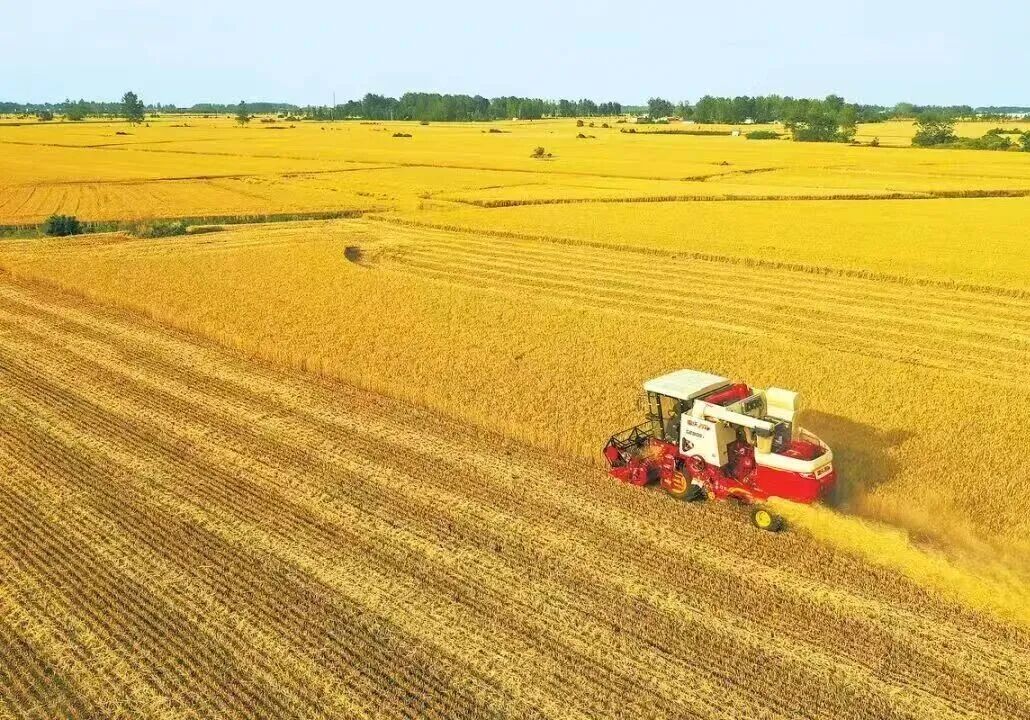
Core Insights - Weifang aims to achieve a total agricultural output value of 135.87 billion yuan by 2024, marking a 30.9% increase over five years, and is targeting to become a trillion-yuan city by 2026 [1] - The city has faced challenges in 2025 due to adverse weather conditions affecting agricultural production, yet managed to stabilize grain output at over 9 billion jin [3][4][5] - Weifang's agricultural policies and infrastructure have significantly contributed to its resilience and growth, with key industries achieving over 100 billion yuan in output during the 14th Five-Year Plan [8][9] Agricultural Production - Weifang's grain production is projected to remain stable at over 9 billion jin annually, despite facing challenges such as reduced rainfall and adverse weather during the harvest season [3][4][6] - The city has implemented a robust agricultural support system, including emergency response measures and technological assistance to farmers [5][6] - Continuous investment in agricultural infrastructure has been crucial for mitigating the impact of extreme weather on crop yields [6] Policy and Economic Development - Weifang's agricultural policies have led to significant growth in various sectors, including vegetables, livestock, and machinery, with the number of agricultural enterprises and cooperatives ranking first in the country [8][9] - The city is focusing on enhancing the value chain of agricultural products through deep processing and training programs for farmers [9][10] - The local government has allocated funds to promote Weifang's agricultural products in other cities, further supporting economic growth [9] Industrial Growth - Weifang's industrial economy is advancing towards high-end, intelligent, and green development, with significant contributions from private enterprises [10][12] - The city has established a modern marine economy framework, achieving an average annual growth of 8.57% in marine production value since the 14th Five-Year Plan [12] - Weifang's industrial output has surpassed 1.2 trillion yuan, with a focus on innovation and technology in various sectors [10][12] Research and Innovation - The establishment of research institutions, such as the Peking University Modern Agricultural Research Institute, is fostering innovation in agricultural practices and technology [17][21] - Collaboration between research entities and local industries is enhancing the application of scientific research to meet agricultural demands [20][21] - The city is building a comprehensive agricultural technology innovation system to support research and development in agriculture [21]
央视报道:我国生物制造产业规模达1.1万亿元!
合成生物学与绿色生物制造· 2025-12-22 02:40
Core Viewpoint - During the "14th Five-Year Plan" period, China's bio-manufacturing industry has experienced significant growth, becoming a crucial force for optimizing and upgrading the economic structure, with a total scale reaching 1.1 trillion yuan [2][3]. Industry Overview - The bio-manufacturing industry in China has steadily expanded, achieving a total scale of 1.1 trillion yuan, with bio-fermentation products accounting for over 70% of global production [3][4]. - The annual output value of sub-sectors such as food additives and biopharmaceuticals exceeds 400 billion yuan, establishing bio-manufacturing as a new economic growth point [3][4]. Technological Innovation - China's bio-manufacturing sector holds over 20% of global patent applications, with the establishment of several national key laboratories and industrial innovation platforms [4]. - New instruments such as domestic high-throughput gene sequencers and large-scale fermentation tanks have been successfully industrialized [4]. Industrial Cluster Development - Regions like Beijing and Tianjin have emerged as innovation hubs for bio-manufacturing, while provinces such as Shandong, Heilongjiang, and Henan have developed into major manufacturing bases for bulk bio-fermentation products [5]. - The "14th Five-Year Plan" has fostered the growth of numerous backbone enterprises with annual revenues exceeding 10 billion yuan, along with the emergence of several national-level manufacturing champions and specialized "little giant" enterprises [5]. Policy and Recognition - The Ministry of Industry and Information Technology (MIIT) has released a list of 35 landmark bio-manufacturing products, with companies like New Hope Liuhe, Blue Crystal Microbiology, and Huaxi Biological among the applicants [6][8].

国际油价下跌,辛醇、草甘膦价格下跌 | 投研报告
Sou Hu Cai Jing· 2025-12-22 02:14
Core Viewpoint - The recent report from Zhongyin Securities highlights a decline in international oil prices and suggests focusing on undervalued leading companies in the chemical industry, the impact of "anti-involution" on supply in related sub-industries, and the importance of self-sufficiency in electronic materials and certain new energy materials companies amid rising prices [1][7]. Group 1: Oil Price Trends - International oil prices have decreased, with WTI crude oil futures closing at $56.52 per barrel, a weekly decline of 1.60%, and Brent crude oil futures at $59.82 per barrel, down 2.13% [3]. - U.S. crude oil production averaged 13.843 million barrels per day for the week ending December 12, a decrease of 10,000 barrels from the previous week but an increase of 239,000 barrels compared to the same period last year [3]. - U.S. oil demand averaged 20.573 million barrels per day, down 50,900 barrels from the previous week, with gasoline demand increasing by 62,200 barrels to 9.078 million barrels per day [3]. Group 2: Chemical Industry Price Movements - Among 100 tracked chemical products, 42 saw price increases, 37 experienced declines, and 21 remained stable during the week [2]. - The average price of isopropanol fell by 4.97% week-on-week to 6,612 yuan per ton, and the average price of glyphosate decreased by 1.58% to 24,901 yuan per ton [4][5]. Group 3: Investment Recommendations - The SW basic chemical sector's price-to-earnings ratio (TTM) is 24.74, at the 73.47% historical percentile, while the price-to-book ratio is 2.24, at the 55.99% historical percentile [7]. - Recommended investment themes include focusing on undervalued leading companies, the impact of "anti-involution" on supply, and the growth potential in semiconductor materials, OLED materials, and new energy materials [7]. - Specific companies recommended for investment include Wanhua Chemical, Hualu Hengsheng, and China Petroleum, among others [7][8].
万华化学宣布上调部分地区MDI、TDI价格 | 投研报告
Zhong Guo Neng Yuan Wang· 2025-12-22 02:03
Group 1 - The average prices for pure MDI, polymer MDI, and TDI are 19186, 14721, and 14693 CNY/ton respectively, with week-on-week changes of -293, +93, and +234 CNY/ton [1] - The gross margins for pure MDI, polymer MDI, and TDI are 6149, 2684, and 2769 CNY/ton respectively, with week-on-week changes of -240, +145, and +3 CNY/ton [1] Group 2 - The average prices for ethane, propane, thermal coal, and naphtha are 1324, 4166, 522, and 3790 CNY/ton respectively, with week-on-week changes of -102, -122, -8, and -166 CNY/ton [2] - The average price for polyethylene is 6933 CNY/ton, with a week-on-week decrease of 113 CNY/ton, while the theoretical profits for ethane cracking, CTO, and naphtha cracking for polyethylene are 625, 1291, and -132 CNY/ton respectively, with week-on-week changes of +41, -44, and +104 CNY/ton [2] - The average price for polypropylene is 6000 CNY/ton, with a week-on-week decrease of 70 CNY/ton, and the theoretical profits for PDH, CTO, and naphtha cracking for polypropylene are -758, 861, and -393 CNY/ton respectively, with week-on-week changes of +65, -25, and +120 CNY/ton [2] Group 3 - The average prices for synthetic ammonia, urea, DMF, and acetic acid are 2346, 1702, 3739, and 2422 CNY/ton respectively, with week-on-week changes of +29, -3, -75, and +15 CNY/ton [2] - The gross margins for synthetic ammonia, urea, DMF, and acetic acid are 331, 33, -396, and 225 CNY/ton respectively, with week-on-week changes of +53, +10, -49, and -2 CNY/ton [2] Group 4 - Related listed companies in the chemical sector include Wanhua Chemical, Baofeng Energy, Satellite Chemical, Hualu Hengsheng, New Hope Liuhe, and Andisu [3]

基础化工周报:万华化学宣布上调部分地区MDI、TDI价格-20251221
Soochow Securities· 2025-12-21 14:29
Investment Rating - The industry investment rating is "Overweight," indicating an expected outperformance of the industry index relative to the benchmark by more than 5% over the next six months [67]. Core Insights - The report highlights that Wanhua Chemical has announced price increases for MDI and TDI in certain regions, reflecting a positive trend in pricing within the polyurethane sector [1]. - The average prices for pure MDI, polymer MDI, and TDI are reported at 19,186, 14,721, and 14,693 CNY/ton respectively, with changes of -293, +93, and +234 CNY/ton compared to the previous week [3]. - The report provides detailed insights into various segments of the chemical industry, including polyurethane, oil and gas, and coal chemical sectors, with specific price movements and profit margins outlined for each segment [3][13]. Summary by Sections Polyurethane Sector - The average prices for pure MDI, polymer MDI, and TDI are 19,186, 14,721, and 14,693 CNY/ton, with respective profit margins of 6,149, 2,684, and 2,769 CNY/ton [3][17][19]. Oil and Gas Sector - The average prices for ethane, propane, and coal are 1,324, 4,166, and 522 CNY/ton, with changes of -102, -122, and -8 CNY/ton respectively [3][23][28]. - The average price for polyethylene is reported at 6,933 CNY/ton, with a decrease of 113 CNY/ton from the previous week [3][31]. Coal Chemical Sector - The average prices for synthetic ammonia, urea, DMF, and acetic acid are 2,346, 1,702, 3,739, and 2,422 CNY/ton, with respective profit margins of 331, 33, -396, and 225 CNY/ton [3][37][45][46]. Animal Nutrition Sector - The average prices for VA and VE are reported at 62.5 and 55.5 CNY/kg, with VE showing a 30% increase [3][53][59].


新和成:公司PPS、PPA产品可以在商业航天上应用
Mei Ri Jing Ji Xin Wen· 2025-12-21 07:58
Group 1 - The core viewpoint of the article is that the company, New and Cheng (002001.SZ), has products that can be applied in commercial aerospace [1] Group 2 - The specific products mentioned are PPS and PPA, which are identified as applicable in the commercial aerospace sector [1]