春秋航空

Search documents
航空机场板块1月20日涨2.53%,南方航空领涨,主力资金净流入1.37亿元
Zheng Xing Xing Ye Ri Bao· 2026-01-20 08:51
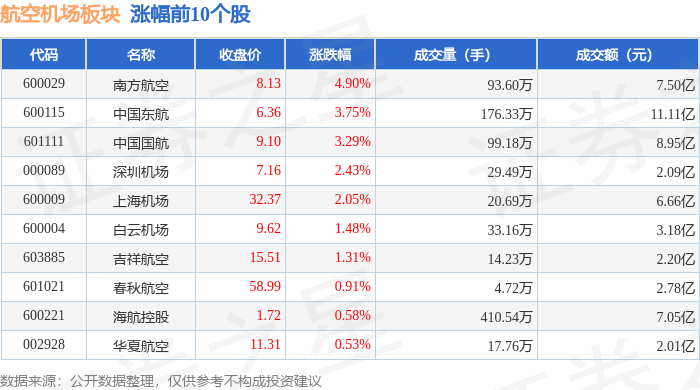
Core Viewpoint - The aviation and airport sector experienced a notable increase of 2.53% on January 20, with Southern Airlines leading the gains, while the overall stock market indices showed slight declines [1]. Group 1: Market Performance - The Shanghai Composite Index closed at 4113.65, down 0.01%, and the Shenzhen Component Index closed at 14155.63, down 0.97% [1]. - Southern Airlines saw a closing price of 8.13, with a rise of 4.90%, and a trading volume of 936,000 shares, resulting in a transaction value of 750 million yuan [1]. - China Eastern Airlines closed at 6.36, up 3.75%, with a trading volume of 1,763,300 shares and a transaction value of 1.111 billion yuan [1]. Group 2: Individual Stock Performance - China National Aviation Holdings closed at 9.10, increasing by 3.29%, with a trading volume of 991,800 shares and a transaction value of 895 million yuan [1]. - Shenzhen Airport's closing price was 7.16, up 2.43%, with a trading volume of 294,900 shares and a transaction value of 209 million yuan [1]. - Shanghai Airport closed at 32.37, rising by 2.05%, with a trading volume of 206,900 shares and a transaction value of 666 million yuan [1]. Group 3: Capital Flow - The aviation and airport sector saw a net inflow of 137 million yuan from main funds, while retail investors experienced a net outflow of 1.22 billion yuan [2]. - Southern Airlines had a net outflow of 57.22 million yuan from main funds, with retail investors also showing a net outflow of 38.10 million yuan [3]. - Shanghai Airport recorded a net inflow of 45.37 million yuan from main funds, while retail investors had a net outflow of 34.33 million yuan [3].






航空迎来黄金时代系列报告:航空“反内卷”初见成效
Shenwan Hongyuan Securities· 2026-01-20 07:37
Investment Rating - The report maintains a positive outlook on the aviation industry, indicating it is entering a "golden era" with an investment rating of "Overweight" [2][3]. Core Insights - The National Civil Aviation Work Conference emphasized "quality improvement and efficiency enhancement," with initial signs of reducing "involution" in the industry. The 2026 targets include a total transport turnover of 1,750 billion ton-kilometers, 810 million passenger transport, and 10.7 million tons of cargo, representing year-on-year growth of 6.7%, 5.2%, and 5.2% respectively [3]. - The global aircraft supply chain remains unhealed, with an aging fleet exacerbating supply constraints. Airbus plans to deliver 793 aircraft in 2025, while Boeing aims for 600, both below pre-pandemic levels. The backlog exceeds 15,000 aircraft, and the delivery cycle has extended to 6.8 years, leading to prolonged service of older models [3]. - Demand is bolstered by visa exemption policies, driving an increase in inbound travelers. The proportion of foreign visitors entering China under visa exemptions has stabilized above 70%. The upcoming Spring Festival is expected to see a daily average of 5.3% growth in passenger volume, with ticket prices projected to rise by 20% compared to the previous year [3]. - The report recommends continued investment in the aviation sector, highlighting the unprecedented constraints in aircraft manufacturing, high passenger load factors, and the growth of inbound and outbound travel. Key companies recommended include China Eastern Airlines, China Southern Airlines, Air China, Spring Airlines, Huaxia Airlines, and Juneyao Airlines [3]. Summary by Sections Supply Side - The global aircraft supply chain is still recovering, with significant delivery delays and an aging fleet leading to supply constraints. The total number of passenger aircraft in China is projected to grow by only 4% in 2025, with a peak in retirements expected by 2030 [3]. Demand Side - The implementation of visa exemption policies is expected to significantly increase the number of inbound travelers, with international routes becoming the main driver of demand growth in 2026. The Spring Festival is anticipated to show a notable increase in both volume and pricing [3]. Investment Recommendations - The report suggests a strong investment in the aviation sector, citing the current supply constraints and the potential for significant improvements in airline profitability. Specific airlines and global aircraft leasing companies are highlighted as key investment opportunities [3][4].



10家航司经济舱均存在锁座行为,春秋深航超半数座位被锁
Mei Ri Jing Ji Xin Wen· 2026-01-20 04:32
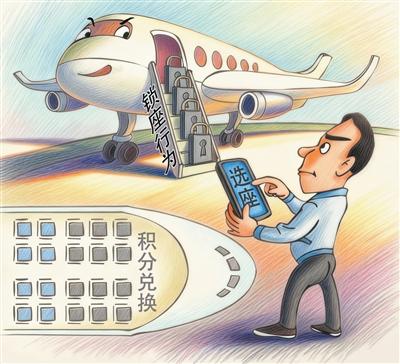
Core Insights - The article discusses the prevalent practice of airlines locking certain economy class seats, which limits consumer choice and is seen as a method for airlines to increase revenue through service tier differentiation [1][2] Group 1: Airline Practices - A survey conducted by the Jiangsu Consumer Protection Committee revealed that none of the 10 major airlines fully open all economy class seats for selection, indicating that seat locking has become a common practice in civil aviation services [1] - The airlines surveyed include Eastern Airlines, Southern Airlines, Air China, Hainan Airlines, Xiamen Airlines, Shenzhen Airlines, Shandong Airlines, Sichuan Airlines, Spring Airlines, and Juneyao Airlines [1] Group 2: Seat Locking Statistics - The proportion of locked seats during the purchasing phase varies significantly among the surveyed airlines, ranging from 19.9% to 62.1%, with an average of 38.7% [1] - Specific routes with high seat locking include Spring Airlines' "Nanjing-Lanzhou" route, which has over 60% of economy seats locked, and Shenzhen Airlines' "Shenzhen-Zhanjiang" route, with over 50% locked [1] Group 3: Consumer Concerns - Consumers have raised questions regarding the reasons for seat locking, the extent of locked seats, unlocking methods, and related rules, but airline customer service responses have been vague regarding these issues [2]
春运开售引爆旅游板块,社保基金重仓股抢滩“假期股”
Huan Qiu Wang· 2026-01-20 03:50
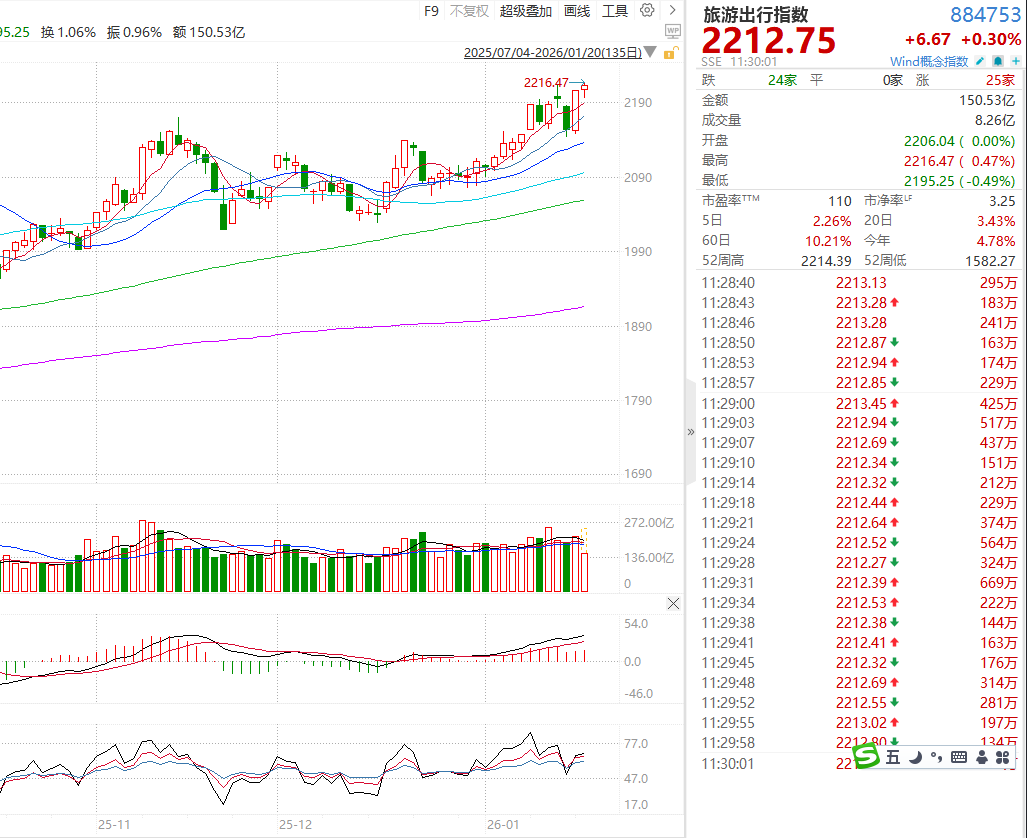
Core Viewpoint - The tourism and travel sector in the A-share market is experiencing a significant rally ahead of the 2026 Spring Festival, driven by strong demand and favorable policies [1][3]. Group 1: Market Performance - On January 19, 2026, the Wind tourism index surged by 2.5%, with major stocks like Dalian Shengya and Jiuhua Tourism hitting the daily limit [1]. - Key stocks such as Junting Hotel, Three Gorges Tourism, and China Duty Free saw gains exceeding 5%, while others like Jinjiang Hotel and Tianmu Lake rose over 4% [1]. - The overall market sentiment is bullish, indicating a preemptive warming of the Spring Festival market [1]. Group 2: Demand Drivers - The 2026 Spring Festival holiday, lasting from February 15 to 23, is expected to boost travel demand significantly, with a projected 5.39 billion passengers during the 40-day railway Spring Festival travel period, a 5% increase year-on-year [1][3]. - Domestic flight ticket bookings for the Spring Festival have surpassed 4.13 million, with a daily growth rate of approximately 21% [1][3]. - The trend of "reverse Spring Festival travel" is emerging, with a 35% year-on-year increase in ticket bookings for parents traveling to their children's workplaces for the holiday [1]. Group 3: Policy Support - Continuous policy support has been crucial for the recovery of the tourism sector, with multiple government initiatives aimed at boosting consumption and expanding travel services [3]. - In 2025, domestic tourism saw 4.998 billion trips, an 18% increase, with total spending reaching 4.85 trillion yuan, up 11.5% [3]. - The tourism market is expected to grow by 10% in 2025, driven by sustained leisure travel demand and experiential consumption [3]. Group 4: Institutional Investment - Institutional interest in the tourism sector is rising, with 25 out of 55 A-share tourism stocks receiving ratings from five or more institutions [3][4]. - The National Social Security Fund has invested heavily in eight tourism stocks, with a total market value of 3.094 billion yuan, favoring airlines and duty-free operators [4]. - Spring Airlines reported a 23.68% year-on-year increase in available ton-kilometers in December 2025, indicating strong operational recovery [4]. Group 5: Future Outlook - The upcoming Spring Festival is expected to lead to a peak in tourism consumption, benefiting related companies [4]. - Long-term prospects for the tourism sector are bolstered by the implementation of duty-free policies, recovery of international routes, and ongoing service consumption policies [4]. - Investors are advised to focus on leading companies in the duty-free, airline, and premium scenic spot sectors that are likely to benefit from consumption upgrades and policy advantages [4].

人民日报关注:锁座成普遍现象,飞机锁座收费合理吗?
Xin Lang Cai Jing· 2026-01-20 03:29
Core Viewpoint - The practice of locking premium seats by airlines is a method to increase revenue, which raises concerns about consumer rights and fair trading [1] Group 1: General Findings - The investigation by Jiangsu Consumer Protection Committee revealed that all ten surveyed airlines have implemented seat locking practices, with no airline fully opening all economy class seats [2] - The average seat locking rate across the surveyed routes is 38.7%, with some routes like Spring Airlines' "Nanjing-Lanzhou" exceeding 60% [2] Group 2: Payment for Unlocking Seats - Airlines require consumers to use miles or points to unlock certain premium seats, with specific examples showing different point requirements for various seat categories [3] - Some airlines have introduced additional paid options for purchasing points or miles, further pushing consumers towards paid unlocking methods [3] Group 3: Lack of Transparency - Airlines provided vague explanations for seat locking, citing reasons such as reserving seats for special passengers and maintaining flight balance, which contradicts the high locking rates observed [4][5] - Customer service responses were often unclear, failing to provide satisfactory justifications for the locking practices [4] Group 4: Unfair Terms - The seat selection agreements of the ten airlines contain unfair clauses, lacking clear communication about locking rules and fees, which may infringe on consumer rights [6] - Airlines are currently evaluating their policies to balance revenue optimization with consumer rights and improve transparency in seat selection information [6]
江苏省消保委调查10家主流航司 机票锁座比例最高达62.1%
Ren Min Ri Bao· 2026-01-20 01:04
Core Viewpoint - The practice of charging for seat selection in airlines is seen as a method to increase revenue by locking premium seats, which raises concerns about consumer rights and fair trading [1] Group 1: General Findings - The survey conducted by Jiangsu Consumer Protection Committee revealed that all 10 selected domestic airlines have implemented seat locking practices, with no airline fully opening all economy class seats [2] - The average seat locking rate across the surveyed routes is 38.7%, with some airlines like Spring Airlines and Shenzhen Airlines exceeding 60% and 50% respectively [2] Group 2: Payment for Unlocking Seats - Many airlines require consumers to use miles or membership points to unlock preferred seats, with specific examples showing that certain seats can require up to 2000 points for unlocking [3] - Some airlines have introduced additional paid options for purchasing points or miles, further pushing consumers towards paid unlocking methods [3] Group 3: Lack of Transparency - Airlines provided vague explanations for seat locking, citing reasons such as reserving seats for special passengers or maintaining flight balance, which do not align with the high locking rates observed [4][5] - Customer service responses were often unclear, failing to provide solid justifications for the locking practices [5] Group 4: Unfair Terms - The seat selection agreements of the airlines contain unfair terms, lacking clear communication about locking rules and fees, which may infringe on consumer rights [6] - Airlines are currently evaluating their policies to balance revenue optimization with consumer rights and improve transparency in seat selection information [6]
2025年甘肃省机场固定资产投资增速位居全国前列
Zhong Guo Min Hang Wang· 2026-01-20 01:01
Core Insights - Gansu Province is set to achieve significant growth in airport fixed asset investment by 2025, positioning itself among the top in the nation, driven by high-intensity investments and precise policy guidance to stimulate the aviation industry's internal dynamics [1][4] Investment and Infrastructure Development - The substantial increase in fixed asset investment is a core support for enhancing the quality and efficiency of Gansu's aviation industry, with a target of 120 billion yuan in national civil aviation investment by 2025 [1] - Gansu aims to strengthen its airport infrastructure, focusing on the construction of core hubs like Lanzhou Zhongchuan International Airport, while also improving regional airports to create a "core-led, branch-linked" airport layout [1] - By 2025, Gansu's civil aviation passenger throughput is expected to exceed 21 million, reaching 21.96 million, with cargo and mail throughput at 92,000 tons, marking a historic peak for key indicators [1] Policy and Collaborative Framework - Gansu's civil aviation transport network has been selected as a pilot for the "dry-branch connection, full network linkage" initiative by the Civil Aviation Administration of China, integrating Gansu's aviation development into the national high-quality development framework [2] - The province has established a collaborative framework involving policy guidance, enterprise cooperation, and service upgrades, partnering with major airlines to enhance operational efficiency and passenger convenience [2][3] Service and Operational Enhancements - Gansu has launched seven domestic flight routes, facilitating over 200,000 passengers and addressing travel challenges, while enhancing the "Yunlan Fly, Convenient Journey" service brand [3] - The province's approach emphasizes collaborative innovation, creating a mechanism where airports lead, airlines play a major role, and support units collaborate, fostering a competitive yet complementary environment [3] Economic and Cultural Integration - Gansu's aviation development is closely linked with economic growth and cultural tourism, utilizing its air network to connect key tourist attractions and develop unique products to convert transportation flow into tourism retention [3][4] - The ongoing pilot projects and investment initiatives are expected to continuously release development vitality, contributing to the high-quality economic and social development of the region [4]
交通运输行业周报20260119:航空关注春运预售表现,重视顺丰估值修复机会
Guolian Minsheng Securities· 2026-01-20 00:30
Investment Rating - The report maintains a "Buy" rating for key companies in the transportation sector, including SF Holding, Spring Airlines, and China Eastern Airlines, among others [2][3]. Core Insights - The report highlights the recovery of the aviation industry as flight volumes increase, with a focus on the upcoming Spring Festival travel season and the performance of airline ticket pre-sales [6][29]. - SF Holding is noted for its high cash reserves and low valuation, suggesting a strong potential for valuation recovery in the near future [6][21]. - The logistics sector is seeing strong resource integration capabilities, with Shimon Logistics preparing for its upcoming IPO [46]. Summary by Sections 1. SF Holding: High Safety Margin and Low Valuation - SF Holding has substantial cash reserves, with cash accounting for 14.2%, 20.5%, and 16.2% of total market value from 2022 to 2024, providing a strong support for stock prices [9][12]. - The expected shareholder return rate for 2025E and 2026E is projected to reach 3.8%, with dividend yields of 2.57% and 2.88% respectively [12][15]. - The current PE ratio of SF Holding is at 18X, close to the market's historical low, indicating a potential for valuation recovery as market conditions improve [24][21]. 2. Aviation Tracking: Recovery from Off-Season - Domestic flight volumes increased to 89,086 flights from January 10 to January 16, 2026, a 2.7% rise compared to the previous week, reaching 112% of the 2019 levels [29][30]. - The average daily aircraft utilization rate rose to 7.89 hours, reflecting a 2.1% increase from the previous week [30]. - The upcoming Spring Festival is expected to see 5.39 billion railway passengers, a 5% increase year-on-year, which may positively influence airline ticket sales [6][29]. 3. Comprehensive Logistics Companies: Shimon Logistics IPO - Shimon Logistics has established a strong competitive advantage in the logistics sector, providing long-term services to leading global manufacturing companies [46][48]. - The company is expected to generate revenues of 9.2 billion yuan in 2025, despite a projected decline due to reduced demand from major clients [48][51]. - The logistics business is segmented into comprehensive supply chain services and trunk transportation services, with the former accounting for 76% of total revenue in the first half of 2025 [48][49]. 4. Continuous Improvement in the Express Delivery Industry - The express delivery sector saw a slight decline in revenue in November 2025, with a total of 1,376.5 billion yuan, down 3.7% year-on-year, while the volume increased by 5% [59][62]. - The average revenue per package in the express delivery industry was 7.62 yuan, reflecting a 1.9% increase from the previous month [62][69]. - Companies like SF Holding, Shentong, and Yunda are recommended for their strong performance and potential for price recovery in the express delivery market [80].

飞机锁座收费合理吗?(法治聚焦)
Ren Min Ri Bao· 2026-01-20 00:24
Core Viewpoint - The practice of airlines locking premium seats during the ticket purchasing process is a method to increase revenue, which may infringe on consumers' rights to fair trade and choice [1] Group 1: General Findings - The survey conducted by Jiangsu Consumer Protection Committee revealed that all ten selected domestic airlines have implemented seat locking practices, with no airline fully opening all economy class seats [2] - The average seat locking ratio across the surveyed routes is 38.7%, with some airlines like Spring Airlines and Shenzhen Airlines exceeding 60% and 50% respectively [2] Group 2: Payment for Unlocking Seats - Many airlines require consumers to use miles or membership points to unlock premium seats, with specific examples showing different point thresholds for various seat categories [3] - Some airlines have introduced additional paid options for purchasing points or miles, further pushing consumers towards a paid unlocking mechanism [3] Group 3: Lack of Transparency - Airlines provided vague explanations for seat locking, citing reasons such as reserving seats for special passengers and maintaining flight balance, which contradicts the high locking ratios observed [4][5] - Customer service responses were often unclear, failing to provide reasonable justifications for the locking practices [4] Group 4: Unfair Terms - The seat selection agreements of the ten airlines commonly contain unfair terms, lacking clear communication about locking rules and fees, which may violate consumers' right to information [6] - The use of ambiguous language in agreements allows airlines to avoid disclosing the number and range of free seats available, facilitating unilateral seat locking [6] Group 5: Expert Opinions - Experts argue that the seat locking practice is a form of price discrimination and information concealment, which increases consumer decision-making costs and distorts market efficiency [9] - There is a call for airlines to balance economic benefits with consumer rights, advocating for clearer rules and transparency in seat allocation practices [9]
10家航司机票锁座比例最高达62.1%,飞机锁座收费合理吗?
Bei Jing Ri Bao Ke Hu Duan· 2026-01-19 23:37
Core Viewpoint - The investigation by Jiangsu Consumer Protection Committee reveals that the practice of locking seats by airlines is widespread and raises concerns about consumer rights and transparency in the airline industry [3][4]. Group 1: Investigation Findings - The survey included 10 major domestic airlines, all of which confirmed the existence of seat locking practices, with no airline fully opening all economy class seats [4]. - The average seat locking ratio across the surveyed airlines is 38.7%, with some routes showing locking ratios as high as 62.1%, such as Spring Airlines' "Nanjing-Lanzhou" route [4]. - Preferred seating areas, such as front rows and exit rows, are commonly included in the locked categories, with higher fees or points required for unlocking these seats [4]. Group 2: Payment and Redemption Issues - Some airlines require consumers to use miles or membership points to unlock preferred seats, with specific examples showing redemption thresholds of 2000 points for premium seats [5]. - Airlines have introduced additional paid options for purchasing points or miles, further pushing consumers towards paid unlocking methods [6]. Group 3: Transparency and Communication - Airlines provided vague explanations for seat locking, citing reasons like reserving seats for special passengers or maintaining flight balance, which contradicts the high locking ratios observed [7]. - Customer service responses were often unclear, failing to provide satisfactory explanations for the locking practices, which raises concerns about consumer rights [7]. Group 4: Unfair Terms and Conditions - The seat selection agreements of the airlines contain unfair terms, lacking clear communication about locking rules and fees, which may infringe on consumer rights [8]. - Airlines often use ambiguous language in their agreements, avoiding the disclosure of free seat availability and locking practices, which benefits the airlines at the expense of consumer transparency [8].