
速腾聚创

Search documents
速腾聚创(02498) - 根据首次公开发售后股份激励计划授出奖励
2026-01-22 10:12
香港交易及結算所有限公司及香港聯合交易所有限公司對本公告的內容概不負責,對其準確性或完整性亦不發 表任何聲明,並明確表示,概不對因本公告全部或任何部份內容而產生或因倚賴該等內容而引致的任何損失承 擔任何責任。 ROBOSENSE TECHNOLOGY CO., LTD (於開曼群島註冊成立的有限公司) 速騰聚創科技有限公司 (股份代號:2498) 根據首次公開發售後股份激勵計劃授出獎勵 茲提述招股章程中披露的首次公開發售後股份激勵計劃。首次公開發售後股份激勵計劃的 條款受上市規則第17章所規限。本公告由本公司根據上市規則第17.06A條、第17.06B條及第 17.06C條作出。 董事會欣然宣佈,於2026年1月22日,本公司根據首次公開發售後股份激勵計劃向23名承授人 (即本集團員工)授予總計583,874股股份的相關獎勵。 授出詳情 股份於授出日期 每股38.50港元 之收市價: 歸屬期: 根據獎勵協議規定的歸屬時間表,授予承授人的獎勵相關的股 份將於授出日期後約6個月至48個月期間內歸屬,其概要載列如 下: (a) 對於若干身為本集團僱員的承授人,由於彼等的獎勵受基 於績效的歸屬條件而非基於時間的歸屬準 ...
2025年机器人激光雷达行业词条报告
Tou Bao Yan Jiu Yuan· 2026-01-21 12:56
Investment Rating - The report indicates a strong growth potential for the robot lidar industry, with a compound annual growth rate (CAGR) of 29.19% from 2020 to 2024 and an expected CAGR of 15.87% from 2025 to 2030, suggesting a positive investment outlook for the sector [4][57]. Core Insights - The robot lidar industry is characterized by technological intensity, cost reduction, and a shift from automotive dominance to a balanced focus on both automotive and robotics applications. The market size is projected to grow from 62.23 billion RMB in 2020 to 173.31 billion RMB in 2024, driven by the explosion of the robotics industry and domestic substitution [4][57]. - The industry is undergoing a cost revolution, with high-end product prices dropping from $5,000 in 2021 to 2,000-3,000 RMB by 2025, influenced by chip design, scale effects, and accelerated domestic supply chain development [20][61]. - The application scenarios for lidar are diversifying, expanding from the automotive sector to various fields, including service robots, logistics, and security, with significant growth in demand for humanoid robots [21][59]. Summary by Sections Industry Definition - Robot lidar serves as the core sensor for providing three-dimensional vision to robots, essential for high-precision, all-weather perception. The technology has evolved through mechanical rotation, semi-solid, and solid-state designs to enhance reliability and reduce costs [5]. Industry Characteristics - The robot lidar industry is a high-tech, research-driven sector with significant cost reductions and price wars reshaping market dynamics. The application scenarios are diversifying, with rapid growth in the robotics market [18]. Development History - The industry has evolved through three phases: initial experimentation (1960s-2000), industrialization and rapid growth (2001-2015), and large-scale application and maturity (2016-present) [23]. Industry Chain Analysis - The industry chain consists of upstream core components, midstream manufacturing and integration, and downstream application scenarios. Domestic substitution is advancing, with significant improvements in the localization of core components and algorithms [27][28]. Market Size - The market size for robot lidar is expected to grow from 193.68 billion RMB in 2025 to 404.52 billion RMB by 2030, with a CAGR of 15.87%. The growth is driven by the rapid expansion of the robotics industry and increasing penetration rates of lidar in various applications [57][61]. Competitive Landscape - The competitive landscape is characterized by a concentration of market share among leading companies such as Hesai Technology and RoboSense, with a projected market share of 95% for the top four companies in the overall lidar market [75][80]. The competition is shifting towards ecosystem collaboration, integrating lidar with algorithms and downstream applications [81].
智感跃迁——机器人激光雷达在三维视觉革命中的技术进化与市场重构 头豹词条报告系列
Tou Bao Yan Jiu Yuan· 2026-01-21 12:24
Investment Rating - The report rates the robot lidar industry with a strong growth outlook, projecting a compound annual growth rate (CAGR) of 29.19% from 2020 to 2024 and 15.87% from 2025 to 2030, indicating robust market potential [4][57]. Core Insights - The robot lidar industry is characterized by technological intensity, cost reduction, and a shift from automotive dominance to a balanced market between automotive and robotics applications. The market size is expected to grow from 62.23 billion RMB in 2020 to 173.31 billion RMB in 2024, driven by the explosion of the robotics industry and domestic substitution [4][57]. - The industry is undergoing a cost revolution, with high-end product prices dropping from $5,000 in 2021 to 2,000-3,000 RMB by 2025, influenced by chip design, scale effects, and accelerated localization of the supply chain [20][61]. - The application scenarios for lidar are diversifying, with significant growth in both automotive and robotics sectors, particularly in service robots and autonomous vehicles [21][59]. Summary by Sections Industry Definition - Robot lidar serves as the core sensor for providing three-dimensional vision to robots, essential for high-precision, all-weather perception. The technology has evolved through mechanical rotation, semi-solid, and solid-state designs to enhance reliability and reduce costs [5]. Industry Characteristics - The robot lidar industry is a high-tech, research-driven sector with significant cost reductions reshaping market dynamics. The application scenarios are becoming increasingly diverse, with rapid growth in the robotics market [18]. Development History - The industry has evolved through three phases: initial experimentation (1960s-2000), industrialization and rapid growth (2001-2015), and large-scale application and maturity (2016-present) [23]. Industry Chain Analysis - The industry chain consists of upstream core components, midstream manufacturing and integration, and downstream application scenarios. The domestic substitution is progressing rapidly, with significant improvements in localization across all segments of the supply chain [28][29]. Market Size - The market size for robot lidar is projected to grow from 193.68 billion RMB in 2025 to 404.52 billion RMB by 2030, with a CAGR of 15.87%. The growth is attributed to the rapid expansion of the robotics industry and increasing penetration rates of lidar in various applications [57][61]. Competitive Landscape - The competitive landscape is characterized by a tiered structure, with leading companies like Hesai Technology and RoboSense dominating the market. The market concentration is expected to increase, with top firms capturing a significant share of the emerging robotics lidar market [75][80].

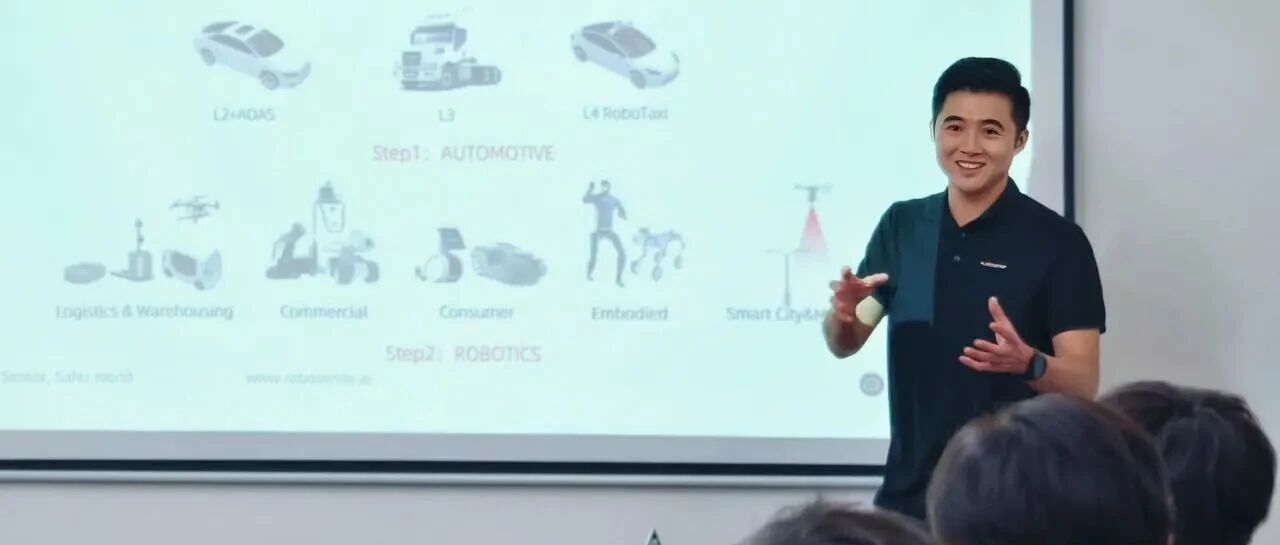
对话速腾无人车事业部总裁徐钰滨:实现真正的L4,离不开高线数激光雷达丨L4十人谈
雷峰网· 2026-01-21 11:32
Core Viewpoint - The Robotaxi industry is moving towards large-scale commercialization, with digital lidar technology expected to capture over 90% of the market share by 2026 [6][10][49]. Group 1: Robotaxi Development and Market Trends - The current development of Robotaxi emphasizes safety, with lidar being a crucial component for 24/7 operation [2][6]. - The transition from mechanical to solid-state and now to digital lidar is driven by the need for cost-effective and safe solutions for Robotaxi deployment [3][10]. - By 2026, the Robotaxi market is anticipated to experience significant growth, with a projected 3 to 5 times increase in market size [49][51]. Group 2: Technological Advancements in Lidar - Digital lidar technology is evolving, with features integrated into chips, enhancing performance and reducing costs [10][41]. - The company has successfully developed self-researched SPAD-SoC chips that have passed automotive-grade reliability certification, marking a significant milestone [4][10]. - The digital lidar products are designed to meet the high standards required for fully autonomous vehicles, ensuring safety and operational efficiency [30][41]. Group 3: Strategic Partnerships and Customer Engagement - The company has established deep partnerships with leading Robotaxi firms, providing tailored support and co-development to address specific challenges [4][20][25]. - The shift from retrofitting to front-mounted production models is crucial for scaling Robotaxi operations, aligning with market demands [16][50]. - The company has built trust with clients through proactive engagement and support, which has led to securing significant orders from major players like Didi and Baidu [6][27][52]. Group 4: Future Outlook and Industry Position - The company is confident in achieving over 90% market share in the Robotaxi lidar segment due to its technological advantages and production capabilities [6][10]. - The anticipated growth in the Robotaxi sector is supported by advancements in technology and favorable regulatory developments [49][51]. - The company aims to maintain its leadership position by continuously innovating and adapting to market needs, focusing on long-term partnerships rather than short-term profits [20][28].

深圳AI硬件创业火了,投资人争抢大疆系
Di Yi Cai Jing Zi Xun· 2026-01-21 10:21
Core Insights - The competition among tech giants and unicorns in the AI hardware sector is intensifying, with OpenAI planning to launch a series of small devices in the second half of the year, while Apple and ByteDance are also entering the AI hardware market [2][4]. Group 1: Investment Trends - There is a growing interest in AI hardware, with many investors shifting focus from software to hardware, particularly in Shenzhen, which is becoming a hub for AI hardware startups [11][12]. - Investment in AI hardware projects is becoming highly competitive, with some early-stage projects achieving valuations exceeding $100 million, driven by market enthusiasm [8][9]. - The investment landscape has changed significantly, with early-stage projects now receiving valuations that previously were only seen at later development stages [9][10]. Group 2: Entrepreneurial Landscape - Teams with backgrounds in major hardware companies like DJI are highly sought after by investors, as they are perceived to have a deeper understanding of the industry and a higher likelihood of success [6][7]. - Many successful startups in the AI hardware space are founded by former employees of established companies, indicating a trend of talent migration from large firms to startups [7][8]. - The emergence of AI hardware startups is being fueled by a wave of entrepreneurs who previously worked in hardware giants, leading to a competitive environment for funding [7][8]. Group 3: Product Development and Market Demand - AI hardware products are diversifying, with categories such as AI toys and companion devices gaining traction, and many components being sourced locally in Shenzhen [13][15]. - The integration of AI into traditional hardware is creating new market opportunities, as companies explore how AI can enhance user interaction and product functionality [18][19]. - There is a notable increase in the production and sales of AI-enabled products, with companies reporting significant growth in demand for AI toys and related hardware [15][18]. Group 4: Future Outlook - The future of AI hardware remains uncertain, with ongoing discussions about what the next popular forms of AI hardware will be, including potential developments in wearable technology [18][19]. - Some investors express concerns about the overuse of the AI concept in marketing, suggesting that not all products labeled as "smart" or "AI-enabled" deliver real value [19]. - The market for embodied intelligence is expected to stabilize or decline as initial investment phases conclude and companies begin to demonstrate their commercial viability [19].


美联邦自驾法案破冰,Robotaxi提速
HTSC· 2026-01-20 09:35
Investment Rating - The report maintains a "Buy" rating for key companies in the autonomous driving sector, including Horizon Robotics, Hesai Technology, Pony.ai, WeRide, Xiaopeng Motors, and Suda Technology [6][8]. Core Insights - The U.S. House of Representatives is reviewing the "SELF DRIVE Act of 2026," which proposes to increase the exemption limit for manufacturers from 2,500 vehicles to 90,000 vehicles, significantly enhancing the potential for Robotaxi mass production [1][2]. - The legislation aims to resolve core obstacles to the scaling of Robotaxi deployment, including the introduction of a "deemed approval" mechanism for exemption applications and establishing federal regulations as a priority over state laws [2][3]. - 2026 is projected to be a pivotal year for the global L4 autonomous driving industry, with the U.S. federal legislative framework becoming clearer and China accelerating its L3 pilot projects and L4 commercialization [1][4]. Summary by Sections Legislative Developments - The "SELF DRIVE Act of 2026" is expected to break a decade-long legislative deadlock, with bipartisan support leading to a clearer timeline for implementation [3]. - Key milestones include committee markup meetings in Q1 2026 and potential integration with the 2026 Surface Transportation Reauthorization Act [3]. Market Expansion - The U.S. Robotaxi market is transitioning from technology validation to large-scale expansion, with companies like Waymo and Tesla ramping up operations [4]. - Waymo's weekly paid orders reached 450,000 by December 2025, with plans to expand operations from 10 to 30 cities [4]. - Tesla's Cybercab is expected to begin mass production in April 2026, further contributing to market growth [4]. Investment Recommendations - The report emphasizes the synchronized development of L4 autonomous driving in both the U.S. and China, suggesting that this convergence will drive significant industry growth [5]. - Companies such as WeRide and Pony.ai are highlighted for their international expansion efforts, while other L4 applications like Robovan and Robotruck are also gaining traction [5].


【具身智能产业动态】字节领投自变量 10 亿元 A++轮融资,智元拆分灵巧手业务成立临界点
GUOTAI HAITONG SECURITIES· 2026-01-20 09:32
产业观察 [table_Header]2026.01.20 【具身智能产业动态】字节领投自变量 10 亿元 A 产业研究中心 | 加加轮融资,智元拆分灵巧手业务成立"临界点" | [Table_Authors] | 王浩(分析师) | | --- | --- | --- | | 摘要:产业最新趋势跟踪,点评产业最新风向 | | 0755-23976068 | | | | wanghao2@gtht.com | | [Table_Summary] 具身智能产业动态 | | | | | 登记编号 | S0880513090004 | | 具身机器人产业动态: | | | | 拓斯达机器狗"星仔"上线,探索场景应用可能 | | | | | | 鲍雁辛(分析师) | | 星动纪元与顺丰达成深度合作,聚焦物流场景机器人应用 | | | | 智元海外首家机器人体验馆在马来西亚开业 | | 0755-23976830 | | | | baoyanxin@gtht.com | | 摩尔线程联合智源完成 RoboBrain2.5 具身大脑模型训练 | | | | | 登记编号 | S0880513070005 | | 速腾聚创 ...
【行业深度】洞察2025:中国激光雷达行业竞争格局及市场份额(附市场集中度、企业竞争力评价等)
Qian Zhan Wang· 2026-01-20 07:21
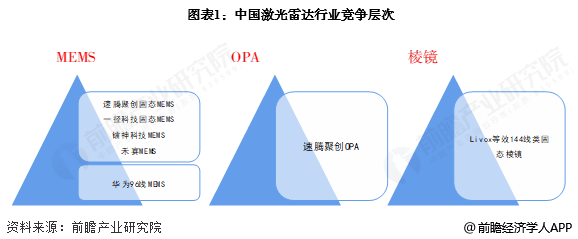
Core Insights - The Chinese LiDAR industry is experiencing rapid growth, with a market size projected to reach 13.96 billion yuan in 2024, indicating a high market concentration with a CR5 of 40.6% [10] Group 1: Industry Competition Landscape - The main companies producing LiDAR in China include Suteng Juchuang, Yijing Technology, Hesai Technology, Raysun Intelligent, and Livox, with different technological approaches such as OPA and MEMS [1] - The leading revenue-generating companies in the LiDAR sector for the first three quarters of 2025 are Hesai Technology, followed by Suteng Juchuang with a revenue of 1.19 billion yuan [8] Group 2: Regional Distribution of Companies - The majority of LiDAR companies in China are concentrated in the southeastern coastal regions, particularly in Guangdong with over 500 companies and Jiangsu with more than 400 companies as of November 2025 [2] - Representative companies are also distributed in regions such as Shanghai, Beijing, Anhui, and Hubei, with a notable presence in Shaanxi [5] Group 3: Competitive Dynamics - The LiDAR industry is characterized by a high level of competition, especially in the mid to low-end product segments where many competitors exist and product differentiation is minimal [14] - The bargaining power of upstream suppliers, particularly for core components, is strong, while the bargaining power of downstream consumers in sectors like surveying and automotive is relatively weak [14] - The threat of new entrants is low due to the technical intensity of the LiDAR industry, which is crucial for the development of autonomous driving and smart manufacturing [14]
安路科技:公司的FPGA产品已经在汽车电子领域有相关应用,部分型号产品已经批量出货
Mei Ri Jing Ji Xin Wen· 2026-01-19 09:31
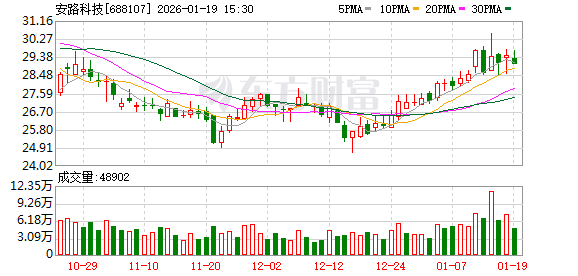
安路科技(688107.SH)1月19日在投资者互动平台表示,公司的FPGA产品已经在汽车电子领域有相关 应用,部分型号产品已经批量出货,与行业的头部客户均有业务往来。 (文章来源:每日经济新闻) 每经AI快讯,有投资者在投资者互动平台提问:请问公司是否与禾赛科技、速腾聚创有合作? ...

公司问答丨安路科技:公司的FPGA产品已经在汽车电子领域有相关应用 与行业的头部客户均有业务往来
Ge Long Hui A P P· 2026-01-19 09:19
格隆汇1月19日|有投资者在互动平台向安路科技提问:请问公司是否与禾赛科技、速腾聚创有合作? 安路科技回复称,公司的FPGA产品已经在汽车电子领域有相关应用,部分型号产品已经批量出货,与 行业的头部客户均有业务往来。 ...