
龙湖集团

Search documents
龙湖青秀天街、五象航洋城冲刺5.30开业,广西又一批王炸新Mall来了!
3 6 Ke· 2025-05-21 02:12
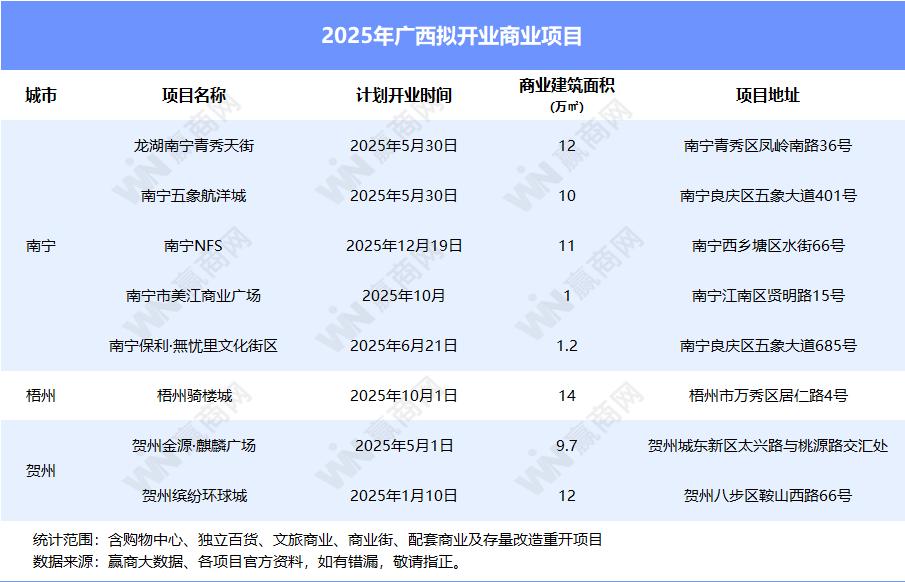
Core Insights - In 2025, Guangxi's commercial market is set to experience significant growth with the simultaneous opening of two major projects: Longhu Nanning Qingxiu Tianjie and Nanning Wuxiang Hangyang City Shopping Center on May 30, 2025 [1][6] - A total of eight commercial projects are planned to open in Guangxi in 2025, expected to bring a commercial increment of 709,000 square meters, nearly double the 2024 increment of 357,500 square meters [1][10] Project Summaries - **Longhu Nanning Qingxiu Tianjie**: Scheduled to open on May 30, 2025, with a commercial area of 120,000 square meters, featuring 8 South China first stores and 20 Nanning first stores [17][18] - **Nanning Wuxiang Hangyang City Shopping Center**: Also opening on May 30, 2025, with a commercial area of 100,000 square meters, it will be the largest shopping center in Nanning Wuxiang New District [21][22] - **Nanning NFS**: Planned to open on December 19, 2025, with a commercial area of 110,000 square meters, it aims to be Nanning's first light luxury cultural tourism complex [24][25] - **Nanning Poly Wuyouli Cultural Street**: Set to open on June 21, 2025, with a commercial area of 12,000 square meters, it will focus on cultural healing themes [27][28] - **Wuzhou Qiloucheng**: Scheduled to open on October 1, 2025, with a commercial area of 140,000 square meters, it will be a historical cultural street integrating various cultural experiences [29][31] Market Trends - The commercial increment in Guangxi is expected to surpass the historical low seen in 2024, with 2025's scale projected to be 1.83 times that of 2023, reaching 709,000 square meters [8][10] - Nanning continues to play a crucial role in Guangxi's commercial landscape, contributing significantly to the overall commercial increment, with five of the eight projects located in the city [12][15] - The focus on cultural tourism is a key trend, with several projects emphasizing cultural and experiential elements to attract visitors [7][28]

楼下商铺炸豆腐 楼上业主“闻油烟”
Qi Lu Wan Bao· 2025-05-20 21:38
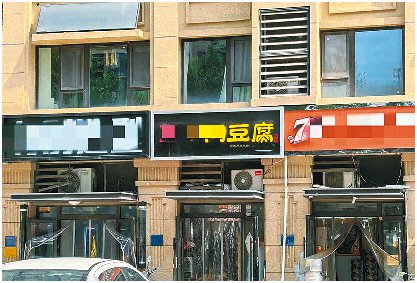
Core Viewpoint - The article discusses a resident's complaint regarding a tofu frying shop located beneath her apartment, which causes significant smoke and odor issues due to improper ventilation and lack of independent smoke ducts [2][3][4]. Group 1: Resident's Complaint - A resident named Ms. Ge reported that the smoke vent of a tofu frying shop is directly below her apartment window, leading to smoke entering her home [3]. - Ms. Ge initially contacted the property management and local authorities, but was informed that the shop had all necessary permits and that the management could not intervene [3][4]. - The resident expressed concern for her family's health, particularly for her young child, and requested urgent assistance from relevant departments to resolve the issue [4]. Group 2: Shop's Operations and Compliance - The tofu frying shop has been operational for a short time and claims to have installed equipment to minimize smoke emissions [6]. - The shop's staff mentioned that multiple regulatory bodies, including city management and environmental protection, have inspected the establishment and deemed it compliant [6]. - The shop's previous tenant also operated a food business, and the current operators inherited the existing smoke duct system [6]. Group 3: Regulatory and Property Management Insights - The property management confirmed that the commercial units do not have independent smoke ducts, but stated that the shop holds a valid business license, which allows it to operate [7]. - A representative from the property developer clarified that the commercial nature of the units does not restrict their use for food services, and it is the responsibility of the business owners to obtain the necessary permits [7]. - The article indicates ongoing concerns about the appropriateness of allowing food businesses in residential areas without proper ventilation systems, highlighting a potential regulatory gap [7].
劲爆!TOP央企多楼盘价格跳水,在宁战略收缩!
Sou Hu Cai Jing· 2025-05-20 19:49
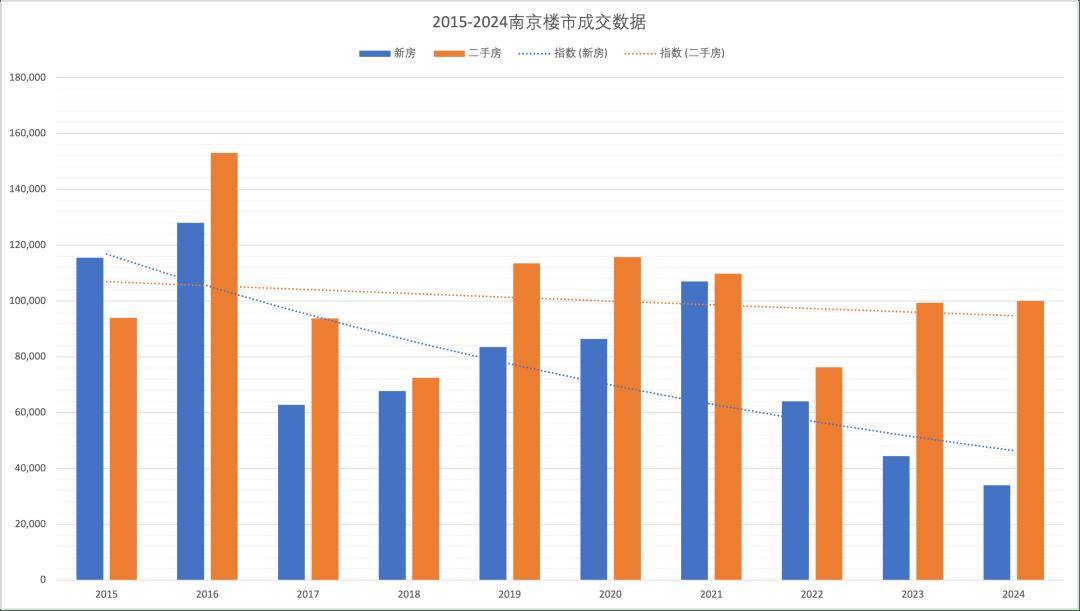
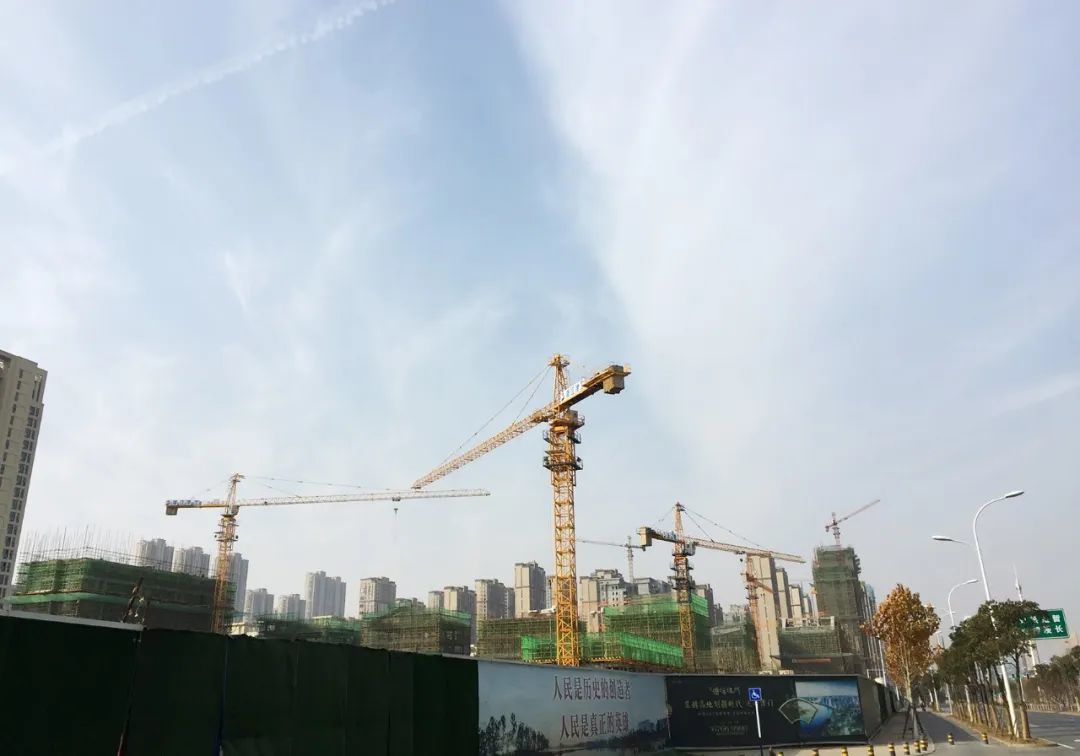
Core Viewpoint - A major state-owned developer has significantly reduced prices across multiple projects in Nanjing, with some properties reaching near record lows, indicating a desperate attempt to boost sales amid prolonged inventory issues and financial pressures [1][2][3]. Group 1: Price Reductions - In the Xianlin Lake area, project prices have dropped to 24,000 yuan per square meter, causing dissatisfaction among existing homeowners [1]. - In the core area of Jiangbei, prices have fallen to 23,000 yuan per square meter, nearly halving from the average price of 35,000 yuan per square meter at the time of the first launch in 2022 [1]. - The main housing sources in Jiangning are priced between 17,000 to 20,000 yuan per square meter, with minimal profit margins remaining, described as "ground-level sales" [1]. Group 2: Sales Performance - The developer, representing a group of top 100 real estate companies, has experienced a continuous decline in sales for three consecutive years, with an average net profit of 420 million yuan last year, down 76.8% year-on-year [3]. - The average net profit margin for top 100 real estate companies is projected to be 1.1% in 2024, indicating a sustained decline in profitability [6]. Group 3: Market Strategy Shift - The developer is shifting focus towards first-tier cities, as evidenced by a 3.6 percentage point increase in sales contribution from these areas, reflecting a strategic pivot to secure cash flow rather than gamble on future prospects in lower-tier cities [6]. - There are indications that the developer may be withdrawing from the Nanjing market, as evidenced by a significant reduction in land acquisition activities compared to previous years [9][11]. Group 4: Market Dynamics - The Nanjing real estate market is showing signs of divergence, with core areas stabilizing while suburban regions face pressure, leading to price adjustments by developers to enhance competitiveness [19].
合肥新房价格连涨,“二手房价格基本回到2018年”
Mei Ri Jing Ji Xin Wen· 2025-05-20 12:42
Group 1 - The core viewpoint indicates that new home prices in Hefei have been rising for three consecutive months, while second-hand home prices have returned to 2018 levels [2][9] - In April, the new home price index in Hefei increased by 0.3% month-on-month, with year-on-year declines narrowing from 5.9% in January to 3.9% in April [2] - Second-hand home prices decreased by 0.3% month-on-month in April, with a year-on-year decline of 7.4%, down from 10% in October 2024 [2][9] Group 2 - From January to April, the total area of new residential transactions in Hefei reached 1.012 million square meters, representing a year-on-year increase of 50.7% [3] - The introduction of new regulations has improved the usable area of new projects by over 12%, making them more attractive compared to older projects [3] - The market is experiencing a shift where investment buyers are decreasing, and the focus is shifting towards self-use purchases driven by family needs [4][5] Group 3 - The market is sensitive to pricing, with a notable threshold at 4 million yuan, beyond which sales slow down significantly [5] - The demand for second-hand homes is primarily driven by self-use needs, with over 60% of transactions involving homes under 100 square meters [9][10] - The overall sentiment in the market indicates that while second-hand home transactions have decreased, the absolute transaction volume remains high, suggesting ongoing demand [10]
2024开发房企年报综述:行业全面亏损,头部房企依然具备显著竞争优势
GOLDEN SUN SECURITIES· 2025-05-20 09:16
Investment Rating - The report maintains an "Overweight" rating for the real estate development industry [6] Core Insights - The real estate development industry faced significant losses in 2024, with overall revenue declining and profitability weakening due to falling housing prices and impairment pressures [1][13] - Key state-owned enterprises (SOEs) and mixed-ownership companies showed resilience compared to the overall industry, with SOEs experiencing a smaller revenue decline [2][36] - The report highlights that the future revenue of real estate companies is expected to remain under pressure for the next 2-3 years, particularly for those not in prime locations [2][41] Summary by Sections 1. Overview of Developer Annual Reports - In 2024, the overall revenue for 168 real estate developers was 4.33 trillion yuan, a year-on-year decrease of 19.2% [1][13] - The net profit for the industry was -376.3 billion yuan, a significant drop from -1.9 billion yuan in 2023 [1][13] - The cash on hand for developers decreased by 19.4% to 1.63 trillion yuan [1][13] 2. Financial and Operational Analysis of Key Developers 2.1 Revenue Pressure from Resource Turnover - Key SOEs saw a revenue decline of 7.4%, while private enterprises experienced a 22.9% drop [2][41] - The report indicates that the revenue performance of leading developers remains more resilient due to their ample turnover resources [2][41] 2.2 Continued Pressure on Gross Margin - The gross margin for key SOEs was 14.6%, down 2.3 percentage points, while private enterprises had a gross margin of 16.4%, down 1.2 percentage points [2][37] 2.3 Rising Sales and Management Expense Ratios - The sales and management expense ratio for key SOEs was 4.9%, while for private enterprises it was 5.9% [2][49] 2.4 Significant Decline in Investment Income - Investment income for key SOEs and private enterprises fell by 72.3% and 53.4%, respectively [2][37] 2.5 Comprehensive Impairment Provisions - All 14 key developers reported asset impairments, with SOEs accounting for 42.27 billion yuan and private enterprises for 3.88 billion yuan [3][38] 2.6 Declining Net Profit Trend - The net profit for key SOEs dropped by 95.7%, while private enterprises saw a 15.0% decline [4][39] 2.7 Stable Financing for Key SOEs - Key SOEs maintained stable financing channels, with a slight increase in interest-bearing liabilities of 0.7% [5][40] 2.8 Sales Performance of Key SOEs - Key SOEs continued to outperform the industry, focusing on land reserves in core cities [2][41] 2.9 Weak Land Acquisition Intent - The willingness to acquire land remains low across the industry, with key developers focusing on high-potential cities [2][41] 3. Investment Recommendations - The report suggests focusing on real estate-related stocks due to anticipated policy support and the potential for recovery in core urban areas [6][9]




3年未露面的林中,能否靠旭辉瓴寓打赢“生死战”?
Sou Hu Cai Jing· 2025-05-20 08:45
Core Viewpoint - CIFI Holdings is focusing on restructuring its debt and transitioning to a business model centered on commercial property leasing, self-developed projects, and real estate asset management to survive and thrive in the current market [1][2]. Group 1: Debt Restructuring - CIFI Holdings announced a debt restructuring plan involving approximately $6.8 billion in principal, covering 12 bonds and 13 loans, aiming to improve its capital structure and balance sheet [1][2]. - The restructuring is critical for CIFI, as it will reduce its credit debt scale by over 50% to within 30 billion yuan and extend the debt maturity to 9-10 years with interest rates below 3% [2]. - The CFO indicated that the restructuring would inject 49 billion yuan in liquidity, essential for the company's survival and future investment capabilities [2]. Group 2: Business Transformation - CIFI Holdings plans to adopt a "low debt, light asset, high quality" strategy, focusing on three core business areas: stable rental income, self-development, and real estate asset management [3]. - The company has a competitive advantage in multi-faceted operations, having established a rental platform, Lingyu International, which manages 130,000 units and ranks among the top four in the industry [3][4]. - CIFI aims to learn from American developers and enhance its asset management capabilities, with Lingyu International positioned as a pioneer in this transformation [3]. Group 3: Lingyu International's Role - Lingyu International, launched in 2016, has grown to manage over 130,000 rental units, becoming a crucial part of CIFI's strategy amid declining sales in residential properties [4][5]. - The long-term goal for Lingyu International includes achieving 200,000 units and preparing for an IPO, which is seen as a potential growth driver for CIFI [5][14]. - Lingyu International has begun to show profitability in some projects, indicating a positive trend despite the overall challenges faced by the rental market [8][9]. Group 4: Market Position and Future Directions - CIFI Holdings is strategically positioned to capitalize on the growing demand for rental housing, particularly among younger generations, as the market shifts towards a focus on rental communities [10][14]. - The company is exploring partnerships with state-owned enterprises and government platforms to enhance its rental community projects, aiming for a balanced approach between light and heavy asset models [12]. - Future developments may include further asset securitization and the establishment of REITs to improve liquidity and capitalize on the rental market's potential [16].
统计局70城房价数据点评:4月一线城市二手房环比转跌,二三线城市二手房继续下行
Dongxing Securities· 2025-05-20 08:04
Investment Rating - The industry investment rating is "Positive" [4] Core Insights - In April, first-tier cities saw a month-on-month decline in second-hand housing prices, while second and third-tier cities continued to experience downward pressure [1][2] - The new residential sales price index for 70 large and medium-sized cities showed a month-on-month growth rate of -0.1% in April, consistent with the previous value [1] - The year-on-year decline in new and second-hand housing prices across all city tiers has narrowed in April compared to March [2] Summary by Sections Housing Price Trends - In April, the month-on-month growth rate for new residential sales prices in first-tier cities was 0.0%, with specific cities like Beijing and Shanghai showing slight increases of 0.1% and 0.5% respectively [1] - The second-hand housing price index for 70 cities decreased by 0.4% month-on-month, with first-tier cities experiencing a decline of 0.2% [1] Year-on-Year Price Changes - The year-on-year growth rate for new residential sales prices in April was -4.5%, an improvement from -5.0% in March [2] - First-tier cities reported a year-on-year decline of -2.1%, with Beijing and Guangzhou showing declines of -5.0% and -6.3% respectively [2] Investment Recommendations - Short-term focus on policy-driven valuation recovery opportunities, while long-term focus should be on leading companies with quality product resources and real estate operational capabilities in core cities [3] - Recommended companies include Poly Developments and New Town Holdings, with potential benefits for China Resources Land and Longfor Group [3]
中信建投:4月销售表现相对平淡 土地市场热度较高
智通财经网· 2025-05-20 07:34
智通财经APP获悉,中信建投发布研报称,4月单月全国商品房销售面积同比下降2.9%,降幅较3月扩大 2.0个百分点,高能级城市中统计40城新房4月销售面积同比下降4%,5月1-16日上升1%,地产销售进入 淡季,销售波动相对较大,市场企稳势头需要进一步巩固。房企保持在核心城市的较高拿地热情,一二 线城市的宅地出让溢价率保持高位;房地产开发投资和开竣工保持低位,同比降幅分别 为-11.5%、-22.3%、-28.2%。 投资建议:4月以来地产销售表现相对平淡,在外部冲击下扩大内需将成为长期战略,地产支持性政策 力度有望提升,看好板块配置价值。重点推荐A股:滨江集团(002244.SZ)、建发股份(600153.SH)、金地 集团(600383.SH)、招商蛇口(001979.SZ)、招商积余(001914.SZ)、我爱我家(000560.SZ),港股:贝壳 (02423)、建发国际控股(01908)、越秀地产(00123)、绿城服务(02869)。推荐优质商业地产公司:华润万 象生活(01209)、华润置地(01109)、龙湖集团(00960)、新城控股(601155.SH)等。 风险提示:房地产销售、结转及房 ...

房地产行业2025年4月统计局数据点评:单月销售降幅扩大,开竣工与投资均走弱
Bank of China Securities· 2025-05-20 00:45
国家统计局发布 2025 年 4 月份全国房地产开发投资和销售情况。4 月销售面积 6393 万平,同比增速-2.1%(前值:-0.9%);开发投资金额 7826 亿元,同比增速-11.3% (前值:-10.0%);新开工面积 4840 万平,同比增速-22.1%(前值:-18.1%)。 统计局披露同比增速说明:根据房地产开发统计制度、统计执法检查等规定,对上年 同期房地产开发投资、新建商品房销售面积等数据进行修订,增速按可比口径计算。 核心观点 1. 商品房销售: 房地产 | 证券研究报告 — 行业点评 2025 年 5 月 19 日 强于大市 房地产行业2025 年4 月统计局数据点评 单月销售降幅扩大;开竣工与投资均走弱 《房地产"止跌回稳"主基调不变,释放需求和化 解风险并行,传递积极信号——2025 年政府工作报 告解读》(2025/03/06) 投资建议 风险提示: 房地产调控升级;销售超预期下行;融资收紧。 《70 城新房、二手房房价环比跌幅均持平;二线城 市新房房价环比增速回正——房地产行业 2025 年 1 月 70 个大中城市房价数据点评》(2025/02/20) 《"旧改为主、收储为辅" ...
固收 降准后的资金紧怎么看?
2025-05-19 15:20
Summary of Conference Call Notes Industry Overview - The notes primarily discuss the bond market and monetary policy in the context of recent adjustments in deposit rates and liquidity measures by the central bank [1][2][4][5]. Key Points and Arguments 1. **Bond Market Trends** - The bond market is currently experiencing fluctuations, with yields declining due to expectations of deposit rate cuts. However, the overall market remains in a state of adjustment [2][4]. - Credit bonds have shown a positive performance, particularly in the medium to short-term segments, while long-term credit bonds have underperformed compared to their government counterparts [3][15]. 2. **Liquidity and Monetary Policy** - The central bank is expected to maintain a stable and loose liquidity stance following recent rate cuts, with potential for structural monetary policy measures to enhance liquidity [5][9]. - There was a temporary tightening observed after the rate cut, attributed to banks needing to replenish excess reserves based on a 10-day or bi-weekly average assessment method [6][10]. 3. **Impact of Deposit Rate Changes** - Changes in the deposit base directly affect the amount of excess reserves banks need to hold. An increase in the deposit base during the maintenance period leads to higher requirements for excess reserves [7][8]. - The anticipated cut in the reserve requirement ratio (RRR) is expected to release approximately 1 trillion in liquidity, although actual releases may be lower due to recalibrations [8]. 4. **Market Sentiment and Future Outlook** - The sentiment in the credit bond market remains optimistic, with expectations of further easing that could push rates below 1.4%. Short-term credit bonds are particularly volatile [16][17]. - The current yield levels in the credit bond market are at historically low levels, indicating limited protection from interest rate fluctuations [18]. 5. **Investment Strategies** - Institutions with stable liabilities are advised to extend durations to 2-4 years and consider lower-rated city investment bonds, which are expected to improve in liquidity [23]. - High-rated, liquid investments such as 4-5 year secondary capital bonds are recommended, but caution is advised due to limited protection [23]. Additional Important Insights - The bond market's performance is influenced by various factors, including tax periods and government bond payments, which can absorb liquidity [12]. - The historical trend shows that liquidity prices tend to stabilize or decline marginally within two weeks following a rate cut, although specific circumstances can vary [10]. - The secondary capital bond market has seen a significant decline in yields, indicating reduced investment opportunities [19]. - The current market environment favors certain types of bonds, such as real estate bonds and medium-duration city investment bonds, which exhibit better liquidity [22]. This summary encapsulates the essential insights from the conference call, focusing on the bond market dynamics, monetary policy implications, and strategic investment recommendations.