美的集团

Search documents
财信证券晨会纪要-20251210
Caixin Securities· 2025-12-09 23:30
Market Strategy - The market is experiencing a volume contraction and fluctuation, with the computing hardware sector leading the gains [5][7] - The overall A-share market saw a decline of 0.55%, with the Shanghai Composite Index down by 0.37% and the Shenzhen Component Index down by 0.39% [7][8] - The innovation growth sector, represented by the ChiNext Index, increased by 0.61%, while the North Star 50 Index, representing small and medium-sized enterprises, fell by 1.72% [7][8] Industry Dynamics - In November 2025, the brand television market in China saw a shipment volume of approximately 3.22 million units, a year-on-year decrease of 15.7% [25] - In the first eleven months of 2025, China's crude oil imports increased by 3.2%, while natural gas imports decreased by 4.7% [27] - The overall trade value of goods in China for the first eleven months reached 41.21 trillion yuan, a year-on-year growth of 3.6% [28] Company Tracking - Midea Group (000333.SZ) announced that the total amount of share repurchase has reached 10 billion yuan, completing the repurchase plan [29][30] - Yuanli Co., Ltd. (300174.SZ) plans to acquire 49% of Clarimex to expand its presence in the American activated carbon market [31][33] - Zhengtai Electric (601877.SH) intends to purchase photovoltaic components from related parties, with a total amount not exceeding 3.5 billion yuan [34] - Yisheng Industrial (002458.SZ) reported a 10.27% year-on-year decline in the sales of white feather broiler chicks in November, while sales of breeding pigs increased by 203.74% [36] - Jingji Zhino (000048.SZ) sold 2.11 million pigs from January to November 2025, a year-on-year increase of 8.27% [38]
百纳千成营收锐减73%“三费”占49% 方刚再掌舵近6年亏4.48亿辞职
Chang Jiang Shang Bao· 2025-12-09 23:24
Core Viewpoint - The resignation of Fang Gang, the chairman and general manager of Baina Qiancheng, comes amid ongoing financial losses for the company, highlighting leadership instability and declining profitability [1][2]. Group 1: Leadership Changes - Fang Gang submitted his resignation due to personal reasons, stepping down from all positions within the company, including chairman and general manager [1][2]. - Fang Gang had a tumultuous tenure, having served as chairman since June 2018, with a brief resignation in May 2019 before being reinstated in December 2019 [3][5]. - The company expressed gratitude for Fang Gang's contributions during his tenure, despite the financial challenges faced [2]. Group 2: Financial Performance - Baina Qiancheng reported a cumulative net loss of 448 million yuan from 2020 to the third quarter of 2025, indicating a significant decline in profitability [6][8]. - For the first three quarters of 2025, the company achieved revenue of 177 million yuan, a year-on-year decrease of 73.43%, with a net loss of 67.54 million yuan, down 24.89% year-on-year [7][8]. - The company's operating expenses, including sales, management, and financial costs, totaled 87.29 million yuan, accounting for approximately 49% of the revenue during the same period [8]. Group 3: Future Leadership - The board has elected Zhu Youyi as the new chairman and Li Qian as the new general manager, both lacking a background in the film industry, raising questions about their ability to improve the company's performance [8][9].

今日新闻丨小米3款新车曝光!鸿蒙智行首款MPV、五菱硬派SUV公布!深蓝汽车累计交付超70万辆!
电动车公社· 2025-12-09 16:04
Group 1 - Deep Blue Automobile has achieved cumulative deliveries exceeding 700,000 units, contributing 2.3% to Changan Automobile's total production of 30 million vehicles, marking a significant role in the group's electrification transformation [3][7] - Xiaomi's upcoming three new car models include the range-extended flagship SUV Xiaomi YU9, high-performance SUV Xiaomi YU7 GT, and the extended executive sedan Xiaomi SU7 L, with expectations of maintaining over 40,000 monthly sales [8][12] - Hongmeng Zhixing has announced its first MPV model, the Zhijie V9, which is set to officially debut next year, enhancing its product lineup in the high-end MPV segment [13][15] - SAIC-GM-Wuling has unveiled its first all-terrain SUV, named Star光560, which will make its global debut at the 2025 ASEAN International Auto Show on December 11, featuring dimensions of 4745/1850/1755mm and a wheelbase of 2810mm [16][19]





A股年内累计回购超1400亿元
Bei Jing Shang Bao· 2025-12-09 15:44
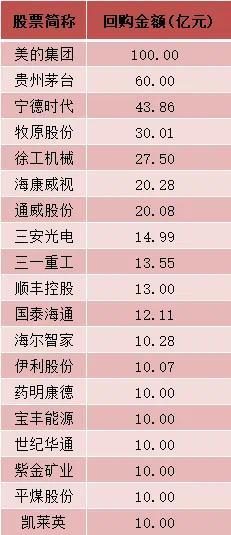
Core Viewpoint - The recent share buyback by Midea Group, amounting to 10 billion yuan, marks a significant event in the A-share market, reflecting a broader trend of companies engaging in buybacks to enhance shareholder value and market confidence [1][2][3]. Group 1: Share Buyback Details - Midea Group completed a share buyback of 1.35 million shares, representing 1.76% of its total share capital, with a total expenditure of approximately 10 billion yuan [2]. - This buyback is the largest single buyback in Midea's history and the second-largest in A-share history, following Gree Electric's buyback of 15 billion yuan in 2021 [2]. - As of now, 1,465 A-share companies have implemented buyback plans, with a cumulative buyback amount exceeding 140 billion yuan [3]. Group 2: Market Response and Performance - Among the 1,465 companies that executed buybacks, 1,172 stocks have seen price increases, accounting for 80% of the total [4]. - The stock with the highest increase is Shenghong Technology, which has risen by 655.64% year-to-date [4]. - The buyback actions are perceived as a signal of management's confidence in the company's value, which can attract investor interest and support stock price increases [5]. Group 3: Financial Performance of Buyback Companies - Over 81% of the companies that conducted buybacks reported profits in the first three quarters of the year, with Kweichow Moutai leading with a profit of 64.63 billion yuan [6]. - Other notable companies with significant profits include Ningde Times and China State Construction, with profits of approximately 49.03 billion yuan and 38.18 billion yuan, respectively [6]. - The pharmaceutical and electronics sectors have the highest number of companies engaging in buybacks, with 158 and 157 companies, respectively [6].
科陆电子(002121) - 2025年12月9日投资者关系活动记录表
2025-12-09 15:16
Group 1: Company Operations and Capacity - The Yichun energy storage base has an annual production capacity of approximately 10 GWh and is currently operating at full capacity [1] - The planned initial capacity for the Indonesian energy storage production base is about 3 GWh, with a target launch in 2026 [1] - The company will adjust its capacity planning according to business development and market expansion needs [1] Group 2: Revenue Structure - In the first half of 2025, the revenue from smart grid and energy storage businesses accounted for 48.74% and 49.83% of total revenue, respectively [2] - Domestic and international market revenues represented 50.22% and 49.78% of total revenue [2] Group 3: International Market Expansion - The company is focusing on a global layout for its energy storage business, particularly in the Americas and Europe, while also targeting the Asia-Pacific and Middle East markets [2] - A localized team is being established to enhance sales, technology, and service capabilities [2] Group 4: Competitive Advantages - The company has been involved in the energy storage sector since 2009, gaining significant technical expertise and project experience [2] - It has developed core components for energy storage systems in-house, enhancing its ability to provide comprehensive solutions [2] Group 5: Smart Grid Business Development - The company is actively pursuing opportunities in the overseas smart grid market, with over 200 million yuan in AMI project orders signed in Africa in the first half of 2025 [2] - Successful entry into the South African market with smart meter products [2] Group 6: Response to New Market Demands - The rise in energy consumption from data centers is driving the need for stable power supply solutions, with "renewable energy + storage" being a key strategy [3] - The company is adapting to new market demands by tracking emerging trends and preparing relevant technologies and business strategies [3] Group 7: Impact of Major Shareholder - The support from major shareholder Midea Group enhances the company's capabilities in R&D, manufacturing, supply chain, and branding [3] - The company is focusing on core business areas and increasing market expansion efforts under the guidance of its strong shareholder [3]

每经热评丨回购100亿元至少注销70亿元 美的集团回报股东的“作业”值得抄
Sou Hu Cai Jing· 2025-12-09 14:45
Group 1 - The core viewpoint of the article highlights Midea Group's successful completion of a share buyback program amounting to 10 billion yuan, which involved repurchasing 135 million shares, with 95 million shares set to be canceled, reducing the registered capital by 1.24% of the total share capital [1] - Midea Group's buyback represents a significant portion of the total buyback amount in the A-share market this year, which has seen over 1,400 companies engage in buybacks totaling 140.6 billion yuan, with Midea accounting for 11.545 billion yuan [1] - The article emphasizes that share buybacks can enhance shareholder returns and improve market liquidity, while also reflecting the company's confidence in its future development [1] Group 2 - The article notes that while share buybacks temporarily reduce the number of freely tradable shares, the intrinsic value per share does not change until shares are canceled, which subsequently increases metrics like net asset value and earnings per share [2] - It points out that most share buybacks are not for cancellation but for purposes like equity incentives or market value management, which may not create long-term value for shareholders [2] - The article advocates for companies to adopt cancellation-style buybacks when financially feasible, rather than engaging in market speculation [2] Group 3 - The article suggests that companies should focus on timely and proactive buybacks rather than waiting for optimal market conditions, as demonstrated by Midea Group's efficient execution of its buyback plan within six months [3] - It highlights that despite 1,465 companies announcing buyback plans this year, many have executed minimal buybacks, indicating potential issues with capital allocation or market timing perceptions [3] - The article stresses that genuine performance and cash flow are essential for companies to engage in cancellation-style buybacks, which can enhance overall operational quality [3]
回购100亿元至少注销70亿元 美的集团回报股东的“作业”值得抄
Mei Ri Jing Ji Xin Wen· 2025-12-09 14:41
Core Viewpoint - Midea Group has successfully completed a share buyback of 10 billion yuan, acquiring 135 million A-shares, with 95 million shares to be canceled, representing 1.24% of the total share capital before cancellation [1] Group 1: Share Buyback Details - The buyback amount of 10 billion yuan corresponds to 135 million shares, with 95 million shares set for cancellation [1] - Midea Group's buyback accounted for 115.45 billion yuan of the total 1,406 billion yuan spent on buybacks by over 1,400 A-share listed companies this year [1] - The company's stock price reached a new high since February 19, 2021, on December 4, indicating the effectiveness of the buyback in enhancing shareholder value [1] Group 2: Characteristics of Share Buybacks - Share buybacks are characterized by companies exchanging cash for shares, reducing the number of circulating shares, which has a direct and rapid impact on stock prices [1] - The funds from buybacks flow from the company to the capital market, improving overall market liquidity and signaling confidence in future growth [1] - The effectiveness of buybacks is maximized by the company's sincerity, with Midea Group's 10 billion yuan buyback serving as a reference for other companies [1] Group 3: Long-term Value Creation - The intrinsic value of shares does not change with buybacks; only after cancellation do metrics like net asset per share and earnings per share increase, enhancing share value [2] - Most buybacks are not for cancellation but for purposes like equity incentives or market management, with some companies later selling repurchased shares at a profit [2] - Companies should focus on cancellation-style buybacks to genuinely create long-term value for shareholders, avoiding short-term speculative strategies [2] Group 4: Implementation of Buyback Plans - Companies should adopt a proactive approach to buybacks, completing them within the committed timeframe, as demonstrated by Midea Group's swift execution of its buyback plan [3] - The buyback price ranged from 69.91 yuan to 80.62 yuan per share, indicating a high-price buyback strategy [3] - A significant number of companies have announced buyback plans, but many have executed minimal buybacks, suggesting a reluctance to act until stock prices reach perceived "buy points" [3]
A股年内回购大数据出炉:超1500亿元,四成以上为注销
Zheng Quan Shi Bao· 2025-12-09 14:12
Core Viewpoint - The article highlights the increasing trend of stock buybacks among A-share listed companies, with over 40% of buyback plans aimed at complete or partial cancellation, indicating a shift towards "cancellation-type buybacks" as a common practice in the market [1][5]. Group 1: Buyback Trends and Amounts - As of December 9, over 1500 billion yuan has been spent on stock buybacks in 2023, with leading companies like Midea Group, Kweichow Moutai, and CATL leading the way [2][5]. - Midea Group's buyback reached 10 billion yuan, making it the only "billion-level" buyback in A-shares this year, with 70% of the repurchased shares intended for cancellation [2][5]. - A total of 1303 companies have announced 1502 stock buyback plans this year, with 637 plans aimed at cancellation, representing 42.41% of the total, an increase from 38.33% in 2024 [5]. Group 2: Motivations Behind Buybacks - Companies are responding to policy incentives and are likely to receive more tax benefits or financial support, which encourages the normalization of cancellation-type buybacks [1][4]. - The buyback activity is seen as a signal of confidence in future operations, especially when stock prices are perceived as undervalued, potentially leading to positive market reactions [4][6]. Group 3: Implications for Market and Company Value - The practice of stock buybacks is aimed at enhancing company value and market competitiveness amidst global economic uncertainties [6]. - Buybacks can improve earnings per share (EPS) and attract long-term capital, providing stable funding for company growth [6][7]. - Companies must balance shareholder returns with maintaining a robust capital structure to avoid excessive cash flow pressure while optimizing financial health [7].

【行业深度】洞察2025:中国全屋智能行业竞争格局及市场份额(附市场竞争派系、区域分布、出海情况、研发能力对比)
Qian Zhan Wang· 2025-12-09 13:45
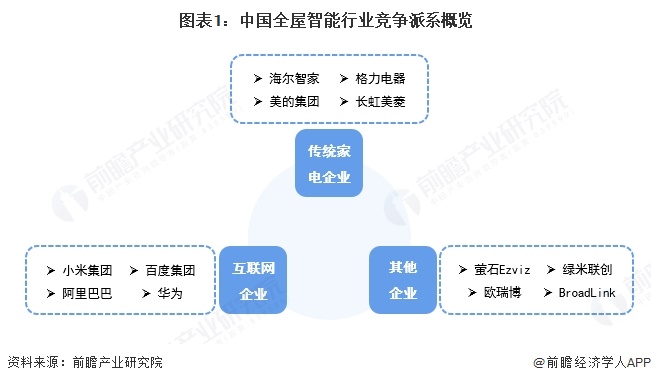
Core Insights - The article discusses the competitive landscape of China's whole-home smart industry, highlighting the key players and their strengths in the market. Group 1: Industry Overview - China's whole-home smart industry can be categorized into three competitive factions: traditional home appliance companies, internet companies, and other specialized firms [2][4]. - Major traditional home appliance companies include Haier Smart Home, Midea Group, and Gree Electric, which have strong supply chains and brand advantages [2]. - Internet companies like Xiaomi, Baidu, Alibaba, and Huawei possess significant technological and financial strengths [2]. Group 2: Competitive Landscape - The competitive landscape is diverse and layered, with Huawei focusing on high-end solutions, Xiaomi targeting the mass market, and traditional brands like Haier and Midea leveraging their appliance roots for comprehensive solutions [5]. - Companies such as UIOT and Aqara specialize in technical niches, while Tuya Smart empowers the industry with an open cloud platform [5]. Group 3: Company Profiles - **Huawei Harmony Smart Home**: Offers a wide range of smart ecosystem products with strong compatibility and stability, leveraging its communication technology [8]. - **Xiaomi Mi Home**: Focuses on a comprehensive ecosystem that includes mobile and smart home devices, known for high cost-performance [8]. - **Haier Smart Home**: Provides integrated smart home solutions with a strong global supply chain and localized service capabilities [8]. - **Gree Electric**: Primarily focuses on smart home products related to air conditioning, with a strong brand influence and product reliability [10]. - **Stone Technology**: Specializes in robotic vacuum cleaners with advanced technology and high user satisfaction [10]. Group 4: Market Dynamics - The industry shows a significant presence of registered companies in Anhui Province, with notable activity in Guangdong, Jiangsu, and Shandong [11]. - Companies like Stone Technology and Haier Smart Home have a high proportion of overseas business, indicating the importance of international markets [13]. - R&D investment varies significantly among companies, with Xiaomi leading with over 15 billion yuan in recent years [16]. Group 5: Competitive Threats and Customer Dynamics - The threat of new entrants is low due to high capital requirements and established ecosystems [18]. - The bargaining power of downstream customers is strong, with consumers being price-sensitive and B2B clients seeking cost reductions [18]. - The bargaining power of suppliers is moderately strong, particularly for core components like high-end chips and sensors [18]. Group 6: Overall Competition Status - The competition is intense and characterized by differentiation, with major players like Huawei and Xiaomi holding significant market shares [19]. - The focus of competition is on technological innovation, ecosystem compatibility, cost-effectiveness, and channel expansion [19].



AI时代,如何看待榜单导购的价值?
3 6 Ke· 2025-12-09 13:37
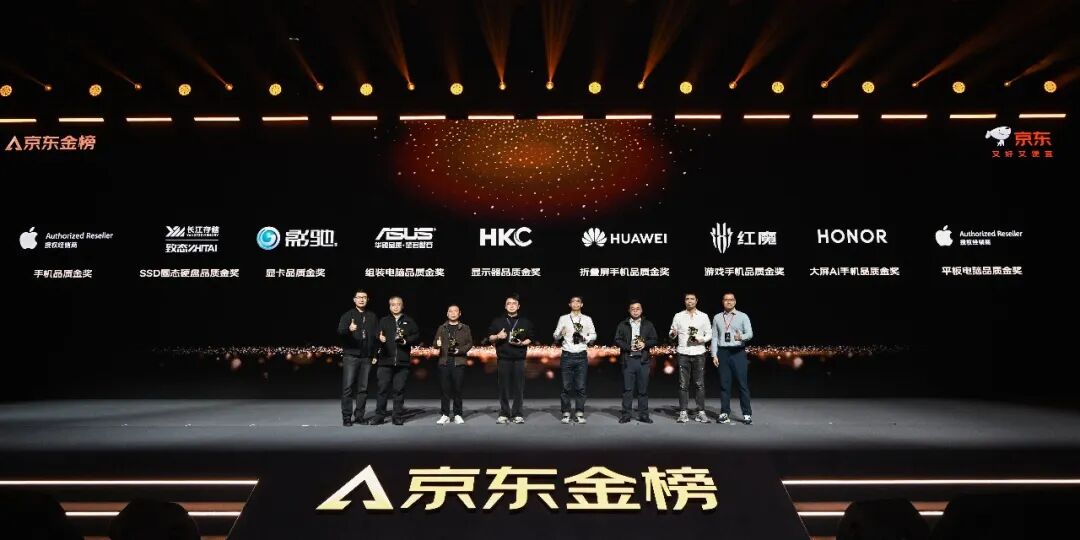
Core Insights - The article discusses the evolving landscape of consumer behavior, highlighting a shift from "finding products" to "selecting products," with a significant percentage of consumers seeking tools to reduce decision-making costs [1][4][9] - The JD Gold List has emerged as a trusted ranking system that relies solely on real data, avoiding commercial influences, and has gained consumer trust over six years [1][5][20] Group 1: Consumer Behavior - Consumers are experiencing a new form of fatigue in decision-making, where they struggle to determine what is worth buying despite the abundance of information available [1] - A report indicates that 76.64% of users need tools to lower decision costs, and 76.56% prioritize finding trustworthy, high-quality products [1][4] - The proliferation of rankings has led to a decline in trust, with many lists being influenced by advertising rather than genuine consumer behavior [4][9] Group 2: JD Gold List - The JD Gold List, established six years ago, is recognized for its objectivity and commitment to not being commercialized, serving as a reliable guide for consumers [2][6][20] - In the past year, the JD ranking system attracted approximately 7 billion visits, indicating its importance as a shopping decision tool [7] - The Gold List ranks products based on real user purchase data, product performance, and brand influence, ensuring a high standard of quality [7][20] Group 3: Awards and Recognition - The annual JD Gold List awards recognized over 140 brands for their high quality and consumer trust, including brands like Midea, Asus, and Nongfu Spring [2][11] - The Gold List's "Quality Gold Award" reflects products that have received significant positive feedback from real users, enhancing their market visibility [10][15] - The list has a notable impact on sales, with products featured on the Gold List experiencing a 12-fold increase in sales growth compared to regular products [9] Group 4: Future Developments - JD plans to enhance the Gold List's capabilities by integrating AI technology, allowing for personalized rankings that cater to individual consumer preferences [22] - The company aims to expand the influence of the Gold List by increasing the range of co-branded products and optimizing the ranking mechanism [22] - The Gold List is positioned as a benchmark for quality in the industry, encouraging brands to improve product quality and service experiences [22]