华为

Search documents
欧洲光伏90%靠中国,欧盟要强推禁令?德法西会反弹吗
Sou Hu Cai Jing· 2026-01-22 05:06
Group 1 - The EU is preparing a new proposal to shift from voluntary guidelines to mandatory regulations targeting Chinese suppliers, including telecom networks, security equipment, and solar systems [1] - The previous 5G security toolbox allowed member states to make their own decisions, leading to inconsistent implementations across countries, with some like Sweden and Germany tightening regulations while others like Spain and Greece continued using Huawei and ZTE due to cost and reliability [1] - The new proposal aims to unify regulations and impose penalties for using high-risk Chinese equipment in critical infrastructure, potentially leading to lawsuits and fines at the EU level [1] Group 2 - The EU's energy transition goals are at odds with the current supply chain realities, as over 90% of solar panels installed in the EU come from China, raising concerns about the feasibility of replacing these supplies without significant cost increases and project delays [3] - The push for strategic autonomy from China and the US is complicated by the lack of viable alternatives, leading to fears that a forced decoupling could harm the EU's green transition efforts [3] - The proposal's success depends on the reactions of member states, as national security is traditionally managed by individual countries, and the EU's attempt to enforce compliance may face strong resistance from nations like Germany and Spain [3] Group 3 - Telecom operators are particularly concerned about the financial burden of replacing Chinese equipment, which could cost billions of euros and slow down network development, ultimately impacting consumers through higher fees and reduced service quality [5] - Some countries, like Spain, are taking a pragmatic approach, with contracts in place that assert no security risks associated with Chinese suppliers, contrasting with the EU's more aggressive stance [5] - Germany's situation is sensitive due to the significant presence of Huawei equipment, and any forced timeline for equipment removal could lead to backlash from the government and industry, especially in a fragile economic environment [5] Group 4 - The proposal will undergo a lengthy legislative process, requiring approval from the EU Parliament and negotiations with member states, indicating that the path to implementation will be complex and contentious [7] - The debate reflects a clash between political correctness and economic rationality, with stakeholders weighing the importance of security against the potential costs and inefficiencies of strict regulations [7] - The overarching risk lies in potentially missing opportunities for digital and green advancements due to a focus on security, which could lead to greater inefficiencies and costs in the long run [7]



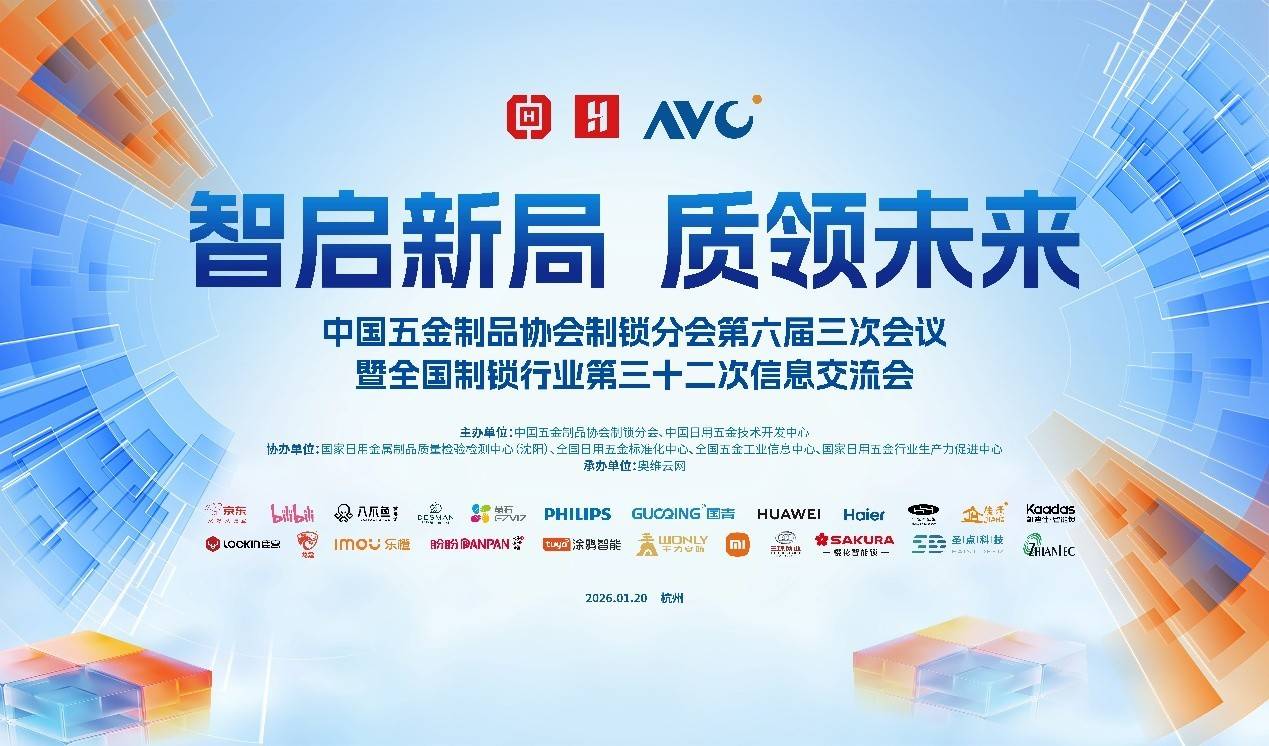
智启新局质领未来——全国制锁行业第三十二次信息交流会在杭州隆重召开
Sou Hu Cai Jing· 2026-01-22 04:50
Core Insights - The conference focused on the theme "Intelligent Initiation of New Situations and Quality Leadership of the Future," highlighting the integration of digital economy and smart home industries, particularly in the smart lock sector [1][5][49]. Group 1: Industry Challenges and Opportunities - The smart lock industry is experiencing robust growth driven by new and replacement demand, but it faces challenges such as severe competition, product quality inconsistency, and inadequate after-sales service [5][9]. - The industry is urged to move towards high-quality development, emphasizing innovation, product quality, and safety as core competitive advantages [5][49]. Group 2: Market Trends and Consumer Insights - The market penetration of smart locks in China remains low, indicating significant potential for new user acquisition [11]. - The 2025 market research report indicates a positive outlook for the smart lock industry, with increasing upstream shipment volumes and clearer supply chain dynamics [9]. Group 3: Technological Innovations - Companies are integrating AI technology into smart locks to enhance user experience and security, with products like the MiyaAI smart lock series showcasing advanced interaction capabilities [16][18]. - Innovations such as the LockinAuraCharge technology by Luokai aim to address power supply issues, enabling wireless charging and continuous operation of smart locks [24]. Group 4: Standardization and Industry Collaboration - The launch of the "Smart Door Group Standard" aims to establish a unified framework for the industry, promoting standardized development and high-quality growth [35]. - The conference emphasized the importance of collaboration among government, associations, and enterprises to foster a healthy and sustainable industry ecosystem [49]. Group 5: Recognition and Awards - The conference recognized leading brands in the smart lock industry, awarding titles such as "China Smart Lock Leading Brand" and "Consumer Preferred Brand" to companies like Deshman and Kaidishi [37][43]. - The event also highlighted high-end products and best-selling smart locks, reinforcing the importance of quality and consumer trust in the market [39][41].
余承东:车辆120km/h时 风阻消耗能量可达70%
Feng Huang Wang· 2026-01-22 03:56
Core Viewpoint - The article emphasizes the importance of the drag coefficient in electric vehicles, highlighting it as a critical factor affecting the range of electric cars [1] Group 1: Importance of Drag Coefficient - The drag coefficient is often overlooked but is crucial for electric vehicle range, with energy consumption at 120 km/h reaching up to 70% due to drag [1] - A slight difference in drag coefficient can lead to a significant variation in range, potentially affecting the distance by several dozen kilometers with the same battery capacity [1] Group 2: Recent Developments - The Zhijie R7 has recently achieved a key certification in a professional wind tunnel, with its pure electric Ultra version recording a drag coefficient of only 0.217 under specific testing conditions (120 km/h at 23°C) [1]

欧盟“高风险供应商”政策升级,华为霸气回怼:损人不利己
Jing Ji Guan Cha Wang· 2026-01-22 03:41
Core Viewpoint - The European Commission has escalated its stance against "high-risk suppliers," effectively banning member states from procuring products from Chinese high-tech companies, which politicizes economic issues and severely hinders technological exchange and economic development [2][4]. Group 1: Legislative Changes - The EU has released a draft revision of the EU Cybersecurity Law, aiming to phase out components and equipment from "high-risk suppliers" across 18 critical sectors, including 5G communication, semiconductors, and medical devices [2][3]. - The draft mandates that telecom operators in EU countries replace equipment from identified high-risk suppliers within three years, marking a shift from voluntary to mandatory compliance for all member states [3][4]. Group 2: Targeted Companies - Although the draft does not explicitly name any countries or companies, it is widely interpreted as targeting Chinese firms, particularly Huawei, which has a significant market share in the affected sectors [3][4]. - Huawei has responded by stating that the legislative proposal violates fundamental legal principles of fairness and non-discrimination, and it plans to monitor the legislative process closely [2][5]. Group 3: Political Context - The EU's move reflects a broader trend influenced by the U.S., which has been pressuring European allies to adopt similar restrictions on Chinese technology firms since 2022 [4][6]. - The shift from a risk management approach to a systematic exclusion of Chinese technology indicates a clear trend towards "decoupling" from China in technology policy [4][5]. Group 4: Industry Reactions - The Chinese Ministry of Foreign Affairs has expressed serious concerns over the EU's actions, urging the EU to avoid protectionism and warning that such measures could harm the EU's market openness and investment confidence [5][6]. - The EU-China Chamber of Commerce has also voiced strong opposition to the proposed mandatory exclusion measures, arguing that they could disrupt normal market operations and negatively impact Europe's digital development and industrial competitiveness [5][6].

团队准备解散了。。
菜鸟教程· 2026-01-22 03:30
Core Viewpoint - The job market for programmers is shifting, with high-value roles evolving, particularly highlighting the demand for large model application development engineers by 2026, which are seen as scarce, high-paying, and resilient to risks [1] Group 1: Industry Trends - Major companies like Baidu and Huawei are restructuring their AI project frameworks to focus on application layers [1] - Tencent is aggressively hiring, adding 3,000 AI talents in the third quarter [1] - The competition in large models has transitioned from technical reserves to application implementation [1] Group 2: Skills and Training - Essential skills for large model application development include mastering core logic, fine-tuning, agent development, and RAG (Retrieval-Augmented Generation) [2] - Learning these technologies can significantly differentiate developers from 90% of their peers, leading to higher salary opportunities [3] - Current job market data indicates that 78% of large model application development positions offer salaries between 600,000 to 1,000,000 yuan, with interns earning over 4,000 yuan per day [3] Group 3: Educational Offerings - A practical training camp for large model application development is being offered, featuring live courses that combine theory, development skills, and demonstrable projects [6] - Participants will receive a job-seeking package that includes interview question banks and insights into high-paying positions [6] - The course has successfully served over 20,000 students, with many securing high-paying job offers [11] Group 4: Career Development - The training aims to help participants connect with product and business teams, build technical barriers, and avoid job insecurity as they age [13] - The course emphasizes the importance of mastering AI technologies to secure a competitive edge in the job market [21] - Continuous opportunities for internal referrals and direct hiring are provided, enhancing the chances of obtaining high-paying offers [19]

美国会横插一脚:不许卖,中国用三流芯片都能干翻我们
Guan Cha Zhe Wang· 2026-01-22 03:21
【文/观察者网 阮佳琪】 上周二(13日),以25%销售额抽成为条件,美国特朗普政府正式批准英伟达对华出口H200人工智能 (AI)芯片, 但这遭到两党对华鹰派议员的强烈反对。 仅仅一周后,为抢夺先进AI芯片对华销售的审查权,美国众议院外交事务委员会于周三(21日)以压 倒性优势表决通过一项两党联合提案。该法案明确要求,参照军售审查模式,由国会对先进AI芯片出 口实施监管。 据彭博社22日报道,依据这项法案,美国政府在批准先进AI芯片出口前,必须事先通知国会;国会则 有权通过联合决议案,审查并否决针对中国、俄罗斯、伊朗及其他所谓"敌对国家"的出口许可。 此外,法案明确规定,未来至少两年内全面禁止向中国出售英伟达更先进的Blackwell芯片,同时将现 行出口管制措施正式纳入法律条文。 特朗普在白宫会晤黄仁勋 视频截图 据报道,该法案以42票赞成、2票反对在委员会获批,下一步将提交众议院全体会议表决。该法案仍需 参众两院通过并获得特朗普的签署才能生效。 目前参议院尚未出台配套法案,但部分参议员已另行提交议案,其效力或将直接禁止H200芯片对华销 售。 报道指出,本次提案是美国国会最新一次试图限制特朗普政府推动英 ...


苹果官宣手机电脑等最高降价1000
Guan Cha Zhe Wang· 2026-01-22 02:56
1月19日,Counterpoint Research发布的最新报告显示,受存储短缺导致价格上涨影响,2025年第四季度 中国智能手机出货量同比下降1.6%,全年同比下降0.6%。除第一季度外,2025年其余季度均录得同比 收缩。 从第四季度来看,苹果以21.8%的市场份额领跑国内市场,OPPO以15.8%的市场份额位居第二,vivo以 15.7%的份额紧随其后,华为、小米、荣耀分别排名第四至第六。从全年来看,华为以16.9%的市场份 额夺得榜首,但前三名并未拉开明显差距。苹果、vivo分别以16.7%、16.4%的市场份额位列第二、第三 名。小米(15.7%)、OPPO(15.5%)、荣耀(13.4%)分列第四至第六。 1月22日,苹果中国官网上线新春限时优惠活动,用户于2026年1月24日0时1分至1月27日23时59分以符 合条件的支付方式购买iPhone、Mac、iPad和Apple Watch等指定产品,最高可立省1000元。 不过观察者网注意到,最新发布的iPhone 17系列手机产品不在降价范围内。 该机构分析认为,苹果四季度出货量同比大增28%,得益于iPhone 17系列的强劲吸引力和供应量 ...


华为AI眼镜被曝上半年发布
Guan Cha Zhe Wang· 2026-01-22 02:51
Core Viewpoint - Huawei is set to release its AI glasses in the first half of this year, featuring various functionalities and a lightweight design, supported by the HarmonyOS for seamless cross-device collaboration [1][3]. Group 1: Product Features and Market Trends - The upcoming Huawei AI glasses will come in three colors and support functions such as photo and video capture, audio playback, and real-time translation [1]. - The global smart eyewear market is projected to see significant growth, with an expected shipment of 4.296 million units by Q3 2025, marking a year-on-year increase of 74.1% [3]. - The Chinese market is also expected to grow, with a forecasted shipment of 4.508 million units by 2026, reflecting a year-on-year growth of 77.7% [3]. Group 2: Industry Competition and Consumer Sentiment - Major tech companies, including Meta, Google, Xiaomi, Alibaba, and Baidu, are entering the AI glasses market, indicating a shift from niche products to a growing demand for smart eyewear [3]. - Despite the high interest in smart glasses, consumer feedback highlights concerns over the redundancy of features compared to smartphones, comfort issues due to weight, and battery life limitations [4]. - The market is transitioning from viewing smart glasses as smartphone accessories to recognizing them as independent smart devices, with AI integration becoming more prevalent [4]. Group 3: Policy Support and Market Dynamics - The introduction of government subsidies for smart glasses priced under 6000 yuan, offering a 15% discount up to 500 yuan, is expected to encourage consumer adoption [4]. - The competition in the smart eyewear market is shifting towards user experience, with comfort, practical AI functionalities, and ecosystem completeness becoming critical factors [5]. - Leading manufacturers are focusing on ecosystem collaboration and innovative scenarios to transform smart glasses from novelty items to everyday smart assistants [5].

从工业基地到数字新城 “产城人文”协同发展绘就中国式现代化新实景
Hang Zhou Ri Bao· 2026-01-22 02:50
运河明珠 2025年8月,小河公园跨运河人行桥开放 5栋高层建筑与4栋多层建筑巧妙组合,内部空间设计灵活,可根据需求自由组合,满足不同使用模 式的切换……这便是位于拱墅区智慧网谷小镇核心区域的国贸云商数字商贸总部基地,于去年完工投 用。该总部基地紧密围绕健康医药和数字经济两大核心领域,打造浙江省国贸健康产业的旗舰典范和数 字医疗的区域标杆,推动拱墅大城北区域转型升级步伐进一步加快。 大运河杭钢公园 汇金云创·科创人才综合体 朝霞刚刚浸染云层,拱墅大城北的产业脉搏已强劲跃动。智慧园区中,智能机器人正沿着预定轨迹 自如巡检;数据中心的屏幕墙上,实时跳动的工业互联网信号连接着千里外的生产线;而在新建的智造 车间,柔性产线已悄然切换工序,精密机械臂于寂静中勾勒出智能制造的韵律。 瞄定"打造大运河保护传承利用的经典范例、超大城市有机更新的示范样板、杭州高质量发展的新 增长极"目标,杭州大城北建设,已步入了关键阶段。 2025年,拱墅区共计实施大城北建设项目77个,开工率达107%,完工率达123%,年度投资超70亿 元。基建日益完善下,拱墅以产业蝶变为核心引擎,同步推进交通路网升级、民生服务提质,全方位构 建"产城人文 ...

为啥说任正非有上乘资质?AI时代不缺资源和能力,最稀缺的是发心
Sou Hu Cai Jing· 2026-01-22 02:44
Core Insights - The essence of entrepreneurship lies not only in resources and intelligence but also in a genuine mission and long-term vision, as exemplified by leaders like Jeff Bezos and Ren Zhengfei [1][5][7] - The AI era presents abundant resources, yet the most scarce asset is the genuine passion and commitment to a cause, which is essential for inspiring others and achieving significant goals [5][9] Group 1: Leadership and Vision - Ren Zhengfei is highlighted as a leader with exceptional qualities, driven by a sense of mission and idealism, which sets him apart in the competitive landscape [3][4][7] - The importance of having a long-term perspective is emphasized, where short-term gains are less valuable than sustained success and respect [1][7] Group 2: Authenticity and Commitment - Authenticity in intentions and actions is crucial for building meaningful relationships and achieving success; superficial connections based on wealth or status are unlikely to yield fruitful partnerships [6][8] - The narrative stresses that true commitment to a vision can overcome obstacles and lead to significant contributions, as demonstrated by Ren Zhengfei's journey from a small switch agent to a major player in the telecommunications industry [5][8] Group 3: The Role of Ideals in Business - The article argues that having high ideals and aspirations serves as a protective barrier against challenges, allowing individuals to maintain focus and perseverance [9] - It is noted that the current competitive landscape is defined by the clash of ideas and aspirations, making personal vision a critical factor for success in the AI era [9]