
洋河股份

Search documents
洋河股份:2021至24年投资现金流净额为正主要系理财收回及新增投资减少
Xin Lang Cai Jing· 2025-07-29 10:40
免责声明:本信息由新浪财经从公开信息中摘录,不构成任何投资建议;新浪财经不保证数据的准确性,内容仅供参考。 尊敬的投资者,您好!主要系投资理财收回、新增投资减少。感谢您的关注! 查看更多董秘问答>> 投资者提问: 尊敬的董秘您好!看到财报里,茅台汾酒五粮液等近十年投资现金流净额都为负,而洋河股份自2021至24年都为正,主要原因是什么呢?谢谢回复, 董秘回答(洋河股份SZ002304): ...



洋河股份:投资者提白酒调整周期应对策略,董秘表示感谢
Xin Lang Cai Jing· 2025-07-29 10:40
查看更多董秘问答>> 免责声明:本信息由新浪财经从公开信息中摘录,不构成任何投资建议;新浪财经不保证数据的准确性,内容仅供参考。 投资者提问: 尊敬的公司董秘您好!针对目前白酒调整周期,应对策略分析:1.增加新畅销品种稳住现金流,控货提质主力品种。2.光瓶酒的火爆销售启发之一是:白酒低谷来临的时候,增加空白畅销品种 董秘回答(洋河股份SZ002304): 尊敬的投资者,您好!感谢您的建议与关注! ...
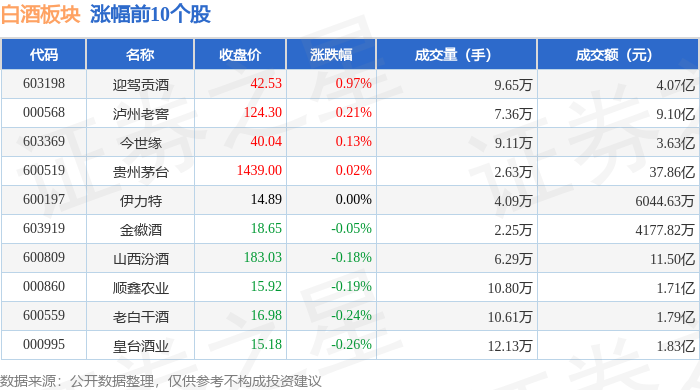
白酒板块7月29日跌0.09%,*ST岩石领跌,主力资金净流出3.14亿元
Zheng Xing Xing Ye Ri Bao· 2025-07-29 08:34
证券之星消息,7月29日白酒板块较上一交易日下跌0.09%,*ST岩石领跌。当日上证指数报收于 3609.71,上涨0.33%。深证成指报收于11289.41,上涨0.64%。白酒板块个股涨跌见下表: | 代码 | 名称 | 收盘价 | 涨跌幅 | 成交量(手) | 成交额(元) | | | --- | --- | --- | --- | --- | --- | --- | | 603198 | 迎驾贡酒 | 42.53 | 0.97% | 9.65万 | | 4.07亿 | | 000568 | 泸州老窖 | 124.30 | 0.21% | 7.36万 | | 9.10亿 | | 603369 | 今世家 | 40.04 | 0.13% | 9.11万 | | 3.63亿 | | 615009 | 贵州茅台 | 1439.00 | 0.02% | 2.63万 | | 37.86亿 | | 600197 | 伊力特 | 14.89 | 0.00% | 4.09万 | | 6044.63万 | | 616809 | 金徽酒 | 18.65 | -0.05% | 2.25万 | | 4177.82万 | | 6 ...
食品饮料行业周报:第二季度白酒超配比例环比下降关注板块中报业绩情况-20250728
Guoxin Securities· 2025-07-28 13:07
Investment Rating - The report maintains an "Outperform the Market" rating for the food and beverage sector [5][6][79]. Core Views - The second quarter saw a decrease in the allocation ratio for the liquor sector, reflecting weak fundamental expectations. The white liquor index rose by 1.0%, but the allocation ratio for actively managed equity funds fell by 2.07 percentage points to 4.50% [2][14]. - The beverage sector is entering a peak season, with strong performance expected from leading companies in basic condiments. The report recommends focusing on companies that are accelerating nationalization and platformization, such as Dongpeng Beverage [3][20]. Summary by Sections 1. Liquor Sector - The allocation ratio for the liquor sector has decreased, indicating weak expectations for fundamentals. The white liquor price index remained stable at 100.00, with a slight increase in the index [2][12]. - Major liquor companies are focusing on market health, with strategies aimed at destocking and promoting sales in the short term, while emphasizing consumer engagement and internationalization in the long term [2][14]. - Recommended stocks include leading companies with proven risk resilience like Kweichow Moutai, Shanxi Fenjiu, and Wuliangye, as well as those with improving digital strategies like Luzhou Laojiao [2][14]. 2. Consumer Goods - The beer sector is entering a peak season, with a slight decrease in fund allocation ratios. Yanjing Beer is prioritized for recommendation due to ongoing internal reforms [3][15]. - The snack sector has seen an increase in fund allocation, with a focus on companies like Salted Fish and Wanchen Group. The report highlights the importance of product differentiation and channel penetration [3][16]. - In the condiment sector, leading companies are expected to perform steadily, with a focus on the upcoming mid-year performance reports. Recommended stocks include Haitian Flavoring and Yihai International [3][17]. 3. Frozen Foods and Dairy - The frozen food sector is stable, with companies actively developing new products to cater to both B-end and C-end markets. Recommendations include stable operators like Anjijia and Qianwei Central Kitchen [3][18]. - The dairy sector is expected to recover gradually, with potential policy catalysts and improved supply-demand dynamics anticipated in 2025. The report recommends focusing on leading dairy companies with a safety margin in valuations [3][19]. 4. Beverage Sector - The beverage industry is expected to maintain its growth momentum, particularly in the no-sugar tea and energy drink segments. Dongpeng Beverage is highlighted for its strong performance, with a reported revenue increase of 36% year-on-year [3][20].




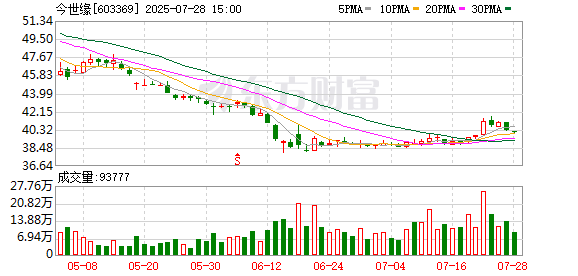
今世缘谋划全国化“前夜” 基酒之问被“旧事重提”
2 1 Shi Ji Jing Ji Bao Dao· 2025-07-28 10:41
Core Viewpoint - The recent marketing controversy surrounding Jiangsu Jinshiyuan has sparked significant discussion in the liquor industry, particularly regarding its competition with Yanghe and the implications of their marketing strategies [2][3]. Group 1: Marketing Controversy - A widely circulated poster questioned the value of original and vintage liquors, seemingly targeting competitors like Gujing Gongjiu and Yanghe, which have strong associations with family gatherings and vintage concepts [2]. - Jinshiyuan denied that the controversial poster was officially released, attributing its spread to distributors [2]. - The marketing strategy has been interpreted as an attempt to undermine Yanghe's reputation, leading to public backlash [3]. Group 2: Production Capacity and Inventory - Jinshiyuan's actual production capacity is 60,000 tons per year, with an additional 20,000 tons of original liquor capacity under construction, while its semi-finished liquor inventory stands at 161,768 kiloliters [6][7]. - In contrast, Yanghe's production capacity exceeds 140,000 tons, with a semi-finished liquor inventory nearing 700,000 tons, highlighting a significant competitive advantage in terms of scale and storage [8][9]. Group 3: Market Position and Strategy - Jinshiyuan's revenue growth has primarily come from within Jiangsu, with only 8% of its 2024 revenue generated from outside the province, indicating a need for expansion beyond its home market [10][12]. - The company aims to penetrate surrounding markets such as Shanghai, Zhejiang, and Anhui, as it seeks to establish a national presence [12]. - Jinshiyuan's product strategy has focused on premium offerings, with over 90% of its main revenue coming from products priced above 100 yuan, while Yanghe has introduced more affordable options to compete in the mass market [13][14]. Group 4: Product Comparison - Jinshiyuan's flagship product, Guoyuan Danya, is positioned in the 100-300 yuan price range, competing directly with Yanghe's Hai Zhi Lan, which is priced similarly but emphasizes its three-year aging certification [14][16]. - The lack of clear aging information for Guoyuan Danya compared to Yanghe's transparent aging claims may affect consumer perception and loyalty in a highly competitive market [16][17].

越卖越亏?酒鬼酒等业绩暴跌!白酒基金经理如何调仓?
Sou Hu Cai Jing· 2025-07-28 10:32
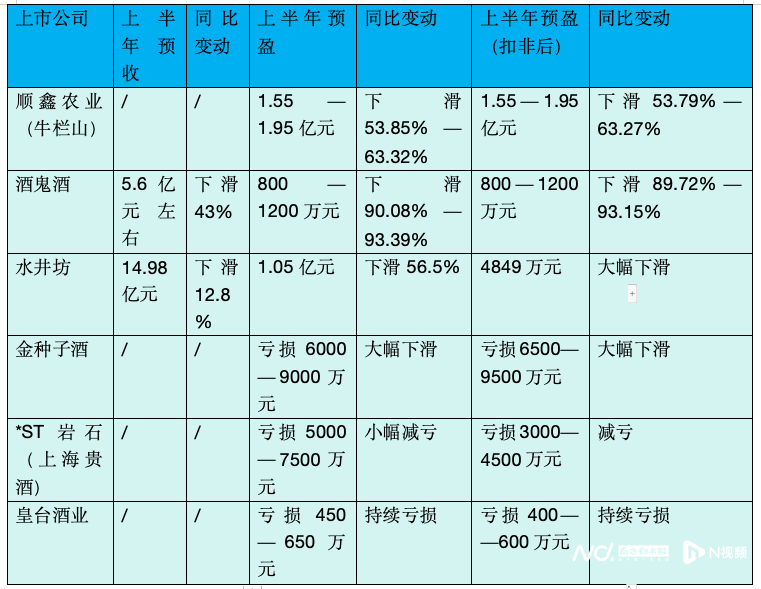
Core Viewpoint - The Chinese liquor industry is experiencing a significant downturn, with over 15 companies reporting substantial declines in profits or expected losses, indicating a deep adjustment period for the sector [1][5]. Company Performance - Shunxin Agriculture (Niulanshan) expects a net profit of 155 to 195 million yuan for the first half of 2025, a decrease of 53.85% to 63.32% compared to over 400 million yuan in the same period last year [2][3]. - Jiu Gui Jiu anticipates a revenue of approximately 560 million yuan, down about 43%, with a net profit drop of 90.08% to 93.39%, projecting earnings of 8 to 12 million yuan [2][3]. - Shui Jing Fang forecasts a net profit of 105 million yuan, a decrease of about 137 million yuan or 56.52% year-on-year, with expected revenue of 1.498 billion yuan, down 12.84% [2][3]. - Jin Zhong Zi Jiu, *ST Yan Shi, and Huang Tai Jiu Ye are expected to report losses, with Jin Zhong Zi Jiu projecting a loss of 60 to 90 million yuan [4][5]. Industry Trends - The liquor industry is undergoing a deep adjustment, with many companies citing declining sales volumes as a key factor affecting revenue and profit levels [5][6]. - Despite an increase in sales volume, Shui Jing Fang's profits have significantly declined due to rising sales expense ratios and the need for promotional support for new products [5][6]. - Fund managers are actively adjusting their portfolios, reducing positions in companies like Gu Jing Gong Jiu and Jin Si Yuan, reflecting a cautious outlook on the sector [7][12]. Strategic Responses - Companies are focusing on terminal sales and channel penetration, with some investing in store coverage and single-store productivity to adapt to the changing market [1][14]. - Jiu Gui Jiu plans to enhance consumer purchasing intent through events and expand sales channels, while Shui Jing Fang aims to increase store coverage and improve single-store sales [13][14]. - Major liquor brands are introducing lower-alcohol products to attract younger consumers, with several companies developing new low-alcohol offerings [14].


食品饮料周报(25年第30周):第二季度白酒超配比例环比下降,关注板块中报业绩情况-20250728
Guoxin Securities· 2025-07-28 08:54
Investment Rating - The investment rating for the food and beverage sector is "Outperform the Market" [5][6][78]. Core Views - The report indicates a decrease in the allocation ratio for the liquor sector, reflecting weak fundamental expectations. The second quarter performance is expected to show demand pressure, with companies focusing on market health and inventory reduction [2][12][14]. - The beer and beverage sectors are entering a peak season, with stable performance from leading companies in basic condiments. The report recommends companies that are accelerating nationalization and platformization, such as Dongpeng Beverage [3][15][20]. - The report highlights three investment lines in the liquor sector: leading companies with strong risk resistance, companies showing digital transformation feedback, and those with market share growth potential [2][14]. Summary by Sections Liquor Sector - The liquor sector's allocation ratio has decreased, with the white liquor index rising by 1.0%. The allocation ratio for actively managed equity funds fell by 2.07 percentage points to 4.50% [2][14]. - Key recommendations include Guizhou Moutai, Shanxi Fenjiu, and Wuliangye, which have shown strong dividend yields and growth potential [2][14]. Consumer Goods - The beer sector is experiencing a slight decrease in fund allocation, with Yanjing Beer seeing an increase in its fund holding ratio. The report recommends Yanjing Beer due to its ongoing internal reforms [3][15]. - The snack sector has seen a significant increase in fund allocation, particularly for Salted Fish and Wancheng Group. The report recommends products with high growth potential, such as those from Weilong and Salted Fish [3][16]. - In the condiment sector, leading companies like Haitian Flavoring are expected to perform steadily, with a focus on mid-year performance [3][17]. Frozen Foods and Dairy - The frozen food sector is stable, with companies actively developing new products to adapt to market demands. Recommendations include Anjui Foods and Qianwei Central Kitchen [3][18]. - The dairy sector is expected to recover gradually, with policies stimulating demand. The report suggests focusing on leading dairy companies with a safety margin in valuations [3][19]. Beverage Sector - The beverage sector is entering a peak season, with significant growth in no-sugar tea and energy drinks. Dongpeng Beverage is highlighted for its strong performance, with a reported revenue increase of 36% year-on-year [3][20].

白酒巨头狂卷低度战场!年轻人到底买不买账?
Nan Fang Du Shi Bao· 2025-07-28 05:10
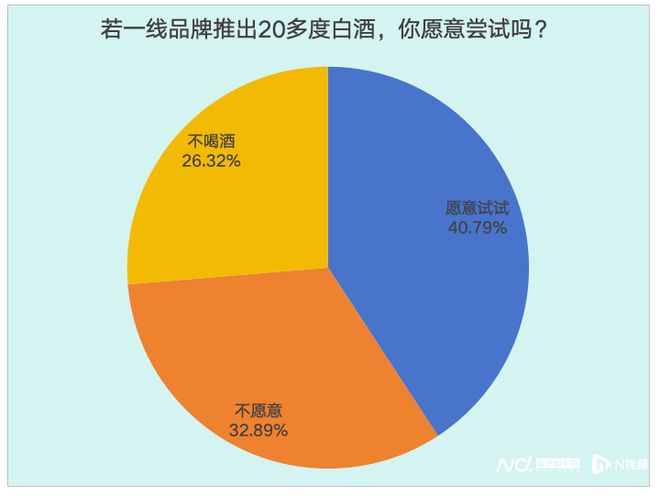
Core Insights - The traditional liquor industry is facing a generational shift, prompting major brands to focus on "lower alcohol content" to attract younger consumers [1][2][5] - Major liquor companies are launching products with lower alcohol levels, such as Wuliangye's 29-degree "Yijian Qingxin" and Luzhou Laojiao's 28-degree Guojiao 1573, in a competitive "lowering alcohol content" race [1][2][10] Group 1: Market Trends - A significant portion of the younger demographic (ages 20-35) prefers beer (52%) and foreign wines (29%) over traditional liquor (19%) [5] - Research indicates that 25.33% of consumers find high-alcohol liquor (over 50 degrees) too strong, with 45.33% believing it does not suit modern preferences [2][5] - The trend towards lower alcohol content is seen as essential for capturing the future of the liquor market, with companies prioritizing product design and innovation to appeal to younger consumers [2][5] Group 2: Consumer Preferences - Younger consumers are shifting towards personalized, lower-alcohol, and aesthetically pleasing products, favoring "light social" drinking scenarios [2][5] - Despite the push for lower alcohol content, 32% of consumers are hesitant to try lower-alcohol products, believing that "20-degree liquor is not real liquor" [6][9] - The perception of lower-alcohol liquor as "bland" poses a challenge, as many consumers associate lower alcohol levels with a loss of flavor and richness [8][9] Group 3: Production Challenges - The process of reducing alcohol content presents technical challenges, including flavor loss and potential cloudiness in the product [8][9][10] - Industry experts emphasize the need for advanced techniques to maintain flavor integrity while lowering alcohol content, indicating that lower alcohol products require higher production standards [9][10] - The complexity of producing lower-alcohol liquor is particularly pronounced in sauce-flavored liquor, which has a more intricate production process compared to strong-flavored varieties [10][12] Group 4: Financial Implications - The introduction of lower-alcohol products raises concerns about lower profit margins, as these products are generally priced lower than their higher-alcohol counterparts [14][16] - Financial reports indicate a decline in profit margins for companies like Luzhou Laojiao, with a noted decrease from 88.3% to 86.51% over recent years [14] - Despite the popularity of lower-alcohol products, there are concerns about their impact on overall revenue, as they are often sold at significantly lower prices compared to traditional high-alcohol products [14][16] Group 5: Industry Outlook - The future of lower-alcohol liquor remains uncertain, with past examples like Jiangxiaobai illustrating the potential pitfalls of market trends that may not sustain long-term consumer interest [17][18] - The industry is at a crossroads, with major brands experimenting with lower-alcohol offerings while facing skepticism about their long-term viability [17][18]
核心资产不断拉升 近600只权益基金翻红
Bei Jing Shang Bao· 2025-07-28 03:04
Market Performance - The A-share market has shown strong performance recently, with the Shanghai Composite Index returning to a relative high of 3600 points [1][2] - As of May 27, the Shanghai Composite Index, Shenzhen Component Index, and ChiNext Index closed at 3608.85, 14897.19, and 3226.11 points, with daily increases of 0.43%, 0.7%, and 0.92% respectively [2] Fund Performance - Equity fund returns have significantly rebounded, with some star fund managers seeing their products' year-to-date returns turn positive and continue to rise [1][2] - Notable fund performances include E Fund's Blue Chip Select Mixed Fund with a year-to-date return of 8.43%, Invesco Great Wall Dingyi Mixed Fund at 8.48%, and China Europe Medical Health Mixed A Fund at 16.68% [2] Investor Sentiment - Many investors have expressed relief at recovering their investments, with some stating they have "broken even" after previous losses [4] - However, a portion of investors remains in a loss position, particularly those who entered the market during high net asset values before the recent downturn [4] Market Recovery Factors - The recent market recovery is attributed to a temporary easing of liquidity and a reduction in commodity price pressures [3] - As of May 26, the number of equity funds with negative year-to-date returns decreased to 1170, representing less than 20% of the total, indicating a significant recovery in fund performance [3] Future Outlook - Industry experts maintain an optimistic outlook for the market, suggesting that high-quality blue-chip stocks will continue to attract investment [5] - There is a consensus that while market sentiment may fluctuate, structural opportunities for growth remain, particularly as systemic risks have decreased [5]
TOP50公司ROE均超21% 超八成获机构6个季度坚定持仓
Zheng Quan Ri Bao Wang· 2025-07-28 03:02
今年,在新冠肺炎疫情的影响下,A股半年报净资产收益率TOP50公司数据仍表现不凡,这为各路资金 配置A股带来了坚定信心。 TOP50公司ROE均超21% 优于往年 《证券日报》记者通过IFIND统计发现,截至9月1日,沪深两市3977家上市公司披露了2020年半年报, 仅千山退和暴风集团两家公司未公布,净资产收益率为正的公司达3188家,占比超八成。而从TOP50来 看,这些公司的净资产收益率均高于21%,对比去年仅有30家公司高于这一数值,单从这个角度对比, A股的投资价值明显提升。 净资产收益率(ROE)作为一个重要的价值发现指标,历来受到投资者关注。价值投资大师巴菲特就曾表 示:"如果非要我用一个指标进行选股,我会选择净资产收益率,那些ROE能常年持续稳定在20%以上 的公司都是好公司,投资者应当考虑买入。" 对此,成恩资本董事长王璇对《证券日报》记者表示,整体上"大健康"生物医药、"必需品"农林牧 渔、"线上"传媒这几个细分行业受疫情影响较小,业绩持续性强于大市,疫情甚至一定程度上催化了它 们的成长空间和渗透速度。可重点关注疫情影响改变消费习惯催生的新兴市场投资机会,比如传媒行业 中"线上"经济相关如 ...