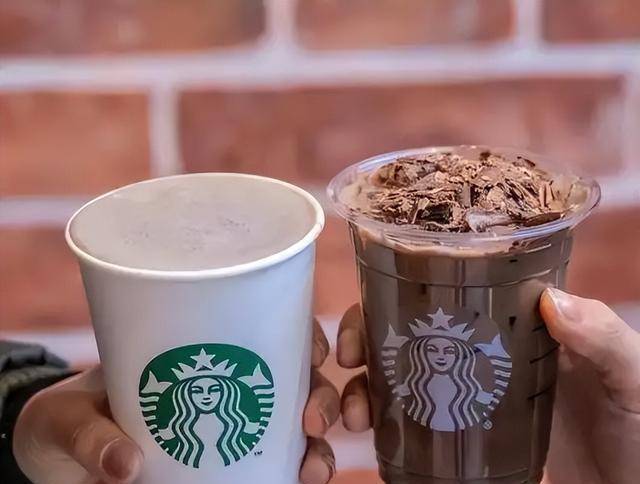
星巴克

Search documents
星巴克再赌一局,也难赢
3 6 Ke· 2025-11-13 12:11
Core Viewpoint - Starbucks is strategically transferring control of its China operations to Boyu Capital to enhance localization and penetrate lower-tier markets, rather than merely selling off assets [1][2]. Group 1: Transaction Details - Starbucks has officially partnered with Boyu Capital, which has acquired a 60% stake in Starbucks China, valuing the joint venture at $4 billion [1]. - The new joint venture will maintain its headquarters in Shanghai and aims to increase the number of Starbucks locations in China from approximately 8,011 to around 20,000 [1][9]. - Starbucks anticipates that the total value of its retail business in China will exceed $13 billion, derived from the sale of equity, retained interests, and ongoing licensing fees [1]. Group 2: Boyu Capital's Role - Boyu Capital, established in 2011, focuses on technology innovation, consumer retail, and healthcare, with a portfolio of over 200 companies [3]. - The firm has previously invested in major companies like Alibaba and NIO, indicating its strong market presence and expertise [3]. - Boyu Capital's involvement is expected to provide Starbucks with local market insights and operational efficiencies, particularly in supply chain and digital infrastructure [5]. Group 3: Market Challenges - Starbucks faces intense competition in the high-end market from niche brands like Blue Bottle Coffee and in the mid-tier market from Luckin Coffee, which offers lower-priced options [6][7]. - The Chinese coffee market is projected to exceed 240 billion yuan by 2025, with a significant shift towards value-for-money as a primary consumer choice [6]. - Starbucks has struggled with its traditional operational model, which has become cumbersome in the fast-paced Chinese market, necessitating a shift towards a more localized approach [7][8]. Group 4: Future Outlook - The partnership with Boyu Capital is seen as a necessary evolution for Starbucks to adapt to the competitive landscape and consumer preferences in China [8][10]. - Starbucks aims to leverage Boyu's resources to enhance its product offerings and customer engagement strategies, ensuring it remains relevant in a rapidly changing market [5][10]. - The collaboration is expected to reshape the coffee market dynamics, with Starbucks potentially reclaiming its position in the high-end segment while mid-tier brands continue to compete aggressively [10][11].

瑞幸咖啡董事长,或90亿抄底星巴克劲敌
2 1 Shi Ji Jing Ji Bao Dao· 2025-11-13 04:25
11月11日有市场消息称,瑞幸咖啡大股东大钲资本,考虑竞购英国咖啡连锁品牌Costa Coffee。 (文章来源:21世纪经济报道) ...

热门中概股下挫,腾讯音乐跌约10%,百度、阿里跌超2%,油价跳水
21世纪经济报道· 2025-11-12 15:43
Market Overview - The U.S. stock market opened higher, with the Dow Jones index rising nearly 1%, while the Nasdaq Composite index experienced a slight decline of about 0.1% [1] Semiconductor Sector - The semiconductor sector showed strong performance, with AMD's stock price increasing by 10%. The company projects an overall revenue growth of approximately 35% annually over the next three to five years, with its AI chip business potentially growing at an annual rate of 80% [2] - Other semiconductor companies such as NXP Semiconductors, Texas Instruments, and Skyworks Solutions also saw significant gains [2] Coffee and Footwear Stocks - Coffee-related stocks experienced notable movements, with Dutch Bros rising nearly 6% and Starbucks increasing by about 2% [2] - Footwear company On Running (ONON.US) surged over 23% following better-than-expected Q3 earnings [2] Chinese Concept Stocks - Most popular Chinese concept stocks declined, with the Nasdaq Golden Dragon China Index dropping approximately 1.5%. Tencent Music fell about 10% after announcing its Q3 results, while other companies like Yipeng Energy, NIO, Baidu, and Alibaba also saw declines ranging from 2% to over 6% [2] Oil and Gold Prices - Oil prices accelerated their decline, with WTI crude oil dropping over 3% and Brent crude oil falling more than 2.8%. This was attributed to higher-than-expected U.S. oil production and increased supply from OPEC, leading to a shift in OPEC's outlook from supply shortage to surplus for Q3 [5] - Spot gold prices touched $4,150, reflecting an increase of about 0.7% for the day, while silver prices rose approximately 2.5% [6] Copper Market - LME copper prices increased by about 1%, with a cumulative rise of over 6% in October. Goldman Sachs recently stated that copper could become the "new oil" in the AI era due to its essential role in data center power transmission [6]


星巴克大罢工影响业绩复苏?迈克尔·杰克逊女儿吸毒导致后遗症?《张朝阳的英语课》看天下
Bei Jing Wan Bao· 2025-11-12 14:06
Group 1: Starbucks Labor Issues - A nationwide strike initiated by the Starbucks union has garnered significant support, with 92% of participating baristas voting in favor of the strike [3] - The union plans to commence a new round of strikes in over 25 cities starting November 13 if no agreement is reached [3] - Starbucks has faced ongoing labor disputes, with the union demanding better wages and staffing, while the company believes employee compensation is already sufficient [3] Group 2: Financial Performance and Competition - Starbucks has experienced a decline in sales for six consecutive quarters, largely due to intense competition from brands like Luckin Coffee [3] - To counteract the sales downturn, new CEO Brian Niccol has implemented measures such as store closures, layoffs, and renovations, resulting in a slight global sales increase of 1% announced on October 29 [3] - The ongoing strike could pose a significant obstacle to the company's recovery efforts [3]


肯德基、麦当劳、星巴克、汉堡王⋯⋯外资餐饮为何在华密集“换老板”
Sou Hu Cai Jing· 2025-11-12 13:14
Core Insights - The strategic partnership between CPE Yuanfeng and RBI aims to revitalize Burger King's operations in China, where it has struggled to grow compared to competitors like KFC and McDonald's [1][2][9] - Burger King's store count in China has stagnated, decreasing from 1,300 in 2019 to approximately 1,250 currently, while KFC and McDonald's have significantly expanded their presence [1][9] - The shift in competitive dynamics in the Chinese market emphasizes the importance of local operational capabilities over foreign brand prestige [2][12] Company Performance - Burger King China has approximately 1,474 stores as of the end of 2024, while its global parent, RBI, has a total of 6,701 stores in the U.S. and fewer than 1,000 in other markets [9] - The partnership with CPE Yuanfeng involves an initial investment of $350 million to support expansion, marketing, and operational improvements [9][10] - The previous exclusive franchise rights held by TFI Group allowed for rapid expansion, increasing store count from about 50 to 1,000 in six years [8] Market Dynamics - The entry of foreign fast-food brands into China has evolved, with local partnerships becoming crucial for success, as seen with KFC and McDonald's [2][10] - The competitive landscape has shifted, with local brands like Tasting rapidly increasing their market share, highlighting the need for foreign brands to adapt [1][6] - The operational challenges faced by Burger King in China stem from its initial high-end positioning and slow adaptation to local market demands [6][12] Investment Trends - Chinese investment firms are increasingly acquiring foreign brands' operations in China due to established brand trust and user bases, which lower risks compared to building local brands from scratch [13][16] - The financial attractiveness of these acquisitions is underscored by the valuation differences between local and global operations, making them appealing to investors [13][16] - The potential for operational synergies and local market expertise is a key driver for these investments, as seen with CPE Yuanfeng's previous investments in other consumer brands [16][17]


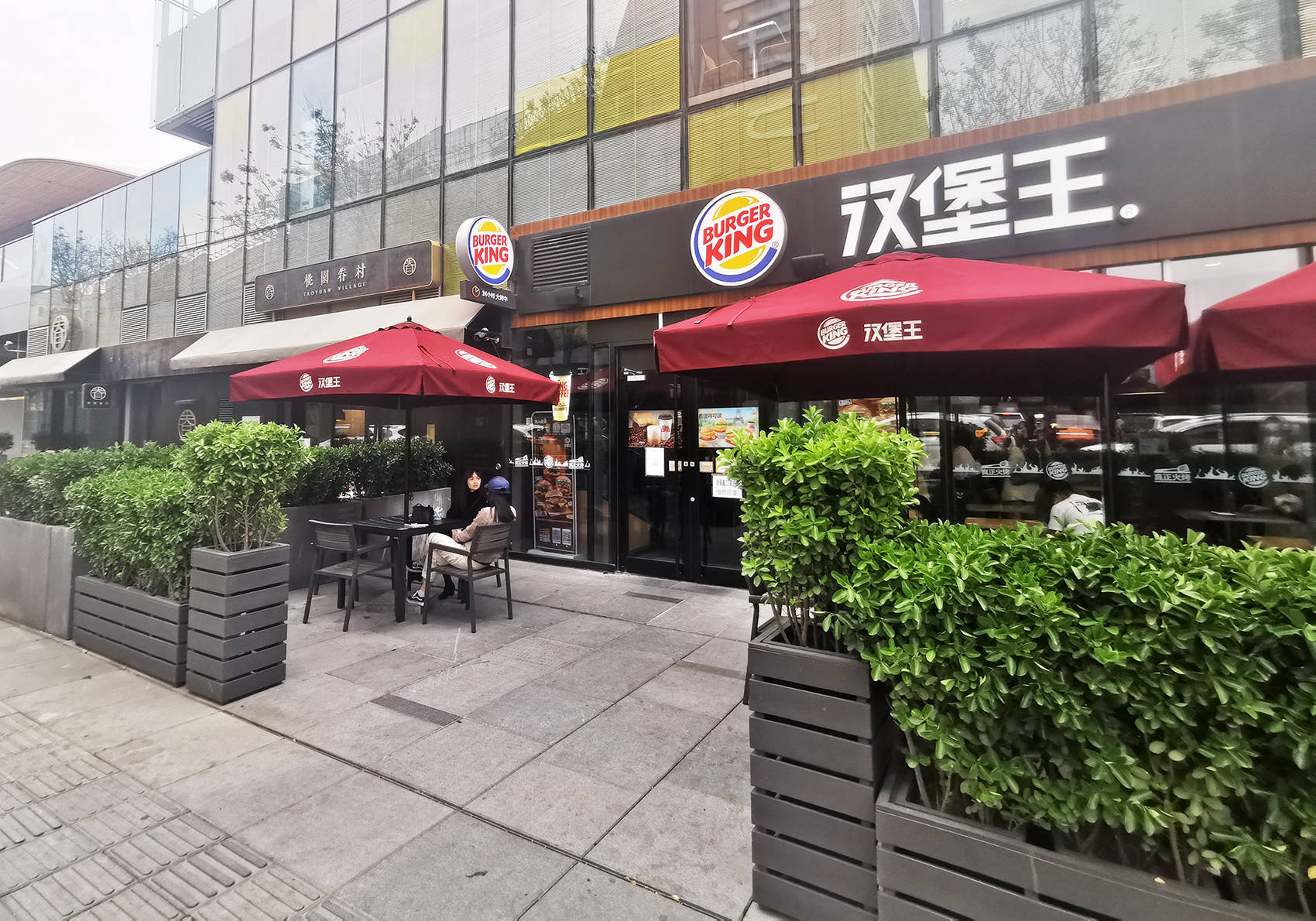
肯德基、麦当劳、星巴克、汉堡王外资餐饮为何在华密集“换老板”
Mei Ri Jing Ji Xin Wen· 2025-11-12 12:31
Core Insights - The article discusses the strategic partnership between CPE Yuanfeng and RBI to form a joint venture, Burger King China, in response to Burger King's stagnation in the Chinese market [1][6] - The competitive landscape in China has shifted from foreign brand prestige to local operational capabilities, prompting foreign brands to collaborate with local investors [2][10] Group 1: Market Performance - Burger King has approximately 1,250 stores in China, a decrease from 1,300 in 2019, indicating a net loss of about 50 stores over six years [1] - In contrast, competitors like KFC and McDonald's have seen significant growth, with KFC surpassing 12,000 stores and McDonald's expected to reach 6,820 stores by 2024 [1][4] - Local brand Tasting has expanded from under 1,000 stores to nearly 9,000 during the same period [1] Group 2: Historical Context - Burger King entered the Chinese market in 2005, missing the peak period for Western fast food education, which was dominated by KFC and McDonald's [4] - The brand's initial high pricing and focus on premium beef burgers created a disconnect with local consumer preferences [4][5] - Management challenges, including remote oversight from Singapore, hindered Burger King's ability to adapt to the rapidly changing Chinese market [4][3] Group 3: Strategic Moves - CPE Yuanfeng will inject $350 million into Burger King China to support expansion, marketing, menu innovation, and operational improvements [6] - The partnership includes a 20-year exclusive development agreement for the Burger King brand in China [6] - CPE Yuanfeng's background in local market insights positions it to enhance Burger King's operational capabilities [10] Group 4: Investment Trends - The trend of local investment in foreign brands is driven by the established brand trust and user base in China, which reduces risks compared to building local brands from scratch [10][9] - Financial attractiveness of the assets, such as lower average store valuations in China compared to global averages, makes these investments appealing [9] - The potential for operational synergies and local market expertise is a key factor for investment firms in acquiring foreign brands [10][9]
肯德基、麦当劳、星巴克、汉堡王 外资餐饮为何在华密集“换老板”
Mei Ri Jing Ji Xin Wen· 2025-11-12 12:20
Core Insights - The article discusses the strategic partnership between CPE Yuanfeng and RBI to form a joint venture, Burger King China, in response to Burger King's stagnation in the Chinese market [1][2] - The competitive landscape in China has shifted from foreign brand prestige to local operational capabilities, prompting foreign brands to collaborate with local investors [2][9] Group 1: Market Performance - Burger King has approximately 1,250 stores in China, a decrease from 1,300 in 2019, indicating a net loss of about 50 stores over six years [1] - In contrast, competitors like KFC and McDonald's have seen significant growth, with KFC surpassing 12,000 stores and McDonald's expected to reach 6,820 stores by 2024 [1][4] Group 2: Historical Context - Burger King entered the Chinese market in 2005, missing the initial growth phase of Western fast food, which was dominated by KFC and McDonald's [4][5] - The brand's high pricing strategy and reliance on a direct management model hindered its ability to adapt to local market demands [4][5] Group 3: Strategic Moves - CPE Yuanfeng will inject $350 million into Burger King China to support expansion, marketing, and operational improvements [7][9] - The partnership aims to leverage CPE Yuanfeng's local market insights and operational expertise to enhance Burger King's performance in China [9][10] Group 4: Investment Trends - There is a growing trend of Chinese investment firms acquiring foreign brands' operations in China, driven by the established brand trust and user base [9][10] - The financial attractiveness of these acquisitions is highlighted by the lower average store valuations in China compared to global averages [9][10]
星巴克、汉堡王……“洋品牌”的中国剧本彻底变了
3 6 Ke· 2025-11-12 11:51
Core Insights - The article discusses the trend of foreign brands in China, particularly in the food and beverage sector, shifting towards local partnerships and ownership structures to adapt to the competitive market landscape [1][3][4]. Group 1: Strategic Partnerships - CPE Yuanfeng has announced a strategic partnership with Burger King to establish a joint venture, injecting $350 million to support expansion and operations in China, with CPE holding approximately 83% of the equity [1]. - Starbucks has formed a joint venture with Boyu Capital, where Boyu will invest around $4 billion for up to 60% equity, while Starbucks retains 40% and continues to own the brand and intellectual property [3][19]. - These moves reflect a broader trend of foreign brands in China seeking local control to navigate the evolving market dynamics [3][18]. Group 2: Market Challenges - Foreign brands like Starbucks and Burger King are facing significant challenges from local competitors, with Starbucks' market share dropping to 14%, while Luckin Coffee holds 35% and Koolearn 18% [7]. - The traditional business models of these foreign brands, such as Starbucks' direct operation and premium pricing, are being undermined by local brands offering lower prices and innovative marketing strategies [5][10]. - Burger King's performance in China has been lackluster, with a significant reduction in store numbers and low average sales per store compared to competitors [8][11]. Group 3: Localization Efforts - The article highlights the difficulties foreign brands have in adapting to the Chinese market, with Burger King's product offerings and marketing strategies failing to resonate with local consumers [10][11]. - Starbucks is also struggling with its "third space" concept as consumer preferences shift towards more affordable coffee options and faster service [11][13]. - Both brands are now looking to leverage local partnerships to enhance their operational efficiency and product relevance in the Chinese market [19][20]. Group 4: Future Growth Plans - CPE Yuanfeng aims to expand Burger King's store count in China from approximately 1,250 to over 4,000 by 2035, indicating a strong growth ambition [20]. - Boyu Capital plans to implement a mixed model of franchising and direct operation for Starbucks, focusing on expanding into lower-tier markets while maintaining brand integrity in major cities [19][20]. - The article suggests that foreign brands must adapt to the unique demands of the Chinese market, which requires agility in decision-making and responsiveness to consumer trends [20].
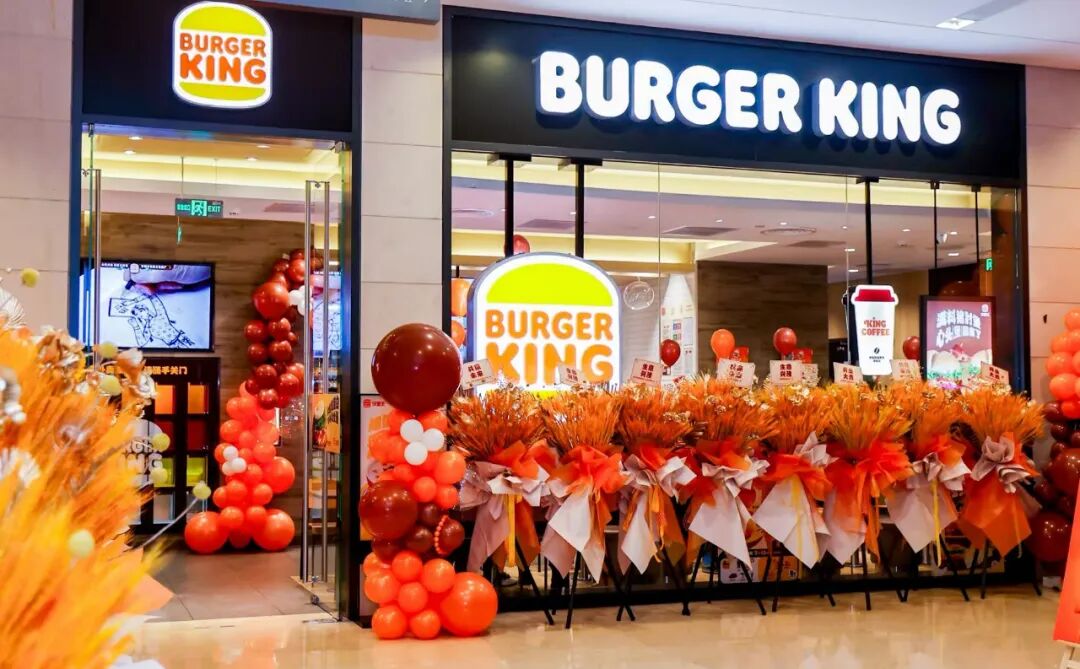
星巴克刚 “嫁人”,汉堡王就 “倒插门”,洋餐饮都在找中国资本续命?
3 6 Ke· 2025-11-12 08:36
Core Viewpoint - The recent sale of a majority stake in Burger King China to local investors reflects a significant shift in the strategy of foreign fast-food brands in China, moving towards partnerships with local capital and expertise to navigate the complex market dynamics [1][19][22]. Group 1: Company Developments - RBI Group, the parent company of Burger King, has formed a joint venture with CPE Yuanfeng, where CPE will hold approximately 83% of the stake, leaving RBI with a symbolic 17% [1][10]. - The restructuring aims to revitalize Burger King China, which has struggled with brand perception and market penetration since its entry in 2005 [2][3]. - After a series of missteps, including a failed franchise model that led to a decline in store numbers, RBI has decided to take direct control of operations with a new management team composed of local executives [9][10]. Group 2: Market Context - The fast-food market in China has become increasingly competitive, with local consumers favoring brands that offer localized products and marketing strategies [19][20]. - The shift from foreign-led operations to partnerships with local capital is indicative of a broader trend where foreign brands are recognizing the need for local expertise to succeed in the Chinese market [19][22]. - Successful examples of this model include Yum China and McDonald's, which have seen significant growth after partnering with local investors [20][22]. Group 3: Investment Insights - CPE Yuanfeng, with over 150 billion RMB in managed assets, is positioned as a strategic partner capable of providing not just capital but also operational expertise and market insights [13][15]. - The investment by CPE includes a commitment of 2.5 billion RMB (approximately 350 million USD) to support the expansion of Burger King in China, with plans to increase the number of stores from around 1,250 to over 4,000 by 2035 [10][18]. - CPE's approach emphasizes deep involvement in operational management, indicating a shift towards a more hands-on investment strategy that could enhance Burger King's performance in the local market [15][16].
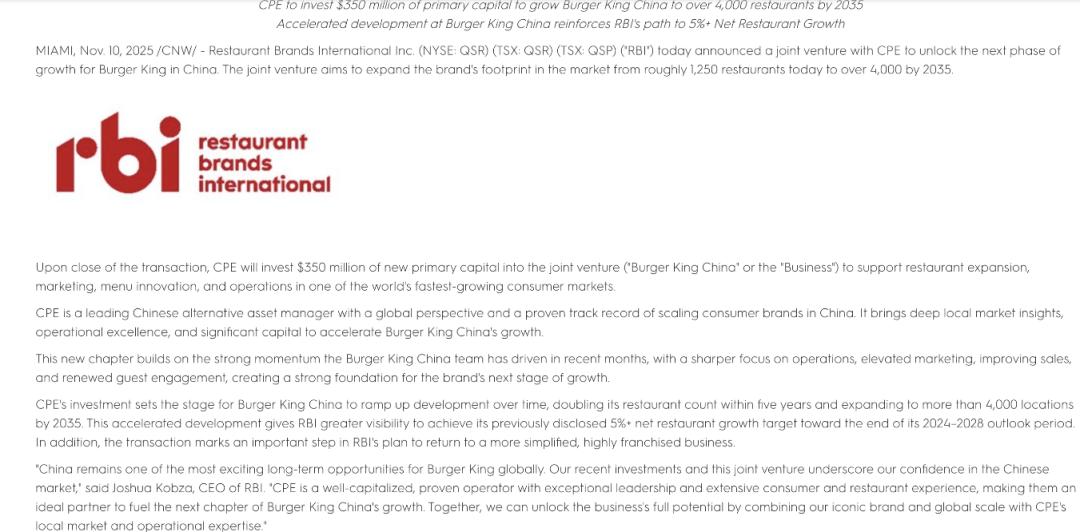
星巴克40亿出售中国店铺,8000家门店大调整,低价产品冲击业绩
Sou Hu Cai Jing· 2025-11-12 05:12
Core Viewpoint - Starbucks has partnered with Boyu Capital, selling a 60% stake in its China business for $2.4 billion, while retaining 40% ownership and control over brand standards, indicating a strategic shift towards aggressive expansion and local operational management [1][5][11]. Group 1: Partnership Details - Boyu Capital acquired a 60% stake in Starbucks' China operations, with Starbucks retaining 40% to maintain brand control [3][5]. - The valuation of Starbucks' China business exceeds $13 billion, factoring in future brand licensing revenues over the next decade [5]. - The joint venture aims to expand the number of stores from approximately 8,000 to 20,000, significantly increasing the footprint in the market [5][19]. Group 2: Market Context - Starbucks has faced increased competition from lower-priced coffee brands like Luckin and Kudi, prompting a need for strategic changes [9][11]. - The brand's previous image as a premium choice has been challenged, leading to a shift in consumer preferences towards value [9][21]. - The North American headquarters is experiencing performance declines, limiting resources and focus on the Chinese market [11]. Group 3: Operational Strategy - Boyu Capital's local market expertise and channels are expected to enhance Starbucks' operational efficiency and speed in the Chinese market [11][15]. - Starbucks has begun implementing promotional strategies, such as price reductions and loyalty programs, to attract price-sensitive consumers while maintaining a premium image [13][19]. - The partnership may lead to rapid expansion into smaller cities and emerging regions, with a focus on increasing store numbers [15][19]. Group 4: Quality Control Concerns - The partnership raises concerns about potential cost-cutting measures that could impact service quality and product consistency [15][17]. - Maintaining a balance between rapid expansion and quality control is crucial for Starbucks' long-term success in China [23][25]. - The joint venture's success will depend on effective coordination and execution to avoid market backlash from any missteps [19][25].