天弘基金

Search documents
量化基金周度跟踪(20250512-20250516):A股表现分化,量化基金整体收涨、超额回升-20250517
CMS· 2025-05-17 14:43
Report Industry Investment Rating No relevant content provided. Core View of the Report From May 12th to May 16th, 2025, the A-share market showed divergence, while quantitative funds as a whole recorded gains and their excess returns rebounded. The main stock indices also showed divergence, with the one-week returns of CSI 300, CSI 500, and CSI 1000 being 1.12%, -0.10%, and -0.23% respectively. All types of quantitative funds had positive average returns this week, with active quantitative funds rising 0.60% and market-neutral funds rising 0.11%. The excess returns of index-enhanced funds rebounded, and the average excess returns of CSI 500 index-enhanced and CSI 1000 index-enhanced funds were relatively high, at 0.40% and 0.26% respectively [2][6][8]. Summary by Relevant Catalog 1. Performance of Major Indices and Quantitative Funds in the Past Week - The A-share market showed divergence, and quantitative funds as a whole recorded gains and their excess returns rebounded. The one-week returns of CSI 300, CSI 500, and CSI 1000 were 1.12%, -0.10%, and -0.23% respectively [6]. - All types of quantitative funds had positive average returns this week, with active quantitative funds rising 0.60% and market-neutral funds rising 0.11%. The excess returns of index-enhanced funds rebounded, and the average excess returns of CSI 500 index-enhanced and CSI 1000 index-enhanced funds were relatively high, at 0.40% and 0.26% respectively [8]. 2. Performance of Different Types of Public Quantitative Funds - **CSI 300 Index-Enhanced Funds**: The one-week return was 1.16%, the excess return was 0.04%, the maximum drawdown was -1.20%, the excess maximum drawdown was -0.24%, and the excess return dispersion was 0.26% [12]. - **CSI 500 Index-Enhanced Funds**: The one-week return was 0.30%, the excess return was 0.40%, the maximum drawdown was -1.17%, the excess maximum drawdown was -0.14%, and the excess return dispersion was 0.23% [12]. - **CSI 1000 Index-Enhanced Funds**: The one-week return was 0.04%, the excess return was 0.26%, the maximum drawdown was -1.47%, the excess maximum drawdown was -0.26%, and the excess return dispersion was 0.24% [13]. - **Other Index-Enhanced Funds**: The one-week return was 0.53%, the excess return was -0.02%, the maximum drawdown was -1.47%, the excess maximum drawdown was -0.32%, and the excess return dispersion was 0.41% [13]. - **Active Quantitative Funds**: The one-week return was 0.60%, the maximum drawdown was -1.10%, and the return dispersion was 0.63% [14]. - **Market-Neutral Funds**: The one-week return was 0.11%, the maximum drawdown was -0.21%, and the return dispersion was 0.22% [14]. 3. Performance Distribution of Different Types of Public Quantitative Funds - The report shows the six-month performance trends and the one-week and one-year performance distribution of different types of public quantitative funds, with index-enhanced funds showing excess return performance [15]. 4. High-Performing Public Quantitative Funds - **CSI 300 Index-Enhanced High-Performing Funds**: Include funds such as FURONG CSI 300 Index Enhancement and HUAXIA CSI 300 Index Enhancement Strategy ETF [29]. - **CSI 500 Index-Enhanced High-Performing Funds**: Include funds such as PINGAN CSI 500 Index Enhancement and CHANGXIN CSI 500 Index Enhancement [30]. - **CSI 1000 Index-Enhanced High-Performing Funds**: Include funds such as GUOLIANAN CSI 1000 Index Enhancement and TIANHONG CSI 1000 Enhancement Strategy ETF [31]. - **Other Index-Enhanced High-Performing Funds**: Include funds such as ZHAOSHANG CSI 2000 Enhancement Strategy ETF and YONGYING SSE STAR MARKET 100 Index Enhancement [32]. - **Active Quantitative High-Performing Funds**: Include funds such as PINGAN HK STOCK CONNECT DIVIDEND PREFERRED and NUODE NEW ENERGY VEHICLE [33]. - **Market-Neutral High-Performing Funds**: Include funds such as DACHENG ABSOLUTE RETURN and DEBANG QUANTITATIVE HEDGING STRATEGY [34].
红利风格投资价值跟踪(2025W20):中证红利成交较4月缩量,本周ETF净流出28.24亿元
Xinda Securities· 2025-05-17 13:50
Macro Perspective - Recent US Treasury yields are influenced by expectations of interest rate cuts by the Federal Reserve, with a 36.8% probability of a cut in July 2025[3] - Domestic M2 growth in April 2025 was 8.0%, up from 7.0% in the previous month, while the M1-M2 differential decreased to -6.5% from -5.4%[10] Valuation Metrics - The absolute PETTM for the CSI Dividend Index is at the 99.60th percentile over the past three years, indicating a high valuation level[17] - The relative PETTM is at the 77.30th percentile, suggesting a decrease from the previous month's 88.38th percentile[21] Price and Volume Analysis - 64.68% of the CSI Dividend Index component stocks are above the six-month moving average, an increase from 52.14% a month ago, indicating improved price momentum[23] - The absolute trading volume is at the 57.41st percentile over the past three years, down from 72.90% a month ago, suggesting reduced trading activity[30] Fund Flows - The CSI Dividend ETF experienced a net outflow of 28.24 billion yuan this week, with a total net outflow of 53.09 billion yuan over the past month[36] - The exposure of equity mutual funds to dividend strategies has decreased from 0.45 in Q4 2024 to 0.37 in Q1 2025, indicating a reduction in allocation to dividend stocks[36] Summary Insights - The macro model suggests that the dividend style may underperform compared to growth style in the near future due to high valuation levels and reduced trading volume[44] - Long-term outlook remains positive for growth style as liquidity conditions improve with potential monetary and fiscal policy measures[44]
来了!首批新模式浮动管理费基金上报,持有满一年或分三档浮动
Mei Ri Jing Ji Xin Wen· 2025-05-16 11:17
Core Viewpoint - The introduction of a new floating management fee structure for public funds aims to align the interests of fund managers and investors, enhancing the long-term value coexistence between them [1][4]. Group 1: New Floating Management Fee Products - Over 20 fund companies have reported new floating management fee products, which link management fees to investors' holding periods and investment results [1][2]. - The new fee structure consists of fixed management fees, contingent management fees, and excess management fees, determined by the holding duration and annualized return of each fund share [2][3]. - The first batch of these products will primarily target broad market indices such as the CSI 300 and CSI 500 [3]. Group 2: Fee Structure Details - The management fee will be charged at 1.20% for holdings of less than one year, while for holdings of one year or more, it will vary based on performance [2][3]. - Three tiers of management fees are established: - 1.50% if annualized excess return exceeds 6% and holding return is positive - 0.60% if annualized excess return is -3% or below - 1.20% for all other cases [3]. Group 3: Industry Implications - The new fee structure is seen as a significant breakthrough in the fee mechanism for actively managed equity funds, promoting a performance-based approach [4][5]. - This reform is expected to enhance fund managers' focus on improving active management capabilities and optimizing investment strategies for long-term excess returns [4][5]. - The floating fee mechanism is anticipated to provide investors with more differentiated product choices while maintaining the dominance of fixed fee products [4][5]. Group 4: Market Considerations - There are concerns regarding the potential for fund companies to issue new products during market downturns, which may face significant sales resistance [5]. - The complexity of the new fee structure necessitates investor education to improve understanding and acceptance of the products [5]. - The ongoing issuance of these new floating management fee funds will serve as a critical observation point for the deepening of public fund fee reform [5].
重磅!“新基金”正式开闸!
证券时报· 2025-05-16 10:56
Core Viewpoint - The first batch of innovative floating fee rate products based on performance benchmarks has been reported, with 26 fund managers participating, indicating strong representation and capability in equity management [1][3][11]. Group 1: Product Overview - 26 fund management companies have quickly responded to the public fund reform policy by reporting the first batch of new model floating management fee products within ten days of the reform's implementation [3]. - The reported products are managed by well-performing fund managers, focusing on creating returns for investors [2][11]. Group 2: Fee Structure - Unlike traditional floating fee rate funds, the new model will have a more detailed fee structure based on each investor's holding time and annualized return during the holding period [7]. - If the holding period is less than 365 days, only the basic management fee can be charged; if it is 365 days or more, the management fee will be linked to the annualized return compared to the performance benchmark [7]. Group 3: Investment Strategy - The first batch of products will primarily invest in a broad market selection, benchmarking against mainstream indices such as CSI 300, CSI A500, and CSI 500 [8]. - The aim is to encourage long-term investment from investors, enhancing their overall investment experience [8][11]. Group 4: Future Developments - More fund managers are expected to follow suit in reporting similar products as they prepare adequately [9][11]. - The "Action Plan" stipulates that leading institutions should issue at least 60% of such funds compared to their actively managed equity funds within a year [10].


胖东来对财富管理机构有哪些启示?
华宝财富魔方· 2025-05-16 10:00
Core Viewpoint - The article highlights the success of the local supermarket brand "胖东来" in a fourth-tier city in China, emphasizing its customer-centric service model, product quality, and supply chain management as key factors for its popularity. This success serves as a valuable lesson for the wealth management industry, which can enhance client trust and service quality by adopting similar principles. Group 1: Product Quality and Variety - "胖东来" places significant emphasis on product categories, quality, and food safety, implementing strict selection and regulatory processes for suppliers and self-operated products to ensure high-quality offerings [2] - National wealth management firms are also focusing on creating comprehensive product offerings to achieve refined management, such as 信银理财's "6+2" product system and 光大理财's multi-strategy product system [2] Group 2: Diversified Layout and Experience Improvement - "胖东来" has established a strong supply chain through self-sourcing and direct sourcing, allowing it to maintain both quality and price advantages in daily consumer goods [6] - Wealth management participants are encouraged to diversify asset sources to withstand cost fluctuations, similar to "胖东来"’s dynamic supply chain alliance model [6][7] Group 3: Commercial Equality and Cost Reduction - "胖东来" practices commercial equality by providing transparency regarding product origins, suppliers, and profit margins, which reduces information asymmetry and rebuilds trust in retail [10] - The wealth management industry is also undergoing transformation with the rise of transparent financial products like index funds, and recent fee reforms in public funds and wealth management companies aim to lower costs for investors [10][11] Group 4: Enhancing Customer Experience - "胖东来" offers various customer service initiatives, such as price adjustments and delivery guarantees, which are based on a deep understanding of market dynamics and customer needs [12][15] - Wealth management firms need to enhance customer experience by managing investment volatility and providing ongoing support, such as regular updates and educational content, to help clients navigate market fluctuations [14][15] Group 5: Lessons for Wealth Management - The success of "胖东来" illustrates the importance of a customer-centric approach in building trust and enhancing service quality in the wealth management sector [17] - Wealth management institutions are encouraged to manage assets with the same diligence as "胖东来" manages its products, fostering a shift from a sales-driven to a service-oriented model [17]

年内吸金近800亿元,债券型ETF迎阶段性爆发
Sou Hu Cai Jing· 2025-05-16 08:41
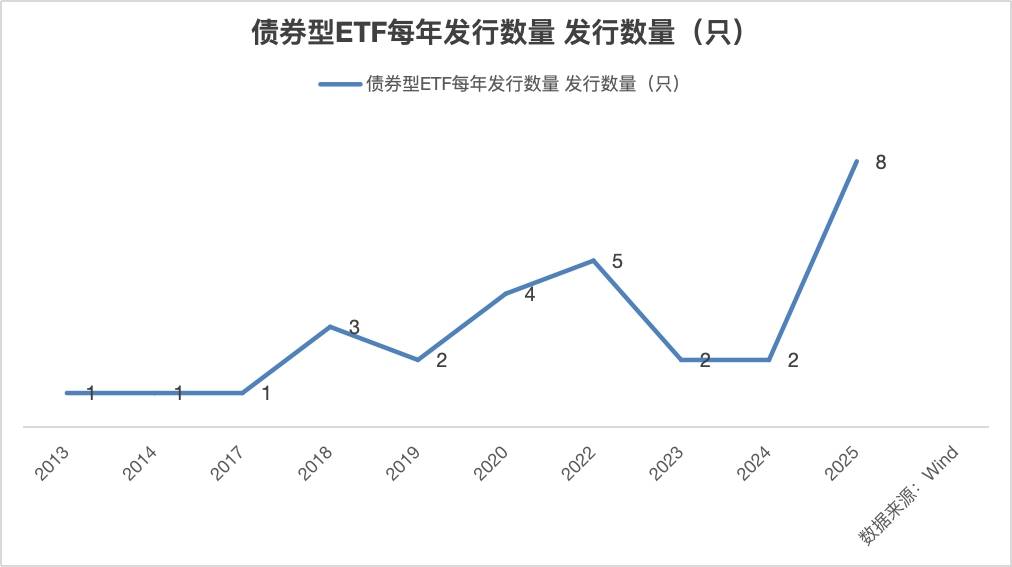
Core Viewpoint - The bond ETF market has experienced significant growth in 2023, with total assets surpassing 250 billion yuan for the first time, reaching 259.9 billion yuan as of May 15, marking an increase of 79.9 billion yuan since the end of last year [1][3]. Group 1: Market Growth and New Products - The bond ETF market has seen a record issuance of 8 new products in January 2023, compared to a maximum of 5 in previous years [1][3]. - The newly launched bond ETFs have collectively raised 21.71 billion yuan, with their total scale exceeding 43.45 billion yuan by May 15, reflecting a growth of over 100% since their inception [3][4]. - Existing bond ETFs have also attracted significant investment, with the Pengyang 30-Year Treasury ETF and the Haifutong Short-Term Bond ETF growing by 11.62 billion yuan and 10.70 billion yuan respectively in 2023 [3][5]. Group 2: Market Drivers and Investor Sentiment - The growth in bond ETFs is attributed to multiple factors, including a declining deposit interest rate and a continued loose monetary policy, which have drawn market attention [6][7]. - Bond ETFs are favored for their clear risk-return characteristics, transparency of underlying assets, and stable positions, catering to diverse investor needs [6]. - The flexibility and liquidity of bond ETFs, along with low investment thresholds and T+0 trading mechanisms, make them an efficient investment tool for risk-averse investors [6]. Group 3: Future Outlook and Strategies - The bond market's future performance is expected to be influenced by tariff negotiations and domestic macroeconomic policies, with potential short-term pressures on market sentiment [6][7]. - Despite the challenges, the overall monetary policy remains accommodative, limiting the upward risk for bond yields, as the economy is still in a weak recovery phase [7]. - A diversified bond investment strategy is anticipated to become mainstream, incorporating various asset types such as industrial bonds, convertible bonds, and overseas bonds to enhance overall expected returns [8].
天弘混合资产团队:打造绝对收益的系统工程
点拾投资· 2025-05-16 06:53
导读:绝对回报正在成为基金产品越来越重要的投资目标。 根据中国证券基金业协会的数据,截至2025年3月底公募基金总规模达到32.22万亿元,连续两个月站稳32万亿大关。其中 具有理财替代属性的货币基金和债券基金分别达到了13.3万亿和6.41万亿,成为了过去一年公募基金规模增量的重要来 源。 对于大众理财来说,公募基金已经成为了主要的投资渠道。与此同时,理财替代下的绝对收益也成为了投资者最重要的投 资目标。无论是买股票型基金、股债混合基金、货币基金还是QDII基金,持有人都希望实现财富的保值增值。 另一方面,满足大众理财目标的难度也在提高。特别是随着债券收益率的下行,纯债类资产能提供的收益变得有限,股票 权益又天然具有高波动的属性,再加上过去传统的相对收益考核方式。作为产品生产方的基金公司,又如何满足用户的需 求呢? 数据来源:有知有行《2024中国大类资产投资年报》 从长期年化收益率的角度看,债券+股票搭配而成的"固收+"组合确实能带来比纯债更高的收益回报。然而,由于股票权益 的高波动特点,会导致某些年份股债混合变成了"固收-"的结果。 对于购买"固收+"的投资者来说,他们是带着绝对收益的投资目标,希望通过 ...

招商资管自购旗下权益基金不少于2500万元 年内行业自购总额破60亿元
Huan Qiu Wang· 2025-05-16 02:27
Group 1 - The core viewpoint is that several asset management companies, including China Merchants Asset Management (招商资管), are actively purchasing their own funds, indicating confidence in the long-term stability of the Chinese capital market and their investment management capabilities [1][3] - As of May 14, China Merchants Asset Management announced it will use its own funds to subscribe to its equity securities investment funds, with a total subscription amount of no less than 25 million yuan, and a holding period of at least six months [3] - Currently, China Merchants Asset Management has invested over 55 million yuan in its non-monetary securities investment funds, which will exceed 80 million yuan after the new subscriptions [3] Group 2 - By the end of 2024, the total asset management scale of China Merchants Asset Management is projected to be 267.392 billion yuan, including six public collective products and two newly established public funds [3] - In April, over ten fund management companies, including Anxin, Bosera, and others, announced their own fund purchases, with a total amount close to 600 million yuan [3] - According to Choice data, fund managers have collectively purchased over 6 billion yuan in their own funds this year, with money market funds accounting for over 30% of the total, followed by bond funds at over 27% [4]


公募积极布局
Zhong Guo Ji Jin Bao· 2025-05-15 13:50
Group 1 - Multiple fund companies are actively launching aerospace-themed ETFs, tracking the National General Aviation Industry Index and the National Aerospace Industry Index [1][2] - As of May 15, 2023, five aerospace-themed ETFs have been established, with significant fundraising targets set by Tianhong Fund and Huaxia Fund [2][3] - The National General Aviation Industry Index includes leading firms in aircraft manufacturing, materials, infrastructure, and operational services, while the National Aerospace Index focuses on military aerospace capabilities [3] Group 2 - The aerospace sector is expected to see a recovery in its fundamentals, with demand gradually stabilizing and a potential compensatory growth by 2025 [4] - Some companies have reported significant improvements in their fundamentals since February 2023, particularly in the aerospace and missile sectors, indicating a high demand phase [4][5] - The government emphasizes the importance of the aerospace industry, aiming to transition from a "major aerospace country" to a "strong aerospace country" by promoting commercial aerospace and low-altitude economy [4][5]
谁在掌控你的基金选择丨蚂蚁基金的流量盛宴后
经济观察报· 2025-05-15 11:42
Core Viewpoint - Ant Fund faces significant challenges despite efforts to enhance services through upgraded screening mechanisms, optimized admission rules, and strengthened risk management due to its complex business model and market environment [1][3][4]. Group 1: Background and Rise - Ant Fund originated from Yu'ebao, launched in June 2013, which quickly gained traction by embedding money market fund products into Alipay, providing a convenient investment option [6][7]. - Within minutes of its launch, Yu'ebao attracted over 180,000 users, and by the end of June 2013, it had over 2.5 million users, surpassing the total client base of the top ten money market funds in 2012 [8]. - By 2014, Yu'ebao's user base exceeded 100 million, with total assets surpassing 574.2 billion yuan, demonstrating the potential of the fund distribution business [8][9]. Group 2: Fund Distribution Dynamics - The fund distribution industry is undergoing profound changes, with Ant Fund needing to balance traffic and service while providing professional, personalized wealth management services [4][22]. - Ant Fund's platform, Wealth Number, allows fund companies to directly reach a vast number of Alipay users, enhancing service precision through data analysis and operational tools [10][11]. - As of the end of 2024, Ant Fund has distributed over 18,000 funds, accounting for 82% of the total public funds available in the market [11]. Group 3: Challenges and Controversies - The "Gold Selection" model introduced by Ant Fund in July 2020 initially attracted significant investor interest but faced criticism as market conditions changed, leading to substantial losses for many recommended funds [13][14]. - For instance, the fund managed by Guo Lan saw its shares increase from 39.3 billion to 143.15 billion within a year but later suffered a 42 billion share decline by early 2025 [14][22]. - Critics argue that the Gold Selection model is product sales-centric rather than client-centric, raising concerns about potential conflicts of interest due to Ant Fund's revenue model based on sales commissions from fund companies [15][22]. Group 4: Recent Developments and Future Outlook - In 2022, Ant Fund updated its admission rules for equity funds, requiring products to be established for over a year and have a minimum scale of 200 million yuan, ensuring a level of market experience [20]. - The fund has also implemented a comprehensive risk management framework using data analysis and AI models to monitor market fluctuations and set differentiated risk thresholds [21]. - The effectiveness of these measures in delivering solid returns for investors remains to be seen, as the fund distribution industry continues to evolve [22].