石药集团

Search documents
北水动向|北水成交净买入0.38亿 北水继续增持小米(01810) 逢高抛售小鹏(09868)超6亿港元
智通财经网· 2025-08-11 10:00
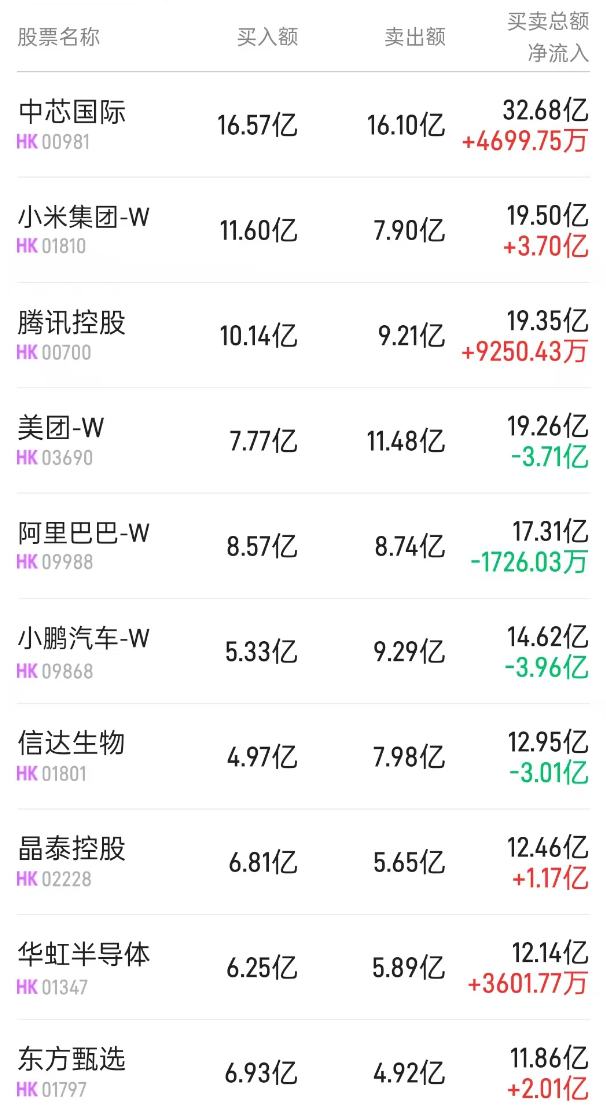
Summary of Key Points Core Viewpoint - The Hong Kong stock market experienced mixed activity with net inflows and outflows from various stocks, indicating a dynamic trading environment influenced by recent company performances and market sentiment. Group 1: Stock Performance - Northbound trading recorded a net inflow of HKD 0.38 billion, with the Shanghai Stock Connect showing a net outflow of HKD 1.8 billion and the Shenzhen Stock Connect showing a net inflow of HKD 2.19 billion [1] - The most bought stocks included Xiaomi Group-W (01810), Kangfang Biotech (09926), and Dongfang Zhenxuan (01797), while the most sold stocks were XPeng Motors-W (09868), Innovent Biologics (01801), and Tencent (00700) [1] Group 2: Individual Stock Insights - Xiaomi Group-W (01810) saw a net inflow of HKD 5.62 billion, with a reported smartphone sales volume of 41 million units in Q2, a year-on-year increase of 0.5% and a quarter-on-quarter increase of 1.5% [4] - Kangfang Biotech (09926) received a net inflow of HKD 99.26 million, with two approved indications for its AK112 drug in China and a strong global research presence [5] - Dongfang Zhenxuan (01797) had a net inflow of HKD 1.87 billion, with a focus on e-commerce capabilities and potential growth following recent market adjustments [5] Group 3: Market Reactions and Trends - XPeng Motors-W (09868) experienced a net outflow of HKD 6.64 billion, despite a new model launch, indicating market volatility and profit-taking behavior [7] - Semiconductor stocks showed divergence, with Huahong Semiconductor (01347) receiving a net inflow of HKD 36.01 million, while SMIC (00981) faced a net outflow of HKD 237 million, reflecting differing market sentiments [6] - The overall trading activity suggests a cautious yet opportunistic approach among investors, with significant movements in response to company-specific news and broader market trends [1][6]



恒生创新药ETF(159316)连续9周获资金加仓,标的指数创新药“纯度”达100%
Mei Ri Jing Ji Xin Wen· 2025-08-11 07:23
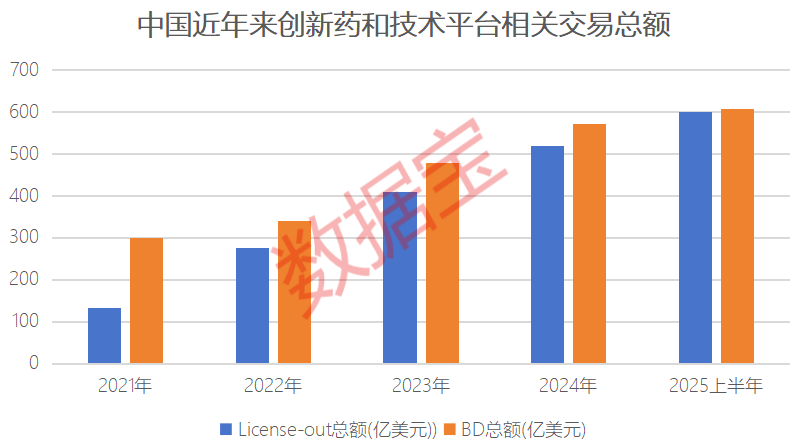
Group 1 - The adjustment of the Hang Seng Hong Kong Stock Connect Innovative Drug Index has officially taken effect, removing CXO to create a "pure" 100% innovative drug index, which more accurately reflects the overall performance of China's innovative pharmaceutical companies [1] - Historical performance of the index is expected to improve significantly after the removal of CXO, with an annualized return exceeding 47% and a higher Sharpe ratio since the index's inception [1] - Several Hong Kong innovative drug companies have reported positive mid-year results, and the outbound licensing of domestic innovative drugs has accelerated, with License out amounts reaching nearly $80 billion from January to July, a year-on-year increase of over 160% [1] Group 2 - Recent high-value licensing agreements have been reached by companies such as CSPC Pharmaceutical Group and Hansoh Pharmaceutical [1] - There has been a notable increase in capital inflow into Hong Kong innovative drug-related ETFs, with the Hang Seng Innovative Drug ETF (159316) experiencing net inflows for nine consecutive weeks, reaching a scale of over 1 billion yuan, doubling from a month ago [1] - The Hang Seng Innovative Drug ETF (159316) is currently the only ETF product tracking the Hang Seng Hong Kong Stock Connect Innovative Drug Index, which is expected to better assist investors in seizing industry development opportunities following the index revision [1]
指数提纯首日跌2.4%≠行情终结!机构借回调抢筹港股创新药,港股创新药精选ETF(520690)午盘飘红
Xin Lang Cai Jing· 2025-08-11 06:45
港股三大指数今日高开,盘初小幅探底后再度回升转涨,恒生指数涨0.19%,国企指数平收,恒生科技 指数上涨0.11%,总体呈现窄幅震荡行情。 3)技术面与拥挤度 年内板块显著跑赢,H股生物科技/创新药年内涨幅可观,存在筹码拥挤、获利盘多的情况,而方法学落 地恰逢技术性回撤窗口。 短期来看,主要是编制规则落地引发的被动波动与情绪反馈,并非行业景气的反转信号。被剔除标的仍 面临被动资金再平衡的供给压力,而留下/新纳入的"纯创新药"标的相对更具被动增配的支撑。 ETF方面,港股创新药精选ETF(520690)盘中持续震荡,截至发稿,成交额破6000万,换手率近 20%,持续溢价,买盘强烈。成分股中超半数上涨,晶泰控股涨超5%;药明合联涨超4%;复星医药、 药明康德、乐普生物-B、和黄医药等个股跟涨,涨幅均超2%。 相关机构发文表示,早盘(约10:30)恒生港股通创新药指数一度下跌约2.4%;而资金逆势"抢筹",恒 生创新药相关ETF盘中获净申购1000万份。 创新药早盘跳水更像是规则落地+拥挤度消化下的回调,而不是主线终结。等被动抛压释放后,"纯度 更高"的创新药篮子反而有望为中期资金提供更清晰的配置锚。 原因如下: ...
疫苗ETF(159643)涨超1.4%,中国创新药全球价值获认可
Mei Ri Jing Ji Xin Wen· 2025-08-11 06:35
Group 1 - The core viewpoint of the articles highlights the significant growth in global pharmaceutical transactions, particularly driven by China's contribution, with a 32% increase in transaction volume and a 58% surge in total transaction value in the first half of 2025 [1] - China's innovative drugs are gaining global recognition, with nearly 50% of the transaction value attributed to the country, indicating a positive trend in the international market for Chinese pharmaceuticals [1] - The domestic healthcare insurance bureau is promoting a pricing mechanism for innovative drug launches, and there is a revival in financing for innovative drugs in both primary and secondary markets, as evidenced by Hong Kong-listed innovative drug companies experiencing first-day gains exceeding 50% [1] Group 2 - The GLP-1 weight loss sector is rapidly advancing, with notable approvals and commercialization efforts from companies like Eli Lilly and Innovent Biologics, indicating a robust market for obesity treatments [1] - The overseas GLP-1 market is showing stable growth, with the transaction value in the weight loss sector expected to reach 1.5 times that of 2024 in the first half of 2025 [1] - The CXO industry is gradually recovering after a period of consolidation, with the total upfront payments for License-out transactions surpassing primary market financing for the first time in the first half of 2025 [1] Group 3 - TCE technology (T-cell bridging technology) is being widely applied in the dual and multi-antibody fields, with Johnson & Johnson reporting excellent clinical data for its tri-antibody product, and domestic company SIM0500 achieving licensing [1] - Breakthroughs in the autoimmune sector are being made, with companies like Rongchang Biologics advancing their products into Phase III trials and Lizhu Pharmaceutical reporting positive clinical efficacy data [1]
中泰国际每日晨讯-20250811
ZHONGTAI INTERNATIONAL SECURITIES· 2025-08-11 02:26
Market Overview - The Hong Kong stock market rebounded last week, with the Hang Seng Index rising 1.4% to close at 24,858 points and the Hang Seng Tech Index increasing 1.2% to 5,460 points. The average daily trading volume decreased by 22.1% week-on-week to over 226.5 billion HKD, while net inflow from the Stock Connect was 21.7 billion HKD. All 12 major sectors in the Hong Kong stock market saw gains, with the materials sector surging 11.0% and the healthcare sector rising only 0.1%, the lowest performer [1]. Earnings Expectations - Current earnings expectations for Hong Kong stocks remain robust, with projected earnings growth rates of 2.7% and 8.5% for 2025 and 2026, respectively. The upstream resources sector benefits from anti-involution policies, coupled with stabilization in the Chinese bond market supporting earnings upgrades. However, short-term valuations have significantly recovered, with the Hang Seng Index's forecast PE returning to mid-range levels of 2018-2019, leading to a high-level consolidation phase in the market [1]. Sector Performance - The automotive sector saw a counter-trend increase last week, with new energy vehicle stocks like Li Auto and NIO rising 1%-3%. Dongfeng Motor surged 22.8% due to domestic anti-involution policies and potential state-owned enterprise restructuring news, outperforming its peers [3]. Industry Dynamics - The environmental, photovoltaic, wind power, natural gas, and electric equipment sectors have shown relative outperformance against the market, with average leads of 1.0%, 2.2%, 0.2%, 17.0%, and 2.2% percentage points, respectively, as of July 31. Conversely, the thermal power, nuclear power, and water supply sectors lagged behind by 0.6%, 6.1%, and 0.5% percentage points, respectively [4]. Power Generation Sector - The thermal power sector is expected to be impacted by rising coal prices, with July coal prices showing a narrowing year-on-year decline. The seasonal increase in coal demand has led to a month-on-month rise in prices, while coal inventories at major ports have decreased [5]. Electric Equipment Sector - The launch of the Yarlung Tsangpo River hydropower project, with a total investment of 1.2 trillion RMB and an expected capacity of 60-70 GW, is anticipated to significantly boost the national hydropower capacity. However, the long construction period may limit short-term profitability for related electric equipment manufacturers, who may face challenges in passing on rising costs to investors [6]. Photovoltaic Sector - As of July 30, the average price of polysilicon rose to 4.94 USD/kg, reflecting a year-on-year increase of 13.3% and a month-on-month increase of 17.1%. In contrast, the average price of photovoltaic modules decreased by 22.4% year-on-year, indicating that downstream demand needs to strengthen to confirm the price increases in polysilicon [7]. Stock Recommendations - Harbin Electric (1133 HK) is positioned to benefit from the Yarlung Tsangpo project, with a projected 95.0% year-on-year increase in net profit for the first half of 2025. Hong Kong and China Gas (1083 HK) expects moderate growth in natural gas sales, with a projected dividend yield of 4.8% for FY25. Cheung Kong Infrastructure (1038 HK) is stable in its operations across public utilities in the UK and Australia/New Zealand, also projecting a 4.8% dividend yield for FY25 [8]. Pharmaceutical Sector - The healthcare sector has shown strong performance, with the Hang Seng Healthcare Index rising 22.8% last month, outperforming the Hang Seng Index by nearly 20 percentage points. Policy support for innovative drug development and successful overseas collaborations for Chinese pharmaceutical companies have contributed to this growth [10]. Policy Developments - The government plans to establish a new directory for innovative drugs and support the use of medical insurance data for drug development, which is expected to enhance the sales of high-priced innovative drugs and accelerate research and development processes [11]. Drug Procurement Policy - The latest drug procurement policy is expected to trend towards moderation, allowing medical institutions to select brands for procurement, which may benefit high-quality products. The new rules aim to ensure that the lowest bids are reasonable and not below cost, thus maintaining the quality of procured drugs [12]. Key Individual Stocks - China Biologic Products (1177 HK) is projected to achieve double-digit growth in product sales revenue for 2025, bolstered by a significant milestone payment from Merck. Haijia Medical (6078 HK) is expected to benefit from the easing of government policies regarding medical insurance, which may improve its operating environment [13].
再创新高!港股创新药ETF(513120)规模突破170亿元,连续4天净流入累计“吸金”超20亿元
Xin Lang Cai Jing· 2025-08-11 01:47
Group 1 - The Hong Kong Innovative Drug ETF has reached a record high of 17.267 billion yuan as of August 8, 2025, with a total of 12.292 billion shares, marking a three-month high [1] - The ETF has seen continuous net inflows over the past four days, with a single-day peak of 741 million yuan, totaling 2.052 billion yuan in net inflows [1] - The ETF has rebounded 80.56% since its year-to-date low on April 9, 2025 [1] Group 2 - The Hong Kong Innovative Drug ETF has achieved a one-year net value increase of 117.53%, ranking 1st out of 124 QDII equity funds [2] - The ETF has a maximum monthly return of 27.04% since inception, with the longest consecutive monthly gain of 6 months and an overall increase of 102.82% [2] - The index closely tracks the CSI Hong Kong Innovative Drug Index, with a 92.5% weight in biopharmaceuticals and chemical pharmaceuticals, making it one of the purest innovative drug industry indices [2] Group 3 - Recent collaborations in the pharmaceutical industry include a partnership between Hengrui Medicine and GSK, yielding an upfront payment of 500 million USD and potential milestone payments of up to 12 billion USD [3] - CSPC Pharmaceutical has signed an overseas licensing agreement with Madrigal Pharmaceuticals, receiving an upfront payment of 120 million USD and potential milestone payments of up to 1.96 billion USD [3] - The Chinese National Healthcare Security Administration has introduced measures to support the high-quality development of innovative drugs, including a new pricing mechanism for newly launched drugs [3] Group 4 - The innovative drug sector is experiencing breakthroughs in payment mechanisms and internationalization, with over 100 drugs submitted for inclusion in the national innovative drug catalog [4] - The total value of innovative drug business development transactions in China exceeded 60 billion USD in the first half of 2025, with Hengrui Medicine's collaboration with GSK setting a record for outbound deals [4] - The CXO industry is entering a phase of order conversion and performance realization, indicating a sustained upward trend in industry prosperity [4]
创新药赛道火爆!机构密集调研+资金大幅加仓,仅13股
Zheng Quan Shi Bao Wang· 2025-08-11 01:43
Core Viewpoint - China's innovative pharmaceuticals have transitioned from being followers to key players in global medical innovation, achieving significant breakthroughs in core treatment areas such as metabolic diseases and oncology, with a surge in new drug approvals and international progress [1][3]. Group 1: Market Trends - The attention of A-share investors towards innovative pharmaceuticals has significantly increased this year, with numerous companies actively disclosing their R&D and clinical progress [2]. - The total value of license-out transactions for innovative drugs in China is projected to exceed $60 billion by mid-2025, surpassing the total for 2024, with 16 transactions exceeding $1 billion each [3]. - The market size of China's innovative drugs reached 679 billion yuan in 2022, expected to exceed 1 trillion yuan by 2026 and reach 1.12 trillion yuan by 2027 [6]. Group 2: International Expansion - Chinese innovative drug companies are accelerating their international business, with 81 companies generating over 100 billion yuan in overseas revenue from 2022 to 2024, accounting for more than 14% of their total revenue [7]. - The proportion of China's innovative drug transactions in the global market has increased from 10.8% in 2015 to approximately 52.5% by August 2023 [6]. Group 3: Policy and Financial Support - The Chinese government has implemented policies to support the high-quality development of innovative drugs, significantly reducing the time from drug approval to inclusion in the medical insurance directory from about 5 years to approximately 1 year [8]. - From 2015 to 2024, the financing in China's innovative drug sector exceeded 1.23 trillion yuan, providing strong momentum for industry growth [9]. Group 4: R&D Investment - The number of companies in the pharmaceutical and biotechnology sector has increased from over 220 in 2015 to nearly 500 currently, with R&D investment in the sector exceeding 140 billion yuan in 2024, a fivefold increase since 2015 [9]. - Among the 81 innovative drug companies, R&D investment rose from approximately 8.8 billion yuan in 2015 to over 57.8 billion yuan in 2024, with R&D intensity increasing from 3.29% to 8.04% [9]. Group 5: Company Developments - Companies such as Betta Pharmaceuticals and Rundu Co. have reported significant advancements in their innovative drug pipelines, with Betta's drug expected to be approved by June 2025 and Rundu's drug completing phase III clinical trials [12]. - The stock performance of companies involved in innovative drugs has surged, with some companies experiencing average increases of over 50% since May 1, 2023 [13]. Group 6: Institutional Interest - 13 companies have received significant institutional interest this year, with some experiencing over 30% increase in financing, indicating strong market confidence in innovative drug investments [14]. - Companies like BeiGene and TaiGen Biotechnology are projected to see substantial profit growth in 2025 and 2026, with BeiGene potentially turning profitable this year [15].



金十数据全球财经早餐 | 2025年8月11日
Jin Shi Shu Ju· 2025-08-10 23:03
Group 1 - The meeting between Trump and Putin on August 15 in Alaska may involve "territorial exchanges" related to the Ukraine peace agreement [12] - Netanyahu stated that the next phase of military action by Israel will focus on two locations still controlled by Hamas [12] - The U.S. Treasury Secretary expects trade issues to be resolved by the end of October [12] Group 2 - The U.S. stock market saw all three major indices rise, with the Dow Jones up 0.47%, S&P 500 up 0.78%, and Nasdaq up 0.98%, marking a historical closing high for Nasdaq [4] - Apple shares rose over 4%, with a weekly gain of 13%, the best performance since July 2020 [4] - Tesla and Google also saw gains of 2.29% and 2.44% respectively [4] Group 3 - European major stock indices showed mixed results, with Germany's DAX30 down 0.12% and the UK FTSE 100 down 0.06% [5] - The Hong Kong Hang Seng Index fell 0.89%, closing at 24,858.82 points, with a trading volume of 2,067.2 million HKD [5] - Semiconductor stocks led the decline in Hong Kong, while gold stocks rose [5] Group 4 - The A-share market experienced narrow fluctuations, with the Shanghai Composite Index down 0.12% and the Shenzhen Component down 0.26% [6] - The railway equipment sector led the gains, while the Huawei Euler concept stocks fell significantly [6] Group 5 - Bitcoin briefly surpassed $119,000, marking its highest level since July 29, while Ethereum reached $4,300, the highest since the end of 2021 [7]

广发基金段涛:深挖具备进化能力的成长股
Shang Hai Zheng Quan Bao· 2025-08-10 13:40
Group 1 - The core concept of the article revolves around the identification and investment in "super strong stocks" that possess evolutionary capabilities and long-term growth potential, as emphasized by Kenneth Fisher's idea of "super strong stocks" [1][2] - The manager, Duan Tao, has significantly increased the allocation to Hong Kong stocks in his fund, particularly focusing on innovative pharmaceutical companies, indicating a keen awareness of market trends [2][3] - The performance of the fund, particularly in the innovative pharmaceutical sector, has been outstanding, with a reported annual return of 76.19% as of August 5, significantly outperforming the benchmark [1][2] Group 2 - Duan Tao's investment strategy is characterized by a bottom-up approach, focusing on small and mid-cap growth stocks, which he has been researching since entering the public fund industry in 2015 [4][5] - The fund's portfolio is diversified across various sectors, with a notable focus on the healthcare industry, including medical devices and services, which are seen as having substantial growth potential [3][4] - The selection methodology employed by Duan Tao includes evaluating companies based on four dimensions: good business, good company, good price, and catalysts, which helps in identifying strong investment opportunities [7][8]
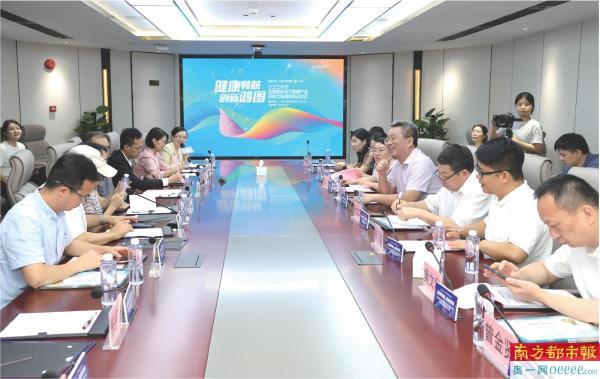
调研团队采用“三维评估模型”,对生物医药企业系统评估
Nan Fang Du Shi Bao· 2025-08-09 23:12
Core Insights - The Guangdong province is aiming to achieve a trillion-level biopharmaceutical and health industry by leveraging policy support, capital assistance, and technological innovation [3][4][6]. Group 1: Industry Development - Guangdong's biopharmaceutical industry is at a critical development stage, with Guangzhou and Shenzhen as core hubs, supported by cities like Zhuhai and Zhongshan [4]. - The province has a strong foundation in traditional Chinese medicine (TCM), with a total industrial output value of 45.71 billion yuan in 2024, of which over 33.43 billion yuan comes from traditional Chinese medicine products, accounting for over 11% of the national total [8]. - The province faces challenges such as the degradation of medicinal material sources and low rates of secondary development for high-quality traditional Chinese medicine products, with less than 35% of products undergoing secondary development [8][9]. Group 2: Policy and Investment - Guangzhou is establishing a biopharmaceutical industry investment fund with a target scale of 20 billion yuan to support enterprise growth and optimize regulatory processes [6]. - Experts emphasize the need for long-term capital support for innovative drug development, advocating for the establishment of a comprehensive mother fund system to align with social capital [12][13]. - The current investment cycle for innovative drugs is long, and there is a call for government and market-based funds to adopt longer-term capital models to better serve the biopharmaceutical industry [12][13]. Group 3: Innovation and Collaboration - The Southern Metropolis Daily has initiated a deep research project focusing on the innovation capabilities of the biopharmaceutical and health industry, covering five major regions and evaluating companies based on innovation, transformation, and collaboration [6][9]. - Experts suggest building collaborative innovation platforms and promoting industry-academia-research alliances to enhance the biopharmaceutical ecosystem [15]. - The integration of AI in healthcare and biopharmaceuticals is seen as a transformative force, although challenges such as data silos and collaborative ecosystems remain [16]. Group 4: Market Trends and Opportunities - Chinese biopharmaceutical companies are increasingly gaining international attention, with 40% of major BD transactions in the first seven months of the year involving Chinese firms, up from 4-5% four years ago [16]. - Traditional pharmaceutical companies are transitioning to innovative biopharmaceutical enterprises, with significant R&D investments, exemplified by a company that allocated 22.4% of its revenue to R&D last year [17].