
长安汽车

Search documents
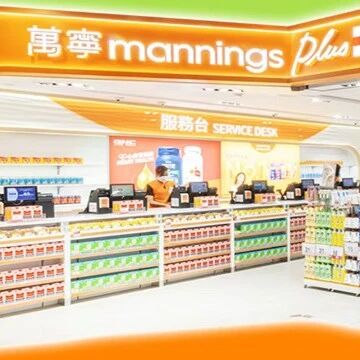
万宁停运中国内地市场门店及线上商城,数百家分店已注销
21世纪经济报道· 2025-12-17 04:30
Core Viewpoint - Mannings, a health and beauty retail chain, will close all offline stores and its online platform in mainland China, with the last operating day for physical stores set for January 15, 2026, and the online store ceasing operations on December 28, 2025 [1][3]. Group 1 - Mannings announced the closure of its offline stores and online platform in mainland China, with specific dates for the cessation of operations [1]. - The company has been operating in mainland China since 2004 and has over 120 stores in the region [3]. - Mannings' parent company, Dairy Farm International Holdings, has a registered capital of approximately HKD 9.97 billion and has faced significant store closures, with many branches in a state of cancellation [3]. Group 2 - The official response from Mannings indicated that the online store would stop operations on December 29, 2025, but after-sales service would continue until January 15, 2026 [3]. - The company has a history of significant investment in the region, with its parent company established in 2016 and holding stakes in several subsidiaries, most of which are now inactive [3].

自动驾驶“关键一跃”落地,谁将率先跑通商业化?
3 6 Ke· 2025-12-17 04:18
Core Insights - The approval of L3 conditional autonomous driving by the Ministry of Industry and Information Technology marks a significant step towards commercialization, bridging the gap between L2 and L4 levels of driving technology [1][2] - The first two approved models, Changan Deep Blue SL03 and BAIC Arcfox Alpha S (L3 version), will conduct trials in designated areas, indicating a shift from testing to real-world application [1][5] Group 1: Industry Context - The automotive industry has been characterized by a "two extremes" scenario, with companies competing in L2 level assistance and others pursuing L4 level fully autonomous driving [1][2] - L3 conditional autonomous driving is seen as a crucial transitional phase, allowing for a gradual shift from testing personnel to real users, thus accumulating practical experience for a replicable autonomous driving operation system [1][2] Group 2: Technical Developments - The approved vehicles utilize different technological approaches: BAIC's Arcfox Alpha S employs a comprehensive safety architecture with 34 high-performance sensors and a 400 TOPS computing platform, while Changan's SL03 focuses on traffic congestion navigation with a speed limit of 50 km/h [3][4] - Both vehicles are currently limited to specific routes and speeds, with the aim of refining technology and regulatory frameworks through pilot testing [4][5] Group 3: Market Implications - The approval is expected to stimulate the development of new business models, including new mobility and insurance services, contributing to a safer and more efficient industry ecosystem [2][4] - The market response was immediate, with stock prices of related companies rising significantly following the announcement [1] Group 4: Future Outlook - Industry experts express cautious optimism regarding the large-scale commercialization of L3 technology by 2026, with L2 becoming a standard feature in vehicles [6][7] - The transition from L2 to L3 involves significant challenges, particularly in urban environments, and requires clear delineation of legal responsibilities [6][7] - The recent approval is seen as a catalyst for the next phase of competition in the autonomous driving sector, focusing on safety validation, data governance, and user trust [7]


金禄电子:公司尚未和北汽蓝谷建立直接合作关系
Mei Ri Jing Ji Xin Wen· 2025-12-17 04:10
Group 1 - The company has established a direct cooperation relationship with a subsidiary of Changan Automobile, and its PCB products are applied in multiple models under Changan [2] - The company has not yet established a direct cooperation relationship with BAIC Blue Valley, but its PCB products are ultimately applied in BAIC's new energy vehicles [2]

16家车企仅四成有望达成全年销量目标,新能源汽车与出口成关键因素
Xin Lang Cai Jing· 2025-12-17 03:49
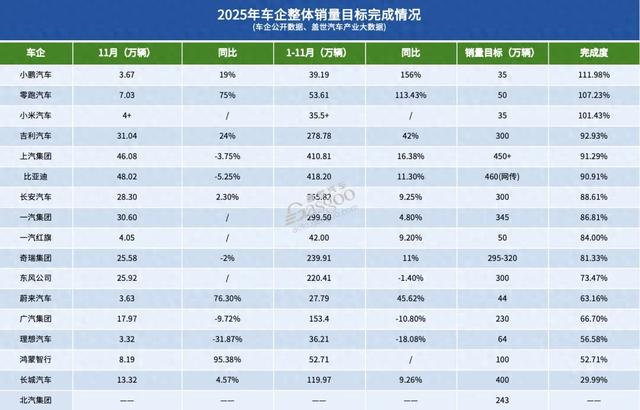
Core Viewpoint - As the end of the year approaches, major automotive companies are reporting their sales for November, allowing for predictions on whether they will meet their sales targets for 2025. The total sales targets set by these companies exceed the overall market forecast, indicating that some may not achieve their goals due to intensified competition and fluctuating pricing dynamics [1][3]. Group 1: Sales Performance of Key Companies - Three companies, Leap Motor, Xiaomi Auto, and Xpeng Motors, have already met their 2025 sales targets ahead of schedule, showcasing strong performance in a competitive market [3][4]. - Leap Motor achieved a cumulative sales volume of 536,000 units from January to November, exceeding its target by 7.23% [4]. - Xiaomi Auto delivered over 355,000 units in the same period, surpassing its target of 350,000 units, despite facing production and delivery challenges [5]. - Xpeng Motors reported cumulative deliveries of 392,000 units, achieving a year-on-year growth rate of 156% and exceeding its target of 350,000 units [5][6]. Group 2: Overall Market Trends - The overall automotive market is experiencing pressure on traditional fuel vehicle sales, while the growth of new energy vehicles continues to outpace the market, driving structural transformation in the industry [3][6]. - Major companies like BYD, SAIC, Geely, Changan, and FAW have completion rates above 80%, indicating a relatively stable performance [7][10]. - However, companies with higher sales targets face significant challenges in the final month, needing to sell tens of thousands of vehicles to meet their goals [8][12]. Group 3: Challenges Faced by Other Companies - Companies such as NIO, Great Wall Motors, and Dongfeng have completion rates below 70%, making it unlikely for them to meet their annual targets [14][17]. - NIO, for instance, has a target of 440,000 units but has only delivered about 280,000 units, requiring a significant increase in December sales [14]. - The challenges faced by these companies include overly ambitious targets, lack of competitive new products, and insufficient progress in their new energy segments [14][17]. Group 4: Factors Contributing to Success - Successful companies share common traits, including realistic target setting, clear growth engines, and robust systemic capabilities that enhance their resilience during the year-end push [13][17]. - For example, Geely's Galaxy series has significantly contributed to its sales, while BYD benefits from a comprehensive product matrix supported by its entire supply chain [11][13].





业内专家:汽车软件正朝底层自主化、架构全栈化、应用智能化等方向发展
Xin Hua Cai Jing· 2025-12-17 03:42
Group 1 - The automotive software is becoming a key driver for the restructuring of the automotive industry and the reshaping of its ecosystem, focusing on bottom-level autonomy, full-stack architecture, and intelligent applications [1] - The Shanghai Municipal Economic and Information Commission emphasizes three areas for collaboration: strengthening foundational technology, integrating AI with new information technologies, and promoting an open-source ecosystem for automotive software [1] - The China Association of Automobile Manufacturers advocates for a dual-driven approach of "learning + innovation," establishing a controllable technological foundation, leading with standardization, and fostering an open and shared development framework [1] Group 2 - Shanghai Jiading has gained a competitive edge as the first national pilot demonstration zone for intelligent connected vehicles and electric vehicles, focusing on automotive software as a key development area [2] - The Shanghai International Automobile City collaborates with leading companies to launch the "Meta-Ecosystem" platform, providing comprehensive support for the embodied intelligence industry driven by AI [2] - A high-quality incubation center for embodied intelligence is being established to support companies with affordable computing power and diverse training scenarios, significantly reducing R&D costs [2] Group 3 - The China Association of Automobile Manufacturers, in collaboration with key industry partners, has released a white paper on "Software-Defined Automotive Service Development," outlining how software can drive profound changes through service-oriented approaches [3] - The white paper presents a comprehensive methodology, toolchain requirements, and middleware solutions for the industry, serving as a practical development guide [3]
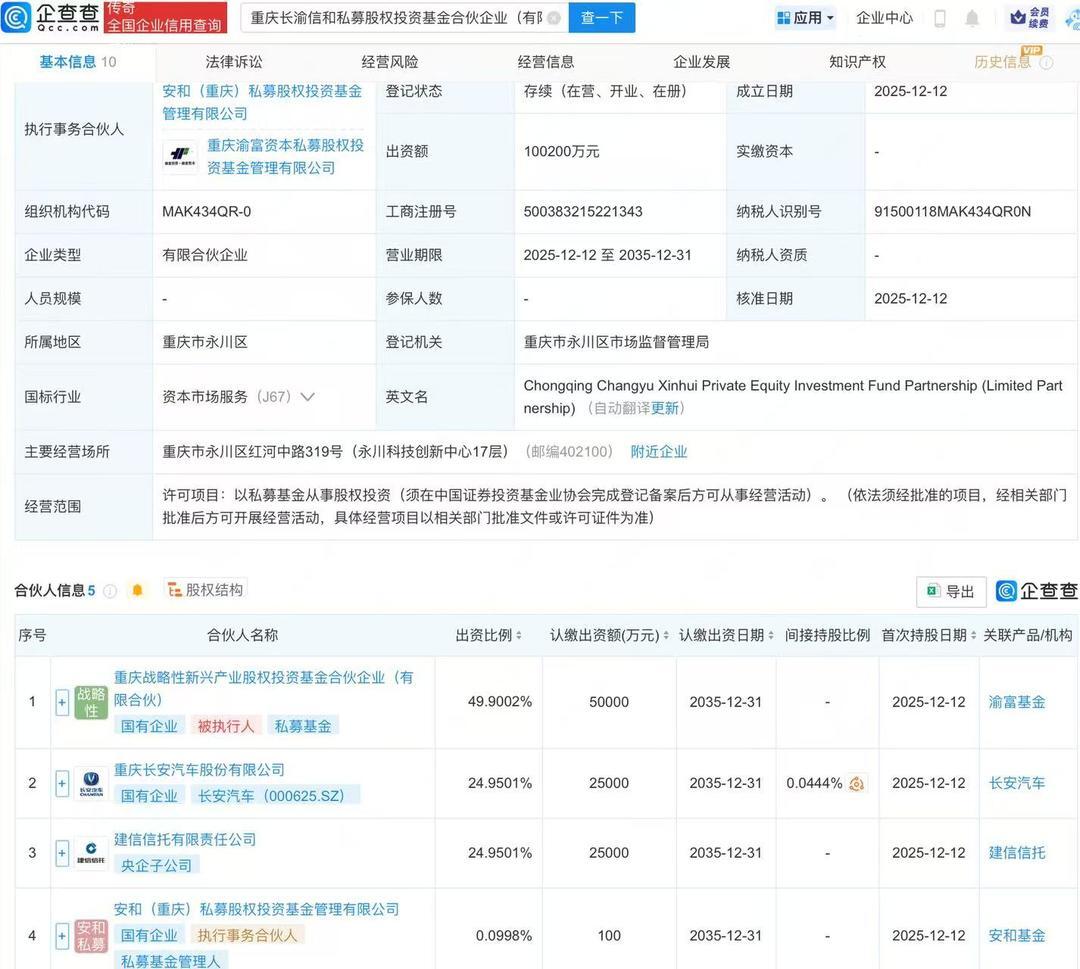
长安汽车等新设私募股权投资基金,出资额10亿元
Da Zhong Ri Bao· 2025-12-17 03:37
| 序号 | | 合伙人名称 | 出资比例 = | | | 认缴出资额(万元) : 认缴出资日期 : 间接持股比例 首次持股日期 关联产品/机构 | | | | --- | --- | --- | --- | --- | --- | --- | --- | --- | | | | 重庆战略性新兴产业股权投资基金合伙企业(有 | | | | | | | | | | 限合伙) | 49.9002% | 50000 | 2035-12-31 | | 2025-12-12 | 渝富基金 | | | | 国有企业 被执行人 私募基金 | | | | | | | | | V | 重庆长安汽车股份有限公司 | | | | | | | | 2 | | 国有企业 长安汽车 (000625.SZ) | 24.9501% | 25000 | 2035-12-31 | 0.0444% % | 2025-12-12 | 长安汽车 | | | C | 建信信托有限责任公司 | | | | | | | | 3 | 障情修托 | 央企子公司 | 24.9501% | 25000 | 2035-12-31 | ା | 2025-12-12 | ...
大和:明年中国乘用车L3级渗透率约1% 销量对应25.7万辆
智通财经网· 2025-12-17 03:25
报告表示,工信部发布《汽车行业稳增长工作方案(2025–2026年)》,提出"推进智能网联汽车车路云一 体化试点,有条件批准L3级自动驾驶准入"。因此,大和预计2026年将有更多L3级车型获许可,2026年 中国乘用车市场L3级功能渗透率约1%,对应销量约25.7万辆。 智通财经APP获悉,大和发布研报称,近日,中国工信部向长安汽车及北汽蓝谷首批L3级自动驾驶车型 产品批出准入许可,标志着乘用车L3级自动驾驶商业化迈出关键一步。该行认为,此举意味着L3级自 动驾驶开始在中国乘用车市场落地。随着L3级自动驾驶在乘用车市场逐步渗透,该行认为地平线机器 人-W(09660)、禾赛-W(02525)以及速腾聚创(02498)将直接受益。 ...
磷酸铁锂涨价潮催化,新能车ETF(515700)涨超2%
Sou Hu Cai Jing· 2025-12-17 03:16
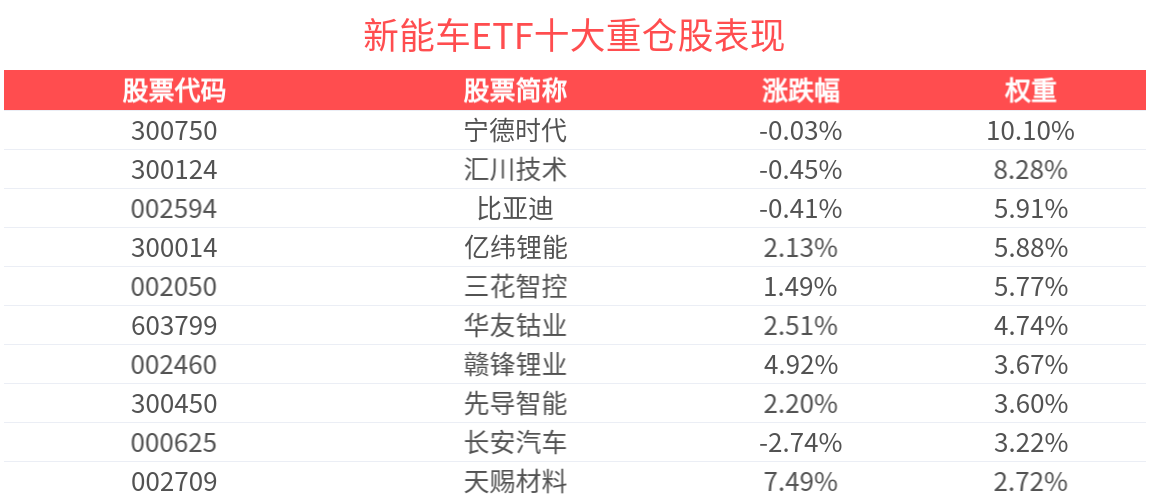
Core Viewpoint - The new energy vehicle (NEV) industry is experiencing significant price fluctuations, particularly in lithium iron phosphate (LFP) materials, with major manufacturers initiating price hikes, which are expected to continue into 2026 [1][2]. Group 1: Market Performance - As of December 17, 2025, the CSI New Energy Vehicle Industry Index (930997) rose by 2.12%, with notable increases in constituent stocks such as Tianhua New Energy (300390) up 15.28%, Shengxin Lithium Energy (002240) up 10.01%, and Defu Technology (301511) up 8.56% [1]. - The New Energy Vehicle ETF (515700) increased by 2.10%, with the latest price reported at 2.34 yuan [1]. Group 2: Price Trends - Since early December, LFP manufacturers have begun collective price increases, with some leading companies negotiating price hikes between 2,000 to 3,000 yuan per ton [1]. - Analysts indicate that for every 10,000 yuan per ton increase in lithium carbonate, the cost of LFP materials rises by approximately 2,300 to 2,500 yuan per ton [1]. Group 3: Demand and Liquidity - The China Passenger Car Association predicts strong growth in NEV retail sales in December due to the impending expiration of the NEV purchase tax exemption policy in 2025, leading to increased consumer urgency [2]. - The New Energy Vehicle ETF recorded a turnover rate of 2.03%, with a transaction volume of 40.37 million yuan [2]. - The latest scale of the New Energy Vehicle ETF reached 1.958 billion yuan [2]. Group 4: Index Composition - As of November 28, 2025, the top ten weighted stocks in the CSI New Energy Vehicle Industry Index accounted for 51.96% of the index, including CATL (300750), Huichuan Technology (300124), and BYD (002594) [2].
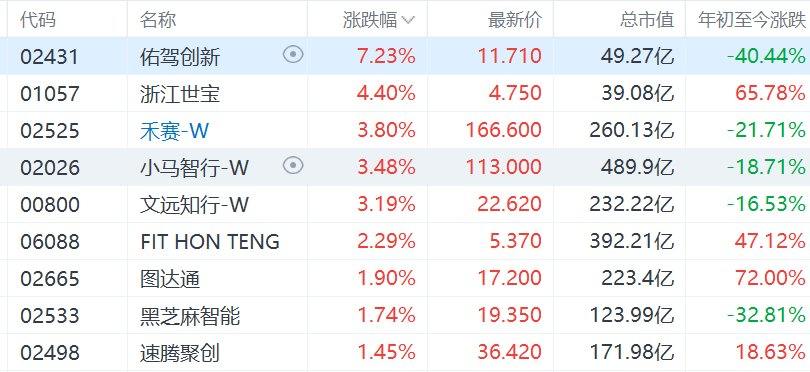
港股异动丨首批L3级车型获批上路,智能驾驶概念走强,佑驾创新涨超7%
Ge Long Hui· 2025-12-17 02:54
港股市场智能驾驶概念集体走强,其中,佑驾创新涨超7%,浙江世宝涨超4%,禾赛-W、小马智 行-W、文远知行-W涨超3%。 消息面上,12月15日,首批两款L3级自动驾驶车型获工信部准入许可,将在指定区域开展上路试 点。这两款车型分别为北汽新能源旗下极狐阿尔法S(L3)和长安汽车旗下深蓝SL03。 业内分析认为,在这之前,市面上没有真正能够量产销售、上路运营的L3车型。之前所谓的"L3牌 照",其实都是测试牌照,允许在规定路段进行L3测试。此次两家车企率先获得准入,是从"允许练 习"变成了"允许正式上路"。这标志着我国自动驾驶技术发展逐步走向量产应用阶段,也是上述两家车 企在自动驾驶领域从技术验证阶段迈向量产应用阶段的重要里程碑。 | 代码 | 名称 | | 涨跌幅 √ | 最新价 | 总市值 | 年初至今涨跌 | | --- | --- | --- | --- | --- | --- | --- | | 02431 | 佑驾创新 | 0 | 7.23% | 11.710 | 49.27亿 | -40.44% | | 01057 | 浙江世宇 | | 4.40% | 4.750 | 39.08亿 | 65.78 ...
计算机行业事件点评:L3级自动驾驶商业化加速,行业有望开启发展新阶段
Guolian Minsheng Securities· 2025-12-17 02:42
Investment Rating - The report maintains a "Recommended" rating for the industry, indicating an expected stock price increase of over 15% relative to the benchmark index within the next 12 months [2][7]. Core Insights - The approval of the first batch of L3 conditional autonomous driving vehicles in China marks a significant step towards commercialization, with two models set to begin trials in designated areas of Beijing and Chongqing [1][5]. - The report highlights that multiple domestic automakers, including Changan, BYD, and GAC, have made substantial progress in the L3 autonomous driving sector, with several models receiving road testing permits [5]. - The report emphasizes the importance of the L3 level autonomous driving technology in enhancing road safety and the need for regulatory improvements in traffic laws and insurance [5]. Summary by Sections Industry Overview - The Ministry of Industry and Information Technology has granted conditional approval for L3 autonomous driving vehicles, allowing for specific operational scenarios in urban and highway settings [1][5]. - The report notes that the L3 vehicles can operate at speeds of up to 80 km/h in designated areas, with specific routes identified for testing in Chongqing and Beijing [5]. Market Development - The report identifies a turning point for the industry, as several companies are actively developing L3 technology, with notable advancements from firms like Huawei and GAC [5]. - The report suggests that the commercialization of L3 autonomous driving will significantly impact the overall development of the autonomous driving industry in China [5]. Investment Recommendations - The report recommends focusing on companies involved in the autonomous driving sector, including companies like Zhongke Chuangda, Siwei Tuxin, and others, as they are expected to benefit from the advancements in L3 technology [5].