
SHEIN

Search documents
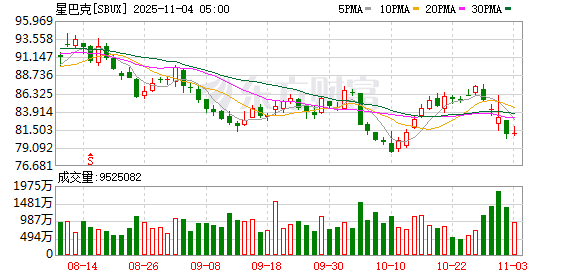
星巴克中国60%股权售出 新主曾拿下SKP部分股权
Zhong Guo Jing Ying Bao· 2025-11-04 04:55
根据协议,博裕投资将持有合资企业至多60%股权,星巴克保留40%股权,并将继续作为星巴克品牌与 知识产权的所有者和授权方,向新成立的合资企业进行授权。基于约40亿美元(不计现金与债务)的企 业价值,博裕投资将获得其相应权益。 星巴克预计其中国零售业务的总价值将超过130亿美元,总价值由三部分构成:向博裕投资出让合资企 业控股权益所得、星巴克在合资企业中保留的权益价值,以及未来十年或更长时间内持续支付给星巴克 的授权经营收益。 据悉,新成立的合资企业将继续以上海为总部,管理并运营目前遍布中国市场的8000家星巴克门店。秉 持共同的发展愿景,双方将致力于未来将星巴克在中国的门店规模逐步拓展至20000家。 博裕投资曾投资过SHEIN,布局涉及消费零售、科技创新、医疗健康及新能源领域内的企业。4月30 日,北京市市场监督管理局公示信息显示,博裕五期美元基金有限责任公司通过其关联方拟收购北京 SKP部分股权,交易完成后,博裕基金将间接持有北京SKP 42%~45%的股权。 星巴克咖啡公司董事长兼首席执行官倪睿安(Brian Niccol)认为,博裕投资在本地市场的经验与专 长,将有力加速星巴克在中国市场、特别是中小城 ...


日本将取消个人进口的税收优惠
日经中文网· 2025-11-03 03:01
Core Viewpoint - Japan is considering the cancellation of tax benefits for personal imports, which currently allow a 40% reduction in taxable value, leading to price discrepancies between imported goods sold by Chinese e-commerce platforms and local Japanese retailers [2][5]. Group 1: Tax Policy Changes - The Japanese Ministry of Finance is coordinating to eliminate the tax benefits for personal imports, which have been exploited by Chinese e-commerce sites to sell goods at lower prices [2][5]. - The current tax benefit allows imported goods valued at 30,000 yen (approximately 1,386 RMB) to be taxed at a reduced value of 18,000 yen, resulting in a consumption tax burden of 1,800 yen [4]. - This tax benefit applies to individuals purchasing from overseas through e-commerce platforms, contributing to competitive disadvantages for local retailers [5]. Group 2: Market Impact and Regulatory Concerns - The number of import declarations is expected to reach approximately 200 million in the 2024 fiscal year, quadrupling over five years, which raises concerns about customs oversight and the risk of counterfeit goods entering Japan [7]. - There have been instances of violations where products intended for resale in Japan are disguised as personal imports to evade taxes, such as large quantities of smartphones [7]. - The Ministry of Finance plans to include the cancellation of personal import tax benefits in the 2026 tax reform outline, reflecting a shift in policy since the introduction of these benefits in 1980 [7]. Group 3: International Trends and Comparisons - Other major countries are also revising their tax exemption policies for small imports, with the EU and the UK abolishing VAT exemptions in 2021, and the US planning to eliminate tariff exemptions by August 2025 [8]. - Japan's response to the influx of low-priced goods from countries like China is part of a broader trend among nations to reform tax systems related to e-commerce and imports [8].

营收370亿美元,利润与税收却在海外:SHEIN的全球化算盘为何打不响?
Sou Hu Cai Jing· 2025-11-02 10:15
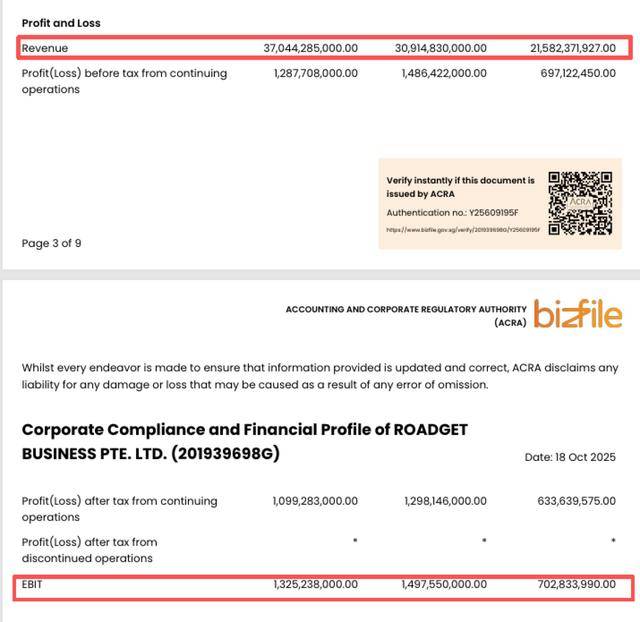
Core Viewpoint - SHEIN's latest financial report reveals that the majority of its profits and tax revenues are concentrated in Singapore rather than its supply chain hub in China, highlighting a strategic shift in its global operations [1][10]. Financial Performance - SHEIN's Singapore headquarters is projected to achieve revenue of $37.04 billion in 2024, representing a nearly 20% year-on-year growth, with pre-tax profits of $1.29 billion [1][3]. - The revenue figures for SHEIN's Singapore operations from 2022 to 2024 are $21.58 billion, $30.91 billion, and $37.04 billion respectively, with EBIT of $703 million, $1.49 billion, and $1.33 billion for the same years [2][3]. Tax Contributions - In 2024, SHEIN is expected to pay approximately $1.89 billion in taxes to Singapore, with cumulative tax payments exceeding 3.3 billion RMB over the past four years [1][3]. Global Headquarters Role - SHEIN's Singapore headquarters has evolved into a global hub encompassing procurement, trade, financial investment, brand management, and tax compliance, allowing the company to retain profit margins within Singapore [4][6]. Supply Chain Dynamics - The Singapore headquarters bears 82% of the group's sales costs and holds core procurement and pricing authority, indicating that Chinese factories primarily serve as production sites with limited profit margins [6][10]. Challenges in Globalization - SHEIN's efforts to downplay its Chinese background and present itself as a global company have faced challenges, particularly in its attempts to navigate regulatory scrutiny and pursue overseas listings [7][10]. - The company has encountered multiple setbacks in its listing journey, including stalled applications in the U.S. and U.K. due to regulatory concerns, with its valuation dropping to approximately $50 billion [9][10].
跨境电商税务合规:平台数据穿透下的行业大洗牌,中小卖家如何破局求生?
Sou Hu Cai Jing· 2025-11-01 10:12
Core Insights - The announcement from Amazon regarding tax compliance reporting has triggered significant concerns within the cross-border e-commerce sector, marking a shift from rapid growth to a focus on high-quality development [1] Group 1: Regulatory Changes - Amazon will report seller identity, transaction volume, income, and commission data to tax authorities quarterly, starting with Q3 2025, disrupting the long-standing information asymmetry that sellers relied on [3] - The regulatory framework is based on the State Council's June 2025 announcement of tax reporting obligations for overseas platforms serving Chinese sellers, mandating data sharing [3] - Over 6,654 platforms have completed basic information reporting, with major players like Walmart and SHEIN already compliant [3] Group 2: Seller Survival Challenges - Leading companies are leveraging compliance advantages to strengthen their market positions, with some transforming compliance costs into brand premiums [5] - Mid-sized enterprises face a dilemma, as compliance costs can consume 10%-15% of their profits, leading to a "death spiral" [5] - Small sellers, making up 70% of the industry, often operate with net profits below 2% and lack the funds for compliance, relying on price wars and unreported income [8] Group 3: Strategic Adaptations - Businesses are restructuring their models by focusing on high-value products to improve profit margins above 15% [11] - Companies are adopting automated tax compliance tools to minimize human error in tax reporting [12] - Eligible firms can apply for profit assessment based on GMV, significantly reducing tax burdens [13] Group 4: Future Industry Outlook - The regulatory environment is shifting towards tiered taxation based on revenue, potentially favoring larger companies [17] - An estimated 20% of small sellers may exit the market due to compliance costs, allowing leading firms to increase their market share to 60% [17] - The demand for compliance services is expected to surge, with the market for tax consulting and ERP systems potentially exceeding 10 billion [17] Group 5: Investment Opportunities - Cross-border e-commerce service providers are positioned to benefit from the compliance trend, with key players like Qingtian Quanshui leading the market [19] - Companies involved in logistics and payment solutions are also likely to gain from the regulatory changes, with firms like SF Holding and Focus Technology showing strong growth [26][28] - High-value product companies, such as Anker Innovations, are expected to thrive due to favorable tax policies and strong market positions [25]

海外 Z 世代最爱哪些中国品牌?Snapchat 联手凯度发布出海 50 强榜单
Jing Ji Guan Cha Bao· 2025-10-31 14:05
Core Insights - Snapchat and KANTAR released the first "Top 50 Favorite Chinese Global Brands Among Gen Z" list, highlighting Tencent Games, Xiaomi, and SHEIN as the top three brands [1][2] - The report emphasizes the shift in Chinese brands' goals from sales growth to building cross-cultural, sustainable, and reputable global brands [2][3] Industry Overview - Gen Z accounts for approximately 25% of the global population, with a projected consumption scale of $9.8 trillion by 2025, expected to grow to $12.6 trillion by 2030 [2][3] - The report identifies key industries for Chinese brands, including 3C, gaming, e-commerce, and electric vehicles (EV), focusing on their appeal to Gen Z consumers [3][4] Brand Evaluation - The "Top 50" list was created using KANTAR's MDS model, evaluating brands based on "meaningfulness," "differentiation," and "engagement," with over 4,000 Gen Z consumers surveyed across Europe, the Middle East, and North America [3][5] - The top ten brands include 50% from the 3C sector, with Tencent Games, Xiaomi, and SHEIN leading the rankings [3][4] Sector-Specific Insights - **3C Sector**: Xiaomi, Huawei, and Hisense are recognized for their high cost-performance ratio and innovative technology, appealing to global young consumers [3][4] - **Gaming Sector**: Tencent Games, miHoYo, and DianDian Interactive leverage strong IP capabilities and local cultural integration to connect with Gen Z [3][4] - **E-commerce Sector**: SHEIN, AliExpress, and SHEGLAM utilize video-driven personalized content and AR technology to enhance user engagement [3][4] - **EV Sector**: BYD, Chery, and Geely focus on digital connectivity and social responsibility to resonate with Gen Z values [3][4] Engagement Strategies - Snapchat serves as a key platform for connecting Chinese brands with global Gen Z, emphasizing the importance of meaningful interactions in areas of interest [5][6] - The platform boasts 9.32 billion monthly active users, with 94% of users being Gen Z and Millennials, facilitating effective brand communication [6][7] Advertising Solutions - Snapchat offers comprehensive advertising solutions to help brands engage with users throughout the customer journey, from conversion to retention [7] - The platform has successfully collaborated with various brands in the 3C, gaming, e-commerce, and automotive sectors to establish valuable connections with Gen Z [7]


云厂情报大览:某头部云厂遭遇大模型产品困境;宇宙云 KPI 「严」出圈;A股运维高管自掏百万腰包打单
雷峰网· 2025-10-31 10:39
Group 1 - The corporate service industry is facing significant challenges, with many companies struggling to survive in a tough economic environment [2] - A leading operations company, BoRui Data, resorted to "executives using personal funds to subsidize clients" to secure a major client with a workforce of over 10,000 [3][4] - BoRui Data won a project originally budgeted at 5 million, but they reduced their bid to approximately 2.4 million to win the contract [4] Group 2 - Anthropic's announcement to prohibit Chinese capital-controlled enterprises from using its AI services poses a risk to AWS's business in China, which generates nearly 600 million annually [6][7] - Despite the restrictions, AWS's business in China experienced explosive growth of about 1600% in the past year, with current monthly revenues stabilizing around 40 to 50 million [6] - The new ban is seen as more damaging than previous restrictions due to its stringent review standards, potentially leading to a "supply cut" risk for AWS in China [7] Group 3 - YuZhou Cloud has implemented strict KPIs, with detailed percentage requirements for various business segments, making AI performance a critical factor [8][9] - The sales team at YuZhou Cloud faces challenges as their AI business performance is now strictly evaluated, with a "one-vote veto" rule in place for AI token usage [9] Group 4 - Microsoft Cloud's ecosystem in China is undergoing positive changes, with a restructuring of its agent system to improve efficiency and collaboration [10][11] - The integration of local and Asia-Pacific teams aims to reduce internal competition and enhance cooperation among partners [10] Group 5 - A major cloud provider in Southern China is experiencing difficulties in its observability and logging services due to departmental competition and lack of integration [12][13] - The separation of observability and logging services leads to a fragmented customer experience, complicating the delivery of a comprehensive monitoring platform [12] Group 6 - SHEIN has signed a significant renewal contract worth 1.5 billion with AWS, while its contracts with Google Cloud and Microsoft Cloud are at different stages [15][16][17] - The renewal with AWS is a five-year deal totaling 1.5 billion, while the contract with Google Cloud is not set to expire until the end of next year [17] Group 7 - A leading internet cloud provider is facing challenges with its large model products, which are not yet mature and have slow development cycles, leading to low sales enthusiasm [18] - The management has not enforced the inclusion of large model product revenues in sales KPIs, recognizing the products' current limitations [18] Group 8 - The former head of AWS China West, Cai Tao, has joined Microsoft Cloud, taking over the Digital Native division, which serves key internet and gaming clients [19][20] - Cai Tao faces immediate challenges, including the reassignment of significant clients, necessitating a focus on acquiring new customers and retaining existing ones [20]




广交会上的“新外贸”:瞄准新兴市场做增量,让AI成选品主角
2 1 Shi Ji Jing Ji Bao Dao· 2025-10-31 09:24
Core Insights - The China Import and Export Fair (Canton Fair) has seen a significant increase in international participation, with nearly 240,000 foreign buyers from 223 countries and regions attending, marking a 6.8% growth compared to the previous session [1] - Cross-border e-commerce is a vital component of the digital economy, contributing 9.2% to China's foreign trade growth in the first three quarters of the year, with an import and export value of approximately 2.06 trillion yuan [1] - The 2025 China Digital Trade Development Report predicts that cross-border e-commerce exports will exceed 2.15 trillion yuan in 2024, with significant growth in Southeast Asia and Latin America [2] Cross-Border E-Commerce Trends - Multi-market strategies have become a consensus among cross-border e-commerce sellers, with varying approaches based on company capabilities [2][6] - Emerging markets such as Southeast Asia and Latin America are increasingly targeted by sellers to diversify risks and seek new growth opportunities [6][7] - The rise of AI and big data technologies is transforming cross-border e-commerce, enhancing supply chain management and customer service efficiency [8][10] AI Integration in Cross-Border E-Commerce - AI is shifting cross-border e-commerce from an "experience-driven" model to a "data-driven" one, improving product recommendations and personalized marketing strategies [8][10] - The application of AI in cross-border e-commerce includes fraud detection, material verification, and enhancing operational efficiency [10][11] - Future development in cross-border e-commerce will heavily rely on AI, which will enhance product value, user experience, and international brand recognition [11]

易点天下(301171):程序化广告驱动收入持续高增 战略投入期利润短期承压
Xin Lang Cai Jing· 2025-10-31 06:48
Group 1 - The company achieved a revenue of 2.717 billion yuan in the first three quarters of 2025, representing a year-on-year growth of 54.94%, with a net profit attributable to shareholders of 204 million yuan, up 4.41% year-on-year [1] - In Q3 2025, the company recorded a revenue of 980 million yuan, a year-on-year increase of 46.80%, while the net profit attributable to shareholders decreased by 4.80% to 60 million yuan [1] - The strong revenue growth is driven by the company's focus on programmatic advertising and the robust demand for overseas marketing in sectors such as short dramas, gaming, and e-commerce [1] Group 2 - The company's programmatic advertising business is in a strategic investment phase, leading to short-term profit pressure due to increased costs in traffic acquisition (operating costs up 65.64% year-on-year) and R&D expenses (up 64.52% year-on-year) [1] - Excluding foreign exchange gains and share-based payment impacts, the company's net profit attributable to shareholders for the first three quarters was 252 million yuan, reflecting a year-on-year growth of 15.98%, indicating a stable operational foundation [1] Group 3 - The company is enhancing its "AI + marketing" product matrix, which has improved programmatic advertising reasoning efficiency by 7 times, reduced task execution time by 30%, and lowered computing resource costs by 25% [2] - The launch of the AIDrive 2.0 intelligent marketing solution integrates various core products, creating a closed-loop marketing process from "intelligent insights → creative generation → automatic delivery → data attribution" [2] - The AdsGo.ai platform aims to democratize marketing capabilities for small and medium-sized enterprises, achieving a 5-fold improvement in delivery effectiveness during the internal testing phase [2] Group 4 - The company is expanding its media resource ecosystem and benefiting from the trend of Chinese enterprises going global, with its self-developed programmatic advertising platform zMaticoo achieving a 37% share in open programmatic advertising sales [3] - The company has deepened global media partnerships, becoming the first-level agent for AppLovin in Greater China and gaining official certification from Snapchat [3] - The company continues to serve well-known clients such as Alibaba, Tencent, Temu, and SHEIN, while also providing marketing services for emerging sectors like short dramas and AI applications [3] Group 5 - The company maintains a "buy" investment rating, projecting net profits attributable to shareholders of 260 million yuan, 310 million yuan, and 400 million yuan for 2025-2027 [3]
开盘飘红?SHEIN商家透露近期半托管中东店月销额涨4倍
Nan Fang Du Shi Bao· 2025-10-31 06:46
"十条评论里有三、四条提到'配送快',2-3天就能送达,甚至隔日收货——这种本地履约体验,是我们 在中东市场实现月销翻倍的关键。"首批入驻SHEIN中东半托管站点的卖家陈伟,看着公司里从1台增加 到7台的打单机,直言自己踩中了中东电商的"黄金增长期"。 当大量中国企业还在担心电商行业的增长红利已进入拐点,事实上,这片被称为"波斯湾机遇"的市场仍 以11%的年复合增长率狂飙,而SHEIN开辟的半托管商机,正在成为许多人试探及深入中东电商570亿 美元蓝海的一把金钥匙。 令跨境圈着迷的"波斯湾机遇" 中东魅力何在? 曾长期游离于跨境商家视野之外的中东市场,近年为何突然成为"香饽饽"?其核心吸引力源于"高增 长、高潜力、高空白"的三重特质。 从增长基本面看,中东电商市场规模将于2026年突破570亿美元,相当于每分钟产生10.8万美元交易 额,年复合增长率达11%,远超全球电商平均增速。更关键的是,电商经济在中东零售总额中的占比仅 为3.6%,沙特、阿联酋等核心市场也仅为11.4%和7.3%,与全球21.9%的平均水平存在巨大差距——这 种"低渗透+高增长"的组合,意味着市场仍处于"增量扩张"的黄金阶段。 从消费基 ...
跨境电商税务监管进入穿透时代 数据直连堵漏洞 行业规范走向纵深
Zheng Quan Shi Bao· 2025-10-30 22:15
Core Insights - The recent initiative by Amazon and other e-commerce platforms to report tax information of Chinese sellers has sparked significant reactions in the cross-border e-commerce industry in China [1] - Starting from October 2025, Amazon will quarterly report seller information to Chinese tax authorities, including seller identity, transaction volume, income, and fees [1][3] - This move indicates a shift towards compliance and the closing of long-standing tax loopholes in the industry [1][3] Group 1: Regulatory Changes - The new tax reporting regulations were established following the State Council's issuance of the "Internet Platform Enterprises Tax Reporting Regulations" in June [3] - These regulations extend the obligation to report tax information to all foreign internet platforms providing services to Chinese operators, regardless of their registration location [3] - The tax authorities previously relied on self-reporting by sellers, leading to significant information asymmetry and many sellers maintaining a "zero declaration" status [3] Group 2: Industry Impact - The implementation of these regulations marks a new phase in tax information management for the cross-border e-commerce sector, with compliance becoming a priority [4] - The cross-border e-commerce sector saw approximately 2.06 trillion yuan in imports and exports in the first three quarters, reflecting a 6.4% growth [4] - Different tiers of sellers are responding differently, with top-tier companies already compliant, while mid-tier sellers are hesitant to invest in compliance due to concerns over costs [4][5] Group 3: Compliance Strategies - The new tax reporting requirements are expected to reshape the industry ecosystem, moving it towards a focus on quality rather than just scale [6] - Industry insiders suggest that regulatory measures may not be uniform, as the tax authorities are currently in a phase of research and consultation with businesses [6] - Many sellers are attempting to evade or reduce tax burdens through complex structures involving Hong Kong, but these strategies are deemed non-compliant and risky [7] Group 4: Future Directions - The transition for mid and lower-tier sellers will involve product refinement and compliance, focusing on high-value products and adapting to regulatory requirements [8] - Leading companies are encouraged to set examples by focusing on quality and compliance, thereby allowing lower-tier sellers to transition effectively [8]