
中信银行

Search documents
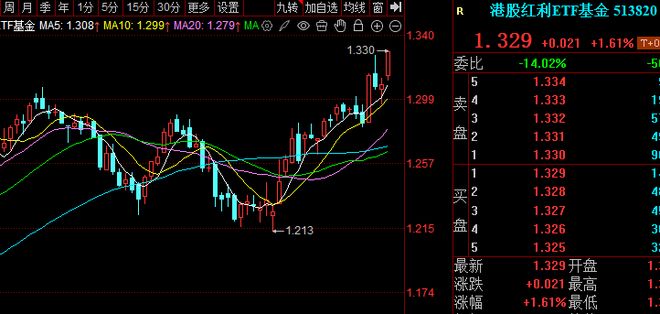
港股红利系ETF新高,为啥涨的比A股的多?
Xin Lang Cai Jing· 2025-11-06 12:33
Core Insights - The Hong Kong stock market has shown significant growth, particularly in dividend themes, with a notable increase of 1.6% in the benchmark index [2][3] - In contrast, the A-share market's dividend benchmark, the CSI Dividend Index, reached a new high but exhibited minimal growth, raising questions about the underlying causes of this disparity [3][4] Group 1: Market Performance - The Hong Kong dividend ETF has performed well, with strong contributions from sectors such as shipping, securities, coal, and energy, leading to an overall increase of 1.6% [4] - The performance of individual stocks within the Hong Kong market shows that major financial stocks have also seen positive growth, contrasting with the A-share market where banks have generally underperformed [5][9] Group 2: Sector Analysis - The A-share market has seen a general trend of smaller gains, particularly in the banking sector, where major banks like China Construction Bank have experienced declines, unlike their Hong Kong counterparts [5][11] - The divergence in performance between the two markets can be attributed to different investor behaviors and market dynamics, with Hong Kong's market being more influenced by foreign capital and having a more concentrated pricing power among leading stocks [8][9] Group 3: Investment Strategies - Quantitative strategies have been highlighted as a significant factor in market movements, with strong performance in growth sectors like semiconductors and AI leading to a reverse impact on bank stocks [7][11] - The A-share market's reliance on traditional safe-haven investments contrasts with the more dynamic and flexible nature of the Hong Kong market, which allows for quicker adjustments to market conditions [9][11]

探底回升,科技、医疗跌幅居前,银行、消费逆势收涨
Ge Long Hui· 2025-11-06 12:24
Group 1 - The Hang Seng Index experienced a sharp decline after opening, followed by a rebound, closing with a slight decrease of 0.07% [1] - The Hang Seng Technology Index opened significantly lower, fluctuating throughout the day, and closed down 1.01%, with notable declines in stocks such as BYD down 1.75% and Bilibili down 4.09% [3] - The Hang Seng Medical Index opened with a deep V shape and maintained a weak consolidation below the midline, closing down 0.6%, with JD Health down 1.32% and WuXi AppTec up 2% [3] Group 2 - Bank stocks opened low but rose throughout the day, closing with a slight increase of 0.03%, with Chongqing Bank and Agricultural Bank both up 1.33% [3] - Other banks such as Zhengzhou Bank, Bank of Communications, and China Merchants Bank saw minor gains, while Qingdao Bank and Bank of China experienced declines [3]

贺晋代为履行信银理财总裁职务
Zheng Quan Shi Bao Wang· 2025-11-06 11:09
Core Viewpoint - He Jin has been appointed as the president of Xinyin Wealth Management, indicating a strategic leadership change within the company [1] Company Summary - He Jin was born in 1979 and joined CITIC Bank's asset management business center in 2016 [1] - He served as a member of the party committee and assistant to the president of the asset management business center starting in February 2019 [1] - He was promoted to vice president of Xinyin Wealth Management in April 2021 [1]

又一大型理财子高管变动!贺晋代为履行信银理财总裁职务
2 1 Shi Ji Jing Ji Bao Dao· 2025-11-06 10:13
Group 1 - The core point of the article is the leadership change at Xinyin Wealth Management, with He Jin taking over as president from Dong Wenzhe, who will move to the Fuzhou branch of CITIC Bank [1][2] - He Jin has extensive experience in asset management, having worked in the wealth management sector for ten years at CITIC Bank, and is recognized as a seasoned professional in the industry [1][3] - Xinyin Wealth Management was established in July 2020, and has had two previous presidents, with the first being Gu Lingyun and the second being Dong Wenzhe [2][3] Group 2 - As of the end of Q3, Xinyin Wealth Management's asset management scale reached 2.21 trillion yuan, reflecting a year-on-year growth of 10.90% [4] - The number of clients holding wealth management products increased to 10.92 million, a growth of 9.44% compared to the end of the previous year [4] - In the first three quarters, the company generated investment returns of 33.71 billion yuan, which is a year-on-year increase of 15.15% [4] Group 3 - CITIC Bank's Q3 report indicates that Xinyin Wealth Management is accelerating the development of a dual-driven growth model combining multi-asset and multi-strategy investment with advisory services [5] - The company aims to enhance its capabilities in equity asset investment, with the scale of equity products reaching 261.02 billion yuan, an increase of 53.94 billion yuan from the end of Q2 [5] - The scale of wealth management products with a duration of one year or more reached 756.56 billion yuan, increasing by 26.65 billion yuan from the end of Q2, accounting for 34.62% of new products [5]
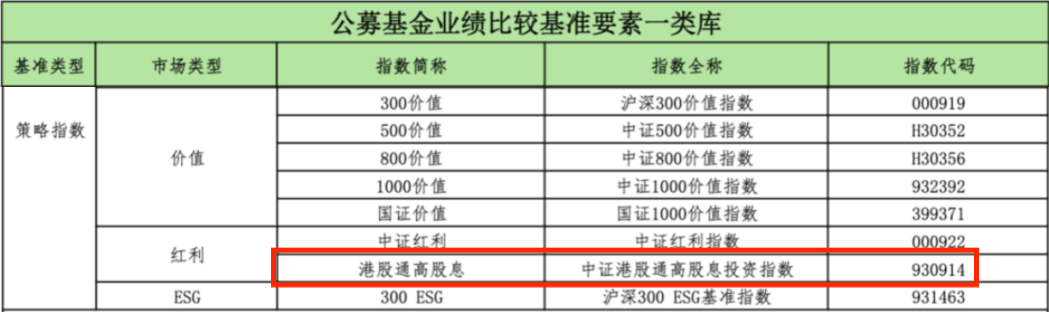
公募基金业绩比较基准指引来了!“红利标杆”受关注!中国海洋石油涨超2%,港股红利ETF基金(513820)涨超1%,盘中价再创新高!
Xin Lang Cai Jing· 2025-11-06 09:40
Core Viewpoint - The Hong Kong Dividend ETF (513820) has seen significant inflows and price increases following the introduction of new performance benchmark guidelines for public funds, with its underlying index being the only selected for the Hong Kong dividend theme [1][4][5] Market Performance - The Hong Kong Dividend ETF (513820) experienced a 1.6% increase, reaching a new high since its listing, with over 100 million yuan net inflow in the past three days [1][3] - Component stocks of the ETF saw nearly all rise, with notable increases in stocks like Guotai Junan and China Shenhua [3] Regulatory Impact - The newly released guidelines for public fund performance benchmarks include a category library that will influence how fund managers select benchmarks, thereby affecting investment strategies and behaviors [4][5] - The Hong Kong Dividend ETF (513820) is now recognized as a key benchmark for the Hong Kong dividend theme, enhancing its authority in the market [5] Investment Trends - Recent market volatility has led to increased interest in high-dividend stocks, with cyclical high-dividend sectors performing well due to policy expectations and price increase anticipations [5] - The current low-interest-rate environment and declining cash yields are driving institutional investors to increase allocations to dividend stocks, with an estimated under-allocation of 800 billion to 1.6 trillion yuan in the sector [5] Advantages of Dividend Assets - The dividend sector is viewed as undervalued, presenting high cost-performance ratios, especially as technology stocks reach new highs [5] - Policy support for corporate dividends and a stable dividend yield relative to government bond rates create a favorable environment for long-term investments in dividend assets [5] - The Hong Kong Dividend ETF (513820) has a leading scale of over 3.6 billion yuan and is recognized for its pure high-dividend selection strategy, making it a preferred choice for investors [5]

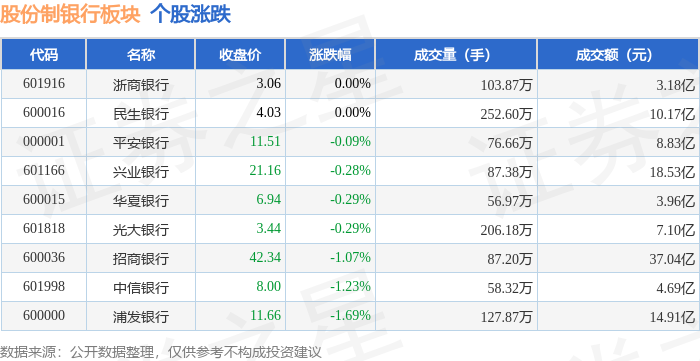
股份制银行板块11月6日跌0.81%,浦发银行领跌,主力资金净流出5.41亿元
Zheng Xing Xing Ye Ri Bao· 2025-11-06 08:51
Market Overview - On November 6, the shareholding banks sector declined by 0.81%, with Pudong Development Bank leading the drop [1] - The Shanghai Composite Index closed at 4007.76, up 0.97%, while the Shenzhen Component Index closed at 13452.42, up 1.73% [1] Individual Bank Performance - The closing prices and performance of key banks are as follows: - Zheshang Bank: 3.06, unchanged - Minsheng Bank: 4.03, unchanged - Ping An Bank: 11.51, down 0.09% - Industrial Bank: 21.16, down 0.28% - Huaxia Bank: 6.94, down 0.29% - Everbright Bank: 3.44, down 0.29% - China Merchants Bank: 42.34, down 1.07% - CITIC Bank: 8.00, down 1.23% - Pudong Development Bank: 11.66, down 1.69% [1] Capital Flow Analysis - The shareholding banks sector experienced a net outflow of 541 million yuan from main funds, while retail investors saw a net inflow of 463 million yuan [1] - The following table summarizes the capital flow for individual banks: - CITIC Bank: Main net inflow of 27.51 million yuan, retail net inflow of 11.20 million yuan - Huaxia Bank: Main net inflow of 23.08 million yuan, retail net outflow of 27.16 million yuan - Zheshang Bank: Main net inflow of 7.26 million yuan, retail net inflow of 5.91 million yuan - Everbright Bank: Main net inflow of 1.13 million yuan, retail net inflow of 15.17 million yuan - Pudong Development Bank: Main net inflow of 0.08 million yuan, retail net outflow of 0.76 million yuan - Industrial Bank: Main net outflow of 1.74 million yuan, retail net inflow of 80.35 million yuan - Minsheng Bank: Main net outflow of 73.74 million yuan, retail net inflow of 80.06 million yuan - Ping An Bank: Main net outflow of 87.51 million yuan, retail net inflow of 55.48 million yuan - China Merchants Bank: Main net outflow of 437 million yuan, retail net inflow of 25 million yuan [2]

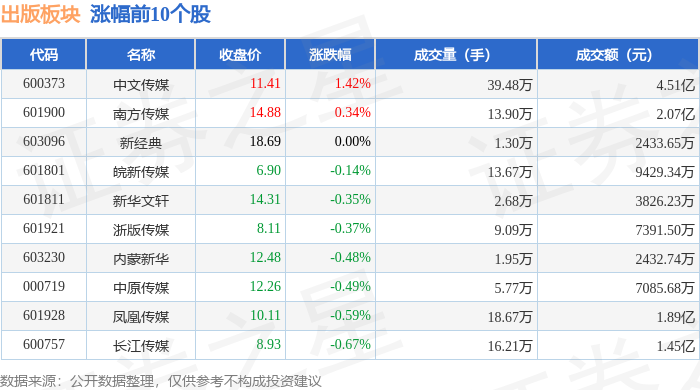
出版板块11月6日跌1.48%,粤传媒领跌,主力资金净流出5.02亿元
Zheng Xing Xing Ye Ri Bao· 2025-11-06 08:50
Core Insights - The publishing sector experienced a decline of 1.48% on the trading day, with major losses led by Guangdong media companies [1] - The Shanghai Composite Index closed at 4007.76, up 0.97%, while the Shenzhen Component Index closed at 13452.42, up 1.73% [1] Publishing Sector Performance - Key stocks in the publishing sector showed mixed results, with notable gainers including: - Zhongwen Media (600373) at 11.41, up 1.42% with a trading volume of 394,800 shares and a turnover of 451 million yuan - Nanfang Media (006109) at 14.88, up 0.34% with a trading volume of 139,000 shares and a turnover of 207 million yuan [1] - Conversely, significant declines were observed in: - Ning Media (002181) at 11.84, down 9.96% with a trading volume of 817,900 shares and a turnover of 206.6 million yuan - Publishing Media (601998) at 7.63, down 4.27% with a trading volume of 377,100 shares and a turnover of 289 million yuan [2] Capital Flow Analysis - The publishing sector saw a net outflow of 502 million yuan from institutional investors, while retail investors contributed a net inflow of 406 million yuan [2] - Notable capital flows included: - Phoenix Media (601928) with a net inflow of 34.01 million yuan from institutional investors, but a net outflow of 37.81 million yuan from retail investors [3] - Zhongnan Media (601098) with a net inflow of 25.27 million yuan from institutional investors, but a net outflow of 38.30 million yuan from retail investors [3]


小红书金融布局再进一步 接入消费分期后拿下支付牌照
2 1 Shi Ji Jing Ji Bao Dao· 2025-11-06 06:45
Core Insights - A major internet company, Xiaohongshu, has acquired Dongfang Electronic Payment Co., Ltd., gaining a third-party payment license, which enhances its financial capabilities in e-commerce [2][4]. Group 1: Company Developments - Dongfang Payment underwent significant changes on November 3, with all original shareholders exiting and the legal representative changing from Mao Wei to Wang Run. The registered capital increased from 121.3 million yuan to 200 million yuan [1]. - Xiaohongshu, through its wholly-owned subsidiary Ningzhi Information Technology (Shanghai) Co., Ltd., has effectively secured its first financial license, allowing it to operate internet payment services [2][4]. Group 2: Financial Integration - Xiaohongshu has been increasingly integrating financial services into its platform, collaborating with major payment providers like Alipay and WeChat Pay for services such as "buy now, pay later" and installment payments [3][4]. - The platform's "buy now, pay later" service is available to consumers with high credit scores, allowing them to order products without upfront payment [3]. Group 3: Recruitment and Strategic Focus - Xiaohongshu is actively hiring for positions related to payment systems, including backend development for payment and settlement processes, and roles focused on cross-border payment and financial management [5][6]. - The recruitment efforts align with Xiaohongshu's strategy to enhance its e-commerce ecosystem and expand into cross-border e-commerce [6]. Group 4: Financial Content Growth - Since July 2024, financial-related content on Xiaohongshu has seen over 80% year-on-year growth, with significant increases in user engagement and the number of financial brands joining the platform [7]. - The platform has facilitated direct interactions between users and financial institutions, exemplified by features like the "apply for credit card" button from Citic Bank [7].
翻遍9家银行财报,我发现行业洗牌的秘密藏在这些数字里
3 6 Ke· 2025-11-06 02:03
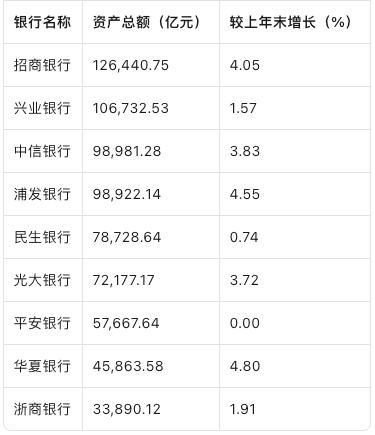
Core Insights - The overall performance of the nine listed joint-stock banks in China showed a decline in both revenue and net profit for the first three quarters of the year, with total operating income at 1.12 trillion yuan, down 2.56% year-on-year, and net profit at 406.1 billion yuan, down nearly 1% [1][3] Group 1: Performance Overview - Among the nine banks, four experienced declines in both revenue and net profit, while some banks managed to achieve growth in both metrics [1][4] - The top joint-stock banks by asset size are China Merchants Bank (12.64 trillion yuan), Industrial Bank (10.67 trillion yuan), and CITIC Bank, with Shanghai Pudong Development Bank showing the fastest growth rate at 4.55% [1][2] Group 2: Revenue and Profit Analysis - Only Minsheng Bank and Shanghai Pudong Development Bank reported year-on-year revenue growth, with increases of 6.74% and 1.88%, respectively; the remaining seven banks saw revenue declines, with Ping An Bank experiencing the largest drop at 9.8% [3][4] - In terms of net profit, only four banks, including Shanghai Pudong Development Bank, reported growth, with the latter achieving a 10.21% increase, making it the leader in profit growth among joint-stock banks [4] Group 3: Net Interest Income and Margin - Net interest income, a key indicator of banks' operating income, showed mixed results, with only three banks reporting growth; China Merchants Bank led with 160.04 billion yuan, up 1.74% [5][6] - The net interest margin (NIM) faced pressure, with most banks experiencing declines; China Merchants Bank maintained the highest NIM at 1.87%, while CITIC Bank saw the largest drop of 16 basis points [7] Group 4: Asset Quality and Risk Management - The non-performing loan (NPL) ratio improved for most banks, with China Merchants Bank having the lowest NPL ratio at 0.94% [9][10] - However, the provision coverage ratio decreased for seven banks, with Ping An Bank showing the largest decline of 21.11 percentage points; Shanghai Pudong Development Bank's coverage ratio increased by 11.08 percentage points, indicating enhanced risk mitigation [10][11]




北京城建投资发展股份有限公司关于2025年度第三期中期票据发行情况公告
Shang Hai Zheng Quan Bao· 2025-11-05 19:32
北京城建投资发展股份有限公司(以下简称"公司")于2024年7月25日召开2024年第一次临时股东大 会,会议审议通过了关于公司拟注册发行中期票据的议案。公司向中国银行间市场交易商协会(以下简 称"交易商协会")申请注册发行不超过75亿元人民币的中期票据。2024年11月,公司收到交易商协会出 具的《接受注册通知书》(中市协注[2024]MTN1110号),交易商协会决定接受公司中期票据注册,注 册金额为75亿元,注册额度自该通知书落款之日(2024年11月12日)起2年内有效。 近日,公司发行了2025年度第三期中期票据(简称:25京城投MTN003,代码:102584635.IB),发行 金额8亿元,期限3年期,票面利率为2.13%,计息方式为按年付息,起息日为2025年11月05日。 中信建投证券股份有限公司为本期中期票据的主承销商和簿记管理人,中信银行股份有限公司、上海银 行股份有限公司、平安证劵股份有限公司和北京银行股份有限公司为联席主承销商。本期中期票据发行 的有关文件详见中国货币网(www.chinamoney.com.cn)和上海清算所网站(www.shclearing.com)。 证券代码: ...
