华为

Search documents
智谱新模型也用DeepSeek的MLA,苹果M5就能跑
量子位· 2026-01-20 04:17
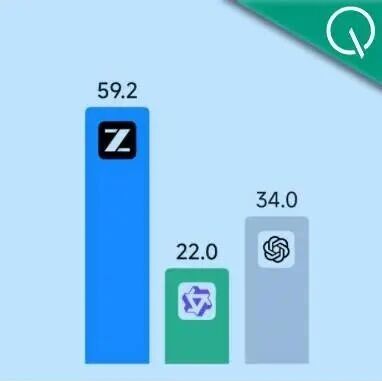
Core Viewpoint - The article discusses the launch of the new lightweight language model GLM-4.7-Flash by Zhipu AI, which aims to replace its predecessor GLM-4.5-Flash and is available for free API access. Group 1: Model Specifications - GLM-4.7-Flash features a total of 30 billion parameters, with only 3 billion activated during inference, significantly reducing computational costs while maintaining performance [4][10]. - The model is designed as a mixed expert (MoE) architecture, specifically positioned for local programming and intelligent assistant tasks [4][9]. - It achieved a score of 59.2 in the SWE-bench Verified code repair test, outperforming similar models like Qwen3-30B and GPT-OSS-20B [4]. Group 2: Performance and Applications - The model is optimized for efficiency and retains core capabilities in coding and reasoning from the GLM-4 series [7]. - Besides programming, GLM-4.7-Flash is recommended for creative writing, translation, long-context tasks, and role-playing scenarios [8]. - Initial tests on a 32GB unified memory Apple laptop showed a speed of 43 tokens per second [17]. Group 3: Technical Innovations - The introduction of the MLA (Multi-head Latent Attention) architecture marks a significant advancement, previously validated by DeepSeek-v2 [12]. - The model's structure is similar in depth to GLM-4.5 Air and Qwen3-30B-A3B, but it utilizes 64 experts, activating only 5 during inference [13]. Group 4: Market Position and Pricing - GLM-4.7-Flash is offered for free on the official API platform, with a high-speed version available at a low cost [19]. - Compared to similar models, GLM-4.7-Flash has advantages in context length support and output token pricing, although latency and throughput require further optimization [19].

AI 时代的 Super App 之战打响丨周亚辉投资笔记 AI 时代系列之二
Xin Lang Cai Jing· 2026-01-20 03:46
Core Insights - The article posits that Zhang Yiming will likely be the richest person in China and Asia in the next ten to twenty years due to his strong motivation, learning ability, execution power, and the resources of ByteDance [3][4][5] - The number of Super Apps in the AI era is expected to drastically decrease, with only 3-4 apps likely to exceed 500 million MAU, compared to 10 in the mobile internet era [4][14] - The value of Super Apps will significantly increase in the AI era, with DAU/MAU ratios expected to rise, leading to higher user engagement and commercial returns [4][14] Company Strategies - ByteDance is expanding into various sectors, including mobile phones, automotive manufacturing, and potentially space computing, indicating a broad strategic vision [3][4][5] - The resolution of TikTok's issues is anticipated to accelerate ByteDance's international expansion, particularly with its new product, Doubao [4][12] - Alibaba's Qwen is positioned to compete directly with Doubao, with a focus on becoming a Super App that integrates various services [6][17] Market Dynamics - The competition for AI Native Super Apps is heating up, with major players like Tencent, Meituan, Pinduoduo, JD.com, and Baidu vying for a position [17][18] - The article suggests that Meituan's exit from the community group buying market is a strategic move to focus on AI and Super App development [18] - The potential market for AI Super Apps is projected to be worth 1 trillion RMB, emphasizing the urgency for companies to launch their AI applications [18] Competitive Landscape - Tencent is described as a stable player with a strong product matrix, while ByteDance's Doubao is gaining traction among younger users, potentially challenging WeChat's dominance [19][20] - The article highlights that the competition between Zhang Yiming and Jack Ma represents a significant moment in the evolution of Super Apps in China [17][19] - Huawei is not expected to enter the Super App market, focusing instead on becoming a leading automotive group in China [19]
那些外国博主们,怎么突然开始吹中国手机了???
创业邦· 2026-01-20 03:29
Core Viewpoint - The article discusses the increasing recognition and acceptance of Chinese smartphones in the global market, particularly highlighted by MKBHD's annual smartphone awards, which this year featured several Chinese brands prominently [8][9][11]. Group 1: Recognition of Chinese Smartphones - MKBHD's awards this year included Chinese smartphones such as Xiaomi 17 Pro Max for "Best Large Phone," OnePlus 15 for "Best Battery Life," and OPPO Find X9 Pro for "Best Camera," indicating a shift in perception towards Chinese brands [9][11]. - The article notes that previously, Chinese smartphones were often overlooked in international awards, but recent trends show a growing appreciation for their quality and innovation [8][9]. Group 2: Technological Advancements - Chinese smartphone manufacturers have made significant advancements in hardware design, achieving thinner devices with larger battery capacities through improved internal stacking technology and battery innovations [16][18]. - The use of silicon-carbon anode materials has led to the development of smartphones with batteries exceeding 8000 mAh, showcasing the ability to balance battery size and longevity [20][22]. - Innovations in materials, such as Huawei's Kunlun glass and OPPO's use of 3D-printed titanium alloy in hinges, have enhanced durability and performance in smartphones [22][26]. Group 3: Software and User Experience - The introduction of OPPO's "Starry Compiler" aims to improve the efficiency of Android applications by optimizing the communication between software and hardware, resulting in a smoother user experience [30][31]. - The article highlights the emergence of advanced AI applications in smartphones, such as the "Doubao" phone assistant, which can perform complex tasks and adapt to user needs, indicating a shift towards more intuitive technology [40][42]. Group 4: Market Dynamics - The article emphasizes that the increasing prices of Chinese smartphones in international markets reflect a shift from cost-based purchasing to a recognition of their quality and functionality [11][13]. - The growing acceptance of Chinese smartphones in markets like Australia suggests a broader trend of international consumers valuing performance and innovation over brand origin [13][18].


AI 时代的 Super App 之战打响丨周亚辉投资笔记 AI 时代系列之二
晚点LatePost· 2026-01-20 03:26
Core Viewpoint - The article posits that ByteDance's Zhang Yiming is likely to become the richest person in China over the next decade due to his strong motivation, learning ability, execution power, and the resources of ByteDance, which are expected to drive significant growth in various sectors, including mobile, automotive, and space computing [4][5]. Industry Insights - In the mobile internet era, there were 10 apps in China with over 500 million MAU, but in the AI era, it is anticipated that only 3-4 Super Apps will achieve this milestone [4][5]. - The DAU/MAU ratio is expected to increase, with 500 million MAU likely corresponding to approximately 350 million DAU, enhancing the value of Super Apps compared to the mobile internet era [5]. - The article emphasizes that the value of Super Apps is greater than that of leading robotics companies, as Super Apps control entry points and can generate excess commercial returns [6]. Competitive Landscape - The competition for AI Native Super Apps is intensifying, with Alibaba's Qwen and ByteDance's Doubao positioned as key players. The article highlights the strategic moves of Alibaba to prevent Meituan from launching a competing Super App [8][9]. - Other companies like Tencent, Meituan, Pinduoduo, JD, and Baidu are also seen as potential contenders in the Super App battle, while smaller players may struggle to compete [9][10]. - The article suggests that Meituan's exit from community group buying is part of a broader AI strategy to position itself for the Super App market [10][11]. Future Projections - The article predicts that the AI Native Super App market could reach a revenue potential of 1 trillion RMB, urging companies to act quickly to launch their AI applications [11]. - Huawei is positioned to dominate the automotive sector but is unlikely to enter the Super App market due to its strategic focus on other areas [12]. - Tencent is recognized for its stability and product matrix, with the potential to maintain a significant role in the AI Native Super App landscape, although ByteDance's Doubao is gaining influence among younger users [12].





HarmonyOS 5/6装机量突破4000万台!上月日均增15万
Xin Lang Cai Jing· 2026-01-20 03:24
Group 1 - The core point of the article is that HarmonyOS has achieved significant growth, with installation numbers surpassing 40 million units as of January 18, 2026 [1] - The growth trajectory of HarmonyOS is unprecedented in the history of smart terminals, with installations increasing from 10 million in July 2025 to 32 million by December 2025, and reaching nearly 38 million by early January 2026 [3] - December 2025 saw a monthly increase of 6.96 million units, representing a year-on-year growth of 24.4%, driven by the strong sales of new models like the Mate 80 and nova 15 series [3] Group 2 - The upgrade to HarmonyOS 6 has been a key factor in attracting users, with over 300 new features and more than 100 system updates introduced [5] - In December 2025, the daily average of new devices running HarmonyOS exceeded 150,000, indicating a stable growth trend [5] - The rapid growth of installations is supported by the flourishing Harmony ecosystem, which now includes over 350,000 native applications and services across 18 core scenarios, with major apps like WeChat and Douyin fully adapted to the system [7]
数据中心绿电困局,直连难、储能贵,破局路在何方?
Sou Hu Cai Jing· 2026-01-20 03:12
Core Insights - The rapid rise of large models like ChatGPT has led to a significant increase in electricity costs for data centers, which are now approaching the cost of server procurement [1] - China's data center electricity consumption is projected to reach 166 billion kilowatt-hours in 2024, equivalent to the annual output of approximately 1.3 Three Gorges Dam [1] - By 2030, electricity consumption by data centers may account for 3% of the total electricity usage in society, causing localized power shortages in regions like the Yangtze River Delta and Guangdong-Hong Kong-Macau [3] Group 1 - The shift from traditional CPU-based servers to GPU clusters for AI training has increased electricity costs to 30% of operational expenses, compared to 5%-15% previously [5] - A 100P computing power data center can incur electricity costs equivalent to purchasing two apartments in Beijing's Fourth Ring Road annually [5] - The coordination issues with the power grid have led to incidents where data centers had to switch to backup power sources, incurring significant costs [5] Group 2 - The "East Data West Computing" policy aims to alleviate the pressure on electricity costs by utilizing lower electricity prices in western regions [7] - Regions like Inner Mongolia and Ningxia have become attractive for data centers due to electricity prices as low as 0.3-0.4 yuan per kilowatt-hour, which is half the price in eastern regions [8] - However, the instability of renewable energy sources in the west can lead to higher overall electricity costs for data centers [10] Group 3 - Companies are exploring self-generated green electricity, but limitations in rooftop space for solar panels have resulted in only a fraction of their electricity needs being met [12] - Current regulations prevent direct electricity sales from neighboring wind farms, leading to increased costs due to intermediary losses and scheduling fees [15] - Energy storage solutions, such as lithium batteries, have limitations in duration, while alternatives like flow batteries are significantly more expensive [16] Group 4 - New technologies, including hydrogen fuel cells and small modular reactors (SMRs), are being explored to provide sustainable power to data centers, with potential costs as low as 0.35 yuan per kilowatt-hour [18][20] - The GHG Protocol's upcoming "hourly green electricity matching" standard will require real-time matching of green electricity usage, necessitating integrated renewable energy systems near data centers [20] - Companies are currently balancing policy benefits, technological investments, and cost control, as uninterrupted server operation is critical [24]
华为夺2025年中国手机第一;SK海力士发高额年终奖【巨头风向标】
2 1 Shi Ji Jing Ji Bao Dao· 2026-01-20 03:11
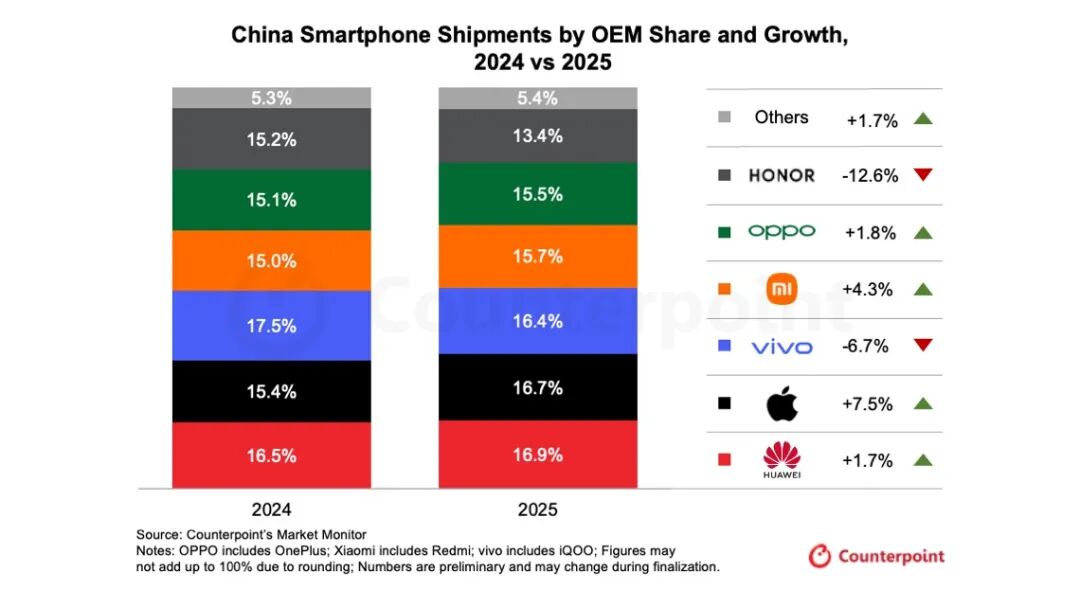
Group 1: Tesla's Transformation - Tesla CEO Elon Musk is pushing for the company to transform into a robotics company, with the Optimus humanoid robot as a key focus, aiming for a valuation of $25 trillion, which would significantly surpass its current business value [2] Group 2: Smartphone Market Trends - Huawei is projected to lead the Chinese smartphone market in terms of shipments by 2025, benefiting from price adjustments and government subsidies, despite an overall decline in smartphone shipments in China [3] - Apple's iPhone 17 series has seen a 28% year-on-year increase in shipments in the fourth quarter, driven by strong demand [3] Group 3: Robotics and AI Developments - Zhijidongli showcased the LimX Oli humanoid robots' ability to autonomously exit their packaging, demonstrating advanced group control technology and smooth movement [6] - JD.com launched a second batch of self-developed AI toys, expanding its offerings to cover all age groups, supported by the JoyInside system for contextual understanding [8] Group 4: Aerospace Industry Advancements - Chengdu Xingji's reusable liquid rocket production base is set to be completed by December 2026, with a design capacity of 20 rockets per year, focusing on reducing launch costs through reusability [9] Group 5: Semiconductor Industry Movements - Micron Technology announced an $1.8 billion acquisition of PSMC's facility in Taiwan, aimed at enhancing DRAM production capacity [13] - Zhongwei Semiconductor is set to launch its first low-power SPI NOR Flash chip, filling a product gap and expanding its market applications [14] Group 6: Employee Compensation in Tech - SK Hynix plans to distribute record bonuses averaging over 136 million KRW (approximately 640,000 RMB) per employee, attributed to a historic labor agreement that changed profit-sharing terms [15] Group 7: Corporate Actions and Financial Updates - Huichuan Technology is planning to issue H-shares and list on the Hong Kong Stock Exchange to enhance its international presence [16] - Hualing Cable terminated its acquisition of Hunan Xingxin Aerospace due to a lack of agreement on specific terms, with no adverse impact on its operations [17] - Yingfang Micro plans to acquire 100% stakes in Shanghai Xiaokeli and FIRST TECHNOLOGY CHINA, indicating a significant asset restructuring [18] - Zhu Hai Bo Rui Jing Xin completed a financing round exceeding 1 billion RMB, focusing on high-performance chip solutions for various industries [19] Group 8: New Product Launches - Feishu and Anker Innovation launched a new AI hardware product, the Anker AI Recording Bean, designed for seamless integration with the Feishu ecosystem [20]
既是青年博士教师,也是技术骨干!南京工业职业技术大学“双师型”教师占比已达92%
Yang Zi Wan Bao Wang· 2026-01-20 02:59
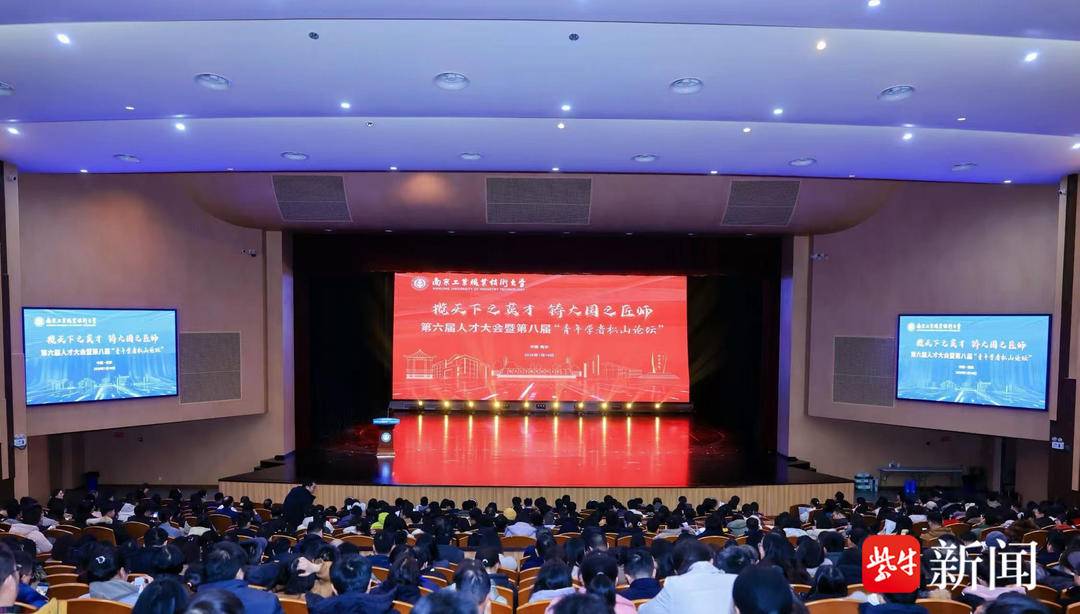
Core Insights - Nanjing University of Technology and Vocational Education held its sixth Talent Development Conference and the eighth "Youth Scholars Songshan Forum," awarding various honors to faculty and industry professionals [1] Group 1: Talent Development Initiatives - The university emphasizes the training of "dual-qualified" teachers, establishing multiple skill master studios across fields such as mechanical, electronic, and artificial intelligence [3] - The number of doctoral faculty members has increased from 8.6% in 2017 to 46.6% currently, with "dual-qualified" teachers reaching 92%, ranking among the top in national vocational undergraduate institutions [3] - The university collaborates with over 60 leading companies, including Huawei and Siemens, to build industry colleges and practice bases, making industry experience a requirement for teacher evaluation and promotion [3] Group 2: Faculty and Student Development - Faculty members are provided opportunities for enterprise internships and basic research funding, enhancing their understanding of industry developments [3] - The university aims to create an environment that respects talent and encourages innovation, implementing flexible and diverse distribution and evaluation mechanisms [4] - The university has successfully hosted six Talent Development Conferences and eight "Youth Scholars Songshan Forums," gradually forming a talent development hub with vocational education characteristics [4]
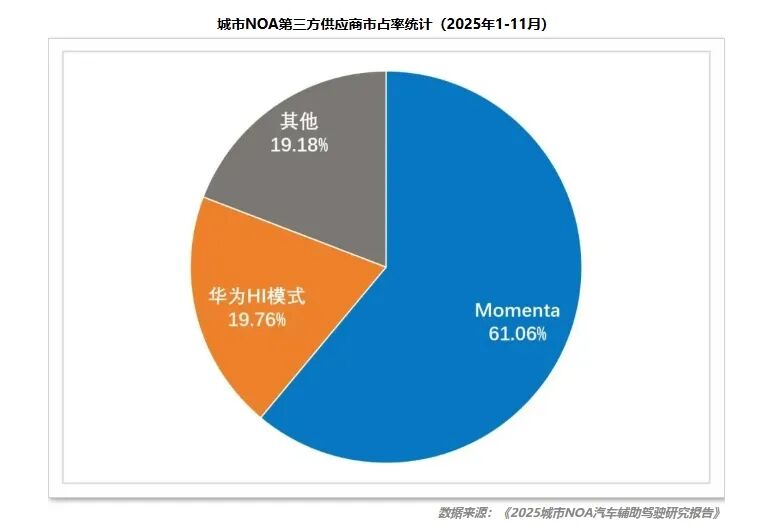
2025年超300万辆,城市NOA规模化加速,华为、Momenta成「双强格局」
3 6 Ke· 2026-01-20 02:46
Core Insights - The report indicates that the cumulative sales of passenger cars equipped with urban NOA functions in China reached 3.129 million units from January to November 2025, marking a significant expansion in the industry [1][2] - The urban NOA market is characterized by a "dual strong" pattern dominated by Huawei and Momenta, which together hold approximately 80% of the third-party supplier market share [1][3] Group 1: Market Overview - The penetration rate of urban NOA-equipped passenger cars in China was 15.1% of the insured passenger car volume from January to November 2025, an increase of 5.6 percentage points compared to 2024 [2] - The report highlights that the urban NOA market has entered a phase of large-scale popularization, with profound changes in market structure and competitive factors [1][3] Group 2: Competitive Landscape - The market is driven by both self-research by car manufacturers and partnerships with third-party suppliers, with domestic brands accounting for 81.1% of the sales of urban NOA-equipped passenger cars [3] - Momenta leads the third-party supplier market with a total of 414,400 units equipped with urban NOA, representing about 61.06% of the third-party supplier share, while Huawei's HI model has approximately 134,100 units, accounting for about 19.76% [3][4] Group 3: Technological Advancements - The report emphasizes that algorithm, data loop capability, and mass production experience are critical factors determining the market position and development speed of auxiliary driving suppliers [6][8] - Momenta's R6 reinforcement learning model is noted as the first in China to achieve mass production based on an end-to-end architecture, enhancing safety and efficiency [8] Group 4: Future Trends - The urban NOA is expected to accelerate systemic changes in intelligent driving technology routes, core architectures, and industrial ecosystems, extending applications from highway NOA to urban NOA [9] - The competitive landscape is evolving with a focus on end-to-end models, pushing for integrated system architecture and the maturation of vehicle-road-cloud collaboration and regulatory standards [9]
华为夺2025年中国手机第一;SK海力士发高额年终奖
2 1 Shi Ji Jing Ji Bao Dao· 2026-01-20 02:39
Group 1 - Tesla CEO Elon Musk is pushing for the company's transformation into a robotics company, with the Optimus humanoid robot as a key focus, aiming for a valuation of $25 trillion, significantly surpassing current business value [2] - Huawei is projected to lead the Chinese smartphone market in shipments by 2025, benefiting from price adjustments and government subsidies, despite an overall decline in smartphone shipments in China [3] - Micron Technology plans to acquire PSMC's factory in Taiwan for $1.8 billion to enhance its DRAM production capacity, with the deal expected to close in Q2 2026 [10] Group 2 - Chengdu Xingji Glory's reusable liquid rocket production base is set to be completed by December 2026, with a design capacity of 20 rockets per year, focusing on reducing launch costs through reusability [7] - SK Hynix will distribute record bonuses of over 136 million KRW (approximately 640,000 RMB) per employee, attributed to a historic labor agreement that allows for a percentage of annual operating profit to be included in the bonus pool [12] - Yingfang Micro plans to acquire 100% stakes in Shanghai Xiaokeli and FIRST TECHNOLOGY CHINA LIMITED, with the transaction expected to constitute a major asset restructuring for the company [16]