奇瑞汽车

Search documents
AI场景落地“浦东范”:无人驾驶、人形机器人齐上阵
Guo Ji Jin Rong Bao· 2025-07-25 05:55
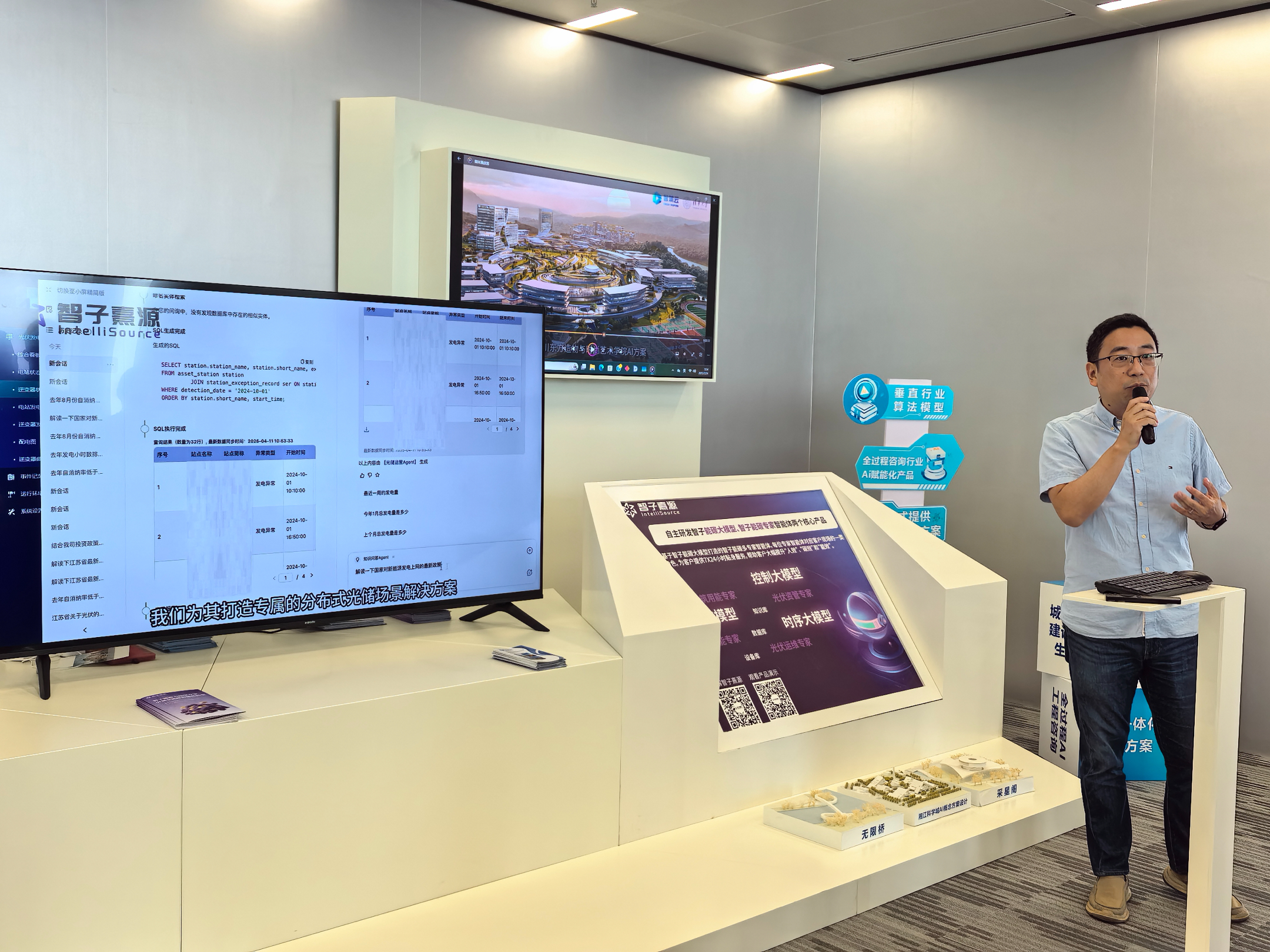
Core Insights - The article highlights the rapid advancement and application of artificial intelligence (AI) technologies in Pudong, showcasing various innovative use cases such as autonomous taxis and humanoid robots [1][2]. Group 1: AI Applications and Innovations - The Zhangjiang Moli Community is fostering the implementation of large model applications, enhancing efficiency in biomedicine and automating document generation [2][6]. - PPIO is introducing a comprehensive AI agent platform that supports various user needs, including a sandbox environment for safe AI operations and enhanced model capabilities [7]. - The "Hundred Industries Industrial Model" by LingShu Intelligent addresses key industrial challenges, improving decision-making and compliance with industry standards [10]. Group 2: Ecosystem Development - The Moli Community has attracted nearly 200 companies since its inception, creating a collaborative ecosystem for AI applications across various sectors [10][11]. - The community is positioned as a testing ground for vertical model applications, leveraging Pudong's extensive industrial base to facilitate AI deployment [11][12]. Group 3: Robotics Training and Development - The National and Local Center has established the first heterogeneous humanoid robot training ground, where over 100 robots are trained to enhance their operational capabilities [12][18]. - The training facility is designed to improve robots' skills through data-driven learning, with a goal of collecting 10 million data points this year [21]. Group 4: Autonomous Driving Initiatives - Pudong is accelerating the innovation and implementation of smart driving technologies, with significant expansions in autonomous driving testing routes [26][27]. - The upcoming World Artificial Intelligence Conference will feature various autonomous driving experiences, showcasing Shanghai's leadership in this field [26][27].


江苏永成二次冲击A股IPO,2022年经营现金流为-1751%
Sou Hu Cai Jing· 2025-07-25 04:41
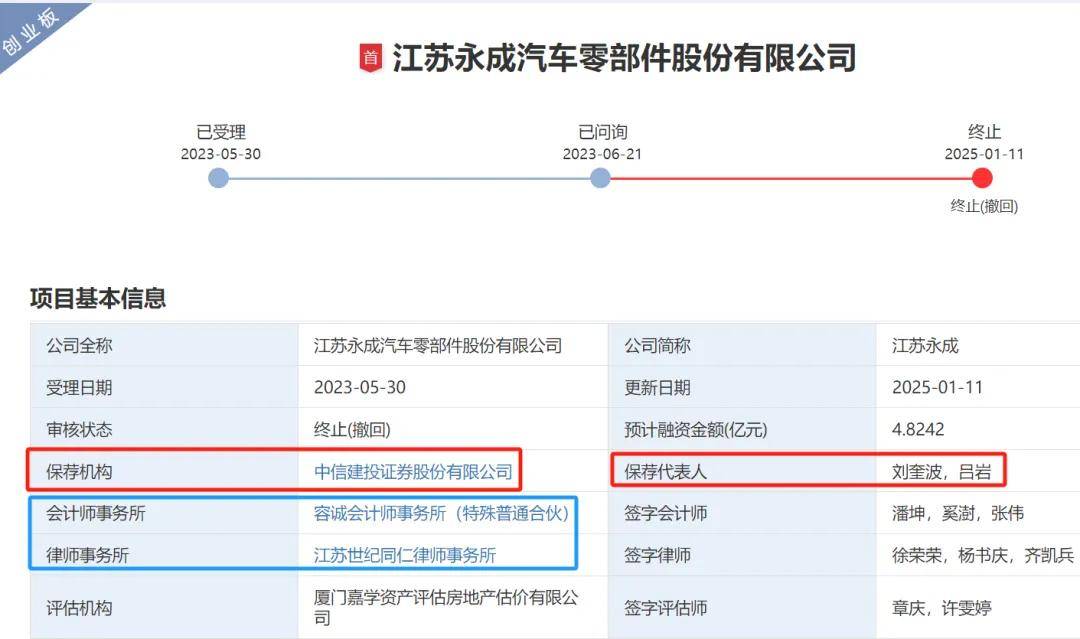
Group 1 - Jiangsu Yongcheng Auto Parts Co., Ltd. has resumed its IPO application process after previously withdrawing it in January 2025, with Dongwu Securities now acting as the counseling institution [1][3][31] - The company faced challenges during its first IPO attempt, which included a lengthy counseling period of nearly two years with CITIC Securities as the previous sponsor [3][4] - The company’s financial performance has shown significant discrepancies, particularly in its cash flow reports, with a notable difference of 600 million yuan in cash flow figures between different audit reports [6][9] Group 2 - Jiangsu Yongcheng's main business involves the design, research, production, and sales of automotive interior and exterior parts, with major clients including BYD, Chery, and SAIC [10][11] - The company has a high customer concentration, with over 90% of its revenue coming from its top five clients in recent years, indicating a reliance on a few key customers [10][11] - The company has reported increasing accounts receivable, which reached 356 million yuan in 2023, raising concerns about cash flow and financial stability [13][16] Group 3 - Recent government policies aimed at regulating payment terms in the automotive supply chain are expected to positively impact Jiangsu Yongcheng by potentially improving cash flow from major clients [19][21] - Major automotive manufacturers have committed to reducing payment terms to 60 days, which could alleviate Jiangsu Yongcheng's cash flow issues [27][30] - The implementation of these policies may lead to a shift in supplier dynamics, with potential risks for listed companies like Jiangsu Yongcheng if they cannot maintain competitive advantages [28][29]
《财富》中国500强中的汽车产业:35家企业上榜 营收、净利润双增企业占比不到35%
Zhong Guo Jing Ying Bao· 2025-07-24 12:08
Core Insights - The 2025 Fortune China 500 list highlights the automotive industry, with 35 companies included, an increase of 6 from the previous year, covering vehicle manufacturing, parts, and retail services [1] - Among the 35 automotive companies, 12 reported year-on-year growth in both revenue and net profit, while 10 experienced declines [1][4] - The automotive industry is facing challenges, with only 34.3% of companies showing growth in both revenue and net profit, indicating significant pressure on profitability [4][5] Revenue and Profit Trends - 21 out of 35 automotive companies on the list achieved revenue growth, representing 60% of the total [3] - However, 14 companies saw a decline in net profit, with an overall negative growth rate of -1258.7% for some vehicle manufacturers [3][4] - The average profit per vehicle has decreased from over 20,000 yuan in 2017-2022 to 14,000 yuan in early 2025, reflecting the impact of ongoing price wars [4][5] Ranking Changes - 20 automotive companies improved their rankings, with significant movers including Seres, which jumped from 404th to 169th, and revenue increased from 5,063 million USD to 20,176.8 million USD [2] - Conversely, 6 companies saw their rankings decline, with China FAW dropping 8 places [2] New Entrants - Several companies that were not on the 2024 list made it onto the 2025 list, including Wanxiang Group, Leap Motor, and Sailun Tire, with revenues ranging from 3,658.6 million USD to 29,717.8 million USD [3] Industry Challenges - The automotive industry is grappling with a prolonged price war that has led to declining profit margins, with manufacturing profit rates dropping from 5.7% in 2020-2022 to 3.9% in early 2025 [5] - Industry experts emphasize the need for companies to focus on brand strength and advanced technologies to navigate the competitive landscape [5]

中国车企逐鹿桑巴之乡
第一财经· 2025-07-24 08:41
Core Viewpoint - The article discusses the rapid growth and market penetration of Chinese electric vehicle (EV) manufacturers, particularly BYD, in Brazil's automotive market, highlighting the shift from traditional fuel vehicles to electric vehicles driven by local consumer preferences and economic factors. Group 1: Market Dynamics - Brazil's automotive market has seen a significant increase in electric vehicle ownership, with a penetration rate rising from 6.26% in 2024 to 8.49% in the first five months of 2025, primarily driven by Chinese brands [7][8]. - In Rio de Janeiro, 90% of the electric vehicles on the streets are from Chinese brands, indicating a strong market presence [3]. - The Brazilian electric vehicle market is dominated by Chinese brands, which accounted for 91.4% of the total sales of imported electric vehicles in the first half of 2024, generating sales of $1.2 billion [3]. Group 2: Consumer Preferences - Brazilian consumers are increasingly favoring electric vehicles due to lower operating costs; for instance, a Chinese EV can save approximately 10,800 Brazilian Reais in fuel costs annually compared to gasoline vehicles [7][8]. - The average gasoline price is about 5.8 Reais per liter, while electricity costs only about 0.6 Reais per kilowatt-hour, making electric vehicles more economically viable [7]. Group 3: Local Production and Investment - BYD has established a factory in Brazil, which aims for over 90% localization in production, significantly reducing the need for imports [1][15]. - The factory in Camaçari represents a $5.5 billion investment, with an annual production capacity of 150,000 vehicles planned [15]. - The Brazilian government is encouraging local production through policies that will gradually increase import tariffs on electric vehicles, making local manufacturing more attractive [21][22]. Group 4: Competitive Landscape - Chinese EV manufacturers are competing directly with established foreign brands like Fiat, Volkswagen, and Hyundai, which have long dominated the Brazilian market [4][9]. - The competitive edge for Chinese brands lies in their advanced technology and cost-effective pricing, appealing to both ride-hailing drivers and private consumers [10][11]. Group 5: Future Outlook - The Brazilian government has set a target for electric vehicles to account for 30% of total vehicle sales by 2030, indicating a strong commitment to the EV sector [22]. - The influx of Chinese manufacturers is expected to reshape the automotive landscape in Brazil, challenging the dominance of traditional foreign brands and fostering a more competitive environment [24][25].


地平线(9660.HK),中国智驾供应商领头羊,踏上“征程”
贝塔投资智库· 2025-07-24 04:24
Core Viewpoint - Horizon Robotics (9660.HK) is a leading provider of intelligent driving assistance solutions for passenger vehicles in China, ranking first in the advanced driver assistance systems (ADAS) market with over 40% market share in 2024 [1] Business Segments - The main business segments include product solutions, licensing and service business, and non-vehicle solutions [2] Product Solutions - The company offers a comprehensive range of advanced driver assistance and high-level autonomous driving solutions, from mainstream assistance (L2) to advanced autonomous driving (L2+) compliant with Chinese regulations, including Horizon Mono, Horizon Pilot, and Horizon SuperDrive [3] Horizon Mono - Positioned as an active safety advanced driving assistance solution, it enhances daily driving safety and comfort, utilizing visual sensors and optional radar to identify various objects [5] Horizon Pilot - This solution provides a safe and efficient driving experience on highways, featuring advanced tasks such as automatic lane changes and parking assistance [6][7] Horizon SuperDrive - An end-to-end urban driving assistance system that theoretically supports high-level autonomous driving up to L4, utilizing a combination of visual sensors, radar, and LiDAR [8] Non-Vehicle Solutions - The non-vehicle solutions are primarily managed by the subsidiary Diguo Robotics, offering products like lawn mowers and air purifiers, benefiting from significant synergies with automotive solutions [9] Licensing and Service Business - The company provides algorithm and software licensing and technical support to automotive clients, which has become a major revenue source, significantly increasing overall gross margins [10] Financial Performance - The company achieved revenues of 910 million, 1.55 billion, and 2.38 billion yuan for 2022, 2023, and 2024, respectively, with year-on-year growth rates of 94%, 71%, and 54% [11] - The gross margins for the same years were 69.3%, 70.5%, and 77.3% [11] - By 2024, the revenue breakdown is expected to be 664 million from product solutions, 1.647 billion from licensing and services, and 72 million from non-vehicle solutions [11] Market Outlook - According to the China Association of Automobile Manufacturers, China's vehicle sales are projected to reach 31.436 million units in 2024, with new energy vehicle sales at 12.888 million units, indicating a growth rate of 34.4% [15] - The penetration rate of L2+ intelligent driving functions is expected to rise to 8.5% in 2024, with significant growth anticipated in urban NOA functions by 2030 [15] Market Performance - In the Chinese market, Horizon Robotics delivered 67,853 units in May 2025, capturing a market share of 9.8%, with a total delivery of 253,241 units in the first five months [18] - The company ranks third in ADAS front camera chip manufacturing, with a market share of 13.0% [21] Recent Shareholding Changes - As of the end of 2024, Baiji held 5.27% of the company's shares and increased its stake to 4.95% in June 2025 [22] Stock Price Drivers - The company anticipates delivering approximately 2.9 million product solutions in 2024, with cumulative deliveries reaching around 7.7 million [23] - The launch of the "Journey 6P" SoC is expected to enhance the company's market position significantly [23]

加强全国统一大市场建设 汽车产业需疏堵结合
Zheng Quan Shi Bao· 2025-07-22 19:15
Core Viewpoint - The Chinese automotive industry is undergoing a significant shift towards regulating competition, particularly in the new energy vehicle (NEV) sector, with government initiatives aimed at curbing irrational competition and establishing a unified national market [1][2]. Group 1: Regulatory Actions - The recent State Council meeting highlighted the importance of "regulating the competition order in the NEV industry," focusing on three core measures: strengthening cost investigations, price monitoring, and production consistency checks [1]. - The central government has initiated a series of meetings to address irrational competition in the automotive sector, indicating a strong commitment to reform [1]. - The National Development and Reform Commission has reported cases of violations related to market access, particularly in areas like charging station construction and vehicle testing, which reveal hidden barriers in the automotive industry [1]. Group 2: Market Integration - Building a unified national market for the automotive industry is recognized as a long-term and systematic project, requiring immediate actions to eliminate barriers to the cross-regional flow of used cars and to enhance the collaborative construction of charging infrastructure [2]. - There is a pressing need to establish a unified market rule system to ensure fair competition and prevent market fragmentation, with regulatory measures needed to correct behaviors that disrupt market order [2]. Group 3: Industry Transformation - Automotive manufacturing provinces like Guangdong and Anhui have expressed intentions to strengthen policy guidance to regulate competition in the NEV sector [3]. - Companies are encouraged to shift their operational focus from short-term local gains to a broader national market perspective, aiming for sustainable growth and global competitiveness [3]. - The transition from competition to collaboration is essential for the sustainable development of the automotive industry, emphasizing the need for resource sharing and cooperation among industry players [3].
从实验室到产业园 教授创业开拓就业新空间
Zhong Guo Xin Wen Wang· 2025-07-22 16:09
Core Viewpoint - The article highlights the efforts of Professor Bai Xianxu and his team at Hefei University of Technology in advancing automotive electronic control suspension technology, aiming to bridge the gap between academic research and industrial application [1][2]. Group 1: Technological Development - Bai Xianxu's team has developed a complete chain from basic research to patent layout and industrial incubation, focusing on electronic control suspension systems [1]. - The team has successfully incubated two technology companies, including Zhi Cheng Automotive, which specializes in automotive electronic control suspension systems [1][2]. - The electronic control suspension system developed by Zhi Cheng Automotive is positioned as a future market opportunity, despite current cost challenges [2]. Group 2: Market Context - In the first half of the year, China's automotive production and sales exceeded 15 million units, indicating a robust automotive industry [2]. - Currently, most electronic control suspensions are imported and used in high-end vehicles, highlighting a market need for cost-effective solutions [2]. Group 3: Talent Development - The article discusses the successful case of Li Chengqi, a doctoral student who has spent seven years transitioning electronic control suspension technology from the lab to industry applications [3]. - Li Chengqi's experience reflects the effective talent cultivation mechanism at Hefei University of Technology, which integrates academic research with industry needs [3][4]. - The university's model promotes collaboration with leading enterprises, allowing students to gain practical experience and reduce their adaptation period in the workforce [4]. Group 4: Institutional Framework - The Intelligent Manufacturing Technology Research Institute at Hefei University of Technology focuses on technology transfer, high-tech enterprise cultivation, and talent development [5]. - Over the past decade, the institute has nurtured 188 high-tech companies and trained 5,000 master's students, establishing a new framework for technology transfer [5].

《财富》中国500强出炉:头部民营车企、新势力集体“升咖”
第一财经· 2025-07-22 15:19
Core Insights - The 2025 Fortune China 500 list highlights the significant rise of new energy vehicle (NEV) companies, showcasing a collective upward trend among firms like Seres, NIO, Xpeng, Li Auto, and the newcomer Leap Motor, indicating a vibrant industry [1][2] - The ranking is primarily based on companies' 2024 revenue, revealing a complex landscape of high revenue growth alongside profit declines and ongoing price wars [1][2] Group 1: New Energy Vehicle Companies - Seres achieved the largest ranking leap, moving from 404th to 169th, with revenue exceeding $20.177 billion, a remarkable increase of 298.5% [1] - Xpeng rose from 452nd to 351st, with revenue of $5.68 billion, up 31.1% year-on-year [2] - Li Auto's ranking improved slightly from 184th to 171st, with revenue of $20.077 billion, an increase of 14.8% [2] - NIO moved from 312th to 269th, with revenue of $9.136 billion, up 16.3% [2] - Leap Motor debuted at 423rd, with a revenue surge of 89% to $4.47 billion [2] Group 2: Established Private Automakers - BYD climbed from 40th to 27th, with revenue and profit growth of 26.9% and 31.8% respectively [2] - Geely Holdings improved from 54th to 41st, with a revenue increase of 13.6% and a slight profit rise of 2.8% [2] - Great Wall Motors moved from 158th to 140th, with revenue growth of 14.9% and a profit increase of 77.8% [2] Group 3: State-Owned Enterprises - Dongfeng Motor fell from 64th to 73rd, with a revenue decline of 10.9%, but managed to turn a profit of $318 million from a previous loss of $391 million [3] - SAIC dropped from 30th to 38th, with a revenue decrease of 17.1% and a profit drop of 88.4% [3] - FAW slid from 35th to 43rd, with a revenue decline of 13.1% and a profit drop of 70.8% [3] - GAC fell from 53rd to 66th, with a revenue decrease of 21.5% and a profit drop of 168.0% [3] Group 4: Export Performance - Chery Automotive rose from 100th to 49th, with revenue of $59.694 billion, up 52.7%, largely due to its export performance [4] - Yutong Bus saw a significant ranking increase from 488th to 375th, with a revenue growth of 35.4% and a profit increase of 122.9% [4] Group 5: Battery and Supply Chain Companies - CATL's ranking fell by 9 places to 77th, with an 11.2% revenue decline but a 13.2% profit increase [4] - Guoxuan High-Tech improved from 442nd to 394th, with a revenue increase of 10.2% and a profit rise of 26.5% [4] - Desay SV's debut on the list at 474th, with revenue of $3.838 billion, up 24.0%, and a profit of $279 million, up 27.5% [5]







《财富》500强出炉:头部民营车企、新势力集体“升咖”
第一财经网· 2025-07-22 13:12
Core Insights - The 2025 Fortune China 500 list highlights the significant rise of new energy vehicle (NEV) companies, showcasing a collective upward trend among them, while state-owned enterprises (SOEs) generally underperformed [1][2][3] Group 1: New Energy Vehicle Companies - New entrants like Seres, NIO, Xpeng, Li Auto, and Leap Motor saw substantial ranking increases, with Seres jumping from 404th to 169th, achieving a revenue of $20.177 billion, a 298.5% increase [1] - Xpeng rose from 452nd to 351st with a revenue of $5.68 billion, up 31.1% year-on-year; Li Auto's revenue reached $20.077 billion, a 14.8% increase, while NIO climbed from 312th to 269th with a revenue of $9.136 billion, up 16.3% [2] - Leap Motor, making its debut on the list, ranked 423rd with a revenue of $4.47 billion, soaring 89% [2] Group 2: Private Enterprises - BYD improved its ranking from 40th to 27th, with revenue and profit growth of 26.9% and 31.8% respectively; Geely Holdings moved from 54th to 41st with a 13.6% revenue increase and a slight profit rise of 2.8% [2] - Great Wall Motors climbed from 158th to 140th, reporting a revenue increase of 14.9% and a profit surge of 77.8% [2] Group 3: State-Owned Enterprises - SOEs like Dongfeng Motors fell from 64th to 73rd, with a revenue decline of 10.9% but managed to turn a profit of $318 million from a previous loss of $391 million [3] - SAIC dropped from 30th to 38th, with a revenue decrease of 17.1% and an 88.4% profit drop; FAW fell from 35th to 43rd, with a 13.1% revenue decline and a 70.8% profit drop [3] - GAC Motors slid from 53rd to 66th, with a revenue drop of 21.5% and a staggering 168% profit decline [3] Group 4: Export Performance - Chery Motors saw a significant ranking increase from 100th to 49th, with a revenue of $59.694 billion, up 52.7%, largely due to its export performance, which grew by 21.4% [3] - Yutong Bus also experienced a notable ranking rise from 488th to 375th, with a revenue increase of 35.4% and a profit growth of 122.9% [3] Group 5: Profitability Concerns - Despite rising rankings, some companies face profit declines, such as Li Auto, which reported a profit of $1.116 billion, down 32.5%, and Chery, with a profit drop of 21.7% [4] - The ongoing price war in the automotive sector is expected to lead to further differentiation and consolidation among companies [4] Group 6: Battery and Supply Chain Companies - CATL's ranking fell by 9 places to 77th, with an 11.2% revenue decline but a 13.2% profit increase; Guoxuan High-Tech rose from 442nd to 394th, with a revenue increase of 10.2% and a profit rise of 26.5% [4] - Companies in the intelligent driving supply chain, such as Joyson Electronics and Desay SV, also showed strong performance, with Joyson moving up to 300th and Desay entering the list at 474th with a revenue of $3.838 billion, up 24% [4]


汽车行业2025年中期投资策略:产业升级,出海加速
Southwest Securities· 2025-07-21 12:46
Core Insights - The report highlights the acceleration of industrial upgrades and the expansion of the automotive industry into international markets, particularly focusing on smart and electric vehicles [1][3]. Smart Vehicles - Tesla's Full Self-Driving (FSD) feature is expected to enter the Chinese market, with the city Navigation on Autopilot (NOA) becoming a standard for advanced driving [4]. - The penetration rate of city NOA is projected to reach 12.2% by 2025, indicating rapid industry growth and benefiting related component manufacturers [4]. - The year 2025 is marked as the beginning of the Robotaxi era, with significant advancements from companies like Waymo and Tesla, creating vast market potential [4]. - New models and popular vehicles are expected to drive sales, with notable launches from brands like AITO and Xiaomi, indicating strong consumer interest [4]. New Energy Vehicles - The report forecasts that sales of new energy vehicles (NEVs) will reach 15.85 million units in 2025, with a penetration rate of 55% [4]. - In the first half of 2025, NEV sales reached 6.937 million units, a year-on-year increase of 40.3%, driven by supply chain improvements and favorable policies [4]. - The global expansion of Chinese automakers is anticipated to contribute significantly to industry growth, leveraging competitive advantages in cost and production capacity [4]. Commercial Vehicles - Heavy-duty truck sales are expected to reach 1.02 million units in 2025, supported by policies encouraging the replacement of older vehicles [4]. - The bus sector is also projected to grow, with sales of 526,000 units in 2024, reflecting a 6.9% increase year-on-year [4]. - The commercial vehicle market is benefiting from the renewal of old vehicles and the export of new energy buses [4]. Two-Wheelers - The electric two-wheeler segment is poised for growth due to favorable policies and the transition to new standards, with production expected to increase significantly [4]. - Motorcycle exports are also on the rise, with a 25% increase in the first half of 2025, driven by demand for larger displacement models [4]. Market Performance - The automotive sector has shown resilience, with a cumulative increase of 8.22% in the first half of 2025, outperforming other industries [7][22]. - The report notes a strong performance in commercial vehicles, with significant growth in both sales and exports [7][23]. Policy Support - The Chinese government continues to implement policies that support the automotive industry's transition to smart and electric vehicles, enhancing the overall market environment [57][59]. - Various initiatives are in place to promote the adoption of intelligent driving technologies and improve safety standards [58][60]. Investment Opportunities - The report identifies key investment targets across various segments, including smart vehicles, new energy vehicles, commercial vehicles, and two-wheelers, highlighting companies like BYD, Changan, and Aima Technology as potential beneficiaries of industry trends [6].