
格力电器

Search documents
王自如称格力高管年薪超百万,直言不看工资表
3 6 Ke· 2025-10-15 08:27
【#王自如曝格力高管工资7位数#,说真不看工资表】 据东方财经报道,10月15日,有网友发布了一则王自如直播的片段。 在视频中,他回应网友"你在格力的工资多少"的疑问。他表示,"高管这个级别的工资,7位数以上,具 体我就不说了,你按照格力公开的高管的薪资,是有公告的。" 对于"你真不看工资表吗"的疑问,他回复道,"真不看,在格力的时候真不看,就是因为这个新闻出来 了以后,有一次我在电梯里边碰见财务部长,他说,王总,你年终奖的工资条还在我们桌子上,要不哪 天让人给你送上去,我说好。然后他们送到我办公室了。"#王自如说真不看工资表# ...



王自如回应不看工资条称格力年终奖工资条由财务送上
Xin Lang Ke Ji· 2025-10-15 08:27
Core Insights - Wang Ziru confirmed that he did not check his salary statements during his time at Gree, but later received them after a public inquiry about his salary [1][2] - He announced plans to start a new venture in the AI sector and addressed various questions from viewers during his first live stream [1] - Wang Ziru clarified that he did not have a formal appointment as Vice President at Gree, and his salary was significantly lower than publicly available figures for that position [1] Summary by Sections - **Salary and Employment** - Wang Ziru stated he had not previously looked at his salary statements while at Gree, but later received them after a conversation with the finance department [2] - He mentioned that the salary for a Vice President at Gree is publicly available, but his actual salary was a fraction of that amount [1] - **Company Relations and Strategy** - He denied having conflicts with colleagues at Gree, asserting that he maintained good relationships with them [1] - Regarding Gree's channel reform, he emphasized that the strategies were not solely his suggestions but part of a comprehensive company approach [1] - **Future Plans** - Wang Ziru announced his intention to re-enter the AI sector, indicating a shift in his career focus [1] - He noted that the confidentiality of his previous work was a reason for not discussing it publicly in recent years [1]

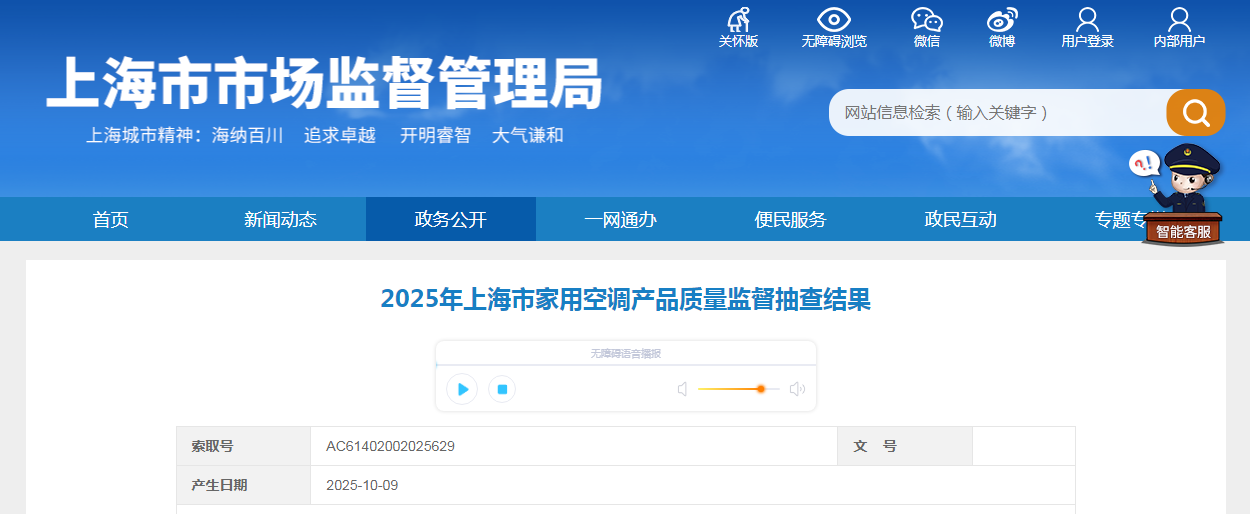
2025年上海市家用空调产品质量监督抽查结果公布
Zhong Guo Zhi Liang Xin Wen Wang· 2025-10-15 08:25
Core Insights - The Shanghai Municipal Market Supervision Administration conducted a quality inspection of household air conditioning products, revealing that all 20 sampled products met quality standards [2] Group 1: Inspection Results - A total of 20 batches of air conditioning products were inspected, with no non-compliant products found [2] - The inspection included 2 batches from production, 14 batches from physical sales, and 4 batches from e-commerce sales [2] - The sampled products originated from 7 provinces and cities, with 3 batches produced in Shanghai and 17 batches from other provinces [2] Group 2: Compliance Standards - The inspection was conducted based on the SHSSXZ0033-2025 guidelines for room air conditioners in Shanghai [2] - All inspected products conformed to relevant quality standards as per the 2025 Shanghai household air conditioning product quality supervision inspection criteria [2]





行业轮动模型由高切低,增配顺周期板块
GOLDEN SUN SECURITIES· 2025-10-15 05:17
Quantitative Models and Construction Methods 1. Model Name: Industry Relative Strength (RSI) Model - **Model Construction Idea**: This model identifies leading industries by calculating their relative strength (RS) based on historical price performance over different time windows [10] - **Model Construction Process**: 1. Use 29 first-level industry indices as the configuration targets [10] 2. Calculate the price change rates for the past 20, 40, and 60 trading days for each industry index [10] 3. Rank the industries based on their price change rates for each time window and normalize the rankings to obtain RS_20, RS_40, and RS_60 [10] 4. Calculate the average of the three rankings to derive the final RS value: $ RS = \frac{RS_{20} + RS_{40} + RS_{60}}{3} $ [10] 5. Industries with RS > 90% by the end of April are identified as potential leading industries for the year [10] - **Model Evaluation**: The model successfully identified key annual industry trends, such as high dividend, resource products, exports, and AI, which were validated by market performance throughout the year [10][12] 2. Model Name: Industry Sentiment-Trend-Crowding Framework - **Model Construction Idea**: This framework provides two industry rotation strategies based on market conditions: 1. High sentiment + strong trend, avoiding high crowding (aggressive strategy) 2. Strong trend + low crowding, avoiding low sentiment (conservative strategy) [6][14] - **Model Construction Process**: 1. Evaluate industries based on three dimensions: sentiment, trend, and crowding [6][14] 2. Use sentiment as the core metric for the aggressive strategy, with crowding as a risk control factor [14] 3. Use trend as the core metric for the conservative strategy, avoiding low-sentiment industries [14] 4. Allocate weights to industries based on their scores in the three dimensions [6][14] - **Model Evaluation**: The framework is effective in adapting to different market conditions and has shown strong performance in historical backtests [6][14] 3. Model Name: Left-Side Inventory Reversal Model - **Model Construction Idea**: This model identifies industries with potential for recovery by analyzing sectors in distress or those with low inventory pressure and high analyst optimism [24] - **Model Construction Process**: 1. Identify industries currently in distress or recovering from past distress [24] 2. Focus on sectors with low inventory pressure and potential for restocking [24] 3. Incorporate analyst long-term positive outlooks for these industries [24] - **Model Evaluation**: The model effectively captures recovery opportunities in industries undergoing inventory restocking cycles, providing significant absolute and relative returns [24] --- Model Backtesting Results 1. Industry Relative Strength (RSI) Model - **Annualized Return**: Not explicitly mentioned - **Excess Return**: Not explicitly mentioned - **Information Ratio (IR)**: Not explicitly mentioned - **Maximum Drawdown**: Not explicitly mentioned - **Monthly Win Rate**: Not explicitly mentioned - **Performance Highlights**: - Industries with RS > 90% by April 2024 included coal, utilities, home appliances, banking, petrochemicals, communication, non-ferrous metals, agriculture, and automotive [10] - These industries showed strong performance, with key themes being high dividends, resource products, exports, and AI [10][12] 2. Industry Sentiment-Trend-Crowding Framework - **Annualized Return**: 22.1% (long-only portfolio) [14] - **Excess Return**: 13.8% (annualized) [14] - **Information Ratio (IR)**: 1.51 [14] - **Maximum Drawdown**: -8.0% [14] - **Monthly Win Rate**: 68% [14] - **Performance Highlights**: - 2023 excess return: 7.3% [14] - 2024 excess return: 5.7% [14] - 2025 YTD excess return: 2.8% [14] 3. Left-Side Inventory Reversal Model - **Annualized Return**: Not explicitly mentioned - **Excess Return**: - 2023: 17.0% (relative to equal-weighted industry benchmark) [24] - 2024: 15.4% (relative to equal-weighted industry benchmark) [24] - 2025 YTD: 7.8% (relative to equal-weighted industry benchmark) [24] - **Information Ratio (IR)**: Not explicitly mentioned - **Maximum Drawdown**: Not explicitly mentioned - **Monthly Win Rate**: Not explicitly mentioned - **Performance Highlights**: - Absolute return: - 2023: 13.4% [24] - 2024: 26.5% [24] - 2025 YTD: 26.4% [24] --- Quantitative Factors and Construction Methods 1. Factor Name: Sentiment Factor - **Factor Construction Idea**: Measures the overall sentiment of an industry to identify high-growth opportunities [14] - **Factor Construction Process**: 1. Evaluate the sentiment of each industry based on relevant metrics (not explicitly detailed in the report) [14] 2. Rank industries by sentiment scores [14] - **Factor Evaluation**: Sentiment is a core metric in the aggressive strategy of the Industry Sentiment-Trend-Crowding Framework, providing strong signals for high-growth opportunities [14] 2. Factor Name: Trend Factor - **Factor Construction Idea**: Measures the strength of market trends to identify industries with strong momentum [14] - **Factor Construction Process**: 1. Evaluate the trend of each industry based on relevant metrics (not explicitly detailed in the report) [14] 2. Rank industries by trend scores [14] - **Factor Evaluation**: Trend is a core metric in the conservative strategy of the Industry Sentiment-Trend-Crowding Framework, offering a simple and replicable approach to industry allocation [14] 3. Factor Name: Crowding Factor - **Factor Construction Idea**: Measures the level of crowding in an industry to identify overbought or underbought sectors [14] - **Factor Construction Process**: 1. Evaluate the crowding level of each industry based on relevant metrics (not explicitly detailed in the report) [14] 2. Rank industries by crowding scores [14] - **Factor Evaluation**: Crowding is used as a risk control factor in both aggressive and conservative strategies of the Industry Sentiment-Trend-Crowding Framework [14] --- Factor Backtesting Results 1. Sentiment Factor - **Annualized Return**: Not explicitly mentioned - **Excess Return**: Not explicitly mentioned - **Information Ratio (IR)**: Not explicitly mentioned - **Maximum Drawdown**: Not explicitly mentioned - **Monthly Win Rate**: Not explicitly mentioned 2. Trend Factor - **Annualized Return**: Not explicitly mentioned - **Excess Return**: Not explicitly mentioned - **Information Ratio (IR)**: Not explicitly mentioned - **Maximum Drawdown**: Not explicitly mentioned - **Monthly Win Rate**: Not explicitly mentioned 3. Crowding Factor - **Annualized Return**: Not explicitly mentioned - **Excess Return**: Not explicitly mentioned - **Information Ratio (IR)**: Not explicitly mentioned - **Maximum Drawdown**: Not explicitly mentioned - **Monthly Win Rate**: Not explicitly mentioned
第四波国补资金来了 叠加天猫双11家电家装3C数码打5折 今晚8点开卖
Guan Cha Zhe Wang· 2025-10-15 04:05
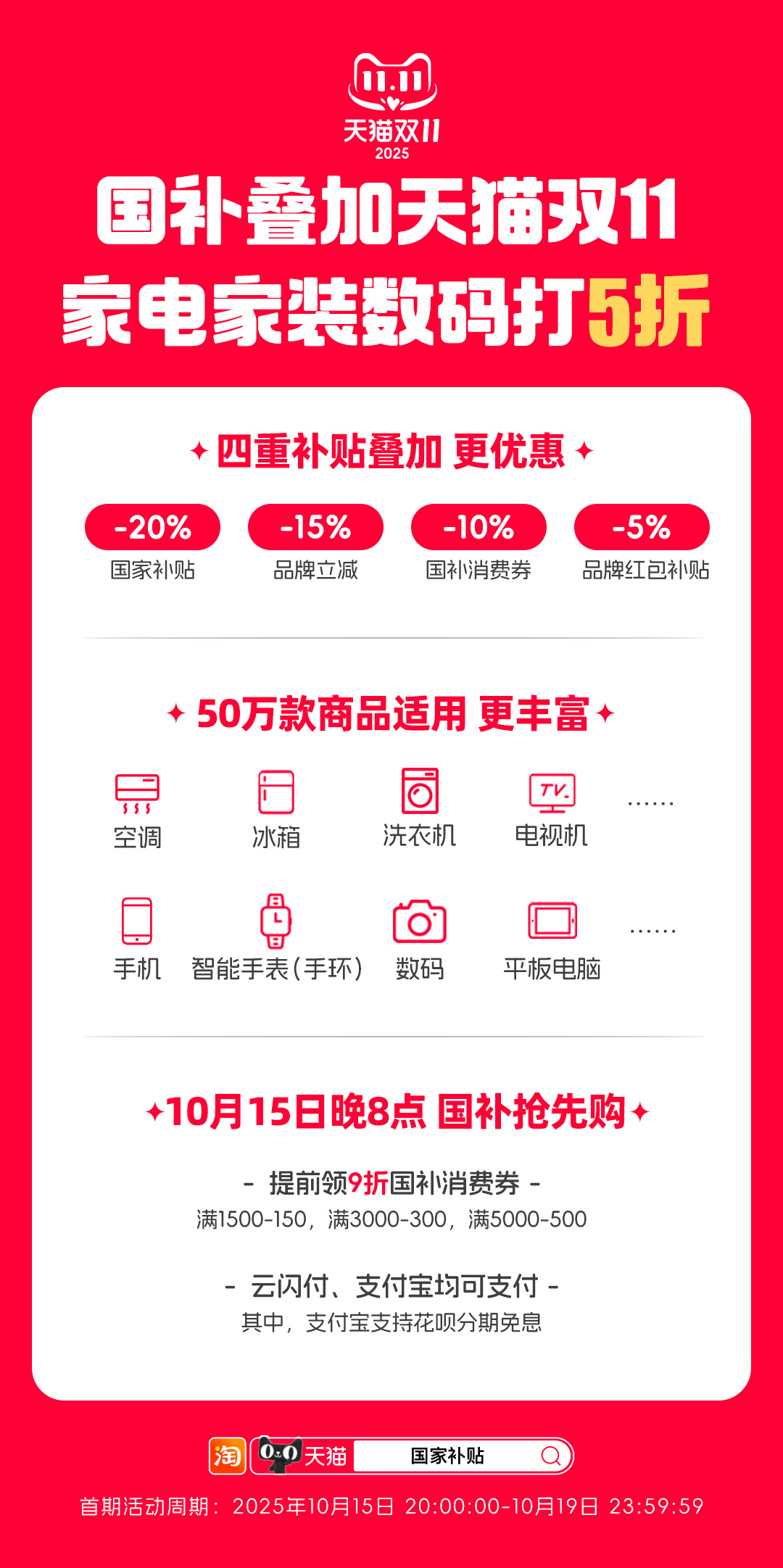
2025年第四波国补资金重磅落地,今晚8点,天猫双11国补5折开卖! 记者获悉,今年天猫双11,超3700个品类,9000个品牌商家,50万款品牌商品参与国补,覆盖家电、家装、家居、3C数码等全品类,支持双11优惠与国补 叠加,补贴商品数量较618翻倍,是全年优惠力度最大、规模最大的一次国补换新消费! 据悉,多款苹果产品参与国补,最新款苹果iPhone17,直接补贴500元!华为Pura80Ultra多重补贴后直降2400元!海尔一级能效燃气热水器K70A,原价6999 元,双11叠国补仅2959.2元,打42折!小米巨省电1.5匹空调,原价2899元,双11叠国补到手价1379元,打48折! | | 商品名 | 日常参考价 国补叠加 | | | --- | --- | --- | --- | | NEW | 四天 iPhone17 | 5999 | 5499 | | | (256G) | | | | | 华为 Pura 80 Ultra | 9999 | 7599 | | NEW | ூ门子 极浄魔盒3.0 | 9999 | 4552 | | | 洗碗机 | | | | NEW | 海尔 云溪4.0pro ...


银行股逆势上涨收涨,中证A500红利低波ETF(561680)投资机会受关注
Xin Lang Cai Jing· 2025-10-15 03:18
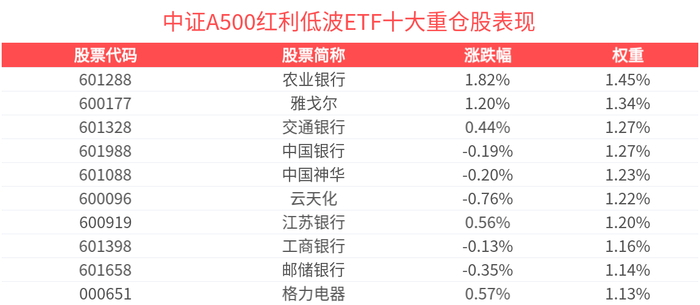
Core Insights - The China Securities A500 Dividend Low Volatility Index (932422) experienced a slight decline of 0.08% as of October 15, 2025, with mixed performance among constituent stocks [1] - The index's ETF (561680) showed a recent price of 1 yuan, with a weekly increase of 2.67%, ranking in the top third among comparable funds [1] - The ETF's trading volume was notable, with an average daily transaction of 34.18 million yuan over the past week, leading among comparable funds [1] Performance Summary - Leading stocks included Agricultural Bank of China (601288) up by 1.82%, Conch Cement (600585) up by 1.63%, and Sun Paper (002078) up by 1.54% [1] - The largest declines were seen in TBEA Co., Ltd. (600089) down by 5.18%, Hikvision (002415) down by 1.74%, and China Nuclear Power (601985) down by 1.41% [1] Liquidity and Drawdown - The ETF's turnover rate was 1.04%, with total transactions amounting to 4.1664 million yuan [1] - The maximum drawdown since the ETF's inception was 3.42%, with a relative benchmark drawdown of 0.23% [1] Fee Structure - The management fee for the ETF is set at 0.50%, while the custody fee is 0.10% [1] Tracking Accuracy and Valuation - The ETF achieved a tracking error of 0.034% over the past month, the highest among comparable funds [2] - The underlying index is currently valued at a historical low with a price-to-book (PB) ratio of 1.01, below 82.31% of the time over the past year, indicating strong valuation appeal [2] Index Composition - The index comprises 50 stocks selected from the China Securities A500 Index, focusing on those with consistent dividends, high dividend yields, and low volatility [2] - As of September 30, 2025, the top ten weighted stocks accounted for 30.72% of the index, including Agricultural Bank of China (601288), Yageo (600177), and China Shenhua (601088) [2]
A股成交量缩量,四季度或风格切换,自由现金流ETF基金(159233)投资机会受关注
Xin Lang Cai Jing· 2025-10-15 03:13
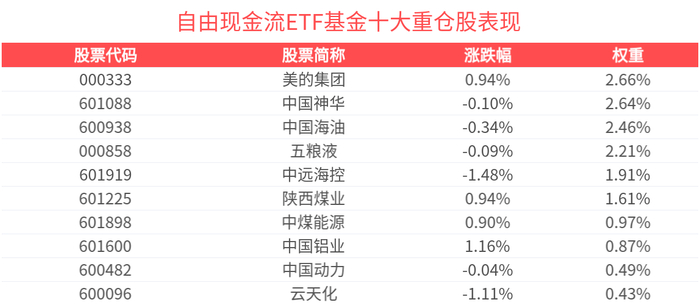
Core Viewpoint - The article discusses the performance and metrics of the CSI All Index Free Cash Flow ETF (932365) and its underlying index, highlighting recent trends in stock performance, liquidity, and fund inflows. Group 1: Fund Performance - As of October 14, 2025, the Free Cash Flow ETF has achieved a maximum monthly return of 7.80% since its inception, with the longest consecutive monthly gain being 4 months and a total increase of 12.71% [2] - The fund has a historical monthly profit probability of 89.47%, with a 100% probability of profit over a 3-month holding period [2] - The maximum drawdown since inception is 3.76%, with a relative benchmark drawdown of 0.49% [2] Group 2: Fund Metrics - The Free Cash Flow ETF fund has a management fee of 0.50% and a custody fee of 0.10% [3] - The fund closely tracks the CSI All Index Free Cash Flow Index, which includes 100 listed companies with high free cash flow rates [3] - As of September 30, 2025, the top ten weighted stocks in the index account for 56.31% of the total index weight, with notable companies including China National Offshore Oil Corporation and Midea Group [3][5] Group 3: Liquidity and Inflows - The Free Cash Flow ETF has seen continuous net inflows for 26 days, with a maximum single-day net inflow of 19.19 million yuan, totaling 175 million yuan in net inflows [1] - The fund's latest scale reached 281 million yuan, marking a 3-month high, with the latest share count at 246 million shares [1] - The fund's average daily trading volume over the past year is 21.83 million yuan, with a turnover rate of 1.09% on the latest trading day [1]
家电头部企业抢占低端市场并不意外
Sou Hu Cai Jing· 2025-10-15 01:41
Core Viewpoint - The home appliance industry is shifting from a growth phase to a mature phase, prompting high-end brands like Gree to launch sub-brands to capture the price-sensitive market, particularly targeting the Z generation [1][3][5]. Group 1: Market Dynamics - During the growth phase, high-end brands focused on quality and brand reputation, avoiding low-price competition, as the market was characterized by high demand for premium products [4][5]. - The current market environment has changed significantly, with economic growth slowing and a trend towards consumer downgrade, leading to a need for brands to adapt their strategies [5][6]. - The Z generation, now a major consumer group, prioritizes price and practicality over brand prestige, making it essential for brands to address this demographic's preferences [5][7]. Group 2: Strategic Responses - Gree has initiated the launch of its sub-brand Jinghong to penetrate the low-price segment, following the successful strategies of competitors like Midea and Haier, which have already established sub-brands targeting younger consumers [3][7]. - Haier and Midea have both developed sub-brands to cover the entire price spectrum, with Haier's Casarte targeting high-end markets and Midea's Hualing focusing on high cost-performance for younger consumers [6][7]. - The strategy of using sub-brands to capture lower-end markets allows high-end brands to maintain their premium image while expanding their market share [8]. Group 3: Future Outlook - The introduction of sub-brands is seen as a strategic necessity for high-end brands to sustain growth in a mature market, as neglecting the low-end segment could limit overall market scale [8]. - Gree's strategy to leverage its strong manufacturing capabilities to offer high-quality, cost-effective products under the Jinghong brand is expected to resonate well with the Z generation [8].

2025年1-4月中国家用洗衣机产量为3918.8万台 累计增长10.9%
Chan Ye Xin Xi Wang· 2025-10-15 01:13
上市企业:美的集团(000333),海尔智家(600690),格力电器(000651),惠而浦(600983),TCL科技 (000100),创维数字(000810) 知前沿,问智研。智研咨询是中国一流产业咨询机构,十数年持续深耕产业研究领域,提供深度产业研 究报告、商业计划书、可行性研究报告及定制服务等一站式产业咨询服务。专业的角度、品质化的服 务、敏锐的市场洞察力,专注于提供完善的产业解决方案,为您的投资决策赋能。 相关报告:智研咨询发布的《2025-2031年中国洗衣机行业市场供需态势及投资前景研判报告》 数据来源:国家统计局,智研咨询整理 根据国家统计局数据显示:2025年4月中国家用洗衣机产量为965万台,同比增长2.6%;2025年1-4月中 国家用洗衣机累计产量为3918.8万台,累计增长10.9%。 2020-2025年1-4月中国家用洗衣机产量统计图 ...

即时零售发展势头强劲:半小时送达,你下单了么?
Xin Hua Wang· 2025-10-15 00:15
Core Insights - The core viewpoint of the articles is that the instant retail industry in China is rapidly evolving, with significant growth expected, driven by consumer demand for convenience and speed in shopping experiences [1][5]. Group 1: Industry Growth and Projections - The instant retail market in China is projected to exceed 2 trillion yuan by 2030, indicating a promising future for the sector [1]. - Instant retail is currently in a rapid development phase, with multiple e-commerce platforms launching their instant retail brands, such as JD's "JD Seconds" and Meituan's "Meituan Flash Purchase" [5][6]. Group 2: Role of Front Warehouses - Front warehouses are crucial for the efficiency of instant retail, allowing for a wide variety of products to meet specific consumer needs [2][3]. - These warehouses can stock up to 15,000 SKUs, enabling them to cater to local demands effectively, such as stocking medical supplies near hospitals or outdoor gear near tourist attractions [3][4]. - As of Q2 this year, Meituan has established over 50,000 flash warehouses, with plans to reach 100,000 by 2027 [3]. Group 3: Consumer Experience and Preferences - Instant retail platforms are enhancing consumer convenience, allowing for quick delivery of products, often within 20-30 minutes [1][2]. - The variety of products available through instant retail is expanding, with categories like snacks, beverages, and fresh produce being the most popular, while electronics and personal care items are seeing rapid growth [8][9]. Group 4: Brand Engagement and Market Dynamics - More brands are joining instant retail platforms, which increases consumer choices and drives sales growth for various categories, including electronics and household goods [9][10]. - Brands that partner with instant retail platforms can better understand consumer needs and market trends, allowing for targeted marketing strategies and personalized services [11].