顺丰控股

Search documents
无锡机场“悦鲜活”高效护航阳澄湖大闸蟹“鲜飞”全国
Zhong Guo Min Hang Wang· 2025-10-15 09:08
Core Viewpoint - The article highlights the peak season for air logistics in transporting fresh products, particularly the Yangcheng Lake hairy crabs, which began on September 26, marking a significant increase in air freight activity at Wuxi Shuofang Airport [1][3]. Group 1: Air Logistics Performance - On the first day of crab catching, Wuxi Shuofang Airport achieved a record cargo and mail throughput of 862.6 tons, setting a historical high for the same period [3]. - The outbound cargo volume of hairy crabs from the airport has shown strong year-on-year growth, contributing positively to the food economy in the Yangtze River Delta region [3]. Group 2: Fresh Logistics Service - Wuxi Shuofang Airport has launched a dedicated logistics service brand "Yue Xian Huo" in collaboration with SF Express to address the challenges of transporting perishable goods, focusing on efficiency and safety [3][4]. - The airport has established a specialized "seasonal fresh guarantee team" to streamline the entire process from security checks to loading, ensuring a fast and safe delivery of hairy crabs [3][4]. Group 3: Service Efficiency Improvements - The "Yue Xian Huo" service has improved its operational efficiency by over 50% this year, reducing the airport handling time for a batch of hairy crabs to the shortest possible duration [4]. - The logistics process includes priority security checks and immediate inspections, with dedicated personnel and equipment ensuring quick verification and loading of goods [4]. Group 4: Future Developments - Wuxi Shuofang Airport plans to continue optimizing the "Yue Xian Huo" service, enhancing the logistics process for fresh products to create a more stable and efficient "air bridge" for high-quality agricultural products from the Yangtze River Delta [4].


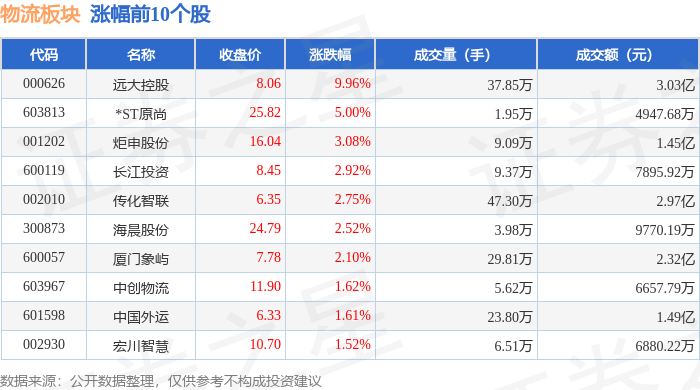
物流板块10月15日涨0.81%,远大控股领涨,主力资金净流入3803.61万元
Zheng Xing Xing Ye Ri Bao· 2025-10-15 08:37
从资金流向上来看,当日物流板块主力资金净流入3803.61万元,游资资金净流出9136.68万元,散户资金 净流入5333.07万元。物流板块个股资金流向见下表: | 代码 | 名称 | 主力净流入(元) | 主力净占比 游资净流入(元) | | 游资净占比 散户净流入 (元) | | 散户净占比 | | --- | --- | --- | --- | --- | --- | --- | --- | | 002468 申通快递 | | 4422.99万 | 10.67% | -1378.71万 | -3.33% | -3044.28万 | -7.34% | | 002352 顺丰控股 | | 4044.39万 | 4.34% | -5496.41万 | -5.90% | 1452.02万 | 1.56% | | 002010 传化智联 | | 2443.86万 | 8.23% | -1055.14万 | -3.56% | -1388.71万 | -4.68% | | 001391 | 国货航 | 1816.69万 | 12.48% | -1078.30万 | -7.41% | -738.39万 | -5.07 ...

出海沙特:当中国“卷王”遇见“松弛感”沙特工人
创业邦· 2025-10-15 03:23
Core Viewpoint - The article discusses the cultural clash between Chinese workers and Saudi labor practices in the context of large-scale projects in Saudi Arabia, highlighting the differences in work ethics, labor conditions, and the impact of local regulations on foreign workers [4][10][21]. Group 1: Labor Conditions and Cultural Differences - Chinese workers in Saudi Arabia endure extreme conditions, working over 12 hours a day in temperatures reaching 50°C, earning approximately 28,000 RMB per month, which is double the domestic salary for similar positions [6][7]. - The work ethic of Chinese laborers is driven by a belief that delays are a sign of failure, leading them to push their limits despite health risks, while Saudi workers adhere to a more relaxed work schedule influenced by religious practices [9][10]. - The "Kafala" sponsorship system creates a significant divide between foreign workers and local employees, leading to disparities in pay and working conditions based on nationality, with some foreign workers earning significantly less than their Western counterparts [12][13]. Group 2: Economic and Social Implications - The Saudi economy relies heavily on foreign labor, with approximately 44.4% of the population being expatriates, and the influx of Chinese workers has increased significantly due to the Belt and Road Initiative [4][10]. - The high welfare system in Saudi Arabia, supported by oil revenues, has led to a lack of motivation among local youth, creating a "comfort trap" that hinders innovation and productivity [13][15]. - The article emphasizes the need for Chinese companies to adapt to local customs and labor laws, suggesting that successful integration requires respect for local practices and a willingness to compromise [21][22]. Group 3: Business Strategies and Local Integration - Chinese companies are increasingly adopting local hiring strategies to comply with Saudi regulations, often hiring local workers initially and then selectively retaining those who demonstrate capability [21][22]. - Building trust and relationships is crucial for business success in Saudi Arabia, where personal connections often outweigh formal contracts in securing projects [16][18]. - The article highlights examples of successful local integration, such as J&T Express's collaboration with local logistics training institutions, which helps develop local talent while maintaining operational efficiency [22][24].

A股成交量缩量,四季度或风格切换,自由现金流ETF基金(159233)投资机会受关注
Xin Lang Cai Jing· 2025-10-15 03:13
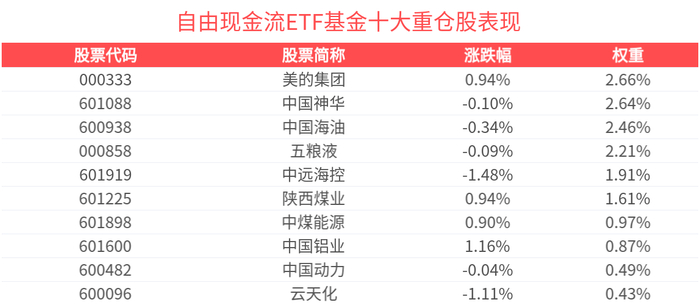
Core Viewpoint - The article discusses the performance and metrics of the CSI All Index Free Cash Flow ETF (932365) and its underlying index, highlighting recent trends in stock performance, liquidity, and fund inflows. Group 1: Fund Performance - As of October 14, 2025, the Free Cash Flow ETF has achieved a maximum monthly return of 7.80% since its inception, with the longest consecutive monthly gain being 4 months and a total increase of 12.71% [2] - The fund has a historical monthly profit probability of 89.47%, with a 100% probability of profit over a 3-month holding period [2] - The maximum drawdown since inception is 3.76%, with a relative benchmark drawdown of 0.49% [2] Group 2: Fund Metrics - The Free Cash Flow ETF fund has a management fee of 0.50% and a custody fee of 0.10% [3] - The fund closely tracks the CSI All Index Free Cash Flow Index, which includes 100 listed companies with high free cash flow rates [3] - As of September 30, 2025, the top ten weighted stocks in the index account for 56.31% of the total index weight, with notable companies including China National Offshore Oil Corporation and Midea Group [3][5] Group 3: Liquidity and Inflows - The Free Cash Flow ETF has seen continuous net inflows for 26 days, with a maximum single-day net inflow of 19.19 million yuan, totaling 175 million yuan in net inflows [1] - The fund's latest scale reached 281 million yuan, marking a 3-month high, with the latest share count at 246 million shares [1] - The fund's average daily trading volume over the past year is 21.83 million yuan, with a turnover rate of 1.09% on the latest trading day [1]
国信证券晨会纪要-20251015
Guoxin Securities· 2025-10-15 01:42
Core Insights - The report highlights the potential for performance recovery in the express delivery sector due to the "anti-involution" policies, which are expected to last until the end of the year or even until the Spring Festival next year [6][7] - The coal industry is anticipated to see a rebound in the fourth quarter of 2025, with clear bottom signals and improving profitability as coal prices are expected to rise [10][11] - The Hong Kong stock market is experiencing a risk premium, with a reevaluation of its valuation logic, particularly in light of recent economic conditions [14][15] Transportation Industry - The express delivery sector is expected to benefit from the "anti-involution" policies, which have led to price increases across approximately 90% of the delivery volume in China [6][7] - The shipping industry is facing challenges due to mutual port fees imposed by the US and China, affecting over 40% of shipping capacity, with varying impacts across different shipping segments [6] - The aviation sector is seeing a stabilization in domestic ticket prices, with a projected recovery in profitability as the economy improves [6][7] Coal Industry - The coal sector is showing signs of a bottoming out, with expectations for a price rebound in the fourth quarter of 2025, driven by supply constraints and seasonal demand increases [10][11] - Coal production has decreased due to weather conditions and regulatory measures, with a projected annual output decline of 1.1% [11][12] - Demand for coal is expected to rise in the winter months, supported by increased electricity consumption and chemical coal needs [12][13] Investment Recommendations - The report recommends investing in companies with stable operations and potential for steady returns, including SF Express, Zhongtong Express, and Southern Airlines, among others [8][21] - In the coal sector, companies like Yancoal and Shanxi Coking Coal are highlighted as potential investment targets due to their expected performance recovery [14] - The automotive glass market is projected to grow significantly, with recommendations for investing in leading companies like Fuyao Glass, which is well-positioned to capitalize on market trends [21]
武汉高速公路网密度居全国第四
Chang Jiang Ri Bao· 2025-10-15 00:45
Core Insights - The recent National Day and Mid-Autumn Festival holiday saw a record high of 9.9581 million vehicle trips in Wuhan, indicating a significant increase in travel and tourism activity [1] - The frequency of the "Han-Shanghai" and "Han-Hong Kong" air routes has reached nine times that of the end of the 13th Five-Year Plan, reflecting a growing interest from tourists in visiting Wuhan [2] - Wuhan's transportation network is evolving into a robust open hub, enhancing its development advantages and international influence [3] Transportation Infrastructure - During the holiday, the average daily vehicle traffic at Wuhan's expressway toll gates reached 1.2448 million, a year-on-year increase of 0.88% [2] - Wuhan has initiated 13 expressway projects during the 14th Five-Year Plan, with eight projects completed, resulting in an expressway network density of 11.4 kilometers per 100 square kilometers, ranking fourth nationally [2] - The city's comprehensive transportation network has expanded to 18,500 kilometers, with 128 international transport routes established, facilitating efficient logistics and trade [4][5] Economic Impact - The logistics cost in Wuhan has decreased, with the ratio of social logistics costs to GDP falling to 12.2%, which is 2 percentage points lower than the national average [6] - The city has seen a 20% increase in foreign trade import and export volume from January to July this year, ranking second among sub-provincial cities in China [5] - The establishment of modern logistics parks and the increase in A-level logistics enterprises have contributed to a thriving logistics market, with over 5,800 transportation market entities in the city [6][7] International Connectivity - Wuhan has expanded its international transport channels, with the launch of the first international bulk cargo shipping route between Indonesia and Wuhan, significantly reducing logistics costs [7] - The city has developed a second starting station for the China-Europe Railway Express, enhancing connectivity between maritime and land routes [7] - The promotion of a public information platform for supply chain logistics is part of Wuhan's strategy to improve logistics efficiency and reduce costs [7]
广州启动一刻钟便民生活季 首创“幸福半径同心圆”四个一共建模式
Zhong Guo Jin Rong Xin Xi Wang· 2025-10-14 12:16
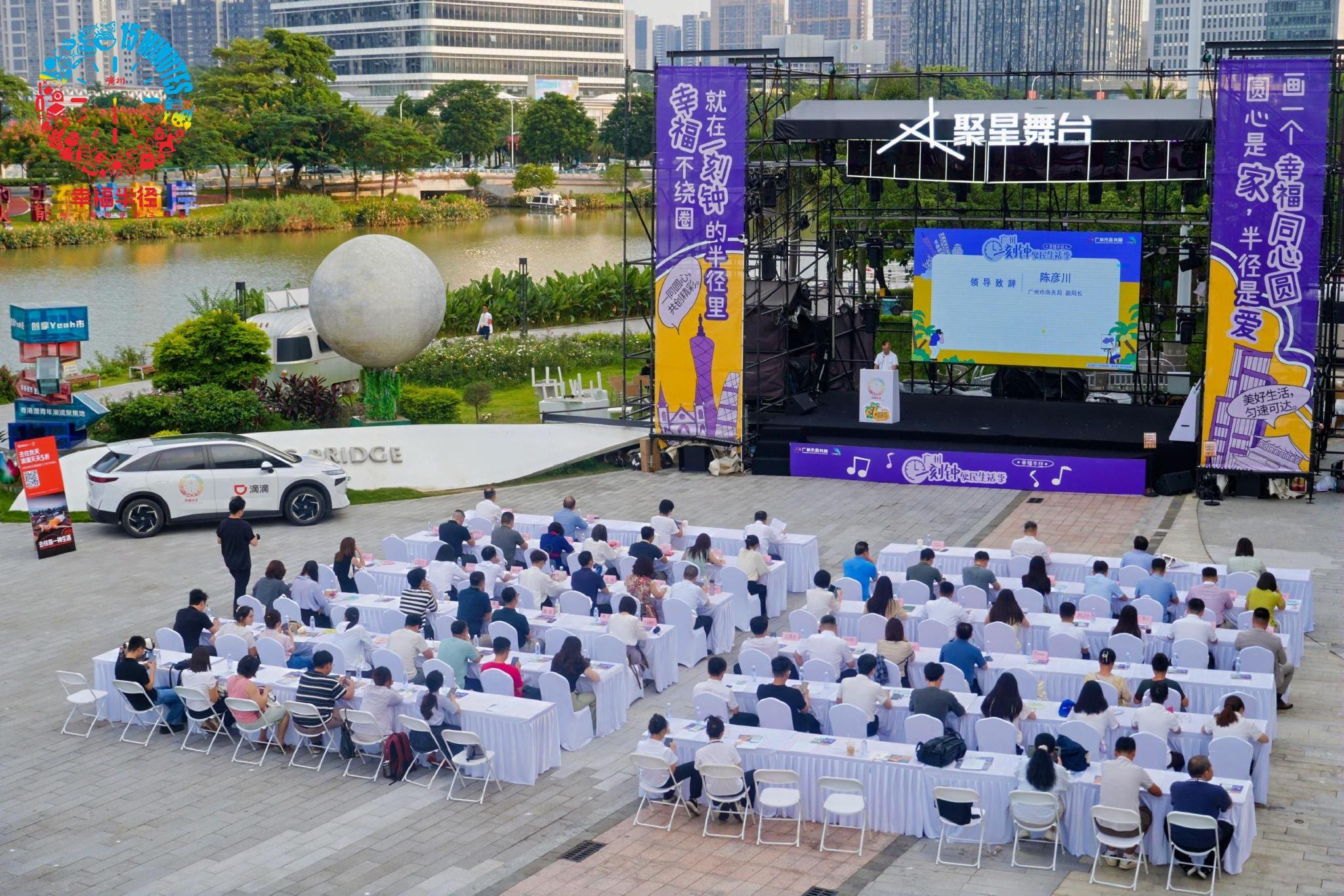
Core Viewpoint - The "Guangzhou One-Quarter Hour Convenient Living Circle" initiative aims to enhance residents' convenience and happiness through the establishment of a comprehensive service network, focusing on core community needs and leveraging various stakeholders for effective implementation [1][2]. Group 1: Initiative Overview - The initiative is guided by the Guangdong Provincial Department of Commerce and aims to create a high-quality living environment by summarizing past efforts and mobilizing future actions [1][2]. - Guangzhou is recognized as the first city in the province to implement the "One-Quarter Hour Convenient Living Circle" and has established a service network across 21 pilot areas and 87 communities [2][4]. Group 2: Achievements and Impact - The initiative has led to the establishment of over 15,000 commercial outlets within the 15-minute service radius, benefiting approximately 1 million residents and creating over 110,000 jobs [4][5]. - Guangzhou ranks first among five international consumption center cities in the "China Urban Convenience Store Development Index" for 2024 [4]. Group 3: Policy and Planning - The city has released the "Guangzhou Urban One-Quarter Hour Convenient Living Circle Construction Special Plan (2023-2030)" and guidelines, focusing on defining living circle boundaries and enhancing service quality [5][6]. - The plan emphasizes a human-centered approach, integrating local characteristics and community needs into the development of the living circle [5]. Group 4: Community Engagement and Services - The initiative includes a "Community Co-Building Salon" to gather feedback from residents and experts, fostering dialogue on community needs and construction concepts [8]. - Various enterprises, including Meituan and UnionPay, are actively participating in the initiative, providing innovative community services and platforms to enhance local living experiences [6][11]. Group 5: Consumer Benefits and Activities - The initiative incorporates multiple consumer benefits, such as government-issued consumption vouchers and subsidies for vehicle purchases, enhancing the overall local living experience [14]. - Over 150 themed community service activities will be launched across 11 districts, covering various aspects of daily life, including food, shopping, and entertainment [14][15].
交通区位优势正在转化为发展优势,武汉高速公路网密度居全国第四
Chang Jiang Ri Bao· 2025-10-14 09:30
Core Insights - The recent National Day and Mid-Autumn Festival holiday saw a record high of 9.9581 million vehicle trips in Wuhan, indicating a robust growth in tourism and transportation [1] - Wuhan's transportation infrastructure is rapidly evolving, enhancing its position as a key open hub for economic development [1][4] Transportation Infrastructure - During the recent holiday, the average daily vehicle traffic at Wuhan's expressway toll gates reached 1.2448 million, marking a year-on-year increase of 0.88% [4] - Wuhan has initiated 13 expressway projects during the 14th Five-Year Plan, with 8 projects completed, resulting in an expressway network density of 11.4 kilometers per 100 square kilometers, ranking fourth nationally [4] - The frequency of air routes has significantly increased, with "Han-Shanghai" flights reaching 17-18 daily and "Han-Hong Kong" flights at 16 weekly, attracting more tourists from Shanghai and Hong Kong [4] Economic and International Cooperation - The development of a comprehensive transportation network has not only boosted local tourism but also facilitated cross-regional economic exchanges and international collaborations [5] - Wuhan has established deep cooperation with multiple countries and regions over the past five years, enhancing its international influence and openness [5] International Trade and Logistics - The number of international transport routes from Wuhan has expanded to 128, supporting the global distribution of "Wuhan-made" products [6][8] - The city has seen a 20% increase in foreign trade import and export from January to July this year, ranking second among major cities in China [8] - The logistics cost ratio to GDP has decreased to 12.2%, which is 2 percentage points lower than the national average, indicating improved efficiency in logistics [9] Innovations in Logistics - Wuhan has pioneered the first international bulk cargo shipping route in Central China, significantly reducing shipping times and costs [10] - The establishment of modern logistics parks and the introduction of innovative logistics solutions have led to a substantial increase in the number of logistics enterprises and warehouse capacity in the region [9][10]

美国最大外卖巨头DoorDash押注配送机器人,行业变革暗潮汹涌
机器人大讲堂· 2025-10-14 09:04
Core Viewpoint - DoorDash is initiating a robot delivery revolution in the U.S., aiming to reshape the global instant delivery industry by integrating robotics into its core operations [1][3]. Group 1: Company Developments - In October 2025, DoorDash launched its self-developed delivery robot, Dot, and entered a strategic partnership with Serve Robotics to scale robot delivery services in Los Angeles, with plans for nationwide expansion [3]. - DoorDash, founded in 2013, is the largest food delivery platform in the U.S., holding a 60% market share and achieving a market valuation exceeding $60 billion [3][4]. - The introduction of the DashPass subscription service in 2022 has attracted over 15 million members, expanding its operations to over 4,000 cities across the U.S., Canada, Australia, and parts of Europe by 2025 [5]. Group 2: Market Context - The global food delivery robot market is projected to reach $299 million by 2024, indicating significant growth potential for DoorDash's robot delivery operations [5]. - The increasing costs in the food service industry are driving the need for automation, with robot delivery costs being one-third of human labor costs, and DoorDash's pilot programs showing a 40% reduction in average delivery costs [8][9]. Group 3: Technology and Efficiency - Dot is designed to deliver various everyday items, capable of carrying up to 16 kg and traveling at speeds of 32 km/h, ensuring food freshness [7]. - The integration of SmartScale technology has reduced human labor costs by 80% and decreased order complaint rates by 62% [9]. - Serve robots optimize delivery routes using AI algorithms, achieving an average delivery time of just 18 minutes [9]. Group 4: Challenges and Barriers - Despite the promising outlook, the widespread adoption of delivery robots faces challenges, including technical limitations in extreme weather and complex terrains [11][12]. - Regulatory hurdles vary significantly across regions, complicating cross-regional operations for companies like DoorDash [12]. - The initial investment for robots is substantial, with costs around $100,000 per unit, which may deter small businesses from adopting this technology [12]. Group 5: Future Prospects - The evolution of delivery robots is part of a broader digital transformation in logistics, with the global market for delivery robots expected to reach billions of dollars [20]. - In China, daily delivery demand exceeds 300 million orders, and if 10% were handled by robots, the market could exceed 55 billion yuan annually [20]. - Innovations in technology and business models, such as robot leasing and data services, are expected to accelerate the profitability of robot delivery systems [18][20].

交通运输行业 10 月投资策略:快递反内卷有望带来业绩修复,中美互征港口费有望带动航运运价上行
Guoxin Securities· 2025-10-14 05:03
Group 1: Shipping Industry - The implementation of mutual port fees between China and the US is expected to impact over 40% of shipping capacity, with Chinese shipping companies being the most affected [1][20][21] - Different shipping segments will experience varying degrees of impact, with oil and dry bulk sectors facing greater challenges compared to container shipping [1][20] - Short-term price fluctuations may occur due to initial chaos from the new policies, but overall, the impact on freight rates is expected to be limited [1][20] Group 2: Aviation Industry - Domestic passenger flight volumes have decreased slightly post-National Day, but overall traffic remains above 2019 levels, indicating a recovery trend [2][33] - The average domestic ticket price is stable, with a slight year-on-year increase, suggesting a balanced supply-demand dynamic in the aviation market [2][34] - The aviation sector is expected to see continued recovery in profitability as the supply-demand gap narrows, with recommendations to invest in major airlines like China Eastern Airlines and Spring Airlines [2][34] Group 3: Express Delivery Industry - The "anti-involution" policy has led to price increases across approximately 90% of express delivery volumes in China, indicating a shift towards more sustainable competition [2][43][44] - The profitability of express delivery companies is anticipated to improve in the fourth quarter, driven by seasonal demand and the effects of the "anti-involution" measures [2][43][44] - Major express companies like SF Express and ZTO Express are expected to see significant growth in profitability in 2025, with projected earnings growth of 15-20% for SF Express [2][54] Group 4: Logistics Sector - The logistics company DeBang's revenue has shown double-digit growth, but profitability has been under pressure due to increased transportation costs [2][66][67] - The company is focusing on enhancing its service quality and optimizing its product structure to improve margins in the future [2][66][67]