
汇丰银行

Search documents
中国外汇交易中心:支持债券通下境外机构投资者参与债券回购交易;2024年全国社保基金投资收益率达8.1% | 券商基金早参
Mei Ri Jing Ji Xin Wen· 2025-09-30 04:29
Group 1: Bond Market Developments - The China Foreign Exchange Trading Center has expanded the channels and scope for foreign institutional investors to participate in bond repurchase transactions, effective from September 29 [1] - Under the new mechanism, 18 foreign institutional investors completed 44 buyout repurchase transactions totaling 3.95 billion yuan, while 12 foreign institutions engaged in 12 buyout repurchase transactions amounting to 1.87 billion yuan [1] - This initiative is seen as a significant step towards the opening of the bond market, enhancing business opportunities for banks and brokers, and improving liquidity in the bond market [2] Group 2: National Social Security Fund Performance - The National Social Security Fund reported an investment return of 218.418 billion yuan with a yield of 8.1% for the year 2024, with total assets reaching 3,322.462 billion yuan [3] - The fund's average annual investment return since its establishment stands at 7.39%, indicating robust operational capability [3] - The strong performance of the social security fund is expected to boost its allocation to A-shares, benefiting sectors like finance and consumer goods [3] Group 3: Trends in Fund Management - Zhang Qinghua has resigned as Deputy General Manager of E Fund to focus on investment management, reflecting a trend in the fund industry towards specialization in investment research [4] - This shift is part of a broader trend where fund managers are moving away from administrative roles to concentrate on investment performance, which may enhance the competitiveness of the public fund industry [4] Group 4: Private Equity Fund Strategies - Over 60% of private equity funds are opting for heavy positions as they approach the National Day holiday, with a significant increase in the overall position index [5] - The majority of private equity funds are optimistic about the post-holiday market, focusing on technology growth sectors, while some are betting on the recovery of valuations in the new energy and real estate sectors [5] - The overall positive sentiment among private equity funds may stabilize market emotions, although caution is advised regarding potential external market disturbances [5]
债券回购市场进一步对外开放措施落地
Jin Rong Shi Bao· 2025-09-30 01:16
Core Points - The People's Bank of China, the China Securities Regulatory Commission, and the State Administration of Foreign Exchange have announced measures to support foreign institutional investors in the Chinese bond market, specifically regarding bond repurchase transactions [1][2] - Starting from September 29, the China Foreign Exchange Trade System and National Interbank Funding Center expanded the channels and scope for foreign institutional investors to conduct bond repurchase transactions [1] - On the first day of trading, 18 foreign institutional investors completed 44 buyout repurchase transactions totaling 3.95 billion yuan, while 12 foreign institutional investors engaged in 12 buyout repurchase transactions totaling 1.87 billion yuan [1] Summary by Sections Expansion of Services - The trading center has broadened the service channels for foreign institutional investors to include all types of investors under the settlement agency channel for bond repurchase transactions [1] - Collaboration with foreign third-party platforms like Bloomberg has been established to facilitate participation in bond repurchase transactions under the Bond Connect program [1] Initial Trading Activity - The first day of trading saw participation from various types of foreign institutions, including offshore RMB clearing banks, foreign banks, and offshore asset management products [1] - The types of bonds involved in the transactions included government bonds, policy financial bonds, interbank certificates of deposit, and ordinary financial bonds from commercial banks [1] Future Developments - The trading center plans to continue building a high-quality service system and enhance cooperation with domestic and foreign financial infrastructures and electronic trading platforms [2] - Ongoing improvements to trading tools and mechanisms for foreign institutions are aimed at supporting the high-quality development and high-level opening of the Chinese financial market [2]
资产交易上链也能电商化,从钢筋水泥到数字资产,房企涌入RWA背后的挑战与迷雾
Hua Xia Shi Bao· 2025-09-27 12:05
Core Insights - The establishment of ALMAD Group by Zheng Zhigang marks a strategic shift towards investing in digital assets and RWA tokenization, reflecting a broader trend among the new generation of wealthy families in Hong Kong [2] - RWA tokenization is gaining traction in the real estate sector, addressing liquidity issues and enabling fractional ownership of high-value assets through blockchain technology [3][4] - The global RWA market is projected to reach $26.7 billion by August 2025, with a significant increase of over 50% compared to the previous year [4] Group 1: RWA Tokenization Developments - New City Development has launched a digital asset research institute in Hong Kong to explore RWA product issuance [3] - Greenland Group has successfully completed its first RWA project, tokenizing a high-end office asset in Hong Kong valued at HKD 2.9 billion [3][4] - RWA tokenization allows for the division of large assets into smaller, tradable digital shares, significantly lowering investment thresholds for retail investors [4][5] Group 2: Market Dynamics and Opportunities - The RWA market is seen as a solution to the liquidity challenges in the traditional real estate market, particularly for large operational real estate projects [3][4] - The entry of companies like Kaisa Capital and New City Development into the RWA space indicates a strategic pivot towards digital financial innovation within a compliant regulatory framework [8][9] - The RWA market is characterized by a diverse range of participants, including technology firms, financial institutions, and real estate companies, all leveraging their unique strengths to capitalize on this emerging trend [10] Group 3: Challenges and Considerations - The RWA market faces challenges related to the quality of asset supply, with a need for stringent selection mechanisms to ensure asset quality and investor confidence [12][13] - The dual role of asset owners and sellers in the RWA space raises concerns about the objectivity and fairness of asset pricing [11][12] - The market's current stage requires enhanced investor education and a robust regulatory framework to foster trust and facilitate growth [13]


不跟风稳定币 英国银行业埋头干“代币化存款”新赛道
智通财经网· 2025-09-26 12:15
Group 1 - Major UK banks are planning to launch tokenized versions of customer deposits next year, following a call from the Bank of England Governor Andrew Bailey to prioritize deposit tokenization technology over stablecoins [1][2] - Tokenization refers to converting assets like deposits, stocks, and bonds into digital forms stored on a blockchain, which proponents argue can enhance transaction speed, reduce costs, and improve security [1] - Banks including HSBC, NatWest, and Lloyds have initiated pilot projects to utilize tokenized deposits for payments in online markets [1] Group 2 - Bailey has expressed skepticism towards stablecoins, questioning their necessity while advocating for the higher value creation potential of tokenization technology [2] - Despite the popularity of stablecoins, Bailey warns that they could withdraw funds from the banking system and threaten financial stability, advising banks against issuing their own stablecoins [2] - The UK's Financial Conduct Authority (FCA) is not expected to finalize stablecoin regulations until the end of 2026, but the Bank of England has allowed banks to explore deposit tokenization within the existing regulatory framework [2] Group 3 - HSBC's Global Payments Solutions Head, Manish Kohli, noted that previous attempts at deposit tokenization failed due to a lack of interoperability between financial institutions, which the new pilot aims to address [3] - The pilot, which includes participation from Barclays, Nationwide, and Santander, will focus on domestic applications but has significant potential for cross-border transactions [3] - The pilot will also test the use of tokenized deposits in mortgage processes and digital asset settlements, balancing innovation with regulatory compliance [3]
低门槛入场:50美元起投的黄金交易平台如何实现高效增值?
Sou Hu Cai Jing· 2025-09-26 05:27
Core Insights - The value of gold as a safe-haven asset is increasingly highlighted amid global economic uncertainties [1] - Low-threshold gold trading platforms, starting from $50, lower market entry barriers and enhance value through technological innovations [1] Group 1: Huimin Finance - Huimin Finance breaks traditional barriers with a "micro-gram" gold investment model, allowing investments from as low as 0.01 grams (approximately $0.5) [1] - The platform's unique smart investment plan uses AI algorithms to generate personalized investment strategies based on inflation data and geopolitical events, achieving a reinvestment rate of over 85% [1] - Collaboration with state-owned banks enables rapid fund transfers, with average transaction times reduced to under 8 seconds, significantly improving liquidity [1] Group 2: Ruifeng Finance - Ruifeng Finance provides real-time pricing for gold and silver, utilizing AI big data analysis for accurate market predictions [1] - The platform supports 24/7 trading and offers detailed market analysis reports, helping users adjust positions ahead of potential losses during critical periods like the 2025 Federal Reserve rate hikes [1] - Strict fund management and encryption technologies ensure account security [1] Group 3: Wealth Alliance - Wealth Alliance integrates social features into quantitative trading, creating the first global gold strategy alliance ecosystem [2] - The "Star Strategy Following System" allows users to automatically replicate high-success-rate traders' strategies, enhancing average returns by 22% for users utilizing this feature [2] - Collaboration with renowned jewelry brands enables direct exchange of physical gold for jewelry, adding investment and consumption value [2] Group 4: Puhui Gold - Puhui Gold focuses on the physical gold supply chain, ensuring gold purity of 99.99% and offering traceability through QR codes [3] - The "Gold Insurance Vault" service, in partnership with major banks, provides storage that meets LBMA standards, with a lower annual loss rate compared to industry averages [3] - The platform's millisecond-level order execution system supports up to 100,000 concurrent transactions per second, facilitating significant cross-market arbitrage without delays [3] Group 5: Today Finance - Today Finance introduces an event-driven trading paradigm, aggregating real-time information from over 200 sources to generate investment impact assessment reports [4] - The platform provides historical analysis of similar events to assist users in making informed decisions during critical market periods [4] - Its millisecond-level market engine supports over 50 technical indicators, allowing users to create innovative trading strategies by combining traditional and non-traditional data [4] Group 6: Prolohu - Prolohu employs adaptive network optimization algorithms to maintain over 95% order success rates even in weak network conditions [5] - The platform's military-grade encryption and streamlined transaction processes ensure security and efficiency [5] - Prolohu's unique "Gold Sentiment Index" analyzes market sentiment through community behavior, significantly enhancing annual returns for certain funds during periods of high volatility [5] Conclusion - The six platforms leverage technological innovations to lower gold investment thresholds below $50 while providing tools for efficient value enhancement in volatile markets [5] - For ordinary investors, aligning with institutional tools and tailoring strategies based on risk preferences is crucial for effective investment [5]
“存美元理财,最后赔了钱”
Di Yi Cai Jing· 2025-09-26 03:03
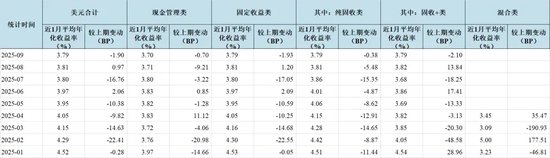
Core Viewpoint - The Federal Reserve has lowered the federal funds rate target range by 25 basis points to 4.00%-4.25%, marking the first rate cut since December 2024, which signals the end of the high-interest rate cycle for the dollar and a downward trend in dollar asset yields [1][7]. Group 1: Impact of Rate Cut on Dollar Assets - The recent rate cut is viewed as a confirmation of a turning point for dollar asset yields, with expectations that the high-interest environment is reversing [7]. - Foreign banks, such as HSBC and DBS, have quickly responded by lowering dollar deposit rates, with HSBC reducing rates for 1-month and 6-month deposits to 3.5% [7][8]. - The average annualized yield for dollar wealth management products has dropped significantly from 4.58% at the beginning of the year to 3.74% in September, reflecting a decline of over 80 basis points [8][5]. Group 2: Investor Experiences and Concerns - Many investors are sharing experiences of losses from dollar wealth management products due to currency depreciation, with some reporting losses despite initially attractive interest rates [3][5]. - The dollar index has fallen nearly 10% year-to-date, and the dollar to RMB exchange rate has depreciated over 3% from 7.35 to 7.12 [3][5]. - Investors are increasingly questioning whether investing in dollar wealth management is about earning interest or speculating on exchange rates, leading to a perception of these products as "high-position traps" [5][10]. Group 3: Future Outlook and Risks - Analysts believe that the impact of the Fed's rate cut extends beyond just lower rates, affecting international capital flows and exchange rate volatility [10]. - There are three main risks associated with dollar wealth management: exchange rate risk, interest rate decline risk, and liquidity risk [10]. - Market predictions regarding future Fed policy vary, with some analysts expecting additional rate cuts in the coming months, while others anticipate the dollar to RMB exchange rate to fluctuate between 7.0 and 7.5 for the year [10][11].
陆家嘴财经早餐2025年9月26日星期五
Wind万得· 2025-09-25 22:34
3、 商务部决定对墨西哥相关涉华限制措施启动贸易投资壁垒调查。 本案的被调查措施为:墨西哥政府拟对中国等非自贸伙伴的产品提高进口关税税率的 相关措施。此外,墨西哥近年来采取的其他涉及中国的贸易投资限制措施也在本次调查范围内。 4、 商务部公告,鉴于初步证据和信息显示原产于墨西哥和美国的进口碧根果存在倾销行为, 并对中国国内产业同类产品价格造成削减和抑制,导致实质 损害, 决定自9月25日起对上述国家的进口碧根果进行反倾销立案调查。 5、国家税务总局透露,目前税务部门和各大平台围绕涉税信息首次报送的相关准备工作已经基本完成。 互联网平台企业将于今年10月份第一次报送平台 内经营者和从业人员的身份信息、收入信息。 1、 A股走势分化,创业板指连续两日创阶段新高。AI概念股重启涨势, 服务器、硅片、有色铜概念涨幅居前,黄金、机械、油气三个周期方向领跌,半 导体产业链调整。截至收盘,上证指数跌0.01%报3853.3点,深证成指涨0.67%,创业板指涨1.58%。A股全天成交2.39万亿元。 2、香港恒生指数跌0.13%报26484.68点,恒生科技指数涨0.89%,恒生中国企业指数涨0.01%。 有色板块全天强势, ...

实探美元存款利率调整 有银行月内已两度下调
Sou Hu Cai Jing· 2025-09-25 16:46
Core Viewpoint - The Federal Reserve's recent interest rate cut has prompted banks to adjust their USD deposit rates, with foreign banks leading the changes while many domestic banks have yet to respond [1][8]. Summary by Sections Foreign Banks' Adjustments - Several foreign banks have lowered their USD deposit rates following the Fed's rate cut, with HSBC reducing rates by 10 to 20 basis points for various terms [2][3]. - As of September 22, HSBC's new rates for new funds include 3.5% for 1-month, 3-month, and 6-month deposits, and 3.05% for 12-month deposits, with previous rates being higher [2]. - DBS Bank has also adjusted its rates, with current rates for general accounts at 3.1% for 1-month and 2.9% for 1-year deposits, reflecting a decrease from earlier in the month [3]. Domestic Banks' Rates - Most domestic banks have not yet adjusted their USD deposit rates, maintaining a maximum rate of 2.8% for 1-year deposits [6][7]. - State-owned banks like Bank of Communications and China Construction Bank offer similar rates, with 1-month deposits at 2.2% and 1-year deposits at 2.8% [6]. - Some city commercial banks, such as Beijing Bank, offer more competitive rates, with 1-year deposits at 3% [7]. Market Dynamics - The differing responses to the Fed's rate cut among banks are attributed to variations in their funding structures, cost of capital, and market positioning [8]. - Analysts suggest that foreign banks are more responsive to international market changes and Fed policies, while domestic banks may take a more cautious approach [8]. Current Market Conditions - Despite the recent adjustments, many banks' USD deposit rates remain higher than their RMB counterparts, attracting depositors [9].
美联储降息叠加美元贬值 美元理财收益缩水
Sou Hu Cai Jing· 2025-09-25 16:46
Core Viewpoint - The Federal Reserve has lowered the federal funds rate target range by 25 basis points to 4.00%-4.25%, marking the first rate cut since December 2024, which signals the end of the high-interest rate cycle for the dollar and a downward trend in dollar asset yields [1][4]. Group 1: Impact of Rate Cut - The recent rate cut is seen as a confirmation of the turning point for dollar asset yields, ending a nine-month period of stable policy [4]. - Foreign banks, such as HSBC and DBS, have quickly responded by lowering dollar deposit rates following the Fed's announcement [4]. - Domestic banks have not yet adjusted their rates, but there is an expectation of potential future declines [4][5]. Group 2: Investor Experiences - Many investors have shared experiences of losses from dollar-denominated financial products due to declining exchange rates, despite initially attractive interest rates [2][3]. - The average annualized yield for dollar financial products has dropped significantly from 4.52% in January to 3.79% in September [2][5]. - Investors are increasingly questioning whether investing in dollar financial products is more about earning interest or speculating on exchange rates [3]. Group 3: Risks and Considerations - The decline in dollar asset yields is attributed to both the Fed's rate cuts and the depreciation of the dollar, which has seen a nearly 10% drop in the dollar index this year [2][7]. - Analysts highlight three main risks associated with dollar financial products: exchange rate risk, interest rate risk, and liquidity risk [7]. - Future expectations regarding Fed policy and exchange rate movements remain uncertain, with differing opinions among analysts [7][8].
美元存款利率 降了
Shang Hai Zheng Quan Bao· 2025-09-25 14:22
Core Viewpoint - The recent interest rate cuts by the Federal Reserve have led to a decrease in USD deposit rates by several foreign banks, with domestic banks following suit to lower foreign currency liability costs. Some banks are also launching short-term high-interest products to attract depositors during this period [1][2][3]. Group 1: USD Deposit Rate Adjustments - USD deposit rates have dropped to around 3%, with foreign banks like HSBC reducing rates for various terms, such as 1-year deposits to 3% and 6-month deposits to 3.5% [2]. - Domestic banks have also adjusted their rates, with previous rates for 1-year USD deposits reaching as high as 5.6%, now reduced to a maximum of 3% [2]. - The adjustment in rates is influenced by the Federal Reserve's recent 25 basis point rate cut and the strengthening of the RMB, prompting banks to reduce USD asset and liability scales [3]. Group 2: Divergent Rate Adjustment Responses - Some banks have not yet adjusted their rates but are expected to do so, with current rates at 2.8% for 1-year and 2-year deposits [3]. - The pace of rate adjustments varies among banks due to differences in liability structures and funding positions, with foreign banks typically responding more quickly to international market changes [3]. Group 3: High-Interest Marketing Strategies - A few banks are countering the trend by offering short-term high-interest USD deposits, such as Hong Kong's Hang Seng Bank advertising rates of 4.1% [4]. - Other banks, like Standard Chartered and HSBC, are also promoting competitive rates for new customers, with rates reaching up to 3.8% for certain deposit terms [4]. Group 4: Considerations for Depositors - Experts emphasize the need for depositors to carefully evaluate the risks associated with USD deposits, particularly in a declining interest rate environment [5][6]. - The potential for further rate cuts by the Federal Reserve may lead to additional downward pressure on USD deposit rates, with expectations of two more cuts this year [6]. - Depositors should consider both exchange rate risks and opportunity costs when choosing USD deposits, as fluctuations in the RMB could lead to currency losses [6].