
新集能源

Search documents
四川锻强国家清洁能源“水引擎”——突破1亿千瓦,约占全国水电装机总量的四分之一
Xin Hua Wang· 2025-12-20 01:58
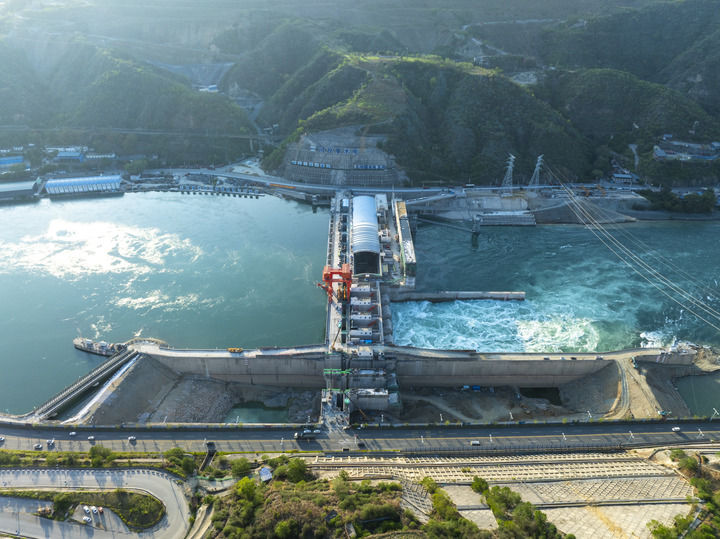
100年,1亿千瓦。 2025年12月19日,随着位于四川攀枝花金沙江中游的银江水电站全面投产,四川水电装机容量突破 1亿千瓦。1亿千瓦,约占全国水电装机总量的四分之一,大约相当于4.4个三峡电站。 这是2025年6月拍摄的银江水电站。(受访者供图) 1925年,泸州洞窝水电站拉开四川水电开发序幕。一个世纪后,世界级水电站群与特高压通道以江 河为卷,在这里塑造出国家发展战略腹地的清洁能源之基。 今天,全国每100度水电中,就有30度来自四川;四川年发电量约三分之一用于川外。四川能源已 不只是"多与少",而是关系到全国能源系统的"稳与安"。 从两千年前都江堰分水而治,到今天借水生能、流域联调、电算协同,顺应自然、系统治理的理念 在四川延续。俯瞰天府大地,一条清洁能源走廊连接山河、贯通东西,支撑我国新型电力系统稳步转 型。 图为国家超级计算成都中心。(受访者供图) 蓄势:从"待字闺中"到能源底座 成都高新区,天府大道贯穿南北,府城大道连接东西。国家电网、三峡集团、国家能源集团、中国 华电集团等多家能源央企区域总部在这个十字路口依次排布。这样的布局并非巧合,而是国家能源战略 统筹推进在四川的现实呈现。 以此为坐标, ...

两部门:优化电力中长期价格形成机制,直接参与市场用户不再执行政府规定的分时电价
Xin Lang Cai Jing· 2025-12-19 12:44
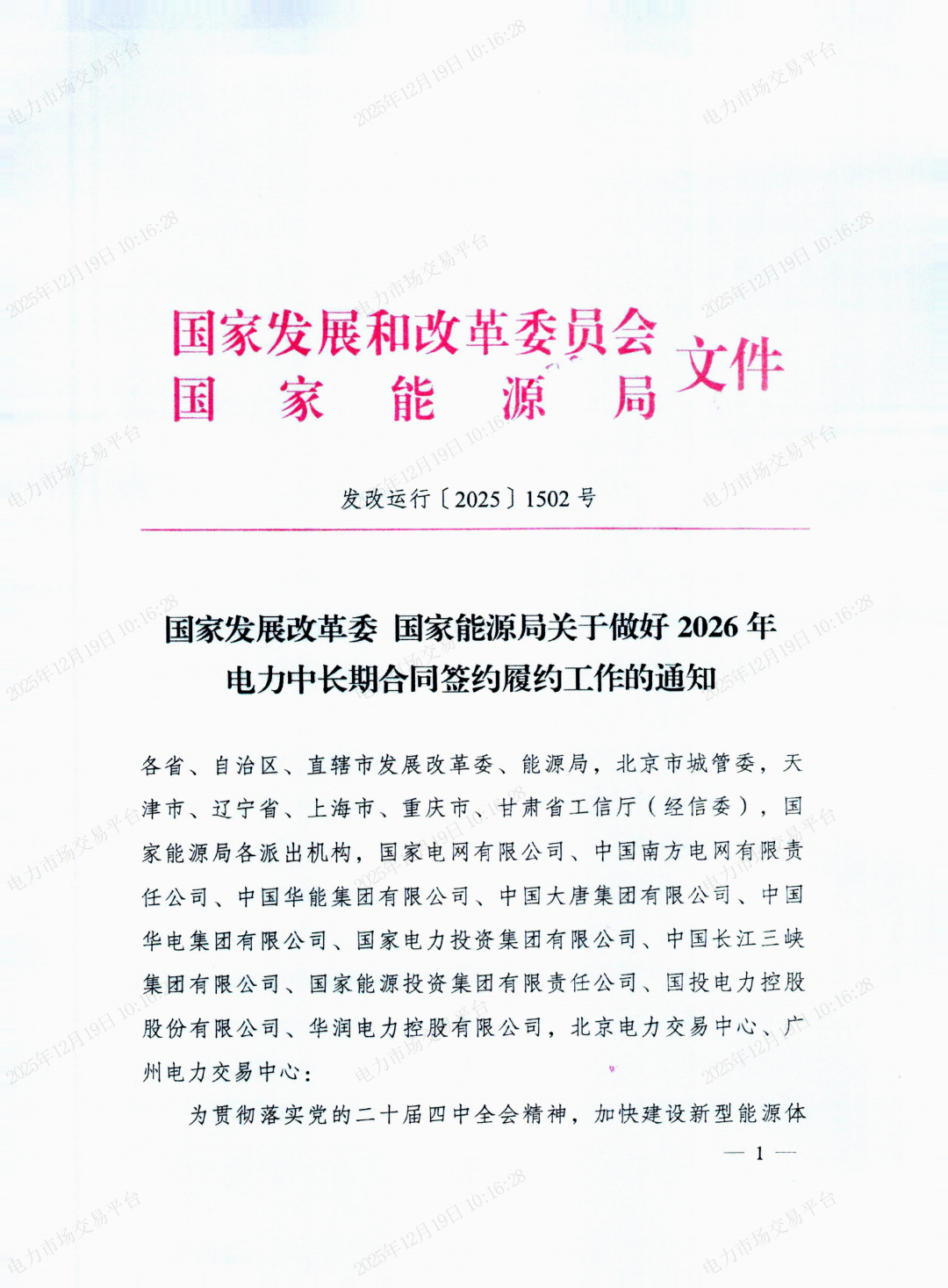
Core Viewpoint - The National Development and Reform Commission and the National Energy Administration have issued a notice to enhance the signing and performance of medium- and long-term electricity contracts for 2026 through four key measures, aiming to ensure effective implementation and quality of these contracts [22][25]. Group 1: Contract Signing Requirements - The total signed electricity volume for medium- and long-term contracts by coal-fired power enterprises in each province should not be less than 70% of the actual online electricity volume from the previous year, with monthly contract signing volumes not less than 80% of the expected market-based online electricity volume [10][26]. - The electricity consumption side must ensure that the monthly contract signing volume is not less than 80% of the expected electricity consumption [2][27]. - For cross-provincial and cross-regional contracts, there should be clear arrangements for supporting renewable energy in transmission projects, encouraging green electricity trading to fulfill priority generation plans [3][28]. Group 2: Quality Improvement Measures - There should be a mechanism for time-segmented and curve-based signing in annual electricity medium- and long-term transactions, with at least 24 trading periods in regions where the electricity spot market is operational [5][28]. - The pricing mechanism for medium- and long-term electricity contracts should be flexible, allowing for adjustments based on market supply and demand, and not mandating fixed prices [6][29]. - A balance management system for electricity supply and demand should be established to avoid significant discrepancies in electricity volume across trading periods [12][29]. Group 3: Efficient Contract Performance - Continuous and flexible trading of medium- and long-term contracts within provinces should be promoted, considering the characteristics of renewable energy generation and load [8][30]. - The quality of cross-provincial and cross-regional medium- and long-term transactions should be improved by enhancing trading frequency and optimizing transaction organization [14][30]. - Monitoring of medium- and long-term trading behaviors should be strengthened to prevent market manipulation and ensure compliance with regulations [15][31]. Group 4: Contract Assurance Mechanism - A mechanism to promote high-quality signing and performance of medium- and long-term contracts should be established, ensuring compliance with policy requirements [16][32]. - The priority generation plan for cross-provincial and cross-regional electricity should be effectively implemented, ensuring that annual delivery needs are met [17][33]. Group 5: Timeline - Local government departments and the National Energy Administration should complete the necessary preparations for the medium- and long-term electricity market by December 10, 2025, and finalize cross-provincial contract signing by December 25, 2025 [18][34].






电力中长期交易:直接参与市场用户不再执行分时电价!利好新型储能等灵活调节资源
中关村储能产业技术联盟· 2025-12-19 06:19
Core Viewpoint - The document outlines the guidelines for signing and fulfilling long-term electricity contracts for 2026, emphasizing the importance of high-quality contracts to ensure stable electricity supply and pricing in the market [6][7][8]. Group 1: Contract Signing Requirements - The document stresses the need for a high proportion of long-term electricity contracts, with coal-fired power plants required to sign contracts for at least 70% of the previous year's actual grid-connected electricity [7]. - For regions with tight electricity supply, local authorities may adjust the signing ratio upwards during peak seasons [8]. - The document mandates that electricity users should also ensure that their annual contract signing volume meets at least 80% of the expected electricity consumption [8]. Group 2: Improving Contract Quality - It is essential to enhance the quality of long-term contracts by implementing time-segmented and curve-based signing mechanisms, allowing for more precise reflection of price signals [9][10]. - The document encourages the adoption of flexible pricing mechanisms that reflect real-time supply and demand, rather than enforcing fixed prices [10]. - Regions are required to optimize the price formation mechanism, ensuring that market participants are not bound by government-mandated time-of-use pricing [10]. Group 3: Cross-Province and Cross-Region Agreements - The document requires that parties involved in cross-province and cross-region electricity transactions must fully sign annual long-term contracts and clarify monthly plans and delivery curves [3][8]. - It emphasizes the need for coordination between sending and receiving parties to establish stable inter-provincial electricity flows [3][8]. Group 4: Timeframe and Implementation - Local governments and the National Energy Administration are tasked with implementing these guidelines and must report their arrangements for the 2026 annual trading by December 10, 2025 [14]. - The Beijing and Guangzhou electricity trading centers are specifically mentioned to complete the signing of national long-term contracts by December 25, 2025 [3][14].
豪威集团(603501):非手机业务正在起势,龙头成长动能已然切换
GOLDEN SUN SECURITIES· 2025-12-18 23:56
Group 1: Core Insights - The report highlights that the market perception of the company as solely a mobile CIS chip supplier is overly pessimistic, as its business structure is shifting towards non-mobile sectors, particularly automotive CIS, which is expected to surpass mobile CIS revenue in 2025 [3][4] - Automotive CIS revenue is projected to exceed 80 billion yuan in 2025, with a year-on-year growth of 30%, indicating a strong position in the mid-to-high-end market [3] - The mobile CIS segment is expected to see a decline, with revenues dropping to approximately 80 billion yuan in 2025, accounting for less than 30% of total revenue due to the lifecycle nearing the end for certain product models [4] Group 2: Financial Projections - The company is expected to achieve revenues of 301.6 billion yuan, 375.7 billion yuan, and 436.7 billion yuan for the years 2025, 2026, and 2027 respectively, with year-on-year growth rates of 17.2%, 24.6%, and 16.2% [5] - Projected net profits for the same years are 47.0 billion yuan, 63.3 billion yuan, and 75.0 billion yuan, reflecting growth rates of 41.5%, 34.6%, and 18.5% [5] - The current stock price corresponds to a price-to-earnings ratio of 32, 24, and 20 for the years 2025, 2026, and 2027, indicating that the company is undervalued as a leading domestic CIS player [5] Group 3: Industry Performance - The report notes that the communication sector has shown significant growth, with a 1-year increase of 78.3%, while the real estate sector has declined by 8.7% over the same period [1] - The coal industry is experiencing a decrease in both production and imports, with November coal production down by 0.5% year-on-year and imports down by 19.9% [8][9] - The report emphasizes the potential for recovery in the optical fiber and cable market, driven by AI demand and a stabilization in ordinary cable prices, suggesting a positive outlook for companies in this sector [6]



河北2025年首批绿电直连项目公示:总规模超4200MW,唐山、张家口、秦皇岛位列前三
中关村储能产业技术联盟· 2025-12-18 04:50
文 | 河北省发展和改革委员会 12月17日, 河北省发展和改革委员会发布《河北省2025年绿电直连拟安排第一批项目情况公示 》,本次公示项目共 31 个,总规模合计 4277.52 MW,其中风电项目2535.65MW、光伏项目1741.87MW。 从项目地域分布看,本次绿电直连项目覆盖了河北省内11个地市。其中,唐山市以总计1564.87MW的装机规模居于首位;张家口市以 893.75MW的规模排名第二;秦皇岛市则以622.5MW的规模位列第三。 从参与项目的业主构成分析,此次申报主体呈现多元化特点,以民营企业为主,同时也吸引了包括国家电投、国家能源、华电集团、大唐集团等 在内的多家中央及地方国有能源企业。 在具体项目规模上,青龙满族自治县安胜建设发展有限公司以400MW的规划容量位列第一;国家电力投资集团公司以357.5MW紧随其后;唐 山渤海湾石油化工储运有限公司与厦门度傲控股有限公司并列第三,各自获批容量均为350MW。 河北省2025年绿电直连拟安排第一批项目情况公示 根据省发展改革委《关于 组织开展绿电直连项目申报工作的通知 》(冀发改能源〔 202 5 〕 879 号)要求,经各市组织 上报 ...

煤炭板块业绩改善+高股息名单揭晓
2 1 Shi Ji Jing Ji Bao Dao· 2025-12-17 23:29
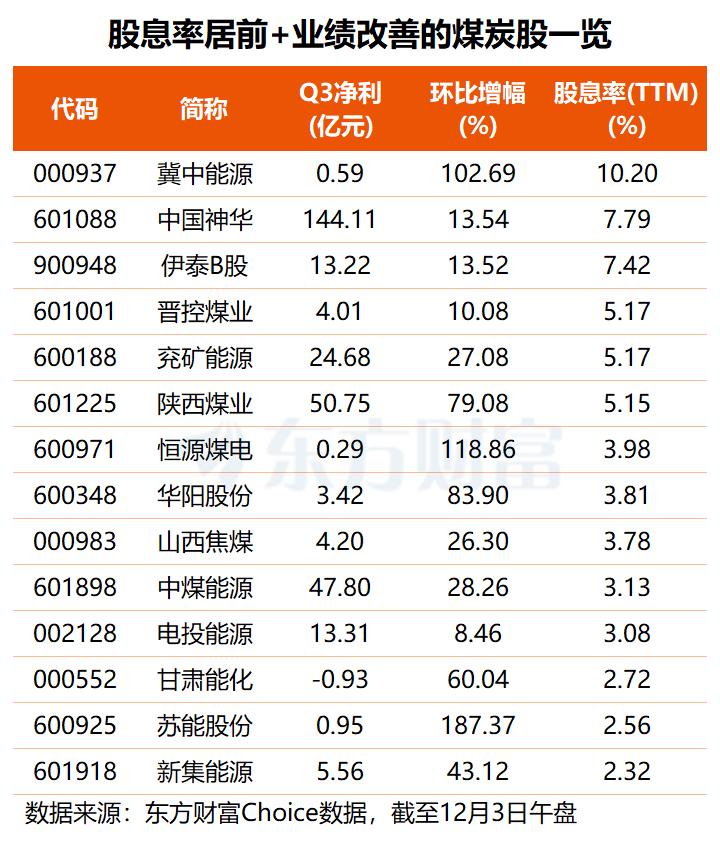
Core Viewpoint - The coal prices have risen unexpectedly since the fourth quarter, with October thermal power generation increasing by 7.3% year-on-year, and inventory levels remaining lower than the same period last year, indicating a strong demand outlook for the coal sector into 2026 [1] Group 1: Industry Outlook - The coal price is expected to maintain a steady yet strong trend towards the end of the year and into 2026, driven by seasonal demand increases starting from late November [1] - The coal industry is entering a "dividend + cycle" phase, with high-quality coal companies benefiting from resource endowments and cost advantages, leading to robust profitability and high cash flow [1] - The anticipated exit of over 100 million tons of pre-approved production capacity by 2026 will lead to a contraction in domestic supply, while demand for thermal coal is expected to rebound [1] Group 2: Investment Strategy - Investment strategies suggested by Zhongtai Securities include focusing on high-dividend, low-valuation coal stocks, particularly those with strong dividend attributes [1] - Companies with growth in production capacity and significant profit elasticity should be prioritized, especially those showing resonance between alpha and beta [1] - Attention should be given to coking coal stocks that are expected to reverse from difficulties, as coal prices stabilize and profitability improves [1] Group 3: Performance Metrics - Among coal stocks, 22 have a dividend yield (TTM) exceeding 2%, with Jizhong Energy leading at 10.20%, followed by China Shenhua and Pingmei Shenma, both above 7% [1] - Despite a decline in performance for most coal stocks in the first three quarters, 14 stocks showed a quarter-on-quarter net profit increase in Q3, with SuNeng Co. nearly doubling its net profit [2][3] - Notable performers in Q3 include Jizhong Energy with a net profit of 0.59 billion and a 102.69% increase, and China Shenhua with a net profit of 144.11 billion and a 13.54% increase [3]




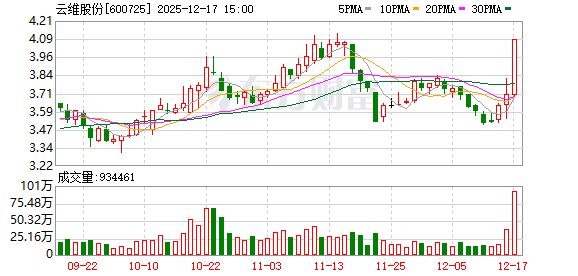
煤炭行业资金流入榜:云维股份等6股净流入资金超千万元
Zheng Quan Shi Bao Wang· 2025-12-17 09:43
Market Overview - The Shanghai Composite Index rose by 1.19% on December 17, with 28 out of 31 sectors experiencing gains, led by the communication and non-ferrous metals sectors, which increased by 5.07% and 3.03% respectively [2] - The coal industry ranked third in terms of decline, with a decrease of 0.11% [2] Capital Flow - The net inflow of capital in the two markets was 9.51 billion yuan, with 16 sectors seeing net inflows. The communication sector had the highest net inflow of 6.45 billion yuan, corresponding to its 5.07% increase [2] - The electronic sector also saw a significant net inflow of 6.34 billion yuan, with a daily increase of 2.48% [2] - Conversely, 15 sectors experienced net outflows, with the defense and military industry leading with a net outflow of 4.87 billion yuan, followed by the retail sector with 2.31 billion yuan [2] Coal Industry Analysis - The coal industry saw a slight decline of 0.11%, with a total net inflow of 29.70 million yuan. Out of 37 stocks in this sector, 20 rose, including one that hit the daily limit [3] - The top three stocks with the highest net inflow in the coal sector were Yunwei Co., Ltd. (5.43 million yuan), Xinjie Energy (2.82 million yuan), and Jiangtong Equipment (2.59 million yuan) [3] - Major stocks with net outflows included China Shenhua (45.75 million yuan), Yongtai Energy (30.31 million yuan), and Lu'an Environmental Energy (15.22 million yuan) [3][4] Individual Stock Performance - The top-performing stock in the coal sector was Yunwei Co., Ltd., which increased by 9.97% with a turnover rate of 7.58% and a net inflow of 5.43 million yuan [3][4] - Other notable stocks included Xinjie Energy (0.15% increase, 1.13% turnover, 2.82 million yuan inflow) and Jiangtong Equipment (1.95% increase, 2.02% turnover, 2.59 million yuan inflow) [3][4] - Stocks with significant net outflows included China Shenhua (-0.42% decrease, 0.12% turnover, 45.75 million yuan outflow) and Yongtai Energy (0.00% change, 1.91% turnover, 30.31 million yuan outflow) [4]


国海证券晨会纪要:2025年第214期-20251217
Guohai Securities· 2025-12-17 01:51
Group 1: Banking Industry Strategy - The report addresses the investment value of the banking sector and the theoretical basis for valuation improvement and timing strategies [3] - The estimated net interest margin for banks is expected to remain stable year-on-year [4] - The upcoming maturity of a large number of three-year fixed deposits in 2023 and the shift in monetary policy from broad to targeted interest rate cuts are expected to stabilize net interest margins, positively impacting banks' ROE [5] - The current market pessimism regarding future ROE is reflected in the widespread trading below book value, which is anticipated to correct [5] - The valuation of Chinese banks is significantly undervalued compared to the US and Japan, with a mismatch between PB and ROE [5] - The banking sector is expected to provide absolute and relative returns in the first and fourth quarters due to seasonal characteristics [6] - The report maintains a "recommend" rating for the banking industry based on the stabilization of net interest margins and positive performance outlook [6] Group 2: Coal Industry Dynamics - In November 2025, coal production remained stable with a total output of 430 million tons, a year-on-year decrease of 0.5% [7][10] - Coal imports in November 2025 decreased by 19.87% year-on-year, with the decline expanding compared to October [11] - The overall coal supply in November 2025 showed a year-on-year decrease of 2.3%, with a narrowing decline compared to October [11] - The demand side saw a decline in thermal power generation, which dropped by 4.2% year-on-year, while chemical and metallurgical sectors recorded positive contributions [12][16] - The average price of coal at northern ports increased by 10% month-on-month, reflecting a significant rise due to low inventory levels and seasonal demand [15][16] - The report highlights the long-term upward trend in coal prices driven by rising costs, safety and environmental investments, and increased taxation [17] - The coal mining industry is rated as "recommended," with a focus on companies with strong cash flow and high asset quality [18]
中国招标投标协会《电线电缆采购技术评审指南 第1部分:光伏发电系统用直流电缆》标准首发仪式在京隆重举行
Zhong Guo Zhi Liang Xin Wen Wang· 2025-12-15 06:59
Core Viewpoint - The launch of the "Technical Review Guidelines for Procurement of Cables for Photovoltaic Power Generation Systems" marks a significant step in standardizing procurement practices in the energy sector, aiming to enhance efficiency and quality in the supply chain [1][3]. Group 1: Standard Launch and Participants - The guidelines were launched by China Huaneng Group, with participation from major state-owned enterprises including China Huadian, China Datang, and others, under the management of the China Tendering and Bidding Association [1][2]. - The event coincided with the 20th anniversary of the China Tendering and Bidding Association and the 25th anniversary of the implementation of the "Tendering and Bidding Law of the People's Republic of China" [1]. Group 2: Purpose and Objectives of the Guidelines - The guidelines address issues in the procurement process, such as unreasonable technical review indicators and the lack of understanding among experts regarding product processes and materials [3]. - The aim is to promote standardized procurement practices, centralized management, and digital transformation in the industry, contributing to the development of a unified national market and a high-standard market system [3]. Group 3: Technical Specifications and Evaluation Criteria - The guidelines provide precise definitions and quantifications of technical review elements, including product qualifications, performance, supplier capabilities, and quality control measures [4]. - It advocates for separating the evaluation of qualifications and performance from price evaluation, utilizing digital methods for pre-assessment and compliance reviews [4]. - The guidelines incorporate technical review indicators that can translate into clear monetary values, focusing on lifecycle cost savings and maximizing investment returns, receiving broad industry support [4].
煤价合理才是常态,稳煤价逻辑依旧 | 投研报告
Zhong Guo Neng Yuan Wang· 2025-12-15 02:02
Core Viewpoint - The coal market is experiencing a slight decline in prices, but the long-term outlook remains positive with expectations of recovery towards the target price range of 800-860 RMB/ton for thermal coal [2][3]. Group 1: Thermal Coal Market - As of December 12, the Qinhuangdao Q5500 thermal coal price is 753 RMB/ton, down 38 RMB/ton from the previous week, while the Guangzhou port price is 815 RMB/ton, achieving the previously indicated profit-sharing target of 750 RMB [1][2]. - Despite recent price declines, the overall upward trend is expected to continue due to tightening supply and increasing demand, particularly as the energy demand season approaches with colder weather [2][3]. - Supply constraints are driven by ongoing crackdowns on overproduction and safety inspections, while demand is rising due to early heating needs and increased industrial activity [2][3]. Group 2: Coking Coal Market - The price of coking coal at the Jing Tang port is 1630 RMB/ton, rebounding from a low of 1230 RMB/ton in early July, with coking coal futures rising from 719 RMB to 1017 RMB, a cumulative increase of 41.5% [1][2]. - The price of coking coal is closely correlated with thermal coal prices, maintaining a consistent ratio of 2.4 times [2][3]. Group 3: Investment Logic - The price recovery for thermal coal is expected to follow a four-step process, including the restoration of long-term contracts and achieving a profit-sharing equilibrium for coal and power companies, with a target price of around 750 RMB by 2025 [3]. - Coking coal prices are more influenced by market dynamics, with target prices based on the ratio to thermal coal prices, suggesting potential prices of 1608 RMB to 2064 RMB depending on thermal coal price movements [3]. Group 4: Investment Recommendations - The coal sector is positioned for a rebound due to historical low prices and improving supply-demand fundamentals, with both thermal and coking coal expected to show upward price elasticity [4]. - Companies are maintaining high dividend payouts, with several listed coal companies announcing interim dividend plans, indicating a dual logic of cyclical recovery and stable dividends [4]. - Key investment lines include cyclical logic with companies like Jinko Coal and Yanzhou Coal, dividend logic with China Shenhua and Shaanxi Coal, diversification with Shenhuo and Electric Power Investment, and growth logic with Xinji Energy and Guanghui Energy [4].