顺鑫农业

Search documents
从看报表到看生态 顺义投贷联动合作联盟破题企业融资难
2 1 Shi Ji Jing Ji Bao Dao· 2025-09-15 07:45
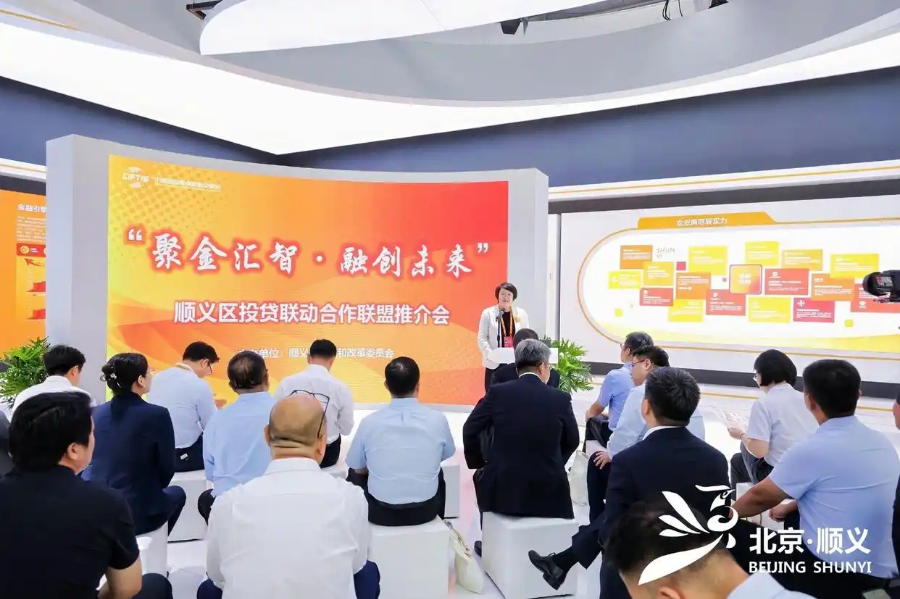
Core Viewpoint - The 2025 China International Service Trade Fair (CIFTIS) held in Beijing focuses on financial services, promoting a collaborative investment and financing model to enhance economic development in Shunyi District [1][2]. Group 1: Event Overview - The CIFTIS took place from September 10 to 14, 2025, at Shougang Park in Beijing, featuring a financial services exhibition themed "Digital Intelligence Drives Open Win-Win" [1]. - The Shunyi financial exhibition area hosted a promotion meeting for the investment-loan linkage cooperation alliance, inviting various financial institutions to join [1]. Group 2: Investment-Loan Linkage Cooperation Alliance - The alliance aims to deepen the "equity investment + debt financing" model to provide precise financial services for enterprises in Shunyi District [1][5]. - It integrates government investment guidance funds with local banks to create a collaborative mechanism for information sharing, business expansion, and risk prevention [1][6]. Group 3: Financial Ecosystem and Support Measures - Shunyi District has established over 500 quality financial institutions, including banks and large industry funds, creating a diverse financial ecosystem [6][7]. - The district's financial industry added value reached 32.16 billion yuan in 2024, with a year-on-year growth of 8% [6]. - A new support policy was introduced during the fair to enhance the financial environment, including funding support for new financial institutions and assistance for small and medium enterprises [7]. Group 4: Industry Development Focus - Shunyi District is focusing on high-end manufacturing sectors such as new energy vehicles, aerospace, third-generation semiconductors, intelligent equipment, and healthcare [4][8]. - The district aims to promote the integration of finance with these industries, enhancing the development of a capital market and supporting enterprise growth through various financial products [9].

光瓶酒冷热分化:牛栏山等失意,玻汾“封神”?
Nan Fang Du Shi Bao· 2025-09-15 03:33
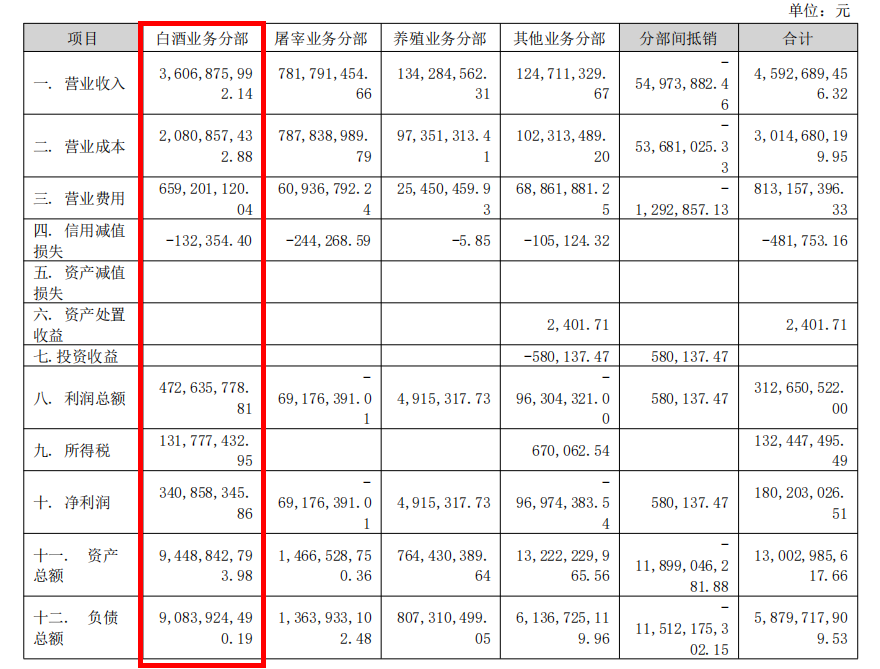
Core Viewpoint - The Chinese liquor market is experiencing a significant divide, with traditional brands like Niulanshan facing revenue declines and profit cuts, while products like Fenjiu's "Guofen" are in high demand, indicating a shift towards quality and value in consumer preferences [1][8]. Group 1: Market Trends - The light bottle liquor market is undergoing a "cold-hot differentiation," driven by industry reshuffling and consumption upgrades, where leading brands leverage quality and brand advantages to meet rational consumer demands [1][7]. - The transition from scale expansion to value competition in the liquor market is evident, with only companies that can ensure quality control, innovate in scenarios, and resonate with brands likely to succeed [1][8]. Group 2: Company Performance - Shunxin Agriculture reported a 19.24% decline in revenue to 4.593 billion yuan for the first half of 2025, with net profit dropping 59.09% to 173 million yuan, primarily due to reduced revenue from its liquor business [2][4]. - The liquor segment of Shunxin Agriculture saw revenue fall over 20% to 3.607 billion yuan, with net profit down more than 40% to 341 million yuan compared to the previous year [2][4]. Group 3: Consumer Preferences - Consumers are shifting from luxury packaging to a focus on quality and cost-effectiveness, particularly among younger demographics, as high-end liquor market growth stagnates [7][8]. - The popularity of Guofen and other light bottle liquors is attributed to their affordability and quality, with Guofen's sales expected to reach over 10 billion yuan by 2025 [5][6]. Group 4: Competitive Landscape - The competition in the light bottle liquor market is intensifying, with major liquor companies and retail giants entering the space, such as the collaboration between Hema and Chuanjiu Group to launch a series of light bottle liquors [9][8]. - New retail giants like Hema and PDD are partnering with liquor companies to accelerate their presence in the light bottle liquor market, reflecting a broader trend of market evolution and consumer behavior changes [9][8].


股市必读:顺鑫农业(000860)9月12日董秘有最新回复
Sou Hu Cai Jing· 2025-09-14 18:25
Group 1 - The stock price of Shunxin Agriculture (000860) closed at 16.28 yuan on September 12, 2025, down by 0.91% with a turnover rate of 1.16% and a trading volume of 86,100 shares, resulting in a transaction amount of 141 million yuan [1] - The company has short-term bank loans of 3.338 billion yuan and long-term bank loans of 626 million yuan, totaling 3.964 billion yuan in bank loans, which incur approximately 80 million yuan in annual interest payments [2] - The company maintains a cash balance of 5.8 billion yuan, leaving approximately 1.9 billion yuan in liquid funds after accounting for the bank loans [2] Group 2 - On September 12, the net outflow of funds from major investors was 17.3443 million yuan, while retail investors saw a net inflow of 15.6355 million yuan [3][4] - The company is considering maintaining a certain level of cash to ensure daily operations and promote healthy development of its main business [2]
吕亚军:打造国资投资的“LGC”新模式
母基金研究中心· 2025-09-14 08:28
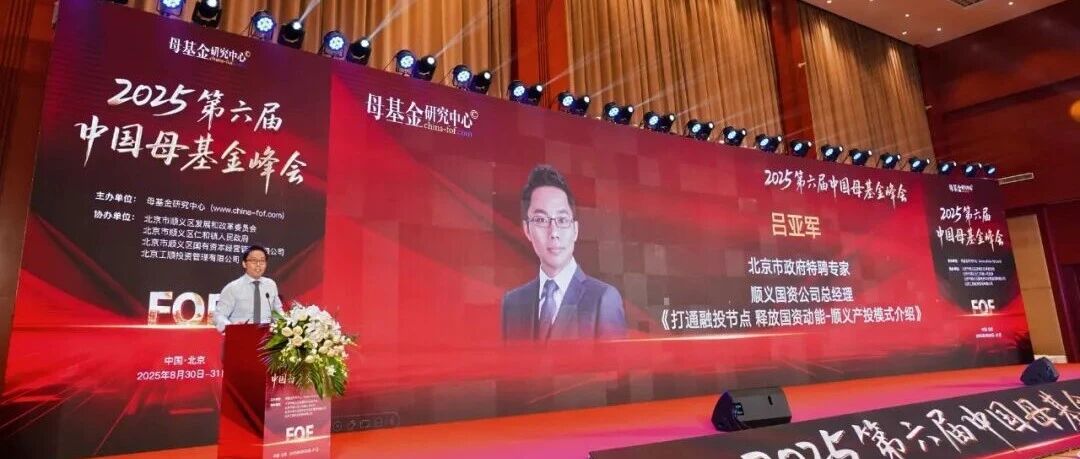
Core Viewpoint - The 2025 Sixth China Fund of Funds Summit highlighted the evolving landscape of the fund management industry, emphasizing the need for adaptation to market changes and the introduction of innovative investment structures to address current challenges [1][2][3]. Group 1: Market Environment and Challenges - The market sentiment has shifted from "embracing change" to "seeing the dawn" in 2025, indicating a gradual recovery and adaptation to new realities [2]. - Key challenges identified include difficulties in exit strategies, reduced fiscal resources impacting investment scale and capacity, and the need for effective error tolerance mechanisms [3][8]. - The fund management industry has seen a reduction of over 20% in management scale in the first half of 2025, primarily due to constrained exit channels and limited external funding [8]. Group 2: Investment Structure and Strategy - The "5+4" model in Shunyi integrates five major manufacturing sectors (new energy vehicles, aerospace, third-generation semiconductors, smart equipment, and healthcare) with four modern service sectors (aviation services, business exhibitions, industrial finance, and technology services) [3][4]. - Shunyi's investment framework employs a "direct investment + fund of funds" model, with a focus on significant projects exceeding 300 million RMB [6][9]. - The establishment of the "LGC structure" aims to unify limited and general partners to enhance capital supply and activate underperforming assets, thereby facilitating a supply-side reform in capital [9]. Group 3: Financial Performance and Capabilities - Shunyi's state-owned capital management company reported a consolidated revenue of approximately 10 billion RMB in Q1 2025, with a tax contribution of 970 million RMB [5]. - The financial institutions in Shunyi have grown to nearly 500, with an asset management scale of 4 trillion RMB, indicating a strengthening of the regional financial ecosystem [4]. - The company has achieved an upgrade in credit rating from "AA+" to "AAA," reflecting improved financing capabilities and market confidence [10]. Group 4: Future Directions and Innovations - The introduction of a "loan-equity linkage" mechanism aims to alleviate valuation discrepancies and support financing needs for private enterprises, enhancing the feasibility of investment projects [12]. - Shunyi is exploring the establishment of a "state-owned capital venture capital" model, leveraging its listed companies to create efficient resource allocation channels for strategic projects [13]. - The company is committed to continuous improvement and collaboration within the industry to foster a robust investment environment and achieve significant regional development [13].
白酒中报|13家酒企合同负债减少贵州茅台合同负债一举减少44.89%
Xin Lang Cai Jing· 2025-09-12 10:34
Industry Overview - The Chinese liquor industry is entering a period of accelerated clearing in 2025, with total production in the first half of 2025 at 1.9159 million kiloliters, a year-on-year decrease of 5.8% [1] - Sales revenue reached 330.42 billion yuan, showing a slight increase of 0.19% year-on-year, while profits fell to 87.687 billion yuan, down 10.93% year-on-year [1] - 58.1% of distributors reported increased inventory, with over half facing price inversion issues, indicating weak terminal consumption and reduced willingness for payment collection among distributors [1] Company Performance - Among 19 listed liquor companies, 13 experienced revenue declines, accounting for 68% of the total, with a significant slowdown in revenue growth compared to the previous year [1] - The market is increasingly concentrating on leading companies, with the top six liquor firms accounting for 47% of revenue in 2024, up 13 percentage points from five years ago, and 62.2% of total profits, also an increase from five years ago [2] - The median revenue growth rate for the top six liquor companies with over 10 billion yuan in revenue was 2.36%, while the median for the 13 companies below this threshold was -16.89% [2] Price Trends - The wholesale price index for Chinese liquor has been declining from September 2024 to August 2025, with notable drops in prices for famous brands [3] - The price of Feitian Moutai fell by 840 yuan to 1820 yuan, while other brands like Wuliangye and Guojiao 1573 also saw significant price reductions [3] Financial Indicators - The total contract liabilities of 19 listed liquor companies decreased by 9.01 billion yuan to 37.497 billion yuan in the first half of the year [3] - Moutai's contract liabilities dropped from 9.993 billion yuan to 5.507 billion yuan, a decrease of 44.89%, reflecting adjustments in direct sales channel quotas [3][4] - Other companies like Jiu Gui Jiu, Gu Qing Gong Jiu, and Yi Li Te also saw contract liabilities decrease by over 30% [4]


白酒中报|白酒企业回款转弱贵州茅台、泸州老窖、山西汾酒、洋河股份经营现金流净额均在减少
Xin Lang Cai Jing· 2025-09-12 10:34
Core Viewpoint - The Chinese liquor industry is entering a period of accelerated clearing in 2025, with significant declines in production, profits, and cash flow among many companies [1][2][3]. Industry Overview - In the first half of 2025, the total production of the liquor industry was 1.9159 million kiloliters, a year-on-year decrease of 5.8%. Sales revenue reached 330.42 billion yuan, a slight increase of 0.19%, while profits fell to 87.687 billion yuan, down 10.93% [1]. - 58.1% of distributors reported increased inventory, with over half facing price inversion issues, indicating weak terminal consumption and reduced willingness to collect payments from distributors [1][2]. Company Performance - Among 19 listed liquor companies, 13 experienced revenue declines, accounting for 68% of the total, with a significant slowdown in revenue growth compared to the previous year [1][2]. - The market is increasingly concentrating on leading companies, with the top six liquor firms accounting for 47% of revenue and 62.2% of total profits in 2024, marking a 13 percentage point increase over five years [2]. Cash Flow Analysis - The cash flow from operating activities for 13 companies decreased, representing 68% of the total, while only six companies saw an increase [3][4]. - Notably, Kweichow Moutai's cash flow from operating activities dropped by 23.503 billion yuan to 13.119 billion yuan, a decline of 64.18% [4]. - Eight liquor companies reported negative cash flow from operating activities, primarily among small to medium-sized enterprises with annual revenues below 5 billion yuan [4][5]. Market Trends - The previous growth logic of "volume reduction and price increase" has collapsed, with both volume and price declining in the current market environment [2]. - The wholesale price index for liquor has been continuously declining from September 2024 to August 2025, with notable price drops for major brands [3].


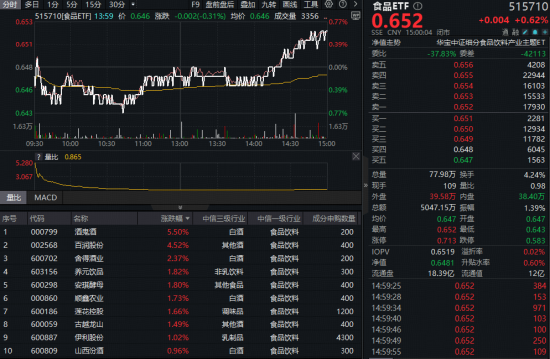
喜迎政策“大礼包”!白酒、大众品携手上攻,食品ETF(515710)尾盘拉升!中秋消费爆点已定?
Xin Lang Ji Jin· 2025-09-11 14:13
Group 1 - The food and beverage sector experienced a rebound on September 11, with the Food ETF (515710) closing up 0.62% after fluctuating at lower levels throughout the day [1] - Notable performances were seen in liquor and consumer goods, with stocks like JiuGuiJiu rising by 5.5%, BaiRun shares increasing by 4.52%, and SheDeJiuYe up by 2.37% [1] - The recent announcement of consumption-boosting policies in Shaoxing, including subsidies for banquet consumption, is expected to stimulate demand in the liquor sector [1][3] Group 2 - According to Xiangcai Securities, the banquet setting is a primary consumption scenario for liquor, and the new policy is likely to revive banquet consumption, leading to a gradual recovery in liquor demand [3] - The current valuation of the food and beverage sector is seen as an attractive investment opportunity, with the Food ETF's underlying index PE ratio at 21.44, which is at a low point historically [3] - Dongxing Securities anticipates that various local consumption stimulus policies will invigorate domestic consumption during the Mid-Autumn Festival and National Day, particularly benefiting the restaurant industry [4] Group 3 - The Food ETF (515710) tracks the CSI segmented food and beverage industry index, with approximately 60% of its holdings in leading high-end and mid-range liquor stocks, and nearly 40% in beverages, dairy, and other segments [5] - The top ten weighted stocks in the ETF include major brands like Moutai, Yili, and Haitian Flavoring, indicating a strong focus on established market leaders [5] - The Consumer Leader ETF (516130) is also highlighted as a way to invest in high-quality consumer sector leaders, including large-cap stocks like Kweichow Moutai and Gree Electric [5]
调研速递|顺鑫农业接受首创证券等18家机构调研 透露重要经营数据与行业观点
Xin Lang Zheng Quan· 2025-09-11 12:56
Group 1 - The core business of the company includes the production and sales of liquor, as well as pig breeding, pig farming, slaughtering, and meat processing, forming two main industries: liquor and pork [1] - The liquor business primarily features the "Niulanshan" and "Ningcheng" brands, while the pork business includes "Xiaodian" brand breeding pigs and commercial pigs, and "Pengcheng" brand fresh and cooked products [1] - The company achieved a revenue of 4.593 billion yuan and a net profit attributable to shareholders of 173 million yuan in the first half of 2025, with liquor business revenue at 3.606 billion yuan and pork business revenue at 889 million yuan [2] Group 2 - The liquor industry is currently undergoing a deep adjustment cycle, with intensified competition and a shift from scale expansion to value cultivation, requiring companies to balance inventory pressure and brand building [2] - The company has implemented a "1 - 2 - 12 - 3+" marketing strategy to drive product innovation and enhance consumer interaction through diverse marketing channels [2] - In the pork business, the company has adjusted its operational strategy in response to industry dynamics, focusing on product innovation and brand marketing to enhance brand value [2]

顺鑫农业(000860) - 顺鑫农业2025年09月11日投资者关系活动记录表
2025-09-11 10:56
Business Overview - The company primarily engages in the production and sale of liquor and pork products, with key brands including "Niulanshan" and "Ningcheng" [2][4] - The liquor segment includes five major product series under the "Niulanshan" brand, while the pork segment features "Xiaodian" breeding pigs and "Pengcheng" fresh and processed meat products [4] Industry Evaluation - The liquor industry is experiencing a contraction in production and a shift towards value-driven growth, with increased competition and changing consumer preferences [5] - Companies need to focus on product innovation, channel optimization, and brand promotion to navigate the current market challenges [5] Financial Performance - In the first half of 2025, the company reported a revenue of CNY 4.593 billion, with a net profit of CNY 173 million [6] - The liquor business generated CNY 3.606 billion in revenue, while the pork segment achieved CNY 889 million, with the slaughtering business contributing CNY 782 million and breeding operations CNY 107 million [6] Brand Strategy - The "Niulanshan" brand is focusing on brand upgrades, strategic product promotion, and cultural marketing to enhance consumer engagement [7] - Innovative marketing strategies include collaborations with popular media and interactive consumer activities to strengthen brand presence [7] Future Outlook - The liquor industry is in a deep adjustment phase, with a trend towards consolidation and a focus on brand strength and innovation [8] - Companies must balance short-term inventory pressures with long-term brand value development to remain competitive [8] Pork Business Developments - The company has adjusted its operational strategies in response to market dynamics and pork price trends, ensuring stable supply in Beijing [8] - Product innovation and brand marketing efforts have been intensified, including the establishment of a new retail model for meat products [8]
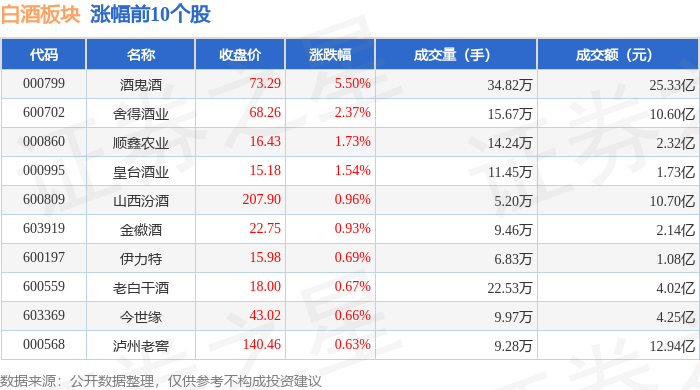
白酒板块9月11日涨0.3%,酒鬼酒领涨,主力资金净流出5223.93万元
Zheng Xing Xing Ye Ri Bao· 2025-09-11 08:43
Core Viewpoint - The liquor sector experienced a slight increase of 0.3% on September 11, with strong performance from Jiu Gui Jiu, while the overall market indices also saw gains, indicating a positive sentiment in the market [1]. Group 1: Market Performance - The Shanghai Composite Index closed at 3875.31, up by 1.65% [1]. - The Shenzhen Component Index closed at 12979.89, up by 3.36% [1]. - The liquor sector's individual stock performance showed varied results, with notable gains from Ji Si Xing at 5.50% and She De Jiu Ye at 2.37% [1]. Group 2: Stock Data - Ji Si Xing (000799) closed at 73.29 with a trading volume of 348,200 shares and a transaction value of 2.533 billion [1]. - She De Jiu Ye (600702) closed at 68.26 with a trading volume of 156,700 shares and a transaction value of 1.060 billion [1]. - Guizhou Moutai (600519) closed at 1523.50 with a trading volume of 37,200 shares and a transaction value of 5.643 billion [2]. Group 3: Capital Flow - The liquor sector saw a net outflow of 52.239 million from institutional investors and 236 million from speculative funds, while retail investors contributed a net inflow of 289 million [2]. - Guizhou Moutai experienced a net inflow of 26,661, while Jiu Gui Jiu had a net outflow of 1.37 billion from institutional investors [3]. - The overall capital flow indicates a mixed sentiment, with retail investors showing interest despite the outflows from larger funds [2][3].