ASML

Search documents
存储超级周期- 人工智能浪潮推动全行业向好-Global Technology:Memory Supercycle – Rising AI Tide Lifting All Boats
2025-09-22 02:01
Summary of Key Points from the Conference Call Industry Overview - The conference call discusses the **memory industry**, particularly focusing on **DRAM** and **NAND** sectors, driven by a new tech cycle fueled by **AI growth** [1][4] - The **memory supercycle** is anticipated to create a **supply-demand mismatch** in 2026, leading to an upgrade in the industry view on memory stocks [1][3] Core Insights - **Upgrades**: ASML and SK Hynix have been upgraded to **Overweight** due to expected strong performance in the memory sector [1][4] - **High-Bandwidth Memory (HBM)**: Despite margin erosion and market share shifts, HBM stocks are expected to remain resilient as demand continues to outpace industry growth [3][9] - **DRAM Pricing**: A **9% increase** in blended average selling price (ASP) for DRAM is projected for Q4 2025, driven by AI-related demand [9][10] - **NAND Demand**: A surge in high-density NAND orders from US hyperscalers for 2026 is expected to exceed the current year's entire eSSD market size, indicating a significant recovery in capital allocation for NAND [9][10] Market Dynamics - **Cycle Indicator**: The cycle indicator is shifting towards a **'peak-cycle'** by 2027, historically indicating strong upside potential for DRAM capital expenditures [3][4] - **Demand Inflection**: Notable demand increases are observed in various AI-led markets, including GDDR7 and DDR5 RDIMM server demand, which is likely to drive price hikes [10][11] - **Inventory Levels**: Current inventory levels are below normal, which may impact customer behavior and pricing dynamics in the DRAM market [10][11] Company-Specific Insights - **Samsung Electronics**: Remains a top pick due to its potential for HBM market share gains and improving DRAM demand [34][39] - **SK Hynix**: Upgraded to Overweight with a higher price target due to expected sustainable margins and improved NAND pricing [29][39] - **ASML**: Upgraded to Overweight as it is expected to benefit from increased DRAM capex and improved memory cycle dynamics [28][39] Investment Recommendations - **Preferred Stocks**: The report highlights preferred stocks in the memory sector, including **SanDisk**, **KIOXIA**, **Winbond**, and **GigaDevice**, which are expected to benefit from favorable pricing cycles and AI demand [24][39] - **Cautious Approach**: While bullish on the memory commodity cycle, the report advises a selective approach to stock picking, focusing on companies with manageable de-rating risks and deliverable margin expectations [19][27] Additional Considerations - **Long-term Outlook**: The memory sector is expected to see significant upside beyond historical averages, with potential price targets indicating a **4-30% upside** [27][39] - **Market Sentiment**: The sentiment around HBM pricing remains cautious, but strong commodity memory pricing is anticipated to persist into 2026 [19][27] This summary encapsulates the key points discussed in the conference call, providing insights into the memory industry's current state and future outlook, along with specific company recommendations and market dynamics.
全球半导体设备展望、英特尔和英伟达合作影响、台积电观点
2025-09-22 00:59
Summary of Semiconductor Equipment Outlook and Key Insights Industry Overview - The discussion centers around the semiconductor equipment industry, particularly focusing on the collaboration between Intel and NVIDIA, and its implications for various companies including TSMC, AMD, and ARM [1][2][11]. Key Insights 1. **Intel and NVIDIA Collaboration**: - Intel's CPU will integrate NVIDIA's GPU, potentially increasing revenue from 150 million mobile PCs [1][2]. - This collaboration is expected to enhance data center performance through CPU and GPU interconnectivity [2]. 2. **Market Performance**: - The global semiconductor equipment market shows significant regional disparities. The Chinese market's localization rate increased to 20%, but overall investment has not rebounded significantly [1][3]. - The overseas market growth slowed to 3% after a 47% increase driven by AI computing investments in the first half of the year [1][4]. 3. **AI Industry Chain Dependencies**: - The AI industry relies on high-speed interconnects, advanced processes, and near-memory computing. Optical modules benefit from high-speed interconnect technology, with TSMC pushing the co-packaged optics platform [1][5]. 4. **Investment Trends**: - A large-scale capital expenditure is expected to commence in 2026, with companies like SMIC, Huahong, and Changxin Storage preparing for new investments after financing [3][14]. - Current or upcoming quarters are seen as opportune for investing in equipment stocks as semiconductor investments are at a cyclical low [14][17]. 5. **Company Performance**: - Chinese semiconductor equipment stocks showed a 1% decline in the first half of 2025, but expectations for the second half are slightly better [1][6]. - North China Innovation and other domestic firms are viewed as having long-term investment value, with potential for significant returns over three years [6]. 6. **Oracle's Capital Expenditure**: - Oracle is increasing its capital expenditure, which may drive growth for hardware and software suppliers and promote innovation in IT infrastructure [1][8]. 7. **Impact on Competitors**: - AMD and ARM are expected to face challenges due to NVIDIA's market entry, with AMD's stock showing volatility in response to the news [9][10]. - TSMC's role remains neutral, as the collaboration may increase NVIDIA orders while reducing Intel's orders [11]. 8. **Future Market Outlook**: - The semiconductor design companies' revenue is projected to grow by 18%, with NVIDIA contributing significantly to this growth [12]. - The capital expenditure for IDM and foundry is expected to rise by 24%, while Chinese capital expenditure is forecasted to decline by 9% [12][13]. 9. **Long-term Prospects**: - The semiconductor equipment investment cycle is at a low point, but strong demand for AI chips and potential recovery from major players like Intel could provide upward momentum for equipment stocks [17]. Additional Important Points - The optical module industry is expected to be significantly impacted by TSMC's advancements in co-packaged optics, which may become mainstream by 2027 [5]. - The performance of overseas equipment companies is also under scrutiny, with a notable decline in growth expected in the second half of the year [6][15]. - The overall sentiment indicates that while short-term performance may be weak, long-term opportunities exist, particularly for companies well-positioned in the AI and semiconductor sectors [17].


One Big Beautiful Bubble: Oracle, Amazon, Microsoft, Google, Meta Platforms, Palantir et al in the danger zone?
BusinessLine· 2025-09-20 15:42
Core Insights - The AI mania is driving significant market movements, exemplified by Oracle Corporation's stock gaining 36% and adding over $255 billion to its market cap in a single day [2][3][13] Company Performance - Oracle's Q1 FY26 results showed net profit in line with expectations but a slight revenue miss, which was overshadowed by ambitious plans to scale its cloud infrastructure business from $10.2 billion in FY25 to $144 billion by FY30, indicating a compounded growth rate of 70% [3][5] - The company signed multiple multi-year, multi-billion-dollar contracts, increasing its remaining performance obligations (RPO) to $455 billion, a 359% year-on-year and 230% quarter-on-quarter increase [6][7] - RPO is expected to reach $500 billion in the coming months, while Oracle's FY25 revenue was $57.4 billion [7] Market Dynamics - The AI race is intensifying demand for data centers, with Oracle positioned to provide cloud-based compute, storage, and networking services [5] - The top 10 AI stocks have collectively added $18 trillion to their market cap since January 2020, highlighting the significant economic interest in AI [14][16] - The Big 5 tech companies, including Oracle, have invested $586 billion in capital expenditures over the last three fiscal years, with expectations of $860 billion in the next two years [17] Economic Impact - Tech capital expenditure has shown resilience, contributing positively to GDP growth, with tech capex surpassing personal consumption expenditure for the first time since 2022 [22][27] - The current market cap of the S&P 500 is significantly influenced by AI stocks, which account for 40% of the index's market cap [16] Valuation Concerns - Despite the growth potential, Oracle's stock trades at a trailing PE of 69x, raising concerns about overvaluation in the context of historical performance [13] - The concentration risk associated with Oracle's future revenue being tied to a single client, OpenAI, is a notable concern, given OpenAI's status as a cash-burning startup [9][10] Future Outlook - The evolving nature of AI technology presents uncertainties regarding efficiency gains and the right level of capital expenditure [29][30] - Investors are advised to be cautious of current valuations, as many top AI stocks trade above their five-year averages, reminiscent of the dotcom bubble [32][34][35]



Wall Street bets on chip boom are getting more concentrated, and it could be good thing for investors
CNBC· 2025-09-19 16:44
Core Viewpoint - The semiconductor sector, particularly driven by Nvidia's success, has become a focal point for investors, with new concentrated investment strategies emerging in this space [1]. Group 1: Semiconductor ETFs - The VanEck Semiconductor ETF (SMH) has become a benchmark for capturing sector growth, with a portfolio that includes major players like Nvidia, TSMC, and ASML, and has grown to nearly $30 billion, up close to 30% year-to-date [2]. - Other ETFs such as the iShares Semiconductor ETF (SOXX) and Invesco PHLX Semiconductor ETF (SOXQ) also provide exposure to the semiconductor industry, attracting investors seeking concentrated investments [5]. - The SPDR S&P Semiconductor ETF (XSD) offers an equal-weighting approach, allowing smaller companies like Astera Labs and Credo Technology to have equal representation with larger firms like Nvidia [6][7]. Group 2: Nvidia's Role - Nvidia's CEO described the company's Blackwell platform as a significant advancement in AI technology, with demand being characterized as "extraordinary" [4]. - Nvidia's investment of $5 billion in Intel to co-develop data centers and PC chips highlights its growing influence across the tech sector [4]. Group 3: Investment Strategies - The Invesco Semiconductors ETF (PSI) utilizes a custom index to select semiconductor companies based on various momentum factors, providing a different exposure compared to traditional market-cap weighted ETFs [11][12]. - The newly launched VanEck Fabless Semiconductor ETF (SMHX) focuses on fabless companies, with Nvidia as its top holding, catering to investors seeking targeted exposure within the semiconductor space [13][14].
大涨近7% 中芯国际创历史新高!光刻机概念集体爆发
2 1 Shi Ji Jing Ji Bao Dao· 2025-09-17 09:00
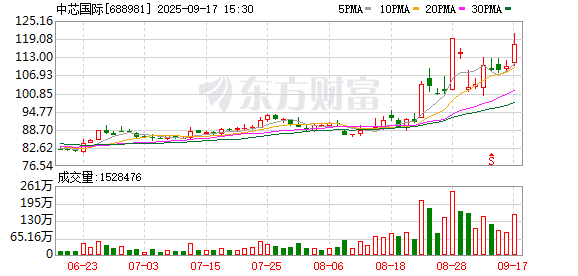
而中国光刻机需求量较大。目前中国是ASML光刻机最大的客户,2024年因晶圆厂扩产景气度及超额备 货的因素中国区收入占比爆发增长至41%。 9月17日,A股市场光刻机概念板块强势拉升。截至收盘,光刻机指数(8841237)涨幅达4.24%。其 中,行业龙头中芯国际(688981.SH)盘中股价创历史新高,收盘报117.39元/股,放量上涨近7%,总市 值攀升至6058亿元。波长光电(301421.SZ)涨幅达20%,苏大维格(300331.SZ)、福晶科技 (002222.SZ)等个股跟涨。 资料显示,光刻机是晶圆制造最核心设备之一,在半导体制造领域,光刻机是延续摩尔定律的核心装 备,其市场前景可观。Yole数据显示,先进封装市场规模预计从2024年380亿美元增长至2030年的790亿 美元。其中,高端封装2024年市场规模为80亿美元,预计到2030年将超过280亿美元。 从市场格局来看,ASML、Nikon和Canon三家国外公司长期占据全球光刻机市场的主导地位。国金证券 研报显示,ASML 2024年占据全球61.2%份额,是EUV领域为唯一供应商;尼康和佳能主攻中低端光刻 机市场。 不过,在AI算力 ...

计算机行业周报:英伟达发布RubinCPX,美团上线首个生活AIAgent「小美-20250916
Huaxin Securities· 2025-09-16 15:16
Investment Rating - The report maintains a "Buy" rating for several companies, including Yidao Information, Weike Technology, Honglin Electric, and Tax Friend Co., Ltd. [9][11] Core Insights - The AI computing market is experiencing significant growth, driven by advancements in specialized hardware like NVIDIA's Rubin CPX, which offers substantial performance improvements for long-context AI tasks [17][30]. - The launch of Meituan's AI Agent "Xiao Mei" represents a strategic move to enhance local life services through AI, simplifying user interactions and improving service efficiency [32][39]. - Mistral AI's recent funding round, led by ASML, positions it as a key player in the European AI landscape, highlighting the integration of AI capabilities in semiconductor manufacturing [40][44]. Summary by Sections 1. Computing Power Dynamics - The rental prices for computing power remain stable, with specific configurations like A100-40G priced at 5.73 RMB/hour on Tencent Cloud [16]. - NVIDIA's Rubin CPX GPU, designed for large-scale AI inference, boasts 30 PetaFLOPS of NVFP4 computing power and 128GB of GDDR7 memory, significantly enhancing performance for long-context processing tasks [20][30]. 2. AI Application Dynamics - The weekly user engagement for Baidu's Wenxin Yiyan increased by 20.68%, indicating growing interest in AI applications [31]. - Meituan's AI Agent "Xiao Mei" simplifies the ordering process for users, allowing them to place orders through natural language commands, thus enhancing user experience [34][39]. 3. AI Financing Trends - Mistral AI completed a €1.7 billion funding round, achieving a post-money valuation of €11.7 billion, making it the highest-valued AI company in Europe [40][41]. - ASML's investment in Mistral AI aims to integrate AI capabilities into its semiconductor manufacturing processes, reflecting a strategic move towards enhancing production efficiency [44][45]. 4. Market Review - The AI computing index and application index showed significant fluctuations, with notable gains in specific companies like Kaipu Cloud and Chunzong Technology [47][52]. 5. Investment Recommendations - The report suggests focusing on companies like Jiahe Meikang, Yidao Information, and Weike Technology, which are positioned to benefit from the growing AI and computing infrastructure market [54].
2025 年台湾国际半导体展_3.5D 先进封装、共封装光学及更多测试_ SEMICON Taiwan 2025_ 3.5D advanced packaging, co-packaged optics and more testing
2025-09-15 13:17
Summary of Key Points from the Conference Call Industry Overview - The conference focused on the semiconductor industry, particularly advancements in AI chips, heterogeneous integration, advanced packaging, and optical interconnect technologies, reflecting the growing importance of these areas in the market [2][3][20]. Core Findings 1. **TSMC's Capacity Expansion**: TSMC is expected to expand its CoWoS capacity to 100kwpm by the end of 2026, up from 70kwpm at the end of 2025, driven by robust demand for Cloud AI GPUs and ASICs [3]. 2. **AI Computing Demand**: AI computing requirements have surged by 10x in the past year, necessitating advancements in chip scaling, memory, and interconnect technologies [3]. 3. **3.5D Advanced Packaging**: The event highlighted significant discussions around 3.5D advanced packaging, which is anticipated to become mainstream for high-performance computing, improving cost structures and product design speeds [3]. 4. **Heterogeneous Integration**: The trend towards co-packaged optics (CPO) is gaining traction, with expectations for power consumption to be optimized by 2028, allowing for the replacement of copper in AI server integrations [3]. 5. **Testing Innovations**: The complexity of die and package designs is increasing the need for more rigorous testing at the wafer/die level to identify yield issues early [3]. Stock Recommendations - Top stock picks in the Greater China semiconductor sector include TSMC, ASE, MediaTek, Alchip, and Aspeed, all rated as "Buy" due to their structural AI opportunities [4]. Additional Insights - **Optical Interconnects**: Nvidia's advancements in networking infrastructure, particularly with its Spectrum-X CPO solution, promise significant power savings and improved signal integrity [12]. - **AI Data Center Power Consumption**: The power consumption of AI data centers is projected to rise dramatically, with examples like Meta's Hyperion data center expected to consume 2GW by 2030 [16]. - **Challenges in Advanced Packaging**: The industry faces challenges in transitioning to panel-level packaging and CoWoP technologies, which require overcoming technical hurdles related to system design and materials [30][39]. Emerging Technologies - **Silicon Photonics**: TSMC's COUPE platform aims to enhance integration of optics and electrical signaling, addressing bandwidth bottlenecks in computing performance [12]. - **GaN Technology**: GaN is highlighted for its efficiency and potential in powering AI applications, with Texas Instruments and Infineon leading developments in this area [36][38]. Conclusion - The semiconductor industry is at a pivotal point, driven by AI advancements and the need for innovative packaging and integration solutions. Companies like TSMC, Nvidia, and MediaTek are positioned to capitalize on these trends, while challenges in testing and power consumption remain critical areas for development [3][4][16][20].
全球芯片,最新预测
3 6 Ke· 2025-09-15 03:13
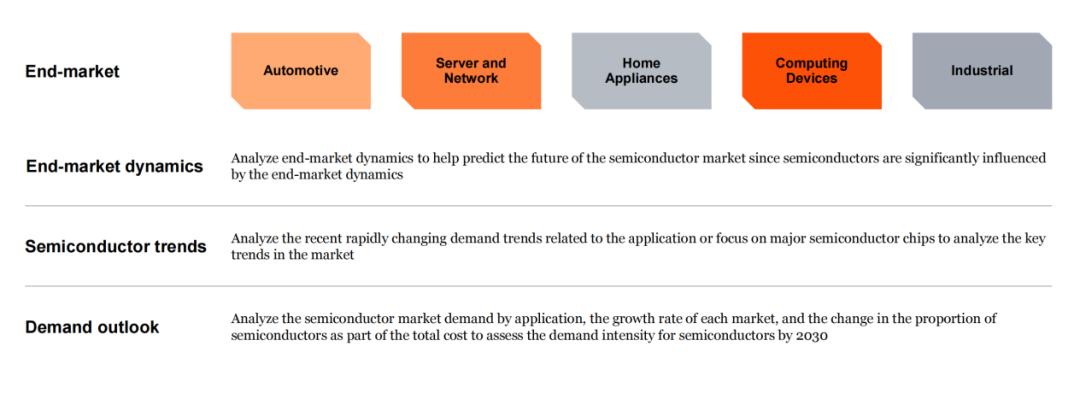
Core Insights - The semiconductor industry is undergoing rapid transformation driven by advancements in artificial intelligence, geopolitical changes, and increased government investments in domestic production [1] - The demand for high-performance chips is surging due to accelerated AI applications, while supply chain dynamics are reshaped by evolving trade policies and national security concerns [1] - Semiconductor technology is becoming indispensable across various sectors, including automotive, healthcare, and energy, necessitating continuous innovation and strategic adjustments [1] Demand Analysis - Semiconductors are essential for innovation and daily life, with strong and evolving market demand driven by technological advancements and industry needs [2] - The global semiconductor market is projected to grow from $627 billion in 2024 to $1.03 trillion by 2030, supported by advancements in data centers, AI, autonomous vehicles, smartphones, and other emerging technologies [3] Automotive Sector - The automotive industry is experiencing profound changes due to electrification, autonomous driving, and software-defined vehicles, increasing the role and value of semiconductors [5] - The electric vehicle (EV) market is expected to capture a significant share by 2030, driving demand for high-voltage power semiconductors like silicon carbide (SiC) [5] - The transition to electric and connected vehicles is expected to increase the semiconductor content per vehicle, with advanced driver assistance systems (ADAS) and high-performance computing (HPC) driving costs [15][22] Data Centers and Networking - The rise of generative AI applications has led to exponential growth in data generation and processing, making data centers and their servers critical for modern digital infrastructure [24] - By 2030, the global server market is expected to exceed $300 billion, driven by investments from cloud service providers and telecom companies [25] - The demand for specialized integrated circuits (ASICs) is increasing as major tech companies develop custom chips to reduce operational costs [25] Home Appliances - The home appliance market is becoming smarter due to AI and IoT technologies, leading to increased demand for AI processors and power management integrated circuits (PMICs) [54] - The integration of AI in traditional appliances is accelerating replacement cycles, while new products like AR/VR devices are gaining market recognition [55] Industrial Applications - Semiconductors are transforming various industrial sectors, supporting faster diagnostics and more efficient operations in healthcare, renewable energy, and smart manufacturing [94] - The demand for advanced semiconductors is expected to grow as industries integrate smart, automated, and AI-driven solutions [95]
X @Bloomberg
Bloomberg· 2025-09-12 15:00
Europe's political chaos is no barrier to tech investment, the ASML-Mistral tie-up shows, writes @LionelRALaurent (via @opinion) https://t.co/S9s9AaljNd ...
台积电史上最大调整!涉及30%员工
是说芯语· 2025-09-11 23:46
Core Viewpoint - TSMC's recent business adjustments, including exiting specific sectors and consolidating wafer fabs, are strategic moves to adapt to market changes and enhance its competitive position in the semiconductor industry [6]. Group 1: Business Adjustments - TSMC plans to exit the GaN foundry business within two years and close the 6-inch Fab 2 in Hsinchu Science Park, Taiwan [3]. - The company will consolidate three 8-inch fabs (Fab 3, Fab 5, and Fab 8) and redeploy up to 30% of its workforce to the Southern Taiwan Science Park (STSP) and Kaohsiung factories [3][4]. - These adjustments aim to address labor shortages, reduce costs, and optimize asset utilization by reallocating human resources and integrating wafer fabs [3]. Group 2: Advanced Packaging and Technology Development - TSMC is transforming the 6-inch fab into a CoPoS panel-level packaging facility to meet the increasing demands for advanced packaging technologies due to enhanced chip performance [4]. - The company is focusing on developing EUV protective film technology to improve yield and control costs, as EUV lithography is critical for new process nodes [5]. - TSMC has reduced orders for High NA EUV systems and is establishing the 8-inch Fab 3 as an internal R&D center for EUV protective films to decrease reliance on ASML and its supply chain [5]. Group 3: Market Position and Industry Impact - TSMC's strategic adjustments are expected to strengthen its leading position in the semiconductor industry and trigger a chain reaction that promotes higher industry standards [6]. - The shift towards proprietary protective films is anticipated to optimize processes, enhance yield, expand capacity, and lower costs, thereby improving profitability and maintaining TSMC's competitive edge [5].