
帝尔激光

Search documents
山西证券研究早观点-20251203
Shanxi Securities· 2025-12-03 01:04
Market Trends - The domestic market indices showed a decline, with the Shanghai Composite Index closing at 3,897.71, down 0.42%, and the Shenzhen Component Index at 13,056.70, down 0.68% [4]. Industry Commentary: Chemical Raw Materials - The new materials sector saw an increase of 3.23%, although it underperformed compared to the ChiNext Index by 1.31%. The synthetic biology index fell by 1.80%, while electronic chemicals rose by 0.45% [6]. - Key price tracking for amino acids showed valine at 12,500 CNY/ton (-0.40%), arginine at 21,400 CNY/ton (unchanged), and tryptophan at 30,500 CNY/ton (-3.17%) [6]. - The IPO guidance for Yushu Technology has been completed, which is expected to accelerate the development of the humanoid robot industry. The company is on the verge of becoming the first humanoid robot stock in A-shares, potentially leading to a market size of 10 trillion CNY for humanoid robots in China [6][7]. Industry Commentary: Electric Equipment and New Energy - The launch of the Lingxin platform by Zhiyuan Robotics allows users to customize robot interactions easily, marking a significant innovation in the industry [9]. - UBTECH's total order amount for humanoid robots in 2025 has reached 1.3 billion CNY, indicating strong market demand [9]. - The National Development and Reform Commission is addressing issues of price disorder in the market, which could impact competition and pricing strategies [9]. - Recent pricing data shows that polysilicon prices remain stable, with dense material averaging 52.0 CNY/kg and granular silicon at 50.0 CNY/kg [9][13]. Investment Recommendations - The report recommends focusing on companies involved in humanoid robots, particularly those producing core components like electronic skin and dexterous hands. Notable companies include Hanwei Technology and Fule New Materials [6][7]. - In the electric equipment and new energy sector, companies such as Aishuo Co., Longi Green Energy, and Daqo New Energy are highlighted for their potential in new technology and supply-side strategies [11].
长江证券副总裁、长江保荐董事长王承军: 深耕区域与赛道 探索精品投行之路
Zheng Quan Shi Bao· 2025-12-02 18:15
Core Viewpoint - The company aims to transform its investment banking approach by abandoning the "big and comprehensive" model in favor of a boutique investment banking strategy focused on "regional deep cultivation" and "specialized tracks" [1] Group 1: Investment Banking Strategy - The company emphasizes the importance of a solid "base camp" for sustainable performance amid long cycles and profitability pressures in investment banking [1] - The "three investment linkage" mechanism is identified as a core advantage, comprising research, investment banking, and investment roles [1] - Research serves as a blueprint, with the company's research institute consistently ranking among the top in the industry [1] - Investment banking is responsible for implementation, particularly in serving small and medium-sized enterprises [1] - Investment acts as a strong guarantee, providing crucial capital support through entities like Changjiang Capital [1] Group 2: Regional Focus - The company follows the principle of "combining national strategy with its own advantages" in regional selection [2] - It focuses on deepening its presence in Hubei, where it has maintained the top IPO ranking for several consecutive years [2] - The company aims to capture opportunities in the Yangtze River Delta and the Guangdong-Hong Kong-Macau Greater Bay Area, which are key sources for innovative enterprises [2] - It seeks to consolidate its market position in the Sichuan-Chongqing area, where it has established a good reputation and business foundation [2] Group 3: Industry Focus - The company adopts a differentiated competition strategy in its investment banking business, focusing on niche markets such as military, Taiwanese enterprises, and chemicals [2] - It aims to build "circle barriers" and "reputation moats" in specific sectors, avoiding highly competitive markets [2] Group 4: Role in Economic Service - The company positions itself as a long-term partner for clients, playing three key roles: a promoter of local platform company transformation, a planner for listed company value management, and a guide for the capitalization of innovative enterprises [2][3] - It provides comprehensive service models like "equity-debt linkage" to support local government platform transformations [2] - The company has developed a merger and acquisition information database to facilitate transaction matching and offers diversified financing support [2] Group 5: Development Stages - The company's deep cultivation strategy has evolved from inefficient "street visits" to leveraging external channels like government and banks for enterprise selection [3] - The current development phase (3.0) focuses on "leading enterprises in the industrial chain" to significantly enhance project precision [3]

帝尔激光:帝尔激光研发生产基地二期项目目前正在建设中,目前正在积极推进项目达到可使用状态
Mei Ri Jing Ji Xin Wen· 2025-12-02 09:36
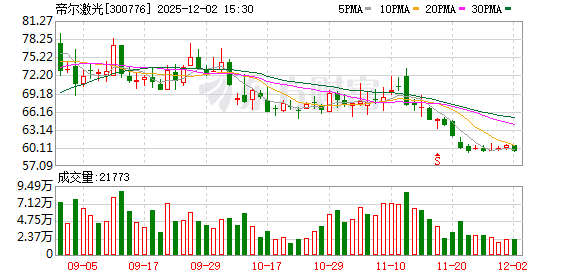
Group 1 - The company's stock price is influenced by multiple factors including macroeconomic conditions and industry cycles [2] - The second phase of the company's R&D and production base is currently under construction and is being actively promoted to reach a usable state [2] - Investors are encouraged to follow the company's future announcements for specific progress updates on the project [2]


国盛证券:钙钛矿产业化进展加速 面板企业跨界带来新动能
Zhi Tong Cai Jing· 2025-12-02 02:00
Core Insights - The Chinese perovskite photovoltaic industry is entering a critical phase of technological scaling, marked by significant breakthroughs since 2025 [1][2] - BOE Technology Group (京东方) is leading the charge in perovskite solar technology, becoming one of the first companies to achieve large-scale production [1][3] Industry Developments - The perovskite photovoltaic industry in China has seen rapid advancements, with the first GW-level perovskite production line launched by GCL-Poly Energy on October 29, 2023 [2] - The year 2025 is projected to be a milestone for the commercialization of GW-level perovskite production lines, with several companies, including GCL-Poly and Xina Solar, set to commence production [2] Company Strategies - BOE has diversified into the perovskite sector as part of its "Screen IoT" strategy, establishing a dedicated subsidiary for perovskite technology development [3] - The company has leveraged its existing capabilities in glass processing and large-scale manufacturing to accelerate the commercialization of perovskite solar cells [3][5] Technological Advancements - Various technological routes, including rigid, flexible, and tandem components, are being developed concurrently, with efficiency breakthroughs reported [4] - Rigid components have achieved a certified efficiency of 27.3%, while flexible components reached 20.11% efficiency [4] - Tandem components have set new records, with experimental line efficiencies reaching 28.42% [4] Production Capacity - BOE has invested 871 million yuan in a 500MW perovskite production line, which is expected to produce 912,500 modules [5] - The production line is set to commence operations in December 2024, positioning BOE as a pioneer in large-scale perovskite production [5]


趋势研判!2025年中国智能光子制造设备行业产业链、相关政策、市场规模、应用结构、竞争格局及发展趋势分析:光通信与数据中心是当前最大应用市场[图]
Chan Ye Xin Xi Wang· 2025-11-29 05:27
Core Viewpoint - The smart photonic manufacturing equipment industry is a key enabling technology in the "Made in China 2025" initiative and the global Industry 4.0 revolution, driving high-end manufacturing towards intelligence and sophistication [1][3]. Industry Definition and Characteristics - Smart photonic manufacturing integrates optical technology, electronic technology, and intelligent software, achieving high precision and automation in the production of photonic devices [2][3]. - The equipment includes laser processing devices, optical detection and measurement devices, and optical communication devices [2]. Market Size and Growth - The global smart photonic manufacturing equipment market is projected to grow to 8.5 billion yuan in 2024, an increase of 1.3 billion yuan from 2023 [3]. - By 2025, the market size is expected to reach 10.5 billion yuan, with the data communication sector accounting for 53.06% and the telecommunications sector for 31.92% [1][6]. Application Structure - The largest application markets for smart photonic manufacturing equipment are optical communication and data centers, with the data communication sector expected to hold 55.24% of the market in 2024 [6][8]. - The demand for high-speed optical modules is increasing, with a transition towards 1.6T technology [6]. Industry Chain - The upstream of the smart photonic manufacturing equipment industry includes key components, software, mechanical parts, sensors, electronic components, and optical elements [6]. - The downstream encompasses the production of smart photonic manufacturing equipment and its applications in sectors like data communication, telecommunications, and biomedical [6]. Policy Environment - The Chinese government is enhancing the integration of artificial intelligence in industrial applications, supporting the smart photonic manufacturing equipment industry through various policies [9]. - Key policies include the "2023-2024 Action Plan for Steady Growth in the Electronic Information Manufacturing Industry" and the "Opinions on Deepening the Implementation of the 'Artificial Intelligence+' Action" [9]. Competitive Landscape - The competitive landscape of the smart photonic manufacturing equipment industry in China is characterized by international giants dominating the high-end market, while domestic companies rapidly penetrate the mid-to-low-end segments [10]. - Notable domestic companies include Robotech, Wuxi Xian Dao Intelligent Equipment, and Shenzhen Jiejia Weichuang Energy Equipment [10]. Development Trends - The smart photonic manufacturing equipment industry is crucial for China's manufacturing upgrade and its position in global high-tech competition [11]. - The industry is at a crossroads of technological breakthroughs and industrial upgrades, with continuous innovation and deep integration of AI and cross-domain technologies expected [11].

山西证券研究早观点-20251127
Shanxi Securities· 2025-11-27 01:11
Market Overview - The domestic market indices showed mixed performance, with the Shanghai Composite Index closing at 3,864.18, down 0.15%, while the Shenzhen Component Index rose by 1.02% to 12,907.83 [2] Industry Insights - The report highlights significant developments in the non-bank financial sector, particularly in brokerage mergers and acquisitions, indicating a renewed focus on investment value within the sector [4][6] - The securities industry has seen a substantial increase in bond underwriting, with a total of 705.18 billion yuan in technology innovation bonds issued in the first three quarters of 2025, marking a year-on-year growth of 57.77% [6] Company Analysis: Longxin Group - Longxin Group recently launched the "Longxin Jiugong Power Trading Intelligent Agent," an AI-driven tool designed for power trading, which aims to simplify market decision-making and enhance trading efficiency [5][9] - The intelligent agent boasts four core capabilities: comprehensive situational awareness, deep strategy analysis, intelligent solution generation, and comprehensive risk control, achieving over 90% accuracy in price forecasting [9] - For the first three quarters of 2025, Longxin Group reported revenues of 2.45 billion yuan, a decline of 9.4% year-on-year, but anticipates a revenue increase in Q4 due to the traditional peak season for power grid-related business [9] - The company has seen significant growth in its new energy services, with over 25 million registered users on its charging platform and a projected total charging volume of 7 billion kWh for the year [9] Solar Industry Commentary - The report tracks price movements in the solar industry, noting that polysilicon prices remained stable at 52.0 yuan/kg, while silicon wafer prices have seen declines of 6.3% and 3.1% for different types [10] - The solar market is experiencing a downturn in demand, with domestic production expected to fall below 44.5 GW in November, and a 23.6% decrease in solar module exports in October [10] - The report recommends companies involved in new technology directions, supply-side initiatives, and energy storage, highlighting Longxin Group as a key player in the power market [10]
多晶硅期货再创阶段新高,隔夜光伏中概股也大涨,行业供需持续改善
Xuan Gu Bao· 2025-11-26 23:44
Group 1 - The photovoltaic sector of Chinese concept stocks has shown strong performance, with Canadian Solar rising by 8.4% and Daqo New Energy increasing by 3.2% [1] - The main futures of polysilicon have risen nearly 3%, reaching a recent high, indicating a recovery in prices across the photovoltaic supply chain [1] - Since mid-year, the upstream photovoltaic sector has experienced price increases due to factors such as cost price sales guidance and anti-involution effects, with prices of polysilicon dense materials and 182N silicon wafers rising nearly 50% [1] Group 2 - Polysilicon is currently the most prominent segment in terms of overcapacity and losses, but it also has the highest concentration of production capacity, which may facilitate consensus among companies for production control and price support [1] - Several silicon material companies are advancing polysilicon capacity consolidation plans, which, if successful, could fundamentally improve the supply-demand structure of the industry [1] Group 3 - Open Source Securities indicates that the photovoltaic industry has achieved some positive results in combating involution, with a focus on two main lines: supply-side measures such as silicon material storage platforms and production limits, and demand-side factors including the support for photovoltaic installation demand during the 14th Five-Year Plan [1] - The cancellation of export tax rebates and the enforcement of prohibitions on selling below cost are also critical to the recovery of the supply-demand relationship in the industry, which is expected to drive up component prices [1] Group 4 - Key companies in the silicon material segment include Tongwei Co., Daqo New Energy, GCL-Poly Energy, and Xinte Energy [1] - Companies involved in BC technology include Aiko Solar, LONGi Green Energy, Dier Laser, and Laplace [1] - Key players in the silicon wafer segment are Hongyuan Green Energy, Shuangliang Eco-Energy, and TCL Zhonghuan [1] - Major battery component manufacturers include JA Solar, JinkoSolar, Trina Solar, and Junda Co. [1]
BC引领光伏价值新时代,全球BC技术创新峰会成功举办
中国能源报· 2025-11-25 08:18
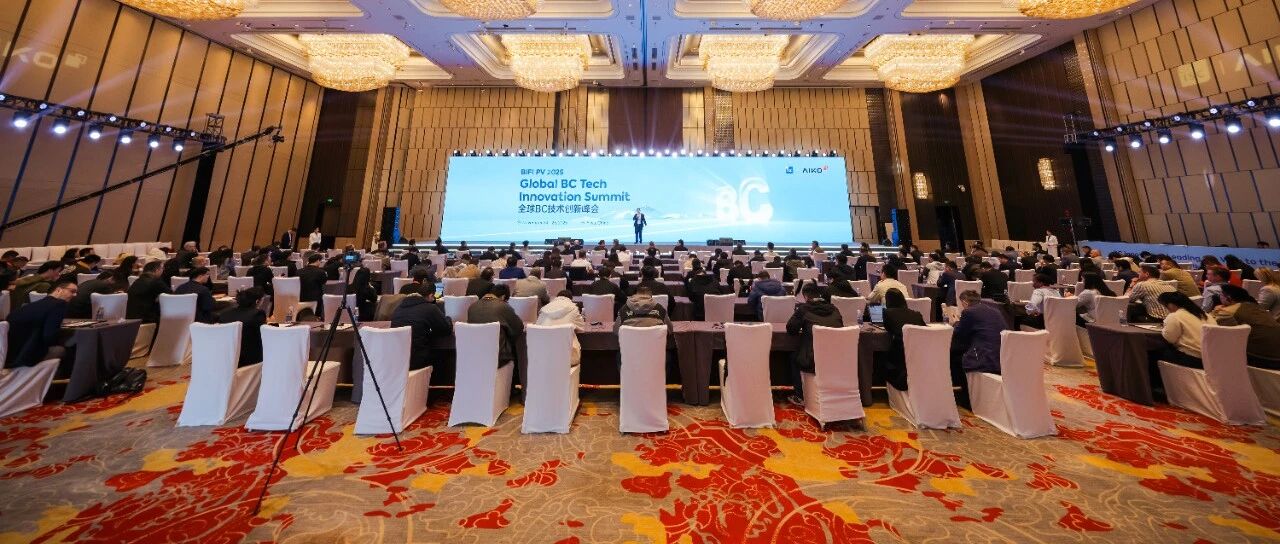
Core Viewpoint - The global BC technology innovation summit held in Yiwu, China, highlights the importance of innovation in the photovoltaic industry, particularly focusing on the advancements in BC technology and its potential to lead the market in the coming years [1][19]. Group 1: Event Overview - The global BC technology innovation summit and the 14th bifi PV workshop took place in Yiwu, attracting over 600 participants from leading photovoltaic companies and research institutions worldwide [1]. - This summit is part of a series of prestigious academic gatherings that have previously been held in various international locations, emphasizing the global nature of the photovoltaic industry [3]. Group 2: BC Technology Insights - BC technology is recognized as the ultimate technology in the single crystal silicon era, with the potential to achieve conversion efficiencies close to the theoretical limits [3]. - Aiko Solar, a key player in the industry, has achieved GW-level mass production of N-type BC technology, showcasing its commitment to innovation and efficiency [3][5]. Group 3: Industry Perspectives - Liu Yiyang, Executive Secretary of the China Photovoltaic Industry Association, emphasized that innovation is crucial for the healthy development of the photovoltaic industry, aligning with national strategic directions [5]. - Radovan Kopecek, founder of ISC Konstanz, projected that BC technology will gain significant market share and customer recognition, with production efficiency reaching 25% and expected to dominate the market by 2027-2028 [8]. Group 4: Future Projections - Aiko Solar's Chairman, Chen Gang, discussed the transition of the photovoltaic industry towards a value competition era, highlighting the need for continuous technological innovation to meet diverse customer demands [10]. - The company aims to increase mass production efficiency to 26% by 2026 and eventually reach 35% within 14 years, indicating a strong commitment to advancing BC technology [10]. Group 5: Collaborative Efforts - The summit facilitated discussions among industry leaders on the necessity of collaborative innovation across the entire supply chain to foster a healthy ecosystem for BC technology [14]. - Various companies and research institutions participated in the summit, contributing to a comprehensive analysis of BC technology across design, production, testing, and application [14]. Group 6: Safety and Standards - TÜV Rheinland awarded Aiko Solar and Longi Green Energy with certificates for "component-level fire risk resistance," highlighting the safety advantages of BC components in high-temperature and shaded environments [16]. Group 7: Market Positioning - Aiko Solar's ABC components have maintained the highest production efficiency ranking for 33 consecutive months, demonstrating their market leadership and commitment to delivering high-quality products [18]. - The company focuses on providing differentiated products and services to meet the evolving needs of customers in the photovoltaic market [18].

帝尔激光跌2.03%,成交额7341.82万元,主力资金净流出601.44万元
Xin Lang Cai Jing· 2025-11-18 02:22
Core Viewpoint - The stock of Dier Laser has experienced a decline in recent trading sessions, with a notable drop of 9.70% over the last five trading days, reflecting market volatility and potential investor concerns [1]. Financial Performance - For the period from January to September 2025, Dier Laser achieved a revenue of 1.781 billion yuan, representing a year-on-year growth of 23.69% [2]. - The net profit attributable to the parent company for the same period was 496 million yuan, showing a year-on-year increase of 29.39% [2]. Shareholder Information - As of September 30, 2025, the number of shareholders for Dier Laser was 19,700, a decrease of 12.16% from the previous period [2]. - The average number of circulating shares per shareholder increased by 13.85% to 8,491 shares [2]. Dividend Distribution - Dier Laser has cumulatively distributed 507 million yuan in dividends since its A-share listing, with 282 million yuan distributed over the past three years [3]. Institutional Holdings - As of September 30, 2025, the third-largest circulating shareholder is Invesco Great Wall New Energy Industry Fund A, holding 5.2669 million shares, an increase of 13,500 shares from the previous period [3]. - Hong Kong Central Clearing Limited is a new sixth-largest shareholder, holding 3.5118 million shares [3]. - Zhuque Hengxin One-Year Holding Fund reduced its holdings by 759,700 shares, now holding 3.1540 million shares, while E Fund's ChiNext ETF also saw a reduction of 482,600 shares, now holding 2.8893 million shares [3].
钙钛矿:技术突破与产业化加速并行,设备与材料环节迎来机遇
GOLDEN SUN SECURITIES· 2025-11-17 08:32
Investment Rating - The report maintains an "Increase" rating for the electric equipment industry [4] Core Insights - Continuous technological breakthroughs in perovskite solar cells have led to significant improvements in efficiency and stability, with laboratory results showing a lifespan increase to over three times that of traditional solutions and maintaining a high efficiency of 26.2% [1] - The industrialization process of perovskite technology is accelerating, with several companies achieving GW-level production capacity, marking 2025 as a pivotal year for mass production [2] - Clear policy support is evident, with the Ministry of Industry and Information Technology promoting advanced photovoltaic technologies, indicating a broad and promising industry outlook [3] Summary by Sections Technological Advancements - Perovskite solar cells have achieved notable efficiency improvements, with a record efficiency of over 30% for all-perovskite tandem cells and significant advancements in commercial applications [1] Industrialization Progress - The perovskite photovoltaic industry in China is entering a critical phase, with major companies launching GW-level production lines and achieving stable operational efficiencies [2] Policy Support and Market Potential - Government policies are favoring the development of perovskite technologies, with applications extending into space and emerging sectors like construction and automotive, indicating a robust market potential [3] Investment Recommendations - The report suggests focusing on equipment manufacturers and material suppliers that are poised to benefit from the growth of the perovskite industry, including companies like Jiejiawei, Maiwei, and Jin Jing Technology [3]