
得利斯

Search documents
日本为何爱吃预制菜?
3 6 Ke· 2025-09-18 09:29
Core Viewpoint - The dispute between Luo Yonghao and Jia Guolong regarding pre-prepared dishes has concluded, with West Be acknowledging the need for transparency in the use of pre-prepared ingredients in restaurants [1][2] Industry Overview - The pre-prepared dish sector has seen a rise in stock prices despite consumer backlash, with companies like Delisi and established brands such as Weizhi Xiang and Sanquan Foods experiencing significant gains [1][2] - The National Health Commission's draft for national food safety standards for pre-prepared dishes is expected to provide clarity on the definition and usage of these products in the restaurant industry [1][2] Definitions and Concepts - The distinction between central kitchens and pre-prepared dishes is crucial, with pre-prepared dishes being fully cooked and frozen for direct consumption, while central kitchens provide semi-finished products that require further cooking [3][4] - The official definition of pre-prepared dishes by the State Administration for Market Regulation excludes dishes made in central kitchens, highlighting the need for clarity in industry standards [2][3] Market Dynamics - The development of central kitchens is seen as a trend in the restaurant industry, driven by the need for efficiency and quality control in food preparation [4][6] - The pre-prepared dish market in China is still in its early stages, with significant differences compared to Japan, where a well-established market exists with strict food production standards [7][9][10] Future Outlook - The pre-prepared dish industry in China is projected to grow rapidly, with estimates suggesting a market size of 674.9 billion yuan by 2030 and a compound annual growth rate (CAGR) exceeding 10% [12] - Companies are recognizing the challenges in gaining consumer trust and are implementing quality management measures to address food safety and regulatory issues [11][12]
食品加工板块9月18日跌0.83%,得利斯领跌,主力资金净流出1.41亿元
Zheng Xing Xing Ye Ri Bao· 2025-09-18 08:52
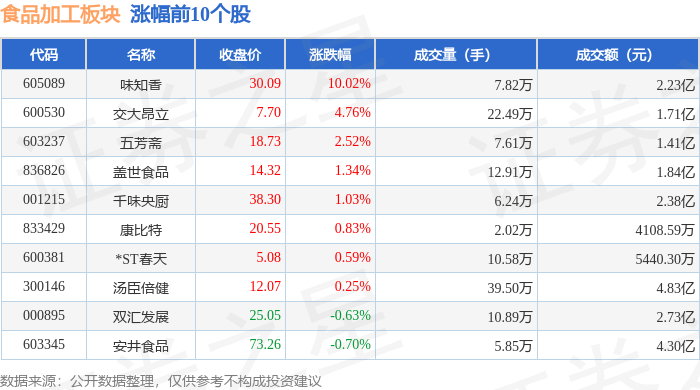
Market Overview - On September 18, the food processing sector declined by 0.83%, with Delisi leading the drop [1] - The Shanghai Composite Index closed at 3831.66, down 1.15%, while the Shenzhen Component Index closed at 13075.66, down 1.06% [1] Stock Performance - Notable gainers in the food processing sector included: - Weizhi Xiang (605089) with a closing price of 30.09, up 10.02% [1] - Jiaoda Anli (600530) at 7.70, up 4.76% [1] - Wufangzhai (603237) at 18.73, up 2.52% [1] - Major decliners included: - Delisi (002330) at 5.14, down 4.64% [2] - Huifa Food (603536) at 10.40, down 3.79% [2] - Jinzi Ham (002515) at 7.33, down 3.43% [2] Trading Volume and Capital Flow - The food processing sector experienced a net outflow of 141 million yuan from institutional investors, while retail investors saw a net inflow of 91.52 million yuan [2] - The total trading volume for the sector was significant, with Weizhi Xiang recording a trading volume of 78,200 hands and a transaction amount of 223 million yuan [1] Individual Stock Capital Flow - Weizhi Xiang had a net outflow of 50.67 million yuan from institutional investors, while retail investors contributed a net inflow of 26.51 million yuan [3] - Tangchen Beijian (300146) saw a net inflow of 25.10 million yuan from institutional investors, but a net outflow of 33.94 million yuan from retail investors [3] - Other stocks like Jiaoda Anli (600530) and Qianwei Yangchu (001215) also showed mixed capital flows, indicating varied investor sentiment [3]


得利斯股价跌5.01%,金元顺安基金旗下1只基金位居十大流通股东,持有250万股浮亏损失67.5万元
Xin Lang Cai Jing· 2025-09-18 06:54
Group 1 - The core point of the news is that Delisi Foods experienced a decline in stock price by 5.01%, trading at 5.12 CNY per share, with a total market capitalization of 3.253 billion CNY as of the report date [1] - Delisi Foods, established on June 20, 2003, and listed on January 6, 2010, is primarily engaged in the slaughtering of pigs and the production and sale of chilled and frozen meat products [1] - The revenue composition of Delisi Foods includes chilled and frozen meat at 41.41%, beef trading at 17.27%, beef series products at 15.03%, and various other categories contributing to the total revenue [1] Group 2 - Among the top ten circulating shareholders of Delisi Foods, Jinyuan Shun'an Fund's flexible allocation mixed fund increased its holdings by 164,700 shares in the second quarter, now holding 2.5 million shares, which is 0.39% of the circulating shares [2] - The Jinyuan Shun'an Yuanqi Flexible Allocation Mixed Fund has a total scale of 1.35 billion CNY and has achieved a year-to-date return of 32.62% [2] - The fund manager, Miao Weibin, has been in position for 8 years and 279 days, with the best fund return during his tenure being 519.35% [3]
A股猪肉股普跌,邦基科技跌近5%
Ge Long Hui A P P· 2025-09-18 05:18
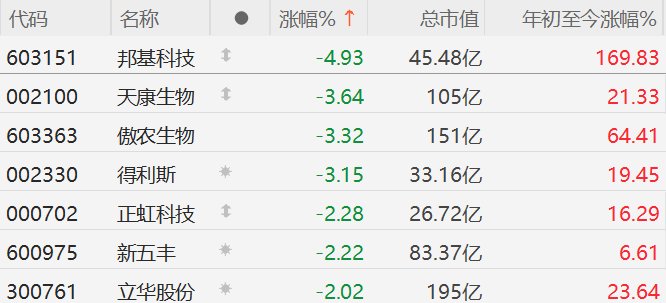
Group 1 - The A-share market saw a decline in pork stocks, with notable drops in several companies [1] - Bangji Technology experienced a nearly 5% drop, while Tiankang Biological and Aonong Biological fell over 3% [1] - Other companies such as Zhenghong Technology, Xinwufeng, and Lihua Co. also reported declines exceeding 2% [1] Group 2 - Bangji Technology's market capitalization is 4.548 billion, with a year-to-date increase of 169.83% [2] - Tiankang Biological has a market cap of 10.5 billion and a year-to-date increase of 21.33% [2] - Aonong Biological's market cap stands at 15.1 billion, with a year-to-date increase of 64.41% [2] - Delisi has a market cap of 3.316 billion and a year-to-date increase of 19.45% [2] - Zhenghong Technology's market cap is 2.672 billion, with a year-to-date increase of 16.29% [2] - Xinwufeng has a market cap of 8.337 billion, with a year-to-date increase of 6.61% [2] - Lihua Co. has a market cap of 19.5 billion, with a year-to-date increase of 23.64% [2]


预制菜风波下,知名餐厅被曝:撤下“现做”招牌,“无预制菜”字样已涂黑!很多人都吃过,公司半年营收近23亿元,净利润大涨超40%
Mei Ri Jing Ji Xin Wen· 2025-09-18 04:22
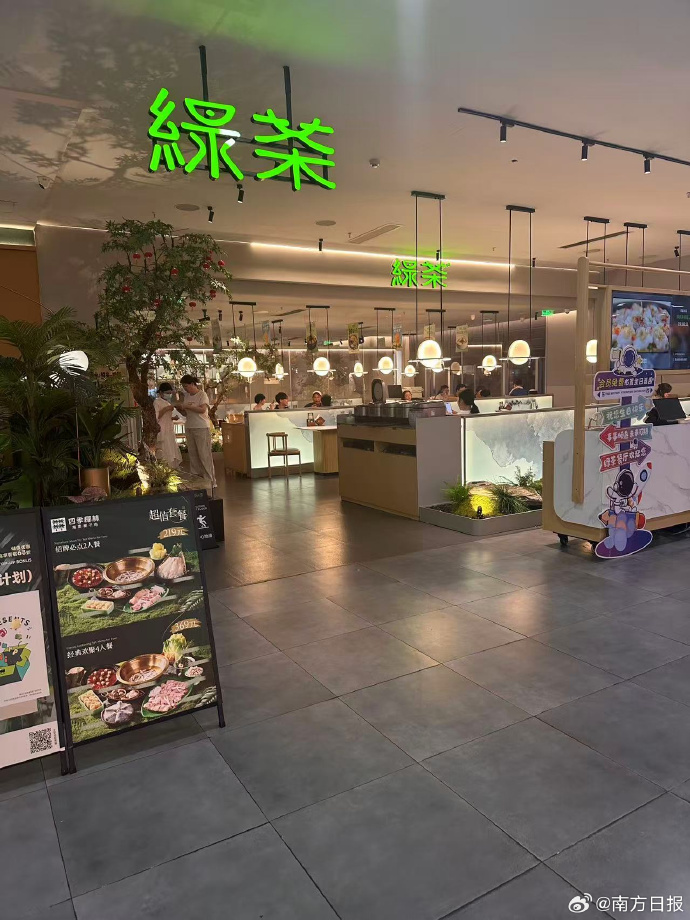
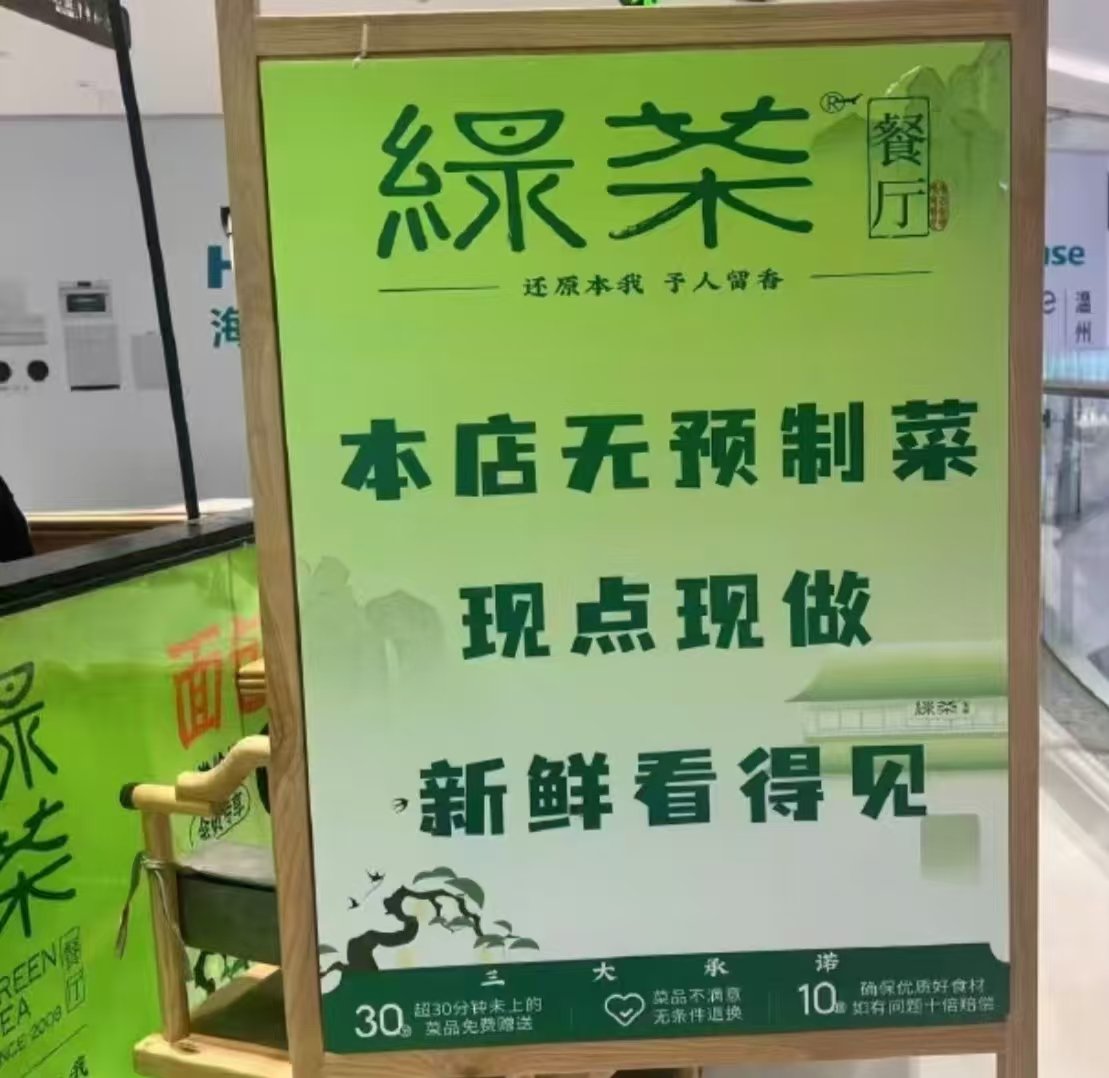
Core Viewpoint - The controversy surrounding "pre-made dishes" is expanding within the industry, particularly affecting the Green Tea restaurant chain, which has recently removed its "no pre-made dishes" signage from its storefronts, raising questions about its food sourcing practices [1][3][4]. Group 1: Company Practices - Green Tea restaurant has been found to have removed its "no pre-made dishes" signage, with staff unable to confirm when this occurred [1][3]. - The restaurant's external takeaway packaging previously indicated "no pre-made dishes," but this has now been obscured [3]. - Green Tea Group's prospectus reveals partnerships with 205 third-party food processing companies, allowing them to reduce upfront investment costs and improve operational efficiency by outsourcing much of the food preparation [4][6]. Group 2: Consumer Reactions - Consumer sentiment is divided regarding the use of pre-made dishes, with some feeling that the lack of disclosure infringes on their right to know [4]. - The restaurant promotes its signature dishes as "made to order," while simultaneously relying on a central kitchen to enhance service efficiency and reduce costs [4][6]. Group 3: Financial Performance - Green Tea Group reported a revenue of 2.29 billion RMB for the first half of the year, a 23.1% increase year-on-year, with a net profit of 233.9 million RMB, up 34% [7][8]. - The company attributes its revenue primarily to restaurant operations and takeout services, supported by a digital and standardized business model [8]. Group 4: Market Impact - Following the controversy, the stock price of Green Tea Group fell by 1.43%, reflecting broader market concerns about the pre-made dish sector, which saw declines in several related companies [9][10].
预制菜风波扩散!绿茶被曝撤下“现做”招牌,海底捞标注“部分预加工”
Sou Hu Cai Jing· 2025-09-18 03:24
Group 1 - The controversy surrounding "Xibei pre-made dishes" is impacting the industry, with reports of restaurants like Green Tea removing signs claiming "no pre-made dishes" [2] - Green Tea Restaurant previously faced allegations of using pre-made dishes without proper labeling, particularly regarding a dish priced at 38 yuan [4] - The company submitted its listing application in July 2022, prompting inquiries from the regulatory body regarding food safety and the proportion of pre-made dishes [4] Group 2 - Green Tea Group reported a revenue of 2.29 billion yuan for the first half of the year, a year-on-year increase of 23.1%, with a net profit of 234 million yuan, up 34% [4] - The company has established a digital and standardized business model supported by a flexible supply chain and strict food safety controls [4] - In contrast to Green Tea, Haidilao has started labeling some menu items as "partially pre-processed" [5][6] Group 3 - As of September 18, the pre-made dish sector saw a decline of 0.56%, with stocks of companies like Jiahe Foods and Delisi dropping approximately 6% and over 3% respectively [7]


再度被关注的预制菜,市场空间有多大
Di Yi Cai Jing· 2025-09-18 03:04
Core Viewpoint - The reliance of the restaurant industry on pre-prepared dishes is decreasing, as evidenced by the shift towards fresher, made-to-order food options among leading restaurant chains like Jiumaojiu Group's Taier Sour Fish [1] Group 1: Market Trends - The pre-prepared dish concept sector saw initial strength, with stocks like Delisi and Huifa Foods hitting the limit up, but later experienced a decline of 1.51% on September 17 [2] - Analysts suggest that the long-term trend for pre-prepared dishes remains positive due to increasing restaurant chain standardization, rising labor costs, and faster consumer lifestyles, indicating growth potential in both B2B and B2C markets [2][3] - The demand for pre-prepared products such as cleaned vegetables and processed seafood is rising among chain restaurants, driven by considerations of cost, supply chain stability, and safety [2][3] Group 2: Industry Dynamics - The increasing chain restaurant ratio, currently around 30%, is expected to drive growth in pre-prepared dishes, creating a mutually beneficial cycle between industry concentration and supply chain strength [3] - Unlike the cooling B2C market, B2B sectors like cleaned vegetables and seafood processing continue to expand their market share [4] - The pre-prepared dish industry is still in its early to mid-development stage, with a fragmented competitive landscape and a focus on B2B efficiency and standardization [4] Group 3: Investment Landscape - Several provinces have previously launched supportive policies for the pre-prepared dish industry, focusing on local agricultural products, but many face challenges in attracting investment [6] - Investment in the pre-prepared dish sector has seen a decline since 2022, with a notable drop in financing activity in 2023 and 2024 [7]


预制菜风波扩散:绿茶被曝撤下“现做”招牌,海底捞标注“部分预加工”
Xin Lang Cai Jing· 2025-09-18 02:51
Core Insights - The controversy surrounding "Xibei pre-made dishes" is spreading within the industry, with some restaurants like Green Tea removing signs that claim "no pre-made dishes, freshly made" [1][3] - Green Tea Restaurant has faced scrutiny regarding the use of pre-made dishes, particularly after a report last year revealed that a dish priced at 38 yuan was made from pre-made ingredients without proper labeling [3] - The company has recently released its first half-year report since going public, showing a revenue of 2.29 billion yuan, a year-on-year increase of 23.1%, and a net profit of 251 million yuan, up 40.4% [3] Company Actions - Green Tea Restaurant has removed its "no pre-made dishes" signage from some locations, indicating a shift in its marketing strategy [1][3] - In contrast, Haidilao has begun labeling certain dishes as "partially pre-processed" on its menu, reflecting a more transparent approach to ingredient sourcing [4][5] Market Reaction - As of September 18, the pre-made dish sector has seen a decline of 0.56%, with specific stocks like Jiahe Foods dropping approximately 6% and Delisi falling over 3% [6]
罗永浩西贝“骂战”背后:中国预制菜行业何去何从?与日本有何不同?
Sou Hu Cai Jing· 2025-09-17 04:42
Core Viewpoint - The controversy surrounding the use of pre-prepared dishes has led to a public discussion about transparency in the restaurant industry, with West B's apology letter indicating a shift towards more on-site preparation and consumer engagement [1][3]. Group 1: Industry Response and Market Impact - West B has committed to adjusting its central kitchen processing model to favor on-site preparation, inviting consumer feedback for improvements [1]. - Following the controversy, the pre-prepared dish sector saw a rise in stock prices, with companies like Delisi hitting the upper limit, and others like Weizhi Xiang, Sanquan Foods, and Huifa Foods also experiencing increases [3]. - The approval of the draft national standard for pre-prepared dishes by the National Health Commission is believed to have positively influenced the market, as it aims to clarify definitions and disclosure requirements for restaurants [3]. Group 2: Consumer Concerns and Industry Standards - Consumer concerns about the safety of pre-prepared dishes have been heightened due to past incidents, such as the exposure of certain manufacturers using substandard ingredients [3]. - The distinction between central kitchens and pre-prepared dishes has become a focal point of debate, with claims that central kitchens primarily provide semi-finished products that require further cooking [4]. - The pre-prepared dish industry in China is still in its early stages, with significant differences compared to Japan, where the market has matured and established strict production standards [6]. Group 3: Market Outlook and Growth Potential - The Chinese pre-prepared dish market is expected to reach a scale of 674.9 billion yuan by 2030, with a projected compound annual growth rate exceeding 10% over the next decade [6]. - The industry faces challenges related to consumer trust and regional limitations in cold chain logistics, which currently restrict the growth of existing companies [6]. - As standards are established, high-quality brands are anticipated to gain consumer preference, indicating a potential shift in market dynamics [6].
预制菜陷入舆论漩涡,相关A股上市公司遇波动
2 1 Shi Ji Jing Ji Bao Dao· 2025-09-17 00:04
Core Viewpoint - The pre-prepared food industry is facing significant challenges due to public scrutiny and declining performance among leading companies, despite the market's potential for growth and regulatory improvements [1][6][8]. Group 1: Market Performance - A-share pre-prepared food companies have experienced volatility, with some stocks rising and others falling in response to recent events [1]. - Major players like Weizhi Xiang and Delisi reported mixed financial results, with Weizhi Xiang's revenue increasing by 4.70% to 343 million yuan, but net profit declining by 24.46% [3]. - Anjixin's revenue grew by 0.80% to 7.604 billion yuan, but it faced a 15.79% drop in net profit, marking its first mid-year profit decline since listing [3]. - Guolian Aquatic Products reported a significant loss of 540 million yuan, with total revenue decreasing by 18.36% to 1.651 billion yuan [3]. Group 2: Industry Challenges - The pre-prepared food sector is under pressure from weak B-end consumption and intense market competition, leading to a decline in overall gross margins from 20.07% in 2018 to 13.79% in 2024 [4]. - Companies like Xianyin Food have struggled to turn a profit, reporting a 12.08% revenue decline and a net loss of 54.17 million yuan [4]. - The industry faces issues such as inconsistent standards and low consumer acceptance, highlighted by recent controversies and the formation of a "anti-prepared food alliance" among restaurants [4][5]. Group 3: Regulatory Developments - The government is increasingly focused on addressing the challenges faced by the pre-prepared food industry, with new regulations and standards being introduced [6][7]. - Guangdong province has implemented eight local standards for pre-prepared foods, and a national food safety standard is set to be released soon [7]. - Experts believe that recent controversies may ultimately benefit the industry's development by prompting necessary changes and improvements [7]. Group 4: Future Outlook - Despite current controversies, the direction for the pre-prepared food industry remains positive, with significant growth potential anticipated [8]. - The market size is projected to reach 674.9 billion yuan by 2030, with a compound annual growth rate (CAGR) exceeding 10% [7].


