上海家化

Search documents
京东PLUS会员日享超值福利:领超3000元超级补贴和至高40元外卖补贴
Zhong Jin Zai Xian· 2025-11-07 13:15
Core Insights - JD.com launched its PLUS Membership Day on November 8, coinciding with the 11.11 shopping festival, offering unprecedented discounts and exclusive benefits for PLUS members [1][3] Group 1: Discounts and Offers - PLUS members can receive a total of over 3000 yuan in subsidies, including various discount tiers such as 500 yuan off for purchases over 5000 yuan and 50 yuan off for purchases over 500 yuan [3][4] - On November 8, select products will be available at up to 50% off, including items like an 18K gold bracelet originally priced at 1269 yuan, now available for 899 yuan [4][5] - Additional essential products are also offered at significant discounts, such as a facial tissue priced at 39.9 yuan, now available for 19.9 yuan [5] Group 2: Membership Benefits - New PLUS members can unlock premium gifts for just 0.1 yuan upon signing up, with options including high-end skincare products and exclusive member services like free returns and dedicated customer service [5][7] - During the 11.11 period, new members will receive double points on lifestyle services, allowing them to redeem for various practical services such as cleaning and car maintenance [7][8] Group 3: Consumer Engagement and Trends - JD.com reported that the average spending of PLUS members is nine times that of non-members, indicating a strong consumer engagement and purchasing power [8][9] - Over 70% of PLUS members are also users of JD's food delivery service, showcasing their higher frequency and spending in this category compared to non-members [8][9] Group 4: Strategic Initiatives - JD.com aims to enhance PLUS membership benefits through various initiatives, including super subsidies and cross-industry collaborations, to foster high-quality growth for brands and merchants [9]


化妆品板块11月7日跌0.24%,嘉亨家化领跌,主力资金净流出4389.4万元
Zheng Xing Xing Ye Ri Bao· 2025-11-07 08:48
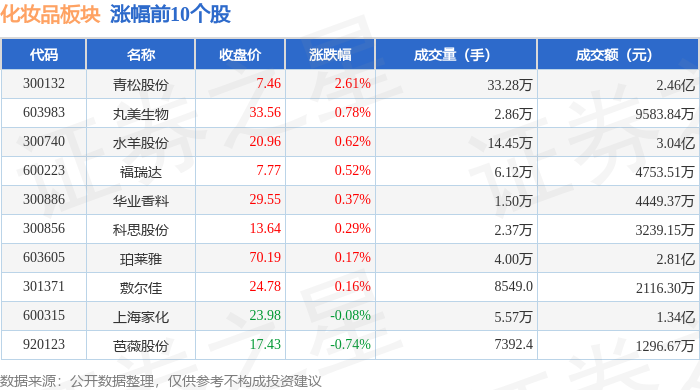
Market Overview - The cosmetics sector experienced a decline of 0.24% on November 7, with Jiaheng Jiahua leading the drop [1] - The Shanghai Composite Index closed at 3997.56, down 0.25%, while the Shenzhen Component Index closed at 13404.06, down 0.36% [1] Individual Stock Performance - Qing Song Co. (300132) saw an increase of 2.61%, closing at 7.46 with a trading volume of 332,800 shares and a turnover of 246 million [1] - Jiaheng Jiahua (300955) led the decline with a drop of 4.99%, closing at 34.85 with a trading volume of 36,400 shares and a turnover of 129 million [2] - Other notable performers include: - Wanmei Biological (603983) up 0.78% to 33.56 [1] - Shuiyang Co. (300740) up 0.62% to 20.96 [1] - Furuida (600223) down 0.52% to 7.77 [1] Capital Flow Analysis - The cosmetics sector saw a net outflow of 43.89 million from institutional investors, while retail investors experienced a net inflow of 13.79 million [2] - Notable capital flows include: - Qing Song Co. (300132) had a net inflow of 37.12 million from institutional investors [3] - Jiaheng Jiahua (300955) experienced a net outflow of 11.10 million from institutional investors [3] - Furuida (600223) had a significant net outflow of 7.78 million from institutional investors [3]

聚焦 | “购在中国·2025精品消费月暨2025上海迎进博消费嘉年华”活动今日启幕!
Sou Hu Cai Jing· 2025-11-07 03:40
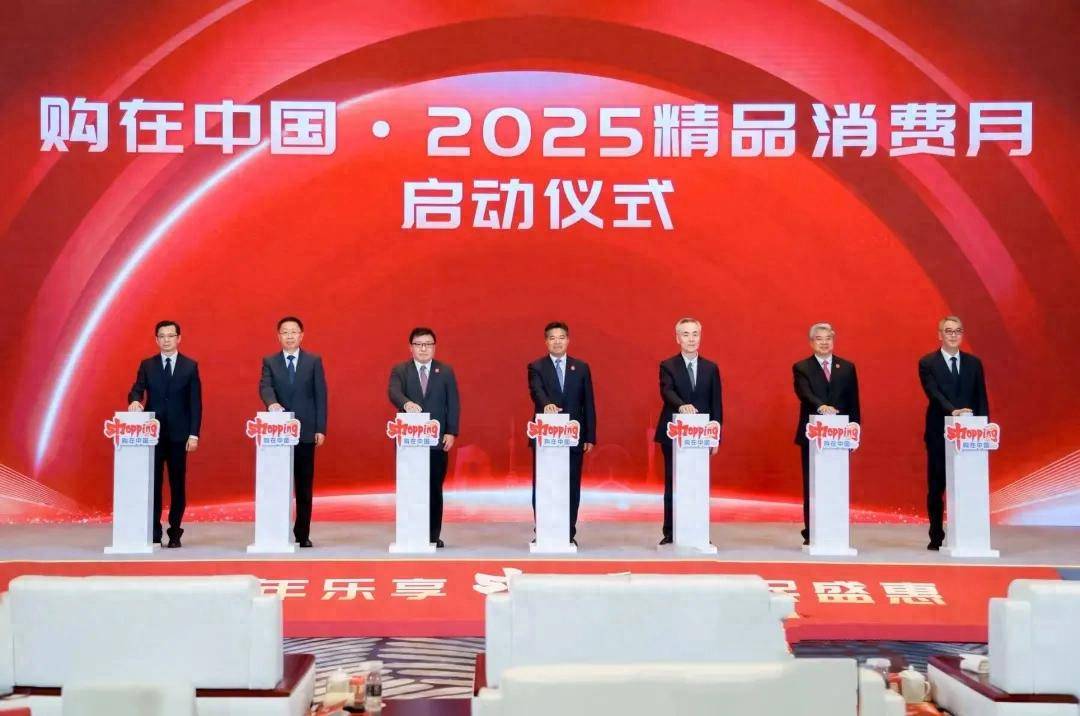
Core Points - The Ministry of Commerce launched the "Buy in China · 2025 Boutique Consumption Month" from November 1 to 30, focusing on four key areas: boutique shopping, exquisite food, exciting tourism, and exquisite performances [1][3] Group 1: Event Overview - The launch ceremony took place in Shanghai, co-hosted by the Ministry of Commerce and several municipal governments, highlighting the collaborative effort to boost consumption [3] - The event aims to leverage the influence of the China International Import Expo (CIIE) and integrate it with the "Double 11" shopping festival to enhance consumer engagement [3] Group 2: Key Activities - "New Trends from CIIE" series will feature the launch of new products from brands like L'Oréal and IKEA, with a focus on creating a vibrant shopping atmosphere in key commercial districts [4] - "Boutique Shopping New Scene" includes the establishment of a tax refund point at the CIIE venue and promotional activities across over 1,600 tax refund stores [5] - "Global Cuisine New Flavors" will promote popular dishes from local restaurants, creating a seamless connection between online and offline dining experiences [6][7] Group 3: E-commerce and Supply Chain - "Cloud Products and Sea Purchases" will focus on e-commerce activities, featuring products from over 30 countries and offering exclusive online promotions [8] - The event will also include a live streaming month, engaging various e-commerce platforms to promote local brands and products [8] Group 4: Tourism and Experience - "Leisure and Travel New Experiences" will introduce special offers for tourists during the CIIE, including free rides on designated buses for attendees [9] - The initiative aims to enhance the overall experience of visitors through themed activities and partnerships with local attractions [9] Group 5: Consumer Insights - The collaboration with Gaode to launch the "Love Shopping Shanghai" consumption list aims to capture the latest consumer trends across five core dimensions: new trends, new scenes, new flavors, new supplies, and new experiences [10]
近一月953公司被调研, 半导体、高端制造成焦点,多股已大涨
2 1 Shi Ji Jing Ji Bao Dao· 2025-11-07 01:48
Core Insights - The article highlights the increasing activity of broker research following the disclosure of third-quarter reports by listed companies, with a notable focus on sectors such as solar energy, semiconductor materials, and consumer electronics [2][5]. Group 1: Broker Research Trends - As of early November, over 35 brokers have conducted research on companies in the solar component supply chain, semiconductor materials, and leading consumer electronics firms [2]. - From October 1 to November 5, a total of 953 listed companies in A-shares received broker research, with 42 companies receiving research from 40 or more brokers [5]. - The most researched companies include Aibo Medical, Huace Testing, and Jinpan Technology, which received 65, 64, and 62 broker inquiries respectively, all categorized under the new productivity label [5]. Group 2: Sector Focus - Brokers are particularly interested in sectors such as semiconductors, industrial automation, and high-end manufacturing, reflecting ongoing market attention to technology-driven industries [2][6]. - Companies like Zhaoyi Innovation and Canadian Solar have also attracted significant broker interest, receiving 55 and 49 inquiries respectively [5]. - The research interest extends to various industries, including medical devices, power equipment, and gaming, indicating a broad focus on high-growth sectors [6]. Group 3: Investment Strategies - Broker investment strategies are concentrated on high-prosperity industries, with a focus on sectors like AI, semiconductor equipment, and consumer electronics [10]. - The research teams from CITIC Securities and CICC suggest that the electronic sector's performance is expected to remain strong, driven by AI and domestic production growth [10][11]. - Recommendations for November include focusing on new economic sectors such as AI software and semiconductor equipment, while traditional sectors like coal and steel are also highlighted [11].







近一月953公司被调研, 半导体、高端制造成焦点,多股已大涨
21世纪经济报道· 2025-11-07 01:38
Core Viewpoint - The article highlights the increasing activity of broker research in various sectors following the disclosure of Q3 financial reports, with a particular focus on technology and new productivity sectors [1][2]. Group 1: Broker Research Activity - As of early November, over 953 A-share listed companies have been researched by brokers, with 42 companies receiving attention from 40 or more brokers [3]. - The most popular companies include Aibo Medical, Huace Testing, and Jinpan Technology, which received 65, 64, and 62 broker research reports respectively, all associated with new productivity [3]. Group 2: Sector Focus - Brokers are particularly interested in the semiconductor industry, high-end equipment, and companies with strong technological barriers and growth potential [5][6]. - Notable companies receiving significant attention include storage chip leader Zhaoyi Innovation and solar component leader Artis, which received 55 and 49 broker research reports respectively [3]. Group 3: Investment Strategies - Broker investment strategies are concentrated on high-growth industries, with a focus on sectors like AI, semiconductor equipment, and consumer electronics [8][9]. - The research teams suggest that the electronic sector is expected to maintain its performance, driven by AI and domestic production growth [8]. Group 4: Market Trends and Recommendations - The article emphasizes the importance of monitoring annual performance expectations and the quality of corporate earnings, as well as the potential for market funds to shift between technology, consumer, and defensive sectors [10]. - Investors are advised to consider policy direction, industry hotspots, valuation rationality, and risk control when making investment decisions [10].

美容护理行业跟踪报告:25Q3美护基金配置比例环比下滑,处于低配区间
Wanlian Securities· 2025-11-06 13:21
Investment Rating - The industry investment rating is "Outperform the Market" with an expected relative increase of over 10% in the next six months [25]. Core Insights - The fund allocation ratio for the beauty and personal care industry decreased in Q3 2025, with a total market capitalization of 284.799 billion yuan, reflecting a 2.79% increase from Q2 2025. The fund's total holdings in the beauty and personal care sector amounted to 6.796 billion yuan, resulting in a fund allocation ratio of 0.20%, which is a decrease of 0.12 percentage points from Q2 2025, indicating a continued underweight position [2][11]. - The medical beauty sub-sector is currently in an overweight position, while personal care and cosmetics are underweight. The fund allocation ratio for personal care products was 0.04% in Q3 2025, down 0.04 percentage points from the previous quarter. The cosmetics sector also saw a decline, maintaining a fund allocation ratio of 0.04% in Q3 2025, down 0.02 percentage points [3][16]. - The top three stocks by fund holding in Q3 2025 are Jinbo Biological, Aimeike, and Baiya Shares, with a total holding ratio of 0.07%, which is a decrease of 0.04 percentage points from Q2 2025 [4][18]. Summary by Sections Industry Overview - In Q3 2025, the beauty and personal care industry fund allocation ratio decreased to 0.20%, with an underweight ratio of -0.09%, indicating a continued low allocation [2][11]. Sub-sector Analysis - Medical Beauty: The fund allocation ratio peaked at 0.53% in Q4 2022 but has since declined to 0.12% in Q3 2025, with an overweight ratio of 0.03% in Q2 2025 [3][16]. - Personal Care: The fund allocation ratio was at a historical low from Q3 2021 to Q3 2022, with a slight recovery post-Q4 2022. The current ratio is 0.04%, indicating a shift from positive to negative overweight [3][16]. - Cosmetics: The fund allocation ratio has been declining since Q3 2022, currently at 0.04%, with an overweight ratio of -0.09% [3][16]. Stock Holdings - The top three stocks in the beauty and personal care sector by fund holding in Q3 2025 are Jinbo Biological (0.0254%), Aimeike (0.0195%), and Baiya Shares (0.0051%), all showing a decline in holding ratios compared to Q2 2025 [4][21]. Investment Recommendations - The report suggests focusing on cosmetics and medical beauty sectors due to significant demand potential in the long term, driven by the "beauty economy." It also highlights the importance of compliance and strong R&D capabilities in personal care products [5][24].
加仓!外资,盯上这些股票!高盛:上调!
券商中国· 2025-11-06 12:35
Core Viewpoint - Foreign investment in A-shares is increasing, with significant focus on high-growth sectors such as artificial intelligence, industrial automation, new energy, semiconductors, and consumer electronics [1][2][9]. Group 1: Foreign Investment Trends - As of the end of Q3 this year, the market value of A-shares held by QFII institutions reached 150.4 billion yuan, an increase of over 33 billion yuan compared to the end of 2024, representing a growth rate of 28.4% [2][7]. - In Q3, QFII entered the top ten shareholders of 687 A-share companies and increased holdings in 141 companies [8]. Group 2: Company Research Focus - Since October, foreign institutions have conducted research on 309 A-share companies, primarily in industries such as industrial machinery, electrical equipment, electronic components, and healthcare [3][6]. - Notable companies receiving significant foreign interest include Huaming Equipment, United Imaging, Lens Technology, and Luxshare Precision, with many being in high-growth sectors [5][6]. Group 3: Economic Outlook and Predictions - Goldman Sachs has raised its forecasts for China's export growth and actual GDP growth, indicating a positive outlook for the "14th Five-Year Plan" period [9][11]. - The firm expects China's export volume to grow by 5% to 6% annually over the next few years, contributing to overall economic expansion [11].

化妆品板块11月6日跌1.21%,贝泰妮领跌,主力资金净流出8263.52万元
Zheng Xing Xing Ye Ri Bao· 2025-11-06 08:50
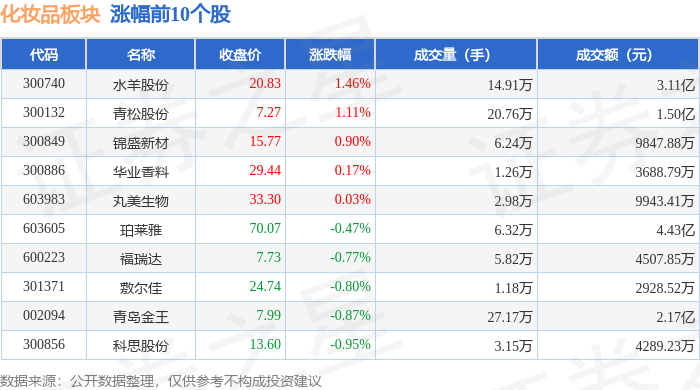
Market Overview - The cosmetics sector experienced a decline of 1.21% on November 6, with Betaini leading the drop [1] - The Shanghai Composite Index closed at 4007.76, up 0.97%, while the Shenzhen Component Index closed at 13452.42, up 1.73% [1] Individual Stock Performance - Notable gainers included: - Shuiyang Co., Ltd. (300740) with a closing price of 20.83, up 1.46% [1] - Qingsong Co., Ltd. (300132) with a closing price of 7.27, up 1.11% [1] - Significant decliners included: - Betaini (300957) with a closing price of 42.22, down 4.89% [2] - Jiahen Home Care (300955) with a closing price of 36.68, down 3.47% [2] Trading Volume and Capital Flow - The cosmetics sector saw a net outflow of 82.6352 million yuan from institutional investors, while retail investors had a net inflow of 58.2199 million yuan [2] - The trading volume for Shuiyang Co., Ltd. was 149,100 shares, with a transaction value of 311 million yuan [1] Capital Flow Analysis - Major net inflows were observed in: - Shuiyang Co., Ltd. with a net inflow of 23.1839 million yuan [3] - Qingsong Co., Ltd. with a net inflow of 7.1227 million yuan [3] - Major net outflows were noted in: - Betaini with a net outflow of 90.237 million yuan [3] - Shanghai Jahwa (600315) with a net outflow of 90.237 million yuan [3]



上海家化跌2.02%,成交额6848.46万元,主力资金净流出276.26万元
Xin Lang Cai Jing· 2025-11-06 02:34
Core Viewpoint - Shanghai Jahwa's stock price has experienced fluctuations, with a year-to-date increase of 41.13% but a recent decline in the last five and twenty trading days [1] Group 1: Stock Performance - On November 6, Shanghai Jahwa's stock fell by 2.02%, trading at 23.81 CNY per share with a total market capitalization of 16.006 billion CNY [1] - The stock has seen a net outflow of 2.7626 million CNY from main funds, with significant selling pressure in large orders [1] - Year-to-date, the stock has risen by 41.13%, but it has decreased by 3.91% in the last five trading days and 4.99% in the last twenty days [1] Group 2: Company Overview - Shanghai Jahwa, established on December 1, 1995, and listed on March 15, 2001, specializes in the research, production, and sales of skincare, personal care, and maternal and infant products [2] - The company's revenue composition includes personal care (45.70%), beauty (21.48%), overseas sales (20.20%), innovation (12.55%), and other segments [2] - As of September 30, 2025, the company reported a revenue of 4.961 billion CNY, a year-on-year increase of 10.83%, and a net profit of 405 million CNY, reflecting a significant growth of 149.12% [2] Group 3: Shareholder Information - As of September 30, 2025, the number of shareholders decreased by 21.58% to 29,600, while the average circulating shares per person increased by 27.52% to 22,704 shares [2] - The company has distributed a total of 3.595 billion CNY in dividends since its A-share listing, with 344 million CNY distributed in the last three years [3] - Hong Kong Central Clearing Limited is the second-largest circulating shareholder, increasing its holdings by 3.7706 million shares [3]

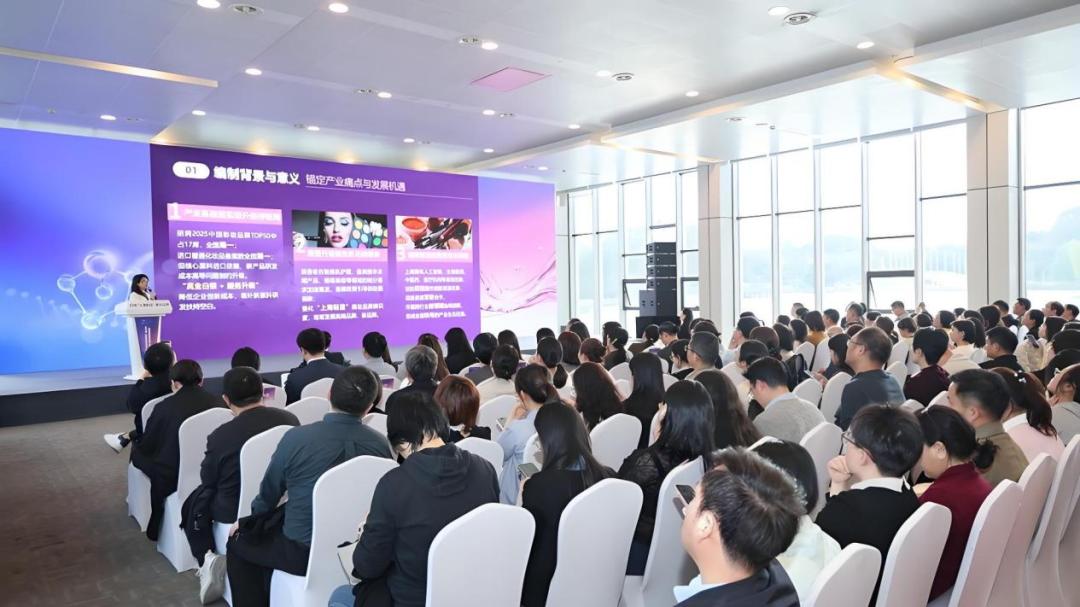
第一家市值500亿的本土美妆公司要出在上海?
3 6 Ke· 2025-11-06 00:26
Core Viewpoint - Shanghai is positioning itself as a leader in the cosmetics industry through the introduction of significant policies aimed at fostering high-quality development and innovation in the sector [1][5][14]. Group 1: Policy Measures - Shanghai released the "Measures for Further Promoting High-Quality Development of the Cosmetics Industry," which includes financial support of up to 30 million yuan for each project [1][5]. - The policy focuses on four key areas: technological innovation, service system innovation, ecological development, and industrial layout optimization, with 11 targeted initiatives to cultivate high-end and emerging brands [5][14]. - The measures include substantial financial support for innovative raw materials, with up to 2 million yuan for new registered raw materials and 500,000 yuan for new filed raw materials [5][14]. Group 2: Development Goals - Shanghai aims to cultivate one enterprise with a market value of 50 billion yuan, two enterprises with a market value of 10 billion yuan, and twelve enterprises with a production value exceeding 1 billion yuan within three years [7][8]. - The current highest market value for domestic beauty companies is held by Maogeping at approximately 38.27 billion yuan, followed by Juzhibio and Shangmei, both below 40 billion yuan [10][11]. Group 3: Competitive Landscape - The competition among major cities in China's cosmetics industry is intensifying, with Shanghai, Guangzhou, and Hangzhou being the primary contenders [2][11]. - Hangzhou has emerged as a strong competitor due to its e-commerce advantages and favorable business environment, housing top domestic brands like Proya and Maogeping [2][11]. - Shanghai's local beauty companies include Shangmei and Shanghai Jahwa, while brands like Lin Qingxuan and Natural Hall are targeting the Hong Kong stock market for IPOs [2][10]. Group 4: Industry Trends - The Chinese cosmetics market is experiencing a shift towards brand-driven and high-end products, with domestic brands capturing a growing market share [11][12]. - The market size for Chinese cosmetics is projected to be approximately 774.65 billion yuan in 2024, with domestic brands accounting for 55.74% of sales [11]. - Shanghai is actively developing live-streaming and cross-border e-commerce to enhance its competitive edge in the beauty sector [13][14]. Group 5: Regional Strategies - Different districts in Shanghai are focusing on specific segments of the cosmetics industry, such as functional skincare and AI integration in beauty health [14][15]. - The Jing'an district aims to create a billion-level beauty health industry cluster by 2028, attracting local beauty companies and establishing partnerships with major players [14][15].