
珀莱雅

Search documents
2025年中国胶原蛋白护肤品行业发展历程、政策汇总、产业链图谱、市场规模、竞争格局及发展趋势分析:CR5市场占有率达69.3%[图]
Chan Ye Xin Xi Wang· 2026-01-07 01:33
Core Viewpoint - The skincare consumption in China is shifting from basic hydration to functional care, with collagen skincare products becoming a core choice for consumers seeking anti-aging solutions. The market for collagen skincare products is projected to reach 31.6 billion yuan in 2024, growing by 21.5% year-on-year, with recombinant collagen products capturing a significant market share of 36% due to their high activity and low allergenicity [1][9]. Industry Overview - Collagen is a structural protein found in animals, primarily maintaining the stability of skin and connective tissues. Collagen skincare products aim to supplement skin collagen, improve barrier function, and enhance skin elasticity through topical application [2]. - Collagen skincare products can be categorized based on source (animal, plant, recombinant), form (masks, serums, creams), and function (hydrating, anti-aging, soothing) [2][3]. Development History - The development of China's collagen skincare industry has progressed through four stages: exploration, rapid growth, standardization, and technology leadership, transitioning from animal-derived to recombinant collagen and synthetic biology [4]. Market Policies - The Chinese government has implemented various regulations to enhance the quality and safety of the cosmetics industry, including collagen skincare products, promoting a shift towards standardized and high-quality development [5]. Industry Chain - The upstream of the collagen skincare industry includes suppliers of collagen, moisturizers, emulsifiers, and packaging materials. The midstream involves R&D and production, while the downstream consists of various sales channels, including retail and e-commerce [7]. - The primary consumer demographic for collagen skincare products is women, accounting for 86.2%, with the age group of 25-45 years making up over 80% of the market. Safety is the top concern for 80% of consumers [7][8]. Current Market Status - The market for collagen skincare products is expected to reach 31.6 billion yuan in 2024, with recombinant collagen products leading the market due to their advantages [9]. Competitive Landscape - The market concentration for recombinant collagen skincare products has increased, with the top five companies holding a 69.3% market share. Key players include Giant Bio, Proya, and Marubi, leveraging technology and product innovation to maintain market leadership [9][10]. - Giant Bio, established in 2000, focuses on high-tech skincare and holds 186 patents, leading in recombinant collagen technology with significant revenue and profit margins [10]. Future Trends - The future of the collagen skincare industry will see recombinant human-like collagen becoming mainstream, with advancements in synthetic biology and green manufacturing. Products will expand beyond hydration and anti-aging to include whitening, sensitivity, and barrier repair, with clear clinical data supporting efficacy [11].


高端酸奶的“泡沫” ,破了
3 6 Ke· 2026-01-06 12:13
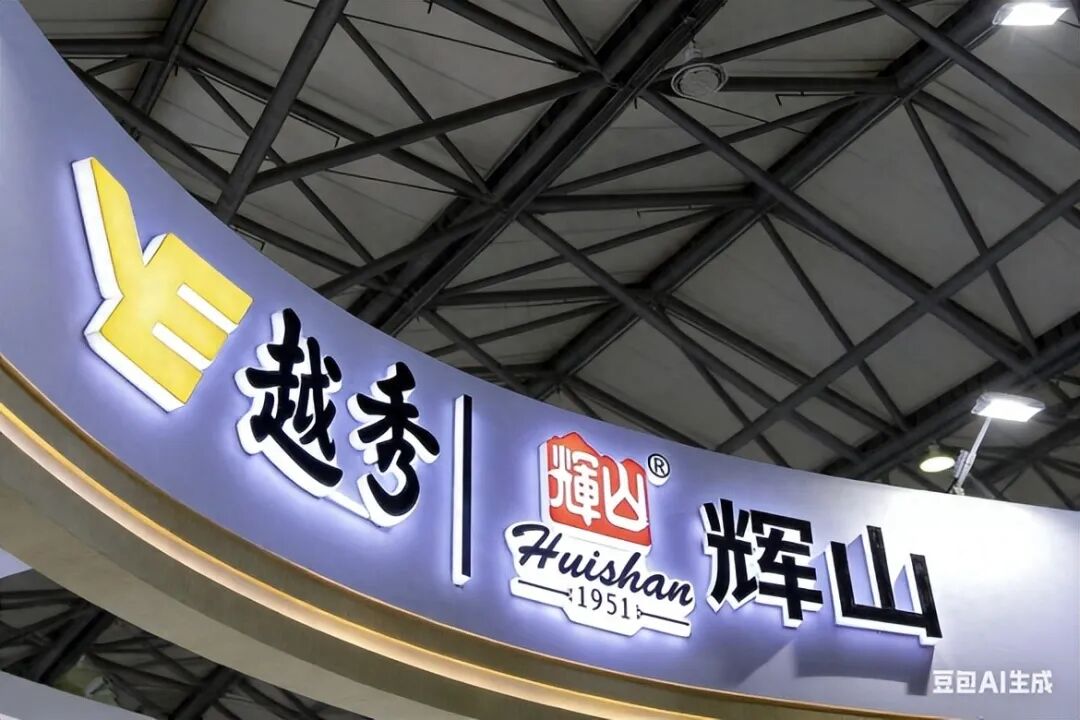
Core Insights - The high-end consumer goods industry has entered a "deep winter" in 2025, leading to widespread price reductions across various brands, including luxury cars, beauty products, and alcoholic beverages, with price drops exceeding 20% from peak levels [1] - The dairy industry, particularly high-end products, has also experienced significant price cuts, with reductions ranging from 30% to 50%, and some products seeing drops as high as 70% [1][3] Group 1: Market Dynamics - The decline in demand for high-end dairy products is not due to a general aversion to premium goods, but rather a failure of traditional brands to engage consumers effectively [4][5] - Consumers have become more rational and discerning, focusing on product quality and effectiveness rather than marketing narratives [5][6] Group 2: Marketing Strategies - Traditional marketing approaches, such as high-profile sponsorships and storytelling, are becoming less effective in reaching today's consumers, who are more skeptical and have diverse media consumption habits [9][10] - Brands like 越秀辉山 and Blueglass have struggled with outdated marketing strategies, leading to penalties and diminished brand reputation [7][8] Group 3: Product Differentiation - The dairy sector faces challenges in product differentiation, as many offerings are similar in taste and nutritional content, making it difficult to justify premium pricing [13][14] - To succeed, brands must find ways to enhance perceived value, such as emphasizing unique nutritional benefits or superior sourcing practices [17][27] Group 4: Future Opportunities - The aging population is expected to increase demand for high-quality nutritional products, presenting a cyclical opportunity for brands like 越秀辉山 to innovate and improve their offerings [28][29] - Companies should focus on modernizing marketing strategies and ensuring product quality to remain competitive in a changing market landscape [18][26]



对话周其仁:AI替代不了“你真正的喜欢”
虎嗅APP· 2026-01-06 09:13
以下文章来源于中国企业家杂志 ,作者梁宵 中国企业家杂志 . 讲好企业家故事,弘扬企业家精神 本文来自微信公众号: 中国企业家杂志 ,编辑:米娜,作者:梁宵 企业家问路在哪里?他只会给出三个字——"看着办"。 即便没有亲身感受过北京大学国家发展研究院教授(以下简称"北大国发院")周其仁的课堂,在两个 小时的采访中也不难发现,这位以犀利、敢言风格著称的经济学家,在研究、治学中特有的敏锐,以 及风趣: 从他的口中,不会听到艰深晦涩的概念和理论,都是具体而微的企业实践;对于"泛泛的宏观"、貌似 普遍的提法,他总是很警惕,"人云亦云一番,毫无意义";他还经常"反客为主",从受访者转变为提 问者,一个追问接着一个,直到答案已在来来回回间跃然而出;最好,对方意见相左,比起自说自 话,他显然更喜欢在"观点的自由市场"中辩出一个所以然——"来,斗。"他甚至鼓励争论继续。 据说很多学生毕业后还很怀念"周老师的午餐"——每周六中午课后,周其仁会邀请一些善于提问的学 生边吃边聊,可以想象得到,那是怎样一场高能的"头脑风暴"。 同是北大国发院经济学教授的汪丁丁对其尤为赞佩,"他的洞察力跟别人很不一样,他能够把细节抓 住,而且他抓住细 ...

化妆品板块1月6日涨0.46%,拉芳家化领涨,主力资金净流出8196.79万元
Zheng Xing Xing Ye Ri Bao· 2026-01-06 09:03
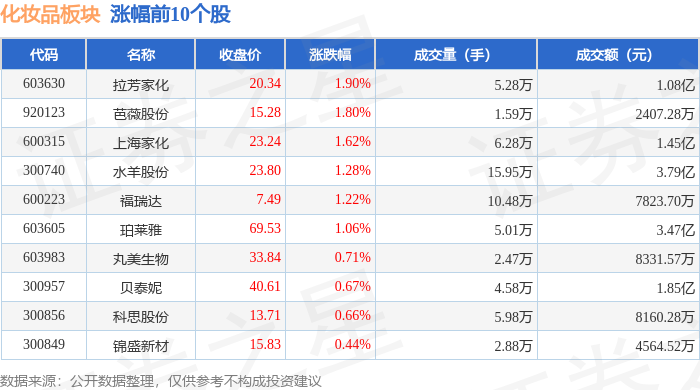
Group 1 - The cosmetics sector experienced a rise of 0.46% on January 6, with Lafang Jiahua leading the gains [1] - The Shanghai Composite Index closed at 4083.67, up by 1.5%, while the Shenzhen Component Index closed at 14022.55, up by 1.4% [1] - Lafang Jiahua's closing price was 20.34, reflecting a 1.90% increase, with a trading volume of 52,800 shares and a transaction value of 108 million yuan [1] Group 2 - The cosmetics sector saw a net outflow of 81.97 million yuan from institutional investors, while retail investors had a net inflow of 67.35 million yuan [2] - The trading data indicates that major stocks like Shanghai Jahwa and Lafang Jiahua had mixed net inflows and outflows from different investor types [3] - Shanghai Jahwa had a net inflow of 9.64 million yuan from institutional investors, while it faced outflows from retail investors [3]



上市大年,30+企业冲刺IPO背后的进与退
Sou Hu Cai Jing· 2026-01-06 08:40
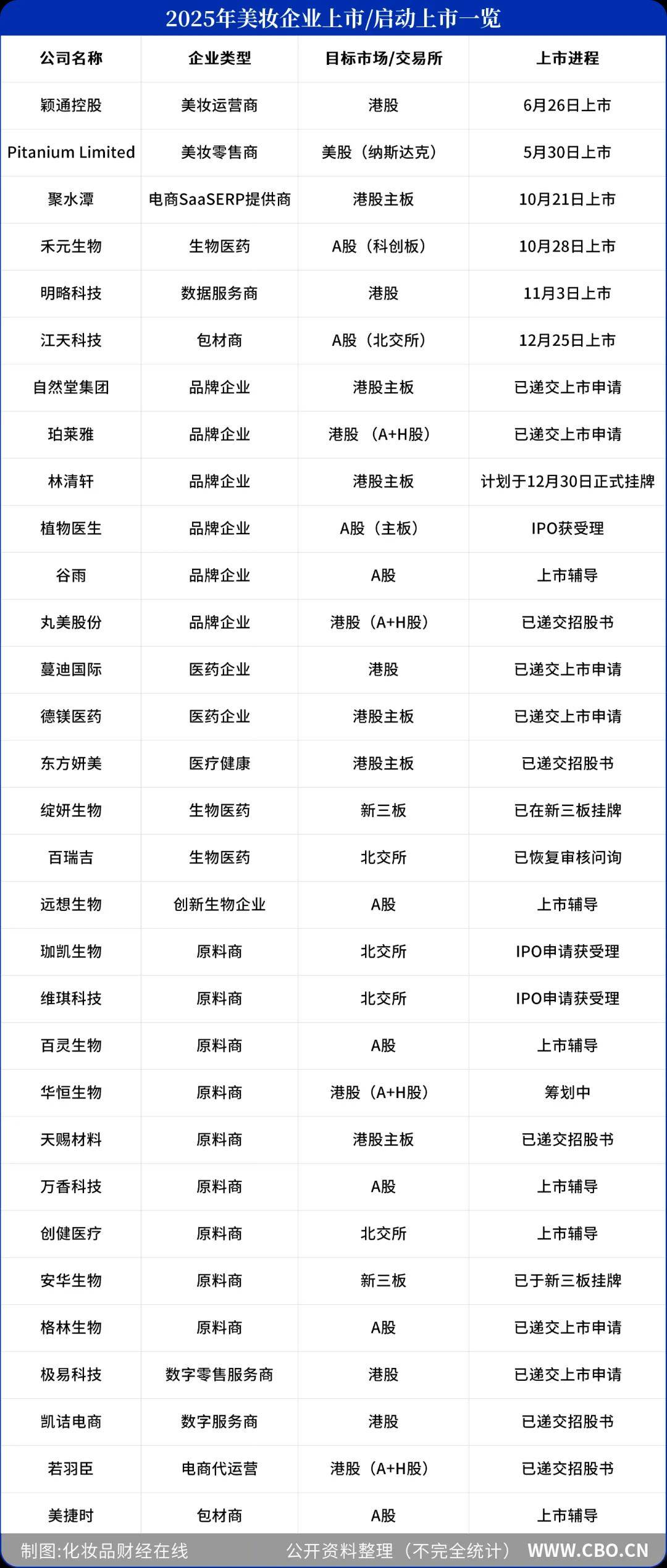
Core Insights - The Chinese beauty industry is undergoing a structural "migration" towards capital markets, with over 30 companies from the entire supply chain seeking listings on global exchanges by 2025, indicating a shift from marketing-driven growth to a focus on "hard technology" and globalization [1][6] Industry Overview - By the end of 2025, five beauty companies have successfully gone public, with over 25 others at various stages of the listing process, showcasing a comprehensive coverage of the entire supply chain [1] - The capital market is reassessing the value distribution in the beauty industry, shifting focus from marketing to upstream technology [3][11] Company Listings - A significant number of companies are targeting the Hong Kong Stock Exchange (HKEX) for their listings, with over half of the firms choosing this market due to its international characteristics aligning with their global ambitions [6][8] - Companies like Pitanium Limited have opted for the Nasdaq, focusing on high-end retail in Hong Kong, indicating a strategic choice based on business alignment and risk management [8] Capitalization Trends - The trend of companies seeking dual listings (A+H shares) reflects a complex capital strategy aimed at optimizing shareholder structure and facilitating cross-border mergers and acquisitions [8][11] - The average R&D investment for companies planning to go public has increased from less than 2% three years ago to 3-5% currently, with leading firms exceeding 5% [9][11] Supply Chain Dynamics - The focus on self-sufficient supply chains has become a priority, with companies recognizing the importance of controlling core raw materials in light of geopolitical changes and supply chain disruptions [11] - The emergence of raw material companies as pioneers in this capital wave indicates a response to industry pain points, aiming to reduce reliance on imported high-end active ingredients [11] Brand Strategies - Companies are increasingly establishing brand barriers through differentiated positioning to attract capital, with notable examples including谷雨 aiming to become the "first domestic whitening stock" and植物医生 targeting the "first single-brand beauty stock" in A-shares [5][11] - The trend of digital transformation in distribution channels is evident, with companies like聚水潭 and凯诘电商 reflecting the urgent need for enhanced operational efficiency and integrated channel systems [11] Sustainability and ESG Factors - Sustainable development and ESG considerations are beginning to influence the capital value of beauty companies, with eco-friendly packaging and green materials becoming competitive advantages [11]
年度趋势:告别大单品时代
3 6 Ke· 2026-01-06 04:57
Core Insights - The article discusses the shift in business strategy from focusing on a single flagship product to managing a diverse product matrix due to increasing market complexity and competition [2][5][6] Group 1: Single Product Strategy - The allure of a single product strategy lies in its efficiency and scale, with examples like Moutai, Red Bull, Apple, and Tesla demonstrating significant revenue contributions from flagship products [2][4][7] - Moutai's focus on its flagship product, the 53-degree Feitian Moutai, has allowed it to dominate the market, achieving a gross margin of over 90% and a net profit margin exceeding 50% [7][9] Group 2: Challenges of Single Product Strategy - The success stories of single product strategies are becoming rarer as market conditions change, with factors like the saturation of traffic, fragmented consumer attention, and highly diversified channels posing challenges [5][6] - Moutai is currently facing challenges as its core attributes of investment and social status are being questioned, leading to a decline in its market price from a peak of over 3000 yuan per bottle [11][9] Group 3: Emergence of Multi-SKU Strategy - The article suggests that the era of single product dominance may be ending, with new companies needing to adopt multi-SKU strategies to thrive in a competitive landscape [6][20] - Successful new brands often emerge from niche markets, leveraging unique products to establish themselves before expanding their product lines over time [15][19] Group 4: Strategic Considerations for Companies - Companies must evaluate their market position, resources, and long-term goals when deciding between a single product or multi-SKU strategy [21][28] - The choice of strategy should align with market dynamics, consumer needs, and the company's capabilities, with a focus on rapid adaptation to changing conditions [22][30]


珀莱雅化妆品股份有限公司关于回购股份事项前十大股东和前十大无限售条件股东持股情况的公告
Shang Hai Zheng Quan Bao· 2026-01-05 20:56
Core Viewpoint - The company has announced a share buyback plan and provided updates on the conversion of its convertible bonds, indicating a strategic move to enhance shareholder value and manage capital structure [1][14]. Share Buyback Plan - The company approved a share buyback plan on December 30, 2025, with a total amount not less than RMB 80 million and not exceeding RMB 150 million, at a price not exceeding RMB 100 per share [15]. - The buyback period is set for 12 months from the date of the board's approval [15]. - As of December 31, 2025, the company has not yet initiated the buyback [16]. Convertible Bonds Conversion - As of December 31, 2025, a total of RMB 981,000 of the convertible bonds have been converted into 7,212 shares, representing 0.0026% of the company's total shares before conversion [3][11]. - The total amount of unconverted convertible bonds as of December 31, 2025, is RMB 750,732,000, accounting for 99.8695% of the total issuance [4][12]. - The conversion price of the convertible bonds has been adjusted multiple times, with the latest price being RMB 95.46 per share [5][10].
可选消费W01周度趋势解析:免税优异表现拉动增长,港股消费跌幅较大-20260105
Haitong Securities International· 2026-01-05 14:47
Investment Rating - The report assigns an "Outperform" rating to multiple companies including Nike, Midea Group, JD Group, Haier Smart Home, Gree Electric, and others, while Lulu Lemon is rated as "Neutral" [1]. Core Insights - Duty-free sales have shown exceptional performance, driving growth in the discretionary sector, while Hong Kong consumer stocks have experienced significant declines [4][11]. - The luxury goods sector has outperformed, with a weekly increase of 1.5%, while the retail sector also saw a rise of 1.1% [5][13]. - The report highlights that the overall sentiment in travel-related sectors remains high, contributing positively to the discretionary consumption outlook [3]. Weekly Performance Review - The weekly performance of various sectors is as follows: luxury goods > retail > overseas sportswear > overseas cosmetics > US hotels > domestic sportswear > credit cards > snacks > pets > domestic cosmetics > gold and jewelry > gaming, with respective weekly changes of 1.5%, 1.1%, 0.8%, -0.3%, -0.4%, -2.4%, -2.4%, -2.8%, -2.9%, -4.5%, -4.6%, and -5.6% [11][12]. - The retail sector's growth was significantly driven by China Duty Free, which saw a 7.6% increase due to strong sales during the New Year holiday [6][13]. Monthly and Year-to-Date Performance - Monthly performance shows retail leading with a 4.9% increase, followed by overseas sportswear and US hotels, while domestic cosmetics and gaming sectors faced declines [11]. - Year-to-date performance indicates that overseas cosmetics and US hotels have performed well, while domestic cosmetics and snacks have shown negative growth [12]. Valuation Analysis - The report notes that the valuation of various sectors remains below their average over the past five years, with expected PE ratios for 2025 indicating significant potential for growth [9][14]. - Specific sectors such as overseas sportswear are projected to have a PE of 31.2 times, which is 59% of the past five-year average, while domestic sportswear is at 13.3 times, 70% of the average [14][15].
珀莱雅:公司暂未开展股票回购
Mei Ri Jing Ji Xin Wen· 2026-01-05 12:26
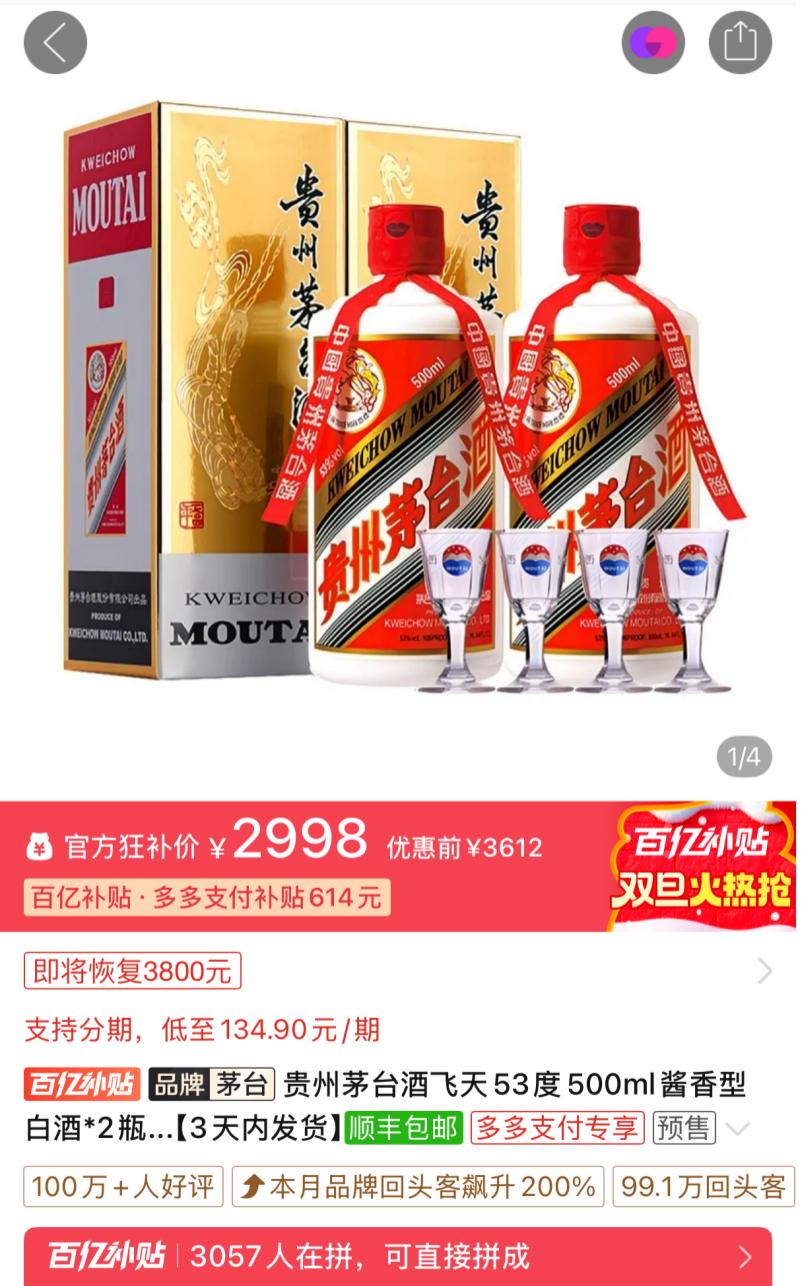
Group 1 - The company Proya announced on January 5 that as of December 31, 2025, it has not yet initiated a stock buyback program, but it plans to implement this buyback based on market conditions in the future [1] - The iMaotai App has surged to the top of the Apple shopping chart, with 100,000 users placing orders for the limited edition Feitian Moutai priced at 1499 yuan, which quickly sold out [1] - The company has reported that distributors are offering the same price as a promotional effort, with 1,000 boxes selling out rapidly [1]
珀莱雅(603605) - 珀莱雅化妆品股份有限公司关于股份回购进展公告
2026-01-05 08:46
二、 回购股份的进展情况 | 证券代码:603605 | 证券简称:珀莱雅 | 公告编号:2026-002 | | --- | --- | --- | | 债券代码:113634 | 债券简称:珀莱转债 | | 珀莱雅化妆品股份有限公司 关于股份回购进展公告 本公司董事会及全体董事保证本公告内容不存在任何虚假记载、误导性陈述 或者重大遗漏,并对其内容的真实性、准确性和完整性承担法律责任。 重要内容提示: | 回购方案首次披露日 | 2025/12/31 | | | | | | | | | --- | --- | --- | --- | --- | --- | --- | --- | --- | | 回购方案实施期限 | 2025 日~2026 | 年 | 12 | 月 | 30 | 年 | 12 | 月 29 日 | | 预计回购金额 | 8,000万元~15,000万元 | | | | | | | | | 回购用途 | □减少注册资本 √用于员工持股计划或股权激励 □用于转换公司可转债 | | | | | | | | | | □为维护公司价值及股东权益 | | | | | | | | | 累计已回购股数 | ...