
中信建投

Search documents
中信建投期货:2月5日农产品早报
Xin Lang Cai Jing· 2026-02-05 01:16
Group 1: Corn Market - The corn closing price was 2269 CNY/ton, with an increase of 0.31%. It is expected that some enterprises will enter maintenance phases next week, leading to a continued decline in operations [4][14] - Market trading is notably quiet, with stable positions. The main divergence lies in whether there will be concentrated volume after the holiday. Future observations will focus on the elasticity of enterprise inventory demand in the short window before recovery [4][14] - Market sentiment is shifting towards post-holiday trading, maintaining a fluctuating trend before the holiday, but there is a possibility of a slight decline. The main contract support is observed around 2250, with resistance at 2330 [5][15] Group 2: Soybean Meal Market - Following a call between Chinese and U.S. leaders, there is a consideration to increase U.S. soybean purchases from 12 million tons to 20 million tons for the 2025/26 season, leading to a significant rebound in CBOT soybean prices. However, South American abundant production may limit the price increase [6][16] - As Brazilian soybeans are shipped to China, market expectations of tight arrivals have been adjusted, resulting in a price correction. The May contract is supported by cost factors, performing better than the March contract [6][16] - Despite the potential increase in domestic soybean supply from continued U.S. purchases, the short-term focus may be on the cost support from the U.S. market rebound, maintaining a range trading strategy with an expected price range of 2700-2850 CNY/ton for the May contract [6][16] Group 3: Egg Market - The spot price of eggs in major production areas has seen a significant decline, with the average price in Hebei at approximately 3.0 CNY/jin, down 0.24 CNY/jin from the previous day. Traders may accelerate sales due to continuous price drops [7][17] - Short-term demand for pre-holiday stocking remains a key support, but post-holiday demand is a major risk. Current signs indicate a weakening in spot prices, leading to a bearish pricing trend [7][17] - Long-term attention should be on the actual progress of capacity reduction, with historical trends suggesting that 2025 could be a loss year, potentially improving supply-demand relationships in 2026 [7][17] Group 4: Live Pig Market - The average price of live pigs in major production areas was approximately 12.12 CNY/kg. The planned output for February is 22.92 million heads, a decrease of 17.73% from January [9][19] - Despite potential fluctuations as the Spring Festival approaches, the futures market has already priced in expectations for a decline, with a high basis level reflecting anticipated price drops [9][19] - Key observations for the 2026 market will focus on the depth and sustainability of capacity reduction, with changes in industry management potentially altering traditional "pig cycle" price fluctuation patterns [9][19]


中信建投期货:2月5日黑色系早报
Xin Lang Cai Jing· 2026-02-05 01:15
Group 1: Economic Indicators - 30 provinces in China have set GDP growth targets for 2026, with several major economic provinces aiming for over 5% growth. Shanghai's government report targets around 5% growth for 2026 [4][15] - China's official manufacturing PMI for January is 49.3%, a decrease of 0.8 percentage points month-on-month, indicating a decline in manufacturing activity due to seasonal factors and insufficient market demand [4][15] Group 2: Shipbuilding Industry - In 2025, China's shipbuilding completion volume reached 53.69 million deadweight tons, a year-on-year increase of 11.4%, accounting for 56.1% of the global total. However, new orders decreased by 4.6% year-on-year [4][15] Group 3: Steel Industry Performance - On February 4, the national main port iron ore transactions reached 1.034 million tons, a 14% increase month-on-month, while the transaction volume of construction steel by 237 mainstream traders decreased by 12.6% [5][16] - The operating rate of blast furnaces in 247 steel mills was 79%, an increase of 0.32 percentage points week-on-week and 1.02 percentage points year-on-year. The average daily pig iron output was 2.2798 million tons, a slight decrease from the previous week [5][16] - Total steel supply for the week was 8.2317 million tons, continuing to rise week-on-week. Rebar production increased by 0.28 million tons to 1.9983 million tons, while hot-rolled production rose by 3.8 million tons to 3.0921 million tons [5][16] Group 4: Rebar and Hot-Rolled Steel Market - Rebar production saw a slight increase, totaling 1.9983 million tons, with total inventory rising by 234,300 tons to 4.7553 million tons. Demand decreased by 91,200 tons to 1.764 million tons, indicating a seasonal weakness in the market [6][17] - Hot-rolled steel production also increased slightly to 3.0921 million tons, with total inventory decreasing by 22,000 tons, but the pace of inventory reduction has slowed [7][18] Group 5: Price Strategies - Short-term price ranges for rebar and hot-rolled steel are set at 3,080-3,200 CNY/ton and 3,250-3,350 CNY/ton, respectively [8][19] Group 6: Alloy Market Overview - Alloy prices are expected to fluctuate within a limited range, with supply remaining low and production changes minimal. Demand from steel mills is stable, but recovery progress is constrained by profit margins and safety production concerns [9][20]
中信建投:2025年基金打新收益如何?
智通财经网· 2026-02-04 23:58
Group 1 - The core viewpoint of the report indicates that by 2025, the public offering of new shares (IPO) in the A-share market will transition into a normalized low-risk contribution phase, with an annualized increase of approximately 0.81% [1] - The report highlights that the A-share IPO market raised a total of 123.883 billion yuan in 2025, completing 86 projects, with the Shanghai main board leading in financing scale, while the Sci-Tech Innovation Board had a higher average financing amount, and the ChiNext had the most IPOs but lower average financing [1] - The electronic industry dominates the industry distribution of IPOs, while the automotive and pharmaceutical sectors remain stable [1] Group 2 - Fund IPO yield has experienced a decline from a high of 5.87% in 2020 to a stable low of approximately 0.81% in 2025, indicating a shift in strategy towards a normalized "low-risk marginal contribution" [2] - Smaller funds (0-5 billion yuan) consistently show higher historical yields compared to larger funds, with a peak yield of 7.16% in 2020, while larger funds have maintained lower yields [2] - The gap in yields among different fund sizes has gradually narrowed, especially after 2022, reflecting a transition from high-yield opportunities to normalized yield supplements, with larger fund sizes contributing less to overall fund returns [2] Group 3 - The evaluation of fund IPO capabilities is primarily based on three indicators: participation rate, qualification rate, and hit rate, which reflect the fund's engagement and pricing effectiveness [3] - A total of 49 "fixed income +" IPO funds were selected based on multiple screening criteria, with 76% being bond-mixed funds and 24% being flexible allocation funds, showing that bond-mixed funds had a higher annualized return of 7.65% compared to 5.05% for flexible allocation funds [3] - The overall average hit rate for selected funds reached 65.64%, with a participation rate of 92.70%, indicating excellent performance in IPO participation [3]
中信建投:出海红利与变革周期为家电板块两条投资主线
智通财经网· 2026-02-04 23:49
Core Viewpoint - The home appliance sector is expected to underperform the CSI 300 index in 2025 due to tariff increases, fluctuations in the trade-in policy, and high base expectations in the second half of the year. Long-term competitiveness will return to product innovation and efficiency advantages, with two main investment themes: overseas expansion as a key growth source and transformation dividends [1]. Group 1: Black Goods Market - Domestic demand is gradually under pressure, while Chinese companies accelerate overseas expansion and enhance their positions in high-end markets. The internal sales stimulus effect is weakening, and external sales expectations are improving. The overall shipment volume of the Chinese television market is projected to decline by 6.8% year-on-year in 2025, with retail sales expected to drop by about 10% [2]. - The "national subsidy" policy's continuation is uncertain, and if no alternative stimulus is provided, the shipment volume in 2026 may decline by over 10%. However, the upcoming sports events in 2026 are expected to boost overseas television demand, making overseas market expansion a priority for Chinese television companies [2]. Group 2: Market Share and Competition - TCL and Hisense have increased their domestic and international market shares, with both companies exceeding 13 million units in global shipments in the first half of 2025, achieving a global market share of over 14%. Hisense's domestic and overseas market shares are 21.1% and 12.7%, while TCL's are 18.9% and 13.8% respectively [3]. - The competitive landscape is shifting as Samsung's market share has decreased, providing Chinese brands with significant opportunities to capture market share. Hisense and TCL are expected to lead the global market within three years, with a focus on maintaining growth in global market share [3]. Group 3: High-End Market Trends - The high-end television market is experiencing a recovery, with global high-end television shipments and revenue increasing by 40% and 21% year-on-year respectively in Q2 2025. The average size of televisions shipped globally has also increased, indicating a trend towards larger screens [4]. - MiniLED technology is gaining traction in the high-end market, with its shipment volume and revenue growing by 101% and 66% year-on-year in Q2 2025, respectively. This trend is reducing the importance of OLED technology in the high-end segment, benefiting Chinese brands that promote MiniLED televisions [4]. Group 4: Profitability and Structural Upgrades - Chinese brands are capturing more high-end market share, with TCL's global shipments of televisions 65 inches and above increasing by 26.9% year-on-year in Q2 2025. The average size of TCL's global shipments has risen to 53.4 inches, with significant growth in quantum dot and MiniLED television shipments [5]. - The shift towards larger and higher-end televisions is a key factor in improving profitability for brands like Hisense and TCL, as they leverage their advantages in MiniLED technology and competitive pricing in the LCD segment [5].
股市必读:中信建投(601066)2月4日主力资金净流入2841.06万元,占总成交额7.62%
Sou Hu Cai Jing· 2026-02-04 16:58
截至2026年2月4日收盘,中信建投(601066)报收于24.33元,上涨1.33%,换手率0.24%,成交量15.41万 手,成交额3.73亿元。 中信建投证券股份有限公司全资子公司中信建投(国际)金融控股有限公司的间接全资附属公司CSCIF Hong Kong Limited在境外中期票据计划下发行一笔本金为人民币3.74亿元的票据,期限364天。中信建 投国际为该票据提供无条件及不可撤销的连带责任保证担保,担保金额为人民币3.82亿元,无反担保。 本次担保用于补充境外业务营运资金。截至公告日,公司及控股子公司对外担保总额为人民币498.65亿 元,占最近一期经审计净资产的46.84%,均为对控股子公司的担保,无逾期担保。 H股市场公告:截至2026年1月31日止月份之股份發行人的證券變動月報表 中信建投証券股份有限公司截至2026年1月31日,法定注册资本无变动。H股和A股的法定股份数目分别 为1,261,023,762股和6,495,671,035股,面值均为人民币1元。已发行股份总数无增减,H股为 1,261,023,762股,A股为6,495,671,035股,库存股数量为零。公司确认H股类别已 ...
浙江佑威新材IPO辅导备案,曾获菲南斯投资,中信建投保荐
Sou Hu Cai Jing· 2026-02-04 14:08
2026年2月4日,证监会官网披露,中信建投保荐已提交《关于浙江佑威新材料股份有限公司首次公开发行股票并上市辅导备案报告》。佑威新材的辅导机 构为中信建投证券股份有限公司,律师事务所为上海市锦天城律师事务所,会计师事务所为天健会计师事务所(特殊普通合伙)。 浙江佑威新材料股份有限公司,公司位于浙江省嘉兴市,是国内一家集新材料应用技术研究与开发、产品生产与销售于一体的专业化复合新材料生产企 业。法定代表人程聪。 佑威新材的控股股东及持股比例情况如下:范爱荣直接持有公司12,800,000股,持股比例25.60%;范秋兰直接持有公司12,000,000股,持股比例24.00%; 范涛直接持有公司12,000,000股,持股比例24.00%,范爱荣与范秋兰系父女关系,与范涛系父子关系,上述3人为公司控股股东。 天眼查信息显示,佑威新材历史上获得了菲南斯投资的投资。 1 | 摩斯IPO | | 【浙江佑威新材料股份有限公司】的 1 条融资历程信息 | | | | | --- | --- | --- | --- | --- | --- | | 序号 | 披露日期 | 融资轮次 融资金额 | | 投资方 | 关联机构 | ...

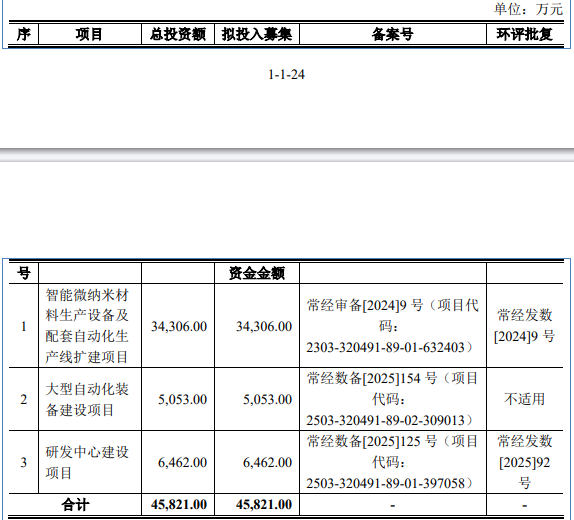
龙鑫智能2月11日北交所首发上会 拟募资4.58亿元
Zhong Guo Jing Ji Wang· 2026-02-04 13:21
| ਥੋ | | | 资金会额 | | | | --- | --- | --- | --- | --- | --- | | 1 | 智能微纳米材 料生产设备及 配套自动化生 | 34,306.00 | 34.306.00 | 常经审备[2024]9 号(项目代 很小: 2303-320491-89-01-632403) | 常经发数 [2024]9 号 | | | 产线扩建项目 | | | | | | 2 | 大型自动化装 备建设项目 | 5.053.00 | 5.053.00 | 常经数备[2025]154号(项目 代码: 2503-320491-89-02-309013 ) | 不适用 | | 3 | 研发中心建设 | 6,462.00 | 6.462.00 | 常经数备[2025]125号(项目 代码: | 常经发数 [2025]92 | | | 项目 | | | | | | | | | | 2503-320491-89-01-397058 ) | ਜੋ | | | 合计 | 45,821.00 | 45,821.00 | | | 龙鑫智能本次的保荐机构为中信建投(601066)证券股份有限公司,保荐代 ...
商业航天六小龙,五家有广东机构布局
2 1 Shi Ji Jing Ji Bao Dao· 2026-02-04 09:55
商业航天大年强势来袭,多地航天企业融资动作密集。 资本市场追捧下,"商业航天六小龙"概念浮出水面,星际荣耀、蓝箭航天、天兵科技、中科宇航、星河动力、东方空间六家企业,被业内视为 当前行业发展的核心玩家。 作为制造业大省,广东投资机构在这场"追星"浪潮中表现如何? "商业航天六小龙"呈现出区域集聚特征。 星际荣耀、蓝箭航天、星河动力三家总部位于北京,天兵科技落子江苏,东方空间注册地在山东,六家企业中,仅有中科宇航一家总部设在广 东。这也使得中科宇航成为广东商业航天产业链中最具代表性的核心企业,其股东结构和融资路径,成为观察广东资本参与商业航天的重要样 本。 中科宇航成立于2018年12月,经过多轮融资后,于今年1月中完成IPO上市辅导验收。 南方财经记者梳理中科宇航的股东结构发现,穿透前三大股东,均与中科宇航董事长杨毅强存在关联。前三大股东合计持股67.31%,超过三 分之二的实控线。 在出让股份份额较少的背景下,留给投资机构入局的份额并不多。 观察中科宇航其他股东,六只来自广东本土的创投基金共持有中科宇航9.17%股份,它们并未参与A轮投资,而投向了更靠后的位置。 投中嘉川CVSource数据显示,越秀产业基 ...

中信建投(601066) - H股市场公告:截至2026年1月31日止月份之股份發行人的證券變動月報表
2026-02-04 09:45
股份發行人及根據《上市規則》第十九B章上市的香港預託證券發行人的證券變動月報表 截至月份: 2026年1月31日 狀態: 新提交 公司名稱: 中信建投証券股份有限公司 (於中華人民共和國註冊成立的股份有限公司) 呈交日期: 2026年2月4日 I. 法定/註冊股本變動 | 1. 股份分類 | 普通股 | 股份類別 | H | | 於香港聯交所上市 (註1) | | 是 | | | --- | --- | --- | --- | --- | --- | --- | --- | --- | | 證券代號 (如上市) | 06066 | 說明 | H股 | | | | | | | | | 法定/註冊股份數目 | | | 面值 | | 法定/註冊股本 | | | 上月底結存 | | | 1,261,023,762 | RMB | | 1 RMB | | 1,261,023,762 | | 增加 / 減少 (-) | | | 0 | | | RMB | | 0 | | 本月底結存 | | | 1,261,023,762 | RMB | | 1 RMB | | 1,261,023,762 | | 2. 股份分類 | 普通 ...
中信建投:中美双极格局主导发展进程 商业航天产业边界向多元赛道拓展
智通财经网· 2026-02-04 08:28
Core Viewpoint - The global commercial aerospace industry is entering a new phase focused on large-scale deployment and ecosystem construction, driven by a bipolar structure dominated by China and the U.S. Group 1: Policy and Regulation - The policy framework for China's commercial aerospace is set to mature by 2025, with the establishment of a Commercial Aerospace Department by the National Space Administration, marking a shift from "encouraging exploration" to "systematic governance and standardization" [1]. Group 2: Capital and Financing - The Shanghai Stock Exchange has opened an IPO channel for commercial rocket companies under the new standards, with industry financing expected to reach 18.6 billion yuan by 2025, and the total valuation of the top 100 companies surpassing the trillion yuan mark [2]. Group 3: Satellite Internet and Deployment - Low Earth orbit satellite internet is entering a phase of normalized networking, with Chinese constellations like "StarNet" and "Qianfan" moving into mass deployment, and "one rocket multiple satellites" launches becoming routine to secure scarce frequency resources [3]. Group 4: Manufacturing Innovations - Satellite manufacturing is transitioning into a "super factory" era, focusing on efficiency and consistency in mass production, exemplified by the automated production lines in Hainan's Wenchang Satellite Super Factory, aiming for an annual capacity of 1,000 units [4]. Group 5: Commercial Applications - The commercial sector is exploring business models that follow a "demand-driven" approach, with direct-to-satellite mobile connections becoming a hot topic, and the Ministry of Industry and Information Technology setting a target of over 10 million users by 2030 to lay the groundwork for a 6G integrated network [5]. Group 6: Reusable Rockets - The focus of competition is shifting from "can it be recovered" to "can it be reused frequently," with multiple medium to large liquid rockets expected to make their maiden flights between 2025 and 2026 to tackle the challenges of capacity and cost associated with satellite constellation construction [6]. Group 7: 3D Printing Technology - 3D printing is evolving from prototype manufacturing to direct production of critical components like rocket engines and satellite structures, enabling significant cost reductions and rapid iterations, becoming a key measure of engineering capability [7]. Group 8: Collaboration Between Enterprises - The industry landscape is moving beyond simple complementarity to a phase of "strategic leadership and market agility," where state-owned enterprises ensure strategic security and foundational capabilities, while private enterprises contribute innovation and cost efficiency [8]. Group 9: Global Competition Dynamics - Global competition has expanded from frequency resource contention to the establishment of 6G integrated communication standards and the positioning of future talent ecosystems, with China and the U.S. building their respective political, technological, and supply chain alliances in the space sector [10]. Group 10: Expanding Space Economy - The boundaries of the space economy are significantly broadening, with emerging fields including space computing (e.g., orbital data centers), space tourism (suborbital, orbital, and deep space travel), heavy launch vehicle development, and long-term visions like Mars colonization, marking the beginning of a new era of "starry seas" [11].