新石器

Search documents
深圳功能型无人车加速商业化落地 10条跨区线路贯通,公交+物流协同构建全市域运营体系
Shen Zhen Shang Bao· 2025-07-07 22:45
Core Insights - Shenzhen has achieved significant breakthroughs in smart logistics development, establishing the first city-level intelligent delivery network in the country with 10 functional unmanned vehicle cross-regional routes officially connected by the end of June [1] Group 1: Unmanned Vehicle Network - The 10 cross-regional unmanned vehicle routes cover a total distance of over 30 kilometers, primarily focusing on seven core routes between Longgang and Longhua, and connecting 29 municipal roads [2] - Major companies like Dongbu Bus, SF Express, and Meituan are already testing logistics delivery and food delivery scenarios using this network, aiming for a 30-minute delivery time for residents through related apps [2] Group 2: Safety and Regulatory Measures - Shenzhen has established a rigorous review mechanism to ensure the safe and reliable operation of unmanned vehicles, including enterprise application, traffic impact assessment, and specialized review [2] - All vehicles submitted for approval must provide detailed performance reports and undergo safety validation under various complex conditions [2] Group 3: Integration of Public Transport and Unmanned Delivery - Over 300 functional unmanned vehicles are currently operating in Shenzhen, with the city accelerating the construction of a comprehensive unmanned vehicle operation system by leveraging public transport resources [3] - The integration of public transport and logistics is seen as a new innovative model to address the "last mile" delivery challenges in large cities, enhancing the efficiency of land and facility resource utilization [4] Group 4: Future Developments - By the end of the year, the number of functional unmanned vehicles on the road in Shenzhen is expected to exceed 1,000, supported by a newly launched management service platform for unmanned vehicles [5] - A significant agreement has been reached for the procurement of L4 level unmanned vehicles, aiming to scale up urban unmanned vehicle leasing [5]
无人物流车:L4级自动驾驶率先落地场景
2025-07-07 16:32
Summary of Key Points from the Conference Call Industry Overview - The unmanned logistics vehicle industry is at a technological maturity and commercialization turning point, with significant growth momentum expected in early 2024 [1][2] - The urban distribution logistics sector is the pioneer for L4 level autonomous driving commercialization, with 85% of routes being fixed, making it easier to implement L4 autonomous driving [1][5] Core Insights and Arguments - The 5 cubic meter unmanned logistics vehicle has an empty mileage of 150 kilometers, meeting demand, and costs have significantly decreased due to the reduction in passenger vehicle autonomous driving kit prices [1][5] - The application of L4 autonomous driving in urban distribution logistics shows remarkable results, with a vehicle-to-driver ratio of 1:100 and a substantial decrease in insurance costs (from 2000 yuan/year to 400 yuan/year), indicating technological feasibility and application value [1][7] - Unmanned logistics vehicles achieve significant cost reductions by lowering driver salaries and delivery costs, with New Stone achieving approximately 59% cost reduction at a logistics point in Wuxi [1][8] - The Z5 model from 90 has a bare vehicle price of about 50,000 yuan, making it more market-acceptable compared to traditional electric vans priced around 60,000 yuan [1][8] Policy and Regulatory Environment - Government policies are actively promoting the development of unmanned logistics vehicles, with the central government reducing logistics costs and local governments opening road rights [1][9] - As of 2024, New Stone and 90 have obtained road rights in over 200 cities, and the State Post Bureau has proposed deepening the application of AI technologies [1][10] Market Potential - The market for replacing urban distribution vehicles in China is substantial, with an estimated annual replacement demand of 2 to 3 million vehicles, leading to a market space of approximately 1,000 to 1,500 billion yuan [1][11] - If all urban distribution vehicles were replaced with unmanned vehicles, the market space could reach 5,000 to 6,000 billion yuan annually, considering the potential for FSD subscription fees [1][11] Company Developments - Major express companies and manufacturers are actively advancing unmanned driving technology, with significant deployment plans from companies like Postal Service, SF Express, and Zhongtong [1][12][13] - Companies like Jizhi Home and Xidi Zhijia are preparing for IPOs, indicating strong market interest and potential for growth in the unmanned logistics sector [1][6][14] Future Trends - The development of robotaxi and Robo truck technologies is expected to see significant advancements, with companies like Xiaoma Zhixing and Wen Yuan Zhixing planning to go public in the second half of 2025 [1][16][18] - Regulatory policies are gradually loosening, which is anticipated to facilitate the commercialization of Robo TAXI and Robo Truck in the next one to two years [1][17]
无人车覆盖全市!全国首个中心城区首批应用试点路线在深开通
Nan Fang Du Shi Bao· 2025-07-04 04:07
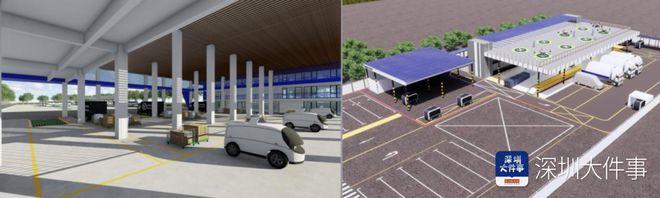
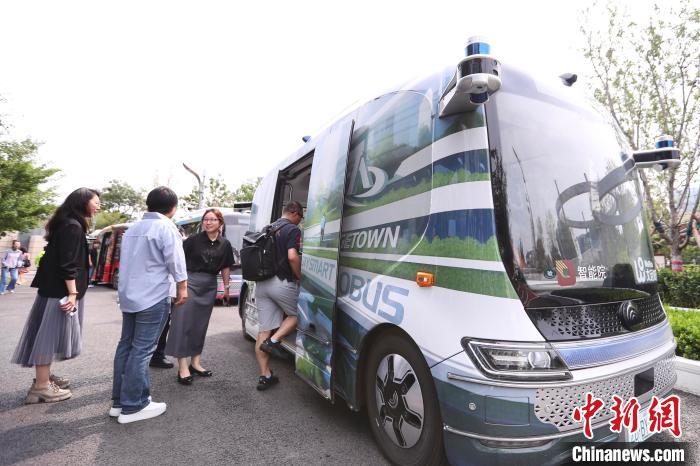
Group 1 - Shenzhen has made significant progress in the field of unmanned delivery, achieving unified management and coordinated operation of functional unmanned logistics vehicles across the city [1] - As of now, over 300 unmanned vehicles are operating in Shenzhen, with a daily delivery volume exceeding 100,000 orders, covering more than 100 community business circles [3] - The collaboration among three state-owned bus companies has accelerated the construction of a city-wide unmanned vehicle operation system, leveraging public transport resources for logistics integration [3] Group 2 - The upgrade of smart stations has empowered the industrial ecosystem, with a collaborative innovation model between state-owned infrastructure and private technology companies achieving breakthroughs [4] - The initial construction of Shenzhen's unmanned vehicle city-wide operation system has expanded service coverage to the entire city, establishing the first "public transport system + unmanned delivery" integrated operation framework in the country [4] - Future plans include expanding applications to special scenarios such as medical emergencies and disaster relief, aiming to improve the unmanned vehicle ecosystem by the end of 2025 [5]



Robovan节约成本+解放人力,智能驾驶技术落地新场景
2025-06-26 14:09
Summary of RoboVan Industry Conference Call Industry Overview - The RoboVan industry focuses on autonomous delivery vehicles, primarily for the "last mile" logistics, including express delivery and fresh produce distribution [1][2] - The market potential is significant, with an estimated annual market space of approximately 130 billion RMB, as RoboVan is expected to replace three-wheeled logistics vehicles, motorcycles, light trucks, and even light cargo vehicles [1][5][23] Key Points and Arguments - **Cost Efficiency**: RoboVan can reduce delivery costs by 60% to 70%, primarily due to declining hardware costs, such as the E6 model from Zhixingzhe [1][21] - **Market Growth Projections**: Expected delivery volumes for RoboVan are projected to exceed 30,000 units in 2025 and reach 100,000 units by 2026 [1][4] - **Regulatory Environment**: The regulatory landscape is favorable, with companies like New Stone acquiring road rights in nearly 200 cities, indicating a supportive government stance towards RoboVan deployment [1][4][19] - **Technological Feasibility**: The algorithmic complexity for RoboVan is relatively low, making it easier for companies to enter the market [20][25] Market Dynamics - **Competitive Landscape**: Key players include Zhixingzhe, New Stone, and Baixiniu, with significant market activity from large tech companies like Alibaba, JD.com, and Meituan [16] - **Future Catalysts**: Anticipated catalysts for growth include the rollout of RoboTaxi services by Tesla and domestic players, which may lead to increased licensing for RoboVan operations [6][7] Financial Outlook - **Profitability Expectations**: Companies like Desay SV expect to achieve net profits exceeding 2.6 billion RMB by 2025, with a current P/E ratio of around 20 [3][7] - **Revenue Growth**: Companies such as Jingwei Hengrun are expected to exceed revenue growth expectations in 2025, driven by sales of electric vehicles [9] Investment Recommendations - **Desay SV**: Positioned to enter the RoboVan market with promising growth potential [26] - **Jingwei Hengrun**: Comprehensive layout in L4 autonomous driving and expected contributions from RoboVan business [26] - **Kai Run Co.**: Potential to collaborate with government for RoboTaxi and RoboVan licenses [26] - **Chassis Suppliers**: Companies like Boteli and Naisite are expected to see rapid growth in revenue and profits [26] Additional Insights - **Market Size Comparison**: The potential replacement volume for RoboVan is estimated to exceed 2 million units, significantly larger than the annual sales of unmanned sanitation vehicles [24] - **Diverse Applications**: While currently focused on express delivery, RoboVan applications are diversifying into other sectors, indicating untapped market potential [14][15] This summary encapsulates the key insights and projections regarding the RoboVan industry, highlighting its growth potential, cost efficiencies, and favorable regulatory environment, along with specific investment opportunities.
智能汽车ETF(159889)涨超1.4%,机构称智驾技术迭代酝酿新动能
Mei Ri Jing Ji Xin Wen· 2025-06-25 08:21
Group 1 - The core viewpoint of the news highlights the advancements in L4 autonomous driving technology, with a leading domestic automaker launching a new intelligent driving system that utilizes multi-sensor fusion and AI algorithms for urban road scenarios [1] - The L4 autonomous driving industry is experiencing significant catalysts, including Tesla's launch of Robotaxi trial services based on FSD in the U.S. and increased orders from leading companies in the Robovan sector, indicating a turning point in costs and technology [1] - The automotive sector's investment focus remains on the robotics segment (technology growth) and the new vehicle cycle, supported by new vehicle launches, domestic demand, and exports, which are expected to provide strong structural growth [1] Group 2 - In the passenger vehicle segment, although sales data during the off-season is lackluster, promotional activities by automakers have led to a rebound in orders, with high-end luxury brands showing resilience in the market [1] - The commercial vehicle sector saw a 14% year-on-year increase in heavy truck sales in May, driven by the implementation of subsidy policies that boost domestic demand, alongside steady export performance, suggesting continued industry growth [1] - The intelligent driving sector is witnessing accelerated technological iterations and evolving business models, potentially leading to a new upward momentum in the market [1]
中信建投:特斯拉robotaxi开始运营 新车、内需和出口仍为主线
news flash· 2025-06-25 00:13
Group 1 - The core viewpoint is that the L4 autonomous driving industry is experiencing significant catalysts, with Tesla launching its Robotaxi trial service based on FSD in the U.S. on June 22 [1] - The robotaxi segment, along with the new vehicle cycle, remains the main investment focus in the automotive sector, driven by new vehicles, domestic demand, and exports, which are seen as strong structural growth factors [1] - There has been a recovery in terminal orders recently, indicating potential for expectation repair or upward movement in the market, despite earlier seasonal promotional activities by manufacturers affecting sentiment [1]


(活力中国)“聪明车”开上“智慧路” 北京无人车“驶”向全球
Zhong Guo Xin Wen Wang· 2025-06-22 11:13
Core Insights - The article discusses the advancements in autonomous driving technology in Beijing, highlighting the city's efforts to create a comprehensive ecosystem for smart vehicles and infrastructure [1][3][5]. Group 1: Industry Developments - Beijing has established the first high-level autonomous driving demonstration zone in China, which has expanded from 60 square kilometers to 600 square kilometers [5]. - The demonstration zone has issued testing licenses for 1,098 vehicles, accumulating over 38 million kilometers in test mileage [5]. - The city is actively promoting the integration of vehicle, road, and cloud technologies to enhance the safety and efficiency of autonomous driving [3][5]. Group 2: Legislative and Safety Measures - In April, Beijing implemented the "Beijing Autonomous Driving Vehicle Regulations," which standardizes the operation of autonomous vehicles and outlines safety requirements [5]. - The National Intelligent Connected Vehicle Innovation Center has developed a comprehensive security research system to address potential risks associated with smart vehicles, including network penetration [5]. Group 3: Company Initiatives - New Stone Technology has received the first permit for autonomous delivery vehicles in the demonstration zone, marking a significant milestone in the industry [6][8]. - The company has deployed over 5,000 autonomous vehicles across 15 countries, including Japan, South Korea, Germany, and the UAE, focusing on local logistics and smart community applications [8].
成本大幅下降,无人物流车商业化落地加速|活力中国调研行
Di Yi Cai Jing· 2025-06-20 13:46
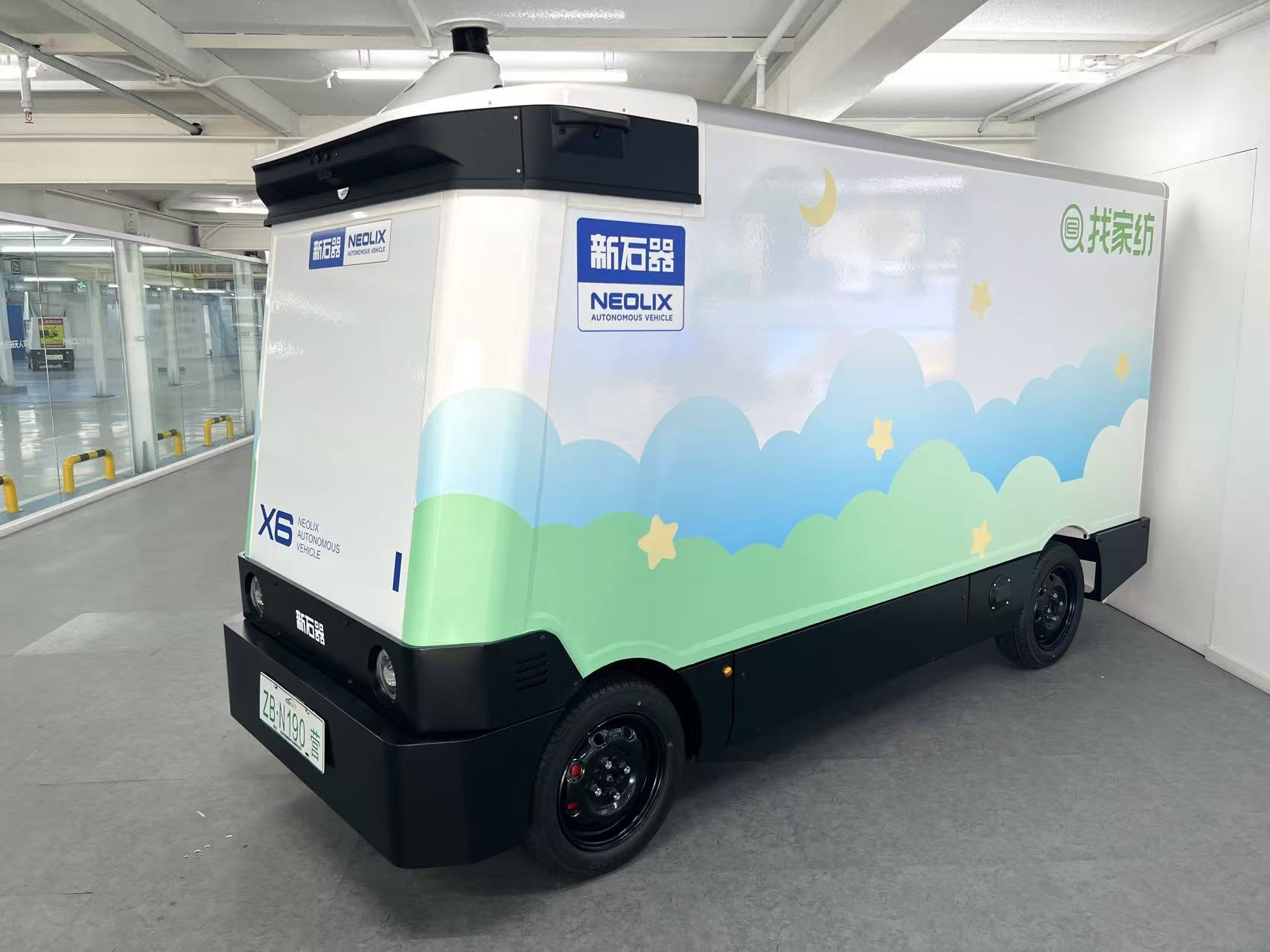
Core Insights - The commercialization of unmanned logistics vehicles has entered stages 1 to 10, with leading manufacturers expected to see a significant increase in order volumes, expanding application scenarios from express delivery to retail distribution [1][6] - Level 4 autonomous vehicles are accelerating their application in the logistics sector, primarily in last-mile delivery [1] Market Overview - The stock market size for urban distribution vehicles is approximately 30 million units (excluding three-wheeled vehicles), with annual sales between 3 million to 4 million units [2] - The annual revenue for urban distribution logistics is around 3 trillion yuan, covering various scenarios such as express delivery, fresh produce, and cold chain logistics [2] Cost Efficiency - The cost of unmanned delivery vehicles has significantly decreased, with prices dropping from over 1 million yuan in 2018 to below 100,000 yuan today, allowing for cost recovery within a year [3][5] - In last-mile delivery, labor costs account for over 80% of expenses, while in trunk logistics, labor costs are about 10%, highlighting the potential for cost savings through automation [2] Technological Advancements - The shift from a multi-lidar and camera setup to a more cost-effective vision-based system has contributed to the reduction in hardware costs, with a projected decline of over 80% from 2023 to 2025 [5] - The new technology approach enhances safety and adaptability in various weather conditions, making it suitable for logistics applications [5] Policy Support - Government policies, including road rights opening and supportive management measures, are facilitating the application of unmanned vehicles in logistics, accelerating the establishment of standards and regulations [5]
无人车从北京加速“驶”向全球
Zhong Guo Xin Wen Wang· 2025-06-19 23:50
Core Viewpoint - Beijing is accelerating the development of intelligent connected vehicles, positioning itself as a global leader in the smart electric vehicle industry, focusing on advanced autonomous driving technology and infrastructure development [1][2]. Industry Development - The "14th Five-Year Plan" emphasizes the integration of intelligent connected new energy vehicles into high-tech industry development, aiming to enhance the competitiveness of the automotive sector through innovation and industrialization [1]. - Beijing has implemented intelligent infrastructure across 600 square kilometers, establishing a city-level experimental platform that integrates "vehicle, road, cloud, network, and map" systems to support rapid technological advancements in autonomous driving [1]. Technological Innovation - The city is fostering core technology innovation by building a national innovation center for intelligent connected vehicles, focusing on key technologies such as perception systems, in-vehicle operating systems, high-precision maps, and intelligent cockpits [2]. - A comprehensive security testing capability has been developed at the National Intelligent Connected Vehicle Innovation Center, addressing issues related to high costs and insufficient validation of safety compliance for smart vehicles [3][5]. Safety Measures - To mitigate security risks like network penetration, a defensive research system has been established, utilizing intrusion detection and defense probes in vehicles to monitor and report potential risks in real-time [5]. - The center has created a vehicle network identity authentication security trust system, which has already served over 20 enterprises and demonstration zones, facilitating secure communication and interoperability across brands and cities [5]. Global Expansion - New Stone Technology's unmanned vehicles have been deployed in over 15 countries and more than 250 cities, with a total of over 5,000 units delivered and an accumulated driving distance exceeding 42 million kilometers [5]. - Beijing has hosted the "World Intelligent Connected Vehicle Conference" for seven consecutive years, promoting international collaboration and leading trends in the global intelligent connected vehicle industry [5].
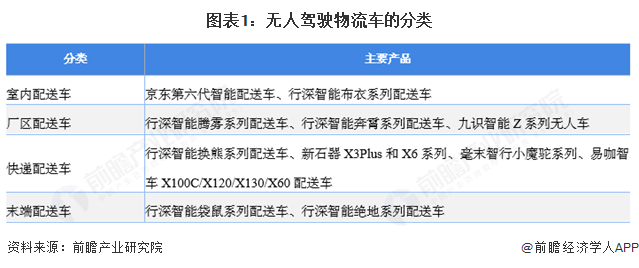
2025年中国无人驾驶物流车行业企业产品发展现状:产品性能稳步提升
Qian Zhan Wang· 2025-06-18 08:57
Core Viewpoint - The article discusses the rapid development and commercialization of autonomous logistics vehicles, highlighting their transformative impact on the traditional logistics industry through advanced technologies and diverse applications in various delivery scenarios [1][4]. Group 1: Product Categories of Autonomous Logistics Vehicles - Autonomous logistics vehicles are categorized into several types based on their application scenarios, including indoor delivery, factory delivery, express delivery, and last-mile delivery [1]. - The average volume of autonomous logistics vehicles in China has exceeded 4 cubic meters, with an average load capacity of over 1 ton, indicating their capability to meet existing logistics transportation demands [3]. Group 2: Company Product Analysis - JD Logistics has introduced its sixth-generation intelligent delivery vehicle, which has a cargo volume of 4 cubic meters and a maximum load of 1000 kg, featuring modular design and a range of advanced technologies for L4 level autonomous driving [4]. - New Stone Technology focuses on developing and manufacturing cargo-type autonomous vehicles, targeting urban delivery markets with a transportation radius extending from 5 km to 50 km, and pricing between 40,000 to 50,000 yuan per unit [6]. - Xing Shen Intelligent's autonomous vehicles are designed for various end-use scenarios, with payload capacities ranging from 400 kg to 3 tons and volume options from 1 to 22 cubic meters, showcasing a diverse product lineup [9]. Group 3: Performance and Specifications - New Stone Technology's models include the X3 and X6, with cargo spaces of 3 m³ and 6 m³, maximum speeds of 50 km/h and 60 km/h, and prices ranging from 40,000 to 50,000 yuan per unit [7]. - Xing Shen Intelligent's vehicles have various models with cargo spaces from 1 m³ to 22 m³, maximum speeds of 25 km/h to 40 km/h, and payloads from 400 kg to 3 tons, catering to different logistics needs [10]. - Nine Sense Intelligent's vehicles, such as the Z2 and Z10, offer payloads up to 1,650 kg and cargo spaces up to 10 m³, suitable for industrial logistics and long-distance transportation [12].