
格力电器

Search documents
“围剿”中国工厂
3 6 Ke· 2026-02-05 05:27
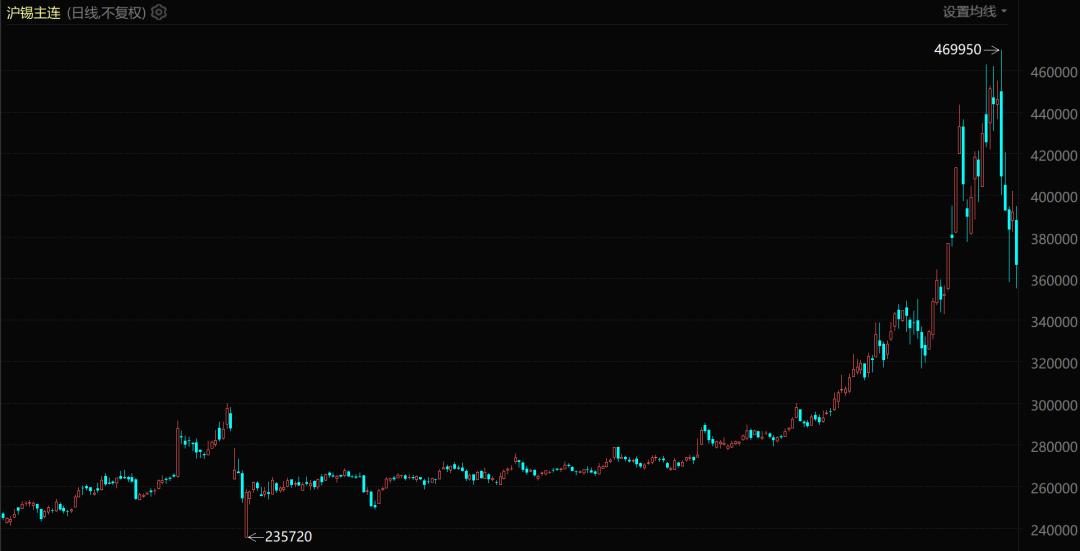
Core Viewpoint - The surge in metal prices, particularly copper, is significantly impacting downstream manufacturing industries in China, leading to squeezed profit margins for manufacturers while upstream companies benefit from rising raw material prices [3][5][9]. Group 1: Price Surge in Raw Materials - In 2025, copper prices increased by 34.34%, and the upward trend continued into 2026 [2]. - The price of lithium carbonate, essential for electric vehicle batteries, skyrocketed from 75,700 yuan per ton in January 2025 to 175,250 yuan per ton by January 23, 2026, marking a 131.4% increase [7]. - Tungsten concentrate prices surged to 520,000 yuan per ton, while tungsten carbide prices rose from approximately 300,000 yuan per ton to 1,200,000 yuan per ton [7]. Group 2: Impact on Manufacturing Industries - The home appliance industry is heavily affected by rising copper prices, with copper accounting for over 20% of the total cost of air conditioners. The copper price reached 105,020 yuan per ton in February 2026, up 42.25% from early 2025, leading to an 8.45% increase in air conditioner costs [10]. - The electric vehicle industry faces significant cost inflation, with UBS reporting that the cost increase for pure electric vehicles (BEVs) due to metal prices alone is approximately 5,600 yuan per vehicle, primarily driven by lithium price increases [12]. - The automotive industry's single vehicle gross profit was only 13,000 yuan in 2025, making it challenging for manufacturers to pass on rising costs to consumers amid fierce competition [13]. Group 3: Upstream vs. Downstream Dynamics - Upstream mining companies are experiencing explosive profit growth due to rising raw material prices, with Zijin Mining forecasting a net profit of 51 to 52 billion yuan for 2025, a year-on-year increase of 59% to 62% [8]. - In contrast, manufacturing companies are facing unprecedented cost pressures, leading to a decline in profit margins. The manufacturing sector's profit margin was only 4.7% in 2025, compared to 15.9% for the mining sector [21][19]. - The overall revenue of China's industrial enterprises has been increasing, but profit margins have been declining, indicating a challenging environment for manufacturers [19][21]. Group 4: Strategies for Survival and Growth - Many Chinese manufacturing companies are exploring ways to extend their business scope internationally, moving beyond low-end products to high-value items like electric vehicles and industrial robots [24]. - Some companies are actively integrating vertically by acquiring upstream resources, such as copper mines, to mitigate the impact of rising raw material prices [24]. - Technological advancements are also being pursued, with companies investing in alternatives to reduce dependency on expensive raw materials, such as the development of sodium-ion batteries [26].







AI空调卷疯了:格力、美的、海尔集体押注,核心价值是「省钱省电」?
3 6 Ke· 2026-02-05 04:13
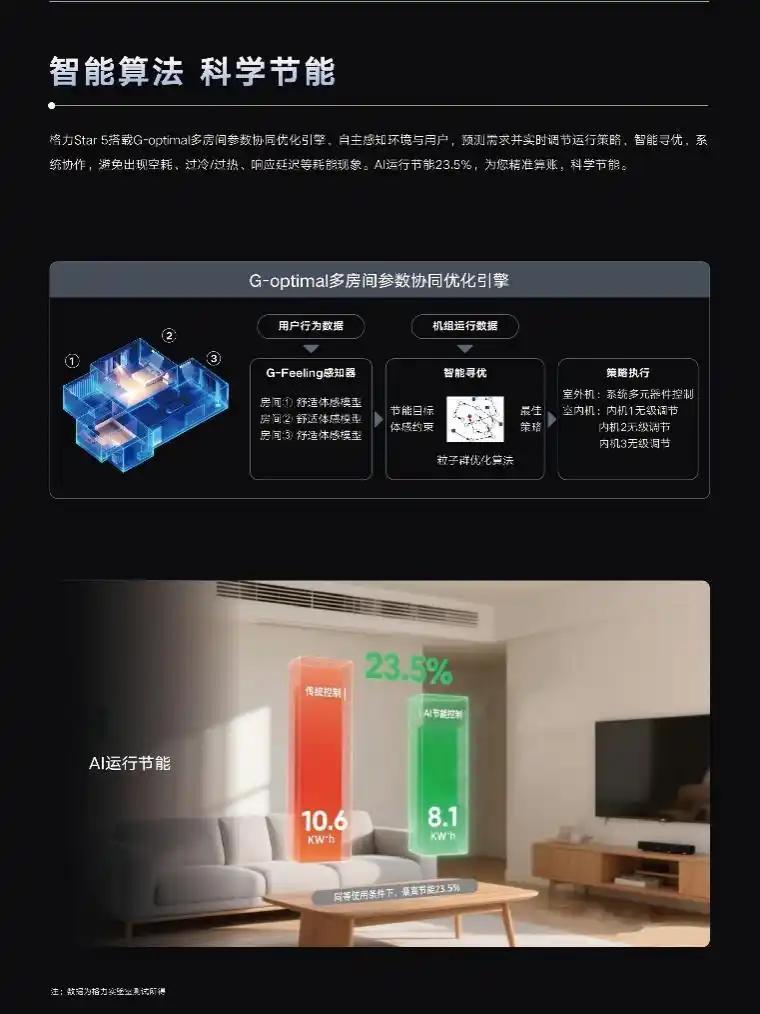
Core Viewpoint - The air conditioning industry is rapidly evolving with the integration of AI technology, moving from traditional cooling and heating systems to more intelligent solutions that focus on user comfort and energy efficiency [1][3][12]. Group 1: AI Integration in Air Conditioning - AI air conditioners, such as Gree's Star 5 AI, aim to enhance user experience by maintaining optimal comfort levels rather than just achieving set temperatures [3][4]. - Traditional air conditioning systems often waste energy and respond slowly to changes in user needs, while AI systems optimize energy use and adjust dynamically based on real-time conditions [4][6]. - Gree's Star 5 AI claims to achieve energy savings of up to 23.5% under ideal conditions, although actual performance may vary based on individual household factors [6][12]. Group 2: Competitive Landscape - Major appliance manufacturers, including Gree, Midea, and Haier, are heavily investing in AI technology, indicating a shift in the market towards algorithm-driven air conditioning solutions [12][15]. - The introduction of AI in air conditioning is expected to create a competitive divide, favoring companies with established data and technology capabilities, while smaller firms may struggle to keep up [16]. - As the market for household air conditioning approaches saturation, consumers are likely to prioritize smart features over cost when upgrading their systems [16].
自由现金流ETF中证全指(561080)跌1.55%,半日成交额840.67万元
Xin Lang Cai Jing· 2026-02-05 03:44
Group 1 - The Freedom Cash Flow ETF CSI All Index (561080) closed down 1.55% at 1.330 yuan with a trading volume of 8.4067 million yuan [1] - Major holdings in the ETF include China National Offshore Oil Corporation (CNOOC) down 1.12%, SAIC Motor up 0.14%, Gree Electric Appliances down 0.33%, COSCO Shipping Holdings up 0.07%, Muyuan Foods down 0.15%, Aluminum Corporation of China down 6.77%, TCL Technology down 0.61%, Baosteel down 1.52%, Great Wall Motors up 1.06%, and Chint Electric down 4.14% [1] - The ETF's performance benchmark is the CSI All Index Free Cash Flow Index, managed by Huaan Fund Management Co., Ltd. The fund has returned 35.06% since its inception on April 23, 2025, and 7.11% over the past month [1]




如何看当前时点地产链投资机会
2026-02-05 02:21
Summary of Conference Call Records Industry: Real Estate Key Points - The real estate industry has undergone a deep cleansing of its fundamentals, with positive policy signals expected to gradually restore holdings, leading to valuation elasticity. In January, the second-hand housing market in core cities showed signs of recovery, with increased transaction volumes and decreased listing volumes, optimizing supply-demand relationships and narrowing price declines [1][2][3] - Multiple authoritative media outlets have released positive signals regarding the financial asset attributes of real estate and the cancellation of restrictive measures. Many real estate companies are no longer required to report the "three red lines" indicators monthly, indicating a period of intensive policy implementation, which enhances the investment value of the real estate sector [3] - The investment strategy for the building materials industry chain should focus on balance and early layout of related opportunities. Global expansion of balance sheets and marginally increasing liquidity in the A-share market support potential excess return opportunities in the building materials sector [1][4] - The A-share market's IPO financing is expected to be at historical average levels, but the second half of the year may see quarterly financing amounts exceeding expectations, which could signal a warning for the technology sector as relative returns may decrease [5] - The current economy is at the end of a Kondratiev wave depression, with non-ferrous metals and commodities being favorable investment options. The adjustment in the real estate market is nearing its end, with potential investment opportunities expected to emerge [6] Additional Insights - The real estate sector is currently in a core configuration window with high win rates and odds. As of Q4 2025, the sector's holdings accounted for approximately 0.43% of stock investment value, indicating a significant underweight that has persisted for 24 quarters [2] - The recovery of the Hong Kong real estate sector serves as a reference for the mainland market, with historical data suggesting that the adjustment in actual housing prices in China has been sufficient, leading to an increase in the sector's win rate [2] - The building materials sector's investment strategy emphasizes early positioning in response to market changes, with a focus on companies with low valuations and strong resource reserves, such as China Trade and Greentown China [4] - The cement industry is highlighted for its potential, with profitability closely tied to capacity utilization rates. Companies like Conch Cement are expected to see significant profit increases if prices rise [10] - The home appliance sector is anticipated to recover as real estate data stabilizes, which will directly boost demand for white goods and kitchen appliances [13] Industry: Building Materials Key Points - The investment strategy for the building materials industry should focus on both expansion and balance, with an emphasis on early positioning in real estate-related opportunities [4] - Companies with low valuations and strong resource reserves, such as China Trade and Greentown China, are recommended for investment [4] - The cement industry is expected to enter a new recovery cycle, with significant profit potential linked to price increases [10] Industry: Home Appliances Key Points - The home appliance sector is nearing the end of its darkest period, with potential investment opportunities arising as real estate data stabilizes and consumer demand is expected to recover [13] - The sector's current low valuations present opportunities for growth, particularly in white goods and kitchen appliances, which are closely tied to real estate performance [13] Additional Insights - Companies like Midea, Haier, and Gree are highlighted for their strong dividend yields, making them attractive investment options [13] - Newer companies in the market, such as Roborock and Ecovacs, are also noted for their competitive positioning and potential for valuation recovery [13]
传统空调需求承压,格力、美的切入AI数据中心制冷领域
第一财经· 2026-02-04 09:46
Core Viewpoint - The central air conditioning industry is undergoing an adjustment period due to declining traditional engineering demand, prompting companies like Gree Electric and Midea Group to invest more resources in AI data center cooling and high-performance infrastructure to seek structural growth opportunities [5][6]. Group 1: Market Dynamics - Air conditioning still accounts for about 70% of Gree Electric's revenue, with central air conditioning being a core segment. However, the industry faces pressure from a downturn in real estate, weak traditional engineering demand, and intensified price competition [7]. - In 2025, the sales scale of China's central air conditioning industry is projected to be 138.68 billion yuan, with a 7.4% year-on-year decline in the domestic market, while the export market is expected to grow by 12.7%. The growth in exports is significantly driven by ongoing investments in overseas data centers and computing infrastructure [7]. Group 2: Technological Trends - As AI computing power increases, the power density of server cabinets is rising rapidly, revealing limitations in traditional air cooling solutions in terms of efficiency and heat dissipation. Liquid cooling is gradually becoming an important technology route for high-performance data centers [8]. - Liquid cooling is not merely an equipment upgrade but involves comprehensive changes in system architecture, core components, and operational modes. It is seen as a supplementary solution in high-performance scenarios, often coexisting with air cooling solutions, requiring higher system integration and project experience [8]. Group 3: Competitive Landscape - The data center cooling market is primarily dominated by two types of companies: specialized manufacturers with extensive experience in data center temperature control, such as Vertiv, Ingersoll Rand, and others, and foreign brands like Johnson Controls and Carrier, alongside domestic central air conditioning manufacturers like Gree and Midea [10]. - Domestic central air conditioning companies face significant challenges in the data center market, including the maturity of technology in high-performance scenarios, the ability to deliver complex projects, and the long verification cycles required by leading clients [10]. Group 4: Future Outlook - Overall, AI data center cooling presents a rare structural growth opportunity for the central air conditioning industry, but its scale, pace, and profit model differ significantly from traditional engineering markets. In the short term, data center business serves more as a buffer against the decline of traditional business rather than a decisive replacement [11]. - The ability of companies like Gree and Midea to establish stable engineering capabilities and long-term customer relationships in high-barrier technology paths like liquid cooling will be crucial in determining their position in the computing infrastructure cycle [11].
传统空调需求承压,格力、美的切入AI数据中心制冷领域
Di Yi Cai Jing· 2026-02-04 08:50
Core Insights - The data center cooling business is a significant growth point for the central air conditioning industry during its consolidation phase, but competition is intensifying, presenting both opportunities and challenges [1] Industry Overview - The central air conditioning industry is currently in an adjustment period due to weakening traditional engineering demand. Companies like Gree Electric Appliances (000651.SZ) and Midea Group (000333.SZ) are reallocating resources towards AI data center cooling and high-computing infrastructure to seek structural growth [3] - The data center temperature control market has high requirements for system design capabilities, project experience, and long-term operation and maintenance, posing challenges for traditional HVAC companies [3] Market Dynamics - Air conditioning still accounts for approximately 70% of Gree's revenue, with central air conditioning being a core segment. However, the industry faces pressure from a downturn in real estate, weak traditional engineering demand, and intensified price competition [4] - The Chinese central air conditioning market is projected to reach a sales scale of 138.68 billion yuan by 2025, with a year-on-year decline of 7.4% in the domestic market, while the export market is expected to grow by 12.7% [4] - Data centers are viewed as one of the few remaining sources of certain demand in the central air conditioning industry, although their contribution to Gree and Midea's central air conditioning revenue remains limited [4] Technological Trends - As AI computing power increases, the power density of server cabinets is rising rapidly, revealing limitations in traditional air-cooled solutions regarding efficiency and heat dissipation. Liquid cooling is becoming an important technology route for high-computing data centers [4] - Liquid cooling is not merely an equipment upgrade but involves comprehensive changes in system architecture, core components, and operational modes, requiring higher system integration and project experience [4] Competitive Landscape - The data center cooling market is primarily dominated by two types of companies: specialized temperature control manufacturers and foreign brands. Specialized firms have accumulated substantial project experience and customer loyalty, while central air conditioning manufacturers like Gree and Midea have advantages in manufacturing and global service networks but face competition in specialized cooling solutions [6] - Domestic central air conditioning companies see opportunities in the data center market due to incremental space and localization trends, but they also face challenges such as technology maturity and complex project delivery capabilities [6] Strategic Outlook - Overall, AI data center cooling presents a rare structural growth opportunity for the central air conditioning industry, but its scale, pace, and profit model differ significantly from traditional engineering markets. In the short term, data center business acts more as a buffer against the decline of traditional business rather than a decisive replacement [7] - The ability of Gree and Midea to establish stable engineering capabilities and long-term customer relationships in high-barrier technologies like liquid cooling will be crucial for their positioning in the computing infrastructure cycle [7]
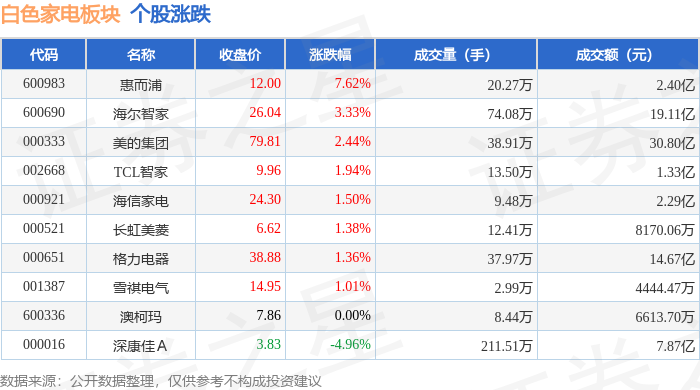
白色家电板块2月4日涨2.29%,惠而浦领涨,主力资金净流入6.29亿元
Zheng Xing Xing Ye Ri Bao· 2026-02-04 08:49
Group 1 - The white goods sector increased by 2.29% on February 4, with Whirlpool leading the gains [1] - The Shanghai Composite Index closed at 4102.2, up 0.85%, while the Shenzhen Component Index closed at 14156.27, up 0.21% [1] - Key stocks in the white goods sector showed varied performance, with Whirlpool rising by 7.62% to a closing price of 12.00 [1] Group 2 - The net inflow of main funds in the white goods sector was 629 million yuan, while retail funds saw a net outflow of 378 million yuan [1] - Midea Group had a main fund net inflow of 296 million yuan, but also experienced a retail net outflow of 205 million yuan [2] - Gree Electric experienced a main fund net inflow of 168 million yuan, with a retail net outflow of 118 million yuan [2]



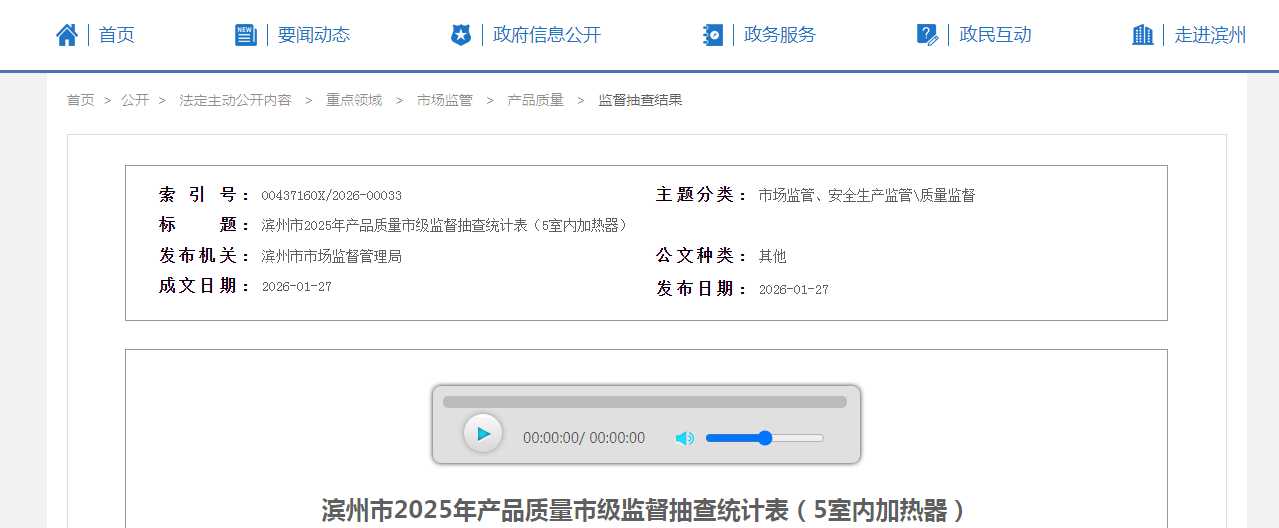
山东省滨州市市场监督管理局发布2025年产品质量市级监督抽查统计表(5室内加热器)
Zhong Guo Zhi Liang Xin Wen Wang· 2026-02-04 08:38
Core Viewpoint - The report released by the Binzhou Market Supervision Administration provides a statistical overview of the quality supervision and inspection of indoor heaters in 2025, indicating a focus on product safety and compliance in the local market [3]. Group 1: Inspection Results - All sampled indoor heaters from various companies were found to be compliant with quality standards, as indicated by the "Qualified" status in the inspection reports [4]. - The inspected companies include notable manufacturers such as Gree Electric Appliances and Midea, which are recognized brands in the home appliance sector [4]. Group 2: Companies Involved - The report lists several companies involved in the distribution of indoor heaters, including Yangxin Zhongxing Mall Co., Ltd., Huimin County Jiahe Zhongcheng Appliance Sales Co., Ltd., and Wudi Fuqiang Sanlian Appliance Co., Ltd. [4]. - Each company is associated with specific brands and models of indoor heaters, showcasing a diverse range of products available in the market [4].

红利低波ETF华泰柏瑞(512890)成交额4.15亿元领跑同类 机构:关注高股息策略
Xin Lang Cai Jing· 2026-02-04 04:24
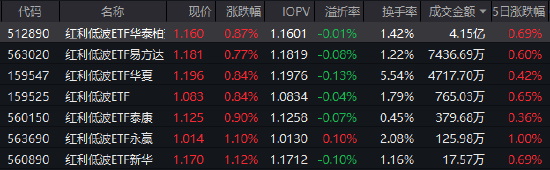
Core Viewpoint - The market experienced a downturn on February 4, with the Shanghai Composite Index turning negative and the ChiNext Index dropping over 2%. Despite this, the Huatai-PineBridge Low Volatility ETF (512890) rose by 0.87%, reaching a price of 1.160 yuan, with a turnover rate of 1.42% and a transaction volume of 415 million yuan, leading among similar ETFs [1][7]. ETF Performance - The Huatai-PineBridge Low Volatility ETF (512890) reported a price of 1.160 yuan, reflecting a 0.87% increase, with an indicative net asset value (IOPV) of 1.1601 yuan and a slight discount of -0.01% [2][8]. - The ETF's trading volume was 415 million yuan, with a 5-day price change of 0.69% [2][8]. Top Holdings - The top ten holdings of the Huatai-PineBridge Low Volatility ETF showed mostly positive performance during the morning session, with notable increases in Shanghai Bank (up 1.08%), Nanjing Bank (up 2.08%), and Ping An Bank (up 0.65%). However, COFCO Sugar fell by 1.61% [3][9]. Fund Inflows - The Huatai-PineBridge Low Volatility ETF has seen significant net inflows, with 670 million yuan over the last 5 trading days, 2.94 billion yuan over the last 20 days, and 4.68 billion yuan over the last 60 days. As of February 3, 2026, the ETF's latest circulation scale was 29.011 billion yuan [3][9]. Market Analysis - According to China International Capital Corporation (CICC), the A-share market is expected to experience short-term consolidation, but medium-term support factors remain unchanged, indicating a slow bull market. They recommend focusing on four key areas: the AI industry chain and commercial aerospace, supply-demand supported non-ferrous metals, cyclical sectors like chemicals and home appliances, and high-dividend strategies based on quality cash flow [5][11]. - Pacific Securities emphasized the attractiveness of bank sector valuations, highlighting significant dividend yield advantages and strong demand for high-dividend asset allocation. They noted that state-owned banks and quality regional banks have advantages in capital, dividends, and regional economic resilience, supporting low-volatility dividend strategies [6][11].
格力电器:公司坚持“价值战”的长期发展理念
Zheng Quan Ri Bao Wang· 2026-02-04 03:49
Core Viewpoint - Gree Electric Appliances emphasizes that customer bargaining power reflects market supply and demand dynamics, which vary across different market segments and product types [1] Group 1 - The company adheres to a long-term development philosophy of "value warfare" [1] - Gree Electric Appliances focuses on continuous technological innovation and differentiated services, such as a ten-year free repair service for home air conditioners, to steadily improve operational quality [1]