
中国平安

Search documents
保险资金运用数据点评:2025年显著增配核心权益,债券增配节奏放缓
Soochow Securities· 2026-02-13 03:49
Investment Rating - The industry investment rating is maintained as "Increase" [1] Core Insights - The insurance industry is experiencing significant growth in asset allocation towards core equities, with a slowdown in bond allocation pace [5] - By the end of 2025, the total investment balance of the insurance industry reached 38.5 trillion yuan, marking a 15.7% increase from the beginning of the year, the highest growth rate since 2021 [9] - The allocation of "stocks + funds" increased by 1.6 trillion yuan in 2025, with a total balance of 5.7 trillion yuan by year-end [5] - The proportion of "stocks + funds" in total investment reached 15.4% by the end of 2025, an increase of 2.6 percentage points from the beginning of the year [5] - The demand in the market remains strong, and the optimization of liability costs is expected to alleviate pressure from interest rate spreads [5] Summary by Sections Investment Allocation - By the end of 2025, the investment scale of life insurance companies was 34.7 trillion yuan, accounting for 90.1% of the industry [5] - The allocation of bank deposits decreased to 7.6%, while the bond allocation increased to 51.1% [5] - The allocation of stocks and funds reached a high level, with stocks accounting for 10.1% and funds for 5.3% of total investments [5] Market Outlook - The recent decline in the yield of ten-year government bonds to approximately 1.81% is expected to ease the pressure on the investment income of insurance companies [5] - The insurance sector's valuation remains at historical lows, with estimated PEV ranging from 0.64 to 0.86 and PB from 1.15 to 2.24 [5]





邢台金融监管分局同意中国平安广宗支公司营业场所变更
Jin Tou Wang· 2026-02-13 03:37
Core Viewpoint - The approval for the change of business location for China Ping An Property & Casualty Insurance Co., Ltd. Guangzong Branch has been granted by the Xingtai Financial Regulatory Bureau [1] Group 1 - The new business location for China Ping An Property & Casualty Insurance Co., Ltd. Guangzong Branch is specified as: S-2 Building 303, Tianyi City Commercial Street, East Side of Heping Road South Section, South Side of Limao Street, Guangzong County, Xingtai City, Hebei Province [1] - The company is required to handle the change and obtain the new license in accordance with relevant regulations [1]
抚州金融监管分局同意平安产险崇仁支公司变更营业场所
Jin Tou Wang· 2026-02-13 03:37
二、中国平安财产保险股份有限公司应按照有关规定及时办理变更及许可证换领事宜。 2026年2月9日,抚州金融监管分局发布批复称,《关于中国平安(601318)财产保险股份有限公司崇仁 支公司营业场所变更的请示》(平保产赣分发〔2026〕9号)及相关材料收悉。经审核,现批复如下: 一、同意中国平安财产保险股份有限公司崇仁支公司将营业场所变更为:江西省抚州市崇仁县活力大道 (中文时代影城)159号。 ...
1月金股最高上涨98%!2月电子行业“断层第一”,保险股回归推荐榜丨股市掘金
Guang Zhou Ri Bao· 2026-02-13 03:18
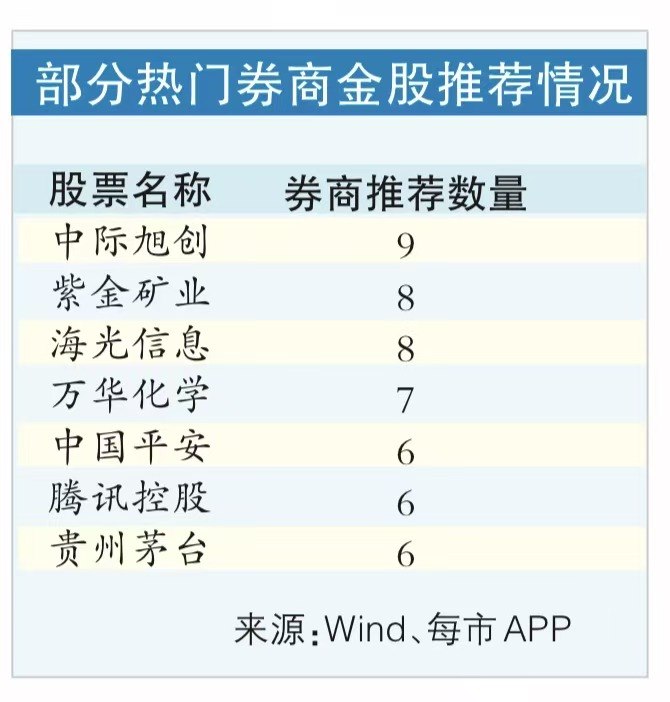
2026年首月,A股市场492万户的新开户数为市场再添热度。随着2月券商金股组合的陆续发布,市场关注热点也更加显现。广州日报新花城记者汇总梳理 41家券商金股,除去重复推荐后共得到305个标的。其中,中际旭创、紫金矿业、海光信息等推荐频次居前,中国平安、贵州茅台等个股也重回券商推荐 榜。 2月电子行业仍最受关注 保险股重回推荐榜 春季行情或将延续推荐成长风格 近期A股指数震荡整理,板块轮动加剧。东吴证券研究所团队认为,一方面源于波动率修复的内在要求,1月中旬,沪指20个交易日波动率指标升至短线 高位,指数需要通过放缓上行斜率的方式完成波动率的修复。另一方面,也与外生力量的节奏引导相关。沪指走出十七连阳后市场情绪短期过热,多个信 号密集释放,核心宽基ETF多日放量净赎回,凸显外生力量逆周期调节平抑波动的决心,强化"慢牛"思路。 另一方面,最新公布的A股1月新开户数达492万户,同比增长213%,是2024年"9·24"牛市行情以来开户数第二高的月份,仅次于2024年10月685万户,居 民入市步伐加快。 进入2月,A股各行业板块轮动加快,但从各大券商的金股推荐中仍可捕捉到当前市场关注热点。从券商金股分布的行业来 ...

主动偏股基金加仓有色、通信,减仓医药
Huajin Securities· 2026-02-13 02:55
Group 1: Fund Positioning - In Q4 2025, the overall equity position of actively managed equity funds decreased to 86.45%, down by 0.97 percentage points from Q3 2025[4] - The main board's position decreased by 0.2 percentage points to 58.4%, while the Sci-Tech Innovation Board's position fell by 1.0 percentage points to 16.4%; the ChiNext Board's position increased by 1.2 percentage points to 24.8%[5] - The cyclical sector saw the largest increase in position, rising from 18.2% to 21.5%, an increase of 3.3 percentage points[10] Group 2: Sector Adjustments - Actively managed equity funds increased their positions in non-ferrous metals and communications while reducing their holdings in pharmaceuticals and electronics[10] - The top five sectors by position in Q4 2025 were electronics (23.7%), electric power equipment (11.4%), communications (11.1%), pharmaceuticals (8.1%), and non-ferrous metals (8.0%)[13] - The growth sector's position decreased by 2.5 percentage points to 57.6%, while the consumer sector fell by 1.6 percentage points to 14.7%[10] Group 3: Concentration of Holdings - The concentration of holdings in the top 20 stocks increased, with the top 5, 10, 30, and 50 stocks' holdings rising by 1.3, 0.8, 0.6, and 0.2 percentage points respectively[20] - The top stocks with increased holdings included those in the electric power equipment and non-ferrous metals sectors, while reductions were primarily in electronics and media[23] Group 4: Future Expectations - It is anticipated that holdings in the growth, certain cyclical, and consumer sectors may rebound or remain high in Q1 2026 due to policy support and market conditions[27] - The TMT (Technology, Media, Telecommunications), electric new energy, pharmaceuticals, and certain consumer sectors are expected to attract attention for potential investment[28]
非银对话计算机-如何看待互联网金融的监管和估值
2026-02-13 02:17
Summary of Conference Call Notes Industry Overview - The conference call primarily discusses the **internet finance industry** and specifically focuses on **Jiufang Zhituo** as a representative company within this sector [2][4]. Key Points and Arguments 1. **Financial Performance and Market Sentiment** - Jiufang Zhituo's contract liabilities reached **1.5 billion** yuan by the end of 2026, indicating stable performance for the first half of 2027 [2][4]. - The increase in stock price reflects market recognition of the company's growth potential [2]. 2. **Regulatory Environment** - The internet finance sector requires dynamic regulatory adjustments, with leading companies like Jiufang Zhituo prepared for compliance [2][4]. - Strict regulations are expected to eliminate non-compliant competitors, benefiting leading firms and enhancing industry concentration [2][4]. 3. **Valuation Methodology** - Valuation of internet finance companies is influenced by performance, trading volume, and investor sentiment, suggesting a preference for relative valuation methods over traditional absolute models [2][5]. - The performance of these companies is closely tied to market conditions, making it challenging to predict future earnings [4][9]. 4. **AI Integration in Internet Finance** - Domestic internet finance companies are actively investing in AI, with firms like Jiufang Zhituo and Tonghuashun leading the way [2][5]. - AI applications include compliance screening and investment research, although achieving a positive return on investment (ROI) may take time [2][5][6]. 5. **Progress in Unstructured Data Processing** - The financial industry has made significant advancements in processing unstructured data, reducing costs and improving efficiency [7]. - Financial institutions are expected to achieve positive ROI as they enhance their product offerings [7]. 6. **Digital Currency Business Expansion** - Companies like Jiufang and Dongfang Caifu are exploring digital currency operations in Hong Kong as part of their international strategy [8]. - The regulatory framework for digital currencies is still developing, and the potential for significant revenue generation remains uncertain [8]. 7. **Challenges in International Expansion** - Domestic financial institutions face challenges such as compliance with foreign regulations, service capability, and operational issues when expanding internationally [12][13]. - Despite these challenges, international expansion is viewed as a long-term direction supported by policy encouragement [13]. Additional Important Insights - The acceptance of AI technology in the financial sector is increasing, with applications in research report writing, data processing, and client services [10][11]. - The performance of large platforms like Dongfang Caifu and Tonghuashun is directly linked to market trading volumes, necessitating a differentiated analysis from smaller platforms [9]. This summary encapsulates the critical insights from the conference call, highlighting the current state and future outlook of the internet finance industry, particularly focusing on Jiufang Zhituo and its strategic positioning within the market.
未知机构:交易台高盛香港市场综述恒指09国企指数09-20260213
未知机构· 2026-02-13 02:05
Summary of Key Points from the Conference Call Industry Overview - The focus is on the Hong Kong stock market, specifically the Hang Seng Index, which decreased by 0.9%, along with the Hang Seng Tech Index, which fell by 1.7% [1][2] - The market experienced a pullback after three consecutive days of gains, with concerns about the impact of AI and competition within the industry [1] Core Insights and Arguments - The Hang Seng Tech Index faced significant pressure from two main catalysts, leading to a decline in performance [2] - Southbound capital saw a slight increase in buying activity, but its trading volume remained around 20% of total transactions [2] - Short positions underperformed compared to the Hang Seng Index, indicating pressure on some short sellers [3] - The A-share market exhibited indecisiveness ahead of the holiday, reflecting cautious market sentiment [3] Company-Specific Highlights - Lenovo's stock dropped by 4.6% after reporting a revenue increase to $22.2 billion, which was better than expected, but net profit for the December quarter fell by 21% [4] - Meituan's performance declined by 4.5%, influenced by Alibaba's increased investment in instant shopping and heightened industry competition [4] - NetEase's stock fell due to underwhelming game sales [5] - The consumer staples sector weakened, particularly beverage stocks like Budweiser APAC (-5.2%) and Tsingtao Brewery (-3.1%), primarily due to technical corrections [5] Other Important Insights - The materials sector showed strong performance driven by rising gold and lithium prices [5] - The industrial sector saw gains in logistics and equipment stocks [6] - The trading desk recorded significant buying activity in the mining and materials sectors, particularly in Zijin Mining [3]
南向1.41万亿“压舱” 韩国散户“点火”——港股迎来定价权分层时代
Zhi Tong Cai Jing· 2026-02-13 01:53
Core Insights - The Hong Kong stock market is experiencing two distinct but resonant waves of incremental capital from mainland China and South Korean retail investors, with mainland southbound funds achieving a record net purchase of 1.41 trillion HKD, establishing themselves as core builders of pricing power in the market [1][10] - Southbound funds are characterized by long-term value investment, while South Korean retail investors engage in high-frequency trading and narrative-driven investments, creating a diversified funding source and a layered pricing logic in the Hong Kong market [1][10] Funding Scale and Structure - Southbound funds have become the core incremental source and valuation system reshaper for the Hong Kong market, with a cumulative net inflow of 5.11 trillion HKD by the end of 2025, and a market value exceeding 6.3 trillion HKD, accounting for 12.7% of the total market [2] - South Korean retail investors, while having a smaller capital scale, exhibit concentrated trading behavior and significant leverage, particularly impacting specific sectors like new economy IPOs and the semiconductor industry [2][5] Industry Preferences - Southbound funds focus on financials and high-dividend utilities, with significant investments in major banks and state-owned enterprises driven by high dividend yields and low valuation levels, while South Korean investors show minimal interest in these sectors [3][5] - South Korean retail investors heavily invested in Xiaomi and MiniMax-WP, demonstrating a high turnover and narrative-driven trading approach, contrasting with the stable, long-term holdings of Southbound funds [5][8] Trading Behavior and Decision-Making - Southbound funds exhibit a decision-making anchor based on dividend yield, ROE stability, and free cash flow generation, characterized by continuous accumulation and stable holdings, as seen with significant net purchases in major banks [8][9] - South Korean retail investors, on the other hand, are driven by industry narrative strength and social media trends, with a high frequency of trading and a tendency to hold stocks for less than three months, reflecting a stark contrast to the long-term holding strategy of Southbound funds [9][10] Market Dynamics - The influx of South Korean retail investors into the Hong Kong market represents a diversification of the investor base, providing liquidity while also potentially increasing volatility during certain periods [9][10] - The interaction between Southbound funds and South Korean retail investors is creating a new normal in the Hong Kong market characterized by layered pricing and concurrent narratives, necessitating both stable investment strategies and agile trading approaches [10]





低利率环境下分红险受关注
Jing Ji Ri Bao· 2026-02-13 01:52
Core Viewpoint - The introduction of a growth-oriented dividend product by Zhongying Life reflects the ongoing adjustments in the life insurance industry due to declining market interest rates and changing asset-liability management dynamics [1][2]. Group 1: Product Development and Market Trends - Zhongying Life has launched a growth-oriented dividend product with a lower predetermined interest rate compared to previous offerings, indicating a shift in product design in response to market conditions [1]. - The predetermined interest rates for ordinary life insurance products have shown a continuous downward trend, with values reported at 2.34%, 2.13%, 1.99%, and 1.9% for January, April, July, and October 2025 respectively, and the current rate is noted at 1.89% [2]. - The changes in predetermined interest rates provide significant reference points for pricing and structural adjustments in life insurance products, particularly for dividend insurance [2]. Group 2: Company Strategies and Investment Management - Different life insurance companies are responding uniquely to the challenges posed by the new regulatory framework; Zhongying Life is developing a multi-tiered dividend system to cater to varying customer risk preferences [2]. - The performance of dividend insurance is closely linked to investment outcomes, emphasizing the importance of long-term asset management and risk management capabilities [2][3]. - Major players in the industry, such as China Life and Ping An Life, have adopted different operational strategies for dividend products, focusing on long-term asset allocation and smoothing mechanisms to manage annual fluctuations [3]. Group 3: Demand Dynamics and Consumer Behavior - The growing interest in dividend insurance is associated with changes in household wealth structures, as families seek products that offer both protection and long-term yield potential amid declining returns from traditional low-risk assets [3]. - The uncertain nature of dividend insurance returns, which depend on company performance and market conditions, highlights the need for a balance between protection, yield, and risk in the industry [3].
机器人“上岗”谁来兜底? 保险业加速布局机器人保障
Jin Rong Shi Bao· 2026-02-13 01:52
Core Viewpoint - The emergence of a comprehensive insurance system for robots is crucial to alleviate concerns from both suppliers and users, enabling the integration of robots into real-world applications [2][3]. Group 1: Insurance Development - The first "lifetime liability insurance for elderly care robots" was launched in Shanghai, addressing key concerns for both robot manufacturers and care institutions [2]. - A new insurance sector focused on robots is rapidly developing, with policies emerging to support various types of robots, including consumer-grade exoskeletons [2][3]. - The Chinese humanoid robot market is projected to reach 8.239 billion yuan by 2025, accounting for approximately 50% of the global market [3]. Group 2: Risk and Challenges - The complexity of robots introduces various risks, including hardware damage, software failures, and human-robot interaction issues, which pose challenges for insurance product design and pricing [5][6]. - Real-world incidents have highlighted the necessity of insurance, as accidents involving robots can lead to significant damages and liabilities [3][5]. - Insurance companies face difficulties in obtaining necessary operational data from robot manufacturers, which hinders accurate risk assessment and pricing [6]. Group 3: Collaborative Solutions - Policy guidance is essential for the development of insurance products in emerging fields like robotics, with local governments providing subsidies to stimulate market demand [7]. - Collaborative data sharing between insurance companies, industry players, and academic institutions is recommended to build a comprehensive risk database for humanoid robots [7]. - The rapid technological evolution of robots necessitates flexible insurance products that can adapt to new applications and scenarios [8]. Group 4: Market Potential - The humanoid robot market is expected to grow significantly, with projections indicating a market size of 20 to 50 billion yuan by 2028 and potentially reaching 10 trillion yuan by 2045 [8]. - The establishment of a robust insurance framework is vital not only for risk transfer but also for fostering the overall development of the robotics industry [8].
