
华住集团

Search documents
大行评级丨海通国际:首予华住集团H股目标价41港元及“优于大市”评级
Ge Long Hui· 2025-12-02 05:32
Core Viewpoint - Haitong International initiates coverage on Huazhu Group with an "Outperform" rating and a target price of HKD 41, highlighting the company's leadership in the Chinese hotel chain market and its effective multi-brand strategy [1] Group 1: Company Performance - Huazhu Group is the market leader in the Chinese hotel chain sector, benefiting from an increase in the chain rate of the hotel industry, with its room night volume ranking in the top tier [1] - The company employs a multi-brand matrix and membership system, which, combined with efficient team execution, has led to a continuous increase in market share [1] - The proportion of mid-range hotels is significant, providing resilience, while the increase in the proportion of mid-to-high-end hotels further supports the growth in overall revenue per available room (RevPAR) [1] Group 2: Business Model and Strategy - The company is transitioning towards a high-margin, asset-light franchise model, closing low-quality stores, which is expected to lead to sustained profit margin improvements [1] - The forecast for the fourth quarter includes a net addition of 234 hotels, with a total hotel count projected to reach 12,814 by 2025 [1] - The company is committed to its long-term goal of 20,000 stores by 2030, aiming for a 15% market share [1] Group 3: Financial Projections - Haitong International predicts adjusted EBITDA for the next two years to be RMB 7.94 billion and RMB 9.13 billion, respectively, with adjusted EBITDA margins expected to increase by 5 percentage points and 3 percentage points year-on-year [1]
海通国际:首予华住集团-S“优于大市”评级 “多品牌矩阵+会员体系”双轮驱动
Zhi Tong Cai Jing· 2025-12-02 01:55
Core Viewpoint - Haitong International initiates coverage on Huazhu Group-S (01179) with an "Outperform" rating and a target price of HKD 41, highlighting its leadership in China's hotel chain market and benefits from increasing chain rate [1] Group 1: Market Position and Growth - Huazhu Group is the leader in the Chinese hotel chain market, benefiting from an increase in the chain rate, with its room nights ranking in the top tier [1] - The company has opened over 2,300 new hotels this year, with a strong focus on mid-to-high-end brands, which have grown by 25% year-on-year, surpassing the overall growth rate of 7% [3] - The management is confident in opening over 2,300 hotels this year and aims for a total of 12,814 hotels by 2025, with a long-term goal of 20,000 hotels by 2030, targeting a 15% market share [3] Group 2: Revenue and Profitability - The company is transitioning to a high-margin, light-asset franchise model, closing low-quality stores, which is expected to enhance profitability [1] - The adjusted EBITDA margin increased by 3.3 percentage points to 36% in Q3, with Legacy-HZ's margin rising to 43%, indicating a positive trend in profitability [5] - The forecast for adjusted EBITDA is RMB 7.94 billion and RMB 9.13 billion for 2025 and 2026, respectively, with expected margin improvements of 5 and 3 percentage points [5] Group 3: Membership and Customer Engagement - Huazhu operates the largest and most resilient membership system in the industry, with over 300 million members and an average of 190 million daily active users on its app [4] - Membership numbers grew by 17.1% year-on-year to 301 million, with member room nights booked increasing by 19.7%, accounting for 74% of total room nights sold [4] - Strengthening membership operations is expected to empower franchisees and enhance future monetization opportunities for the company [4] Group 4: Market Demand and Supply Dynamics - The supply-demand situation in the hotel industry continues to improve, with 396,500 new hotels (15 rooms or more) opened in October, a 7% year-on-year increase [2] - Domestic holiday travel shows a sustained increase in cross-regional movement, with approximately 2.142 billion trips during the first seven days of the National Day holiday in 2025, reflecting a 7% year-on-year growth [2] - The fourth quarter is expected to maintain resilience in leisure tourism, although business travel remains weak, with a projected 0.5% year-on-year increase in single-room revenue for Legacy-HZ [2]
海通国际:首予华住集团-S(01179)“优于大市”评级 “多品牌矩阵+会员体系”双轮驱动
智通财经网· 2025-12-02 01:55
Core Viewpoint - Haitong International initiates coverage on Huazhu Group-S (01179) with an "Outperform" rating and a target price of HKD 41, highlighting the company's leadership in China's hotel chain market and its effective multi-brand strategy [1] Group 1: Market Position and Growth - Huazhu Group benefits from improving supply-demand dynamics, with 396,500 new hotels (15 rooms or more) opened in October, a 7% year-on-year increase [1] - The company maintains a strong position in the market with a significant share of mid-range hotels, which are resilient, and an increasing proportion of mid-to-high-end hotels contributing to overall RevPAR growth [1] - Management is confident in opening over 2,300 hotels this year, with a net addition of 234 hotels expected in Q4, aiming for a total of 12,814 hotels by 2025 and a long-term goal of 20,000 by 2030, targeting a 15% market share [2] Group 2: Membership and Operational Efficiency - Huazhu operates the largest and most resilient membership system in the industry, with over 300 million members and an average of 190 million daily active users on its app [3] - Membership bookings increased by 19.7% year-on-year, accounting for 74% of total room nights sold, indicating strong member engagement and potential for future monetization [3] Group 3: Profitability and Financial Performance - The group's adjusted EBITDA margin improved by 3.3 percentage points to 36% in Q3, with Legacy-HZ's margin reaching 43% [4] - The company expects this upward trend in profitability to continue, forecasting adjusted EBITDA of RMB 7.94 billion and RMB 9.13 billion for 2025 and 2026, respectively, with margins projected to increase by 5 and 3 percentage points year-on-year [4]
社服行业 2026 年度投资策略:新复苏,新生态,新供给
Huachuang Securities· 2025-12-01 09:19
Core Insights - The report highlights three core trends in the consumer services industry: "New Recovery, New Ecology, and New Supply" [6] - Structural factors are aiding certain sectors in stabilizing and improving operations, indicating a gradual recovery from the bottom [7] - The integration of online platforms with offline operations is reshaping the industry ecosystem, enhancing competition and operational efficiency [8] Industry Overview - The consumer services sector has seen a slight revenue increase of 2.57% year-on-year, totaling 183.23 billion yuan in the first three quarters of 2025, despite a 12.7% decline in net profit [20][22] - The sector's performance has been mixed, with tourism and education sectors showing significant growth, while the hotel and restaurant sectors faced slight declines [16][19] New Recovery - The hotel industry is experiencing a rebound due to increased tourism demand and a stabilization in average daily rates (ADR), with occupancy rates showing signs of improvement [31][57] - The Macau gaming market has shown strong recovery, with gross gaming revenue (GGR) reaching 24.086 billion MOP in October 2025, driven by non-gaming attractions [32][44] - The duty-free market is benefiting from policy optimizations, with sales in Hainan reaching 2.425 billion yuan in October 2025, reflecting a 34.86% year-on-year increase [32][38] New Ecology - Major players like Alibaba, Meituan, and JD.com are competing in the instant retail space, each leveraging their strengths to enhance online and offline integration [42] - The restaurant industry is witnessing a shift towards standardized and professional supply chains, with the chain restaurant rate increasing from 15% in 2020 to 23% in 2024 [46][48] New Supply - The tourism sector is transitioning from a "sightseeing + ticket" model to one focused on content innovation and immersive experiences, with companies like Sanxia Tourism and Haichang Ocean Park leading this change [50][53] - The sports industry is evolving to combine spectator and participatory sports, creating new social engagement opportunities through digital platforms [54] Investment Recommendations - Key recommendations include focusing on leading hotel chains like Jinjiang Hotels and ShouLai Hotels, and monitoring companies with strong supply chain advantages in the restaurant sector [6][8] - The report suggests that innovative companies in tourism, sports, and education sectors, particularly those utilizing AI and content innovation, are worth attention for potential growth [8][50]






酒店业未来五年怎么干?
3 6 Ke· 2025-12-01 02:49
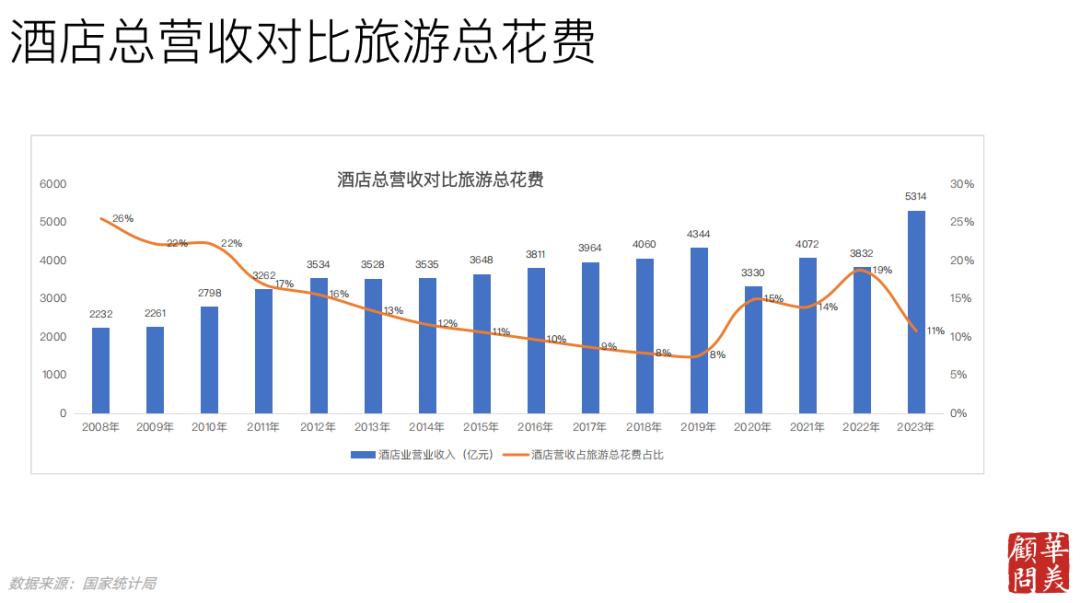
Core Insights - The hotel industry is facing a paradox of increasing room supply while experiencing declining operational metrics, leading to confusion and challenges within the sector [1][3] - The industry is recognized as a "pillar of the nation" in terms of national strategy, with government support for high-quality development, yet the operational performance remains unsatisfactory [3][4] Industry Status - The hotel industry is characterized as having "face" but lacking "substance," indicating a disparity between its perceived status and actual performance [3] - In Q3 of this year, key performance indicators such as RevPAR, ADR, and OCC for major hotel groups have shown a decline [4] - Over the past 12 months, hotel room supply in China increased by 3.5%, while demand only rose by 0.4%, resulting in a 1% drop in room revenue [5] - The average hotel occupancy rate is projected to reach 38.2% by Q1 2025, indicating a growing oversupply issue [5] - The proportion of hotel revenue to total tourism expenditure has decreased from 26% in 2008 to 11% in 2023, highlighting a significant decline in the industry's financial health [5] Market Trends - The hotel industry is undergoing a new cycle characterized by continuous supply growth and declining tourism spending [5][8] - There is a noticeable differentiation in performance between international and domestic hotel groups, with luxury hotels maintaining stable demand while mid-range hotels face ongoing pressure [8] - The industry is experiencing a shift from "scale expansion" to "value cultivation," with a focus on quality over quantity [12] Future Directions - Digital transformation is identified as a key strategy for enhancing efficiency and customer experience, with a push for adopting advanced technologies [19][20] - Understanding and catering to diverse market demands is crucial, as consumer preferences are evolving towards personalized and thematic experiences [22][24] - There is a growing trend of Chinese hotel brands expanding internationally, leveraging strengths in service and technology while addressing gaps in management capabilities [25][26] - The industry is encouraged to actively seek new opportunities and adapt to changing market dynamics over the next five years [27]

如何看待酒店行业的近期回暖和新零售业务拓展?
2025-12-01 00:49
Summary of Hotel Industry and Atour's Retail Business Conference Call Industry Overview - The hotel industry is experiencing a gradual recovery, with RevPAR (Revenue Per Available Room) decline narrowing each quarter, particularly for Huazhu, which has nearly returned to last year's levels in Q3, driven mainly by room prices while occupancy rates remain stable [1][2] - Recent high-frequency data indicates that the improvement in RevPAR is likely temporary, influenced by factors such as trade shows and holiday periods [1][4] - Despite a slowdown in store expansion, the supply of hotel rooms continues to grow at a fast pace, with franchisees remaining cautious about future demand recovery, particularly in business travel [1][5] Key Insights on Atour - Atour has achieved significant success in its new retail business, maintaining over 70% growth, effectively utilizing its membership base of 100 million and nearly 2,000 hotels [1][9] - The retail business is closely related to hotel services, with strong sales in sleep-related products, such as mattresses and pillows, expected to generate over 1 billion yuan in sales in 2024 [3][11] - The current franchisee landscape has shifted from small operators to larger franchisees, who prioritize cash flow stability and are willing to accept longer payback periods of around 5 years [6][7] Future Outlook - The overall sentiment among franchisees regarding future demand recovery remains cautious, with a notable decline in business travel demand and general consumer behavior leaning towards budget travel [5][8] - The supply side continues to show high growth rates, indicating persistent pressure on supply despite a slight decrease [5][8] - Atour's retail business is expected to continue growing, with projections indicating that retail revenue could reach approximately 4 billion yuan by the end of 2025, contributing 30%-40% of total revenue [10][14] Retail Business Development - Atour's retail strategy focuses on leveraging its hotel service experience to sell related products, with a significant emphasis on sleep-related items [11][12] - The company has effectively utilized new media platforms like Douyin and Xiaohongshu for content-driven e-commerce, enhancing brand recognition and user loyalty [13][14] - The retail business serves as a counterbalance to pressures in the hotel sector, helping maintain stable overall revenue growth [14][15] Challenges and Considerations - The increase in sales expenses, particularly due to investments in new media advertising, raises questions about the sustainability of Atour's original sales advantages [15][16] - Monitoring the transition from public to private user channels is crucial for assessing the effectiveness of Atour's user retention strategies [16][17] This summary encapsulates the key points discussed in the conference call regarding the hotel industry and Atour's strategic initiatives in retail, highlighting both opportunities and challenges ahead.

中国仍在 “消费不足” 吗?迷思与真相-Is China still under - consuming_ Myth vs. truth
2025-12-01 00:49
Summary of Key Points from the Conference Call Industry Overview: China Consumer - **China's Consumption Status**: Contrary to the belief that China is under-consuming, the country is one of the fastest-growing major economies. Per capita volume consumption is comparable to global peers, exceeding the US, Japan, and South Korea in certain food categories such as proteins, eggs, seafood, and vegetables [1][10][21]. - **Pricing Dynamics**: The perception of under-consumption is largely due to low pricing, which can be less than 40% of US prices in many categories, especially services [1][10][21]. Macro View - **Household Consumption to GDP Ratio**: China's household consumption accounts for approximately 40% of GDP, which is lower than the US (68%), Japan (54%), and South Korea (48%). However, when adjusted for social transfers in kind, this ratio increases by about 7%, bringing China closer to South Korea and Japan [2][66][71]. - **Potential for Upside**: There is potential for growth in higher-quality and experience-based services, including preventive healthcare, leisure, and entertainment [2][72]. Corporate China: E2SG Opportunities - **E2SG Definition**: E2SG stands for Efficiency, Experience, Service, and Global. Companies can leverage these themes for growth, focusing on cost efficiency, enhancing customer experience, and exploring global markets [3][4]. - **Stock Picks**: The report identifies several companies that fit into the E2SG framework, including Pop Mart, Midea, Geely, H World, Trip.com, Tencent, and Damai, which are expected to be long-term winners despite some facing near-term challenges [4]. Consumption Patterns - **High Volume Consumption**: China exhibits high volume consumption in staples, particularly food, while discretionary categories may see growth potential. For example, China's per capita protein consumption exceeds that of the US [26][27]. - **Service Consumption**: China's consumption of core services like housing, healthcare, and education is comparable to global peers, but there is still room for improvement in higher-quality services [27][30]. Pricing Analysis - **Low Prices**: China's nominal consumption value is suppressed by low prices, which are influenced by structural factors such as being the world's factory, intense competition, and government price regulations [32][35][52]. - **Comparison with Developed Markets**: Consumer goods and services in China are generally cheaper than in the US, Japan, and South Korea, with significant price differences in various categories [33][34]. Urbanization and Future Growth - **Urbanization Impact**: Urbanization is expected to continue, with projections suggesting that the urbanization rate could surpass 70% during the 15th Five-Year Plan. This shift is anticipated to boost household consumption significantly [60][73]. - **Discretionary Spending Potential**: There is significant upside potential in discretionary healthcare and education, as well as leisure and entertainment services, which are currently underdeveloped [72][76]. Conclusion - **Investment Opportunities**: The analysis suggests that while China faces challenges in consumption patterns, there are substantial opportunities for growth in various sectors, particularly in higher-quality and experience-based services. The E2SG framework provides a strategic lens for identifying potential investment opportunities in the Chinese consumer market [3][4][72].
12月消费金股会议:寻找最具弹性的消费方向
2025-12-01 00:49
Summary of Key Points from Conference Call Records Industry Overview - **Alcohol Industry**: The liquor sector, particularly Moutai, has experienced price fluctuations, dropping below 1,600 yuan due to year-end cash recovery. However, after the digestion of pessimistic sentiment, a buying opportunity may arise in the liquor sector [1][4]. - **Food and Beverage Sector**: This sector is expected to see a rebound due to low expectations and low holdings, with CPI recovery and micro-consumption data resonating with macroeconomic trends [1][5]. - **Light Industry**: Focus on export opportunities, with recommendations for companies like Leshushi (leading market share in Africa for sanitary products) and Jiangxin Home (successful expansion in Vietnam) [1][7]. - **Textile Manufacturing**: Overseas clothing demand remains strong, with U.S. retail growth outpacing wholesale. However, caution in procurement due to tariffs has led to low inventory levels [1][8]. - **Snack Industry**: The sector shows significant improvement in fundamentals, with increased store openings and enhanced terminal sales performance [1][9]. - **Pig Farming Industry**: Currently undergoing accelerated capacity reduction, with a notable decline in breeding sow inventory. The industry is facing deep losses, but policy guidance may elevate future pig price expectations [1][24]. Company-Specific Insights - **New Dairy Industry**: New Dairy's pure oat products show stable growth, with compound oat flakes growing rapidly. The company is expected to accelerate revenue in Q4 due to declining import prices [1][6]. - **Angel Yeast**: The company benefits from declining raw material costs, with steady revenue growth and improvements in domestic and overseas yeast operations [1][6]. - **XGIMI Technology**: Anticipated revenue growth from domestic market outsourcing and acquisitions, with expected increases in overseas revenue due to new product launches [1][13][14]. - **Snack Industry Companies**: Companies like Gu Ming and Hu Shang are expected to benefit from internal growth and product expansion, achieving significant same-store sales growth [1][22][23]. - **Pork Producers**: Companies with low-cost advantages and strong cash flow, such as Muyuan, Wens, and DeKang, are recommended for investment due to their resilience against cyclical downturns [1][24]. Additional Important Insights - **Market Trends**: The snack industry is projected to see further profit margin improvements due to stable competition and expanded procurement scales [1][12]. - **Investment Opportunities**: The planting sector is highlighted for its potential due to global agricultural supply-demand dynamics and the upcoming IPO of Syngenta, which may attract attention to the entire sector [1][26][27]. - **Retail Sector**: The hotel industry is recovering, with companies like Huazhu Group and Tongcheng Travel recommended for their strong performance driven by business travel demand [1][21]. This summary encapsulates the key insights and recommendations from the conference call, providing a comprehensive overview of the discussed industries and companies.
酒店生意越来越难,为什么携程越赚越多?
Sou Hu Cai Jing· 2025-11-27 08:26
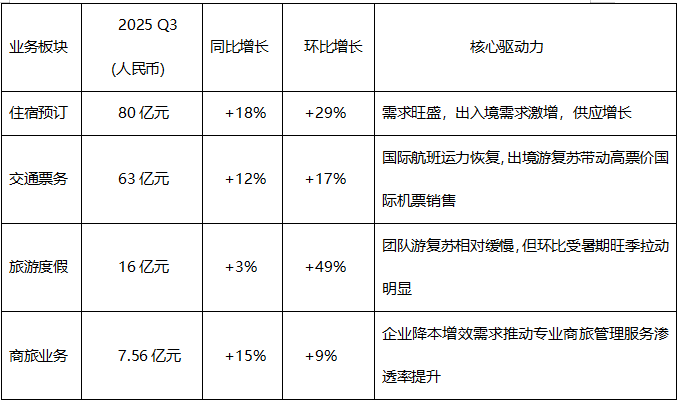
Core Insights - The article highlights the paradox in the Chinese online travel agency (OTA) industry, where Ctrip, a dominant player, reported significant revenue and profit growth, while many hotels struggle with profitability [1][9][61] - Ctrip's Q3 2025 revenue reached 18.3 billion RMB, a year-on-year increase of approximately 16%, with net profit soaring to 19.9 billion RMB, largely due to non-operating income from asset sales [2][3][4] - The disparity between Ctrip's financial success and the challenges faced by hotels raises questions about the sustainability of such growth and the impact of OTA commission structures on hotel profitability [7][18][61] Financial Performance - Ctrip's Q3 2025 net revenue was 18.3 billion RMB, with a year-on-year growth of nearly 16% [2] - The revenue breakdown shows accommodation bookings at 8 billion RMB (+18%), transportation tickets at 6.3 billion RMB (+12%), and travel vacation at 1.6 billion RMB (+3%) [2] - Ctrip's adjusted EBITDA reached 6.3 billion RMB, with an EBITDA margin of 34%, significantly higher than competitors like JD and Meituan [3][18] Industry Dynamics - The hotel industry is experiencing a structural crisis, with many operators reporting "no profit" despite increased revenue, indicating a severe profit squeeze [1][9][15] - The influx of capital into the hotel sector has led to oversupply, resulting in price wars and stagnant average daily rates (ADR) [10][14][15] - The reliance on OTAs for customer acquisition has made hotels increasingly dependent on platforms like Ctrip, which charge high commissions [17][18] Competitive Landscape - Ctrip is transitioning from a commission-based model to a comprehensive service provider focused on accommodation, enhancing its control over the hotel booking process [3][22] - The article discusses the competitive strategies of other players like JD and Meituan, with JD attempting to disrupt the market with a "zero commission" model, though this may not be sustainable [40][41][44] - Ctrip's international business has seen explosive growth, with international OTA bookings up 60% and inbound travel bookings more than doubling [23][25] Technological Advancements - Ctrip's use of AI tools like TripGenie has significantly reduced service costs and improved operational efficiency, allowing for higher margins on new orders [28][30][32] - The company leverages data and algorithms to optimize pricing and enhance customer engagement, solidifying its market position [33][56] Future Outlook - The article suggests that the hotel industry must innovate and differentiate to survive in a market dominated by OTAs, emphasizing the need for brand building and unique customer experiences [59][60] - Regulatory scrutiny may increase due to Ctrip's market dominance and high profit margins, posing potential risks to its business model [60][61]

全季大观之外,华住全新品牌矩阵里还藏着服务式公寓的“大变局”
Jin Tou Wang· 2025-11-27 07:20
Core Insights - The article highlights the transformation of serviced apartments in China, indicating a shift from a luxury offering for expatriates to a more accessible option for domestic consumers, driven by urbanization and changing consumer preferences [2][3][4] - Huazhu Group is positioning serviced apartments as a strategic focus, recognizing the need to address both consumer demand and the challenges faced by property owners in managing existing assets [8][11] Industry Changes - Change 1: Serviced apartments are evolving from a high-end niche market to a mainstream option, with a significant decrease in foreign residents and an increase in domestic travelers and families [3][4] - Change 2: The expansion of serviced apartments is moving from first-tier cities to second and third-tier cities, reflecting economic growth and increased travel demand in these areas [5][6] - Change 3: The rental model is shifting from long-term rentals to a combination of long and short-term rentals, allowing for greater flexibility and responsiveness to market demands [6][10] Strategic Moves by Huazhu - Huazhu is establishing serviced apartments as a key business segment, aiming to fill gaps in the market for multi-day, multi-person accommodations that traditional hotels cannot adequately serve [9][10] - The company is addressing the challenges of large property owners by offering a hybrid rental model that provides stable cash flow through long-term rentals while capitalizing on peak demand with short-term rentals [11][12] - Huazhu is also focusing on revitalizing underperforming commercial properties by converting them into serviced apartments, leveraging their adaptability to various property types [13][14] Product Innovation - Huazhu's serviced apartments are designed to meet the specific needs of Chinese consumers, featuring layouts and amenities that cater to family and group travel, which traditional hotels often lack [18][19] - The company is implementing cost-effective renovation strategies to upgrade older properties, allowing for quicker returns on investment and improved operational efficiency [15][16] Investment Model - Huazhu's serviced apartments offer a low-barrier investment model, with reduced construction and renovation costs compared to traditional hotels, making it attractive for investors [20][21] - The combination of long and short-term rental strategies provides a clear revenue model, enhancing the financial viability of serviced apartments and ensuring stable returns for investors [20][21] Operational Efficiency - Huazhu leverages its extensive membership base and digital tools to optimize operations and reduce costs, ensuring a competitive edge in the serviced apartment market [21] - The company's strategic focus on understanding local consumer needs and market dynamics positions it well for future growth in the serviced apartment sector [21]
