华熙生物

Search documents
医疗美容板块1月6日涨0.66%,爱美客领涨,主力资金净流出1283.62万元
Zheng Xing Xing Ye Ri Bao· 2026-01-06 09:03
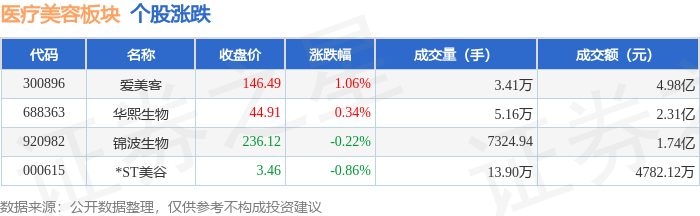
证券之星消息,1月6日医疗美容板块较上一交易日上涨0.66%,爱美客领涨。当日上证指数报收于 4083.67,上涨1.5%。深证成指报收于14022.55,上涨1.4%。医疗美容板块个股涨跌见下表: | 代码 | 名称 | 收盘价 | 涨跌幅 | 成交量(手) | 成交额(元) | | --- | --- | --- | --- | --- | --- | | 300896 | 爱美客 | 146.49 | 1.06% | 3.41万 | 4.98 乙 | | 688363 | 华熙生物 | 44.91 | 0.34% | 5.16万 | 2.31亿 | | 920982 | 锦波生物 | 236.12 | -0.22% | 7324.94 | 1.74亿 | | 000615 | *ST美谷 | 3.46 | -0.86% | 13.90万 | 4782.12万 | 从资金流向上来看,当日医疗美容板块主力资金净流出1283.62万元,游资资金净流入772.62万元,散户 资金净流入511.0万元。医疗美容板块个股资金流向见下表: | 代码 | 名称 | 主力净流入 (元) | | | 主力净占比 游资净流入 ...



2025,超30个知名美妆在中国大溃退
3 6 Ke· 2026-01-06 00:55
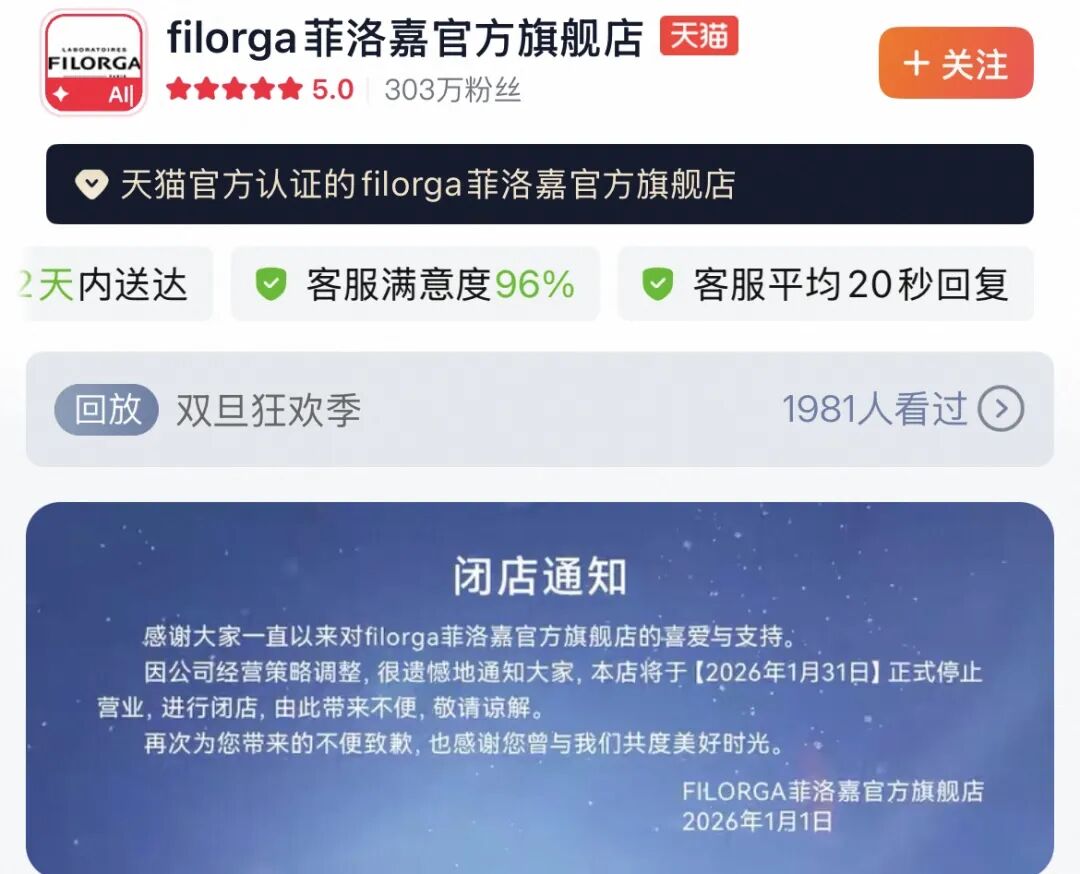
Core Insights - The Chinese cosmetics market is undergoing a significant structural transformation, presenting both opportunities for brands and severe survival challenges, particularly for international beauty brands [1][3][4] Group 1: International Brand Challenges - Colgate's French skincare brand Filorga announced the closure of its Tmall flagship store, marking a strategic retreat from the Chinese market after being acquired for nearly €1.5 billion (approximately ¥12.2 billion) [3] - Over 30 international beauty brands are projected to experience a "mass retreat" from China by 2025, with a notable concentration of closures among Japanese and Korean brands, which account for nearly 80% of the total [3][7] - In 2025, 16 Japanese beauty brands are expected to close or withdraw from the Chinese market, indicating a worsening trend for these brands [7][8] Group 2: Japanese Brand Dynamics - Japanese brands are characterized by a "slow craftsmanship" approach, which has become a liability in the fast-evolving market, leading to significant challenges against local and Western competitors [8][21] - Historical data shows that brands like Sekkisei and Decorte, which once thrived in China, are now retracting their presence due to declining sales and market pressures [9][10] - The overall performance of Japanese beauty brands in China has been declining, with Shiseido reporting a 12.4% drop in sales in the Chinese market in the first half of 2025 [20] Group 3: Korean Brand Struggles - Korean beauty brands are also facing difficulties, with a reported decline in exports to China, which fell below 20% for the first time in 2025 [22] - Six Korean brands are expected to close or withdraw from the Chinese market, with most being under the Amorepacific Group, indicating a significant contraction in their market presence [25][26] - Despite challenges, some Korean brands are attempting to optimize their strategies in China, focusing on digital innovation and resource allocation [30] Group 4: European and American Brand Trends - European and American brands are experiencing a decline in their presence in China, with closures primarily among budget and niche makeup brands [32][33] - The exit of brands like LA Girl and Flower Beauty highlights the competitive disadvantage faced by foreign budget brands against local alternatives [36] - The rise of domestic budget makeup brands, which have shown significant growth, further complicates the landscape for foreign brands [36] Group 5: Domestic Brand Landscape - In 2025, 17 domestic beauty brands are reported to have closed, primarily those established between 2017 and 2024, indicating a challenging environment for newer entrants [39] - The closures are attributed to rising costs, funding pressures, and strategic shifts within companies, reflecting a broader trend of consolidation and optimization in the industry [44][45] - The market is expected to continue evolving, with a focus on differentiation and adaptation to consumer demands becoming crucial for survival [46]
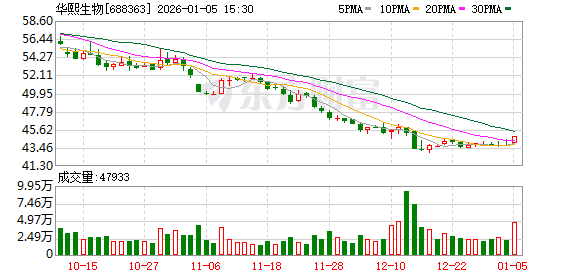
华熙生物副总裁邹松岩答21:加速布局韩国医美与生物制造
2 1 Shi Ji Jing Ji Bao Dao· 2026-01-05 11:57
Group 1 - The core viewpoint is that Huaxi Bio sees the South Korean market as a crucial area for international expansion, particularly in the rapidly growing medical aesthetics industry [2] - The China-Korea Business Forum highlighted discussions on manufacturing innovation, supply chain cooperation, and new consumer markets, with over 400 attendees from both countries [2] - Biomanufacturing is identified as a strategic high ground in the global technological revolution, with the "14th Five-Year Plan" emphasizing the need for forward-looking layouts in biomanufacturing and other future industries [2] Group 2 - Huaxi Bio, established in 2000 and listed on the STAR Market in 2019, specializes in the research and production of bioactive materials, holding a 44% share in the global hyaluronic acid raw material market and 70% in the domestic market [3] - The company entered the South Korean market in 2002 and has expanded into pharmaceuticals, medical aesthetics, cosmetics, and functional foods, with a new subsidiary established in Seoul in 2023 [3] - In the pharmaceutical sector, Huaxi Bio collaborates with top Korean companies in eye drops and joint injection products, while in medical aesthetics, its products cover over 90% of local production companies [3]
医疗美容板块1月5日涨2.22%,华熙生物领涨,主力资金净流入1362.9万元
Zheng Xing Xing Ye Ri Bao· 2026-01-05 09:09
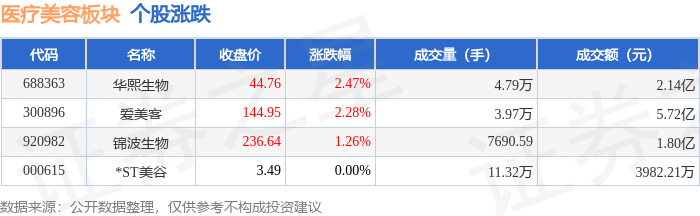
证券之星消息,1月5日医疗美容板块较上一交易日上涨2.22%,华熙生物领涨。当日上证指数报收于 4023.42,上涨1.38%。深证成指报收于13828.63,上涨2.24%。医疗美容板块个股涨跌见下表: | 代码 | 名称 | 收盘价 | 涨跌幅 | 成交量(手) | 成交额(元) | | --- | --- | --- | --- | --- | --- | | 688363 | 华熙生物 | 44.76 | 2.47% | 4.79万 | 2.14亿 | | 300896 | 爱美客 | 144.95 | 2.28% | 3.97万 | 5.72亿 | | 920982 | 锦波生物 | 236.64 | 1.26% | 7690.59 | 1.80 Z | | 000615 | *ST美谷 | 3.49 | 0.00% | 11.32万 | 3982.21万 | 从资金流向上来看,当日医疗美容板块主力资金净流入1362.9万元,游资资金净流出704.42万元,散户资 金净流出658.47万元。医疗美容板块个股资金流向见下表: 以上内容为证券之星据公开信息整理,由AI算法生成(网信算备310104345 ...
——未来产业周报第4期(2025/12/28-2026/1/3):脑机接口产业化提速,机器人场景创新,氢能向电网调节者转变-20260105
Shenwan Hongyuan Securities· 2026-01-05 06:36
Group 1: Quantum Technology - The "quantum + supercomputing" integration innovation platform has been established in Chengdu, deploying China's first 550-qubit coherent optical quantum computer, enabling the collaboration of classical high-performance computing and quantum computing [7][8] - The deployment of the 550-qubit quantum computer fills the gap in the central and western regions of China for quantum computing capabilities, establishing a complementary regional computing power structure with eastern regions [8][9] Group 2: Biological Manufacturing - The first sugar science key laboratory in Beijing has been approved, co-established by Huaxi Biological and Peking University, focusing on precise manufacturing and functional applications of sugars [10][11] - Huaxi Biological aims to leverage this laboratory to enhance its capabilities in synthetic biology, expanding from hyaluronic acid production to comprehensive sugar biological research [11] Group 3: Hydrogen Energy and Nuclear Fusion - The world's first 30 MW pure hydrogen gas turbine has achieved stable operation, marking a significant step in hydrogen energy transitioning from a "power consumer" to a "grid regulator" [12][13] - The EAST nuclear fusion device has confirmed the existence of a density-free regime, providing critical physical evidence for efficient operation of fusion reactors [18][19] - The Chinese Academy of Sciences has completed the manufacturing of all ITER correction coil procurement packages, marking a significant achievement in domestic R&D capabilities for nuclear fusion components [22] Group 4: Brain-Computer Interface - Neuralink plans to begin mass production of brain-computer interface devices in 2026, aiming to automate surgical procedures and enhance device performance [23][24] - The "Beijing Brain No. 1" system has been implanted in five spinal cord injury patients, achieving clinical breakthroughs, with plans for clinical trials to start in mid-2026 [26][27] - The "Guangdong-Hong Kong-Macao Greater Bay Area Brain Science and Central Nervous System Disease AI Innovation Alliance" has been launched, focusing on research and development in brain science and related technologies [28] Group 5: Embodied Intelligence - Woan Robotics has gone public in Hong Kong, focusing on household scenarios with plans to launch a humanoid household robot in January 2026 [29][30] - The "Qiyuan Q1," the world's first small-sized humanoid robot with full-body force control, has been released, targeting research and interactive applications [33][34] Group 6: Future Industry Catalysts - A table has been organized detailing key catalytic events for six future industries in 2026, including important conferences and technological milestones [36][38]

未来产业周报第4期:脑机接口产业化提速,机器人场景创新,氢能向电网“调节者”转变-20260105
Shenwan Hongyuan Securities· 2026-01-05 03:15
Group 1: Quantum Technology - The "quantum + supercomputing" integration innovation platform has been established in Chengdu, deploying China's first 550-qubit coherent optical quantum computer, achieving a synergy between classical high-performance computing and quantum computing [7][8] - The deployment of the 550-qubit quantum computer fills the gap in mid-western China for quantum computing capabilities and complements eastern regions like Hefei and Beijing [8] Group 2: Biomanufacturing - The first sugar science key laboratory in Beijing has been approved, co-established by Huaxi Biological and Peking University, focusing on precise manufacturing and functional applications of sugars [10][11] - Huaxi Biological aims to leverage this laboratory to enhance its capabilities in synthetic biology, expanding from hyaluronic acid production to comprehensive sugar biological research [11] Group 3: Hydrogen Energy and Nuclear Fusion - The world's first 30 MW pure hydrogen gas turbine has achieved stable operation, marking a significant step in hydrogen energy transitioning from a "power consumer" to a "grid regulator" [12][14] - The EAST nuclear fusion device has confirmed the existence of a density-free zone, providing critical physical evidence for efficient fusion reactor operation [18][19] - The ITER correction coil procurement package has been fully manufactured, showcasing China's 100% independent research and development capabilities in key components for nuclear fusion [22] Group 4: Brain-Computer Interface - Neuralink plans to begin mass production of brain-computer interface devices in 2026, aiming to automate surgical procedures and enhance device performance [24][25] - The "Beijing Brain One" system has been implanted in five spinal cord injury patients, with plans for clinical trials to start in mid-2026 [28][29] - The "Guangdong-Hong Kong-Macao Greater Bay Area Brain Science and Central Nervous System AI Innovation Alliance" has been launched, with a total fund of 1.16 billion yuan for brain science projects [30] Group 5: Embodied Intelligence - Woan Robot has been listed on the Hong Kong Stock Exchange, focusing on household scenarios with plans to launch a humanoid household robot in January 2026 [32][33] - The "Shangwei Qiyuan" brand has entered the personal robot market with the release of the world's first small-sized humanoid robot, emphasizing its application in research and interaction [37][38] Group 6: Future Industry Catalysts - A table has been compiled detailing key catalytic events for six future industries in 2026, including important conferences and technological milestones [40][41]
化妆品医美行业周报:林清轩成功IPO,上美股份高管回购彰显信心-20260104
Shenwan Hongyuan Securities· 2026-01-04 14:58
Investment Rating - The report maintains a "Positive" outlook on the cosmetics and medical beauty industry [2]. Core Insights - The cosmetics and medical beauty sector outperformed the market, with the Shenwan Beauty Care Index rising by 0.2% from December 26 to December 31, 2025, while the Shenwan Cosmetics Index increased by 1.0% [4][5]. - Lin Qingxuan successfully completed its IPO on December 30, 2025, attracting significant investor attention. The company, founded in 2003, reported a revenue growth from 690 million yuan in 2022 to 1.21 billion yuan in 2024, with a compound annual growth rate (CAGR) of 32.7% [4][10]. - Upward confidence in the company is reflected in the share buyback by senior management at Shangmei Co., with a total of 835,900 shares purchased in December 2025, amounting to approximately 66.32 million HKD [4][10]. Summary by Sections Industry Performance - The cosmetics and medical beauty sector showed strong performance, with the Shenwan Beauty Care Index increasing by 0.2% during the specified period, outperforming the market [4][5]. - The top-performing stocks included Yanjiang Co. (+14.3%), Shuiyang Co. (+9.5%), and Qingsong Co. (+7.0%), while Shangmei Co. saw a decline of 18.6% [6]. Key Company Updates - Lin Qingxuan's IPO on the Hong Kong Stock Exchange was a significant event, marking it as a leading high-end domestic skincare brand. The company has a strong market presence with a focus on camellia oil-based products [4][10]. - Shangmei Co. demonstrated management confidence through share buybacks, indicating a positive outlook for future growth [4][10]. E-commerce and AI Integration - The report highlights the robust foundation of the e-commerce agency business, particularly for companies like Yiwan Yichuang, which is leveraging AI to enhance operational efficiency and performance [11][12]. - The e-commerce agency sector is experiencing a resurgence, driven by increased demand for brand representation on platforms like Alibaba [12][13]. Market Data - The retail sales of cosmetics in China for the first eleven months of 2025 reached 428.5 billion yuan, reflecting a year-on-year growth of 4.8% [16]. - The report indicates that the market for PDRN components is expected to reach 285 million USD globally by 2029, with China projected to capture 34% of this market [21]. Competitive Landscape - The domestic skincare market is becoming increasingly competitive, with local brands gaining market share against international competitors. The report notes that local brands now occupy five of the top ten positions in market share [24]. - The report anticipates that the trend of domestic brands gaining market share will continue, particularly in the context of rising consumer preference for local products [24].
医美界商业战争:玻尿酸大战胶原蛋白
3 6 Ke· 2026-01-04 10:04
枭雄要成就霸业,需要的不只是一招鲜,而是长期源源不断的竞争力。 陕西女首富范代娣和前山东女首富赵燕,如果不做医美,不关注护肤成分,你可能对这两个名字并不熟 悉。但在如今的中国商业版图上,这两位女性,分别掌控着两家市值几百亿的上市公司——巨子生物和 华熙生物。 表面上看,她们一个在西安,一个在山东;一个做蛋白,一个做多糖;一个出身严谨的大学实验室,一 个来自野蛮生长的地产江湖。她们本该井水不犯河水。 但现实是,这两家公司正在进行一场旷日持久的、甚至可以说是「你死我活」的商战。 但命运和机遇有时候就是不讲道理。 这一年,在北大EMBA的课堂上,她结识了山东省生物药物研究院的副院长郭学平。他跟赵燕说了一句 至今被奉为行业金句的话:「一个玻尿酸分子,能锁住1000个水分子。」 故事的起点,要回到2000年。 这是一个神奇的年份,两人的命运在这一年同时被改写。 当时的赵燕,还是一个在海南淘金成功、在北京开发楼盘的地产大鳄。后来更是在北京开发了中环世贸 中心,承建了奥运会场馆五棵松体育馆,也就是现在的五棵松华熙Live。 按理来说,她的头衔,应该是地产女王,而不是现在的「玻尿酸女王」。 01 她没有亲自去搞研发,而是用资 ...
“人、货、场”迭代升级,关注情绪消费赛道机会
KAIYUAN SECURITIES· 2026-01-04 08:46
Investment Rating - The industry investment rating is "Positive" (maintained) [1] Core Viewpoints - The retail industry is undergoing an evolution in the "people, goods, and scene" framework, driven by emotional consumption, which presents new opportunities for growth [3][25] - High-end gold and fashion jewelry are gaining traction among consumers, with a focus on product differentiation and cultural significance [3][32] - The cosmetics industry is innovating through the IP of technical ingredients and cultural confidence, enhancing product appeal and market competitiveness [3][37] - Offline retail is shifting from selling "goods" to offering "services and experiences," with companies like Yonghui Supermarket leading the transformation [3][41] Summary by Sections Retail Market Overview - In 2025, the retail sector index closed at 2422.59 points, with an annual increase of 8.21%, underperforming the Shanghai Composite Index, which rose by 18.41% [5][14] - The retail industry ranked 23rd among 31 sectors in terms of performance [15] Industry Dynamics - The emotional value is driving consumer intentions, with a focus on "research-based consumption," "self-satisfaction," and "long-termism" as key decision-making trends [25][28] - High-end gold is becoming a preferred asset for wealth preservation, while fashion gold is appealing to younger consumers through innovative designs and social media engagement [32] - The cosmetics sector is witnessing a shift towards self-developed core ingredients and cultural narratives, enhancing brand value [37] Investment Recommendations - Focus on high-quality companies in the emotional consumption theme, particularly in the gold jewelry sector, with recommendations for brands like Chao Hong Ji and Lao Pu Gold [6][50] - Emphasize offline retail companies adapting to market changes, such as Yonghui Supermarket and Ai Ying Shi [6][48] - Highlight cosmetics brands that innovate in emotional value and safety, including Mao Ge Ping and Po Lai Ya [6][48] - Consider differentiated medical beauty product manufacturers and leading medical beauty institutions, recommending companies like Ai Mei Ke and Ke Di-B [6][48]
解码美妆新质生产力:头部品牌的智造实践与研发深耕
艾瑞咨询· 2026-01-04 05:31
Core Viewpoint - The Chinese cosmetics industry is projected to reach a market size of 1.1 trillion yuan, with domestic brands surpassing international brands in market share and consumer preference [1][2]. Group 1: High-Quality Development and New Productive Forces - The domestic cosmetics market retail sales are expected to reach 470 billion yuan by 2025, indicating a significant growth trajectory for the industry [2]. - New productive forces are essential for the high-quality development of the cosmetics industry, transitioning from traditional manufacturing to intelligent and lean production [4]. - New productive forces enhance production efficiency and product consistency through automation and intelligent equipment, addressing quality control challenges [4]. Group 2: Intelligent Manufacturing Practices of Domestic Brands - The past decade has seen a shift in the cosmetics manufacturing industry from experience-driven to data-driven processes, evolving through three stages: semi-automated, automated, and now data-driven intelligent stages [6]. - Leading brands like Han Shu and Pechoin have made significant investments in intelligent manufacturing, achieving production capacity increases and improved quality control [8][10]. - Domestic brands have made historical advancements in intelligent manufacturing, with automation rates rising from approximately 40% to levels comparable to international brands [10]. Group 3: R&D Innovation and Cost Management - R&D expenditure rates vary across different categories, with skincare products averaging 1.5%-5% and medical beauty products at 2%-5%, reflecting a focus on compliance and clinical data [21][23]. - Domestic brands like Han Shu and Pechoin have R&D personnel ratios comparable to international leaders, indicating strong R&D capabilities [24]. - The production cost rates for various product categories range from 15% to 30%, with domestic brands leveraging self-researched technologies and integrated supply chains to maintain competitive pricing [27][28]. Group 4: International Competitiveness of Domestic Brands - Domestic brands have achieved significant breakthroughs in the cosmetics sector, enhancing core competitiveness through new productive forces [31]. - Intelligent manufacturing has enabled micro-level quality control, establishing trust in product quality [33]. - The integration of AI and 5G technologies in manufacturing processes positions domestic brands at the forefront of global standards, driving high-quality development in the industry [33].