平安人寿

Search documents
金融业出拳整治“内卷式”竞争,价格恶战首当其冲
Nan Fang Du Shi Bao· 2025-07-24 10:56
Core Viewpoint - The financial industry is increasingly focusing on resisting "involution-style" competition, with institutions like Ping An Bank taking proactive measures to address this issue and promote sustainable business practices [2][4]. Group 1: Ping An Bank's Actions - On July 22, Ping An Bank held a meeting to outline its business development plan and promote the signing of commitment letters against "involution-style" competition among its over 2,000 employees [2]. - In Q1 2025, Ping An Bank reported a revenue of 33.709 billion, a year-on-year decrease of 13.1%, and a net profit of 14.096 billion, down 5.6% [2]. - The bank's total assets reached 57.8 trillion at the end of Q1, reflecting a slight increase of 0.1% compared to the end of the previous year [2]. Group 2: Industry-Wide Trends - The Guangdong Banking Association has established a "1+3+N" system to combat "involution-style" competition, which includes a negative list from regulatory bodies and self-regulatory measures from various business sectors [4]. - The Guangdong Financial Regulatory Bureau has publicly opposed "involution-style" competition and is working on self-regulatory agreements to guide the industry [4]. Group 3: Broader Industry Context - The call for resisting "involution" is gaining traction nationwide, with provinces like Fujian and Anhui issuing self-regulatory agreements to prevent malicious competition and ensure compliance with regulatory requirements [5]. - In Shenzhen, despite being a major financial hub, there has been no clear stance from local regulators on "involution" competition, although the banking sector's total assets reached 13.57 trillion, growing by 1.37% year-on-year [5]. Group 4: Regulatory Measures and Market Impact - The implementation of the "reporting and execution consistency" policy in the insurance sector aims to standardize market practices and curb harmful competition, resulting in a 30% reduction in average commission levels in certain channels [6]. - The banking sector is facing significant pressure on profitability, with net interest margins declining to approximately 1.43% in Q1 2025, leading to concerns about the sustainability of business models [7]. Group 5: Responses to Challenges - Strategies proposed by industry leaders include international expansion, diversification of revenue sources, and the use of artificial intelligence to enhance operational efficiency [8]. - There are differing opinions on the effectiveness of "anti-involution" measures, with some industry professionals arguing that the root cause of the issue lies in the high degree of market homogeneity rather than just pricing strategies [8].




大资金持续发力!新一轮举牌潮进行中
券商中国· 2025-07-24 03:30
Core Viewpoint - The recent surge in insurance capital's stock acquisitions, marking a new wave of investment activity, reflects a strategic shift in asset allocation and operational adjustments in response to the evolving economic landscape [2][18][19]. Group 1: Insurance Capital Activity - Insurance companies have initiated a record 21 stock acquisitions as of July 22, surpassing the total for 2021-2023 and setting a five-year high [2][10]. - The latest acquisitions include significant purchases by Zhongyin Life and Taikang Life, with Zhongyin acquiring 726,000 shares of Green Power Environmental, reaching a 5.0722% stake [7][6]. - The trend of stock acquisitions has been consistent, with four instances occurring in July alone, indicating a robust interest from various insurance firms [5][6]. Group 2: Investment Strategy and Market Conditions - The current investment strategy emphasizes high-dividend stocks and long-term equity investments, driven by a low-interest-rate environment and new financial regulations [11][18]. - The insurance sector is increasingly focusing on stable, high-yield investments to enhance returns, with a notable shift towards equities as a means to navigate low returns from traditional fixed-income assets [18][19]. - The ongoing policy support for long-term investments is expected to further expand the space for equity asset allocation among insurance companies [19][22]. Group 3: Historical Context and Future Outlook - This marks the third wave of stock acquisitions in the past decade, with previous surges occurring in 2015 and 2020, indicating a cyclical pattern in investment behavior [8][9]. - Although the current annual acquisition count has not yet surpassed the previous waves, the duration and total volume of acquisitions since 2024 have already exceeded the second wave [9]. - The focus on banking stocks remains prominent, with significant investments in major banks, reflecting their stable operations and attractive dividend yields [12][10].

两大险资巨头“战略陪伴”华电新能带来的启示
Zheng Quan Ri Bao Zhi Sheng· 2025-07-23 17:10
Group 1 - Huadian New Energy Group Co., Ltd. has successfully listed on the Shanghai Stock Exchange, marking the largest IPO in the A-share market this year, which is a significant milestone for the company [1] - The investment by insurance companies such as China Life and Ping An Life in Huadian New Energy reflects a broader trend of insurance funds increasing equity investments and aligning with national strategies [1][2] - The investment in Huadian New Energy aligns with the green and low-carbon transformation trend, supporting the achievement of China's "dual carbon" goals [2] Group 2 - The long-term investment advantage of insurance funds, particularly life insurance funds, allows them to better navigate short-term liquidity pressures and market volatility risks [3] - The shift towards long-term equity investments is seen as a strategic choice for insurance funds to optimize their asset structure in a low-interest-rate environment [4] - Enhancing research and investment capabilities is crucial for insurance funds to maintain their professional brand in asset preservation and appreciation [4]
举牌!举牌!
中国基金报· 2025-07-23 09:27
Core Viewpoint - Zhongyou Insurance has increased its stake in Green Power Environmental Protection, marking the 21st time insurance companies have made such moves this year, surpassing the total for the previous year [2][6]. Group 1: Zhongyou Insurance's Actions - On July 22, Zhongyou Insurance announced the purchase of 726,000 shares of Green Power Environmental Protection H-shares, triggering a stake increase [2][4]. - Prior to this purchase, Zhongyou Insurance held 19.784 million shares, representing 4.8927% of the H-share capital. After the purchase, the total shares held increased to 20.51 million, or 5.0722% of the H-share capital [4]. Group 2: Financial Metrics - As of July 4, the book value of Zhongyou Insurance's holdings in Green Power Environmental Protection was approximately RMB 94.1 million, accounting for 0.014% of the company's total assets as of the end of Q2 2025 [5]. - As of March 31, Zhongyou Insurance reported total assets of RMB 631.38 billion and net assets of RMB 7.997 billion. By June 30, the book value of equity assets was RMB 100.775 billion, making up about 17.08% of total assets [5]. Group 3: Industry Trends - In 2023, over ten insurance institutions have made stake increases in A-shares and H-shares, totaling 21 instances, which exceeds the total from the previous year [6][7]. - The most frequently targeted sector for stake increases by insurance companies has been the banking sector, followed by public utilities, energy, transportation, high technology, and environmental protection [7]. - The motivations behind these stake increases include the pursuit of higher yields in a low-interest-rate environment, the implementation of new financial instrument standards encouraging long-term equity investments, and supportive policies for long-term capital market entry [7].

21次举牌,险资狂买!
经济观察报· 2025-07-23 06:52
Core Viewpoint - Since 2025, insurance companies have triggered 21 investment events involving stock acquisitions, surpassing the total number of such events in the previous year [4]. Group 1: Investment Activities - The A-share market has been experiencing upward fluctuations, and the Hong Kong stock market is recovering, leading to increased activity from insurance funds in the capital markets [2]. - In July 2025, Zhongyou Insurance announced its acquisition of shares in Green Power Environmental (01330.HK), triggering a stock acquisition disclosure [3][8]. - Other insurance companies, such as Xintai Life and Lianan Life, also disclosed stock acquisitions in July 2025 [9] [10]. Group 2: Specific Investment Cases - Zhongyou Insurance purchased 726,000 shares of Green Power Environmental, increasing its holdings to 20.51 million shares, representing 5.0722% of the company's H-share capital [8]. - Xintai Life increased its holdings in Hualing Steel (000932.SZ) to 345 million shares, raising its ownership from 4.99% to 5.00% [10]. - Lianan Life acquired 1.1 million shares of Jiangnan Water (601199.SH), increasing its stake from 4.91% to 5.03% [10]. Group 3: Financial Data and Trends - As of June 30, 2025, Zhongyou Insurance reported a net buy of over 90 billion yuan in public market equity investments [6]. - Xintai Life's equity assets amounted to 565.78 billion yuan, accounting for 19.07% of its total assets as of June 30, 2025 [10]. - Lianan Life's equity assets were reported at 205.6 billion yuan, making up 16.29% of its total assets as of May 31, 2025 [10]. Group 4: Market Dynamics and Regulatory Environment - The current wave of stock acquisitions by insurance companies is driven by a preference for high-dividend stocks, particularly in sectors like banking, public utilities, and pharmaceuticals, with an average dividend yield of 4.6% since 2024 [14]. - The downward trend in interest rates has increased investment pressure on insurance companies, prompting them to seek stable long-term investment returns through frequent stock acquisitions [15]. - Regulatory changes have encouraged insurance funds to engage in long-term equity investments, with new guidelines introduced to assess net asset returns over extended periods [19].



21次举牌,险资狂买!
Jing Ji Guan Cha Wang· 2025-07-23 06:46
Core Viewpoint - The insurance sector is increasingly active in the capital markets, with a notable rise in shareholding stakes in listed companies, indicating a strategic shift towards long-term equity investments driven by low interest rates and regulatory support [2][7][11]. Group 1: Shareholding Activities - In 2025, insurance companies triggered 21 shareholding events, surpassing the total for the previous year, with notable participation from companies like China Life, Postal Insurance, and Xinhua Life [3][4]. - Postal Insurance acquired 726,000 shares of Green Power Environmental, raising its stake to 5.0722%, and previously triggered a shareholding event in April by acquiring 79.42 million shares of Eastern Airlines Logistics [4][5]. - Xintai Life and Lian Life also reported shareholding increases in July, with Xintai Life raising its stake in Hualing Steel to 5.00% and Lian Life increasing its stake in Jiangnan Water to 5.03% [5]. Group 2: Investment Trends - The average dividend yield of companies targeted for shareholding by insurance funds has reached 4.6%, the highest in recent years, reflecting a preference for high-dividend stocks in sectors like banking and utilities [7][8]. - The shift towards long-term equity investments is partly due to the mismatch in asset and liability durations, with insurance liabilities averaging over 12 years compared to asset durations of about 6 years [9]. Group 3: Regulatory Environment - Recent regulatory changes encourage insurance funds to engage in long-term equity investments, with new assessment criteria introduced that emphasize long-term performance metrics [11]. - The new accounting standards allow for more stable valuation of long-term equity investments, motivating insurance companies to increase their holdings in high-dividend stocks [10].

解码险资“囤楼”经济学:收租型物业成抗周期利器
Zhong Guo Zheng Quan Bao· 2025-07-22 21:05
Core Viewpoint - The recent acquisition of the Yumi Community in Shanghai by AIA Insurance highlights the growing interest of insurance capital in real estate investments, driven by declining interest rates and a scarcity of quality assets [1][2]. Investment Trends - As of July 22, 2023, four insurance companies have announced 13 real estate investments totaling approximately 4.747 billion yuan, showing a significant increase compared to the same period last year [2]. - Insurance companies are increasingly focusing on rental-type properties such as shopping centers, office buildings, and long-term rental apartments to secure stable rental income [1][2]. Market Environment - The current low interest rate environment has made traditional fixed-income assets less appealing, prompting insurance capital to seek alternative investment channels [2][3]. - The yield on 10-year government bonds was reported at 1.69% as of July 22, 2023, while the maximum guaranteed interest rate for most ordinary life insurance products is around 2.5% [3]. Investment Strategies - Insurance capital is diversifying its investment methods, moving away from heavy investments in real estate stocks to include direct equity investments, private equity funds, and public REITs [3][4]. - The focus is on high-quality real estate in core urban areas, with expected net operating income rates around 4%, which can cover liability costs [4]. Research and Development Needs - The current allocation of insurance capital to real estate is relatively low, indicating potential for growth as the policy environment improves [6]. - There is a need for enhanced research and investment capabilities within insurance companies to effectively manage real estate investments, which involve complex market, financial, operational, and legal considerations [5][6]. Exit Strategies - The ability to exit real estate investments is a significant consideration for insurance capital, with public REITs and bulk transactions being the primary exit channels [7]. - Recommendations include easing the entry barriers for public REITs and promoting the development of asset securitization products to facilitate smoother exits [7].



多家银行热推红利策略产品,有的近1月年化收益率超17%!值得买吗?
Xin Lang Cai Jing· 2025-07-22 11:42
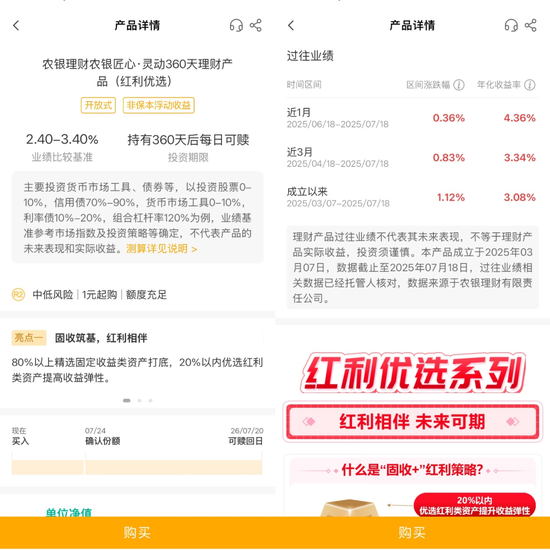
Core Insights - The low interest rate environment has led to a resurgence in dividend strategy wealth management products, with increasing demand from investors for such allocations [1][2][8] - Major banks like Agricultural Bank of China, Bank of China, and Huaxia Bank are actively promoting dividend strategy products through their apps and public accounts [2][8] Product Overview - Dividend strategy products typically have a foundation of over 80% fixed income assets, with up to 20% allocated to dividend assets to enhance returns [1][4] - For example, the "Agricultural Bank of China Wealth Management 'Agricultural Bank Craftsmanship·Dynamic 360-Day Wealth Management Product (Dividend Preferred)'" has over 80% in fixed income assets and less than 20% in dividend assets [1][4] - The "Bank of China Wealth Management Wise Wealth Equity Dividend Strategy 180-Day Holding Period A" includes 30% of the CSI Dividend Index, with a risk level of R4 and an annualized return of 17.92% over the past month [4][7] Performance Metrics - The Agricultural Bank's product has shown an annualized return of 4.36% over the past month, 3.34% over the past three months, and 3.08% since inception, with a performance benchmark of 2.4%-3.4% [4][7] - The Bank of China's product has a high annualized return of 17.92% over the past month and 7.92% year-to-date, with an inception-to-date annualized return of 9.28% [7][8] Market Trends - The dividend strategy is gaining traction as a preferred investment choice among banks, with many financial managers recommending these products for their stability and potential for higher returns compared to traditional fixed income products [9][10] - The current low interest rate environment has made dividend strategies attractive, as they offer a stable yield compared to government bonds [9][10] Investment Opportunities - In addition to dividend strategy products, other investment opportunities include high-dividend blue chips, state-owned enterprises, green low-carbon assets, and sectors related to AI and digital economy [12][13] - The market is seeing increased interest from insurance funds in high-dividend stocks, indicating a shift towards assets that provide stable cash returns [10][11]



年内险资举牌20次!泰康人寿斥资1.79亿元提前潜伏
Guo Ji Jin Rong Bao· 2025-07-22 04:38
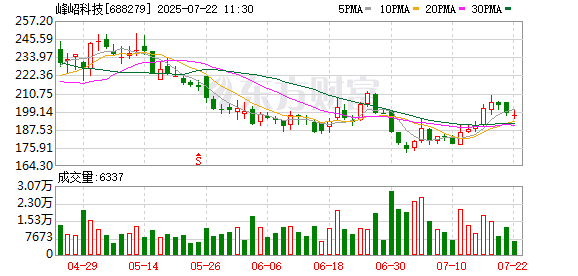
Core Viewpoint - Insurance capital continues to actively invest in listed companies, with significant participation in the IPO of Fengcai Technology, indicating a trend of increasing engagement from insurance funds in the capital market [2][5][8]. Group 1: Insurance Capital Activities - Taikang Life announced its participation as a cornerstone investor in Fengcai Technology's H-share IPO, investing $25 million, which represents 8.69% of the total H-shares issued [2][4]. - As of July 21, 2025, there have been 16 listed companies targeted by insurance capital, with a total of 20 instances of shareholding increases, matching the total for the entire previous year [2][8]. - The trend of insurance capital increasing its stake in listed companies is expected to continue, focusing on firms with high dividends, capital appreciation potential, and high return on equity (ROE) [2][8]. Group 2: Market Trends and Performance - Fengcai Technology, established in 2010, specializes in motor drive chips and has recently achieved a dual listing on both the A-share and H-share markets, with its H-shares rising over 30% from the issue price on the first day of trading [5][12]. - In 2024, Fengcai Technology reported revenues of 600 million yuan, a year-on-year increase of 45.94%, and a net profit of 222 million yuan, up 27.18% [5][12]. - The insurance sector has seen a notable recovery in shareholding activities over the past two years, with 20 instances of shareholding increases in 2024 alone, surpassing the total from the previous three years combined [8][9]. Group 3: Investment Strategies and Preferences - Insurance companies are increasingly favoring high-dividend stocks, particularly in the banking sector, as they provide a stable income stream and help mitigate the impact of declining interest rates [11][13]. - The new accounting standards have created a dilemma for stock investments, prompting insurance firms to seek long-term equity investments or high-dividend strategies to manage profit volatility [9][10]. - The focus on banking stocks is driven by their average dividend yield exceeding 5%, which is significantly higher than the cost of liabilities for insurance companies, making them attractive as "quasi-fixed income" assets [13].
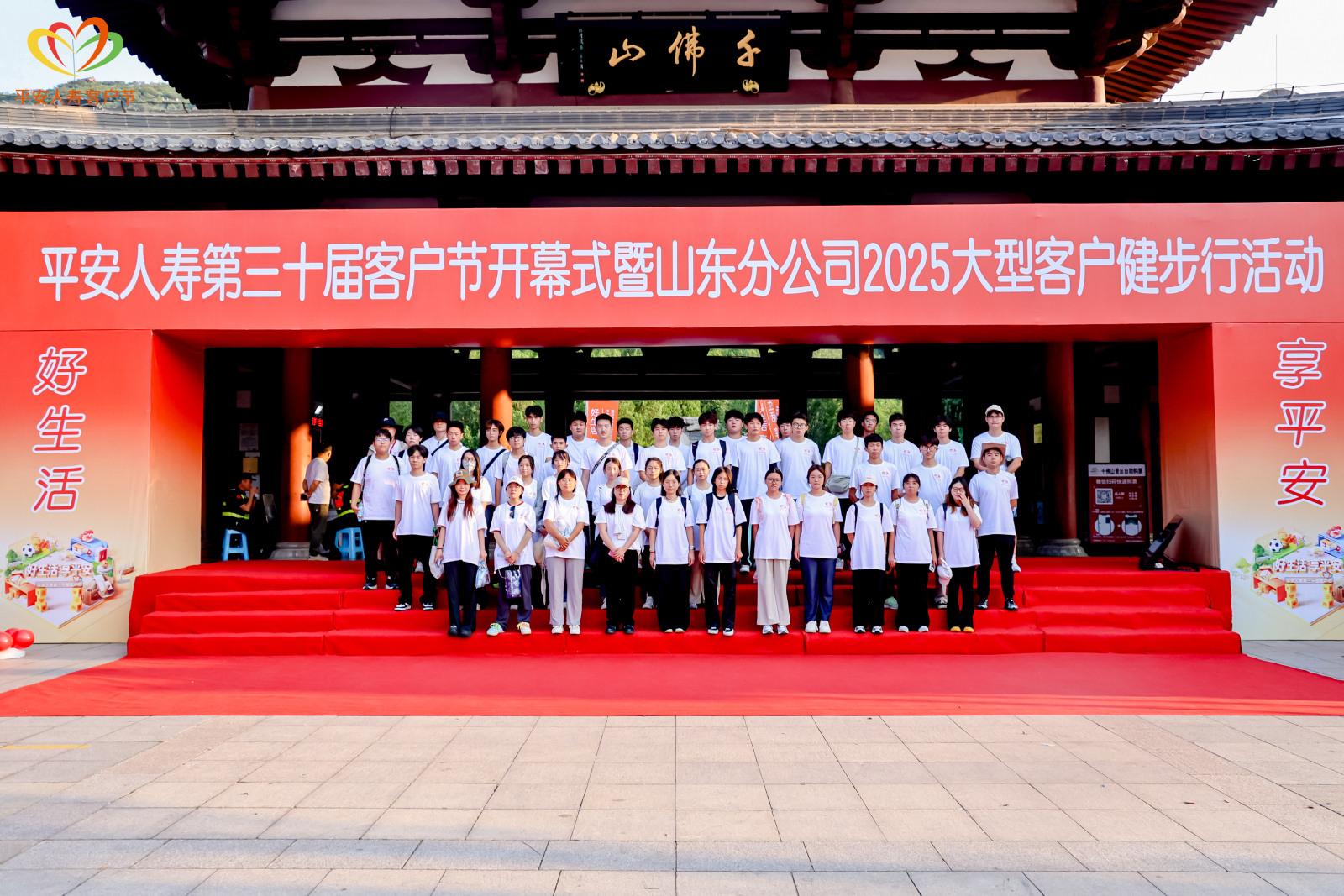
近3000人共赴千佛山!平安人寿第三十届客户节山东启幕
Qi Lu Wan Bao· 2025-07-19 03:09
Core Viewpoint - The 30th Customer Festival of Ping An Life Insurance was inaugurated with a large-scale health walking event, emphasizing the theme "Good Life, Enjoy Peace" and aiming to enhance customer service experience [1][5]. Group 1: Event Overview - The event attracted nearly 3,000 Ping An Life insurance customers, who gathered in the scenic Qianfo Mountain for a health-focused celebration [1][6]. - A 30-second promotional video and social media countdown were utilized to generate excitement prior to the event, creating a vibrant atmosphere [3]. - The event included a structured check-in process and an opening ceremony featuring interactive activities and warm-up sessions led by fitness coaches [3][6]. Group 2: Service and Customer Engagement - Liu Ping, the General Manager of Ping An Life's Shandong branch, highlighted the significance of the Customer Festival as a service upgrade platform and introduced the new "Enjoy Peace" benefits system, which includes nearly 100 value-added services across sports, education, entertainment, and health [5][8]. - The health walk covered a 5-kilometer route, with energy supply stations and financial knowledge displays integrated into the event, promoting a blend of exercise and service [6][8]. - The event concluded with challenges such as plank and jump rope competitions, reinforcing the connection between health and customer engagement [8]. Group 3: Strategic Alignment - The health walk aligns with the "Healthy China" strategy, embedding health management into service scenarios [8]. - The "Enjoy Peace" benefits system is part of Ping An's innovative "Three Savings Project," aimed at creating a convenient service ecosystem for customers [8]. - The company plans to continue enhancing services based on the benefits system, ensuring long-term support for customers' quality of life [8].