格力电器

Search documents
美的,换帅疑云
3 6 Ke· 2026-02-02 12:11
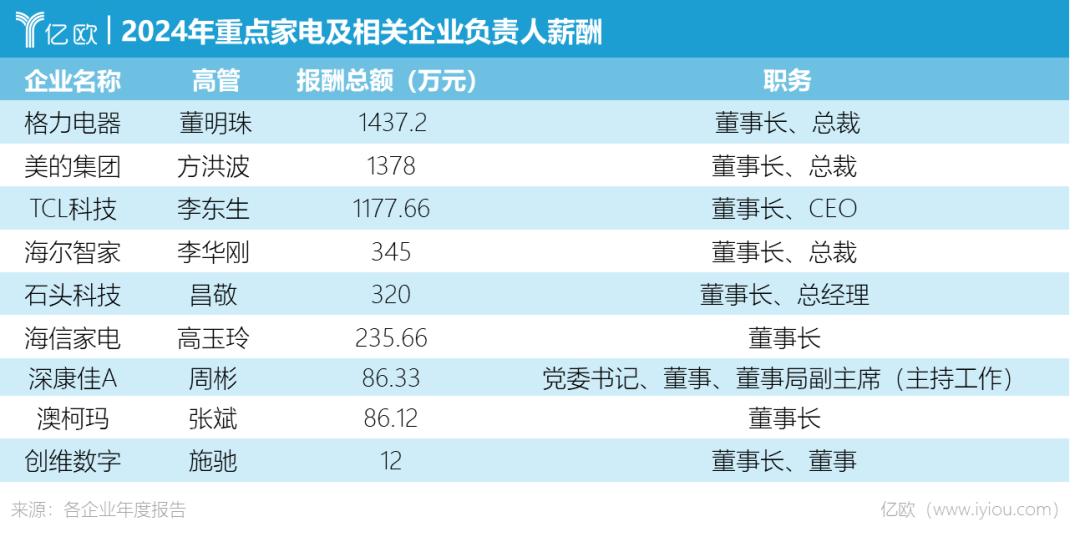
年薪千万元、"最牛打工人"、职业经理人"天花板"......美的集团董事长兼总裁方洪波,在商界拥有耀眼的光环。 以美的视角看,方洪波值得称赞之处在于,既非美的创始元老,也非第一大股东,这突破了民企股权与管理权深度绑定的传统结构。 在这种情况下,方洪波接班12年,推动美的营收增长298%、净利润增长531%、自有资金增长4512%、资产总额增长589%(数据源自美的集团官网,与 2013年年度报告对比存在偏差),市值峰值一度突破7000亿元。方洪波带领美的拳打格力、脚踢海尔,将美的推向了中国"家电一哥"的位置。 更可贵的是,方洪波多次表示"我一定要退下来""我只是美的发展历史中的一个过客"……他对外展示的个人形象非常鲜明——不恋权、不恋名,随时准备 隐入尘烟。 当然,美的集团也没有亏待这位功臣。 天眼查显示,方洪波持有美的集团1.17亿股,占美的集团总股本1.52%。按1月30日开盘价77.60元计算,方洪波身价达到91.84亿元。《2025新财富500创富 榜》显示,方洪波以88.1亿元的持股估值,位列第391位。 在薪酬上,美的也给予了方洪波"天价"回报。2024年美的年度报告显示,方洪波从公司获得的税前报 ...


家电行业 2026 年 2 月投资策略:原材料价格上涨对白电龙头影响有限,白电 1-2 月排产增速环比改善
Guoxin Securities· 2026-02-02 11:09
Core Views - The report maintains an "Outperform" rating for the home appliance industry, indicating a positive outlook despite challenges from rising raw material prices and market competition [1][5][11]. Raw Material Price Impact - Recent increases in copper and aluminum prices have raised concerns about the profitability of leading white goods manufacturers. However, historical analysis shows that the negative impact of raw material cost increases on gross margins has diminished over time. For instance, during previous cycles from 2008 to 2022, the maximum quarterly gross margin decline for leading white goods companies was 5-7 percentage points in 2009-2011, around 5 percentage points in 2016-2017, and only about 2 percentage points in 2020-2022. The current price increases are expected to have a lesser impact, with an anticipated gross margin decline of less than 2 percentage points [1][17][18]. Production and Demand Trends - In January and February 2026, the total production of white goods in China was 23.79 million units, reflecting a year-on-year decline of 22.1%. However, the cumulative production decline for the first two months is expected to be around 5%. The production performance has shown signs of recovery compared to a more than 10% decline in Q4 2025. The demand is expected to stabilize due to the effects of national subsidy policies [2][24]. Retail Market Performance - The retail market for home appliances in China is projected to decline by 4.3% in 2025, with a total retail scale of 893.1 billion yuan. Specific categories such as air conditioners and refrigerators are expected to see declines of 0.4% and 11.5%, respectively, while small kitchen appliances are expected to grow by 3.8% [2][31]. Investment Recommendations - The report recommends several companies for investment based on their performance and market position. For white goods, companies like Midea Group, Haier Smart Home, TCL Home, and Hisense Home Appliances are highlighted. In the small appliance sector, Stone Technology, Bear Electric, and New Treasure are recommended. For black goods, TCL Electronics and Hisense Visual are suggested [3][12][50]. Company Earnings Forecasts - The report provides earnings forecasts for key companies, indicating that Midea Group is expected to have an EPS of 5.84 yuan in 2025 and 6.43 yuan in 2026, with a PE ratio of 13 for 2025. Haier Smart Home is projected to have an EPS of 2.27 yuan in 2025 and 2.53 yuan in 2026, with a PE ratio of 11 for 2025 [4][50].




市场调整中显韧性:红利低波ETF华泰柏瑞(512890)逆市抗跌,资金借道布局释放什么信号?
Xin Lang Cai Jing· 2026-02-02 11:01
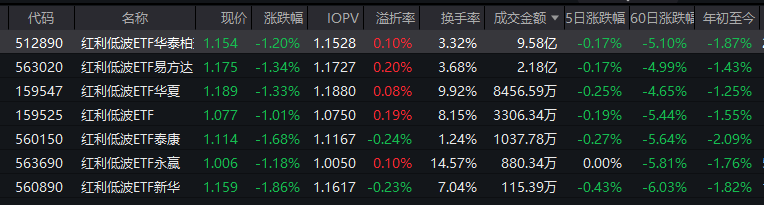
Core Viewpoint - The market is experiencing adjustments, yet the Huatai-PineBridge Dividend Low Volatility ETF (512890) is seeing increased capital inflow, indicating strong investor confidence in this ETF despite broader market declines [1][3][11]. Group 1: ETF Performance and Market Context - On February 2, major indices fell over 2%, while the Huatai-PineBridge Dividend Low Volatility ETF closed down only 1.20% at 1.154 CNY, with a turnover rate of 3.32% and a total trading volume of 9.58 billion CNY, leading its category [1][9][10]. - Over the past five trading days, the ETF has seen a net inflow of 680 million CNY, with 2.38 billion CNY over the last 20 days and 4.26 billion CNY over the last 60 days, reflecting a growing preference for this investment vehicle [3][11]. Group 2: Fund Size and Liquidity - As of January 30, the Huatai-PineBridge Dividend Low Volatility ETF had 24.844 billion shares outstanding, corresponding to a total size of 28.966 billion CNY, with a year-on-year share growth of 9.06% and a size growth of 8.26% [5][13]. - The ETF has recorded a cumulative trading amount of 18.123 billion CNY over 21 trading days this year, averaging 863 million CNY per day, indicating robust liquidity [5][13]. Group 3: Investment Strategy and Market Outlook - The dividend low volatility strategy is characterized by its ability to navigate through market cycles, enhancing the risk profile of traditional high-volatility dividend strategies, making it particularly appealing in the current volatile market [5][13]. - Fund manager Liu Jun emphasizes that the dividend sector's allocation value is worth noting for Q1 2026, supported by both short-term and medium-term logic, with a favorable environment for risk appetite expected to emerge [14][15].
解码消费新浪潮,世研指数发布《2025年度消费榜单》趋势报告
3 6 Ke· 2026-02-02 10:44
Core Insights - The report titled "2025 Consumer Rankings: Decoding Consumption Trends" was officially released by the World Research Index on January 27, providing a systematic analysis of hot categories, brands, and consumption hotspots for 2025, aimed at helping businesses accurately grasp consumption trends and identify growth opportunities [1]. Group 1: Key Observations - The report's core observation revolves around two main themes: "Rational Foundation, Value Return" and "Emotional Leap, Scene Integration," utilizing a proprietary consumption index evaluation system developed by the World Research Index [4]. - The report systematically outlines annual hot categories, the top 100 brands, twelve major industry hot brands, a hot consumption map, and key events, presenting an objective and dynamic view of consumption trends in the Chinese market [4]. Group 2: Annual Hot Categories - The top annual hot categories include cooking oils and seasonings (1.82), mobile communications (1.74), major appliances (1.70), and main fermented foods (1.65), indicating a strong consumer focus on essential goods and the continued penetration of technology in daily life [6]. - Categories such as smart devices (1.59) and facial care (1.55) reflect a trend towards intelligent and convenient upgrades in consumer products [6]. Group 3: Annual Brand Rankings - The top brands in the annual brand rankings include Apple (1.93), BYD (1.91), and Huawei (1.82), showcasing strong brand loyalty and consumer interest in technology and lifestyle products [8]. - In the 3C digital and home appliance sectors, brands like Apple, Huawei, and Xiaomi are noted for their innovation in AI smartphones and smart home products, indicating a shift towards integrated smart living solutions [12]. Group 4: Industry Trends - The outdoor trend is reshaping the sportswear and outdoor industries, with domestic brands like Anta and Li Ning leveraging functional technology and aesthetic styles to penetrate everyday fashion, promoting a "national outdoorization" consumption trend [14]. - The pet product market is evolving from basic care to high-quality living, with brands focusing on scientific and premium offerings, driven by trends towards "humanization" in pet care [19]. Group 5: Consumption Hotspots - The report identifies social livelihood and digital technology as the two main engines of annual consumption hotspots, intertwined with seasonal rhythms and cultural tourism emotions, shaping a rich and interconnected consumption pulse [24]. - Key consumption events for 2025 have shifted from traditional holiday promotions to a diverse network of social emotions, technological innovations, and cultural phenomena, marking the entry into an era of omnipresent consumption triggers [26].



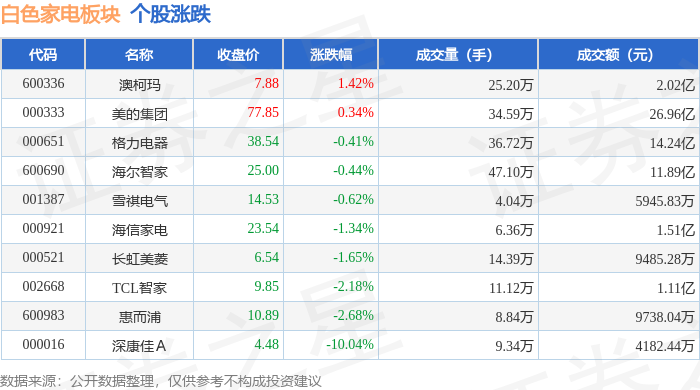
白色家电板块2月2日跌0.14%,深康佳A领跌,主力资金净流入4.02亿元
Zheng Xing Xing Ye Ri Bao· 2026-02-02 09:15
Market Overview - The white goods sector experienced a decline of 0.14% on February 2, with the Shanghai Composite Index closing at 4015.75, down 2.48%, and the Shenzhen Component Index at 13824.35, down 2.69% [1] Individual Stock Performance - Aokema (600336) closed at 7.88, up 1.42% with a trading volume of 252,000 shares and a turnover of 202 million yuan - Midea Group (000333) closed at 77.85, up 0.34% with a trading volume of 345,900 shares and a turnover of 2.696 billion yuan - Gree Electric (000651) closed at 38.54, down 0.41% with a trading volume of 367,200 shares and a turnover of 1.424 billion yuan - Haier Smart Home (600690) closed at 25.00, down 0.44% with a trading volume of 471,000 shares and a turnover of 1.189 billion yuan - Deep Kangjia A (000016) led the decline, closing at 4.48, down 10.04% with a trading volume of 93,400 shares and a turnover of 41.824 million yuan [1] Capital Flow Analysis - The white goods sector saw a net inflow of 402 million yuan from institutional investors, while retail investors experienced a net outflow of 158 million yuan [1] - Midea Group had a net inflow of 508 million yuan from institutional investors, but a net outflow of 328 million yuan from retail investors [2] - Haier Smart Home recorded a net inflow of 29.328 million yuan from institutional investors, with a net outflow of 37.224 million yuan from retail investors [2] - Deep Kangjia A experienced a significant net outflow of 20.7661 million yuan from institutional investors, while retail investors had a net inflow of 15.3664 million yuan [2]


当广货遇见广货,是风味,更是天作之合
Nan Fang Nong Cun Bao· 2026-02-02 03:02
Core Viewpoint - The article emphasizes the synergy between Guangdong's manufacturing prowess and its agricultural products, showcasing how "Guangdong goods" (广货) are not only a representation of quality but also a cultural symbol that enhances the quality of life and drives economic growth [4][67][72]. Group 1: Guangdong's Manufacturing Strength - Guangdong is a major manufacturing hub, producing 70% of the world's consumer drones, 40% of smartphones, and 40% of industrial robots in China [6]. - The province leads in the production of home appliances, with products like rice cookers and air conditioners being globally dominant [7][14]. - The "Guangdong goods" brand is recognized for its innovation and quality, contributing significantly to both domestic and international markets [8][72]. Group 2: Agricultural Excellence - Guangdong's agricultural sector is robust, with products like the Qingyuan silk rice, which has a projected total output value of 6.457 billion yuan in 2024 [21]. - The province's seasoning industry, represented by brands like Haitian soy sauce, generated revenue of 55.7 billion yuan in 2024, accounting for over 60% of the national soy sauce production [27][28]. - The integration of traditional agricultural products with modern processing techniques enhances the value and appeal of these goods [30][37]. Group 3: Cultural and Culinary Integration - The combination of Guangdong's culinary products, such as the pairing of rice with high-quality rice cookers, exemplifies the harmonious relationship between technology and tradition [12][21]. - The collaboration between local ingredients, like lychee from Maoming and traditional beverages like Wanglaoji herbal tea, reflects a deep cultural connection and innovation in product offerings [35][39]. - The article highlights the importance of maintaining quality and tradition in food preparation, which is essential for enhancing the dining experience [54][69]. Group 4: Economic Impact and Future Prospects - The "Guangdong goods" initiative aims to expand the reach of these products both nationally and globally, fulfilling consumer demands while stimulating economic growth [72]. - The article suggests that the synergy between industrial and agricultural sectors will lead to a healthier, more convenient, and flavorful modern lifestyle [69][70]. - The ongoing efforts to promote Guangdong's products are expected to narrate compelling stories about the region, further enhancing its economic and cultural significance [73].

格力碳化硅芯片落地千万家电,驶入新能源汽车赛道
Jing Ji Wang· 2026-02-02 02:46
在全球半导体技术加速迭代、绿色低碳转型深入推进的背景下,第三代半导体碳化硅正成为推动产 业升级的关键力量。格力电子元器件有限公司作为格力电器全资子公司,凭借其在碳化硅领域从晶圆制 造到封装测试的全链条自主能力,已实现碳化硅芯片在家电领域的规模化、高质量应用,为我国高端制 造与节能减碳注入强劲动能。 白电领域规模化突破,碳化硅助力能效再定义 格力电子元器件聚焦第三代半导体SiC碳化硅产业发展,截至目前,其碳化硅 SBD 芯片已成功应用 于数百万台套空调,走进万千家庭。为消费者带来实打实的高效节能体验,格力在碳化硅白电应用领域 实现规模化突破。 在冰洗空冷四大家电品类中,碳化硅SBD已广泛应用于前端PFC整流电路。相较硅基FRD, SiCSBD优势显著,不仅反向漏电流更小,且器件结电容更低,能有效降低PFC电路反向恢复损耗与反 向尖峰电流,全面提升产品能效与可靠性。以格力碳化硅基二极管 GCS065W020E 为例,应用于家用3 匹空调,在市电输入电压220V下、较硅基方案能效同比提升0.5%,器件温升同比降低了10℃,精准达 成节能提效目标。 随着用户对续航、充电速度的需求提升,新能源汽车800V高压平台已成为 ...
董明珠说:“就得让有钱人多交点税。你看我年薪500万,扣掉45%的税,手里还能剩200多万呢,这钱够花了。可普通人一个月挣5000块,日子过得紧巴巴的根本不够用,个税起征点真该调到1万块。”聚光灯下的董明珠从来不回避敏感话题,尤其是关于钱。在两会采访区的镜头前,这位格力电器的掌门人并没...
Sou Hu Cai Jing· 2026-02-02 02:44
Core Viewpoint - Dong Mingzhu advocates for raising the individual income tax threshold to 10,000 yuan, highlighting the disparity between her high salary and the struggles of ordinary workers earning around 5,000 yuan per month [1][2][3] Group 1: Taxation and Income Disparity - Dong Mingzhu emphasizes the need for wealthier individuals to pay more taxes, using her own salary as an example to illustrate the burden of high taxes on lower-income families [1][3] - The current tax system creates friction, where increased corporate costs do not translate into improved employee satisfaction, leading to a paradox for management [2] - The existing income threshold of 5,000 yuan is insufficient for families in first and second-tier cities, where living costs are significantly higher [2] Group 2: Economic Implications - Economists suggest that reducing taxes for ordinary citizens could stimulate economic activity through increased consumer spending, potentially offsetting lost tax revenue through consumption taxes [3] - Historical examples, such as the high tax rates during Roosevelt's New Deal, demonstrate that high taxes on the wealthy can contribute to social stability rather than harm economic growth [3] - Dong Mingzhu's proposal is framed not merely as a redistribution of wealth but as a means to achieve "differential justice," where the impact of tax changes is more significant for lower-income individuals [3]

家电行业 2026W04 周报:关注地产链复苏机会,重点家电公司披露年报预告
GUOTAI HAITONG SECURITIES· 2026-02-02 02:40
Investment Rating - The industry investment rating is "Increase Holding" [6][13]. Core Insights - The real estate market is expected to stabilize, creating opportunities for recovery in the real estate supply chain, with a focus on key home appliance companies' annual report forecasts [2][6]. - Key home appliance companies are showing significant profit growth, with notable increases in net profits for companies like Ecovacs and Ninebot, while others like Roborock are experiencing declines [3][4][6]. Summary by Relevant Sections Key Home Appliance Company Forecasts - Ecovacs is projected to achieve a net profit of 1.7-1.8 billion yuan in 2025, representing a year-on-year increase of 111%-123% [3]. - Ninebot expects a net profit of 1.67-1.85 billion yuan in 2025, a year-on-year increase of 54%-71% [3]. - Roborock anticipates a net profit of no less than 1.34 billion yuan in 2025, a year-on-year decrease of 31% [3]. - Anfu Technology forecasts a net profit of 220-250 million yuan in 2025, a year-on-year increase of 29%-51% [3]. - TCL Electronics expects an adjusted net profit of 2.33-2.57 billion HKD in 2025, a year-on-year increase of 45%-60% [4]. - Beiding Co. anticipates a revenue of 950 million yuan in 2025, a year-on-year increase of 26% [4]. Investment Recommendations - The report recommends increasing holdings in companies such as Midea Group, Haier Smart Home, TCL Electronics, and Hisense Visual, which are expected to perform well due to stable operations and high dividends [6][7]. - The report highlights the potential for smart home appliances to drive growth, particularly for leading robotic vacuum companies like Roborock and Ecovacs [6]. - Companies like Ninebot and Anfu Technology are noted for their stable performance and upward potential, making them attractive investment options [6].


自由现金流ETF(159201)连续11天净流入,合计“吸金”22.59亿元
Sou Hu Cai Jing· 2026-02-02 02:38
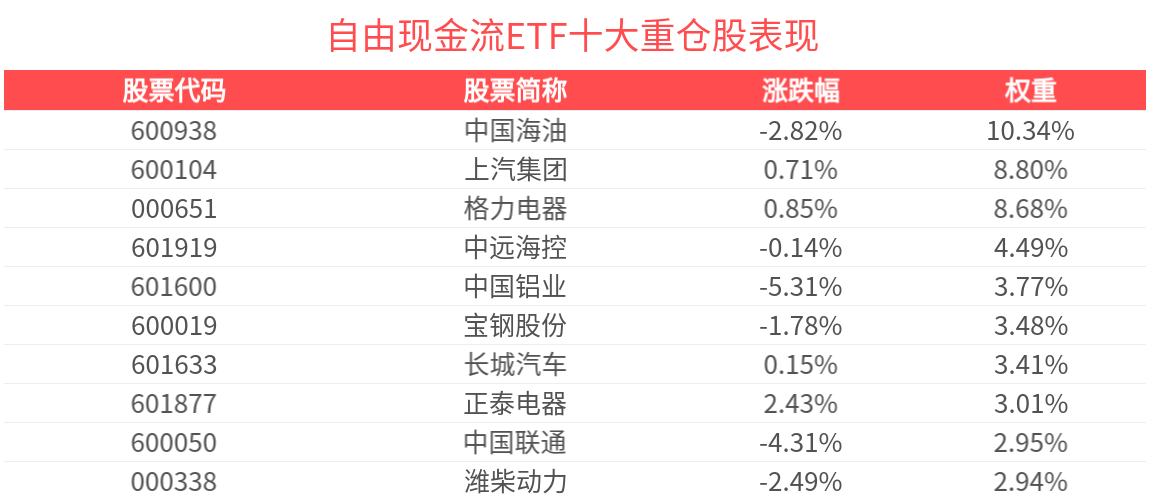
Core Viewpoint - The National Index of Free Cash Flow has experienced a decline of 2.01% as of February 2, 2026, with mixed performance among constituent stocks, indicating a volatile market environment [1]. Group 1: ETF Performance - The Free Cash Flow ETF (159201) has decreased by 2.03%, with the latest price at 1.3 yuan [1]. - The ETF has seen a turnover of 2.06% during the trading session, with a total transaction volume of 250 million yuan [1]. - Over the past week, the average daily transaction volume of the ETF has been 685 million yuan [1]. - The ETF has recorded a net inflow of 2.259 billion yuan over the last 11 days, reaching a total share count of 9.357 billion and a total scale of 12.409 billion yuan, marking a new high since its inception [1]. - The leverage funds have been actively investing, with a net financing purchase of 4.1325 million yuan on the previous trading day and a current financing balance of 141 million yuan [1]. - The net value of the ETF has increased by 24.49% over the past six months [1]. - The highest monthly return since inception was 9.25%, with the longest consecutive monthly gain being 6 months and a maximum increase of 22.69% [1]. - The ETF has a monthly profit percentage of 81.82% and a historical holding period profit probability of 100% [1]. Group 2: Top Holdings - As of January 30, 2026, the top ten weighted stocks in the National Index of Free Cash Flow include China National Offshore Oil Corporation, Gree Electric Appliances, SAIC Motor, China Aluminum, COSCO Shipping Holdings, Weichai Power, Silver Holdings, Baosteel, Chint Electric, and Great Wall Motors, collectively accounting for 50.3% of the index [2]. - The individual weightings of these stocks vary, with China National Offshore Oil Corporation holding the highest at 10.34% and Weichai Power at 2.94% [4].